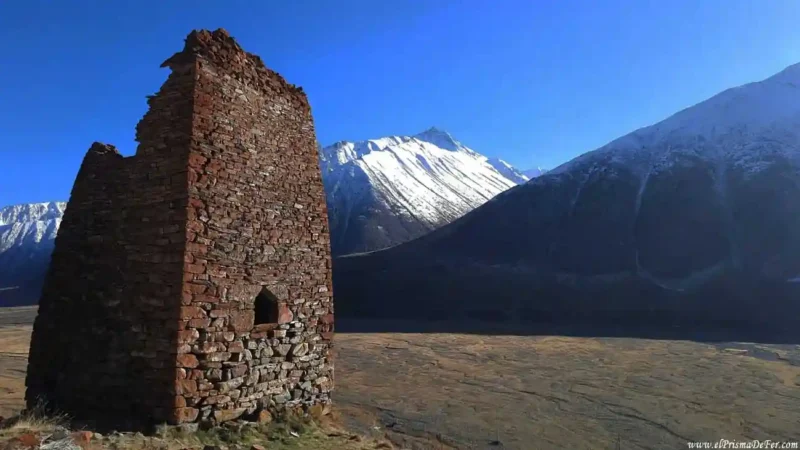
The Truso Valley, located in the Kazbegi region in Georgia, is one of the most interesting areas to visit in the area. Along your way, you'll find a beautiful river that shaped this landscape, hilltop fortress ruins, and ancient rural villages where time seems to have stood still.
Unlike other parts of the Caucasus that are already overflowing with people, here you can walk for miles almost alone, only crossing paths with the occasional shepherd or abandoned defense tower.
In this article, I'll tell you about trekking in the Truso Valley, what you can see along the way, how to get there, how long the hike to Zakagori Fortress takes, and also my personal experience comparing it to other valleys in the region like Juta.

This post may contains affiliate links. If you purchase through these links, I may earn a commission at no extra cost to you. Thank you for your support!
Table of Contents
🗺️ Fact Sheet for Trekking in the Truso Valley
| Start |
| Okrokana |
| Final |
| Okrokana |
| Duration |
| 1 day |
| Distance |
| 18 km |
| Estimated time in hours |
| 7/8 hs |
| Max. Altitude |
| 3300m |
| Difficulty |
| Easy |
| Signaling |
| The trail is well marked, sometimes passing along the road itself. |
| Water/food |
| During high season there are cabins that sell provisions. |
Do you want to follow my routes precisely?
Download the KML/KMZ files of all the treks I did in Kazbegi, including the Gergeti Glacier, Juta Valley, Truso Valley, and Arsha Waterfall, and open them in apps like Maps.me or Gaia GPS to get the complete route offline. This is ideal if you want to navigate the valley with confidence, even without a signal.
Get the Kazbegi files on Gumroad for a small contribution.

How to get to the Truso Valley
There are several ways to access the Truso Valley from Kazbegi, depending on your travel style:
- Private car or taxi: This is the most convenient and fastest option. The road is generally in good condition, and you can even reach the end of the valley, the ruins of Zakagori Fortress. This option allows you to stop at various points of interest at your own pace.
- Public Transport: During high season, a minibus can be taken from Kazbegi, which will drop off passengers in a village not far from the start of the trek to the valley. From there, it's a short walk to explore the various attractions, such as abandoned villages and historical ruins.
- Hitchhiking: For adventurers, hitchhiking is a common option in the region. Many travelers combine this option with hikes within the valley to explore its most remote corners.
I was lucky enough to explore the valley in a car that my friends, whom I met during the trekking to Ushguli from Mestia, rented in Tbilisi, which made the logistics of visiting all the attractions in the Valley much easier. But in general, the trip requires quite a bit of walking to fully enjoy it.
How long does the Truso Valley trek take?
The Truso Valley trek usually starts at the Okrakana parking lot (see location on map), where the paved road ends and you leave your car. From there to the Zakagori Fortress, at the end of the valley and very close to the border with South Ossetia, it is approximately 8 to 9 km each way (one way), which adds up to about 16 to 18 km in total walking.
As for time, the entire tour usually takes between 3.5 and 4.5 hours one way and about 3 hours back, depending on your pace, photo or rest stops, and the weather. In total, consider about 7 to 8 hours of trekking if you do it completely on foot.
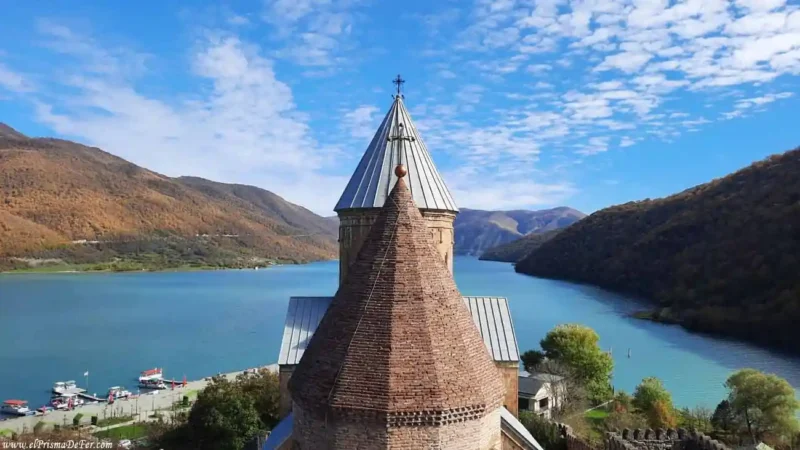
And by car?
Another option is to shorten part or all of the journey by car. 4x4 vehicles (even some that aren't) can travel along the gravel road to reach the fortress itself. In that case, it might take you a couple of hours just to get there, making the journey quite manageable and giving you time to stop at each place.
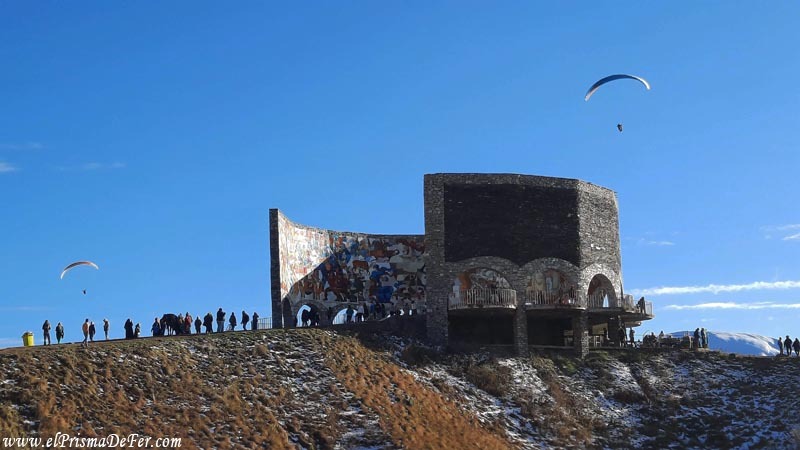
Save this post on Pinterest

What is trekking like in the Truso Valley?
The Truso Valley trek starts from the parking lot located just before crossing the bridge into Okrakena village, which is where many travelers leave their cars if they are traveling alone.
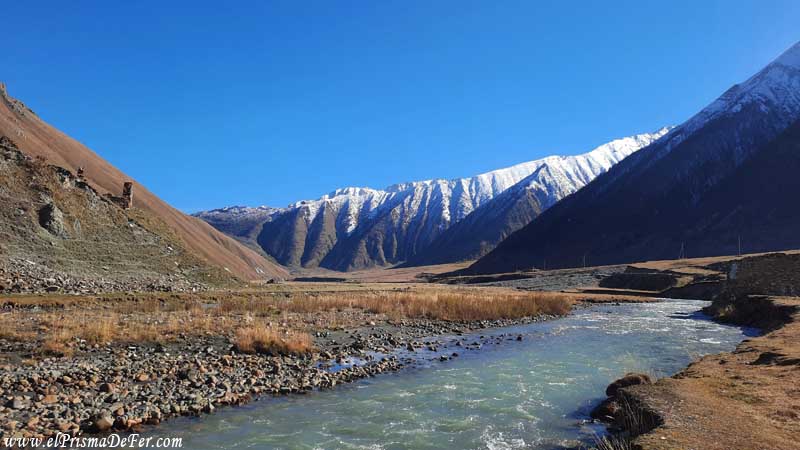
The first section of the trail runs through a gorge, with the river bordering the path below, offering a closed but very picturesque landscape.
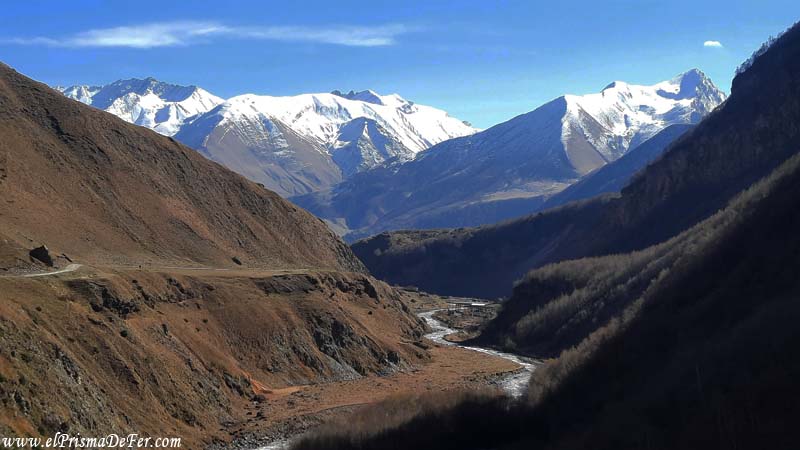
When we finish crossing the gorge, just as the river bends, we can find some small cabins, which usually sell drinks or snacks during high season, but not during low season when they are usually closed.
From this point, you can climb to a nearby viewpoint to get your first panoramic views of the valley and begin to appreciate the magnitude of the landscape that awaits us.
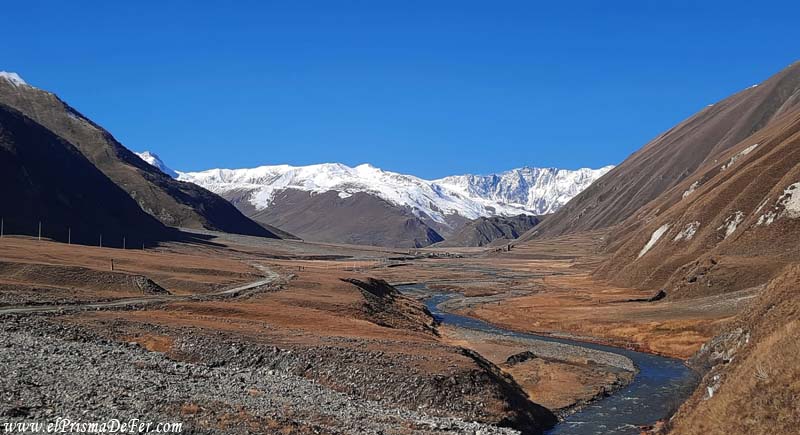
Abano Lake
One of the highlights of the tour is Lake Abano, a small turquoise lake infused with carbon dioxide and minerals. Its color and natural fizz make it a fascinating spot for a quick stop and photo op.
It's not accessible by car, as the lake is on the other side of the river and the road doesn't pass through. However, if you're walking, it's a must-see on the route to the valley.
Ketrisi travertines
After Lake Abano, the road takes us to the Ketrisi travertine terraces (see on the map), natural geological formations where water has deposited minerals over time.
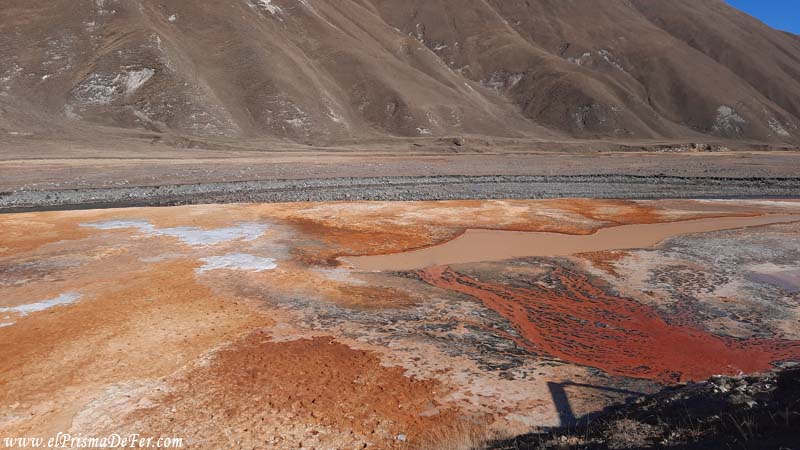
The rocks and water have reddish and brownish tones, a striking contrast with the green and blue of the surrounding valley, making this a very photogenic spot.
Villages
Continuing along the path, you will pass through the village of Ketrisi, a small town that in the low season gives the impression of being abandoned. The stone houses remain standing, silent, and the streets seem empty, with not a soul in sight.
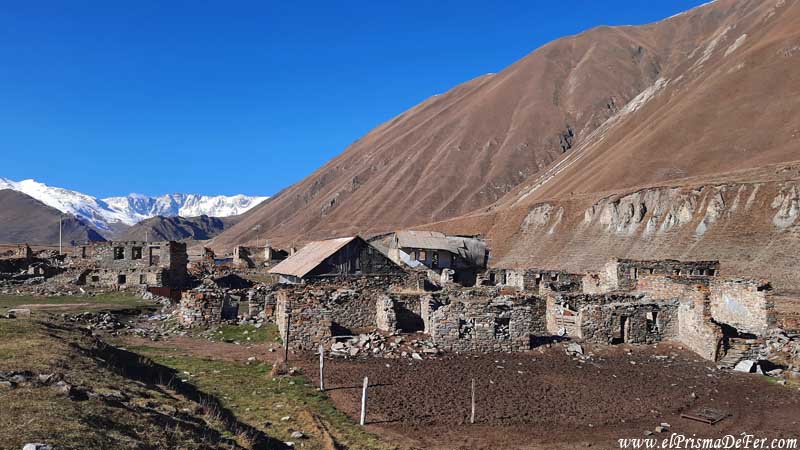
That solitary atmosphere gives the place a very special feel, as if it had stopped in time, and makes crossing it like a mystery.
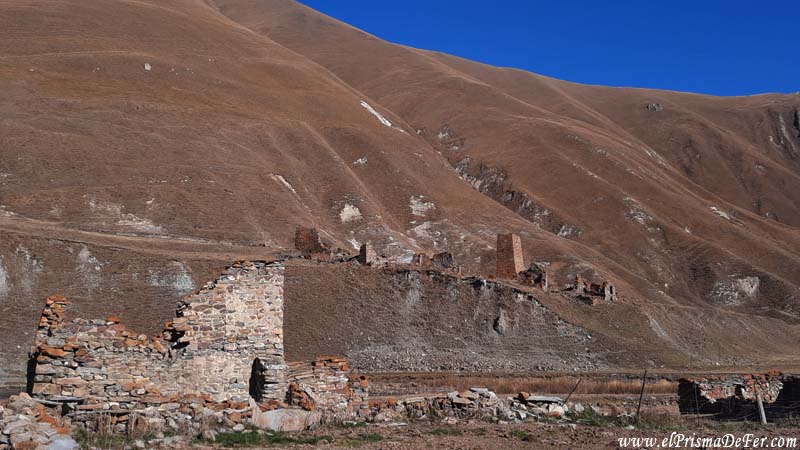
Abano Monastery
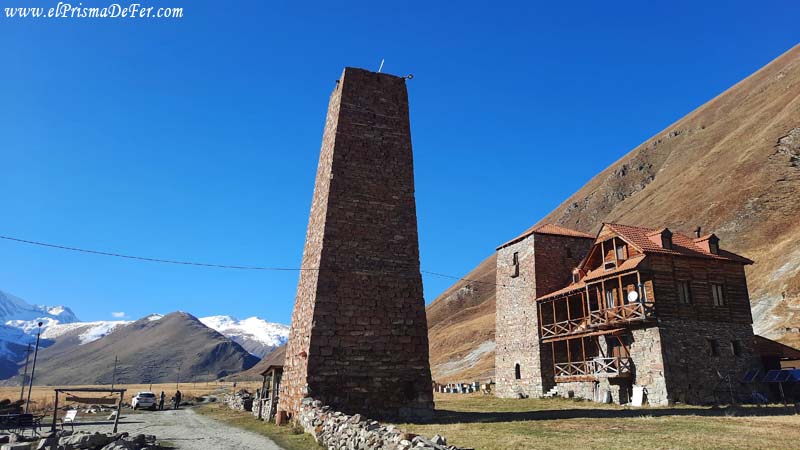
Following the path, you will find a small monastery with its medieval tower, accompanied by a guesthouse/restaurant just opposite, ideal for stopping, having a drink and enjoying the surroundings.
Zakagori Fortress
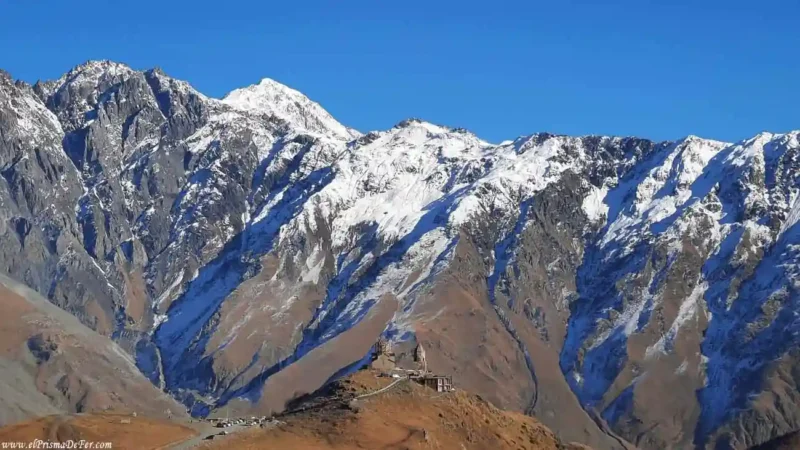
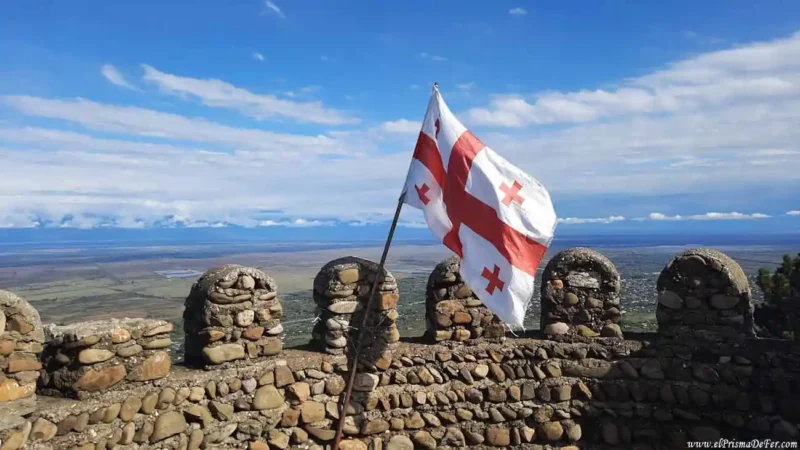
Finally, the trek reaches the ruins of the Zakagori fortress (see location), an ancient defensive structure located on top of a hill.
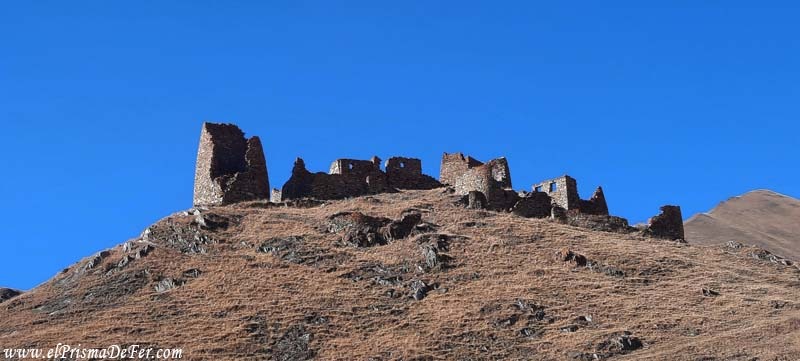
Although today it is mainly just ruins, in its time it served to protect the local inhabitants and control passage through the valley, also offering a strategic surveillance point over the surrounding area.
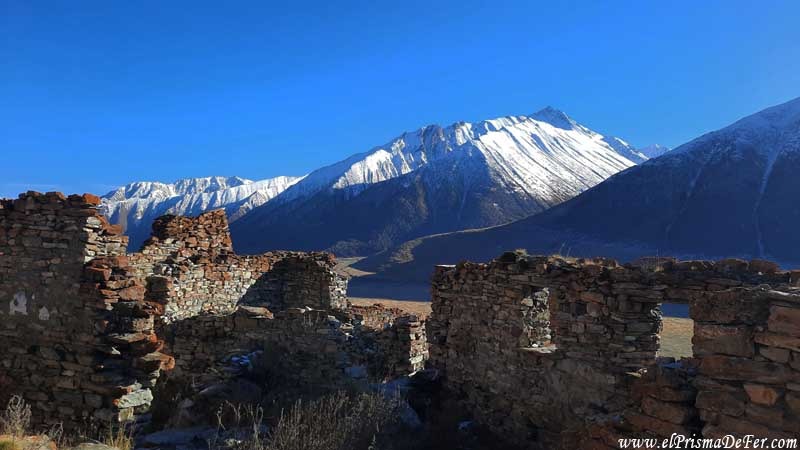
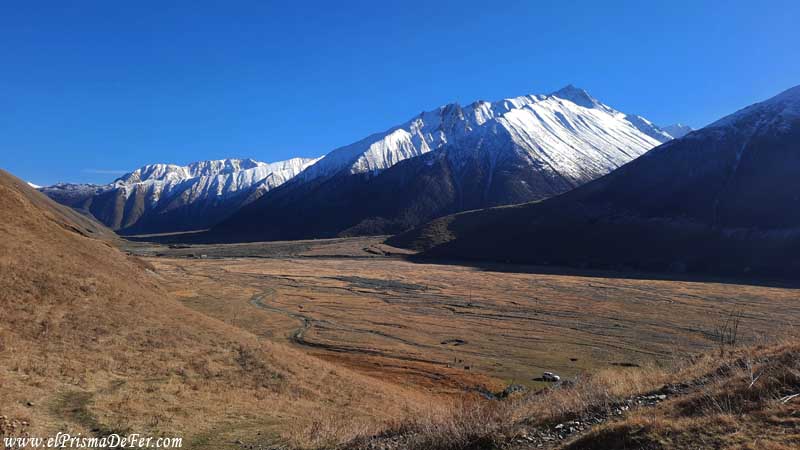
From the top of the fortress you have panoramic views of the valley, which allows you to understand the importance of its location in military terms.
How to get back to Kazbegi from the Truso Valley
After exploring the valley, the return to Kazbegi is made by the same route, passing again by the villages, travertines and Lake Abano. The walk can feel long, especially after a full day of hiking, so it's advisable to plan to return before nightfall .
Since few cars venture to the fortress, if you are walking and see one passing by, chance to hitchhike. This option makes the return trip much easier and saves energy, especially if you're carrying a lot of gear or just want to enjoy the scenery without rushing.
During peak season, there is also the option of taking public transport or taxis that depart from the valley entrance to Kazbegi, although this requires planning schedules and availability in advance.
Best time to visit the Truso Valley
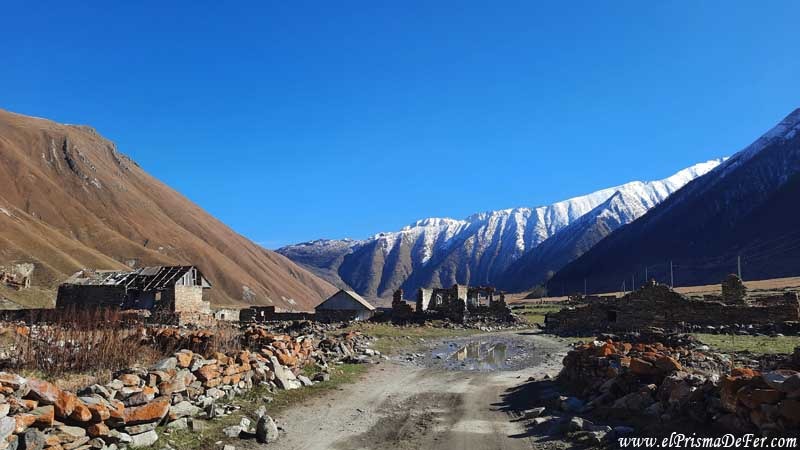
The recommended season to visit the Truso Valley runs from late spring to early autumn (June to mid-September). During these months, the trails are generally snow-free, the days are longer, and the weather conditions are more stable, allowing you to enjoy the entire valley more comfortably.
Additionally, during peak season, some of the cafes, guesthouses, and services in intermediate villages are often open, making the logistics of the tour easier.
If you decide to visit the valley out of season, such as in late autumn or other times when there may be snow, the landscape changes completely: the rivers and lakes look more vivid in the cold light, and the white-covered mountains give the trip an epic air.
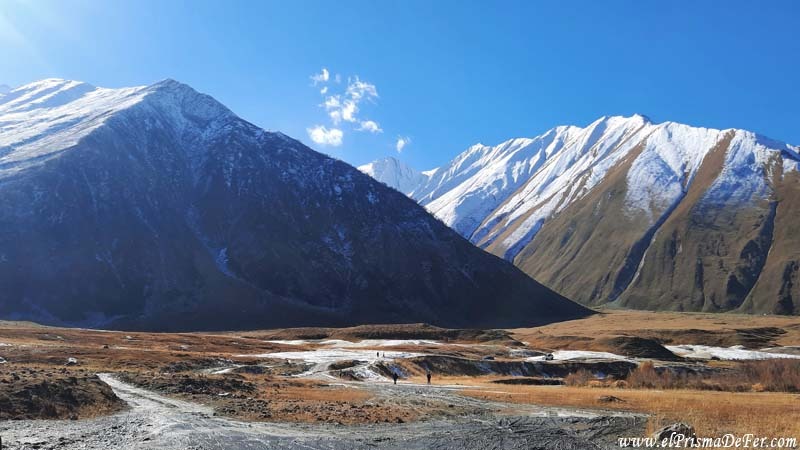
Of course, you should be prepared for more demanding sections and slippery trails, as well as the possibility that most services may be closed. This experience, although more challenging, can make the trek even more memorable for those seeking adventure and fairytale landscapes.
Recommendations for visiting the Truso Valley
- Appropriate footwear and clothing: The trail is mostly flat, but it involves many hours of walking. Bring comfortable and sturdy hiking shoes or boots, as well as a windproof or waterproof jacket (the weather in Kazbegi can change quickly).
- Water and food: During high season, there are usually some cabins open where you can buy supplies, but this is not the case during low season, so bring plenty of water and energy snacks. A picnic in the middle of the valley is a great idea.
- Travel time: If you're doing the entire hike, plan on a 7–8-hour day. It's best to start early so you don't have to return late.
- Transportation Options: If you don't want to walk the entire route, you can hire a 4x4 taxi to take you part of the way. Ask in Stepantsminda to arrange this.
Juta Valley or Truso Valley, which one to choose?
If you are hesitating between visiting the Juta Valley or the Truso Valley, my experience makes me lean towards Truso. What I liked most is the variety of landscapes and points of interest it offers: villages, travertine, lakes, monasteries, and historic ruins, all in one tour.
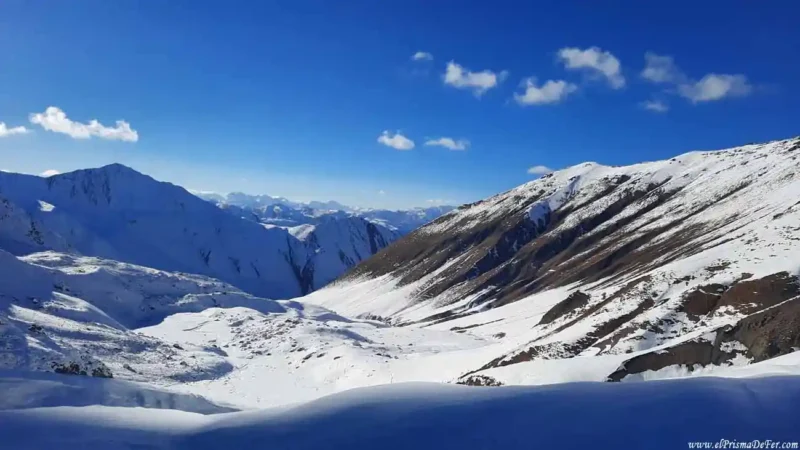
Each section offers something different, making the trek more dynamic and visually striking.
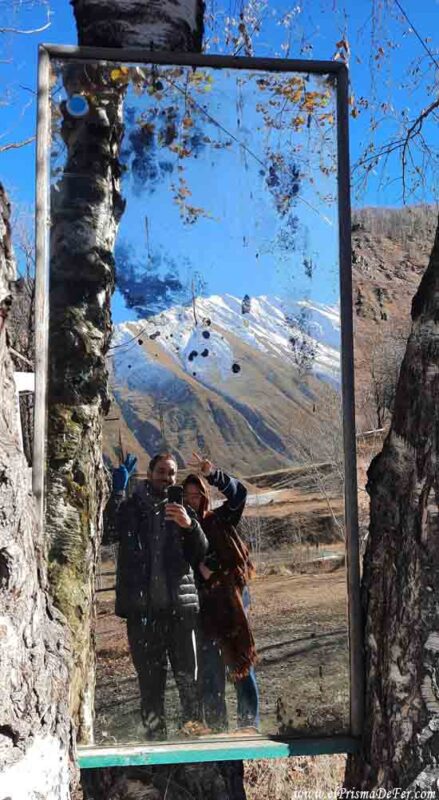
In contrast, the Juta Valley seemed more enclosed by mountains, with less variety in the scenery along the trail. Beyond Lake Chaukhi, the path doesn't offer impressive landscapes and lacks the same diversity as Truso.
Therefore, if I had to choose a valley to explore, it would definitely be Truso, although it should be noted that it can be quite long if done entirely on foot.
Frequently asked questions about trekking in the Truso Valley
Where is the Truso Valley located?
The valley is in northern Georgia, near the Russian border, not far from Stepantsminda (Kazbegi). It is a fairly remote area, with open landscapes and very little infrastructure.
How to get to the start of the trek?
The most common way to get there is from Kazbegi. You can hire a taxi or, if you're lucky, hitch a ride on a vehicle heading up the valley. There's no regular public transport to the trailhead.
Is it a difficult trek?
It's not technically difficult. The terrain is quite flat compared to other areas of the Caucasus, so it's accessible for most people. The distance can be long, though, if you want to reach the end of the valley.
How long does the journey take?
You can adapt it to your schedule. Many people do a half-day or full-day hike, while others venture deeper into the valley or even combine it with multi-day treks in the region.
Can it be done in one day?
Yes, absolutely. In fact, it's quite common to go and return from Kazbegi in a single day.
Do we need a guide?
It's not necessary. The route is quite clear and doesn't present any major navigational difficulties. Even so, it's always a good idea to carry offline maps or a GPS as a precaution.
What's so special about this valley?
The Truso Valley is known for its expansive landscapes, medieval towers, abandoned villages, and natural formations such as colorful mineral springs. It's less touristy than other places in the area, giving it a more authentic feel.
Is it safe because it's near the border?
Yes, it's generally safe to travel through, but there are restricted areas closer to the Russian border. The important thing is to stay on the marked trails and respect all signs.
What is the best time to go?
From spring to autumn. In winter it can be complicated due to snow and access.
What to bring?
Water, some food, warm clothing (the weather can change quickly), comfortable shoes, and sun protection. There are no services along the route, so come prepared.
Is it worth including in a trip to Georgia?
Yes, especially if you enjoy walking and are looking for quieter, less crowded landscapes than in other parts of the Caucasus.
Support The Prism of Fer!
Your support helps me continue creating free content on the blog. Thank you so much!