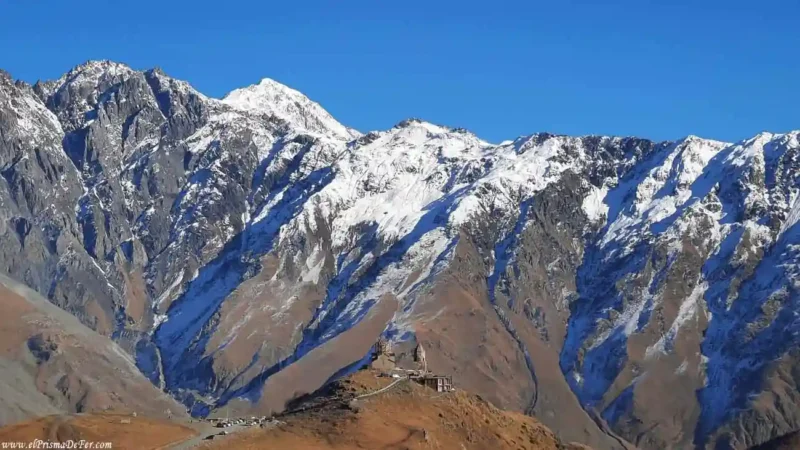
One of the most visited areas from Kazbegi is the Juta Valley. This is one of the highest inhabited valleys in Georgia, surrounded by the mountains of the Chaukhi massif, also known as the "Dolomitic Caucasus" for its sharp peaks that rise above 3,000 meters.
The village of Juta is the starting point for various hikes, from simple treks to multi-day routes that connect to the Khevsureti region.
In this article, I'll tell you what trekking in the Juta Valley is like, what you can see along the way, how long the hike to Chaukhi Lake takes, continuing on to the mountain pass, and also my personal experience comparing it with other valleys in the region, such as Truso.

This post may contains affiliate links. If you purchase through these links, I may earn a commission at no extra cost to you. Thank you for your support!
Table of Contents
🗺️ Trekking in the Juta Valley Fact Sheet
| Start |
| Juta |
| Final |
| Juta |
| Duration |
| 1 day |
| Distance |
| 16 km |
| Estimated time in hours |
| 7/8 hs |
| Max. Altitude |
| 3300m |
| Difficulty |
| Easy-Moderate |
| Signaling |
| Marked and well-signposted trail |
| Water/food |
| In the village of Juta you can get provisions |
Do you want to follow my routes precisely?
Download the KML/KMZ files of all the treks I did in Kazbegi, including the Gergeti Glacier, Juta Valley, Truso Valley, and Arsha Waterfall, and open them in apps like Maps.me or Gaia GPS to get the complete route offline. This is ideal if you want to navigate the valley with confidence, even without a signal.
Get the Kazbegi files on Gumroad for a small contribution.

How to get to Juta Valley from Kazbegi
The Juta Valley is located about 20 km from Stepantsminda (Kazbegi), it seems close, but from the town center there is no regular public transport to Juta, so other alternatives must be considered:
- Local taxi: This is the easiest and fastest option. The journey takes about 30-40 minutes, depending on the road conditions, as the last few kilometers are gravel. It's a good idea to agree on a round-trip fare with the driver, or ask to be waited for and return the same day.
- Organized excursions: Some agencies in Kazbegi offer transfers to the Juta Valley, sometimes combining the visit with other nearby points of interest.
- Hitchhiking: This is a possible alternative, although less safe and slower. During peak season, there are often cars traveling up to the valley, mainly jeeps carrying tourists.
- Own or rented vehicle: If you have a car, you can arrive directly, although keep in mind that the last stretch requires careful driving, especially if you don't have experience on mountain roads.
I went with my travel companions, whom I met during the trekking from Mestia to Ushguli, in the car they rented in Tbilisi. However, we couldn't get to the village, since the road was under repair (it seems like it's been for years), and we were forced to leave the car a few kilometers before.
From there, you had to walk or take one of the taxis waiting in the area to take you to the town and the official start of the route.
How long does the trekking in the Juta Valley last?
The classic trek from Juta village to Chaukhi Lake is relatively short, taking between 2 and 3 hours round trip, depending on your pace and any stops along the way. The trail doesn't present any major technical difficulties, although in some sections the slope is noticeable and the terrain can be somewhat uneven.
If instead you decide to continue beyond the lake to the Chaukhi Pass, the walk becomes considerably more demanding. The total round trip from Juta takes about 7 to 8 hours, with a significant ascent and greater mountain exposure.
This route allows you to cross the pass and look out over the Khevsureti region. It is an ideal option for those looking for a more comprehensive trek, although it requires good physical fitness and an early departure.
What to see on the way to the village of Juta
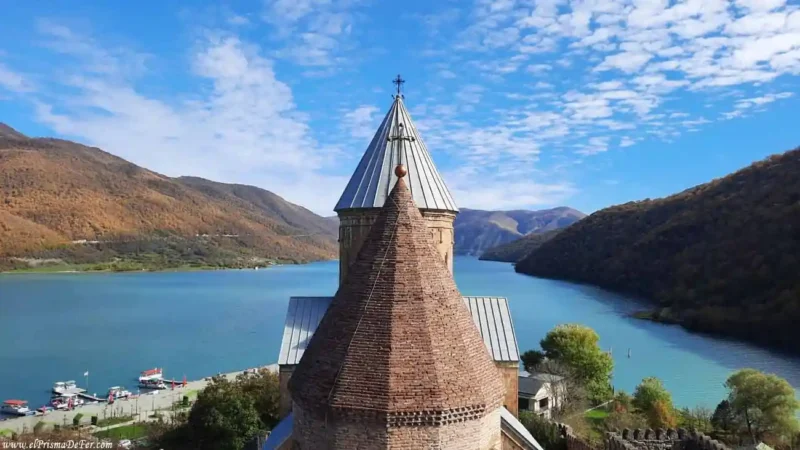
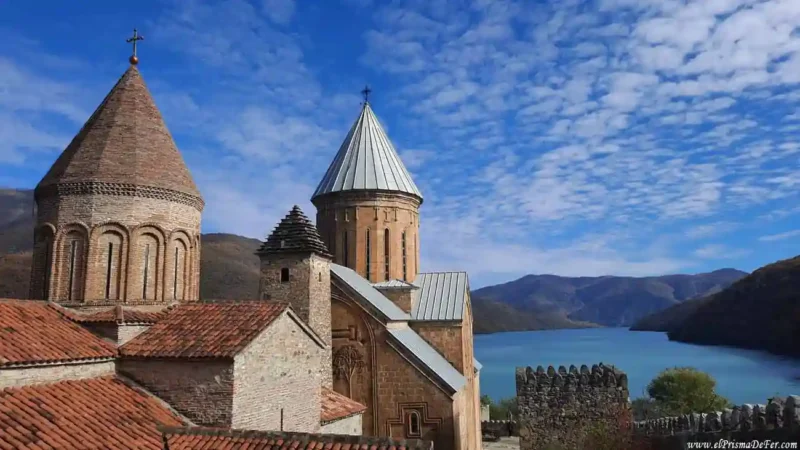
The journey to the village of Juta doesn't offer many points of interest, beyond a few small villages that you pass through. The main and most noteworthy stop is the village of Sno (see location), where you can see sculptures of giant faces and a small castle with the typical svana tower.
The trail to Juta crosses mountains, rivers, and valleys, and depending on the time of year, there may be snow or mud, making the route more challenging.
Where the trekking in the Juta Valley begins
The trek in the Juta Valley begins in the village of Juta, a small mountain village located at the end of the road (see location on map). From there, the trail begins past the village, and after a steep uphill walk you reach the Hotel Five Seasons, an alpine-style accommodation that is usually the clearest reference point to locate where the trail continues.
The Five Seasons Hotel is the most prominent accommodation in the Juta Valley and virtually the only one in this remote mountainous area. It is a small complex of cottages and a main building with a restaurant. It is popular with hikers and travelers looking to spend the night surrounded by nature, with unobstructed views of the Chaukhi Mountains.
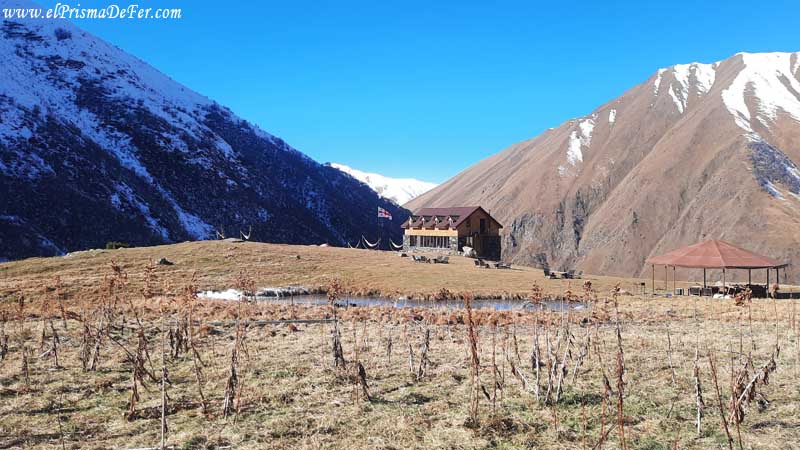
Although prices tend to be higher than in Kazbegi, its privileged location makes it a popular choice for both trekkers and those simply looking to relax in this unique setting.
What is the trekking to Chaukhi mountain pass in Juta like?
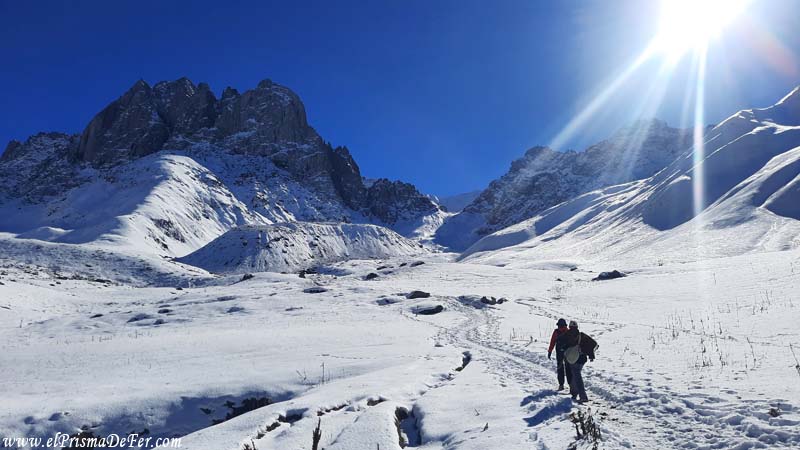
The hike begins with a gentle ascent along the side of a meltwater river and through some meadows. We were careful; in late October, this part of the trail was partially covered in snow, making it slower and slippery in several sections.
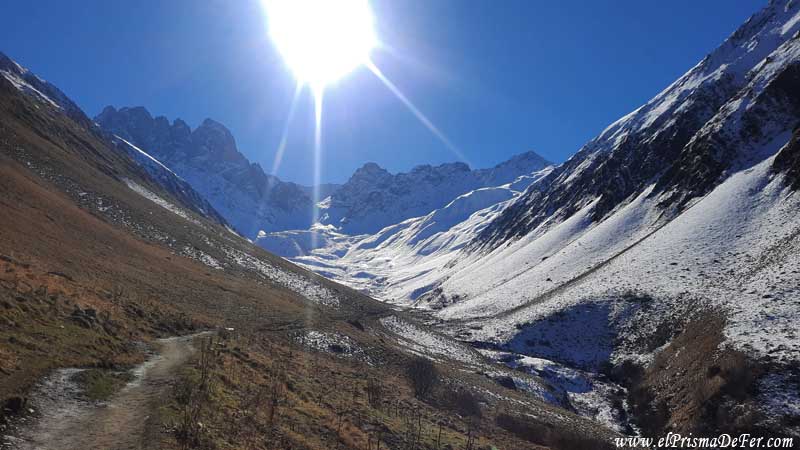
Along one section of the trail, a fork appears next to the river. While it's possible to continue without crossing it, it's best to do so at this point, as there are stones placed there to make it easier to cross without getting your feet wet. This way, the path leads directly to the lake, one of the most recognizable spots in the area.
Chaukhi Lake
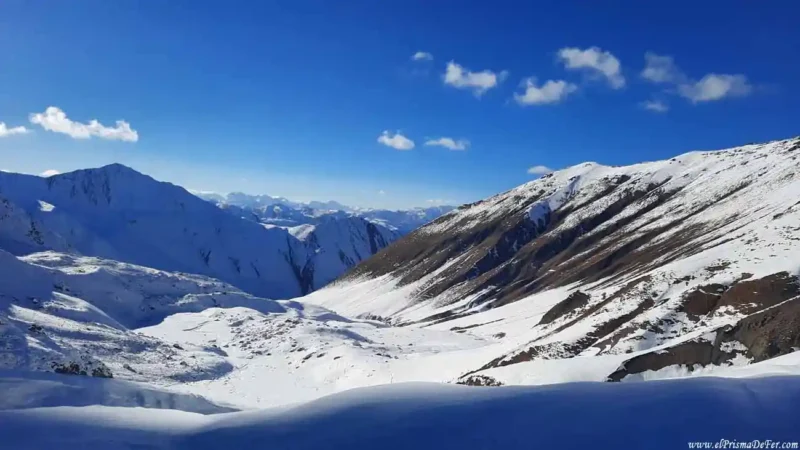
Shortly after, you reach Chaukhi Lake, a small lake that when we went, we found half frozen and surrounded by snow. Although many hikers tend to take it as the end of their trek because it's accessible and panoramic, for me it's not the place with the best views of the valley.
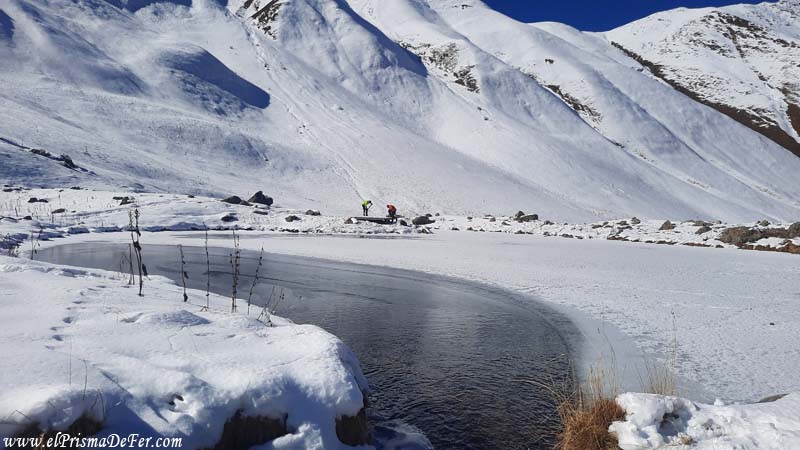
A base camp is often set up in the surrounding area, used by climbers in the Chaukhi mountains, so if you're someone who enjoys this activity, this will be the place for you.
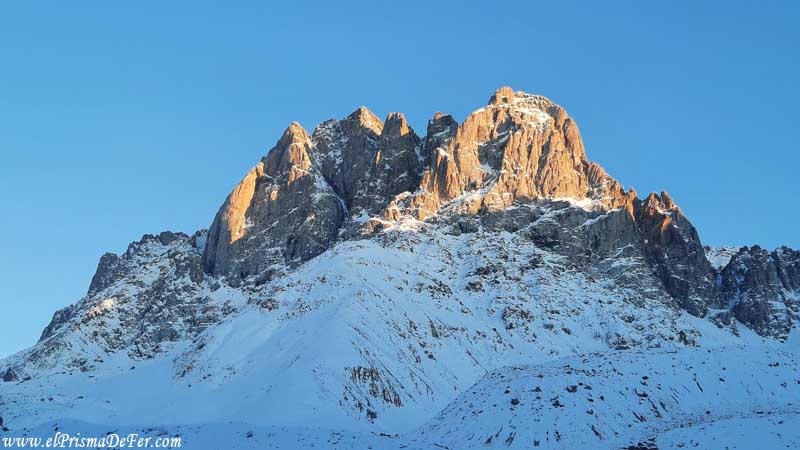
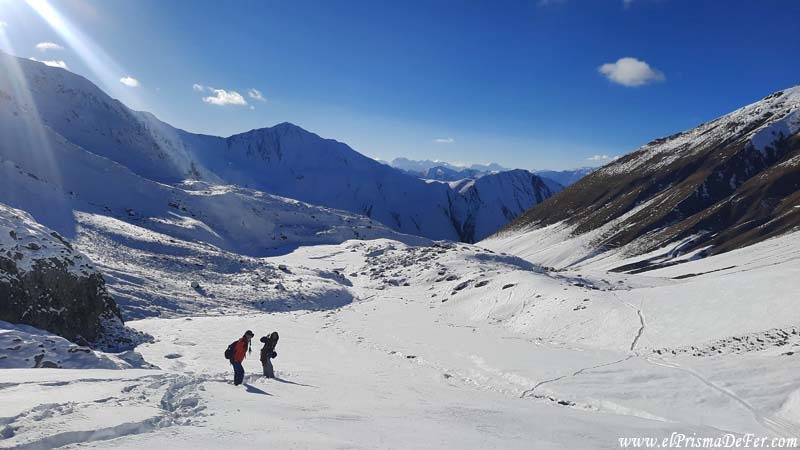
We, however, decided to continue on toward the Chaukhi Pass. The trail became increasingly challenging, with accumulated snow making the climb difficult but also adding an epic feel to the experience.
Chaukhi Pass
The final stretch leads to Chaukhi Pass (see location), the highest point of the route. However, due to the large amount of snow and not having the appropriate clothing for walking in those conditions, it became very difficult to proceed.
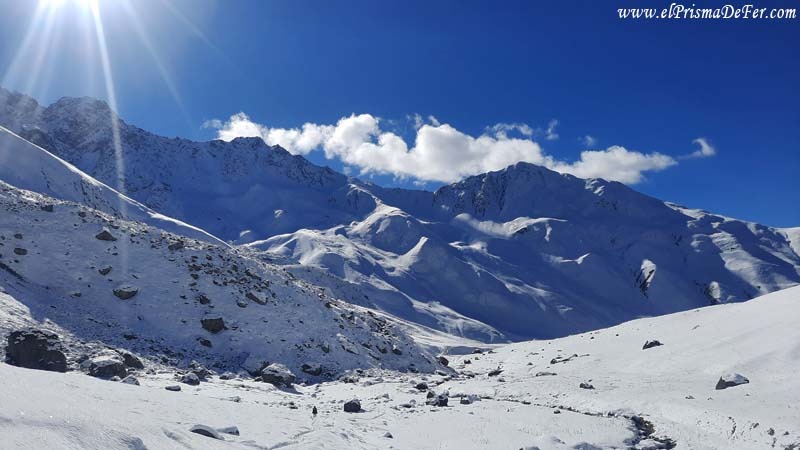
We had to abandon the climb just a few meters before the summit, but from there we were able to enjoy what were undoubtedly the best views of the day over the valley and the mountains of the massif, with the snow-capped peaks framing the horizon.
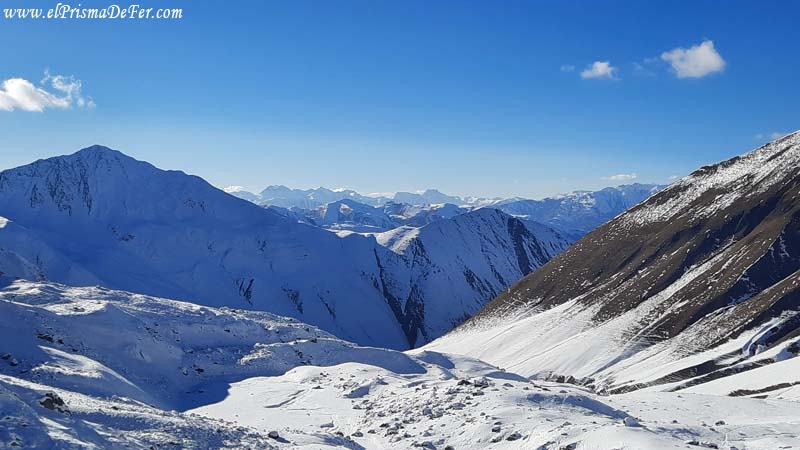
Even so, I confess that the walk was exhausting, not only because of the slippery, snow-covered terrain, but also because of the intense cold we felt.
Al tener los pies y parte de la ropa mojados al caminar sobre la nieve, y sin contar con indumentaria adecuada para esas condiciones, cada paso se volvía más pesado y exigente, haciendo que el trekking fuera tanto un desafío físico como mental.
Return to Juta
From the Chaukhi Pass, there is no other option but to return along the same path to the village of Juta. The descent is usually faster than the ascent, but it still requires caution due to slippery sections and accumulated snow. Under normal conditions, the return trip can take between 3 and 4 hours, depending on the pace and the stops made to rest or enjoy the scenery.
How to get back to Kazbegi from the Juta Valley
From the village of Juta, there is no direct public transportation, so the most common option is to arrange a taxi ride back to Stepantsminda. Many travelers arrange to have the same driver pick them up at a predetermined time, which is convenient and avoids getting stuck.
Another alternative is hitchhiking, which is quite common in the area and usually works quickly, as many locals and tourists travel that route.
During high season, shared transfers are also organized, especially from Camp Zeta, where several travelers group together to share the costs.
Best time to visit the Juta Valley
The best time to explore the Juta Valley is between June and early September, when the trails are clear of snow, the rivers and streams have a steady flow, and the days are long enough to make the most of your hike.
I did the trek at the end of October, and there was already quite a bit of snow, especially from Chaukhi Lake onwards. This made the entire stretch to the mountain pass more difficult and time-consuming, but at the same time, it gave the landscape an epic feel, with the peaks covered in white.
However, for those who prefer easier conditions and clearly visible trails, the summer season remains the best option.
Between Juta Valley and Truso Valley, which one to choose?
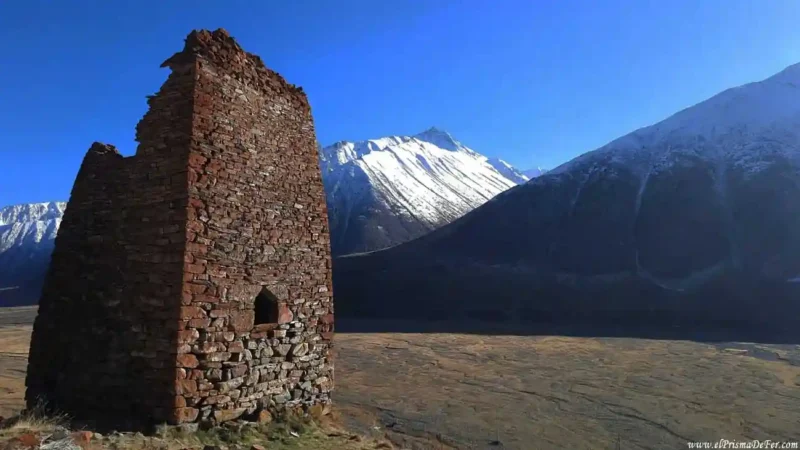
If I had to choose between the Juta Valley and the Truso Valley, I would definitely choose Truso. The variety of features found along the route, from villages and ruins to rivers, lakes, and mineral formations, makes each section of the trail interesting and different.
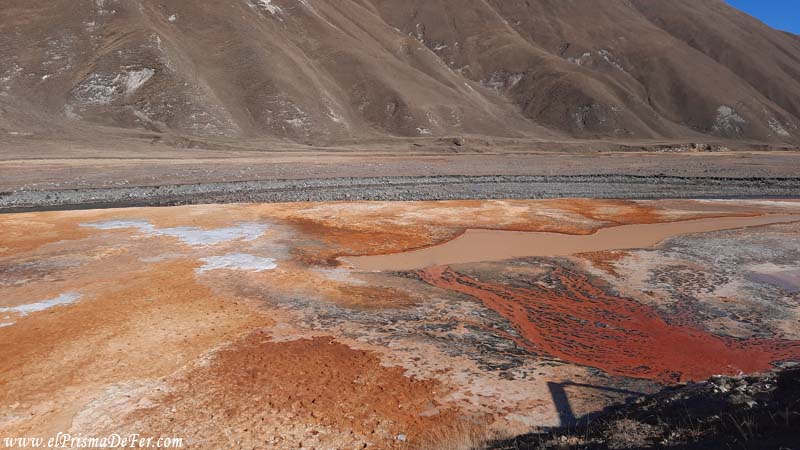
Furthermore, the vastness of the landscape gives it an extra advantage that Juta, with its more enclosed path between mountains, does not offer.
My visit to the Truso Valley felt more complete and varied. While Juta also has its charm, the hike there was less impressive and more tiring due to the snow and cold, whereas Truso combines expansive landscapes, historical sites, and strategic stops that enrich the day.
For all these reasons, for those looking for a more visual and dynamic trek in Kazbegi, Truso would be my recommendation.
Recommendations for visiting the Juta Valley
If you're planning to do this trek in a day, it's best to arrive early. Due to the altitude and terrain conditions, it's important to bring clothing suitable for the cold and snow if you're going in the fall or winter, including waterproof footwear and trekking poles for added stability. Keep in mind that crossing the river requires caution, although there are stones to make the crossing easier.
Although the route is feasible in one day, it's a good idea to leave early to take advantage of the light and enjoy the journey without rushing.
Regarding food and water, there aren't many options along the way beyond the village of Juta and the Five Seasons Hotel, so bringing snacks and water is recommended.
My reflections on trekking to the Juta Valley
Of all the treks I did in Georgia, I have to say that the Juta Valley was the one I was least excited about. The views, while beautiful, didn't seem as epic as those found in other regions of the country, like Svaneti or Kazbegi.
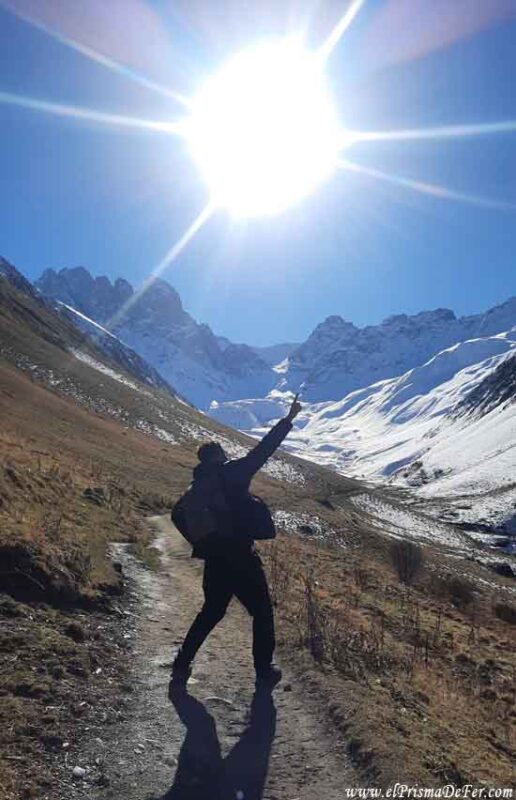
Furthermore, the conditions I experienced, the large amount of snow and the intense cold, made the hike quite exhausting, taking away some of the enjoyment from the journey.
Perhaps in summer, with the greener landscape and the stronger rivers, the surroundings become even more enjoyable, and the experience of walking through Juta Valley gains in charm and comfort.
Save this post on Pinterest

Frequently asked questions about trekking in the Juta Valley
Where is Juta located?
The trek begins in Juta, a small mountain village in the Kazbegi region of northern Georgia. The most common destination is the Chaukhi Pass, at the foot of the Chaukhi Massif, known for its sharp peaks.
How to get to Juta?
The most common way to get there from Stepantsminda is by taxi or 4x4. The road is not always in good condition, so it's not ideal for low-clearance vehicles.
Is it a difficult trek?
It's of moderate difficulty. There are no technical sections, but the distance and elevation gain mean it requires a minimum level of fitness, especially if you make it to the pass.
How long does the trek last?
The hike to Chaukhi Pass and back usually takes between 6 and 8 hours, depending on the pace and how much time you stop to rest or enjoy the scenery.
Can it be done in one day?
Yes, that's the most common way. Leaving early from Juta, you can reach the pass and return the same day without any problem.
Do we need a guide?
It's not necessary under normal conditions. The trail is quite clear, especially during peak season. Even so, it's always advisable to carry offline maps or a GPS.
What is the best time to do it?
From June to September. Outside of those months there may be snow, which complicates access and crossing the pass.
Is camping allowed?
Yes, many people choose to spend the night near the lake or in areas of the valley. This allows them to split the trek into two days and enjoy it at a more relaxed pace.
¿Hay alojamiento en Juta?
Yes, there's the Five Seasons Hotel, and there are also some guesthouses and basic accommodations where you can spend the night before or after trekking.
What to bring?
Water, food, warm clothing (the weather changes quickly in the mountains), good footwear, and sun protection. There are no services along the route.
Is it worth going to Juta?
It depends. If you have plenty of time, then yes, it's another area to explore near Kazbegi and do some trekking in the Caucasus. But if you're short on time, I'd prioritize other valleys, like the Truso Valley, which I liked more for its variety and open landscapes.
Support The Prism of Fer!
Your support helps me continue creating free content on the blog. Thank you so much!