One of the treks I enjoyed most on my entire Silk Road trip was the one that takes you from Mestia to Ushguli. You'll pass through villages nestled among snow-capped mountains or green meadows in summer, and the iconic medieval defensive towers that make the Svaneti region a unique place in the world.
Beyond the natural beauty, which is already considerable, the tour allows you to delve into the rural life of Georgia, where tradition is still palpable in every village.
For several days, the road winds through valleys and past glaciers, offering spectacular panoramic views at every turn. Finally, when you reach Ushguli, considered one of the highest inhabited villages in Europe, it's like stepping into a village frozen in time, with stone houses, ancient towers, and a setting that captivates everyone.
In this post I'm going to tell you what the trek from Mestia to Ushguli involves, what you need to know before starting, how many days it takes, the difficulty, what to expect, and much more information that will help you plan.

This post may contains affiliate links. If you purchase through these links, I may earn a commission at no extra cost to you. Thank you for your support!
Table of Contents
🗺️ Technical details of the Mestia to Ushguli Trek
| Start |
| Mestia |
| Final |
| Ushguli |
| Duration |
| 2/4 days |
| Distance |
| 56 km |
| Estimated time in hours |
| 19 hs |
| Max. Altitude |
| 2700m |
| Difficulty |
| Moderate |
| Signaling |
| Marked and well-signposted trail |
| Water/food |
| Water and food can be obtained in any of the villages and rivers in the area. |
Do you want to follow this route precisely?
Download the KML/KMZ files for the Mestia-Ushguli and Mestia-Koruldi Lakes treks in the Svaneti region of Georgia and open them in apps like Maps.me or Gaia GPS to view the complete route offline. Ideal if you want to navigate the valley with confidence, even without a signal.
Get the files from Gumroad for a small contribution.

Mestia: the gateway to Svaneti
Mestia is the ideal starting point for organizing trekking to Ushguli and, in general, for exploring the mountainous region of Svaneti.
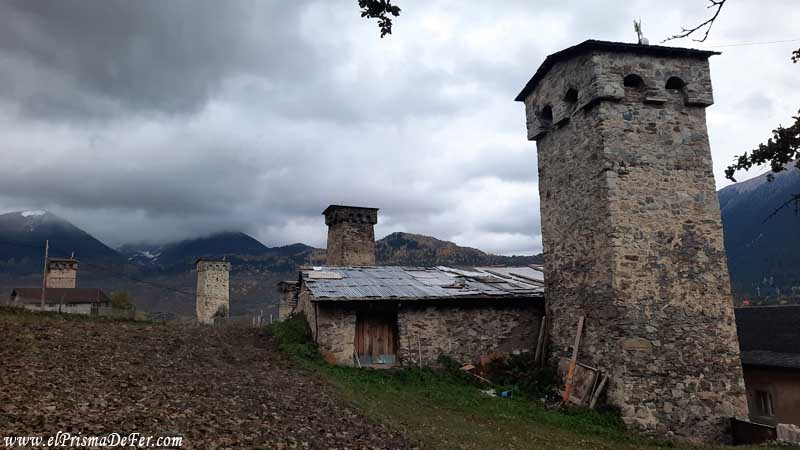
It's a small town surrounded by imposing mountains, where traditional stone defensive towers blend seamlessly with accommodations, restaurants, and agencies that make life easier for travelers. Despite its growth in tourism in recent years, it still retains that authentic charm that makes it a special destination.
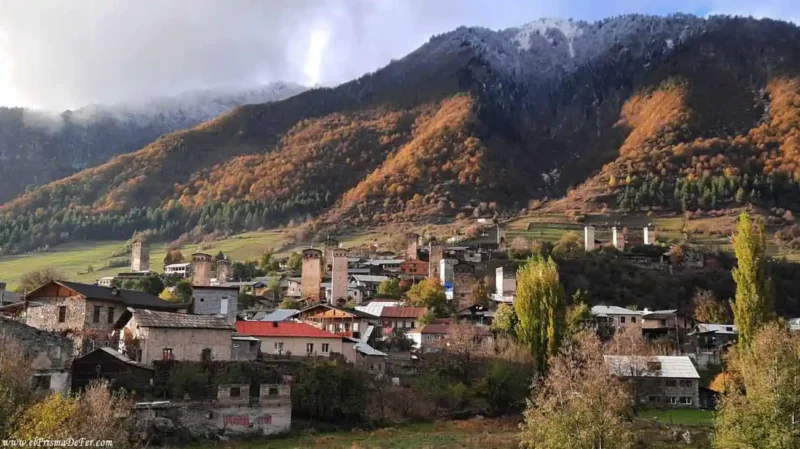
Besides being a logistics hub, Mestia offers plenty of other things to do. You can visit the Museum of History and Ethnography of Svaneti, walk through its quiet streets admiring the Svan towers, or simply enjoy the local cuisine in one of its family restaurants.
It is also an excellent base for short hikes, such as the trek to the Chalaadi Glacier or the climb to the Koruldi Lakes, which offer spectacular views of the Caucasus.
What is the best time to trek from Mestia to Ushguli?
The best time to trek from Mestia to Ushguli is between June and mid-September, when the trails are snow-free, the days are longer, and the weather conditions are more stable. Accommodations in the intermediate villages are also more frequently available during these months, which greatly facilitates the logistics of the trek.
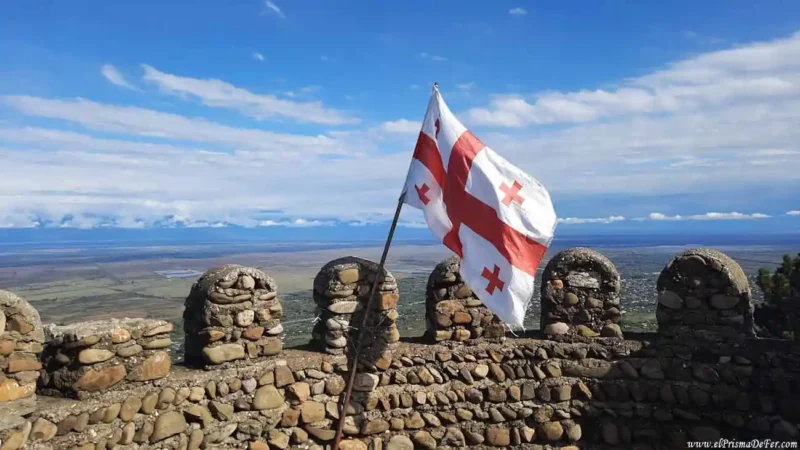
In spring (April-May)the trails slowly thaw, the rivers flow rapidly, and the meadows begin to bloom; ideal for those who enjoy greenery and flowers, although there may be muddy stretches.
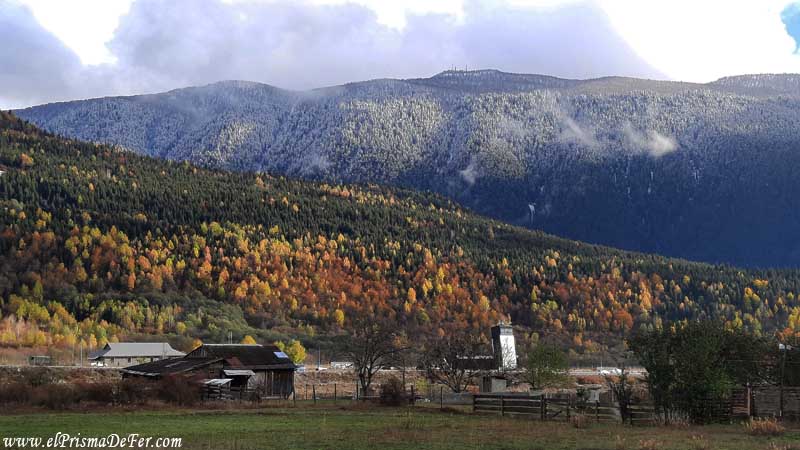
Autumn (September-October) offers warm, reddish colors, cool weather, and, towards mid- and late October, the first snowfalls may appear, transforming the landscapes into epic postcards.
In winter (November-March) the trails are covered in heavy snow and most guesthouses may be closed.
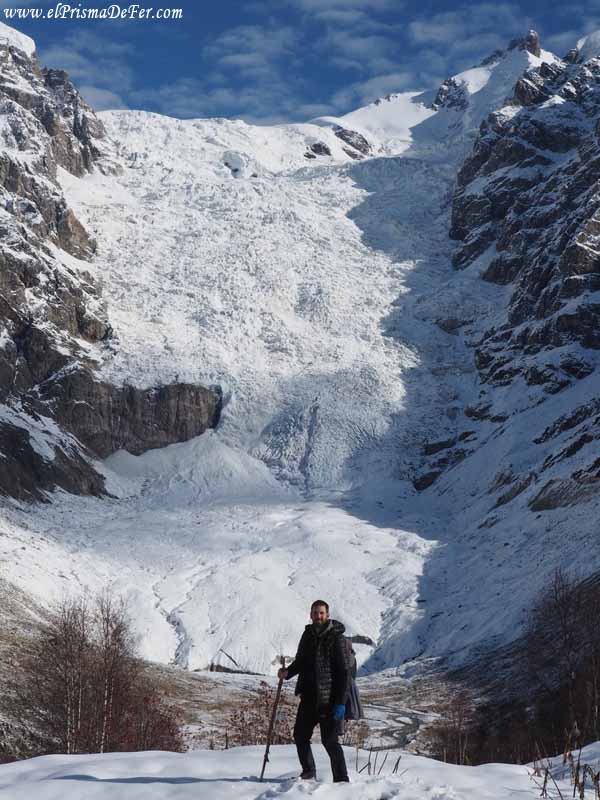
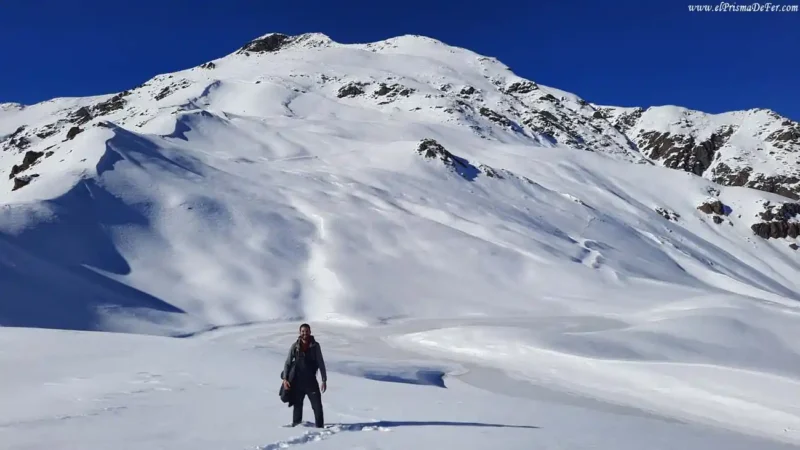
I did the trek at the end of October, and by that time there had already been several snowfalls in the region, especially noticeable at the highest point of the trek, between Adishi and Iprari, where it was necessary to walk on snow.
While it presented an extra challenge in terms of physical exertion, the reward was spectacular. The mountains and villages of Svaneti were covered in a blanket of white, giving them an epic feel, like something out of a fairy tale. It was more demanding, yes, but also much more special.
How long does the trek from Mestia to Ushguli take?
The trek from Mestia to Ushguli usually takes between 2 and 4 days, depending on the pace of each traveler and whether they decide to do some part by car.
The classic route takes 4 days, spending each night in different villages in the valley, allowing you to enjoy the experience at a relaxed pace.
However, those who walk faster or have less time available can complete it in 2 or 3 days, shortening stages or combining transport in certain sections.
Ushguli is also accessible by car from Mestia. Many travelers choose to visit the village directly on a day tour, which goes there and back in the same day.
This option is practical if you only want to see Ushguli and its famous medieval towers, but trekking has a unique value: walking through the landscapes of the Caucasus, passing through remote villages, and experiencing the environment with a much deeper connection.
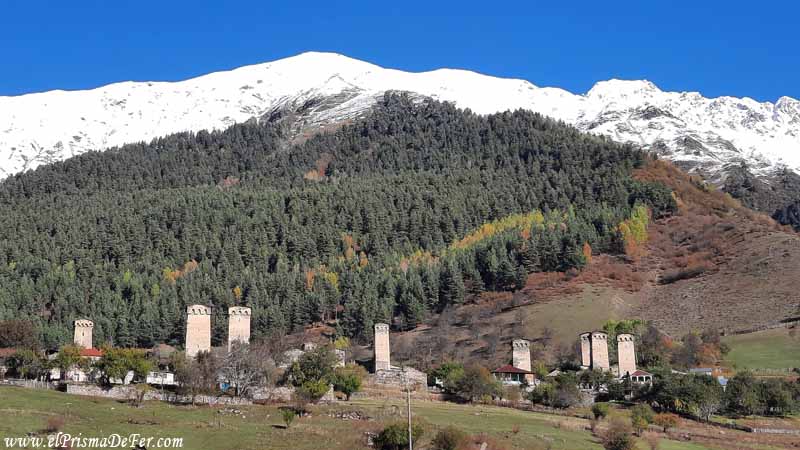
In my case, I ended up doing the trek in only 2 days, because a pretty strong weather front was approaching and I had to pick up the pace.
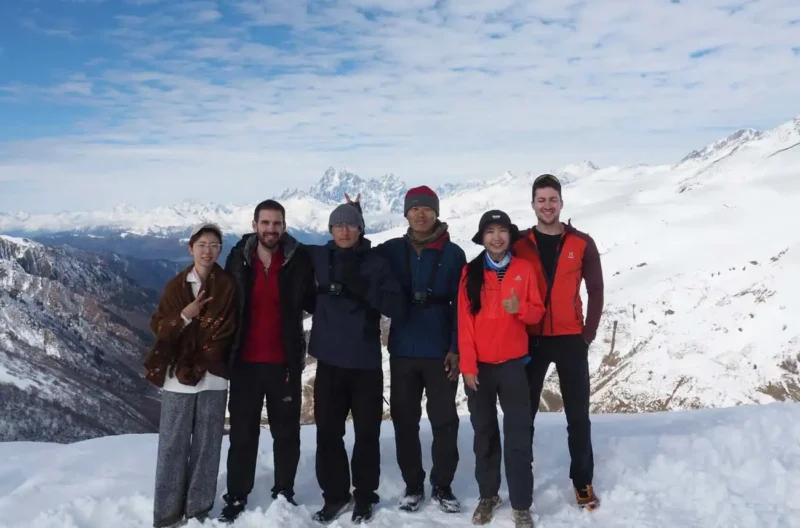
On the first day I made my way to Adishi, and on the second day I walked to Iprari, where I finally took a car accompanied by a group of friends from China that I made along the way, and who took us straight to Ushguli.
Where to sleep during the trek
One of the great advantages of trekking from Mestia to Ushguli is that you don't need to bring a tent or camping equipment.
Throughout the route, you'll pass through villages where local families offer accommodation in guesthouses or family homes, prepared to welcome travelers. These are usually simple but comfortable, and almost always include the option of breakfast and home-cooked dinner, although prices can be a bit high.
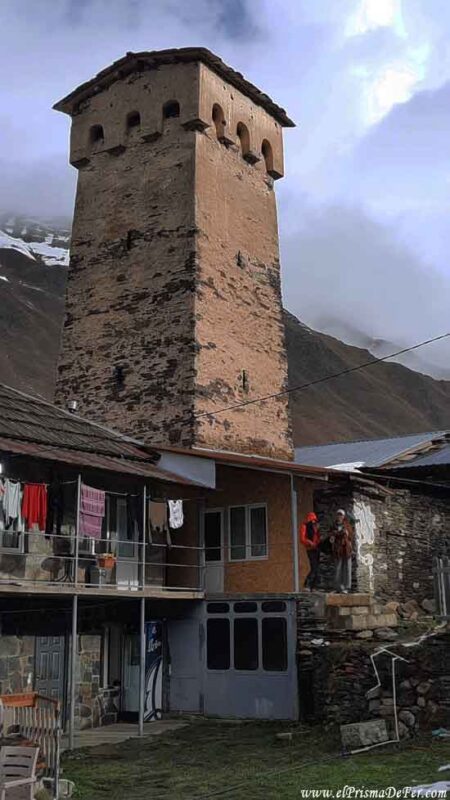
The most common towns to spend the night on the classic 4-day route are:
- Zhabeshi (first night)
- Adishi (second night)
- Iprari (third night)
- Ushguli (fourth night)
Whether you decide to trek in 2, 3, or 4 days, you'll always find options for sleeping under a roof, which makes logistics much simpler. Plus, staying in these houses is also an opportunity to share a meal with local families and try the region's typical food.
Practical tips for trekking
- Transportation: To get to Mestia from Zugdidi (after train connection from Tbilisi), the most common way is to take a marshrutka that waits outside the station. From Ushguli, you can also return to Mestia by marshrutka or shared taxi, so you don't need to worry too much about the return trip.
- Cash: There are no ATMs in the villages and no cards are accepted, so it is essential to carry enough cash (Georgian lari) to pay for accommodation, meals and transportation.
- Climate and clothing: The weather in the Caucasus is very changeable, even in summer. Snow can occur in October (as it did for me), so it's a good idea to bring a good coat, a waterproof jacket, and waterproof trekking shoes.
- Signal and Maps: Cell phone signal is limited on some sections of the trek. I recommend downloading offline maps from Maps.me or AllTrails in advance, as the trail may not always be well marked.
- Food: You can buy supplies in Mestia or rely on the meals at the guesthouses, which are usually plentiful. However, bringing snacks and nuts will help you maintain your energy during the hike.
- Difficulty: Although the trek is not technically complicated, it does require good physical condition, as there are long stages with significant elevation changes, especially in the mountain passes area.
Map with the highlights of the Ushguli trek
Details of the trek from Mestia to Ushguli
I'm going to describe the trek as a 4-day hike, which is the most common way most travelers do it. However, as I mentioned before, the route can be adapted depending on the time and conditions.
Some complete it in just 2 or 3 days, moving faster or using transport in certain sections, while others prefer to take it easy over 4 full days to enjoy every village and every landscape.
Day 1: Mestia – Zhabeshi
| Distance |
| 17 km |
| Estimated time |
| 4.45 hs |
| Elevation Profile |
| From 1.400 mts to 1.900 mts |
The trek begins in Mestia, the heart of the Svaneti region and a must-see for adventurers who want to explore the landscapes of the Caucasus. From the start, the hike begins with a gentle climb that accompanies the exit from Mestia, allowing you to acclimatize and get into the swing of things.
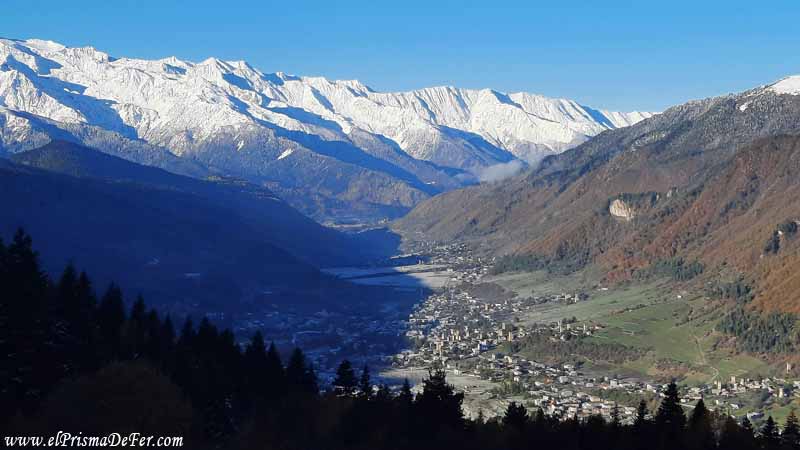
Afterwards, the slope becomes more constant and steeper, crossing a wooded area first, until reaching a hill where a sign indicates that we are on the right path.
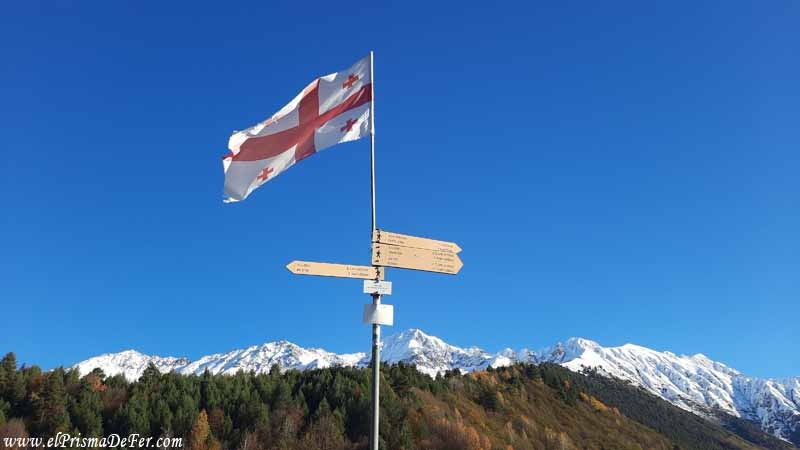
From that point, where we can already appreciate some of the beauty of the Caucasus, the route descends into the valley, marking the beginning of the succession of villages we pass through along the trek.
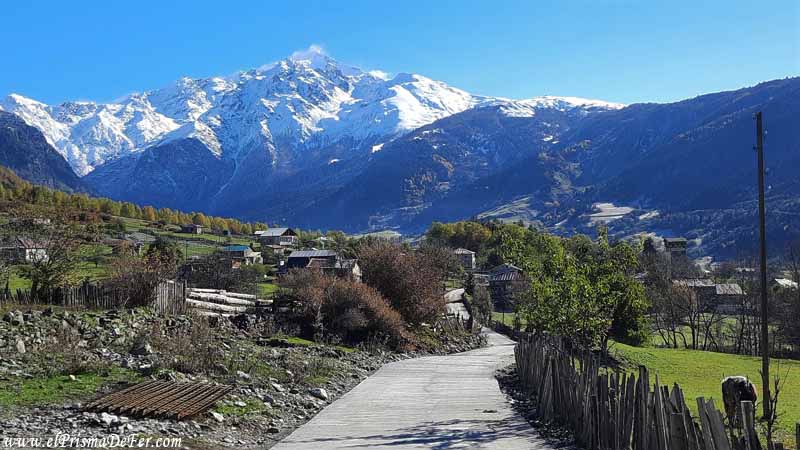
The trail passes through small forests, pastures, a river, and scattered villages, where traditional medieval Svan towers still stand, seemingly keeping watch from above.
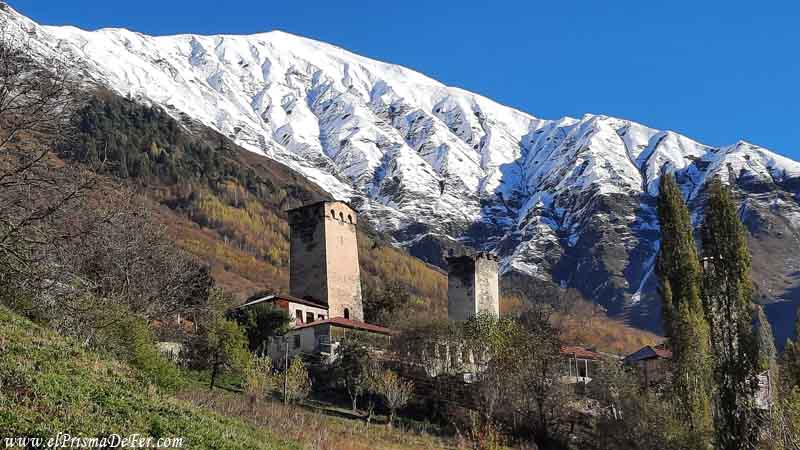
This section is generally fairly flat, but you'll begin to get your first panoramic views of the mountain range. The hike typically takes between 5 and 6 hours, depending on your pace and the stops.
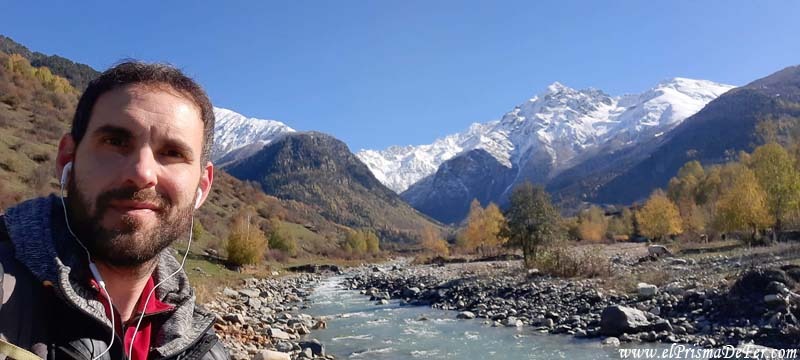
The day usually ends in Zhabeshi (or a nearby village), where there are family-run guesthouses offering beds and home-cooked meals.
Although I didn't sleep in this town, one option that was recommended to me in case I wanted to spend the night was the Guest House Victor, which has excellent reviews.
Day 2: Zhabeshi – Adishi
| Distance |
| 10 km |
| Estimated time |
| 3.20 hs |
| Elevation Profile |
| From 1.600 mts to 2.500 mts |
The second day is one of the most beautiful, as the landscape begins to become more alpine, revealing spectacular views of snow-capped mountains. The trail climbs steeply, offering panoramic views of the valley below.
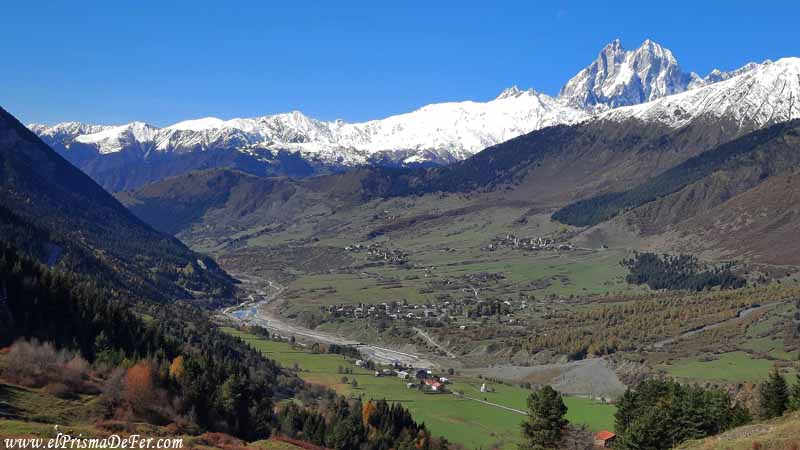
The trail winds through forests and small streams from melting snow, which at the time I hiked were quite treacherous due to the frozen, slippery ground.
After a short walk, you reach a well-known ski resort in the area, which may be open or closed depending on the season.
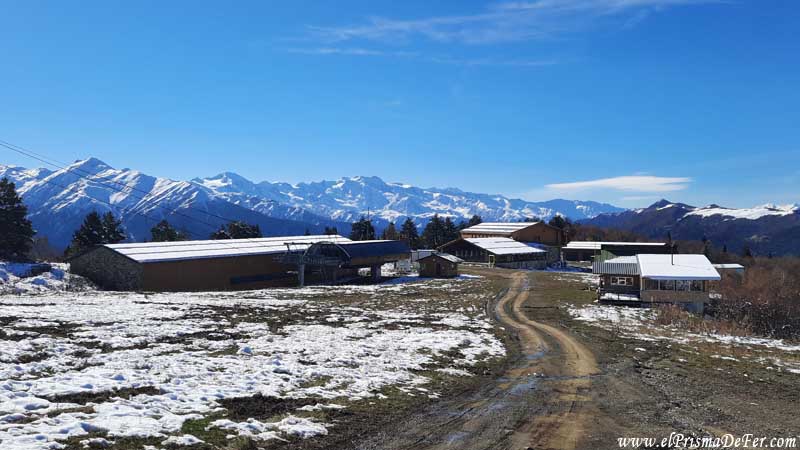
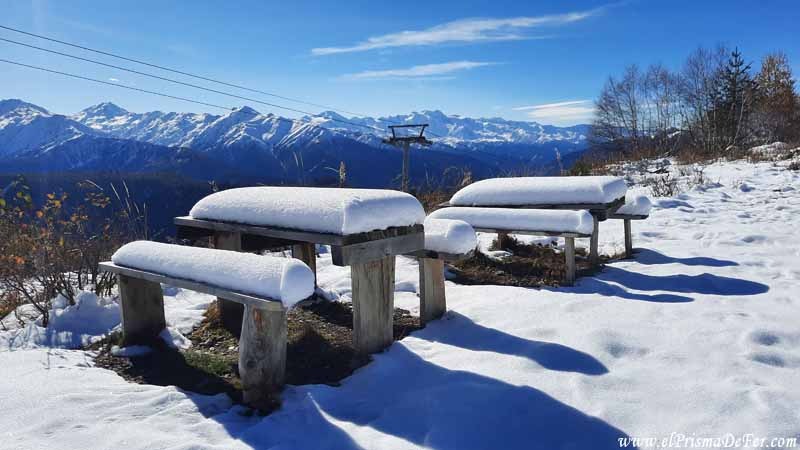
At the end of October, when I was there, snow had already covered much of the terrain, giving the trail an epic and magical feel that made every step worthwhile.
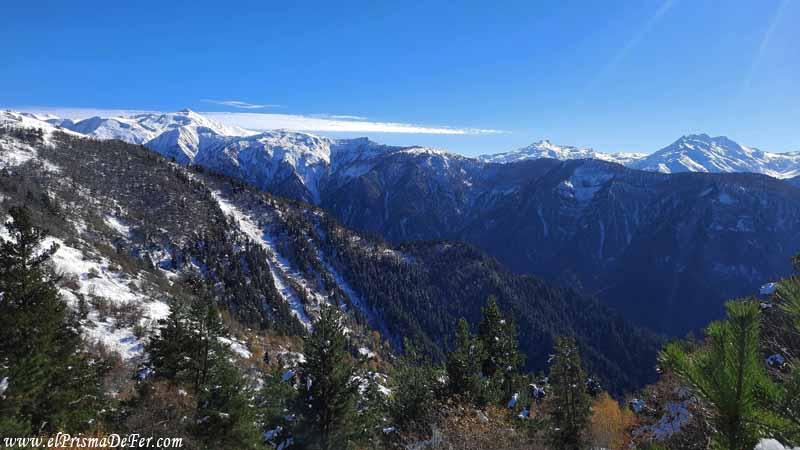
Adishi is our destination for this day, a small, remote village that seems frozen in time. Just a few stone houses and medieval towers make up the hamlet, surrounded by towering mountains.
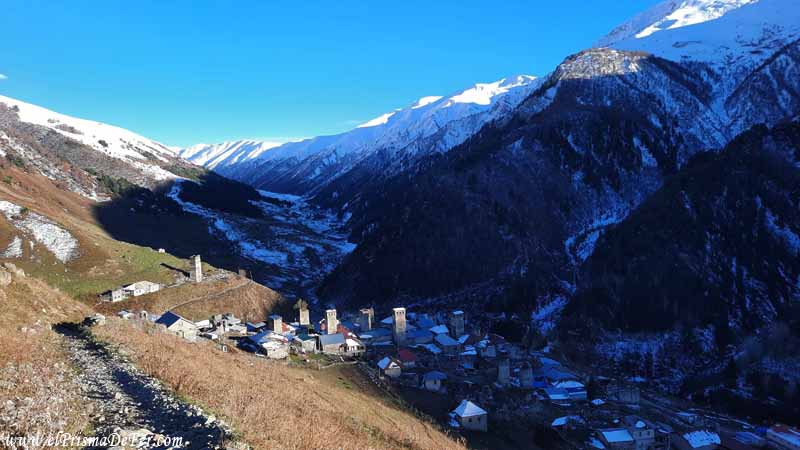
I stayed in a shared room at Gunter Guest House, where the owner, Naila, was very welcoming. All the houses are similar, old, and some look like they're about to fall apart, but the food and the service are what really matter.
This stage is not too long, so some travelers, like I did, choose to get here in a single day starting from Mestia.
However, it is recommended to spend the night in Adishi, as the following day is the most demanding and you will not pass through any towns until well into the day.
Day 3: Adishi – Iprari
| Distance |
| 17 km |
| Estimated time |
| 7 hours |
| Elevation Profile |
| From 1.950 mts to 2.700 mts |
This is undoubtedly the most challenging day, and also one of the most spectacular, of the trek. From Adishi, the trail begins with a river crossing that, depending on the season, may require the assistance of a local horse or even soaking your feet in icy water.
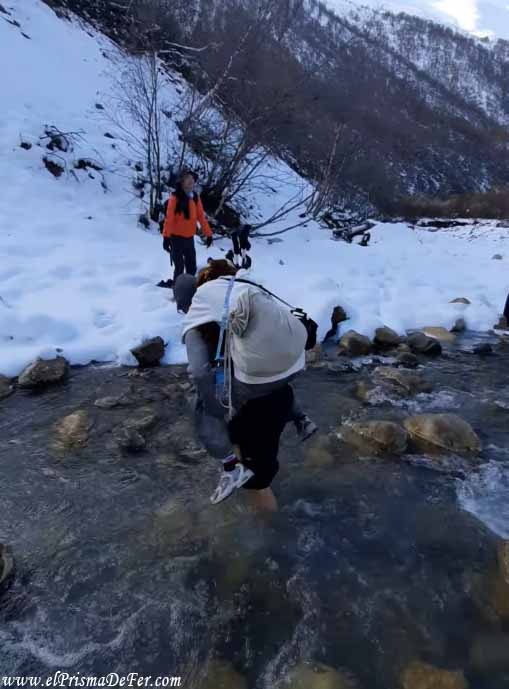
Once past this stretch, the toughest climb of the route begins, the Chkhunderi Pass, which reaches over 2,600 meters above sea level. The hike on this section is demanding, especially if there's accumulated snow, as I experienced in late October.
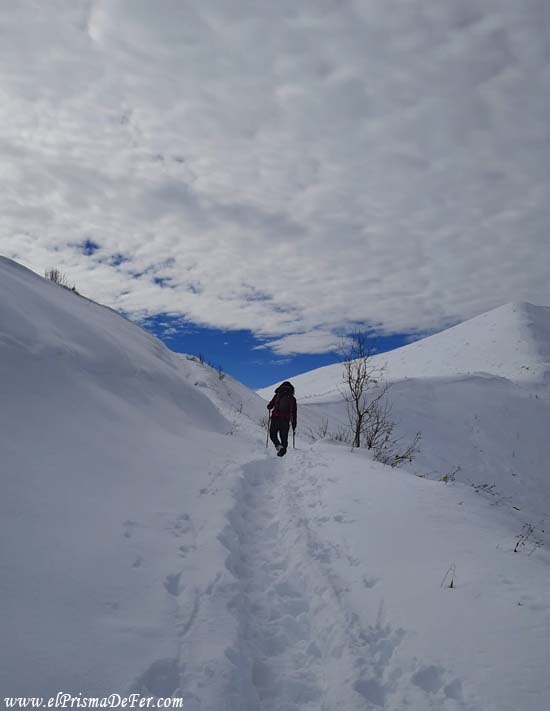
But every step is worth it; from the top, an incredible panorama of the Adishi Glacier and the surrounding mountains opens up, a picture that is etched in my memory forever.
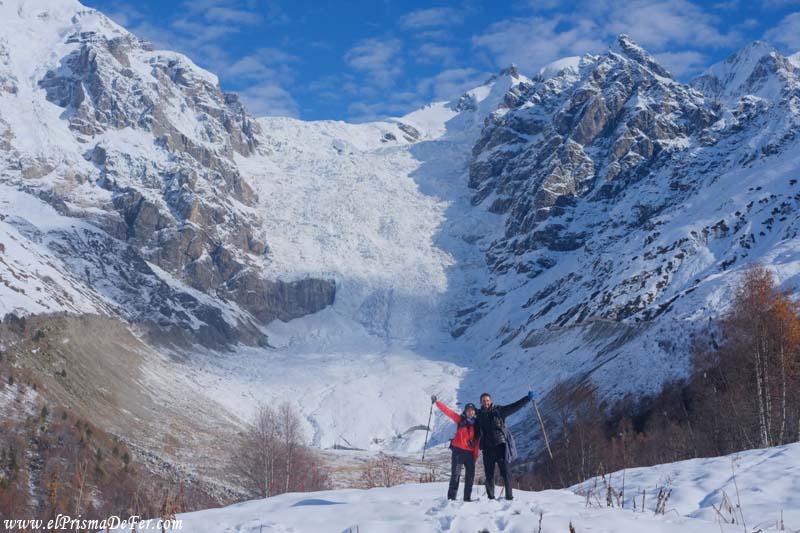
The mountain pass is the ideal place to rest a while, have a snack, and enjoy the best views we'll have throughout the trek to Ushguli.
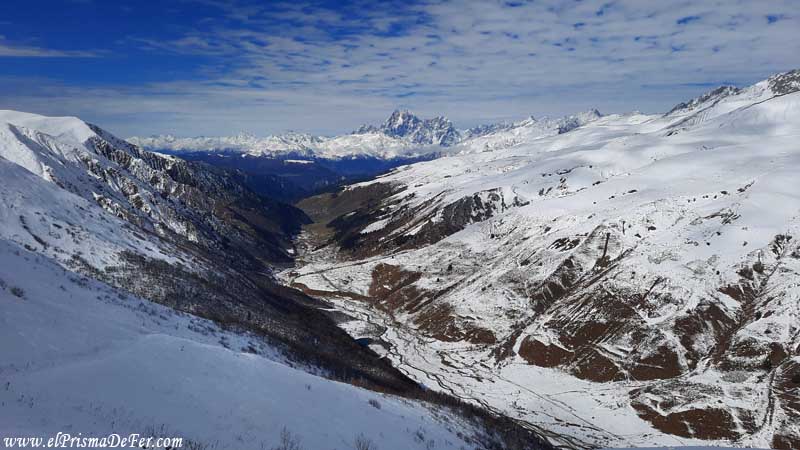
The subsequent descent is equally intense and attractive with the views we have on the other side, as we descend towards the valley with a wall of mountains in front of us.
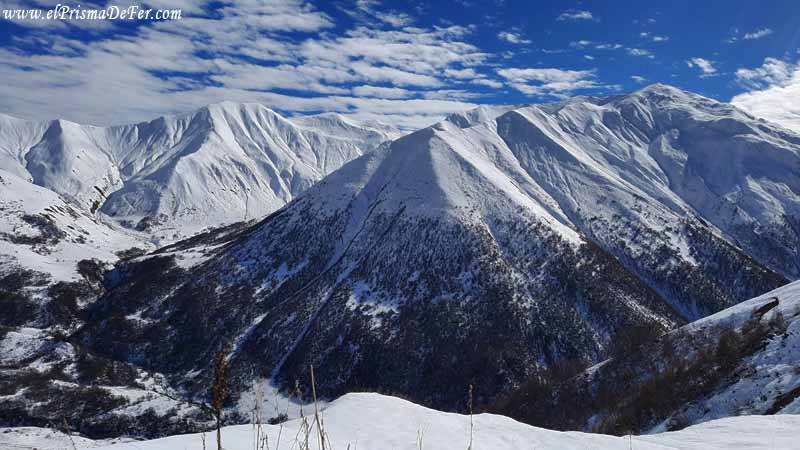
Once we finish the descent, the trail passes through a mostly flat valley. The goal is to reach Iprari, a village slightly larger than Adishi that offers several guesthouse accommodation options.
Day 4: Iprari – Ushguli
| Distance |
| 12 km |
| Estimated time |
| 4 hours |
| Elevation Profile |
| From 1.800 mts to 2.200 mts |
The final stretch of the trek is quieter compared to the previous day, and not as scenic. The path passes through small villages that retain the essence of Svaneti, with stone houses and the ubiquitous medieval towers that stand guard over the landscape.
But for me it's the least spectacular day, since the trail runs not far from the road where cars pass, there are no epic views and there's no strong disconnection from civilization.
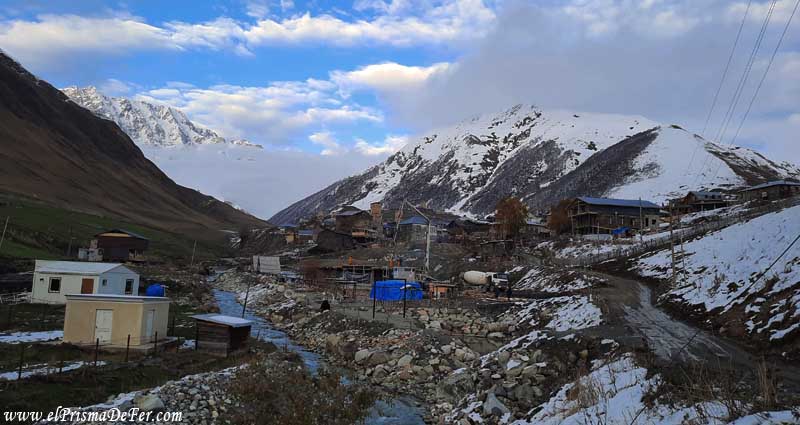
But arriving in Ushguli is one of the highlights of the trip. Considered one of the highest inhabited villages in Europe (around 2,100 meters), Ushguli is surrounded by imposing mountains and glaciers, with Shkhara, Georgia's highest mountain, as a backdrop.
Wandering through its dirt streets, with towers that seem straight out of a medieval fairy tale, is the perfect ending to the journey.
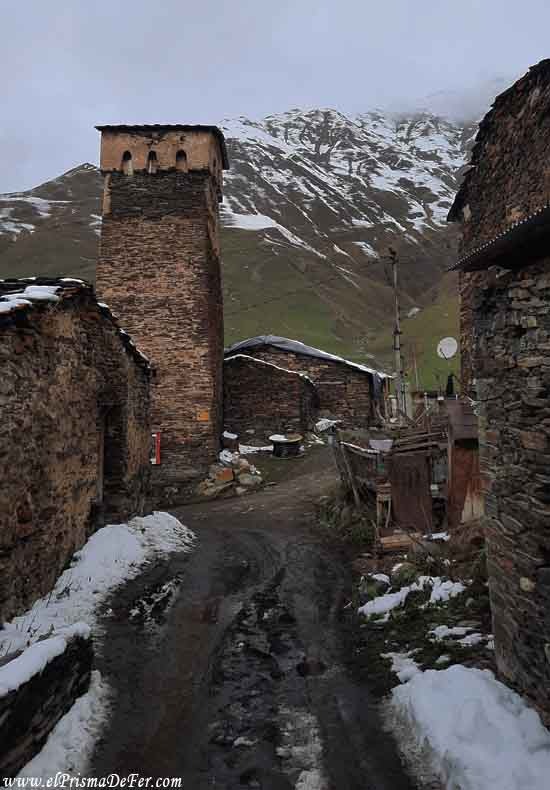
I recommend staying at least one night in Ushguli to enjoy its unique atmosphere and explore its surroundings.
I stayed with my travel companions at the guesthouse Old Tower, a unique place where they even used the medieval tower as a storage area, which gave the accommodation a special charm.
What to do in Ushguli
Beyond being the end of the famous trek from Mestia, Ushguli is a destination in itself. Declared a UNESCO World Heritage Site, this cluster of villages in the heart of the Caucasus is striking with its medieval appearance, stone towers, and the feeling of being in a remote corner of the world.
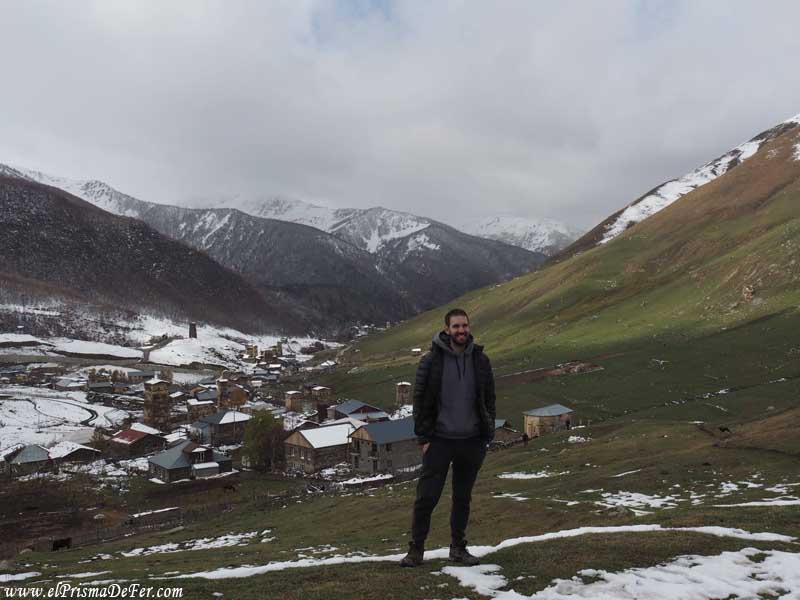
One of the most recommended activities to do in Ushguli is to walk to the Shkhara Glacier, which is located a few hours from Ushguli.
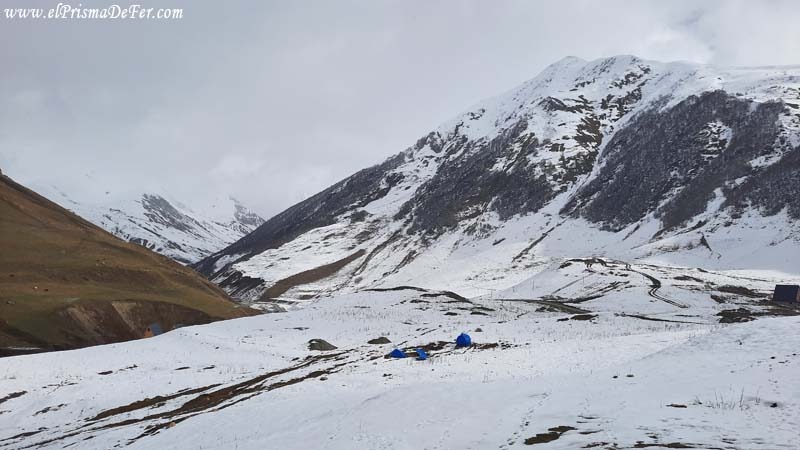
The trail starts in the village and follows the valley towards the glacier, offering views of Georgia's highest mountain (5,193 m). It's an easy, scenic hike, ideal for those who still have energy after trekking or for those arriving directly by car from Mestia.
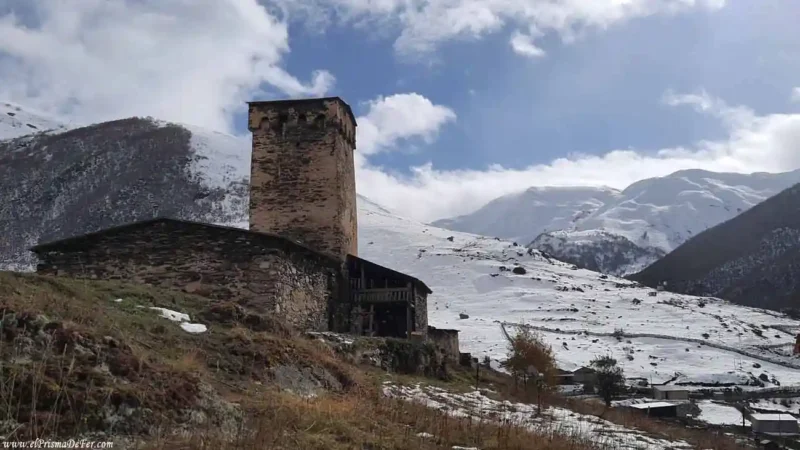
In Ushguli itself you can also visit its medieval churches, such as Lamaria, which dates back to the 9th century and stands at a high point with spectacular views. This small temple is one of the symbols of the area and offers a glimpse into the spirituality and history of Svaneti.
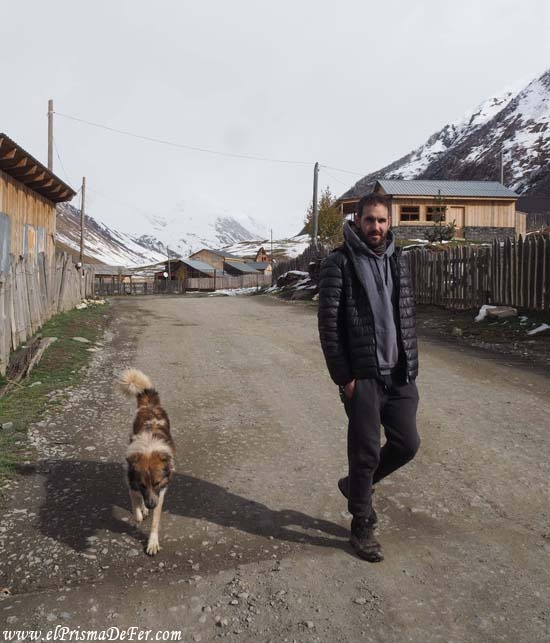
Ushguli is also perfect for immersing yourself in local life, chatting with the locals, trying traditional dishes in guesthouses, or simply observing how shepherds and farmers maintain ancient customs.
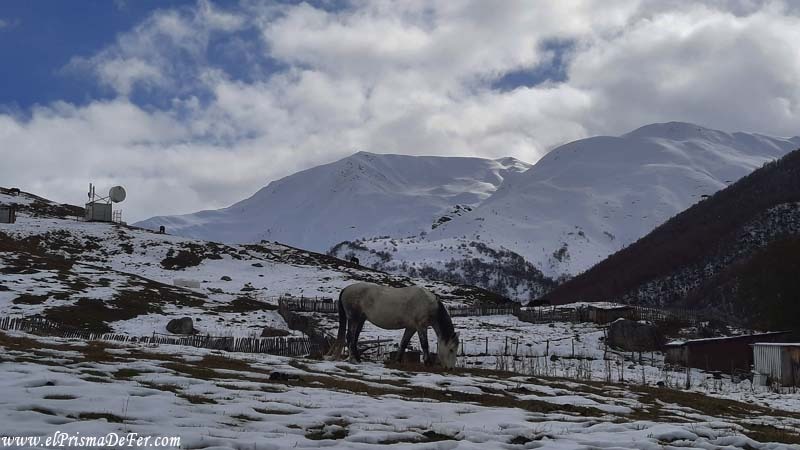
In summer, the valley is filled with green pastures and free-roaming horses; in winter, the snow transforms the landscape into a postcard from another time.
Finally, many travelers take the opportunity to explore the surrounding area on horseback or on short excursions to nearby villages. And if photography is your thing, every corner of Ushguli is a perfect backdrop: stone towers, children playing in the streets, snow-capped mountains, and a unique atmosphere that combines isolation and tradition.
How to get back to Mestia from Ushguli
The most common way to return to Mestia from Ushguli is by taking a shared vehicle or local taxi, which usually travels the route several times a day. These cars stop in the villages along the way and allow you to reach Mestia in about 3 to 4 hours, depending on the weather and road conditions. The estimated price of the trip was 80 leri, which is then divided among the total number of passengers (4 to 6 people).
If you prefer to stay in touch with nature, it's also possible to walk back, following the same trekking trail, although this option is more physically demanding and requires good weather and preparation.
In any case, it is advisable to coordinate with the guesthouses in Ushguli, as many offer help in getting transport to Mestia or even have their own vehicles that transport guests.
Conclusion and personal reflection
I loved the trek from Mestia to Ushguli. The views of the snow-capped mountains gave the trip an epic feel, although I'm sure it must also be stunning in summer, with green meadows and glaciers glistening in the sun.
The medieval villages, with their stone towers, add a unique touch that makes you feel like you're walking in a place frozen in time.
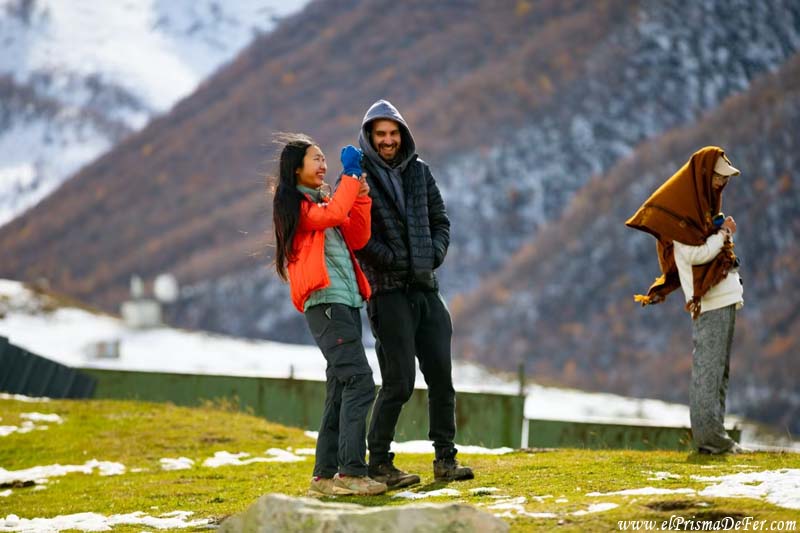
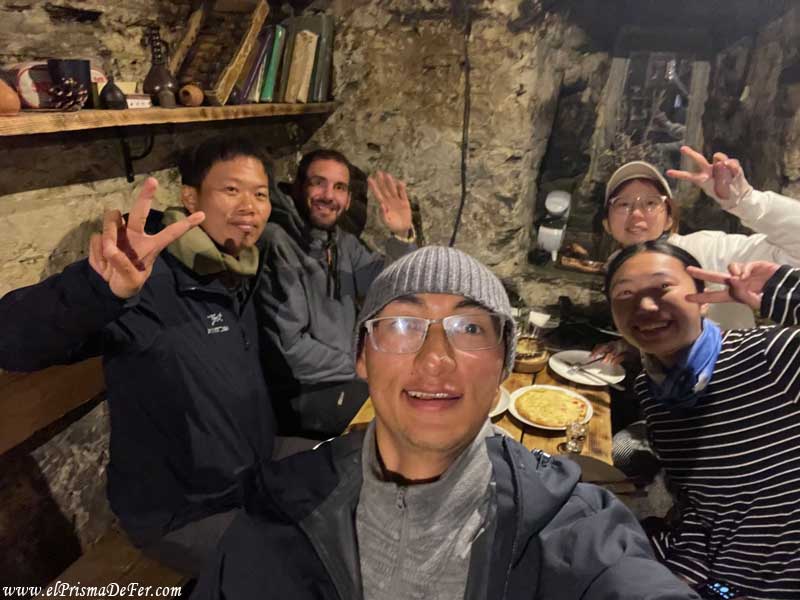
Furthermore, this experience had a very special human element; I met a group of travelers from China who were on a long journey like mine, so we were able to meet and join paths later on.
After the trek, we spent several days together exploring Georgia and Armenia, sharing accommodations, meals, and adventures. Being used to traveling alone, that encounter and the connection with them added value that made this experience even more unforgettable.
In short, hiking through Svaneti, discovering Ushguli, and experiencing its people is much more than just trekking, it's a perfect combination of landscape, history, and human connection that leaves memories to last a lifetime.
Save this post on Pinterest

Frequently asked questions about the Mestia to Ushguli trek
Where is this trek located?
It is one of the most classic treks in Georgia, in the Svaneti region, connecting Mestia with Ushguli, one of the highest inhabited settlements in Europe.
How many days does it take to do it?
The most common way to do it is in 4 days, although some people complete it in 2, 3 or stretch it to 5 depending on the pace and the variations chosen.
Is it a difficult trek?
It's of moderate difficulty. There are no technical sections, but it does involve long days of walking with constant ascents and descents. It's accessible to anyone in good physical condition.
Do we need a guide?
It's not necessary. The path is quite well marked and very busy during peak season. Even so, it's advisable to carry offline maps or a GPS.
Where do you sleep during the trek?
Each stage of the journey has villages with guesthouses where you can sleep and eat. This means you don't need to carry camping equipment, although that option is also available.
Do I need to book accommodation in advance?
During peak season (summer), it may be advisable to book in advance, especially in smaller towns. Outside of peak season, there is usually availability.
Is it possible to do it without carrying much weight?
Yes, absolutely. Since there's accommodation and food along the way, you can do it with a light backpack, which makes it much more manageable.
What is the best time to do it?
From June to September. Before or after this time, there may be snow on the passes, making the journey more difficult.
What is the landscape like?
Very varied, with green valleys, forests, traditional villages with defensive towers, and constant views of the Caucasus Mountains. It's a trek where you'll pass through several villages.
Can the route be shortened or adapted?
Yes, there are options to skip stages by vehicle or modify the itinerary according to the time available.
How to get back from Ushguli?
From Ushguli you can take a 4x4 or private transport to Mestia or even continue on to Kutaisi.
Is it worth doing?
Yes, it is probably the most complete trek in Georgia, combining nature, culture and comfort in a single tour.
Support The Prism of Fer!
Your support helps me continue creating free content on the blog. Thank you so much!