Rome is one of the European capitals that most captivates visitors, especially the first time they visit. Within just a few blocks, you can find archaeological remains, Renaissance buildings, Baroque churches, and modern streets coexisting seamlessly.
I arrived with high expectations, not so much for the Colosseum or the city itself, but for what it represented in history. I was quite aware of what the Roman Empire was, and I was interested to see how that translated into a living city today.
In this post, I'm going to tell you what to see in the city and how to plan your itinerary without wasting time. You'll also find out about getting around, where to stay, and my impressions of this great capital, which left me wanting much more.
This post may contains affiliate links. If you purchase through these links, I may earn a commission at no extra cost to you. Thank you for your support!
Table of Contents
A Brief History of Rome
Between the 8th century BC and the 5th century AD, Rome transitioned from a monarchy to a republic and then to an empire, expanding across much of Europe, North Africa, and the Middle East. Famous structures from this period include the Colosseum, the Roman Forum, and the Appian Way, which were central to the city.
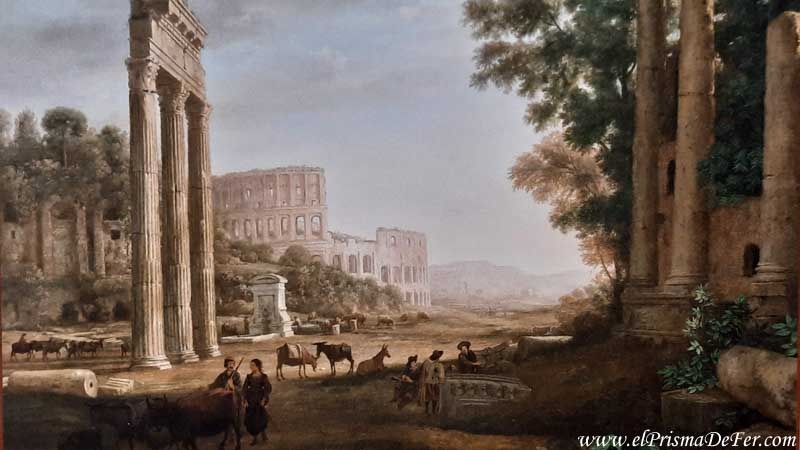
With the fall of the Roman Empire in the 5th century, Rome lost political influence, but it did not disappear. During the Middle Ages and, above all, the Renaissance, it became the center of religious power, with the Catholic Church at its core. Many of the churches, squares, and buildings that define its image today were constructed during this period, including sites such as the Pantheon of Agrippa and the grand basilicas that shaped the urban growth around Vatican City.
What's interesting is that none of these stages completely replaced the previous one; instead, the vestiges of each era accumulated, leaving the Rome we know today.

My impressions of Rome
In Rome, I spent most of my time walking, which turned out to be one of the best cities I've ever visited and definitely worth exploring on foot. I was constantly wandering aimlessly, and then, on any given corner, I'd stumble upon a column, an ancient facade, or even a ruin that's become part of the city.
There isn't a clearly defined historic center that concentrates most of the attractions, as is often the case in many European cities. In Rome, everything seems to have some kind of value, even many churches that don't stand out much from the outside. Inside, you find ceilings full of details, paintings, and an amount of art you wouldn't expect in such a place.
I loved the Colosseum
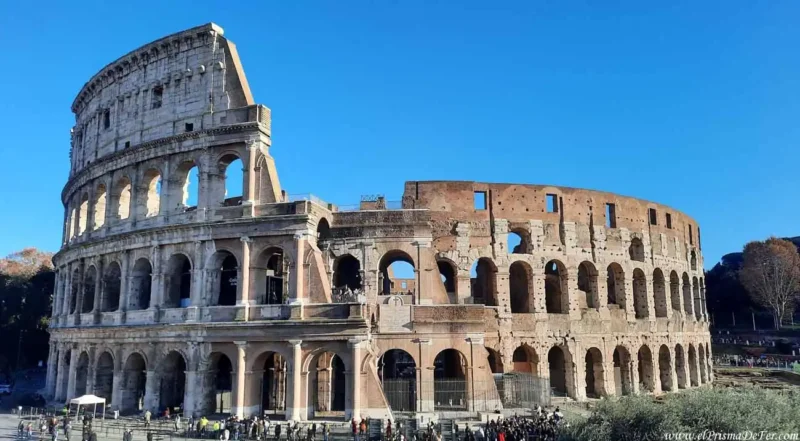
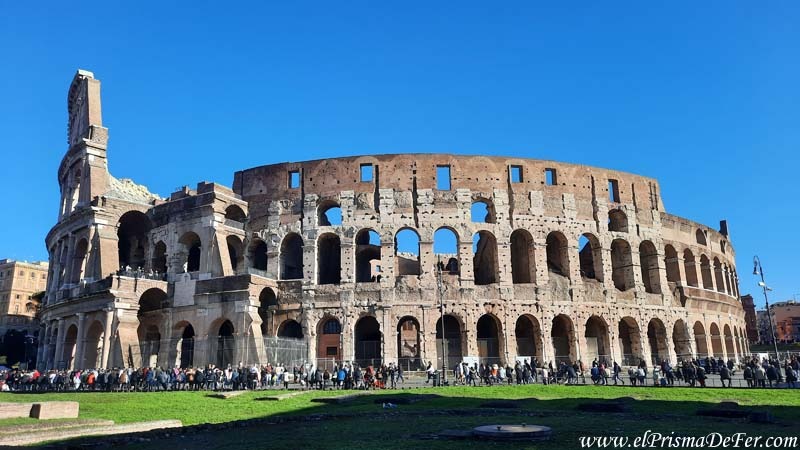
The Colosseum, one of the 7 wonders of the modern world, was obviously one of the highlights of my trip. I'd seen it a thousand times in photos, movies, and documentaries, so I didn't think it would impress me that much. But seeing it there, right in front of you, so imposing, is still breathtaking.
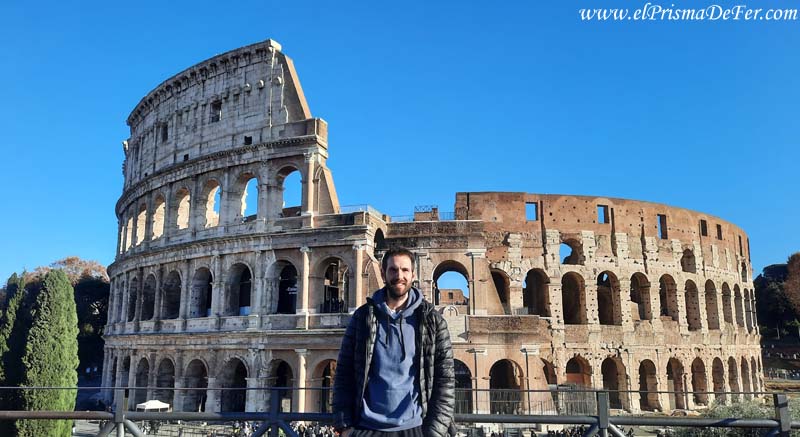
Besides being much larger than I imagined, when I walked through it, it gave me a true sense of the colossal work they did so long ago to entertain the people. I was so captivated that I went back a thousand times, day and night, because I never wanted to forget this marvel.
Other surprises I liked in Rome
Another place I didn't expect at all, and which surprised me when I was walking without a clear destination, was the Theatre of Marcellus, which at first glance seemed like a "second Colosseum", but which was actually a smaller theatre and had a different use at the time.
And don't even get me started on the Vatican, another place steeped in history where important decisions have been made that have shaped the course of human history. If I think about it too much, I'll go crazy.
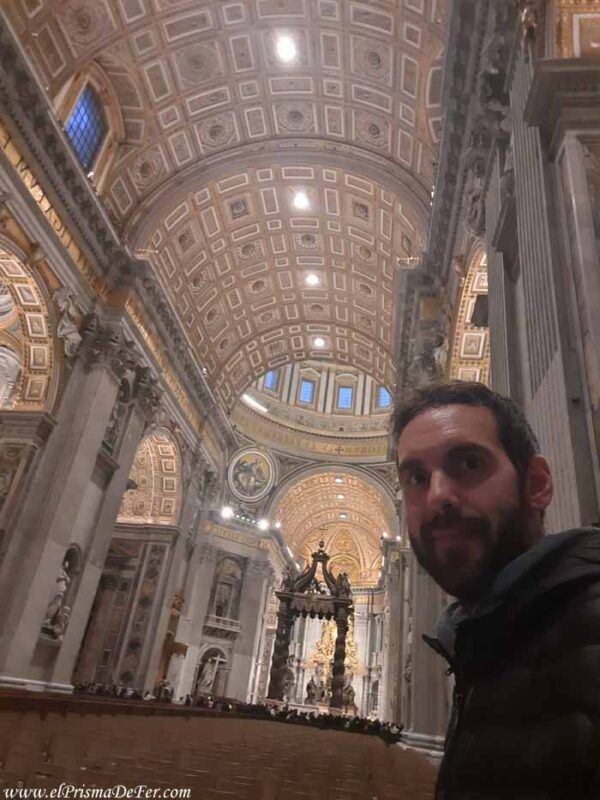
Plus, it has so many streets lined with restaurants, bars, a vibrant atmosphere, parks—it's truly beautiful. That's why I loved Rome; I wished I could have stayed longer than the five days I was there.
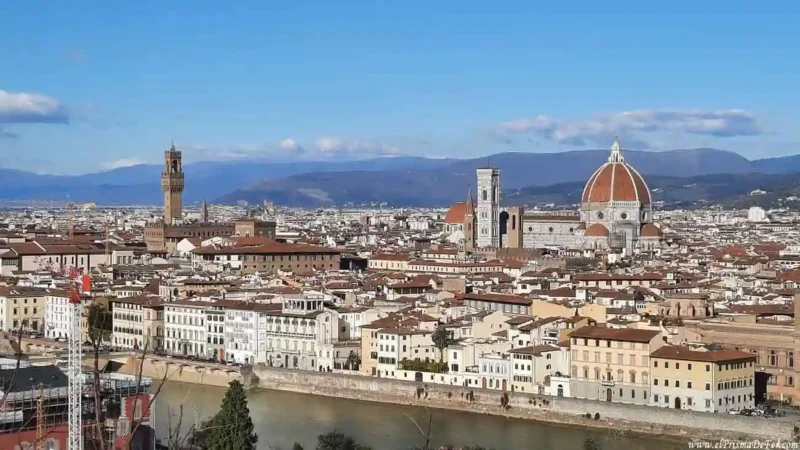
What to see in Florence, the cradle of the Renaissance
Map with the main attractions to see in Rome
What to see in Rome
Walking Tour
A free walking tour in Rome is the best way to start exploring the city. While it's not free, as it operates on a tip-based system, it helps you get your bearings quickly, you learn history and anecdotes from a local guide, and you can meet other travelers along the way. You can book your free walking tour here.
Another interesting option is to join a night tour of Rome. Although the route is usually similar to the daytime tour, you'll see fewer people, different lighting, and a different pace.
Coliseum
Built in the 1st century AD, during the Flavian dynasty, the Colosseum was the main amphitheater of ancient Rome, with a capacity for tens of thousands of people (see on the map). Public spectacles such as gladiatorial combats, executions, and battle reenactments were held here.
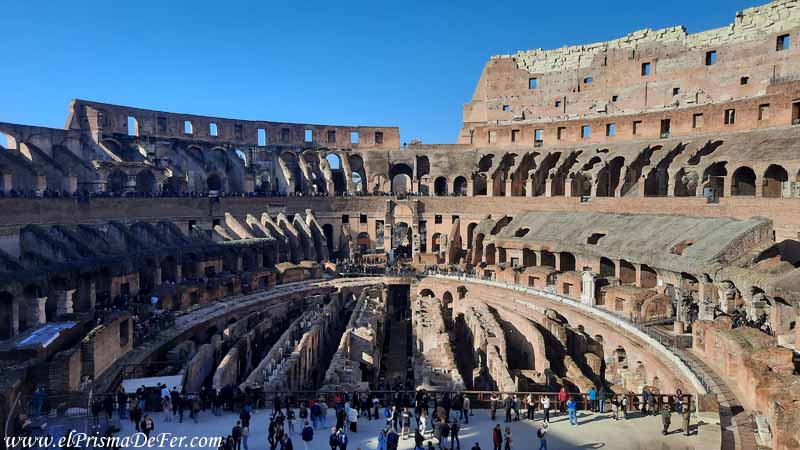
Beyond what one already knows, being there and seeing it with your own eyes makes you realize the scale of the work, which is much bigger and more complex than it seems.
In addition, walking through it helps give you an idea of how it was organized, with the stands according to social classes and the internal corridors.
You can also go down to the arena level, at an additional cost, and see up close the underground structure (the hypogeum), where the fights were organized, the gladiators were prepared and animals were housed before going on stage.
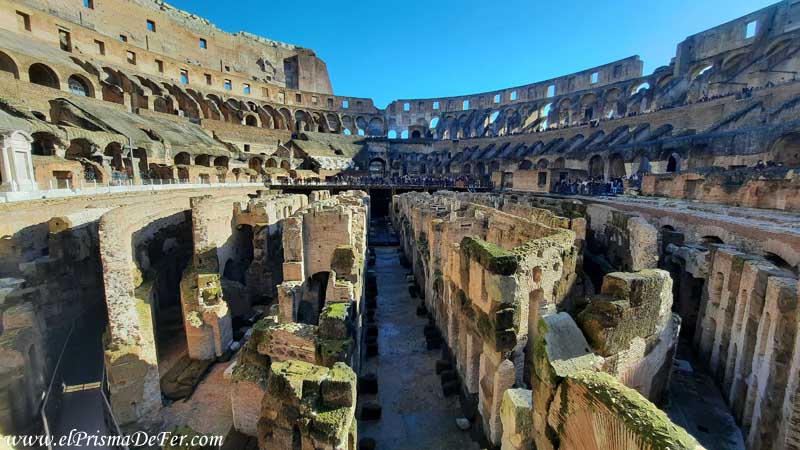
Even partially destroyed, it remains one of the most striking structures in the world.
Beware of scams
Outside the Colosseum, there are people posing as guides or "official" assistants. It's quite common for them to approach you saying there are no more tickets at the box office or that the line is impossible, and offer a "solution" by taking you to another entrance or selling you a more expensive tour.
In many cases, it's simply a way to convince you to overpay or get involved in something you didn't need. If you already have a ticket, just ignore them. Otherwise, it's best to buy through official channels or directly from the venue, without intermediaries.
Roman Forum and Palatine Hill
Another place I loved was the Roman Forum. This was the political, religious, and commercial center of ancient Rome (see location).
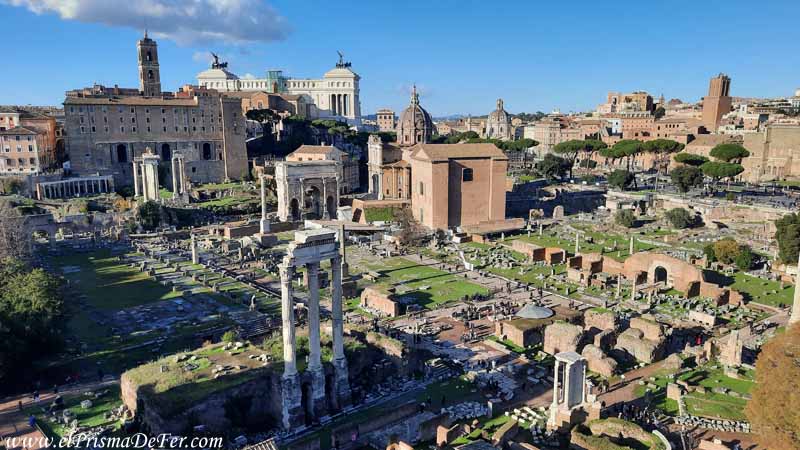
Today it is a collection of ruins, with temples, basilicas, triumphal arches, all concentrated in the same space that was very important for centuries.
You should allow plenty of time, as it can take several hours to explore it properly. At first glance, they appear to be scattered ruins, but each structure has its context and function within what was once the city.
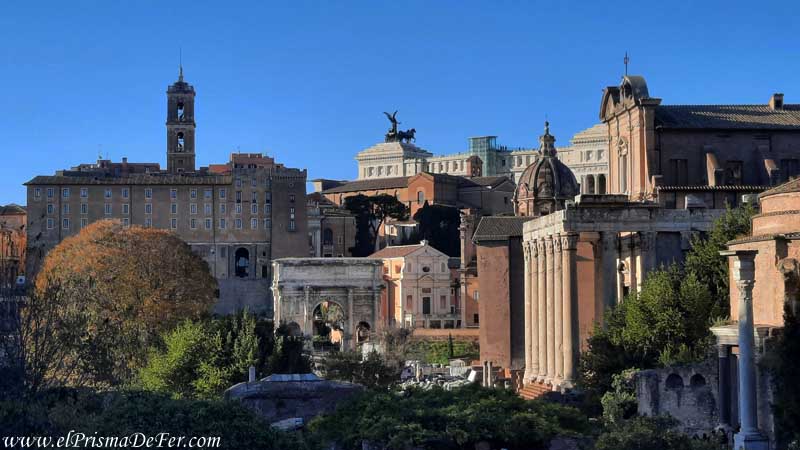
The Palatine, right next door, is one of the oldest areas of the city and where, according to tradition, Rome was founded, and later it was chosen by emperors to build their residences, which explains the number of palace remains.
Furthermore, from there you have some of the best views of the Forum and the Colosseum, which gives you a sense of how these spaces were related.
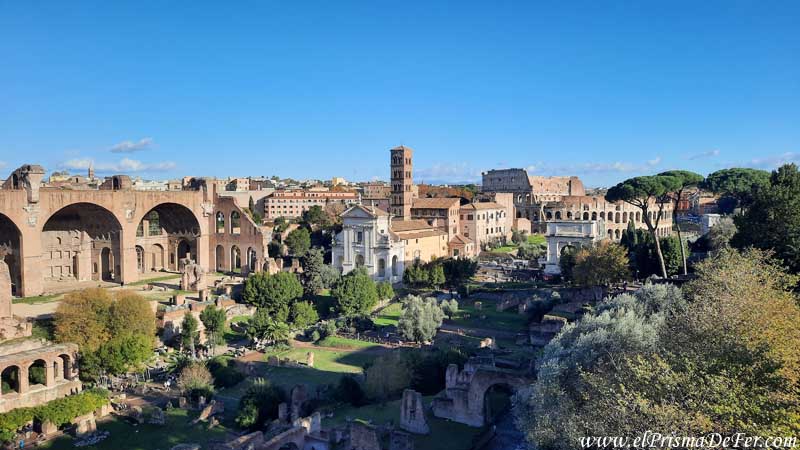
There are some information signs within the complex, but they tend to be quite general, so you'll miss a lot if you don't have any background information. That's why it might be a good idea to visit with a guide or, at least, with an audio guide or some prior background information, to better understand what you're seeing and not just rely on the visual aspects.
Vatican City
It is the center of the Catholic Church and, although an independent state, is completely integrated with Rome. The visit is usually divided into two main parts.
St. Peter's Basilica
The current basilica was built between the 16th and 17th centuries on the site where, according to tradition, Saint Peter, one of Jesus' apostles and a key figure for the Catholic Church, was buried (see on the map).
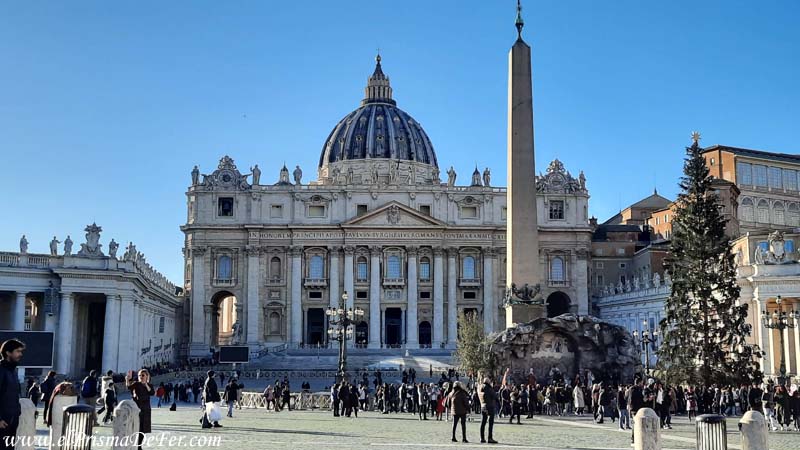
Its construction involved some of the most important artists of the Renaissance and Baroque periods, including Michelangelo, who designed the dome.
Entry to the basilica is free, but you have to queue for security, which can be quite long during peak season. It's best to go early or near closing time to avoid the crowds.
Once inside, you'll be surprised by the size of the place, as everything is bigger than it seems, from the columns to the sculptures.
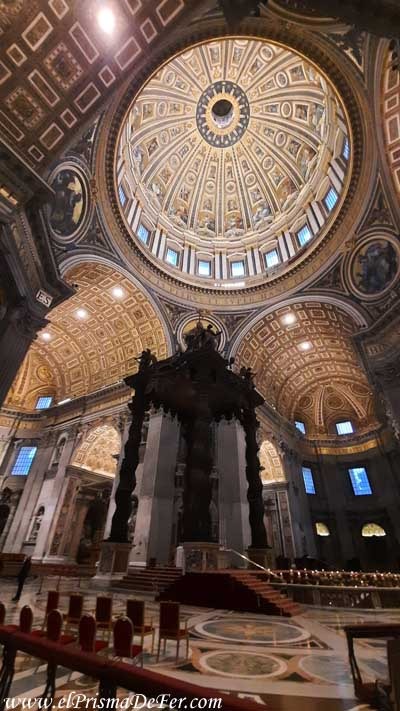
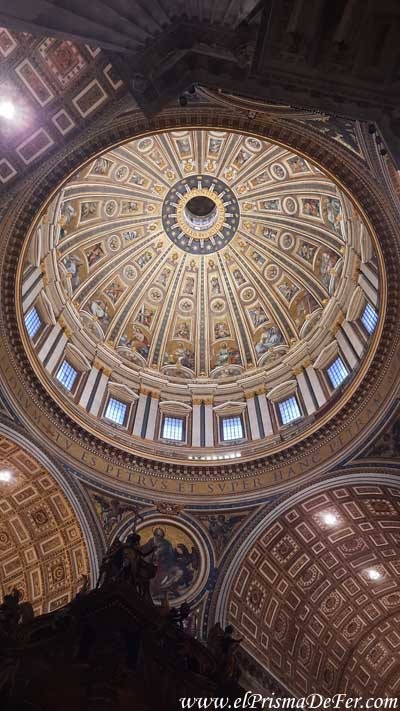
Highlights include Michelangelo's "Pietà" and the central altar, located directly beneath the dome. You can also climb to the top of the dome (additional fee applies), which offers one of the best views of Rome.
Vatican Museums and Sistine Chapel
The Vatican Museums are not a single museum, but a collection of galleries and collections accumulated by the popes over centuries.

The ticket is a single entry and includes the entire tour, which is quite long and can easily take between 2 and 4 hours (buy your tickets in advance and avoid queuing).
Within the complex are various sections, such as the Map, Tapestry, and Chandelier Galleries, as well as rooms with classical sculptures, Egyptian art, and Renaissance works. There are also the Raphael Rooms, decorated by Raphael himself, which are often overshadowed by the end of the tour, but are well worth a visit.
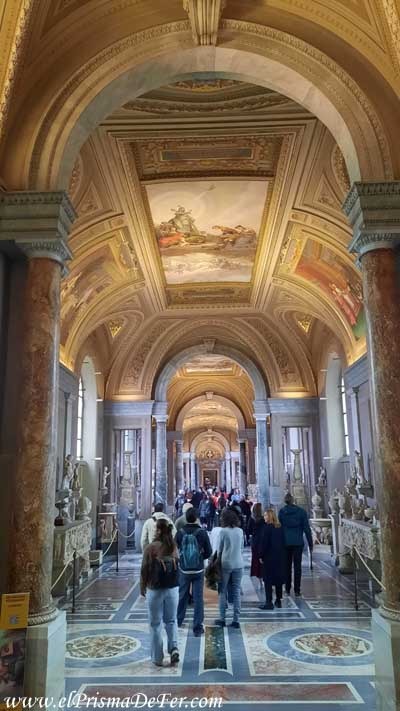

The visit ends at the Sistine Chapel, which is not a museum in itself, but a religious space where important events such as the conclave (the election of the Pope) take place.
The most impressive feature is Michelangelo's frescoes, especially the ceiling with scenes from Genesis and the Last Judgment on the altar wall. It's a place you've probably seen a thousand times in pictures, but seeing it with your own eyes is something else entirely.
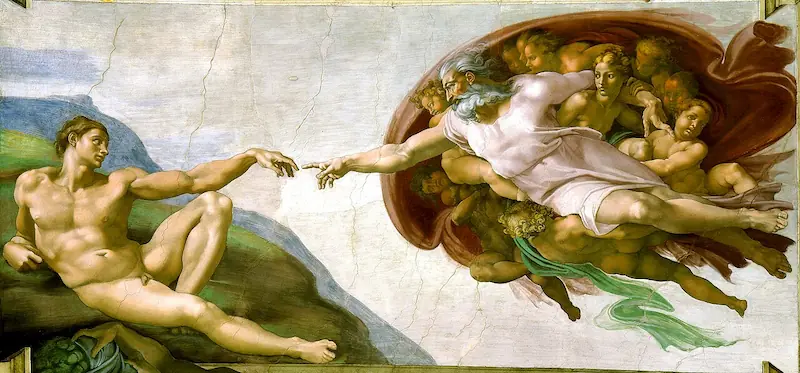
One thing to keep in mind: inside the Sistine Chapel, taking photos or speaking loudly is not allowed, and the control is quite strict.
The entrance is from a side street (see entrance on the map), not from the square or the basilica.
Pantheon
Originally built during the time of Augustus and later rebuilt in the 2nd century, it is one of the best-preserved buildings of Ancient Rome (see location). Its dome remains an impressive feat of engineering, especially considering the era.
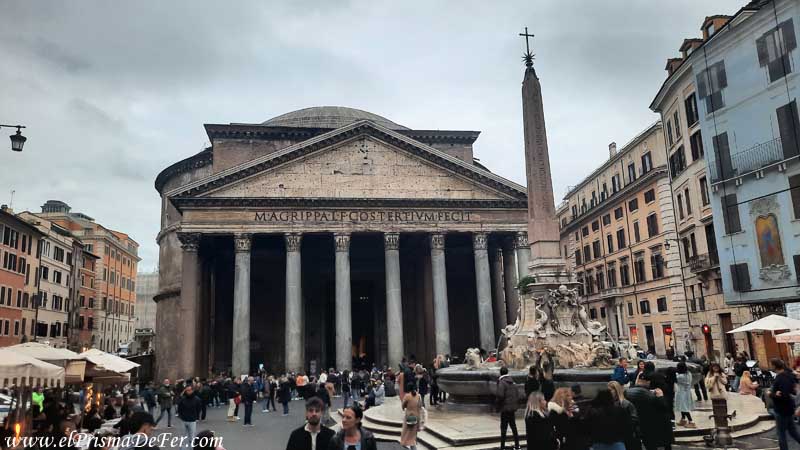
The most distinctive feature is the central oculus, an opening in the roof that lets in natural light (and rain). There are no windows or coverings; the water enters and drains through the floor.
You can buy your tickets in advance from this link and avoid queuing.
Trevi Fountain
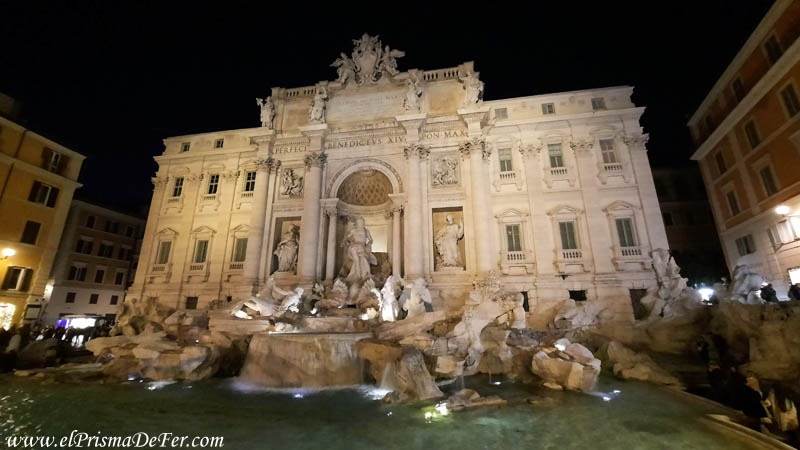
Built in the 18th century, it is the city's most famous fountain and marks the endpoint of an ancient Roman aqueduct (see location).
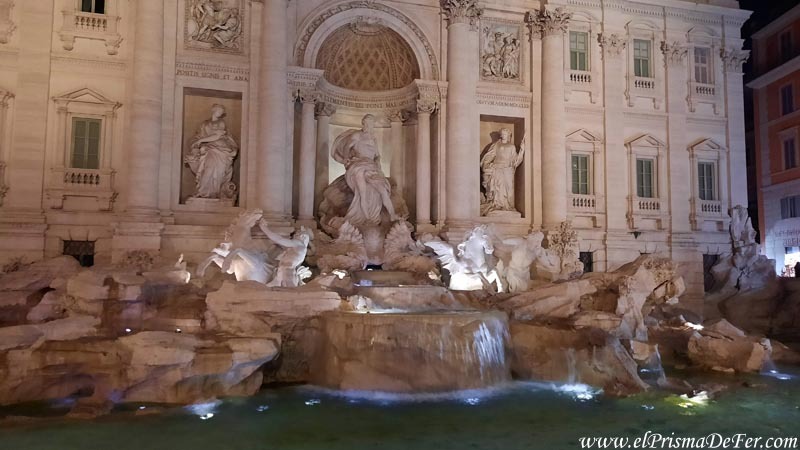
It is completely integrated into a building, which makes it even more striking when it suddenly appears among narrow streets and surprises you with that large facade full of details.
The tradition of throwing a coin comes from the idea of ensuring a safe return to Rome. But beyond that, the level of sculptural detail is what truly stands out. That said, it's almost always crowded, so if you want a more peaceful experience, it's best to go early in the morning or at night.
Castel Sant’Angelo
Originally built as a mausoleum for Emperor Hadrian, it was later repurposed as a fortress and papal residence (see location). This mix of functions explains its imposing architecture.
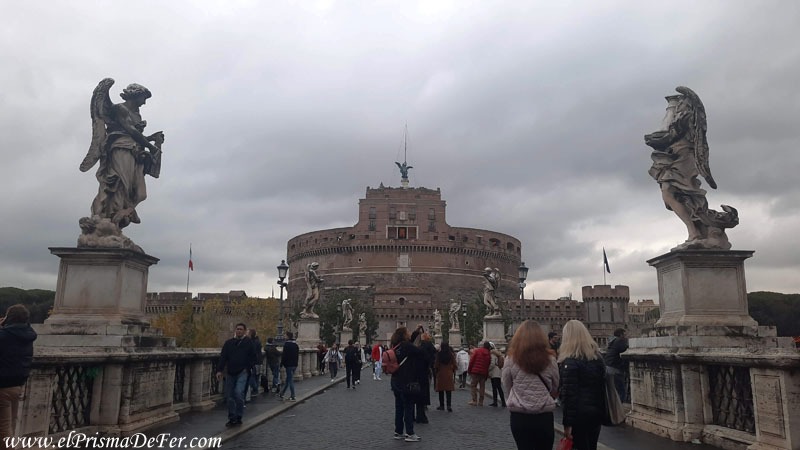
The bridge that connects it to the city, the Sant'Angelo Bridge, is decorated with sculptures and is one of the most striking entrances. Climbing to the castle also guarantees good views of the river and the Vatican.
Piazza Navona
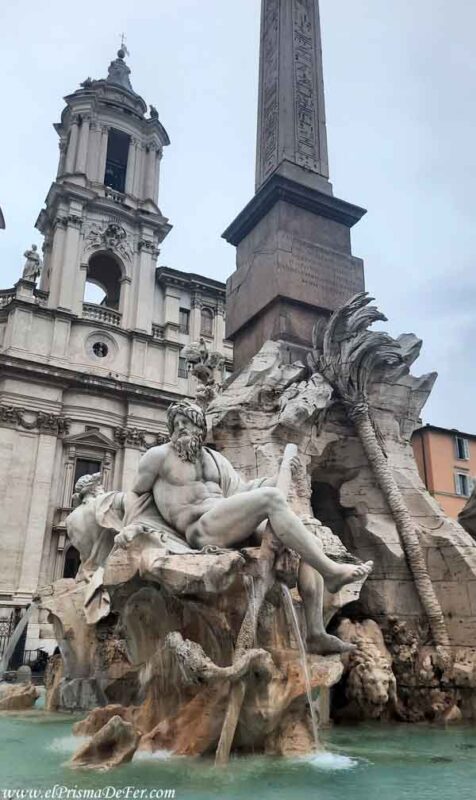
This square is unique in that it is built on the site of an ancient Roman stadium (the Stadium of Domitian). That's why it maintains that characteristic elongated shape (see location on the map).
Today it's a space with baroque fountains, street performers, and plenty of activity. The Fountain of the Four Rivers, in the center, is one of the square's most recognizable features.
Piazza Spagna
Famous for its staircase, it connects the pedestrian street Via dei Condotti, a commercial artery full of luxury shops, with the Trinità dei Monti church (see on map).
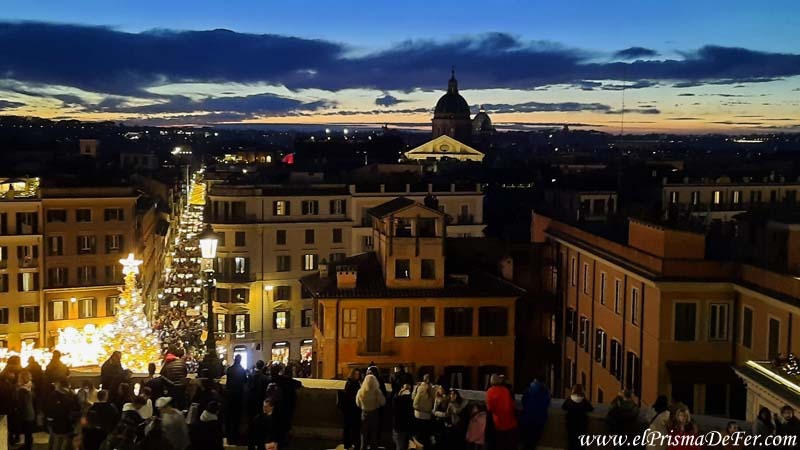
For centuries this square was a meeting point for travelers and artists. Today it remains a busy place, where many people stop to take photos or chat for a while. From the top of the steps you get a good view of the area, although it's usually quite crowded.
Villa Borghese
One of Rome's largest parks, created as a private garden for a noble family (see location).
Today it's a perfect public space to take a break from walking around the city center. It's very close to Plaza España, so combining both might be a good idea.
The Borghese Gallery, with its impressive art collection, is also located within the park. Even if you don't go inside, the park itself is worth a visit.
Piazza del Popolo
It is one of the largest squares in Rome, located at one of the historic entrances to the city (see location). For centuries it served as the gateway for those arriving from the north, hence its wider layout compared to other squares in the city center.

In the center stands the Flaminian Obelisk, an Egyptian obelisk brought to Rome during the Roman Empire, which remains the most striking feature of the square. From the square, you can also climb to the Pincian Hill, right next to it, which offers a good panoramic view.
A great way to incorporate it into your itinerary is to combine it with the Piazza di Spagna and the Villa Borghese. You can walk along Via del Babuino, a central street that directly connects these points.
Marcellus' Theatre and surroundings
This area contains several important ruins, but with far fewer people than other tourist spots.
The Theatre of Marcellus, built during the time of Augustus, is similar in structure to the Colosseum, although it is smaller and less well known (see on the map).
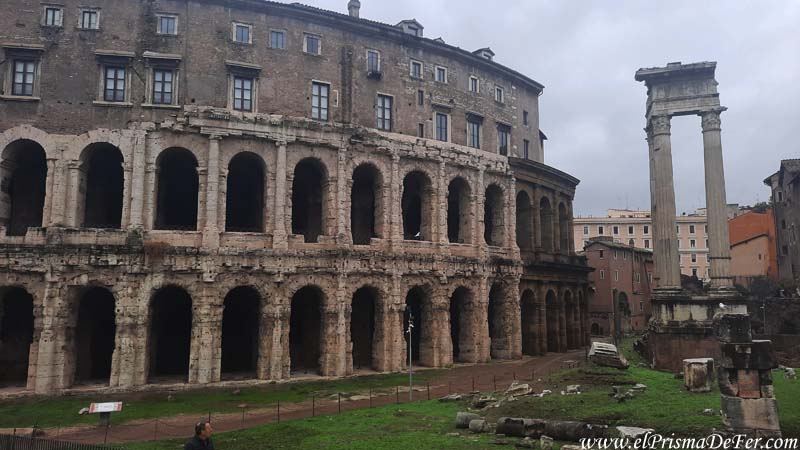
Nearby you'll also find archaeological remains, ancient temples, and areas linked to the ancient Forum Boarium. It's a different area, not very large but much quieter, with a certain degree of neglect and without the level of overcrowding seen in other places.
Monument to Victor Emmanuel II
Also known as the “Altare della Patria”, it is one of Rome's most striking buildings, both for its size and its white color which contrasts sharply with the rest of the city (see location).
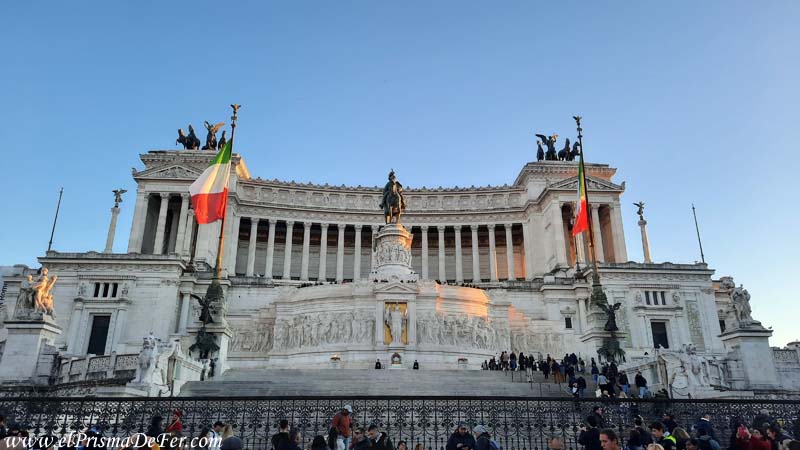
It was built in the late 19th century in honor of Victor Emmanuel II, the first king of a unified Italy.
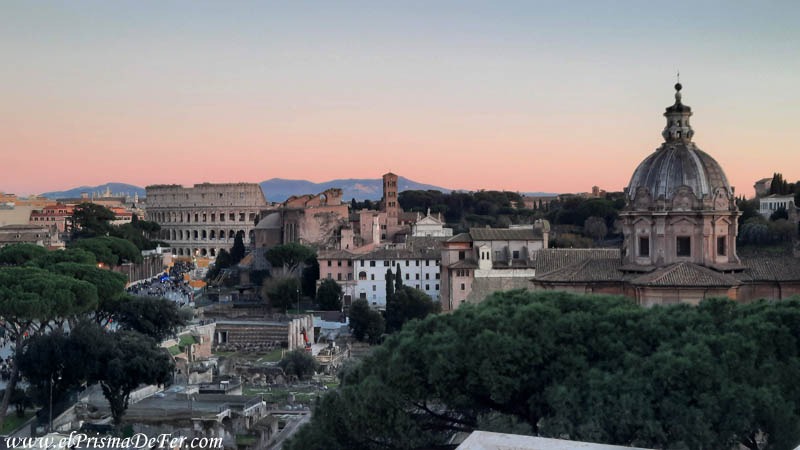
But beyond its style (which not everyone likes), it is a good panoramic viewpoint, since you can climb its steps (for free) and see several domes of the city and the Colosseum (albeit from a distance).

You can also take an elevator to the roof for a better view, but this option requires an additional fee. I'm not sure if it's worth it because I didn't go up, but you can still enjoy the views from the middle terraces.
Trajan's Forum
It is one of the largest and best preserved imperial forums, built in the 2nd century AD during the reign of Trajan (see location). Unlike the Roman Forum, which grew more organically, this one was planned as a monumental complex that included squares, markets, and the famous Trajan's Column.
The column is one of the most interesting points, as it has spiral reliefs that tell the story of the emperor's military campaigns, as if it were a carved history book.
Today, much of the forum can be seen from above, especially from the area around the Victor Emmanuel II Monument, which helps to give a sense of its size without having to go inside.
Arch of Constantine
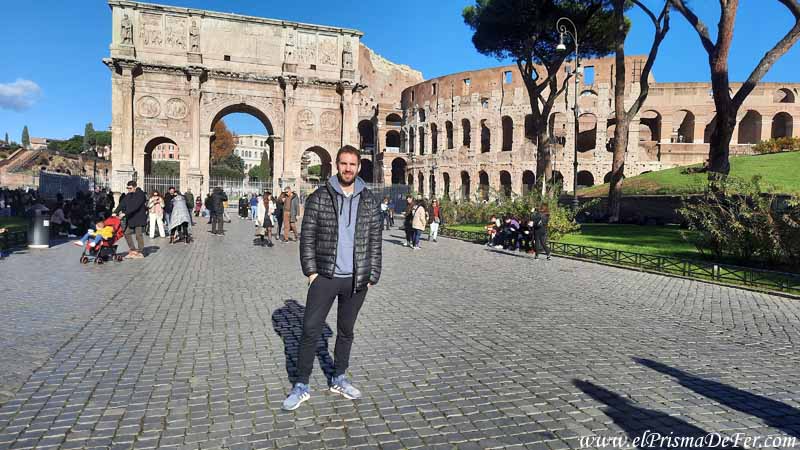
Located right next to the Colosseum, it is one of Rome's best-preserved triumphal arches. It was built in 315 AD to commemorate Constantine I's victory at the Battle of the Milvian Bridge, a significant event that marked his consolidation of power.
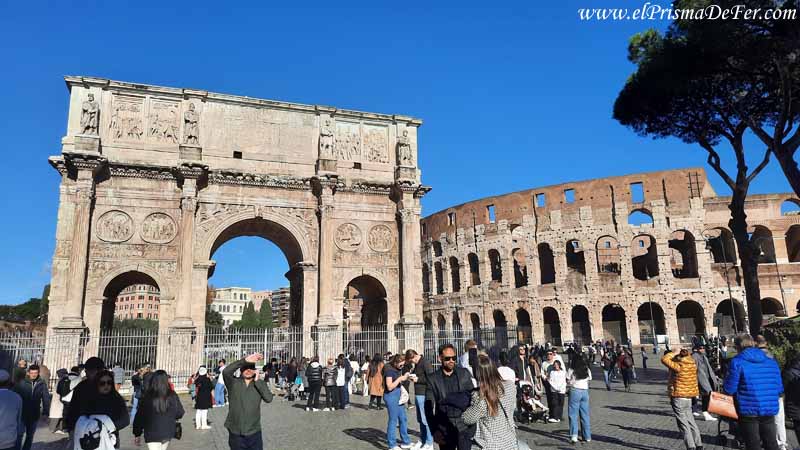
Many of the pieces were not made specifically for the arch, but were reused from earlier monuments of other emperors, something quite common at that stage of the Empire.
Trastevere
This neighborhood, on the other side of the Tiber River, was traditionally a more working-class area, which explains why its layout is less orderly and has a more bohemian atmosphere (see on the map).
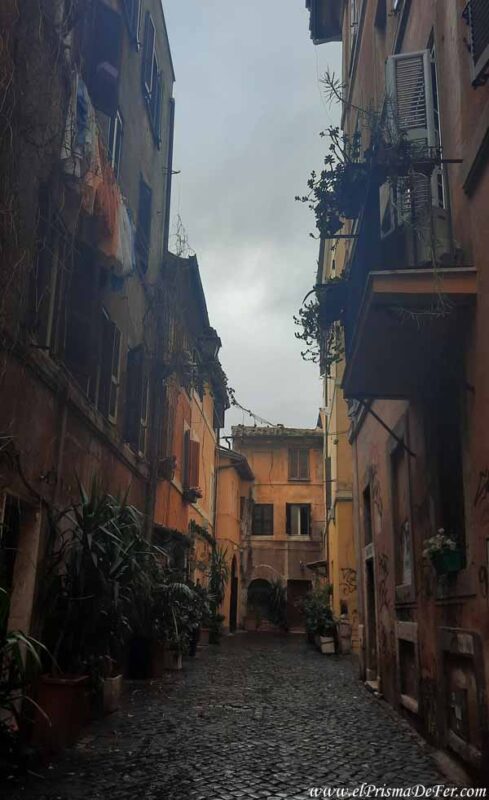
It's one of the best places to get lost in its alleyways, especially in the afternoon or at night. Narrow streets, facades with visible wear and tear, and a good selection of restaurants make it a welcome contrast to the more touristy areas.
Churches (the most prominent ones)
Beyond simply popping into churches at random, there are some that truly stand out and are worth seeking out. Besides St. Peter's Basilica, which is the most imposing, within the city you can visit:
- The Basilica of Saint John Lateran, which is the official cathedral of Rome
- The Basilica of Santa María la Mayor, with interiors full of details.
- The Basilica of San Clemente, because it allows you to go down to different underground levels and see how the city was built on top of itself.
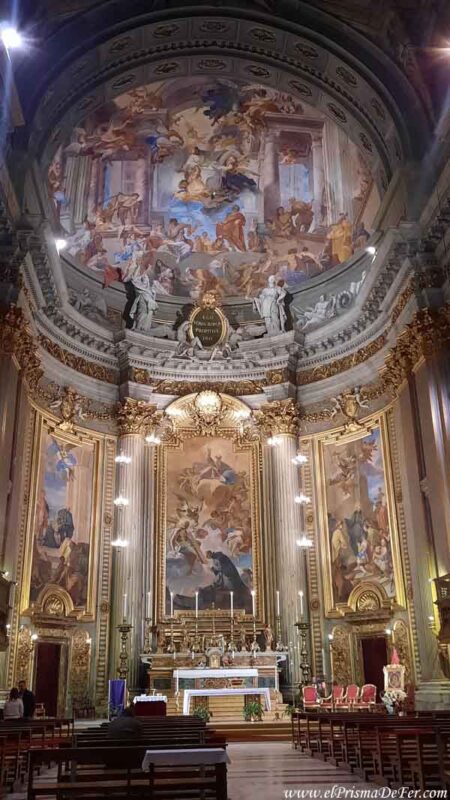
- The Church of Santa María de la Victoria, with some impressive frescoes inside.
Wandering aimlessly
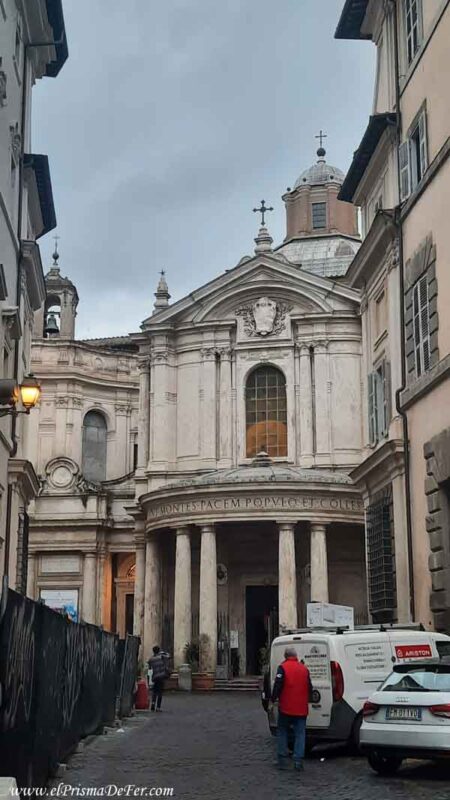
It might sound basic, but in Rome it's what I enjoyed most. Beyond the tourist spots, much of the interest lies in between; you'll stumble upon ruins, squares, archaeological remains integrated into modern buildings, ancient churches, and more.
Excursion to Pompeii, Amalfi Coast and Sorrento
One of the most popular day trips from Rome combines Pompeii, the Amalfi Coast, and Sorrento. It's a long day (generally between 12 and 14 hours), but quite common among those with limited time who want to see more of southern Italy without worrying about logistics.
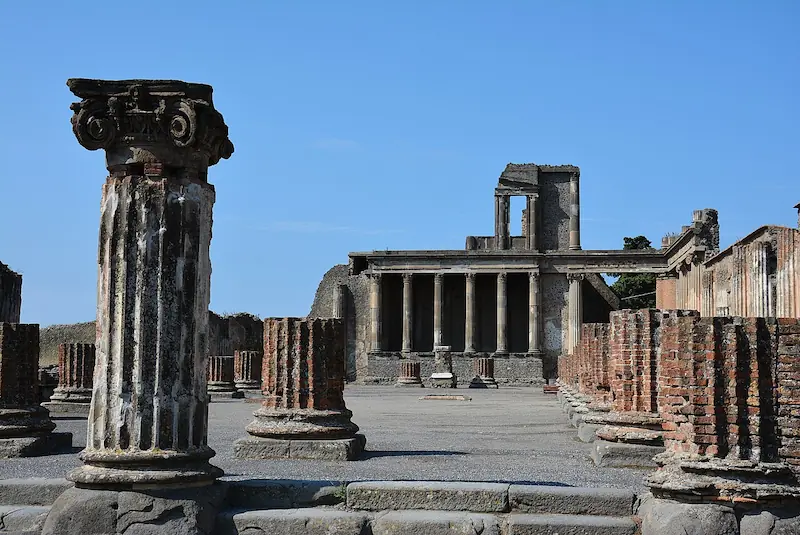
The tour usually starts early from Rome, with a first stop in Pompeii, where you can explore the ruins of this Roman city that was frozen in time after the eruption of Vesuvius in 79 AD.
Afterwards, the tour continues to the Amalfi Coast, passing through coastal landscapes. And in many cases, a visit to Sorrento, a smaller but pleasant city, ideal for a stroll, is also included.
Furthermore, it's usually relatively affordable considering it includes transportation and a guide. If you're short on time and want to add this part of Italy to your itinerary without too much hassle, it's a practical option.
Where to sleep in Rome
Rome isn't a particularly cheap destination, and that's quite noticeable when it comes to accommodation. Especially if you're traveling during the shoulder or peak season, finding something affordable and well-located can be challenging. In my case, during my five-day stay, I ended up changing places and trying two different options.
One was the Mosaic Hostel, which is well located near Roma Termini. It's nothing fancy, but it does the job; it has a kitchen and a common room where you can relax and meet other people.
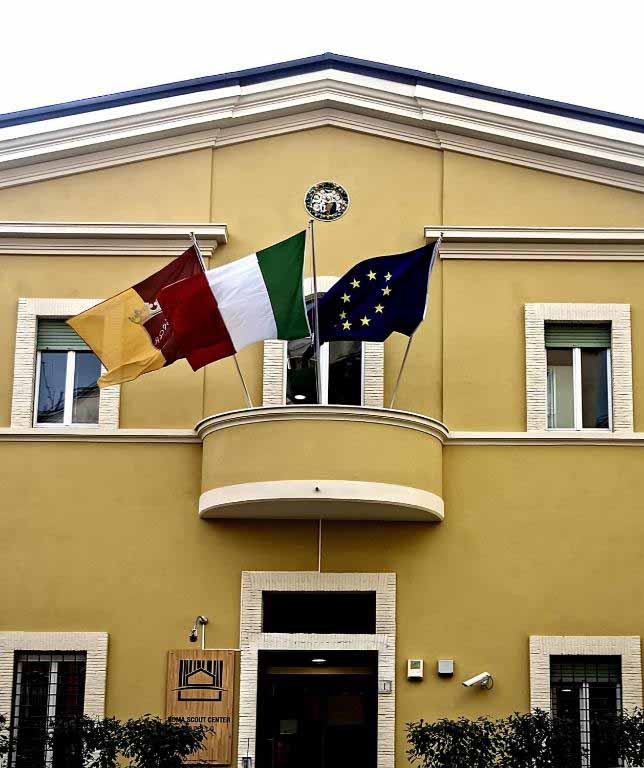
The other was the Roma Scout Center, which is a little further from the city center, but well connected by metro from Bologna station. It's somewhat more expensive, but also more comfortable. The place is large, has better facilities overall, and a more fully equipped kitchen. I found it more comfortable for slightly longer stays.
How to get around in Rome
Most tourist attractions are relatively close to each other, so often the most practical thing to do is simply walk. In fact, walking is the best way to enjoy the city, not only because of the distances, but also because you always discover something unexpected along the way.
For longer distances, the public transport system works well, although it's not the most comprehensive in Europe. The metro is limited (few lines), but it connects several important points and is usually the fastest option for crossing the city.
Then you have buses and trams that better cover the areas the metro doesn't reach. Everything is managed by ATAC, and you can use the same ticket to combine different modes of transport within a certain time.
How to pay for transportation
You have several options:
- Contactless card (most practical): You simply tap your card or mobile phone on the turnstile of the subway or when boarding the bus with the Tap&Go system. You don't need to buy a physical ticket.
- Physical ticket: the classic ticket (BIT) valid for 100 minutes, or passes for 24, 48 or 72 hours, which you can buy at machines, kiosks or stations.
- Apps: You can buy and validate tickets from your cell phone with apps like MooneyGo, DropTicket or TicketAppy.
In practice, if you have a contactless card, it's the most convenient and fastest option. Just keep in mind that you have to tap it every time you change transport.
Useful stations depending on what you want to see
Although the subway isn't huge, there are stations that drop you off very close to the most famous places:
- Colosseum: Colosseo station (Line B)
- Trevi Fountain: Barberini station (Line A)
- Piazza di Spagna: Spagna station (Line A)
- Vatican City: Ottaviano station (Line A)
- Roman Forum: also from the Colosseum
Apps to get you moving
To get around day to day:
- Google Maps: works perfectly for combining subway, bus and walking.
- Citymapper: very useful for public transport in large cities.
- Uber (it works, but it's more expensive than in other cities)
- Free Now (widely used in Europe for taxis and ride-hailing services)
How to get from the airports to the center of Rome
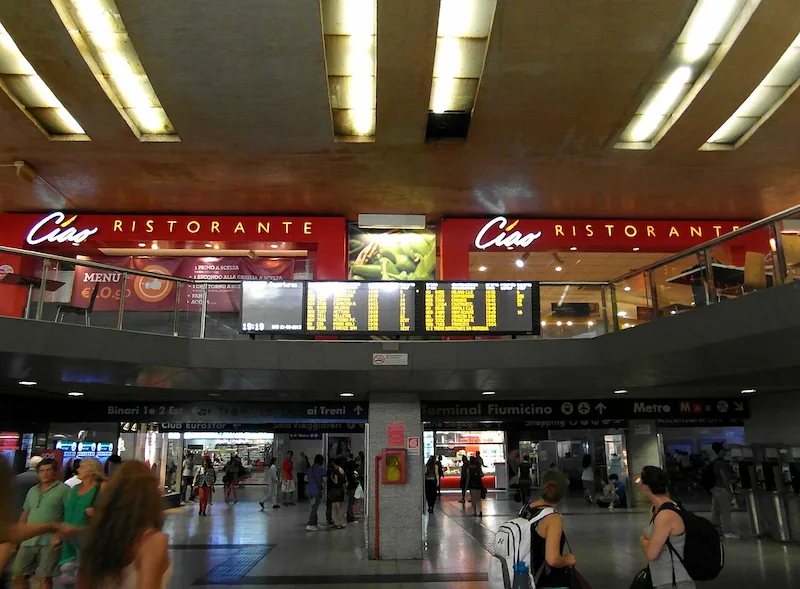
Rome has two main airports: the Leonardo da Vinci–Fiumicino Airport (the main, international one) and the Ciampino Airport (smaller, used mainly by low-cost airlines). From both it is not difficult to get to the center, especially to the Roma Termini area (see on the map), which is usually the reference point.
From Fiumicino (FCO)
It is the most important and best-connected airport:
- Leonardo Express Train: the most direct option. It departs every 15–30 minutes and arrives at Termini nonstop in about 30 minutes. It's more expensive than other alternatives, but fast and simple.
- Bus: several companies connect the airport with Termini. It's the cheapest option, although slowest (between 45 minutes and 1 hour, depending on traffic).
- Taxi: fixed fare to the historic center. This can be convenient if you are traveling in a group or with a lot of luggage.
From Ciampino (CIA)
Smaller and with fewer direct options:
- Bus + metro: the most common combination. Take a bus to Anagnina station (Line A) and from there the metro to the city center.
- Direct bus to Termini: several low-cost companies offer this service, which is quite practical and economical.
- Taxi: also has a fixed fare to the center, similar to Fiumicino.
How to explore Rome in the best way
The key to Rome is to plan your itinerary by area, not by specific locations. Many attractions are relatively close to each other, so it makes more sense to group them together and do everything on foot, rather than crisscrossing the city.
It also helps to start early at the busiest spots (like the Colosseum or the Vatican Museums) and leave the more flexible ones for the afternoon.
A fairly logical route for a first day could be:
- Starting at the Colosseum
- Continue through the Roman Forum and Palatine Hill
- Continue walking towards the Victor Emmanuel II Monument
- From there, move towards the Pantheon of Agrippa
- End at Piazza Navona or the Trevi Fountain
It's a long route, but everything is within walking distance.
Another day you can dedicate to the Vatican City area, starting early with the museums, continuing with St. Peter's Basilica and then crossing the river to walk through areas like Trastevere.
What to see in Rome in 2 days
With 2 days you'll have to prioritize quite a bit, but you can cover the essentials.
Day 1: Ancient Rome
- Coliseum
- Roman Forum and Palatine Hill
- Monument to Victor Emmanuel II
- Pantheon of Agrippa
- Trevi Fountain
- Piazza Navona
Day 2: Vatican + neighborhoods
- Vatican Museums
- Sistine Chapel
- St. Peter's Basilica
- Cross over to Castel Sant’Angelo
- End up in Trastevere
It's an intense pace, but you get to see what's most important.
What to see in Rome in 3 days
With 3 days you can travel with a little more leeway and add things:
Days 1 and 2
Similar to the previous days, but with more time to explore the Forum at a leisurely pace and perhaps visit a church along the way.
Day 3: Less central areas + walking
- Villa Borghese
- Piazza Spagna
- Marcelo's Theatre Area
- Wandering through neighborhoods and entering churches without a plan
- Close again in Trastevere
With this plan, you not only see the main points of interest, but you also have time to enjoy the city without being in such a rush.
Frequently Asked Questions about Rome
How many days do I need to visit Rome?
Ideally, you should allow 3 to 4 full days to see the main sights without rushing. With less time, you'll cover the basics, but it will be quite tight. With 5 days or more, you can travel at a different pace and include some lesser-known places.
Is Rome an expensive city?
Yes, compared to other European destinations it can be expensive, especially for accommodation and in very touristy areas. Even so, you can significantly reduce your budget if you book in advance and avoid eating in overly central locations.
Is it advisable to buy tickets for the Colosseum or Museums in advance?
For places like the Colosseum or the Vatican Museums, yes. The lines can be long, and buying tickets online saves you a lot of time.
Is it safe to move around Rome?
Generally, yes, but as in any tourist city, you should be aware of pickpockets, especially on public transport and in crowded areas. Nothing out of the ordinary, but it's best not to let your guard down too much.
What is public transport like in Rome?
It works well, although it's not as extensive as in other European capitals. The metro has few lines, but it connects key points. Buses and trams complete the network.
Where is the best place to stay in Rome?
Areas near Roma Termini or within the historic center are convenient for getting around. Termini tends to be more affordable, although it's not the most attractive area; the center is more expensive but more comfortable.
Is cash needed in Rome?
Less and less. In most places you can pay by card, even on public transport. Even so, it's always good to have some cash on hand for small expenses.
What is the best time to visit Rome?
Spring (April–June) and autumn (September–October) are usually the best times to visit, with pleasant weather and less extreme heat. Summer can be very hot and crowded.
Support The Prism of Fer!
Your support helps me continue creating free content on the blog. Thank you so much!