
Trekking independently in the impressive Colca Canyon, the second deepest in the world, is entirely possible and doesn't require an expensive tour. In this guide, I'll tell you, step by step, how you can venture solo through its trails.
The trek can be done in two days, although some people prefer to take it more slowly and dedicate three days to it, adding an extra night in one of the small villages within the canyon. This depends on each person's pace and time. In my case, I did it in two days, and that's the itinerary I'm going to share with you below.


This post may contains affiliate links. If you purchase through these links, I may earn a commission at no extra cost to you. Thank you for your support!
Table of Contents
🗺️ Colca Canyon Trekking Fact Sheet
| Start |
| Mirador de San Miguel |
| Final |
| Cabanaconde |
| Duration |
| 2 days |
| Distance |
| 21 km |
| Estimated time in hours |
| 9 hs |
| Max. Altitude |
| 3500 mts |
| Difficulty |
| Easy-Moderate |
| Signaling |
| Little |
| Water/food |
| Water and food can be obtained in the villages within the Canyon. |

Do you want to follow this route precisely?
Download the KML/KMZ file for the 2-day Colca Canyon trek, including an overnight stay at the Sangalli Oasis, and open it in apps like Maps.me or Gaia GPS to view the complete route offline. This is ideal if you want to navigate the valley with confidence, even without a signal.
Download the Colca Canyon route on Gumroad for a nominal fee.

Where is the Colca Canyon?
The Colca Canyon is located in southern Peru, within the Arequipa region, about 160 kilometers from the capital city of the same name.
At over 3,400 meters deep, it is considered one of the deepest canyons in the world.
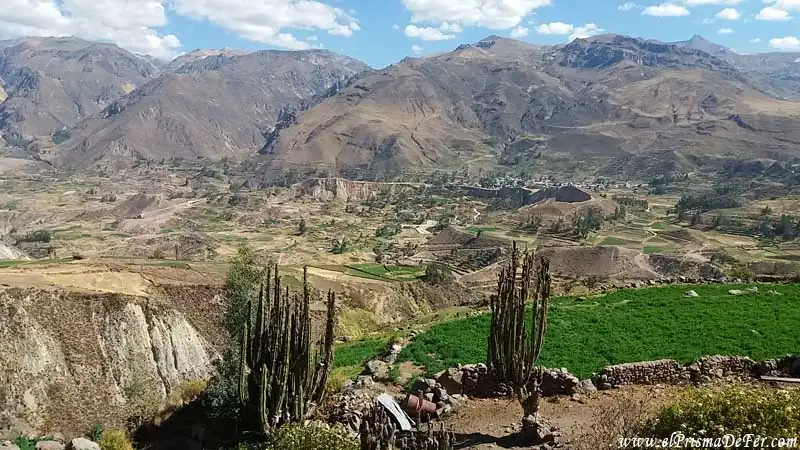
The area is surrounded by stunning Andean landscapes, pre-Incan agricultural terraces, and traditional villages that preserve their customs.
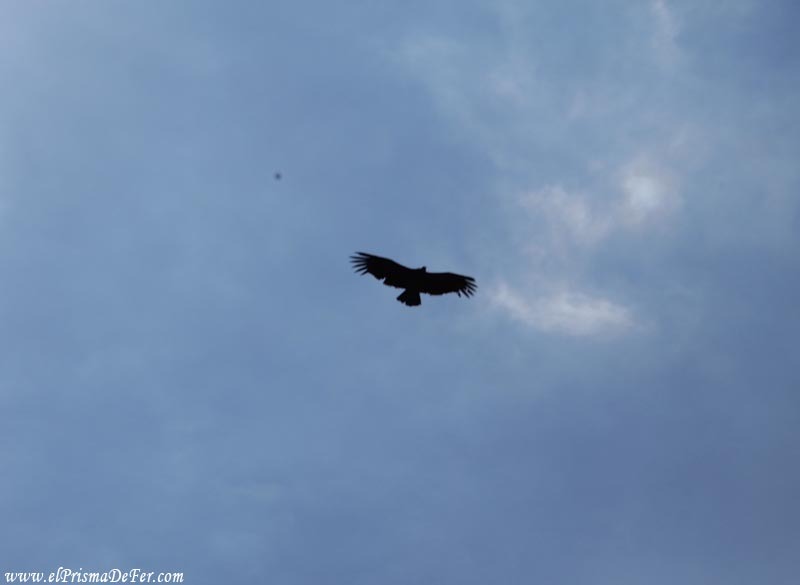
The valley is also home to the majestic Andean condor, one of the main attractions for travelers visiting this destination.
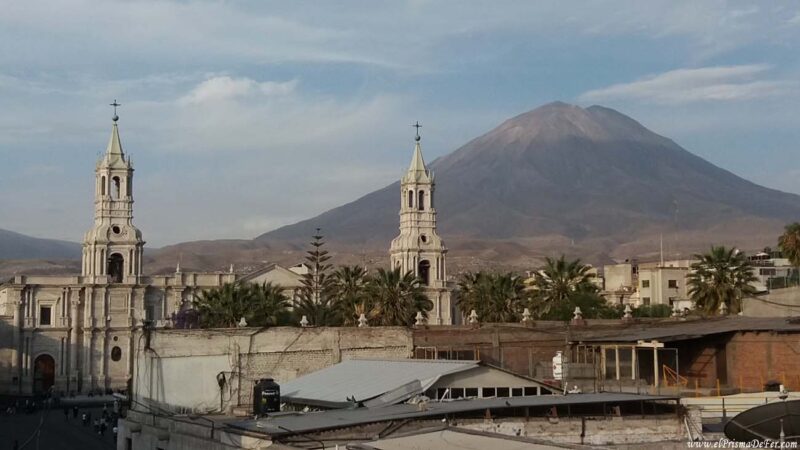
Chivay City, ideal for starting your trek through the Colca Canyon
Chivay is a picturesque Andean town located in southern Peru, renowned for being the gateway to the majestic Colca Canyon. Surrounded by mountains, pre-Incan agricultural terraces, and hot springs, its strategic location makes it the ideal starting point for exploring one of the deepest canyons in the world.
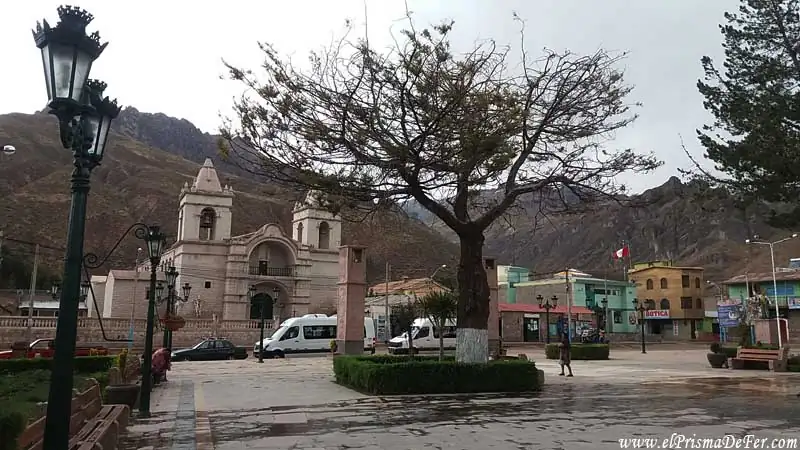
In Chivay, you can visit the market near the main square, ideal for buying food and supplies for the trek into the canyon. You can also visit the La Calera Hot Springs, located about 3.5 km away.
It's easy to get to, as taxis and vans shuttle tourists around all the time. It's a great way to relax your muscles before or after your adventure.
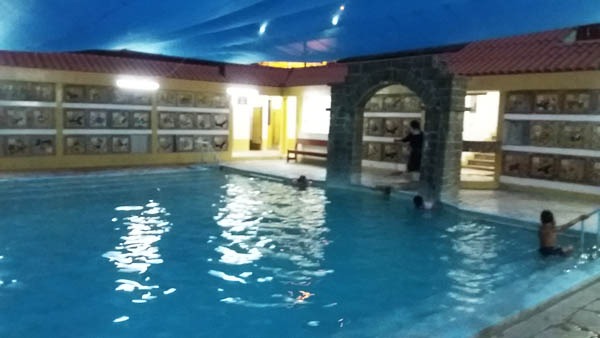
Where to stay in Chivay
Chivay is a small but super cozy town, with tons of accommodation options if you're passing through the area. I stayed at Rumi Wasi, a very friendly place, but there are plenty of other options for all tastes and budgets. So don't worry about where to stay, you're sure to find something you like.
How to get to Chivay
From Arequipa, you can take a bus, for example, from Andalucía or Reyna, leaving from the terminal for Chivay. The trip takes about four hours, and as you travel, you'll feel the thrill of approaching the impressive Colca Canyon.
Where to sleep during the Colca Canyon trek
Choosing where to spend the night during the Colca Canyon trek depends largely on how many days you have available. If you plan to do it in 2 days, the obligatory stop is usually the Sangalle oasis, a true paradise at the bottom of the canyon with natural pools to relax in after the hike.
However, if you have more time and decide to do it in 3 days, the most common option is to sleep in one of the small towns located inside the canyon, such as Cabanaconde, Llahuar, or Malata. These towns offer a more authentic and peaceful experience, where you can also experience a bit of local life and rest in basic but cozy accommodations.

How to visit the Colca Canyon
There are organized excursions that visit the Colca Canyon without the need to do the trekking. These bus tours travel along Route 109, which connects Chivay with the town of Cabanaconde, skirting the canyon and stopping at several vantage points to enjoy the views.
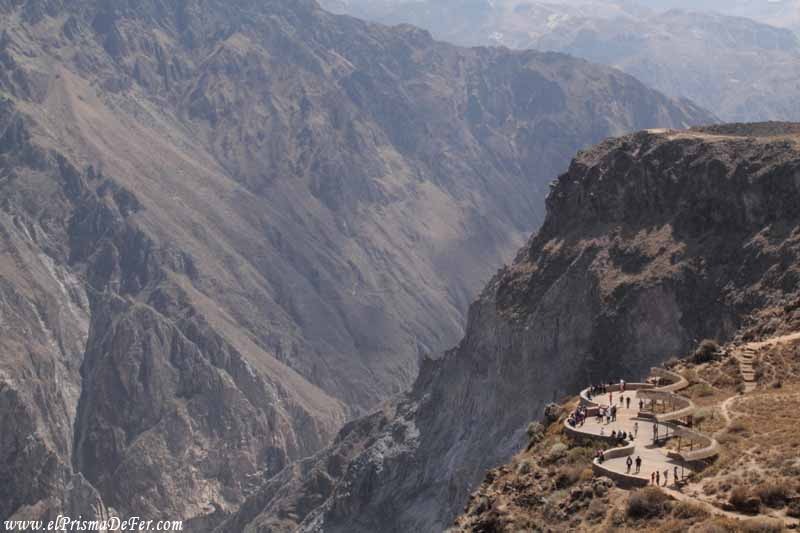
The most popular of all is the Cruz del Cóndor viewpoint (see location), where most tourists congregate, especially during peak condor viewing hours (between 8:30 and 9:30 am).
Upper and Lower Viewpoint
The Cruz del Condor viewpoint has two platforms for viewing the landscape and the condors, one upper and one lower. They're very close together, so you can go back and forth for better views. You'll see people arriving and departing all the time from the various tourist buses and even private vehicles.
True to form, and with the idea of exploring the Colca Canyon on your own, you can also take advantage of the first day of the trek to visit this viewpoint.
How to get to the Cruz del Condor Viewpoint
To get to the viewpoint on your own, you have to take a bus that leaves from the Chivay terminal to Cabanaconde around 7:30 am (or earlier, if possible). The trip to the viewpoint usually takes between an hour and a half and two hours. You can let the driver know that you want to get off at Cruz del Cóndor so you don't miss him.
I recommend sitting on the right, as during the ride you'll see how postcards of the canyon appear without warning...and they're absolutely unmissable.
It's truly worth stopping here, not only to see the condors fly, but also to admire the immensity of the Colca Mountains in all their magnitude.
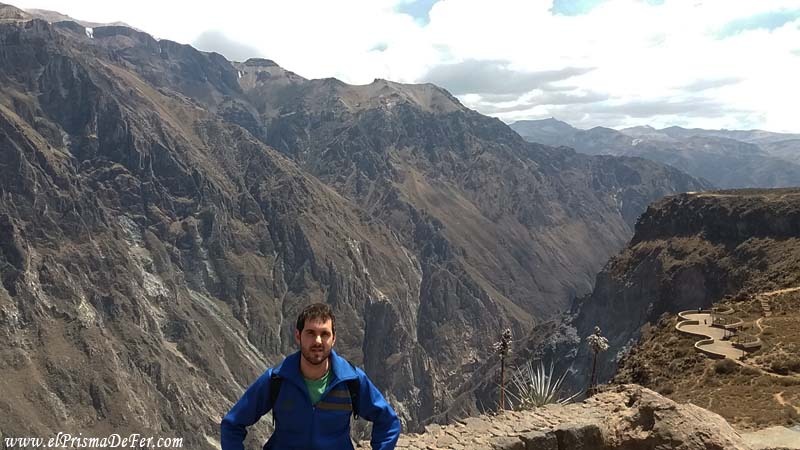
Where to start the Colca Canyon trek: Mirador San Miguel
Our starting point for the trek is the Mirador San Miguel (see on the map), located about 20 minutes by car from the Mirador Cruz del Cóndor, in the direction of Cabanaconde.
To get there from the viewpoint there are two options: wait for the next bus going towards Cabanaconde, they usually pass approximately every hour, although it is advisable to check with the park rangers, or start walking along the route and try to hitchhike in the meantime, to see if someone takes pity on you 😄.
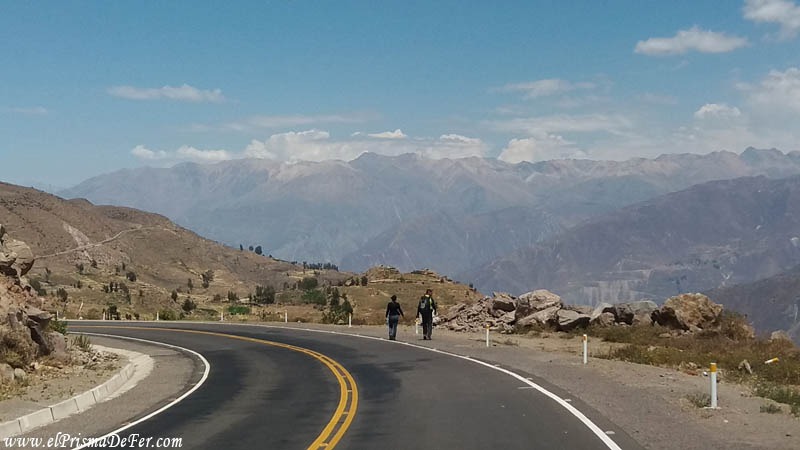
I was lucky; after about 10 minutes of walking, a truck loaded with vegetables picked me up, along with two other travelers who were also heading to Cabanaconde.
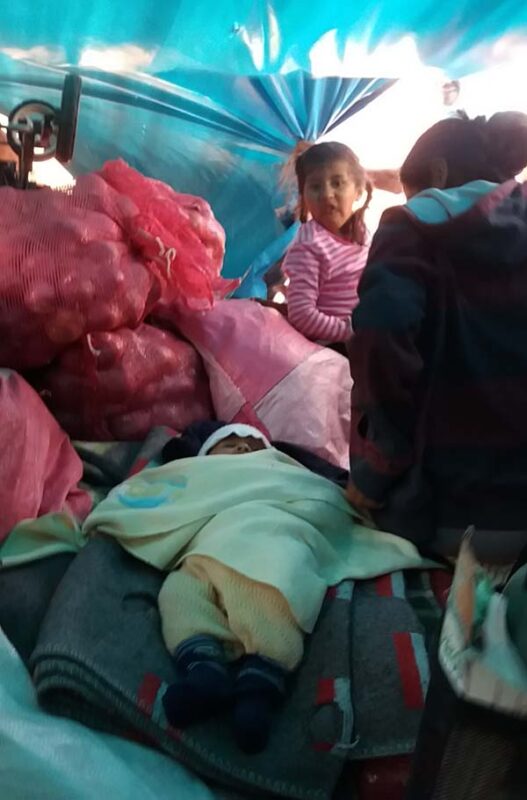
I let them know if they could drop me off at the San Miguel Lookout, since they were heading for the town. They had no problems, even asking me if I was sure that was my stop, because it's a pretty desolate place. There are no people, villages, or stalls—there's practically nothing. That's why it's important to buy supplies the day before. Chivay.
I said goodbye to them, a little apprehensive because I honestly didn't know if the information I had was correct. The people in the van didn't know anything about the canyon entrance from that point, since the normal route is to enter from Cabanaconde, which was where the other two travelers were going.
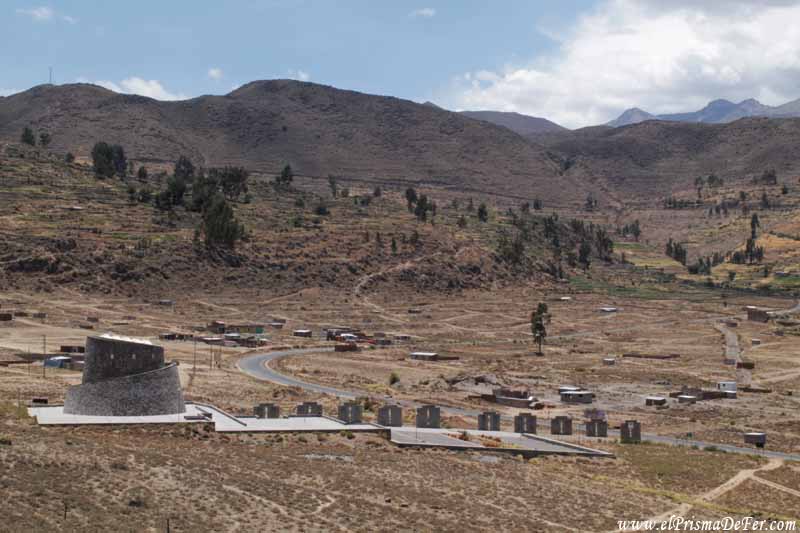
However, that fear didn't last long. When I started walking towards the viewpoint, which also has very nice views of the area, we could already see the Sangalle Oasis Right at the bottom of the Colca Canyon. We'll also have a panoramic view of the route we'll soon embark on. That's our goal for the day. We're on the right track!
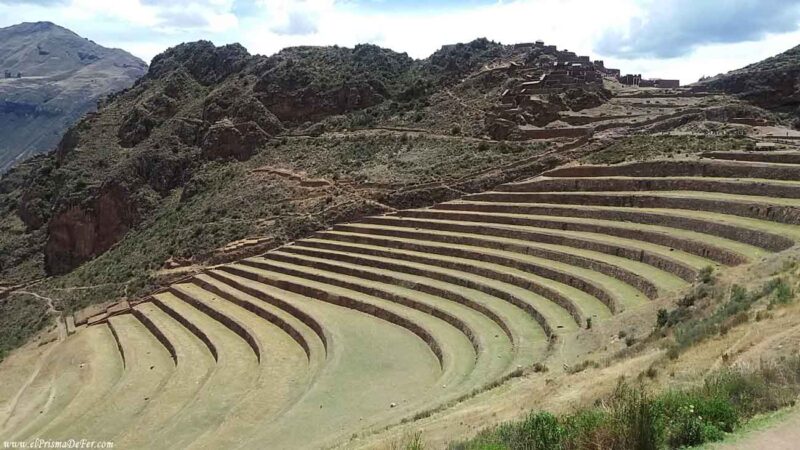
Trekking to the Colca Canyon on a Tour
I hope this guide helps you plan your canyon trek, just as reading other travelers' journals has helped me. But if you prefer the peace of mind of doing this trek with the safety of a guide on an organized tour, you can find an interesting and quite affordable option, actually.
Colca Canyon trekking map
Day 1: From Mirador San Miguel to Sangalle Oasis
| Distance |
| 15 km |
| Estimated time in hours |
| 6 hours |
| Elevation Profile |
| From 3,500 meters to 2,200 meters |
If you start walking from the viewpoint to the right, after about 200 meters you can see a path that begins to enter the Colca Canyon.
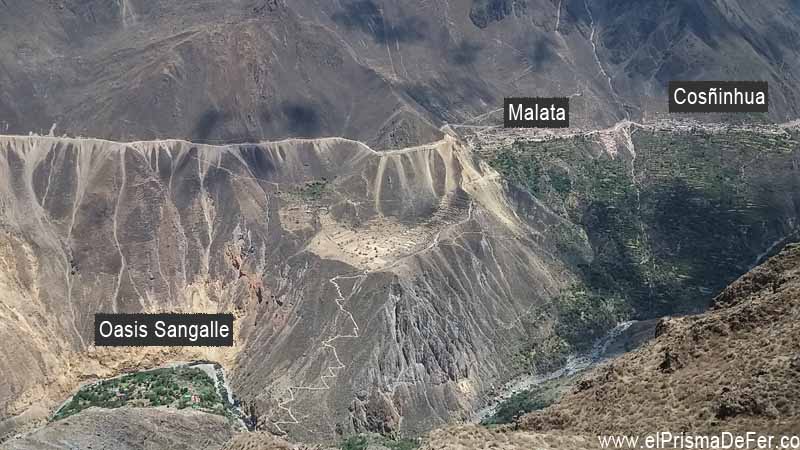
That's our gateway to adventure. The path from here is easy to follow and impossible to get lost on. You'll be descending the entire way on a single trail.
It is rare to encounter other people on this part of the trek, at least until you reach the bridge at the bottom of the canyon that crosses the Colca River and connects both banks.
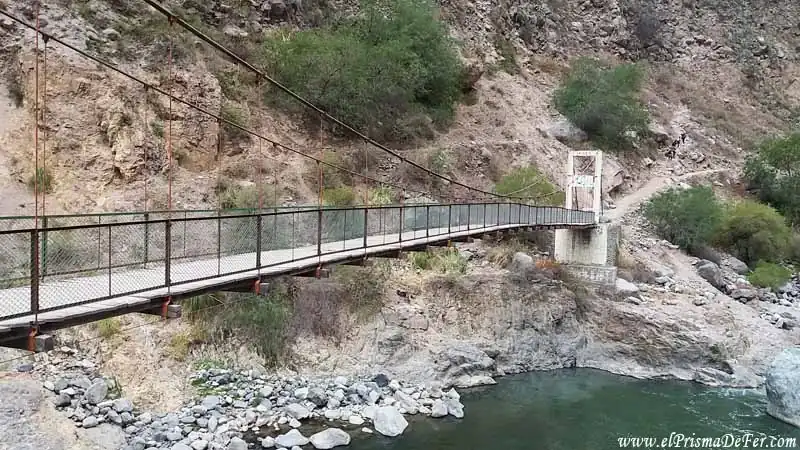
Only from here do shops, mostly women, begin to appear, selling snacks and drinks to hikers. You can start seeing shacks and small houses with people living in the Colca Valley.
First village: San Juan de Chuccho
The first town we pass is San Juan de Chuccho, ideal para comprar provisiones si nos falta o para descansar un rato.
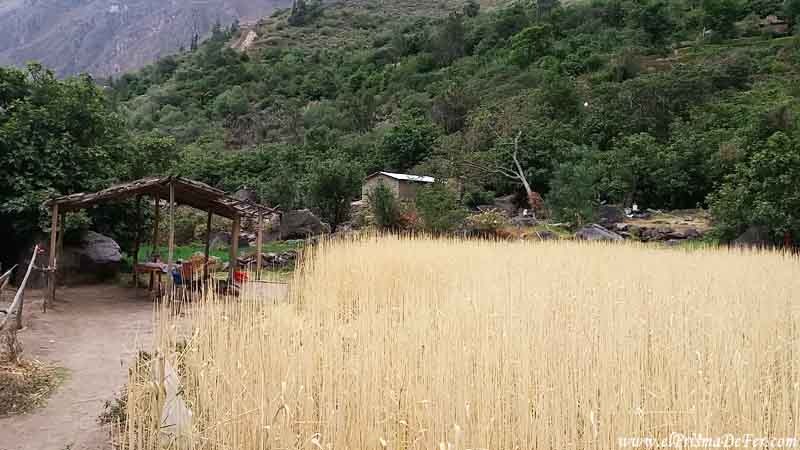
The trail takes you through constant climbs and descents. This section is usually more tiring because what we descended at the beginning (to the bridge) now has to be climbed back up, but on the other side of the river.
I got lost several times during this stage. The path stops being a single path and branches off in various directions; although they all head in the same general direction, some end at a crevasse that splits the Colca Canyon. When that happens, there's no choice but to retrace your steps and try another path. My advice: ask the locals if you can, and see if they can guide you better… I wasn't so lucky. 🙁
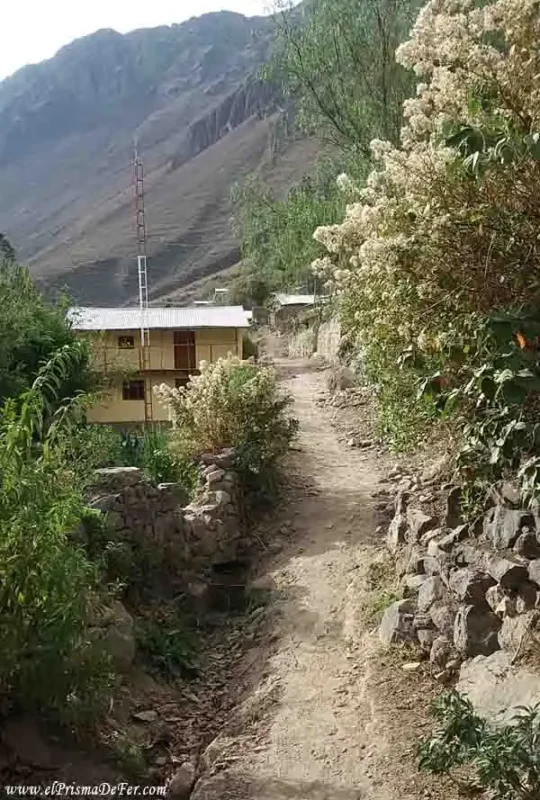
The hours passed, the sun began to set, and I was running out of water. I was wondering if I'd taken the right route. After a good climb, I found the place where I could cross the crevasse that had been blocking my way.
I confess that when I found that intersection, I felt a great relief... phew. I could now move on. After climbing a steep hill, I reached a small town I'd marked on my map, a place where you can rest and buy supplies. I took the opportunity to buy water, which I was already running low on.
Although it was getting late, I knew there were several villages in a row from there, and that I would eventually descend to the Sangalle Oasis. Finally, I didn't feel so lost anymore. 😀
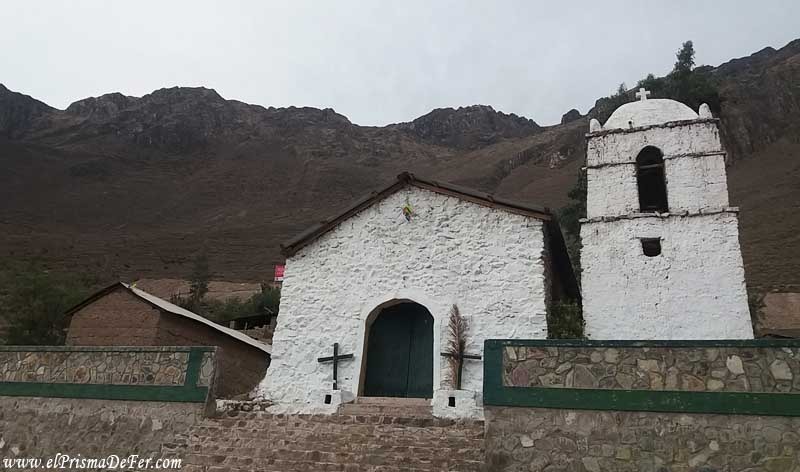
Villages of Cosñinhua and Malate
The road, flat in this part, continues through the towns of Cosñinhua and Malate . If we have any doubts about our direction, there are many locals who can show us the way and give us encouragement!
After a while, we can see the downward path that culminates in the Oasis, so we just have to descend, without encountering any difficulties this time.
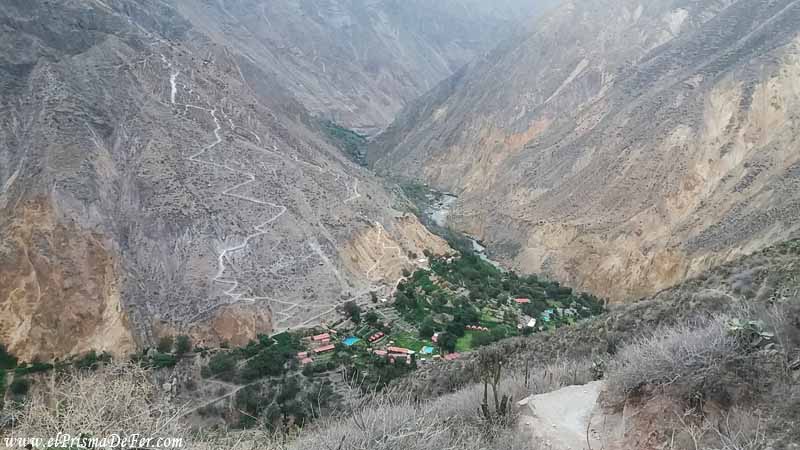
Arriving at the Sangalle Oasis
Already quite tired, and after almost six hours of intense hiking, I finally reached the Sangalle Oasis. In theory, I should have arrived sooner, but since I got lost a couple of times, it took me a little longer to make up for lost ground.
It was almost dusk when I started looking for a cabin to stay in for the night at the Oasis. There are a total of five places to stay. If you're bringing a tent, you can do so, or look for a simple cabin to rest.
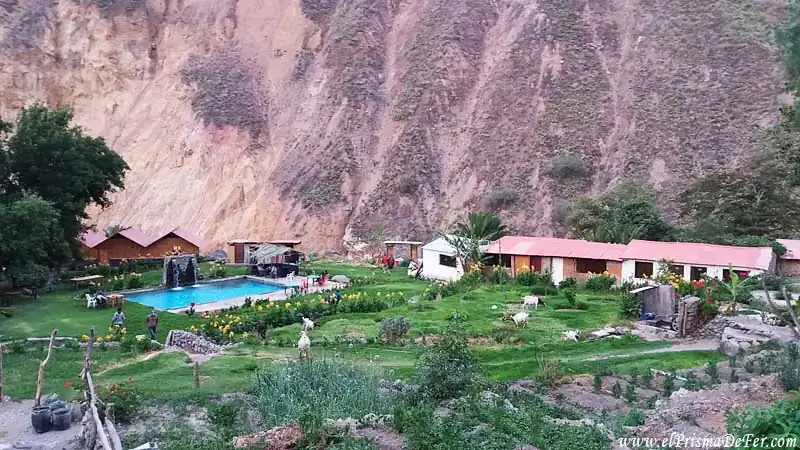
Most have pools of spring water; they're not warm, but they're not freezing either. I couldn't get in, as they release the water every evening and refill it at the beginning of the next day.
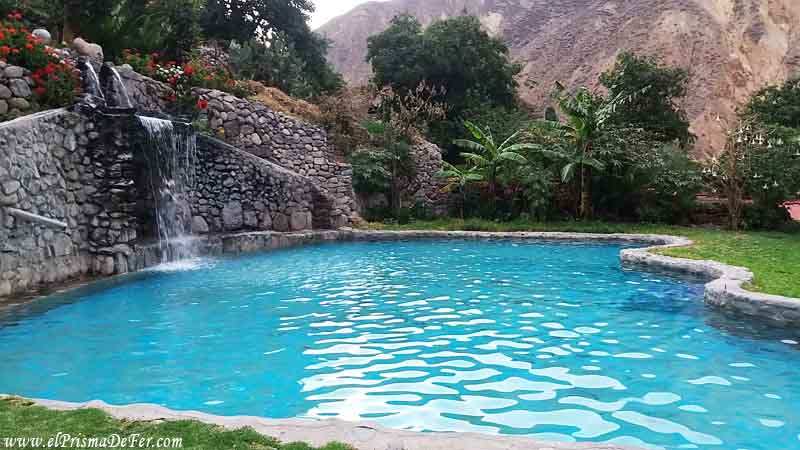
I was so tired that after eating, I went to the cabin to lie down on the bed to rest and regain strength for the next day.
Day 2: From Sangalle Oasis to Cabanaconde
| Distance |
| 6 km |
| Estimated time in hours |
| 3 hs |
| Elevation Profile |
| From 2.200 mts to 3.500 mts |
This is the most exhausting part. A long, very steep climb from the Sangalle Oasis at the bottom of the canyon to Cabanaconde.
This stretch can take you between 3 and 4 hours, depending on how you've been doing the day before. Slowly, making as many stops as my aching knees demanded, I reached the village.
From above, if we look back, we see the little oasis down there...and to think that just a few hours ago it was there.
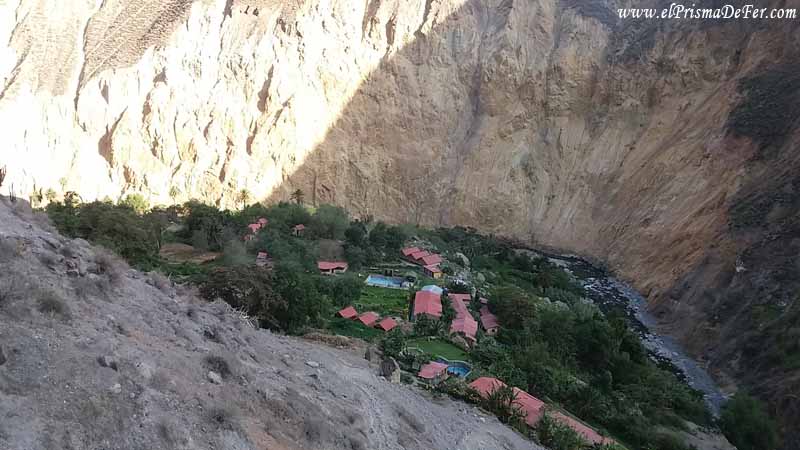
I felt a great sense of satisfaction at having accomplished it on my own; it's more adrenaline-pumping and cheaper, too. It's a fairly challenging and physically exhausting experience, although I'm sure that for someone in better physical condition, mine wasn't the best at the time, it might not be as difficult or as long to complete the entire route.

If you are passionate about trekking like me, you can check out the other posts that I have posted on the blog
Arrival in Cabanaconde and end of the Colca Canyon trek
Already in Cabanaconde you can take buses that go to Chivay either Arequipa, with a previous stop in Chivay.
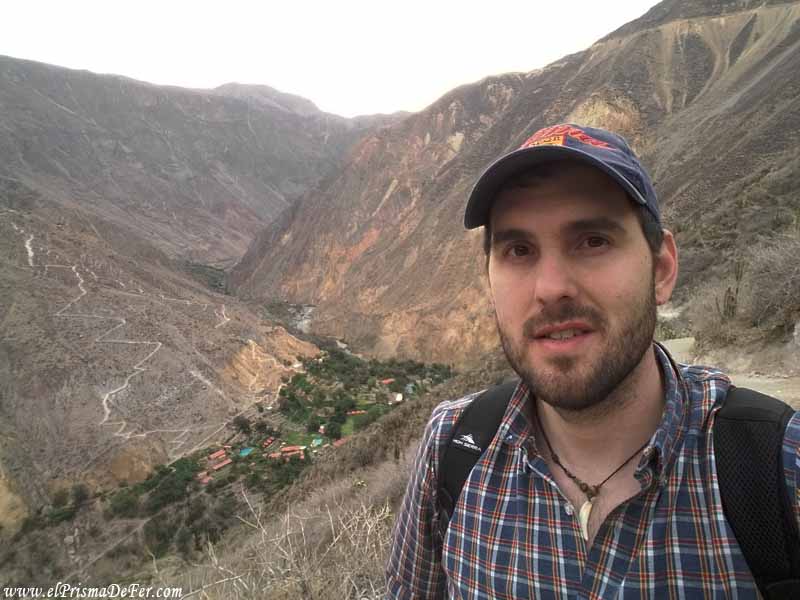
I went to Arequipa (6 hours of travel), with the bus that left at 11:30 am. From the central plaza, since afterwards, I would have to take another bus towards Cuzco to visit the Sacred Valley and obviously, one of the 7 wonders of the modern world, the famous Machu Picchu.

You might be interested in reading about how to get to Machu Picchu economically and with a few hours of trekking
If not, the other option is to return to Chivay and go to the hot springs to relax in the 38°C waters and regain strength.
Save this post on Pinterest

Frequently asked questions about the 2-day trek in the Colca Canyon
What does the 2-day trek consist of?
It's a trek that descends into the canyon, passes through small villages and agricultural areas, and usually includes an overnight stay at Sangalle Oasis. The following day, an early morning ascent back to the canyon rim takes place.
How difficult is trekking?
It is of moderate difficulty. The descent on the first day is long but manageable, while the ascent on the second day is the hardest part.
How many kilometers are traveled?
Depending on the route, the total distance covered is between 15 and 20 km. It's not so much the distance that's challenging, but the elevation gain, especially on the final climb.
Is it possible to do it without a guide?
Yes, the trek can be done independently, as the main trails are quite well-trodden. However, going with a guide simplifies the logistics and can provide context about the area.
Where do you sleep?
Most itineraries include accommodation at the Sangalle Oasis, where there are basic accommodations with a pool, food, and a very pleasant environment after the hike.
What to bring?
It's important to bring water, sunscreen, a hat, light clothing for the heat, something warm for the early morning, and good shoes. Snacks for the hike are also a good idea, although food can be purchased at some points along the way.
What is the best time to do it?
The best time to go is between April and November, during the dry season. During the rainy season (December to March), the trails can be more slippery and the trek becomes more challenging.
It's really hot?
Yes, it can get quite hot inside the canyon during the day, especially on the way down. That's why many hikes start early and the final ascent is done before sunrise.
Is it worth doing it in 2 days?
Yes, it's the most popular option if you're short on time. It's challenging but allows you to fully experience the canyon. If you prefer something more relaxed, there are 3-day versions with a more leisurely pace.
Colca Canyon trekking summary videos
Support The Prism of Fer!
Your support helps me continue creating free content on the blog. Thank you so much!


Great adventure!! I went with an agency, I didn't know what I was getting into 😆😆 It was a unique, exhausting, but well-rewarded experience. I also arrived at the lodge so tired that I didn't even have the strength to go into the pool. I had dinner already in bed, but the hardest part was just around the corner, climbing all the way down... Wow, it was exhausting. The good thing was that every so often during my breaks I had the luxury of screaming at the top of my lungs. 🤣
Fond memories of that visit to the imposing Canyon.
Hi Ruth! Does the agency tour also enter through the San Miguel Lookout?
So much effort has its reward! That final climb is super exhausting, but what a pleasure to leave the Canyon and look back at all the hikes we've been through. I'll never forget it, haha.
Those screams you made surely recharged you to keep going 😀
Greetings and thanks for commenting!