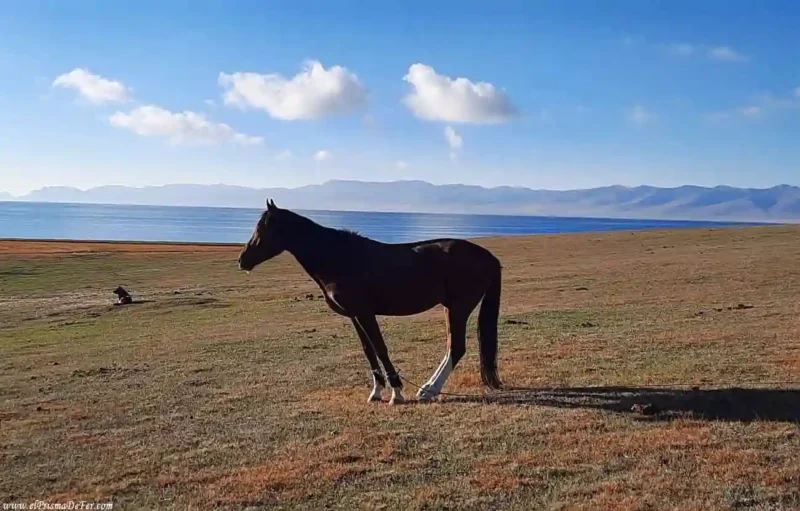
Song Kul is one of Kyrgyzstan's most popular destinations, especially known for the horseback treks that cross its vast steppes to reach the lake.
However, true to form, I decided to do it on foot, and it turned out to be very different from the treks I did in the Karakol area. Here the terrain is more open, without demanding mountain passes, with some noteworthy panoramic viewpoints and activity near the lake due to the yurt camps that remain active during the summer.
The hike to Song Kul isn't so much about epic landscapes like Ala-Kul or Archa-Tor, but rather about traversing wide valleys, passing some yurts along the way, and finally finding a large lake nestled among low mountains.

This post may contains affiliate links. If you purchase through these links, I may earn a commission at no extra cost to you. Thank you for your support!
Table of Contents
🗺️ Technical sheet for the Trekking to Song Kul Lake
| Start |
| Kochkor |
| Final |
| Kyzart |
| Duration |
| 3 days |
| Distance |
| 60 km |
| Estimated time in hours |
| 21.30 hs |
| Max. Altitude |
| 3326m |
| Difficulty |
| Easy-Moderate |
| Signaling |
| None |
| Water/food |
| Water can be found in rivers and some food can be found if there is a yurt camp. |
Do you want to follow this route precisely?
Download the KML/KMZ file for the 3-day trek to Song Kul Lake and open it in apps like Maps.me or Gaia GPS to view the complete route offline. This is ideal if you want to navigate the valley with confidence, even without a signal.
 Get the file on Gumroad for a small contribution.

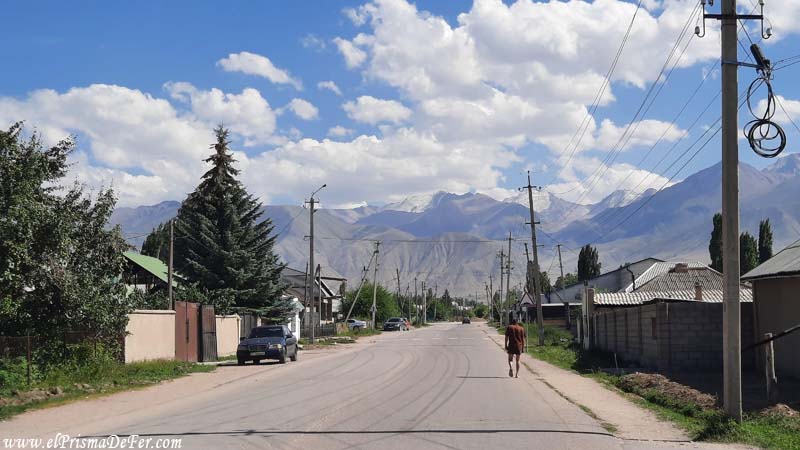
Kochkor, the base for exploring Song Kul
Kochkor is the most common starting point for those who want to get to Song Kul, whether by walking, on horseback, or on an organized tour.
Honestly, I didn't like the town itself very much; it's quite drab, without much charm or much to do. But its usefulness lies in its strategic location, since several routes to the lake start from here, and you can also arrange transportation, rent horses, or hire guides if needed.

To get to Kochkor, the most common route is from Bishkek or Karakol. From Bishkek, there are marshrutkas (shared minibuses) that depart from the west of the city and take about 4–5 hours. It's also possible to combine transportation if you're coming from other villages, such as Tamga or Naryn.
Once in Kochkor, there are plenty of guesthouses and several community agencies (such as CBT) where you can plan your trek or simply get maps and useful advice.
I stayed at Happy Hostel. A basic but comfortable hostel run by a very friendly family, with a grandmother who's happy to chat (they don't speak English) and treat you to meals. It's conveniently located and one of the cheapest in Kochkor.
Save this post on Pinterest

What is the best time to trek to Song Kul?
The ideal time for this trek is between mid-June and early September. Before then, many mountain passes are still covered in snow, and afterward, temperatures start to drop considerably, especially at night.
Even in the height of summer, it can get cold, especially around the lake, which is over 3,000 meters above sea level. The weather is changeable, so it's best to be prepared for sun, wind, rain, and even the occasional snowfall.

Other ways to get to Song Kul Lake
While hiking to Song Kul Lake is a beautiful experience for trekking enthusiasts, it's not the only way to get there. You can also reach it by car, although keep in mind that it's not the most economical option.
Being located at an altitude of over 3000 meters and far from the main roads, journeys by vehicle are usually long, along gravel and mountain roads, which significantly increases the cost, especially if traveling alone.
The most popular option for those seeking a different experience is doing it on horseback. In fact, it's the traditional and most promoted way to get there, especially from Kyzart or Jumgal.
Many local agencies like CBT and independent organizers offer 2- or 3-day horseback riding tours, with stops at yurts along the way. This is a good alternative for those who aren't used to walking long distances but still want to enjoy the rural and mountainous landscape of the Kyrgyzstan heartland.

Useful tips for trekking to Song Kul
- Bring a coat: Even in summer, nights can be cold. A sleeping bag isn't necessary, but thermal clothing is always welcome.
- No need to bring a tent: unlike what is recommended for trekking near Karakol, here, at least in high season, there are many yurt camps where you can spend two nights.
- Sun protection: The sun is strong at this altitude. Sunscreen, sunglasses, and a hat are essential.
- Water and food: There are some places where you can refill water (rivers and streams), but it's always a good idea to bring water purification tablets or a filter. As for food, dinner and breakfast will be provided at the camps, so bring what you need to eat for the rest of the day.
- Horses and cargo: If you don't want to carry a lot of weight or don't feel like walking the entire route, you can hire a horse to carry your luggage or even walk the entire route.
- The altitude shouldn't be a problem: The maximum altitude reached at the Jalgiz Kara mountain pass is 3,326m, so it shouldn't be an inconvenience, although it never hurts to acclimatize a little in the days beforehand.
- Hiking boots. While there are no steep or loose rock sections, it's always advisable to wear good footwear. There are no rivers to cross on foot.
- Download offline maps or bring a GPS with the trail track. This trail isn't very well marked, so having an offline map is essential. I recommend using Maps.me with the downloaded map of the area. The app has all the hiking trails in the Song-Kul area marked.
Where to sleep during the Song Kul trek?
Unlike the treks near Karakol, Ala-Kul, and Archa Tor, you don't need a tent to camp here, especially in summer. There are several strategically located campsites in the area where you can spend the two nights of the trek or horseback ride.

First Night
The first night I slept in a small camp called Kilemche CBT, located just before starting the climb to the Jalgiz Kara mountain pass (see location on the map). It's possible to book in advance at the CBT office in Kochkor town, although you can also arrive without a reservation and try your luck. If there's no space, it's not a big problem; there are other campsites nearby that can serve as alternatives.
The price was 1500 som without dinner or 2000 som with dinner and breakfast.
Second Night
The second night I slept in one of the many yurt camps on the shores of Song Kul Lake. During high season, there are many spread out across the lake, and it's easy to find accommodation without a reservation. The price was 1,500 som, with dinner and breakfast included.
The experience of sleeping in a traditional yurt, with open views of the lake and surrounded by the vast, serene landscape, is one of the great attractions of trekking.

Most of these camps offer bed, dinner, and breakfast, although the conditions are basic: single beds, no showers in some cases, and bathrooms outside the yurt. But the hospitality of the nomadic families and the experience itself make it worthwhile.
How to get to the starting point of the trek?
The starting point of the Song Kul trek is not in a specific town, but in the middle of the route connecting Kochkor with Kyzart. There is no frequent public transportation that runs along this exact stretch, so it's best to arrange a private car or taxi transfer from Kochkor. Most local drivers are familiar with the area and know where the trailhead is.
I joined a small group of hikers through the CBT agency in Kochkor. From there, we arranged a shared ride and all went together to the starting point. It cost approximately 500 som each (there were six of us in total, and the trip cost 3,000 som). It's a good option if you want to save money and meet other travelers. Another option, if you have the time and are up for adventure, is hitchhiking, although it's not the fastest option.
Whichever route you choose, the important thing is to plan well and make sure you arrive early to start the hike with plenty of light and energy.
Song Kul Lake trekking map
Day 1: From Kochkor to Chaar Archa Pass and arrival in Kilemche
| Distance |
| 18 km |
| Estimated time |
| 8 hs. |
| Elevation Profile |
| From 2.500 to 3.000 mts |
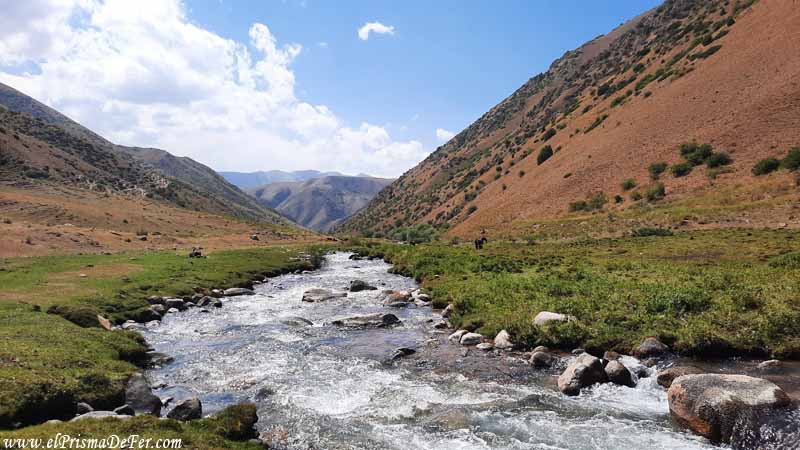
The trek to Song Kul begins with a completely different atmosphere than the trails of Karakol. In this area there are no forests or mighty rivers, but rather arid and open terrain, with broad but less steep hills.
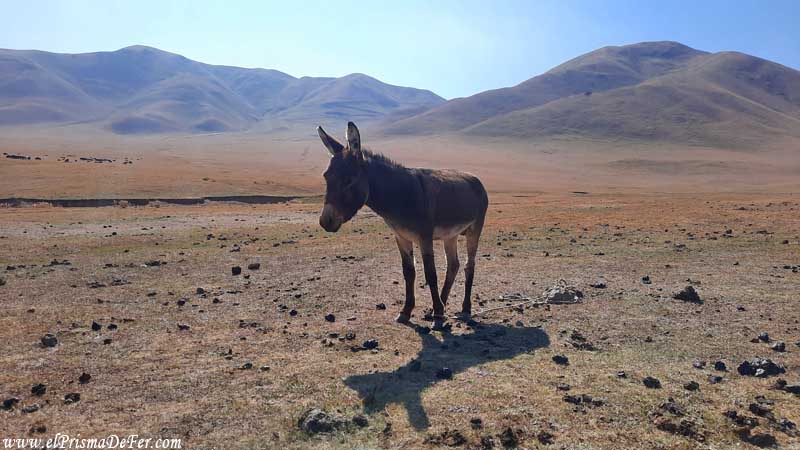
During this first day, approximately 18 kilometers are covered in about 8 hours of walking, crossing two mountain passes: the highest is the Chaar Archa Pass, at 3043 meters above sea level, and then another lower one is crossed, at about 2700 meters.
The climbs are constant but accessible, without technical sections, although they require good physical condition due to their duration.
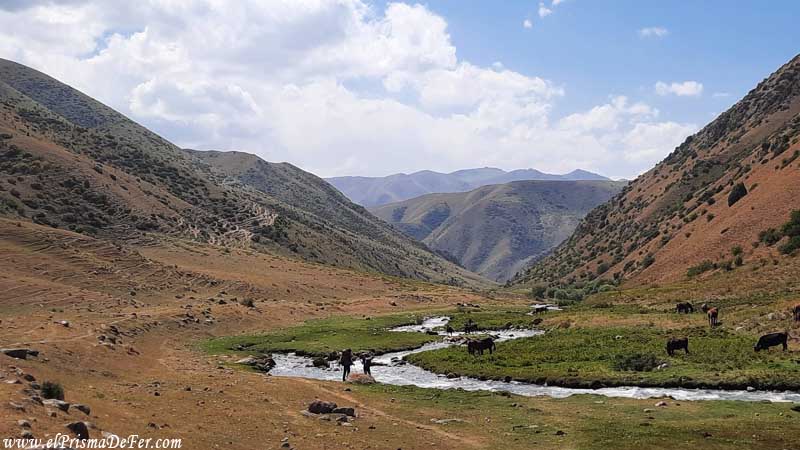
The goal for the day is to reach the Kilemche yurt camp, managed by the CBT (Community Based Tourism) network. It's an ideal place to rest after a long day, where you'll experience the traditional hospitality of the Kyrgyz people.
The landscape opens up to vast meadows, and as you approach the camp, it is common to see grazing animals and nomadic shepherds moving about.
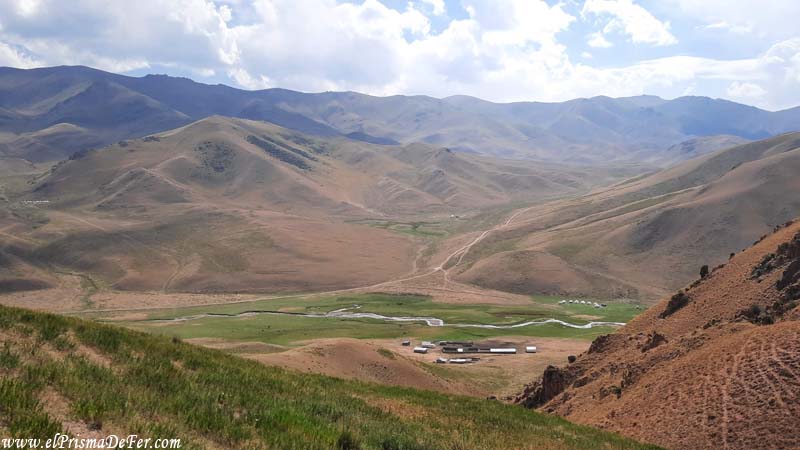
If you go during the high season (especially between July and August), it is advisable to book in advance, as the flow of travelers is usually high. However, you can also arrive directly without a reservation, as there is almost always availability, and if there is no space at that specific campsite, there are other nearby campsites in the area that also welcome hikers.
Day 2: Crossing the Jalgiz Kara Pass and arriving at Song Kul Lake
| Distance |
| 18 km |
| Estimated time |
| 6.30 hs |
| Elevation Profile |
| From 2.600 mts to 3.300 mts |
The second day begins with the biggest challenge of the trek: crossing the Jalgiz Kara pass, which at 3326 meters above sea level, is the highest point of the entire trek.
The climb starts early and requires sustained effort, but there are no technical sections. As you ascend, the landscape becomes increasingly dramatic, and upon reaching the summit, the panoramic views reward all your efforts. Rolling mountains in shades of ochre and green stretch to the horizon, and on clear days you can already glimpse the lake in the distance.

I recommend taking a long break at the top of the pass, eating something, hydrating, and enjoying the scenery calmly, as the views from there are some of the best of the entire trek.
After passing the highest point of the trail, the path begins a steady and fairly gradual descent. As we descend, the landscape gradually opens up until, almost without realizing it, the vastness of Song Kul Lake appears before us.
Before arriving, a curious solitary monument in the middle of nowhere marks a landmark that is surprising for its isolated location (see on the map). If I remember correctly, it is a tribute to a Kyrgyz general who fought nearby.
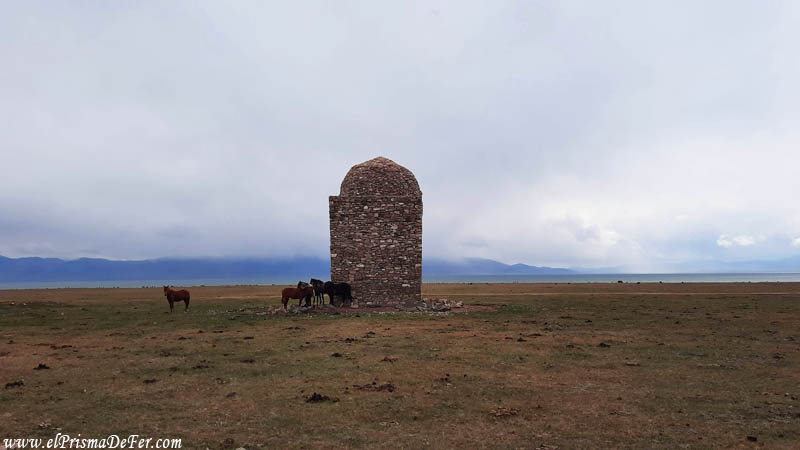
Once on the shore, the size of the lake becomes clear. Enormous, calm, surrounded by hills that seem to stretch on forever.
Along the shore there are several yurt camps to choose from, although they are quite spaced out. I opted to go to the right, following the coast, because it suited my route for the next day.
The yurts are very well equipped, and some even have bathrooms with Western-style toilets, which is unusual in such remote areas.
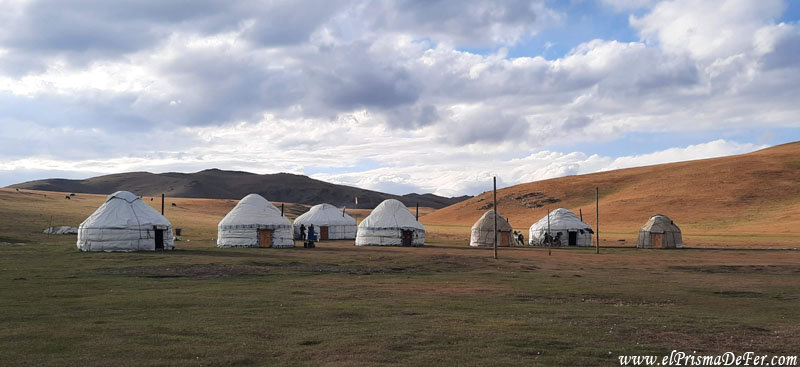
As it's a shorter trekking day, this day offers plenty of time to rest, take a leisurely stroll around the area, or even take a dip in the lake... although be warned: the water is freezing.

Day 3: Heading to Kyzart, closing the circle
| Distance |
| 24 km |
| Estimated time |
| 7 hs. |
| Elevation Profile |
| From 3.300 mts to 2.100 mts |
The third day aims to reach the village of Kyzart, which involves a hike of about 24 km, approximately 7 hours. It is the longest stage in terms of distance, but also one of the most enjoyable.
The trail starts from the camp following the lake shore for a stretch, and then begins a new climb that takes us to another mountain pass, also close to 3300 meters in height.
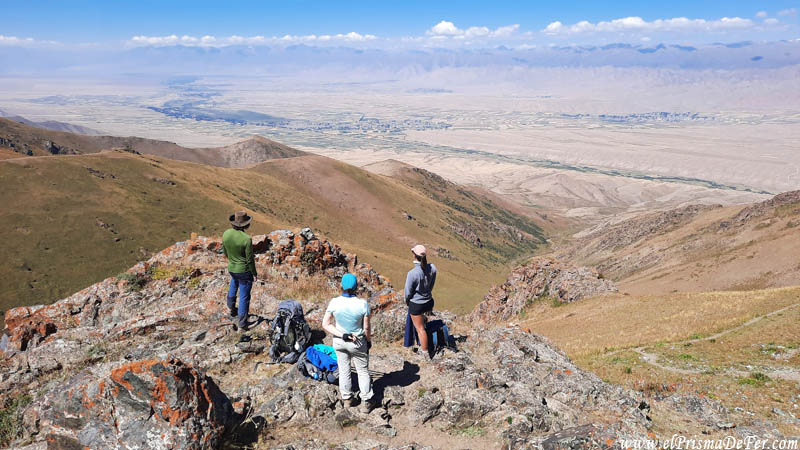
Once we reached the pass, we definitively left behind the views of Song Kul Lake, but the landscape that opens up on the other side is not far behind.
The panoramic view is breathtaking, with rolling hills, distant mountains, and the small village of Kyzart peeking out in the distance, the ultimate destination. The descent from there is long but gradual, allowing you to savor each view without overexerting yourself.
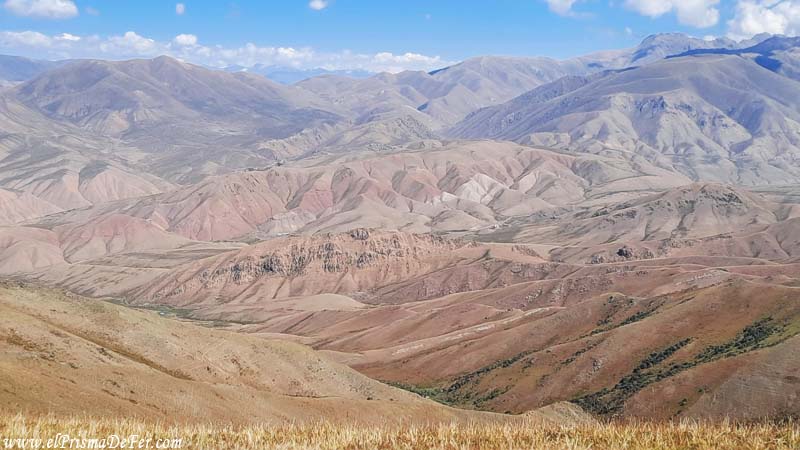
I would say that this section was my favorite of the trek, because of the visual appeal of the surroundings and the feeling of closing the adventure with a contemplative walk.
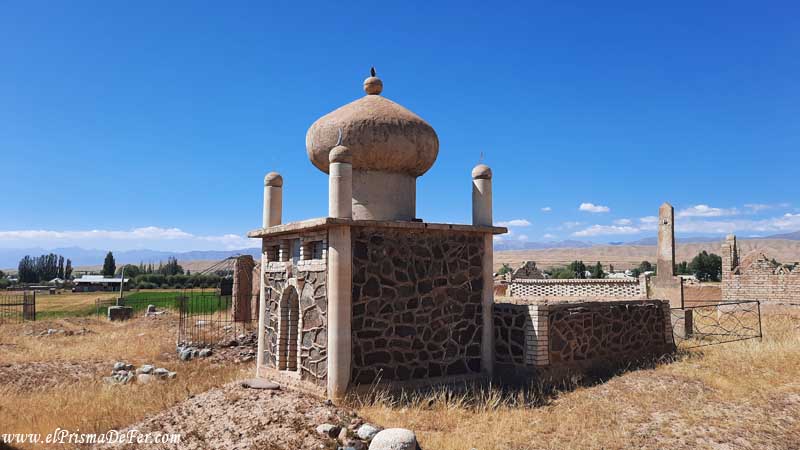
Near the end, the terrain flattens out, and just before entering Kyzart we pass through a very picturesque cemetery, with tombs in the Arabic style, which provide a different image to the end of the hike.
How to get back from Kyzart to Kochkor?
Once you've finished trekking in Kyzart, it's time to organize your return to Kochkor. It's important to know that there's no regular public transportation from this village, so your options are limited to negotiating with a local driver or hitchhiking.
Since I was with a group, we arranged for a local car to take us. Keep in mind that prices are usually high, since the driver has to make the round trip and doesn't always find passengers for the return trip. We paid 3000 som for the whole car.
If you're alone, hitchhiking can be a viable option, there's some traffic, especially from other travelers or locals heading down to Kochkor. Of course, be patient and flexible, and it doesn't hurt to include this expense in your travel budget.
Final thoughts: Is trekking to Song Kul worth it?
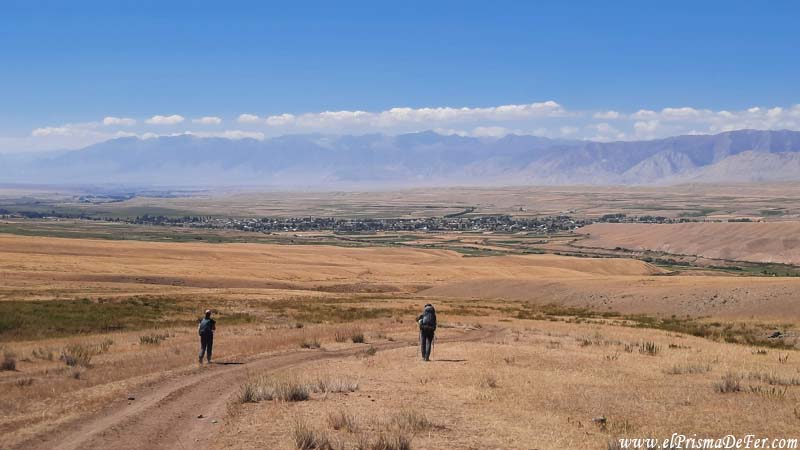
Song Kul is undoubtedly one of the most well-known and touristy destinations in Kyrgyzstan, but compared to other areas of the country, such as the area around Karakol or the south towards Lenin Peak, it didn't seem like the best trekking the country has to offer. Over the three days, I found the landscapes to be somewhat monotonous, with wide hills, pastures, and gentle mountains that didn't really impress.
The lake itself is large and has a beautiful turquoise color, but I didn't find it impressive either, especially considering that Issyk Kul, which is much more accessible, also offers beautiful views and more possibilities around. Perhaps that's why many choose to do this route on horseback, which ends up being more of a relaxing walk than a real trekking adventure.
In short, I wouldn't recommend it if you're short on time and want to prioritize more intense hikes or more varied landscapes. But if you have plenty of time and are looking for a more peaceful experience, with the possibility of sleeping in yurts and being close to the nomadic life, it may be a good option.
Frequently asked questions about trekking to Song Kul Lake
Where is Song Kul Lake located?
The Song Kul is located in the heart of Kyrgyzstan, at an altitude of over 3,000 meters, surrounded by wide grasslands where nomads spend the summer with their flocks.
How difficult is the trek?
The difficulty is moderate. It's not technical, although there are long days and mountain passes that require good physical condition.
How many days are needed?
The most common way to do it is in 3 days, depending on the starting point and pace. It can also be combined with sections on horseback.
How many kilometers is that?
It varies depending on the route, but it is usually between 40 and 70 km in total.
What is the best time to do it?
The best season is from June to September, when the lake is accessible and the shepherds set up their yurt camps.
Where do you sleep?
Most travelers sleep in traditional yurts, one of the most authentic experiences in the country. Camping is also possible.
Can it be done on horseback?
Yes, it's one of the most popular ways to explore the area. You can arrange complete horseback riding tours or combine trekking with horseback riding.
Is it signposted?
Not too much. It's advisable to carry offline maps (Maps.me, Gaia GPS).
Is there water on the road?
Yes, there are rivers and streams, but it's advisable to filter or purify the water.
Can you feel the altitude?
Not much. The lake is over 3,000 m, but few people usually experience symptoms of altitude sickness.
Is it worth doing?
It depends. While it's one of the most iconic experiences in Kyrgyzstan, in my opinion, there are better treks to do in the country. If you're looking to do the trek on horseback, then it might be more worthwhile.
Support The Prism of Fer!
Your support helps me continue creating free content on the blog. Thank you so much!