Tbilisi, the capital of Georgia, is a city I loved from the moment I arrived. Located on the banks of the Kura River and surrounded by hills, it combines a long history with a modern energy that makes it one of the most attractive destinations in the Caucasus.
Its cobbled streets, old churches, houses with carved wooden balconies and colorful murals create a unique atmosphere where tradition and avant-garde coexist.
Besides its rich culture, Tbilisi is an ideal starting point for exploring the rest of Georgia, whether towards the wine region, the Black Sea or the Caucasus Mountains.
In this post I'm going to tell you what you can do in Tbilisi, what I liked most, how to get around the city, where to stay, must-sees, places to eat, everything you need to know before traveling to this extraordinary capital.

This post may contains affiliate links. If you purchase through these links, I may earn a commission at no extra cost to you. Thank you for your support!
Table of Contents
History and architecture of Tbilisi
Tbilisi is a city that surprises with its blend of styles found at every turn. Founded in the 5th century, it has been in the hands of Persians, Arabs, Mongols, Ottomans, and Russians, making it a true cultural and architectural mosaic.
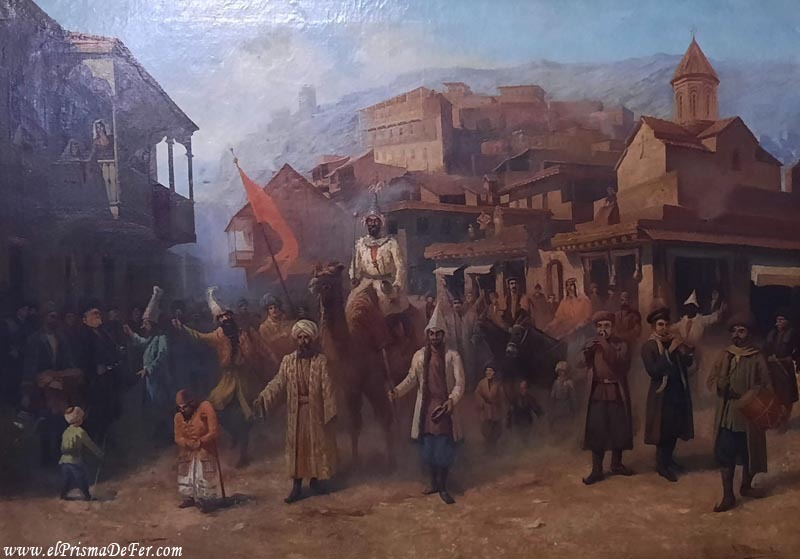
Walking through its streets is like traversing centuries of history, where Orthodox churches, synagogues, and mosques stand a few meters apart, reflecting the diversity that has always characterized Georgia.
The historic center preserves cobblestone streets and traditional houses with carved wooden balconies, perfect for getting lost in with a camera in hand.
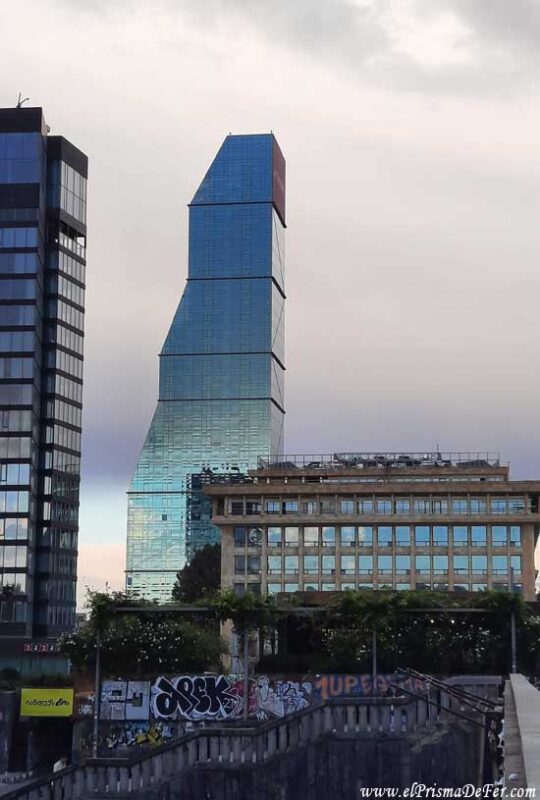
At the same time, the city shows its modern side with contemporary buildings such as the Peace Bridge or the futuristic headquarters of the Ministry of Justice, which contrast with the Soviet buildings still present in many neighborhoods.
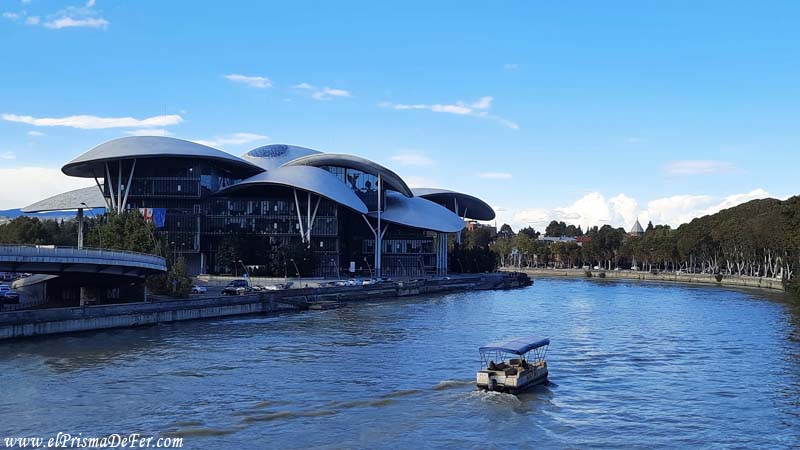
That duality is what gives Tbilisi its unique character; you can be standing in front of a 6th-century church, and then turn the corner and find yourself face to face with an urban mural or an ultramodern glass tower.

Why I liked Tbilisi
Tbilisi struck me as a city with a lot of personality and, above all, very diverse.
As someone who loves walking through cities, I felt it was absolutely worthwhile. As I walked along, something caught my eye at every corner: murals, old buildings, Soviet-era structures, modern architecture—all mixed together and coexisting in a way that wasn't jarring.
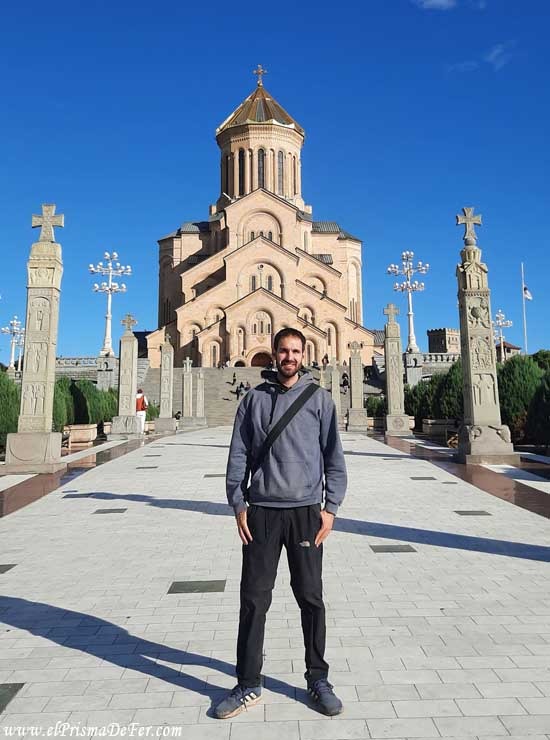
I also liked the youthful atmosphere, with lots of people in the streets and bars, but it wasn't overwhelming. It's not a city where you'll get bored.
In addition, I encountered quite a few foreigners of different nationalities, which gives it a more cosmopolitan feel and makes it even more interesting to explore.
Nightlife and youthful atmosphere in Tbilisi
As I mentioned earlier, Tbilisi boasts a vibrant youthful energy and nightlife, which in recent years has put it firmly on the cultural map of Eastern Europe. There are trendy cafes, alternative bars, and clubs operating out of abandoned factories or basements with an underground vibe.
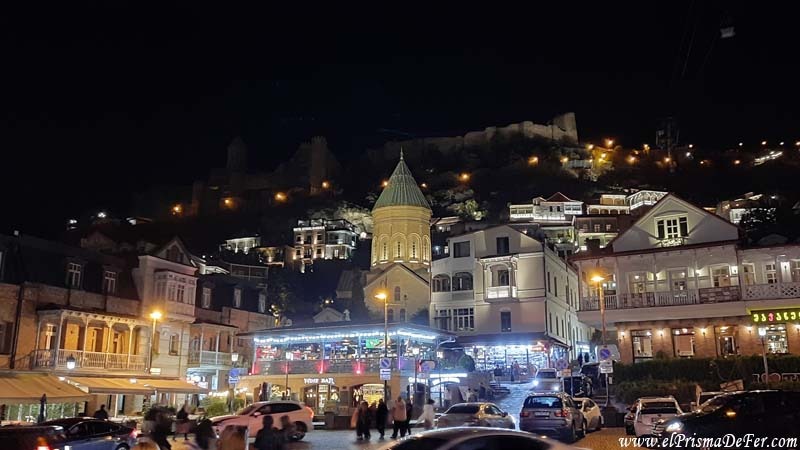
One of the best-known spots is Bassiani club, considered one of Europe's best for electronic music lovers. Beyond this, there's a wide variety of bars serving craft beer, terraces overlooking the Kura River, and live music venues that blend jazz, rock, and traditional Georgian sounds.
And the most interesting thing is seeing the mix of people who join this movement, from backpackers, local students, expats and even more conservative Georgians.
Map with attractions to see in Tbilisi
What to do in Tbilisi
There are so many things to see and do in Tbilisi, from exploring its medieval churches and cobblestone streets to enjoying its sulfur baths, its viewpoints, and its nightlife. This is a list of the places I consider most important to visit in Georgia's capital.
A guided tour
A walking tour in Tbilisi is the best way to start exploring the city. While it's not free, it helps you get your bearings quickly, you learn history and anecdotes from a local guide, and you can meet other travelers along the way. You can book your walking tour here.
Old City (Abanotubani and surroundings)
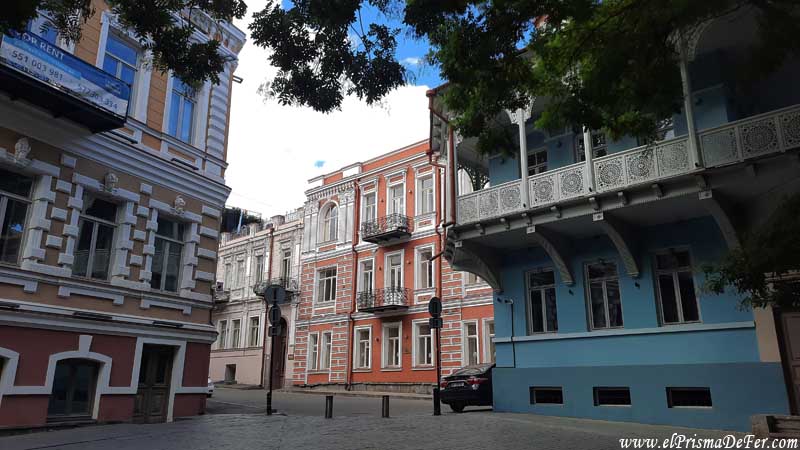
Tbilisi's Old Town is a veritable labyrinth of cobblestone streets, colorful wooden balconies, and buildings recounting centuries of history. Walking through this neighborhood is like exploring an open-air museum, where Orthodox churches, synagogues, and mosques coexist within a few square meters, reflecting the city's cultural diversity.
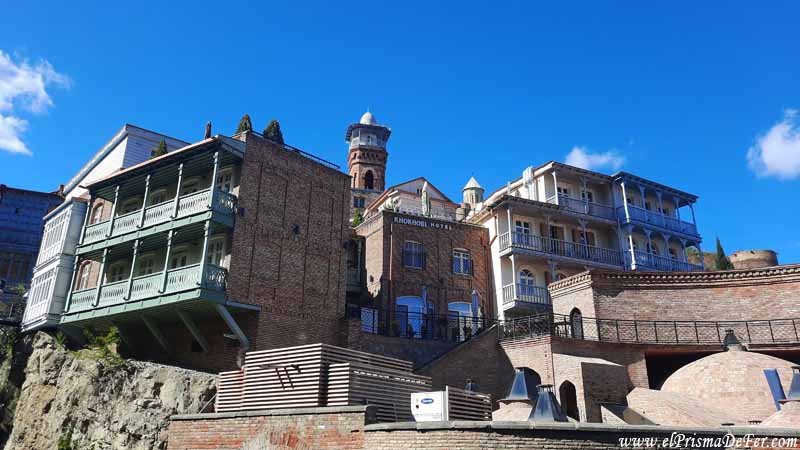
In addition to its architectural charm, the area is full of cafes, restaurants, and small local businesses that give it a bohemian feel. It's the ideal place to wander aimlessly, camera in hand, and be amazed by corners full of photogenic details.
Metekhi Church
The Metekhi Church is one of Tbilisi's most iconic temples and one of the city's best postcard views (see on the map). It sits atop a cliff overlooking the Kura River, directly opposite the Old Town, offering spectacular views.
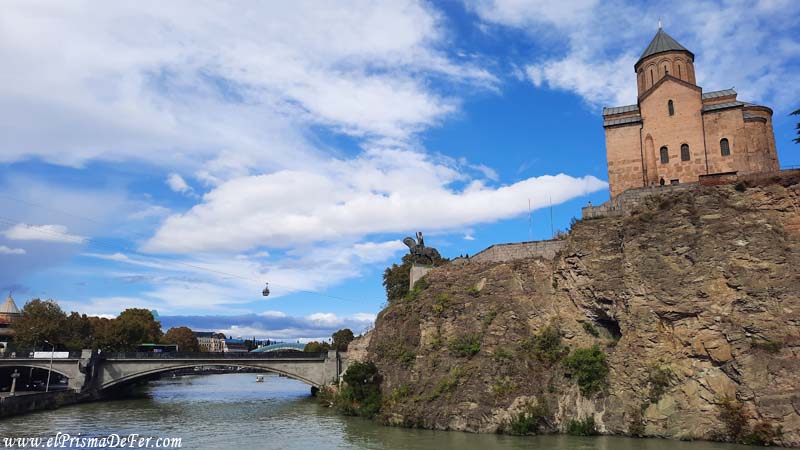
Its origin dates back to the 13th century, during the reign of King Demetre II, although the place already had historical importance even before that, since it is said that the palace of the former royal residence was on that same hill.
In front of the church is the equestrian statue of King Vakhtang Gorgasali, founder of Tbilisi, making the complex one of the capital's most recognizable symbols.
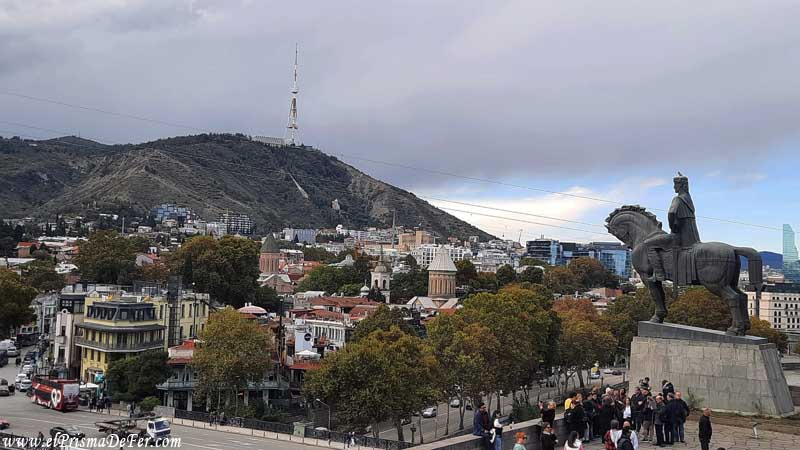
Furthermore, from the viewing platform surrounding the temple, you have some of the most beautiful views of Narikala Fortress, the Old Town, and the river, making it a perfect place to stop and admire the city.
Abanotubani sulfur baths
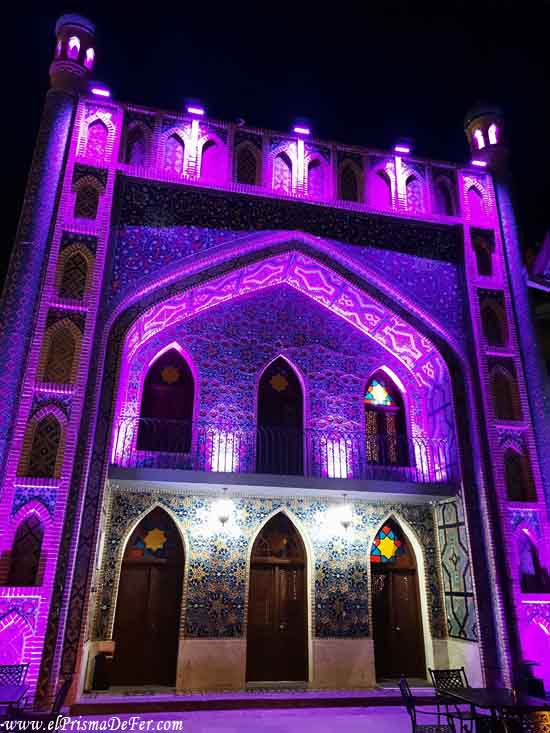
The sulfur hot springs are one of Tbilisi's most iconic sights (see location). Recognizable by their brick domes that rise above the surface, they have been part of the city's history for centuries.
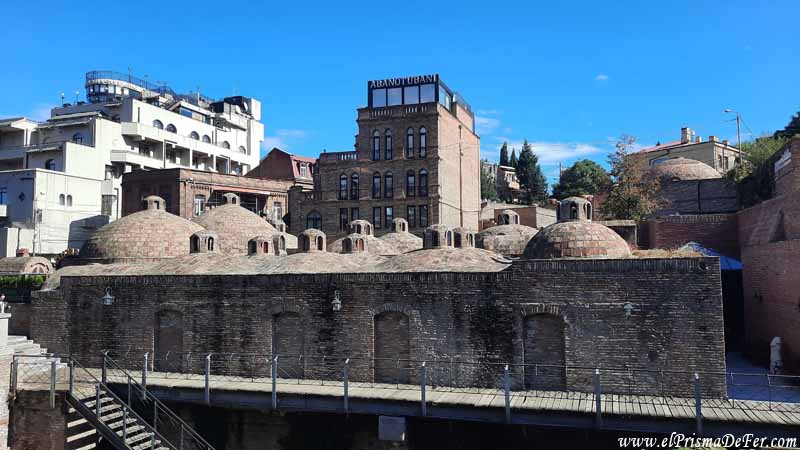
You can relax in one of these baths, especially in winter, when the contrast between the cold outside and the warmth of the water is enjoyed to the fullest.
Some baths retain a more traditional style, with mosaics and private rooms, while others offer modern services such as massages and spa treatments. Even if you don't go inside, it's worth walking around the neighborhood and appreciating the unique atmosphere.
Narikala Fortress
The Narikala Fortress overlooks the old town of Tbilisi from the top of the hill (see on map). It can be accessed by walking along the street or by taking the cable car from Rike Park, making it an accessible walk for everyone.
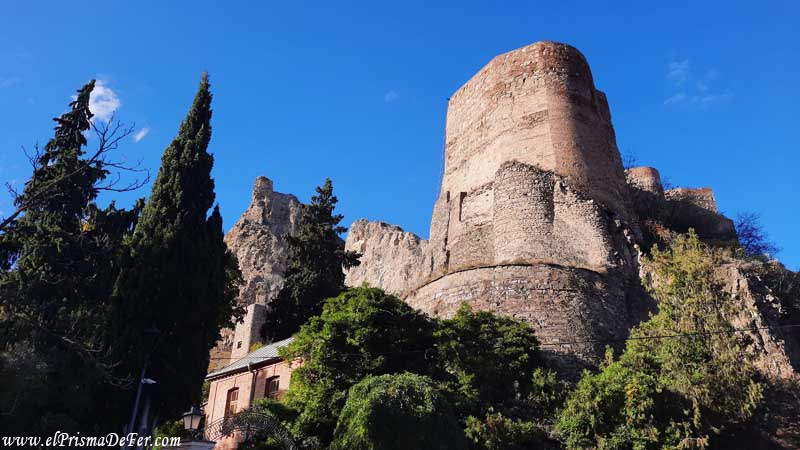
When I was there in 2024, it was closed for restoration work, so it's best to check beforehand if it's currently possible to enter.
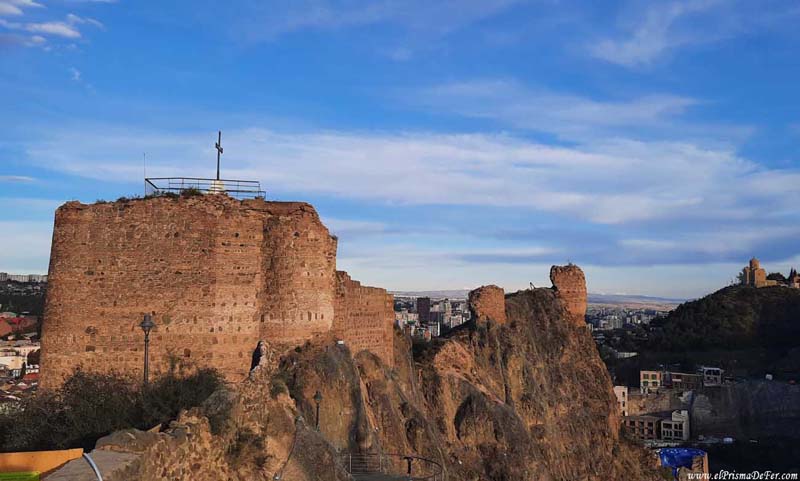
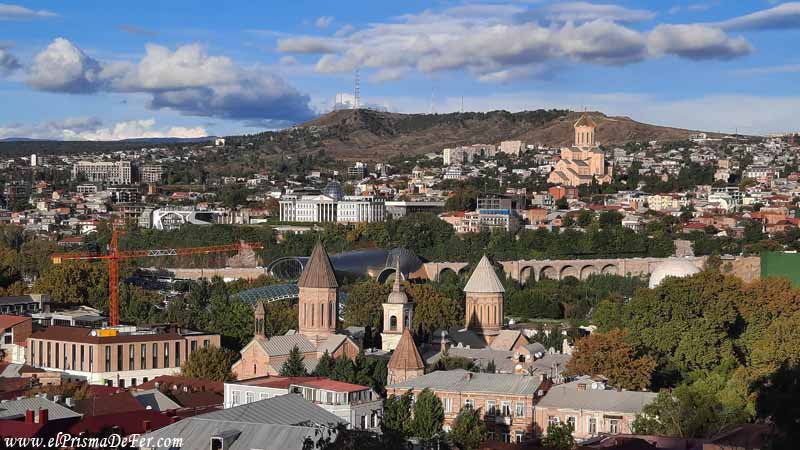
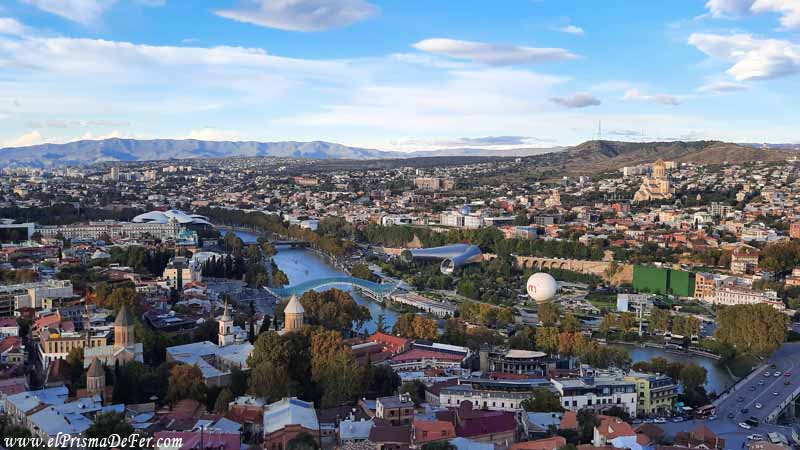
In any case, even though it's closed, it's worth visiting and walking around the area, as the entire area is not only picturesque and touristy, but also offers spectacular panoramic views from the stretch that runs from the fortress to Mother Georgia.
Georgia's Mother
Very close to the fortress is the Monument to the Mother of Georgia, a huge statue holding a sword in one hand and a wine cup in the other.
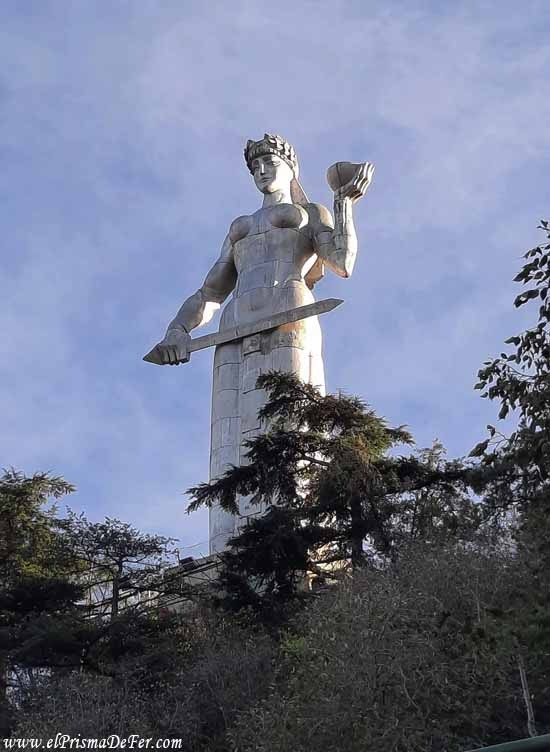
It is a symbol of Georgian duality: hospitality with friends and firmness with enemies. Climbing up there not only allows you to see this iconic figure up close, but also to enjoy one of the most beautiful views of Tbilisi.
Holy Trinity Cathedral (Sameba)
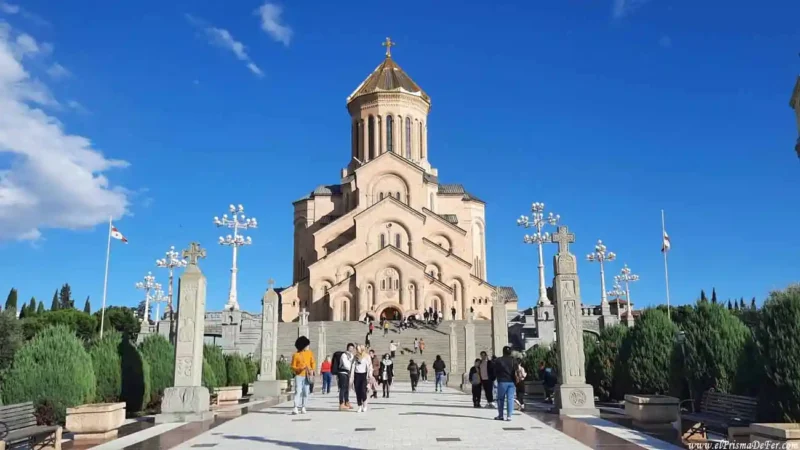
The Holy Trinity Cathedral is the largest Orthodox church in the Caucasus and one of Tbilisi's most impressive landmarks (see location).
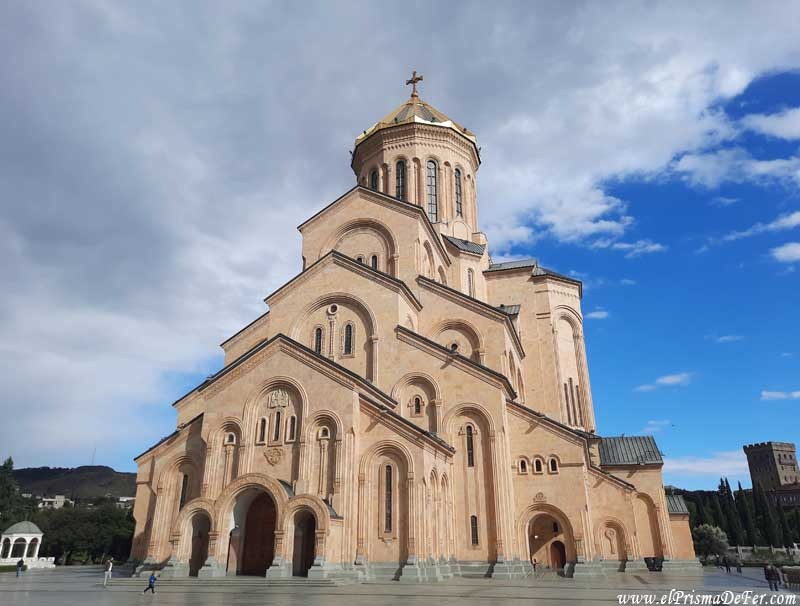
Built in the 2000s, it stands out not only for its size, but also for its location on a hill that makes it visible from almost anywhere in the city.
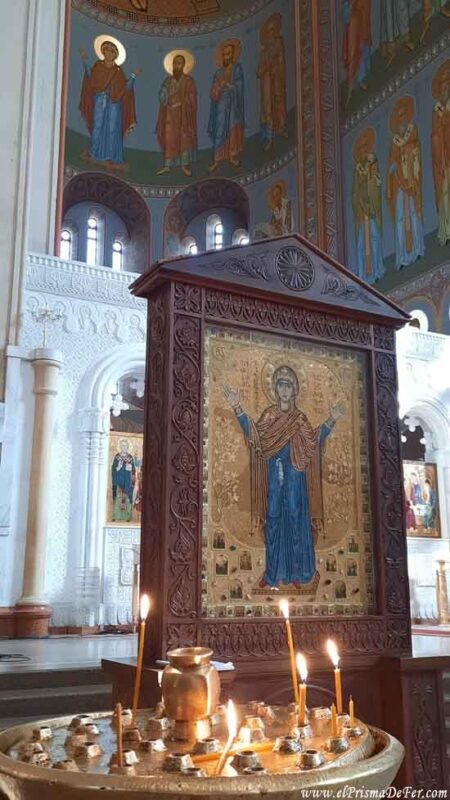
The interior is majestic, with spacious halls and decorations that combine the traditional with the modern.
In addition, it's a lovely walk to explore the surrounding area, as it has some wooded areas and panoramic viewpoints to appreciate this architectural beauty from different angles.
Chronicles of Georgia Monument
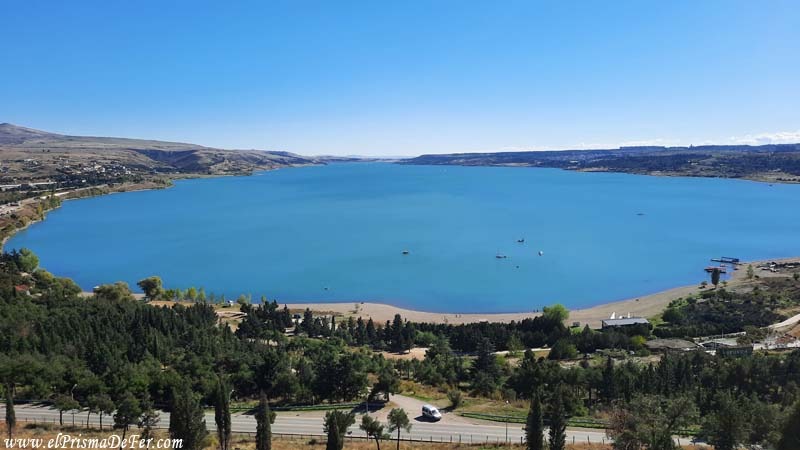
A little further from the center, near the Tbilisi Sea reservoir, is one of the most surprising works in the city, the Monument called Chronicles of Georgia (see location).
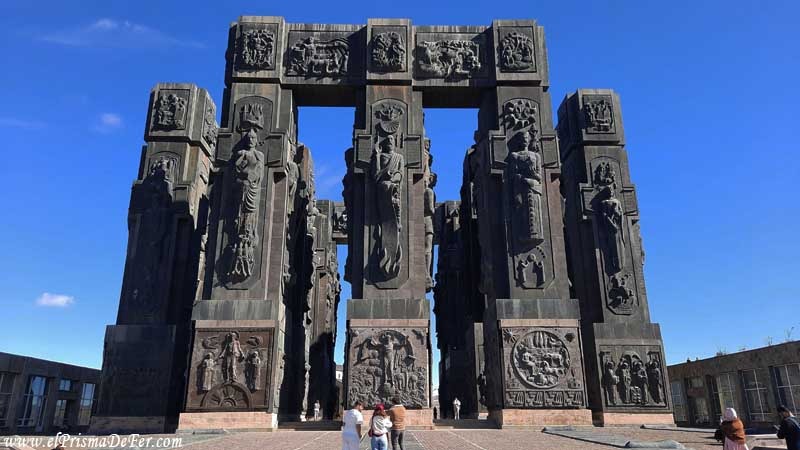
This set of enormous carved columns, each decorated with biblical scenes and passages from Georgian history, creates an imposing effect that seems straight out of an epic film like The Lord of the Rings.
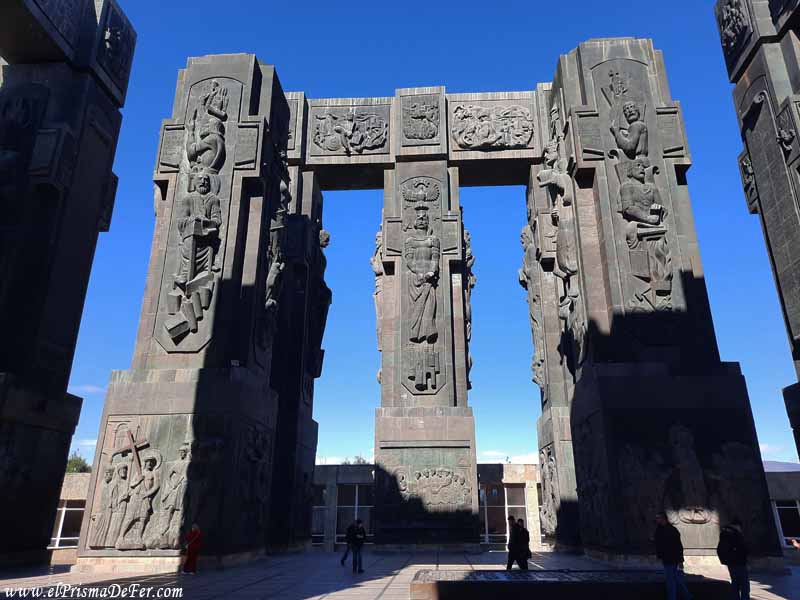
The magnitude of the site, its location overlooking the lake, and the fact that it is still little known to many travelers make it a must-see.
How to get to Chronicles of Georgia
To get to the Georgia History Monument, the most convenient way is to take the subway to Guramishvili station (red line) and from there walk up.
The route begins along residential streets, then climbs a hill directly to the monument. The ascent can be somewhat demanding, but it's short, and the reward lies in the views and the sheer scale of the work.
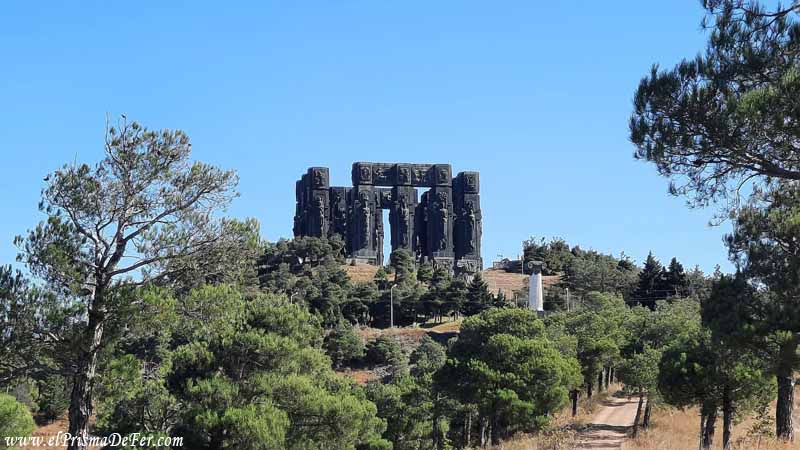
You can also get there by car. There's a road that leads up from the city to the entrance to the monument.
Rustaveli Avenue and Liberty Square
Rustaveli Avenue is the city's main artery and one of the most striking points of the contrast between tradition and modernity. Along its wide sidewalks are iconic buildings such as the Rustaveli Theatre, the Parliament, museums, and several art galleries.
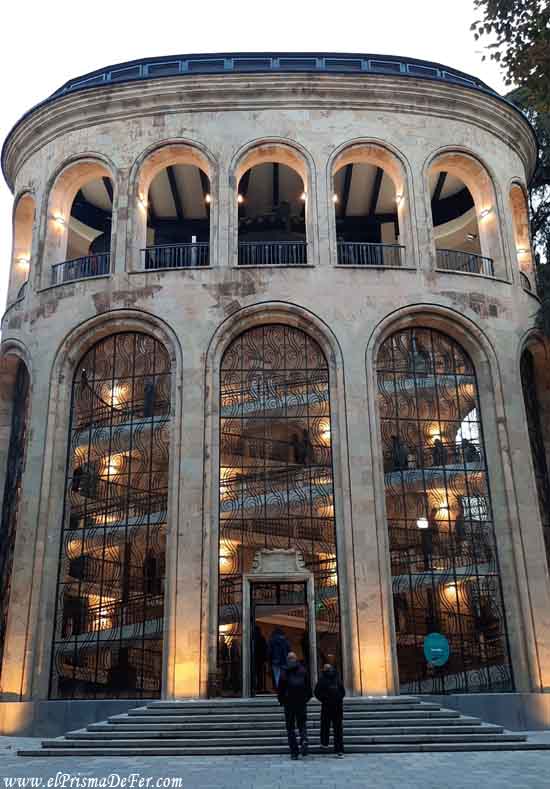
Liberty Square is like the heart of the city. This square serves as the nerve center of Tbilisi, connecting Rustaveli Avenue with the Old City and serving as a meeting point for locals and tourists.
From here, you can appreciate the architecture of the surrounding buildings, take photos, and explore the nearby historic neighborhoods. It's ideal for exploring during the day, stopping in one of the cafes and observing the rhythm of the city, or enjoying it at night, when the lights give it an elegant and vibrant feel.
Tbilisi Soviet Flea Market
A different place to visit is the Tbilisi flea market (see on map), where you can find everything from clothes, books and souvenirs, to furniture and collectibles.
What makes this market different is the large number of items from the Soviet era, which allow you to delve into the recent history of Georgia and find unique pieces to take home as souvenirs.

It's perfect for those looking for original souvenirs, antiques, or simply to experience an atmosphere different from the rest of the city.
Peace Bridge and Rike Park
The Bridge of Peace is one of Tbilisi's contemporary icons. Its modern glass and steel design contrasts with the traditional architecture of the Old Town, creating a very distinctive postcard of the city. It's a highly photogenic spot both day and night, when illuminated by thousands of LED lights.
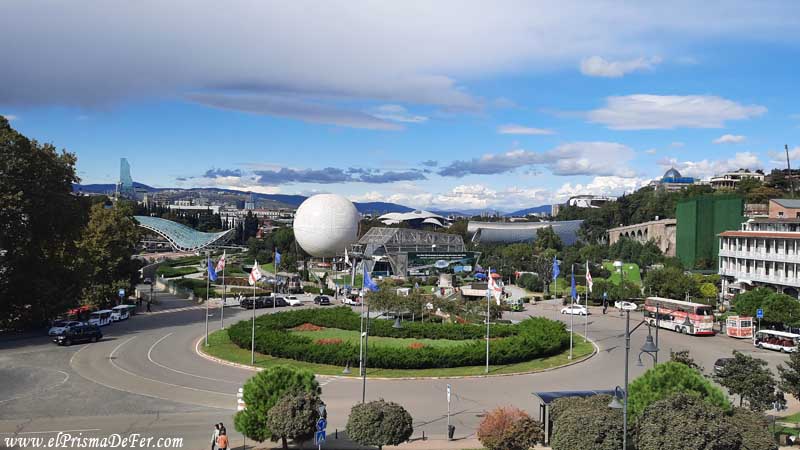
At its base lies Rike Park, a lively green space where you can relax, have a picnic, or simply watch the locals enjoy the outdoors. The cable car to Narikala also departs from here, so you'll likely pass by more than once.
Mtatsminda Park
At the top of a hill is Mtatsminda Park, an amusement park that also serves as a viewpoint overlooking Tbilisi.
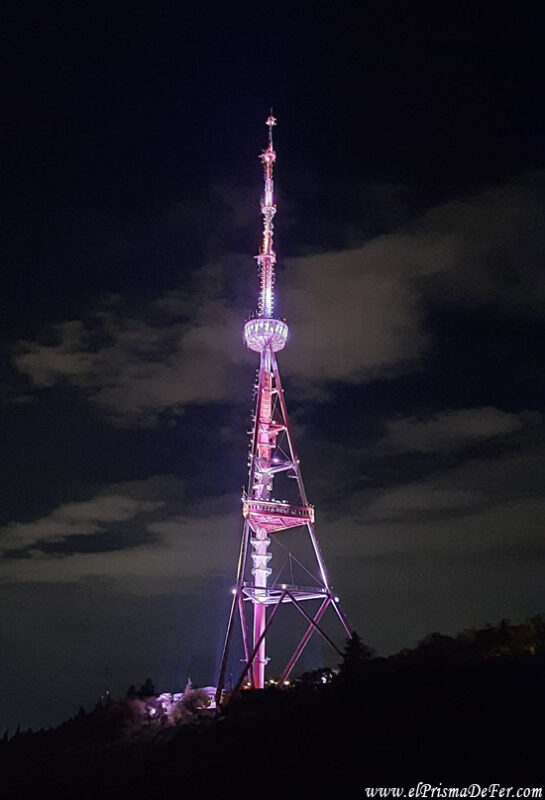
It can be accessed by funicular or on foot. In addition to games and attractions, there are restaurants and cafes with terraces for viewing the city from above.
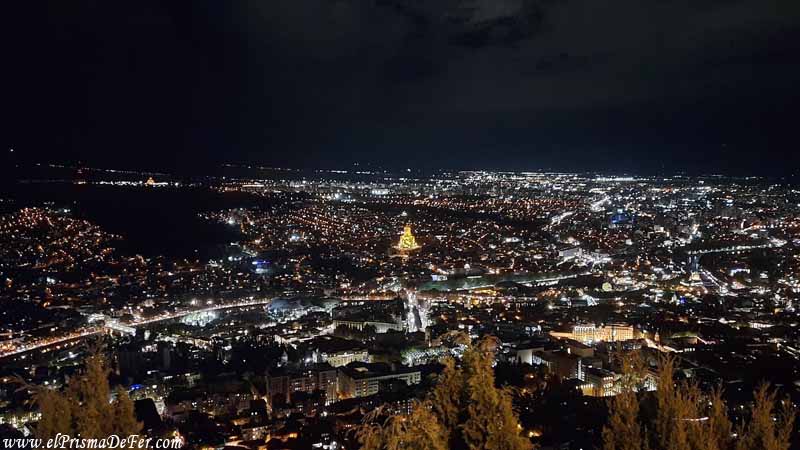
From here you can see all of Tbilisi stretching out at the foot of the mountain, another panoramic view just as striking as those you get near the Mother of Georgia, but from another point in the city.
Fabrika neighborhood
Fabrika is Tbilisi's alternative hub. This complex, formerly a Soviet textile factory, has now been transformed into a cultural space that combines a hostel, bars, cafes, artist studios, and independent shops.
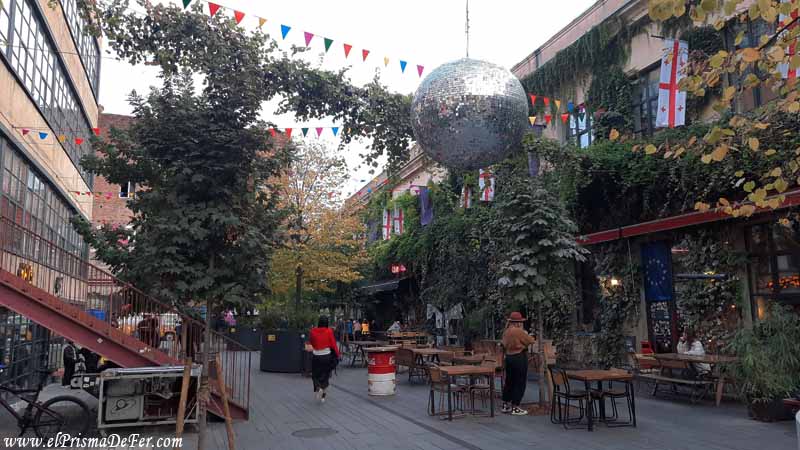
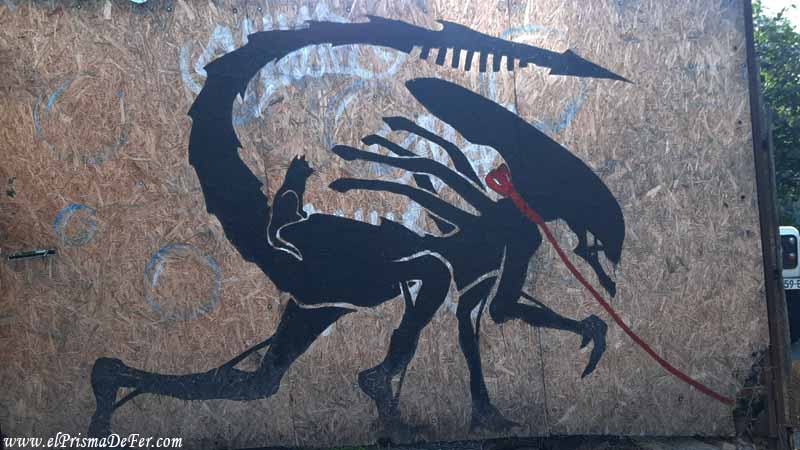
The place is full of murals and graffiti, making it an interesting spot for urban art lovers.
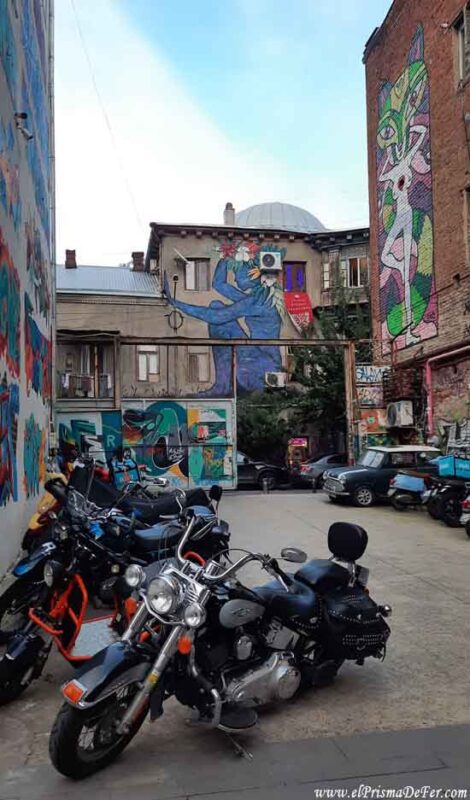
The vibe is young, relaxed, and creative. It's a meeting point for travelers and locals alike, where there's always something going on: concerts, fairs, or just people enjoying a coffee outdoors.
Murals and urban art
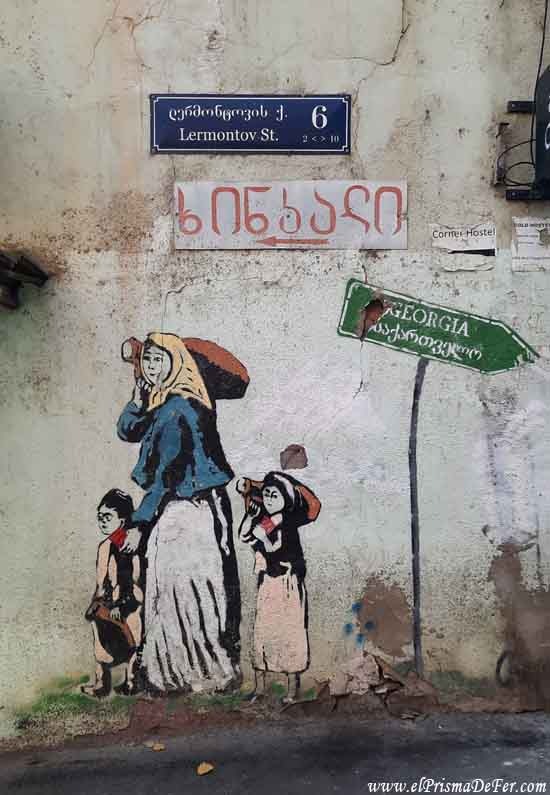
Tbilisi is a very photogenic city, and much of that charm comes from its murals. From large, refurbished facades to small works hidden in alleyways, urban art has become part of its visual identity.
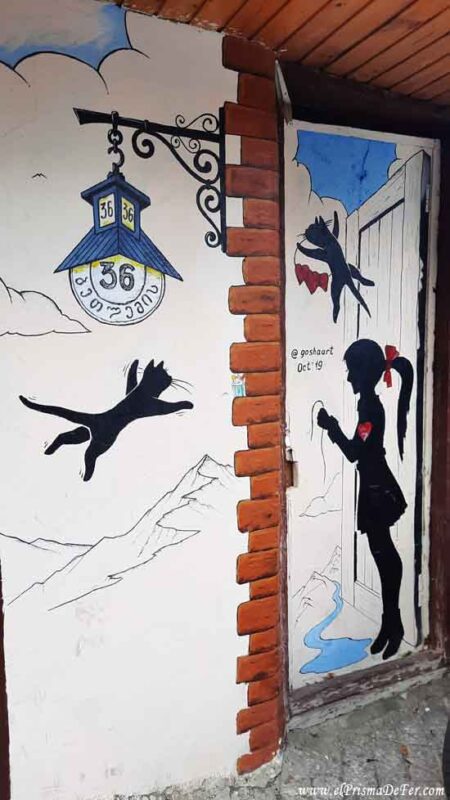
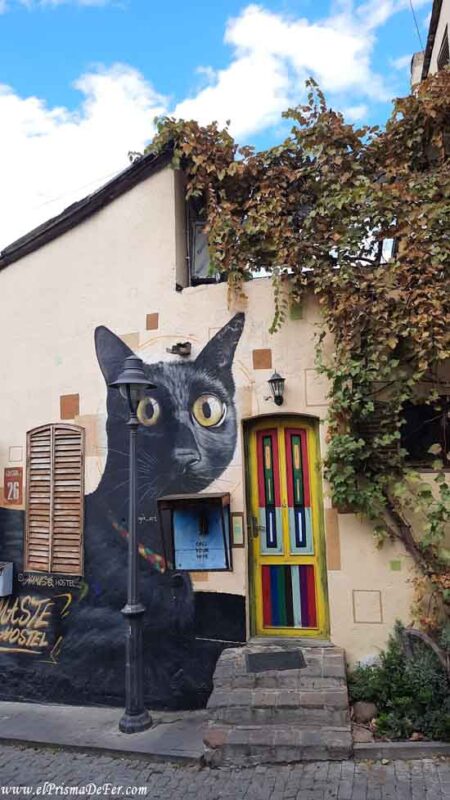
Strolling through neighborhoods like Fabrika or Avlabari offers authentic open-air galleries. For photography enthusiasts, it's an incredible opportunity to capture another side of the Georgian capital, one that's much more contemporary and creative.
Tbilisi History and Art Museums
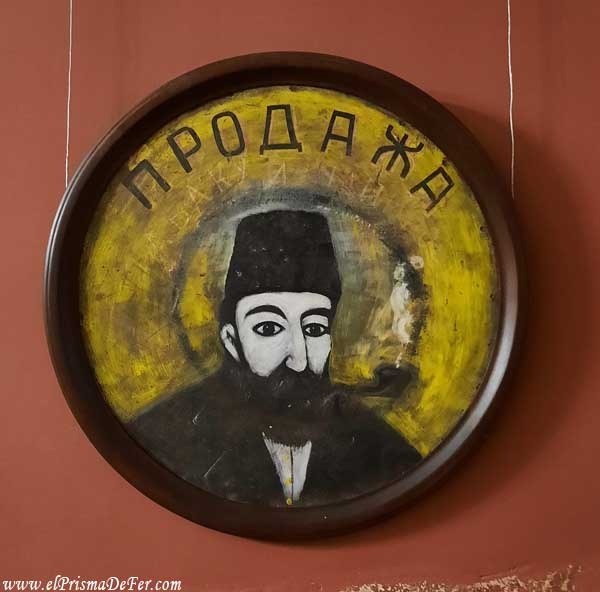
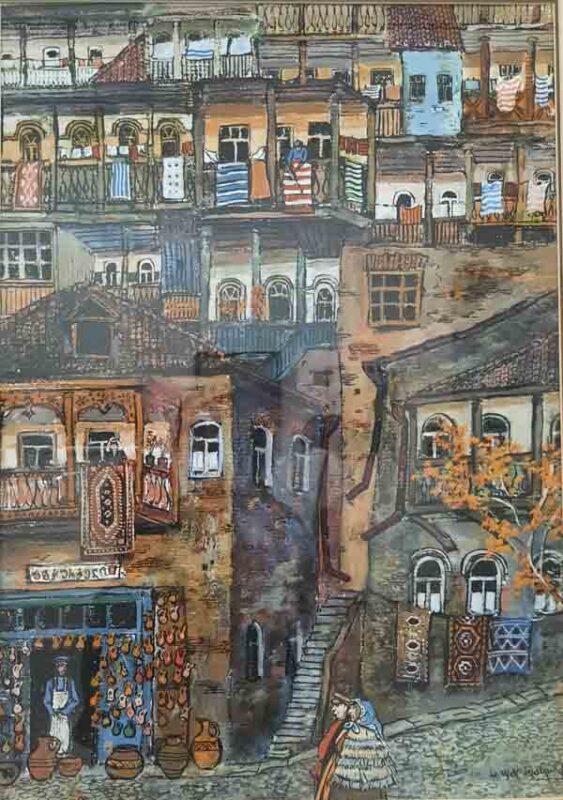
Among the city's cultural offerings are the National Museum of Georgia and the National Art Gallery, two spaces where you can learn more about the country's history and its artistic expressions.
The former houses archaeological pieces and objects that span different stages of Georgian identity, while the latter focuses on modern and contemporary art exhibitions.
However, I didn't find these museums as interesting as those in Armenia or Azerbaijan for example.
The art museum features a lot of abstract works, which aren't my style and might not appeal to all visitors, and the history museum felt like it lacked more information and context to convey Georgia's cultural richness.
Still, it's a valid option if you have extra time in the city or are looking for indoor activities on a rainy day.
Clock Tower
In the heart of the historic center stands the Tbilisi Clock Tower, one of the city's most unusual and photogenic buildings. With its irregular and colorful design, it reminded me of an animated Studio Ghibli film.
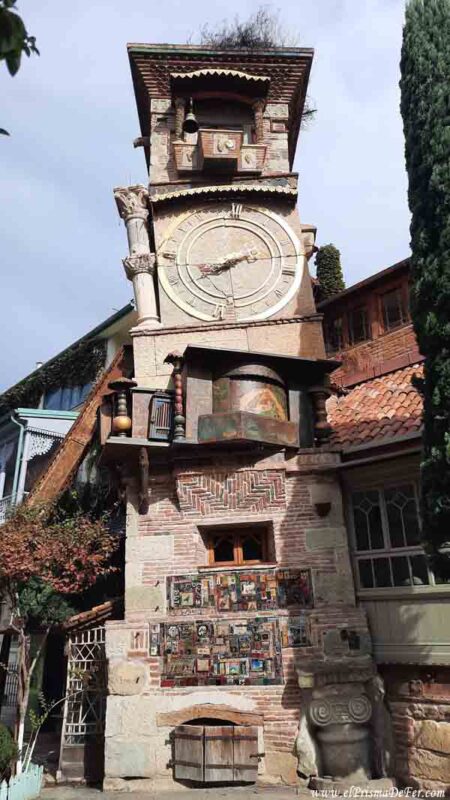
The tower was built by puppet master Rezo Gabriadze, next to his theater, and quickly became a symbol of the city.
At 12:00 and 19:00 there is a small puppet show that appears at the top of the tower. It's a short but charming show that attracts both locals and tourists, so it's worth planning your visit to coincide with one of those times.
Try Georgian wines
One of the must-do experiences in Tbilisi is tasting the local wines. Georgia is considered the birthplace of wine, with a winemaking tradition dating back over 8,000 years, and there are numerous places in the capital where you can try a wide variety of options at fairly affordable prices.

Many bars, restaurants, and small urban wineries offer homemade or locally produced wines at very affordable prices. This allows you to sample a variety of varieties, from the most intense reds to fresh and aromatic whites, without breaking the bank.
It's a great plan if you want to experience Georgian culture through your taste buds, learn about traditional brewing methods (such as fermentation in qvevri, buried clay pots) and enjoy a relaxing time in the city.
Day trips from Tbilisi
One of the best things about Tbilisi is its location, which makes it easy to take day trips to places steeped in history, epic landscapes, and traditions. While the capital has much to offer, spending time in the surrounding areas will give you a more complete picture of Georgia.
Mtskheta
One of the most classic getaways is to Mtskheta, the country's former capital and spiritual center of Georgia.
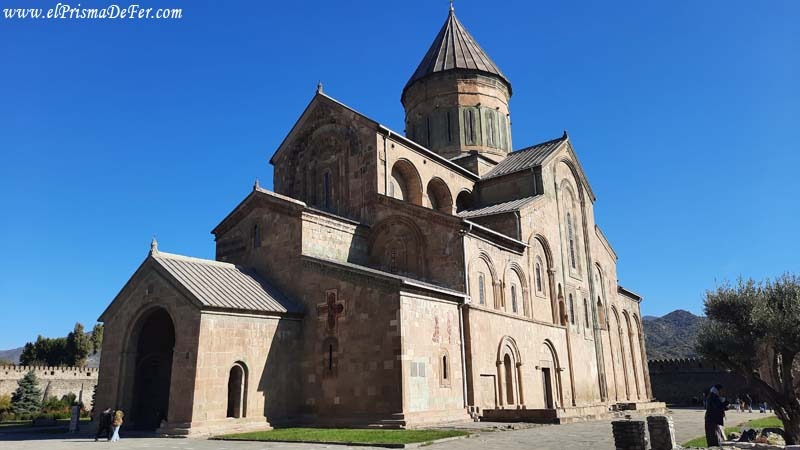
Declared a World Heritage Site by UNESCO, here you will find the Svetitskhoveli Cathedral and the Jvari Monastery, both of enormous historical importance and overlooking the confluence of the Mtkvari and Aragvi rivers.
It's only 30 minutes from Tbilisi, so it's the perfect day trip if you're short on time.
Uplistsikhe
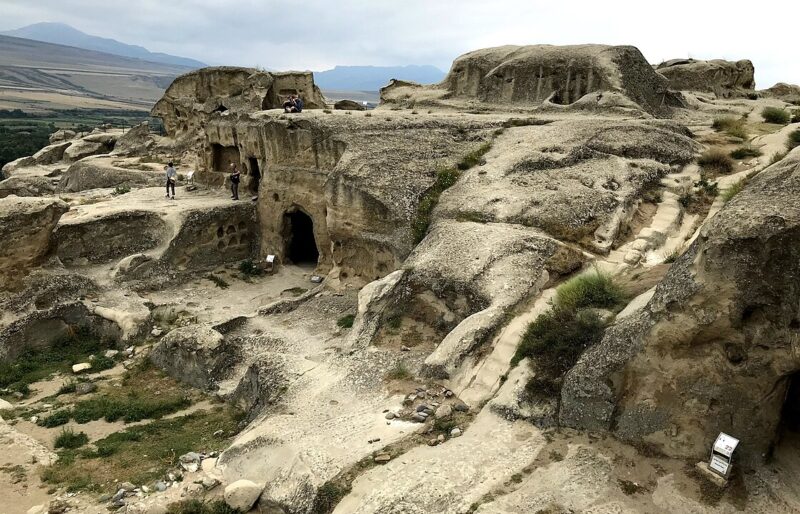
Another stop is Uplistsikhe, a rock-cut city dating back to the Iron Age. You can combine on the same day with Mtskheta or Gori (Stalin's hometown, which also has a museum dedicated to him).
Georgian Military Highway and Kazbegi
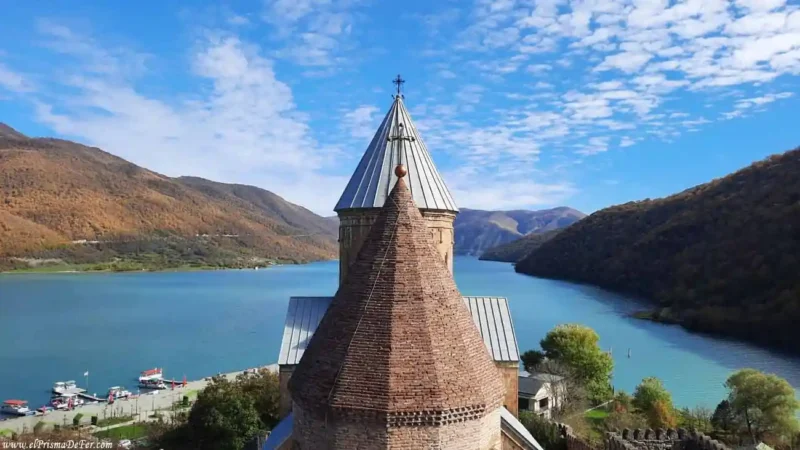
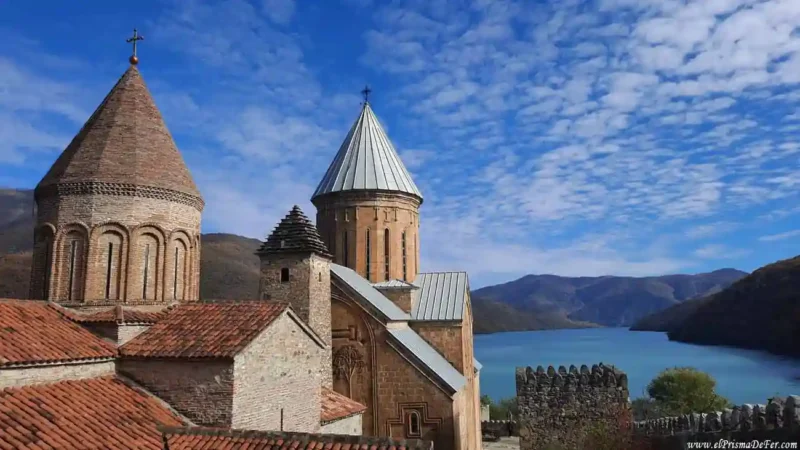
If you are looking for mountain landscapes, the route north along the Georgian Military Highway is a spectacle. Along the way you will find the Zhinvali Reservoir, Ananuri Fortress, Gudauri Viewpoint and finally you will reach Stepantsminda (Kazbegi), famous for the Gergeti Trinity Church, located at the foot of Mount Kazbek.
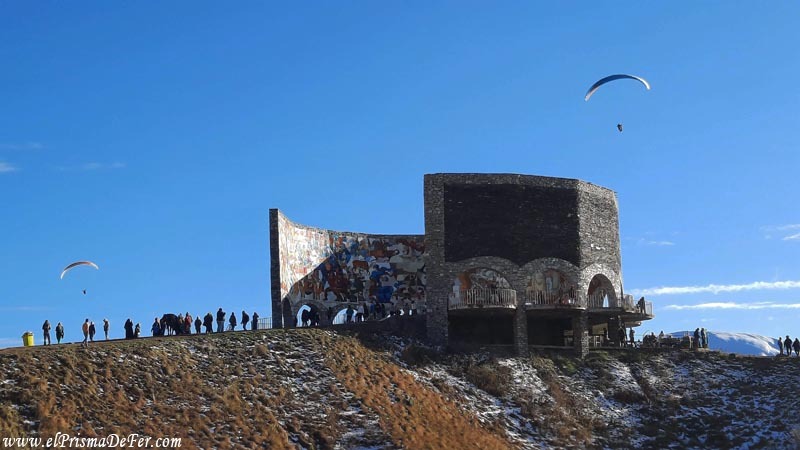
Although the journey is long for a single day, many tours do it, although the ideal is to spend at least one night there to enjoy it calmly.
Kakheti Valley
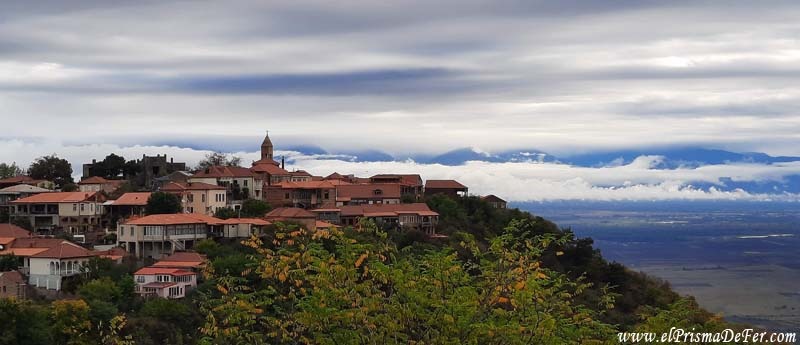
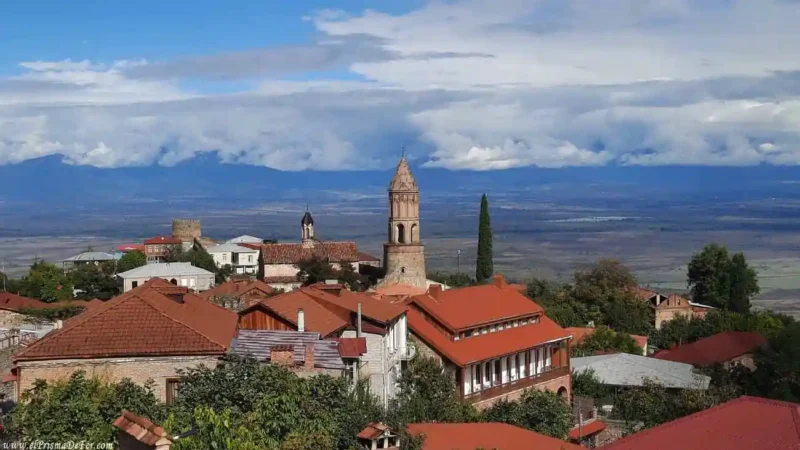
Finally, if you want to discover Georgian wine in its place of origin, the Kakheti Valley is the perfect destination. Just two hours from Tbilisi, this wine-producing region offers family-run wineries, endless vineyards, and the town of Sighnaghi, known as the "City of Love" for its romantic charm and medieval walls.
How to get from Tbilisi to major destinations
Tbilisi is well-connected to other parts of Georgia and even to neighboring countries, thanks to its network of marshrutkas (shared minibuses), trains, and some domestic flights. Most journeys depart from specific stations, and it's helpful to know which one to choose depending on your destination.
Sighnaghi
To visit the charming village of Sighnaghi, in the heart of Kakheti, the most common option is to take a marshrutka from Samgori station (Navtlugi intercity Bus Terminal), located next to the metro station of the same name.
The journey lasts about 2 hours and passes through vineyard landscapes until reaching the so-called "city of love".
Batumi
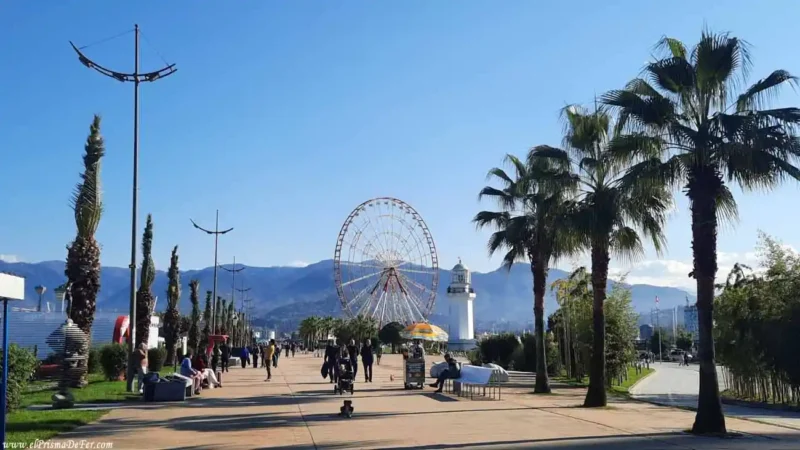
If your plan is to explore the Black Sea coast, you can get to Batumi in two ways.
- The first is by train from Tbilisi Central Railway Station (Tbilisi Central Railway Station), a comfortable journey that takes between 5 and 6 hours.
- The second option is by marshrutka (minibus) from Didube station, with a similar travel time but less comfort. The train is usually the recommended option.
For the train, I recommend purchasing tickets in advance from the official Georgian Railways website.
Mestia
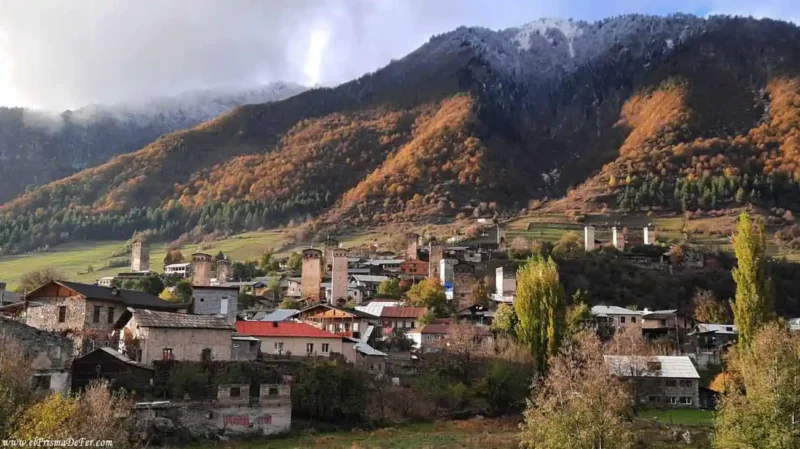
To reach the mountainous region of Svaneti, you must first travel to Zugdidi. To do this, you can take the train from the Tbilisi central station, or you can go by marshrutka, which leave daily from the Didube station and take about 6 to 7 hours to reach Zugdidi.
Once there, you transfer to another marshrutka (usually waiting for the train from Tbilisi) that travels through the mountains to Mestia for another 3-4 hours. It's a long trip, but the scenery makes it unforgettable.
Kazbegi (Stepantsminda)
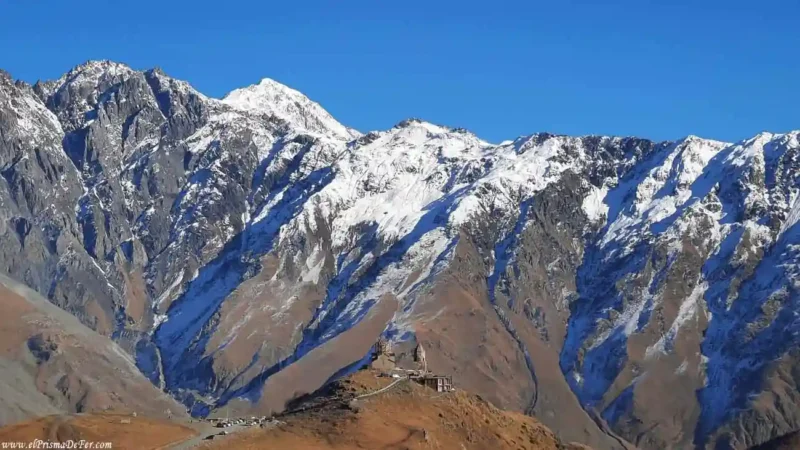
The most accessible destination from Tbilisi by road is Kazbegi. Marshrutkas depart daily from Didube Station, taking about 3 hours to reach Stepantsminda.
Along the way, you'll visit all the attractions of the Georgian Military Highway, so the journey is part of the experience. You can also hire shared taxis or take organized tours.
Yerevan (Armenia)
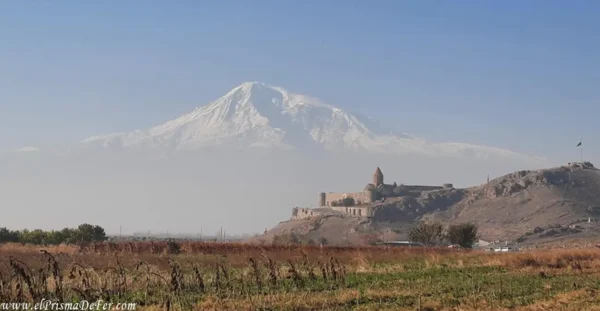
To reach Armenia's capital, you can choose between marshrutkas (minibuses) or the train. Marshrutkas depart from the Ortachala Station and take about 5 to 6 hours, depending on the border crossing. The Tbilisi–Yerevan train is also popular during peak season. It departs from the Tbilisi Central Station and travels overnight, allowing you to sleep during the journey and arrive in Armenia at dawn.
How to get around Tbilisi
The city has several public transport options.
By metro
The Tbilisi Metro is the fastest way to get around, with two lines connecting the main points of the city. It runs from 6 a.m. to midnight, and while it doesn't cover every neighborhood, it's very useful for long journeys or avoiding rush-hour traffic.
With marshrutkas
Another widely used alternative is the marshrutkas (shared minibuses), which cover practically the entire city and also reach more remote areas. They're very cheap, although sometimes a bit chaotic because the route isn't always clear. It's a good idea to ask before getting on to make sure you're going in the right direction.
Buses
The city bus is also a good option, as it connects the center with most neighborhoods and even the airport.
All transportation is paid for with the Metromoney card, which can be purchased and recharged at metro stations. You can also pay directly with international credit or debit cards.
Cable car and funicular
If you're looking for a different way to explore Tbilisi and enjoy its views, you can opt for the cable car that connects Rike Park with Narikala Fortress.
Another alternative is the funicular that goes up to Mtatsminda Park, from where you can access the park's attractions, restaurants, and viewing points that offer stunning views of Tbilisi and its surrounding hills.
Apps
For more specific trips or if you prefer comfort, taxis are quite affordable, although it's best to order them through apps like Bolt or Yandex Go, otherwise drivers may try to charge you inflated fares for being a tourist.
Gastronomy in Tbilisi
Georgian cuisine is famous for its variety of flavors, blend of Eastern spices with European techniques, and the hospitality that surrounds the table.
Dishes such as khachapuri (bread stuffed with cheese), khinkali (dumplings stuffed with meat or vegetables) and lobio (red bean stew) are a must-try on any visit. Added to this are fresh salads with herbs, freshly baked bread, and, of course, Georgian wine, considered one of the oldest in the world.

There was one place I returned to several times because of its variety, affordable prices, and the quality of its food: Mafshalia (see on the map). It's a simple restaurant at first glance, but it has delicious dishes, all without breaking the bank. There you can order everything from Georgian soups and khinkali to more elaborate dishes, always in generous portions.
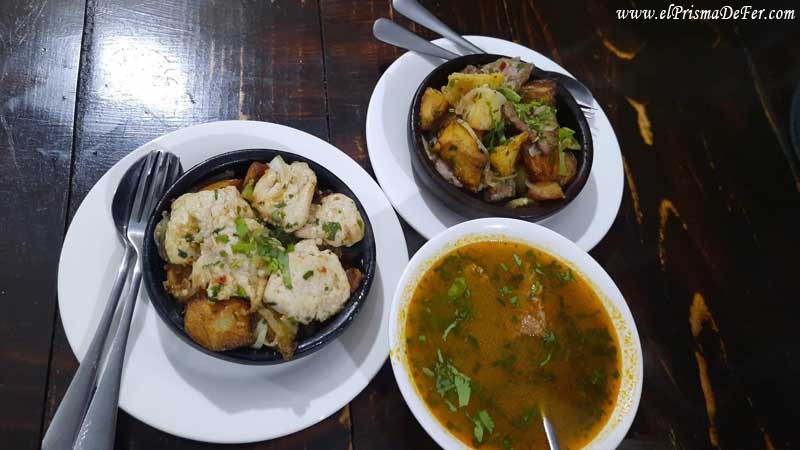
If you are interested in Georgian cuisine, you can participate in a cooking class and learn how to make these unique dishes.
Where to stay in Tbilisi
Since it was my home city to which I had to return every time I visited a region, I had the opportunity to stay in different areas of the city.
Old Town
Most travelers stay in the Old Tbilisi area, as it is home to many of the city's tourist attractions, such as the sulfur baths, Narikala Fortress, and Shardeni Avenue, as well as restaurants, bars, and cafes. It's a vibrant area with a historic charm, ideal if you want to be close to everything.
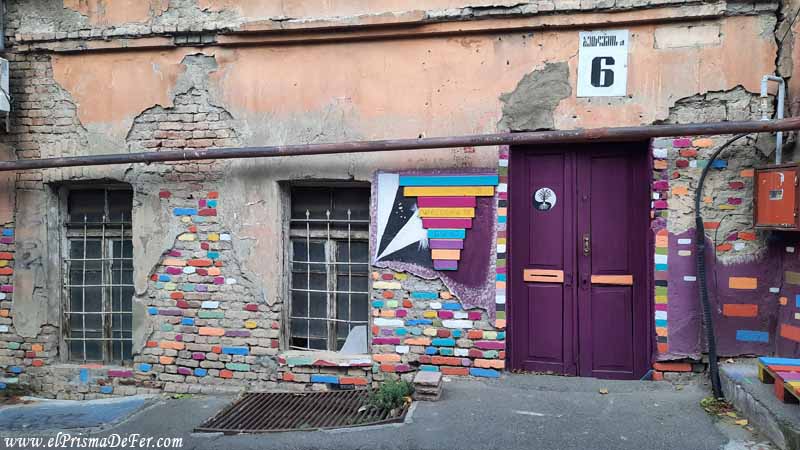
In this area I stayed at Tbil Home Hostel, a hostel that, although it doesn't have a full kitchen and its common space is quite small, still allowed me to meet several people who were traveling through the Caucasus.
Rustaveli
Another highly recommended option is the Rustaveli and Agmashenebeli Avenue area, which offers a combination of convenience, good transport links, and a variety of accommodations. Here you'll find everything from boutique hotels in historic buildings to more modern options, surrounded by museums, theaters, and shops.
I stayed at the K17 mini hotel. A small, renovated hotel with few rooms, but it offers greater comfort, space, and privacy, although it doesn't have a backpacker atmosphere or a kitchen.
Fabrika
For those looking for an alternative atmosphere, the Fabrika neighborhood is a great choice. This area is home to the art complex that, after being converted into a hostel, cafes, and cultural spaces, has become the epicenter of urban art and youth life in Tbilisi.
In terms of prices, Tbilisi is quite affordable compared to other European capitals. There are everything from budget hostels and family-run guesthouses, perfect for backpackers, to luxury hotels with views of the city or the Caucasus Mountains for those seeking more comfort.
How many days to stay in Tbilisi?
While you can easily explore its most iconic sites in two or three days, such as the Old City, the cable car to Narikala Fortress, the Peace Bridge, the Abanotubani neighborhood, and Mtatsminda Park, it's ideal to dedicate at least four full days.
This way, you'll have time to explore at a leisurely pace, discover its most authentic neighborhoods, enjoy the local cuisine, and visit less touristy spots like the Chronicles of Georgia Monument or the Saburtalo district with its murals.
Additionally, Tbilisi works very well as a base for day trips to nearby destinations such as Mtskheta or Sighnaghi, making staying longer a great idea.
Even if your main goal is to explore other regions of the country, it's a good idea to plan several nights in the city at the beginning or end of your trip to take advantage of its vibrant energy and wide variety of offerings.
Thoughts on Tbilisi
Tbilisi quickly became one of the cities I liked the most during my entire trip along the Silk Road. Its bohemian, youthful atmosphere, along with its variety of cultural activities, excursions, and leisure options, make it a very attractive destination for both travelers and those who choose to stay there.
I can now understand why so many expats choose Tbilisi to settle, and it's not just because of the free one-year visa you're granted upon entering the country. It's also because it's a historic, modern, and cosmopolitan capital, with a lively atmosphere and very affordable prices.
I would definitely love to return one day to continue exploring, enjoy its nightlife, its cafes and terraces, and rediscover everything this unique city has to offer.
Save this post on Pinterest

Frequently Asked Questions about Tbilisi
Where is Tbilisi located?
Tbilisi is the capital of Georgia, located at the crossroads of Eastern Europe and Asia, which explains its strong cultural mix.
How many days is it advisable to stay?
With 2 or 3 days you can see the city well. If you want to take it more slowly or do a nearby excursion, you can add an extra day.
Is Tbilisi a safe city?
Yes, in general it's a fairly safe city for travelers. As always, it's wise to take basic precautions, but it's not a problematic destination.
Is it possible to explore Tbilisi on foot?
Yes, especially the old town. Many of the main attractions are relatively close to each other, although there are some ups and downs.
What is the transportation like?
It has a subway, buses, and affordable taxis. Apps like Bolt also work very well for getting around the city.
Is it expensive to travel to Tbilisi?
No, it remains a fairly affordable destination compared to many European cities.
What is the best time to visit?
Spring and autumn are usually the best times to visit, with pleasant temperatures. Summer can be quite hot and winter cold.
What excursions can be done from Tbilisi?
There are several interesting options, such as Mtskheta, the former religious capital, or Kazbegi, if you're looking for mountain scenery.
Do I need a visa to enter Georgia?
It depends on your nationality, but many countries allow entry without a visa. It's best to check your specific situation.
Is Tbilisi worth including in a trip?
Yes, it's a very interesting city to start getting to know Georgia, with its own identity and a cultural mix that makes it different from other destinations.
Support The Prism of Fer!
Your support helps me continue creating free content on the blog. Thank you so much!