
Arriving in Fez from Chefchaouen
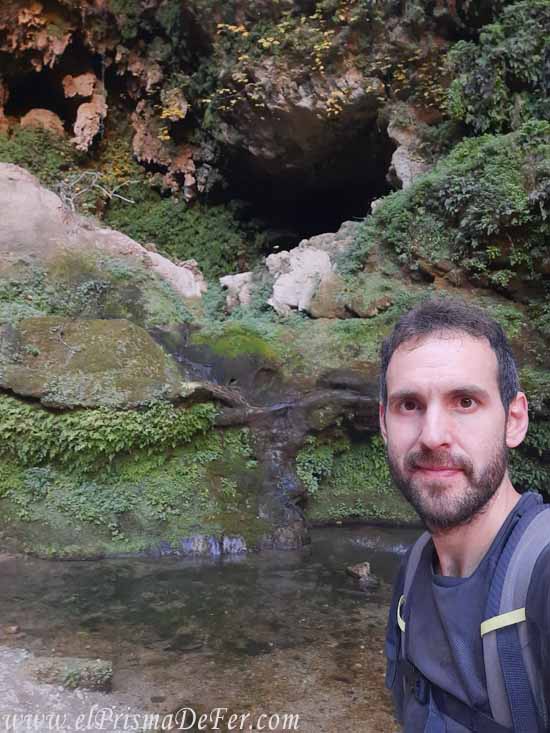
I arrived in Fez from Chefchaouen, after spending a few days trekking through the Rif Mountains. And the contrast couldn't have been more stark.
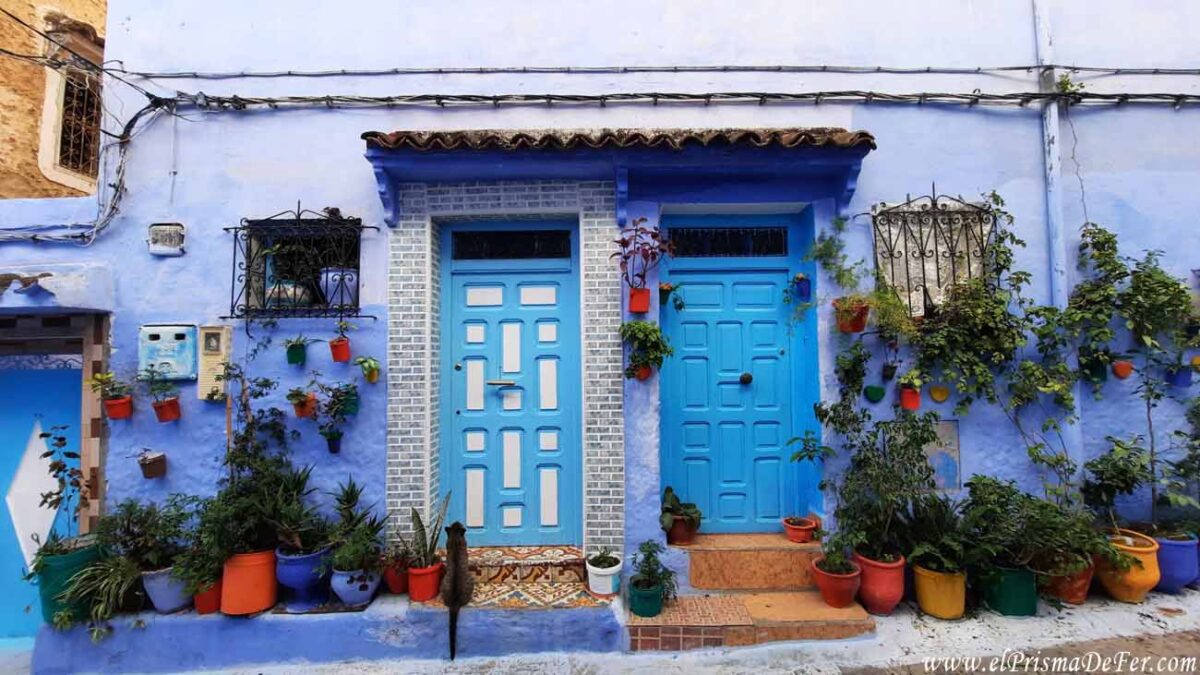
You can now read the guide to visiting the Blue Pearl of the North of Morocco, Chefchaouen

My impressions of Fez
This post is part of the itinerary I put together to travel Morocco in 3 or 4 weeks.
How to get to Fez from different cities in Morocco (and from abroad)
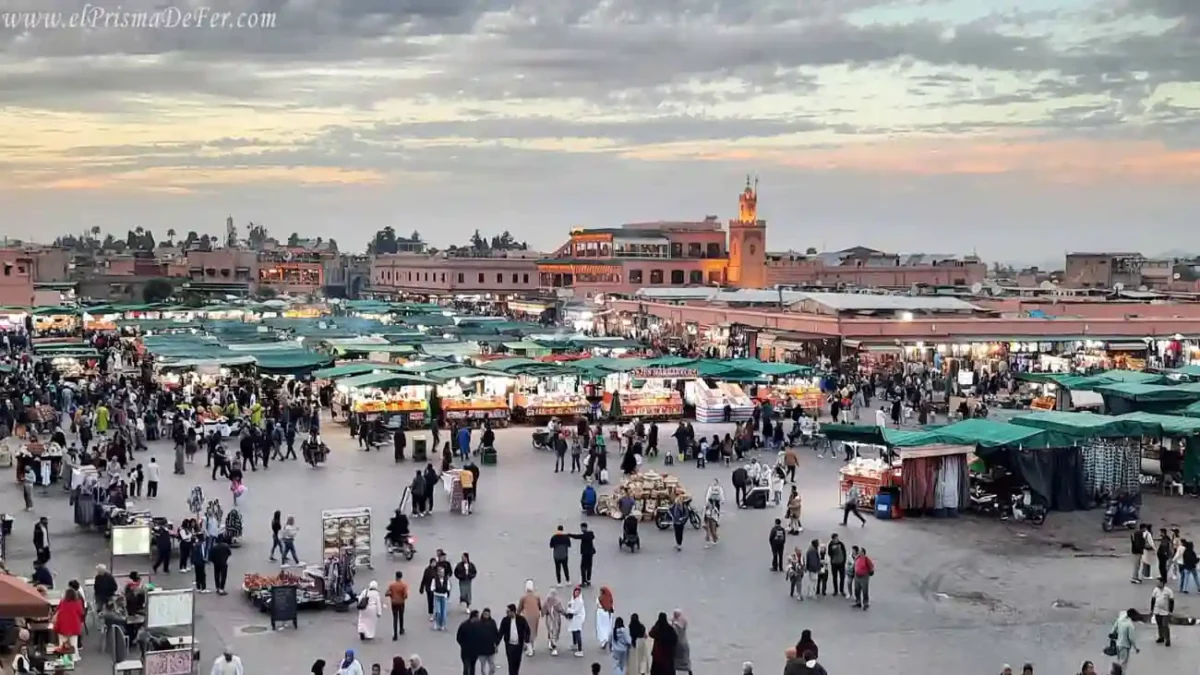
From Marrakech
There are comfortable trains that take between 6 and 8 hours. See schedules and prices at ONCF. The main train station is Fès-Ville (see location), well connected to the national network.
There are also buses that take a little longer, between 7 and 9 hours, with companies such as CTM or Supratours.
From Chefchaouen
It's a medium-length journey. There are direct buses from the company CTM that take between 4 and 5 hours and drop you off at their bus station (see location).
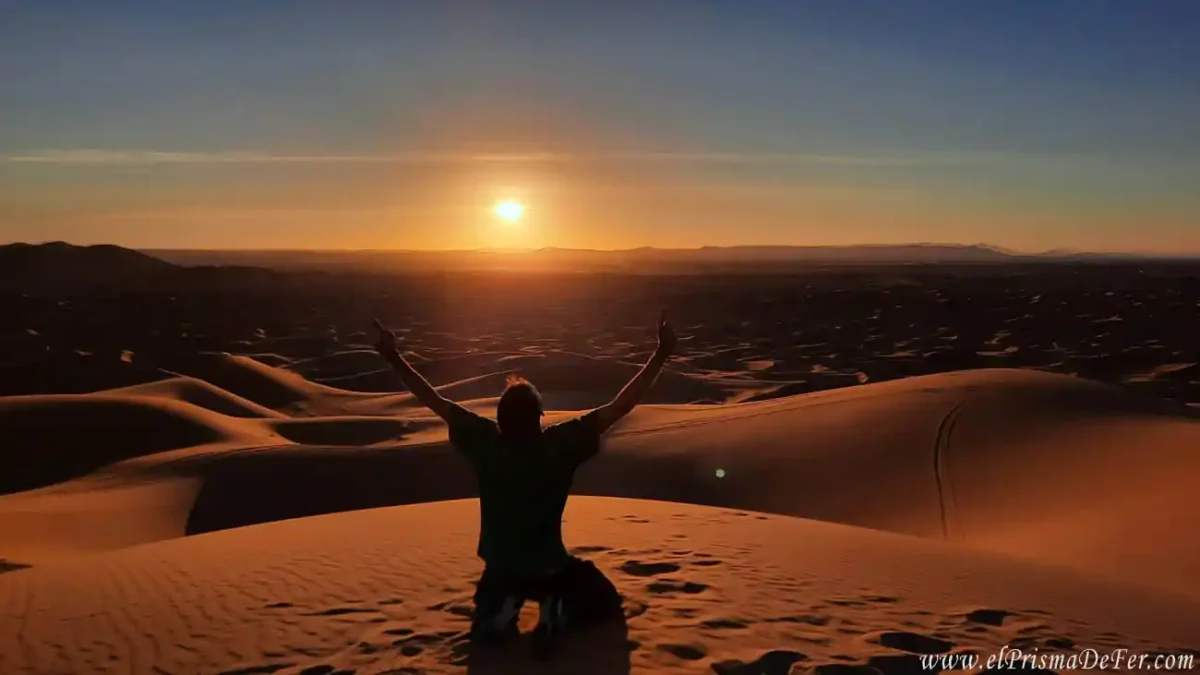
From Merzouga
From the outside
Fez has an international airport, Fès–Saïss Airport (FEZ), which receives flights from several European cities. You can get to the city center from the airport by taxi (negotiable fare) or by public bus, although the latter is less frequent.
You can read the complete travel guide to Morocco. There you have all the information you need to plan your trip to this fantastic country.
Some curiosities about Fez
🧠 Did you know that Fez is home to the oldest university in the world?
The University of Al-Qarawiyyin, founded in 859 AD by a woman, Fatima al-Fihri, is recognized by UNESCO and Guinness World Records as the oldest continuously operating educational institution in the world.
🧴 The smell of Fez is also a heritage
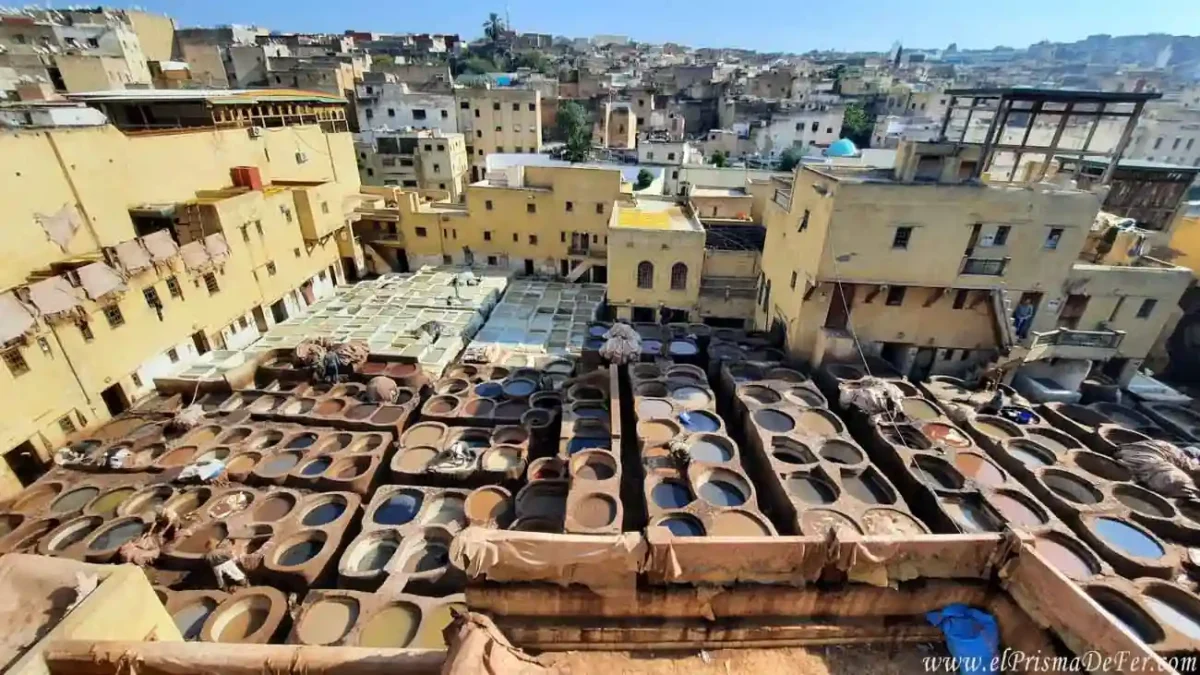
The Chouara tanneries, with over a thousand years of history, use pigeon droppings, lime, and natural dyes to treat the leather. The smell is so strong (and unpleasant) that vendors give you mint to help you endure it. It's disgusting but striking at the same time.
🧭 The medina of Fez is a true labyrinth
With more than 9,000 alleyways, many of them dead ends, Fez el-Bali is the world's largest pedestrian zone. Google Maps often doesn't work there, and getting lost is almost part of the plan.
🕌 Fez had its own “medieval Wi-Fi” system
In centuries past, a network of foot messengers connected madrasas, mosques, and markets to transmit news, official announcements, and religious events. All with precision and without technology.

Map of Fez attractions
What to do in Fez: living history in every corner
Fez is one of the imperial cities of Morocco and its medina, Fez el-Bali, is the largest pedestrian medieval city in the world. Founded in the 8th century, it reached its peak in the Middle Ages as the spiritual, cultural, and commercial center of North Africa.
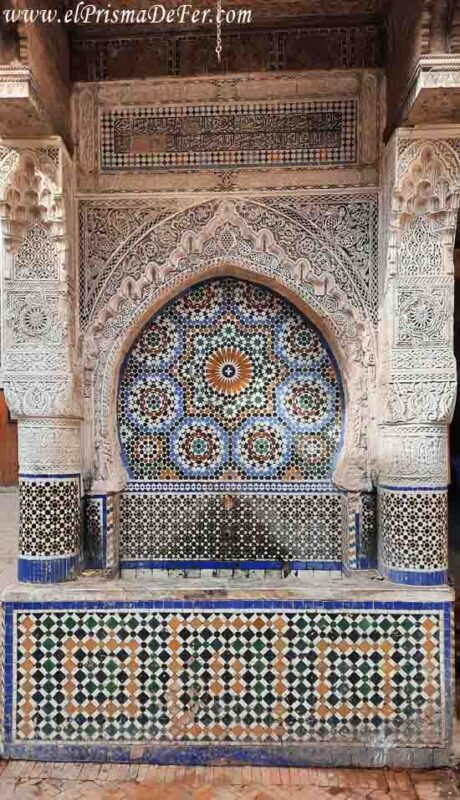
 Get lost in the Medina of Fez el-Bali
The Fez medina has been a UNESCO World Heritage Site since 1981. With more than 9,000 alleys and no cars or the annoying motorbikes that plague the Marrakech medina, it's an experience in itself: overwhelming and captivating. Full of life, colors, and (sometimes not so pleasant) aromas, walking through it is a trip back in time.
Bab Bou Jeloud (The Blue Gate of Fez)
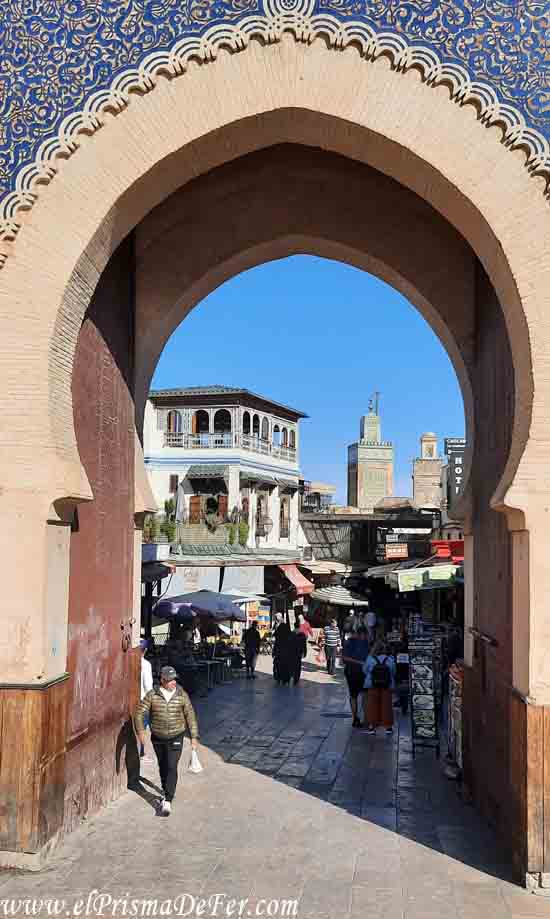
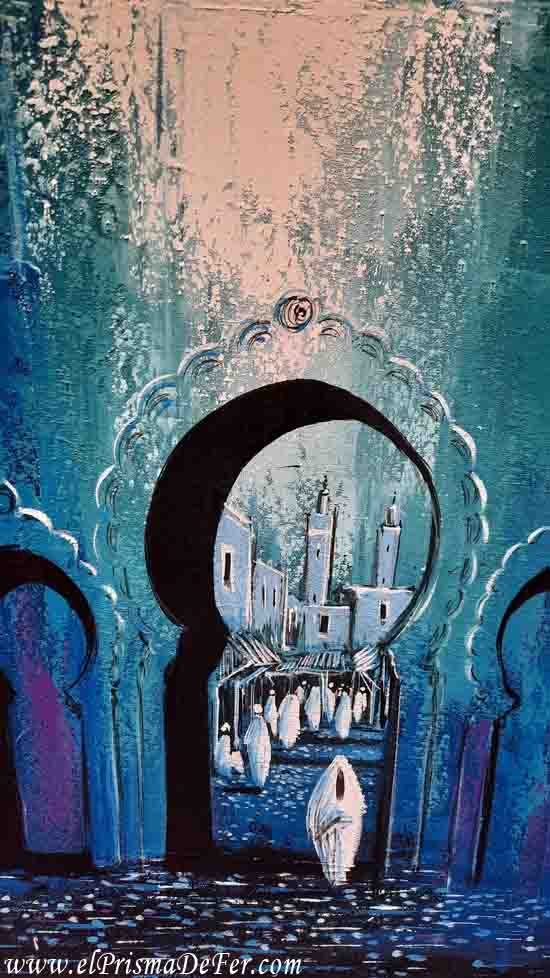
Talaa Kebira and Talaa Sghira streets
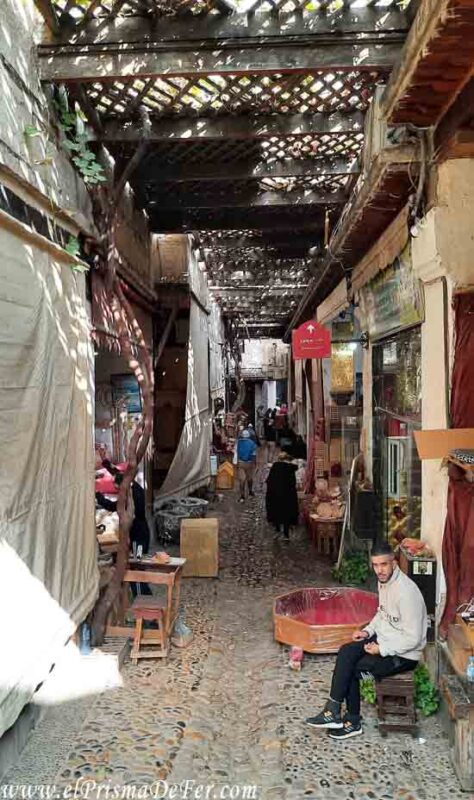
Traditional souks
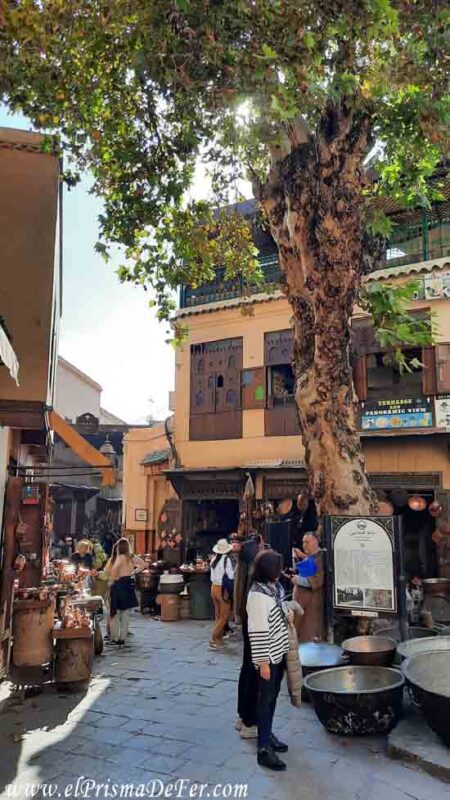
👣 Take a free walking tour of the medina
If there's one place where it's worth taking a free walking tour, it's Fez. The medina is so full of history, symbolism, and hidden corners that walking through it without context is like flipping through a book in another language.
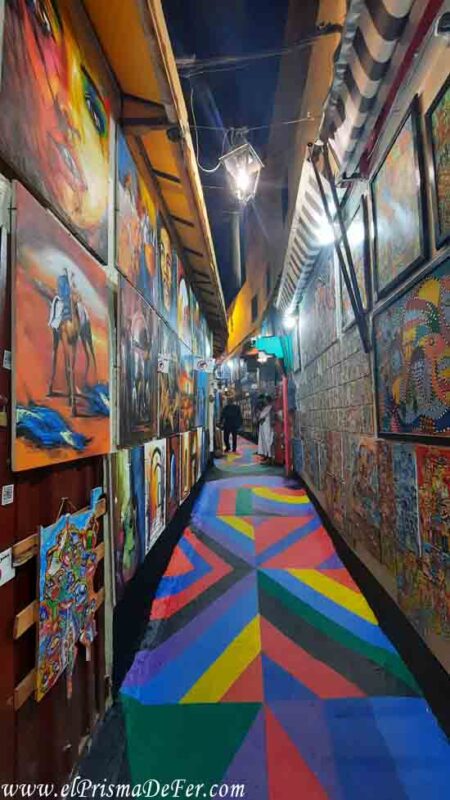
The guide not only showed us the most important places in the medina, such as the tanneries, madrasas, squares, and historic gates, but also explained fundamental aspects of Moroccan culture, Islam, and how these beliefs are intertwined with everyday life.
He spoke to us about the five pillars of Islam, the importance of the call to prayer, why not all religious spaces are accessible to non-Muslims, and how religion even influences the way Moroccans trade and hospitality.
A good free tour (even if they're not actually free) in Fez not only orients you within the labyrinth of the medina, but also places you culturally and spiritually within the world you're exploring. Most end with a voluntary contribution and are worth every dirham.
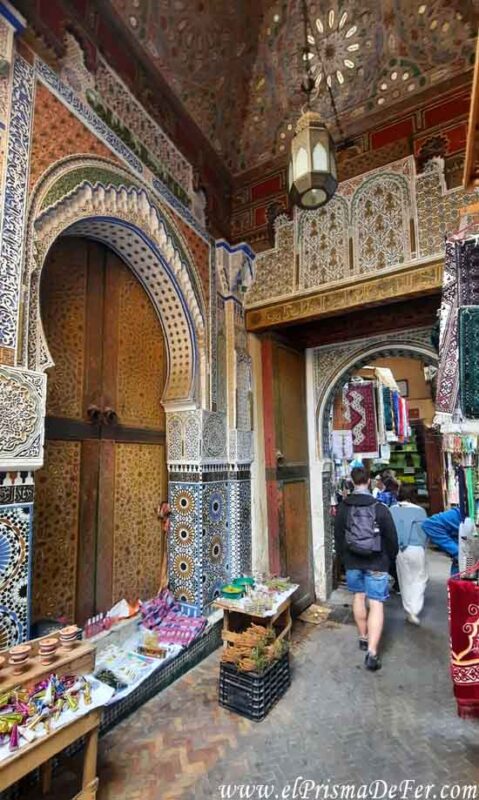
These tours typically start at Bab Bou Jeloud and last between 2 and 3 hours. A voluntary (but fair) tip is left for the guide at the end. Options are available in English, Spanish, and French, depending on the day.
Visit the Chouara Tanneries
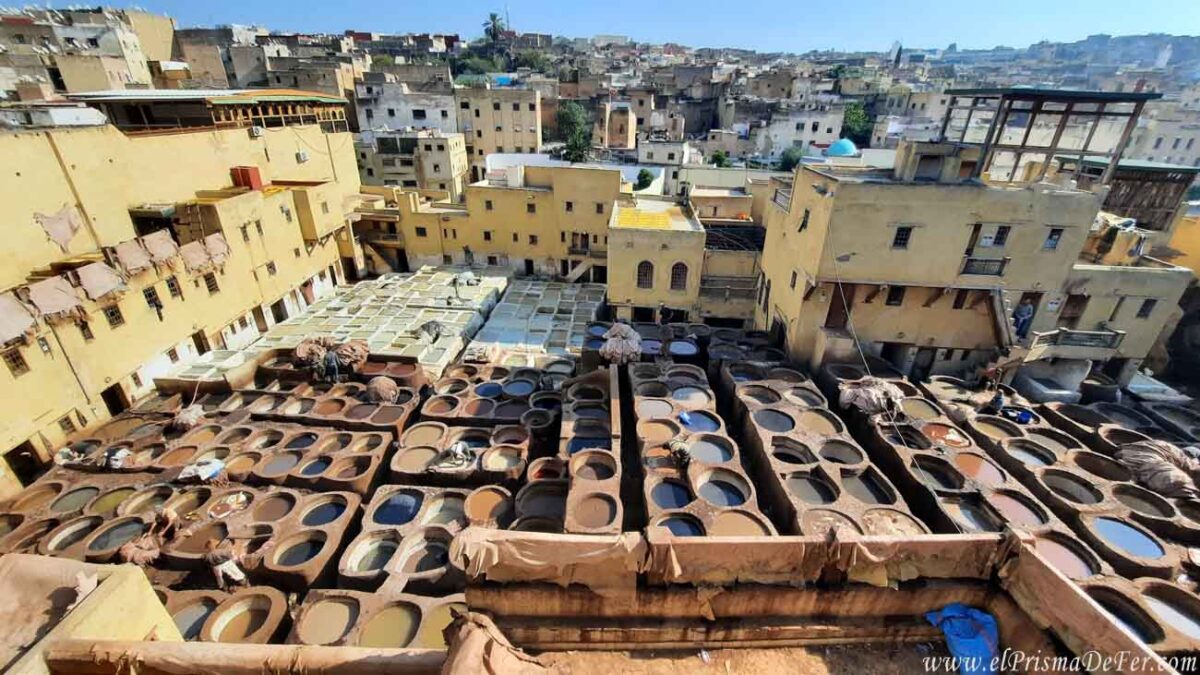
The other side of tanneries
Beyond the visual and photographic appeal of the leather tanneries of Fez, there is a harsh reality that often goes unnoticed: the working conditions are extremely unhealthy.
Madrasa Bou Inania
Built in the 14th century by the Marinid sultan Abu Inan Faris, this madrasa is an architectural gem and one of the few in Morocco open to non-Muslims. Its stucco, marble, and carved cedar wood decoration is spectacular. It was a religious school, but also functioned as a mosque and astronomical observatory.
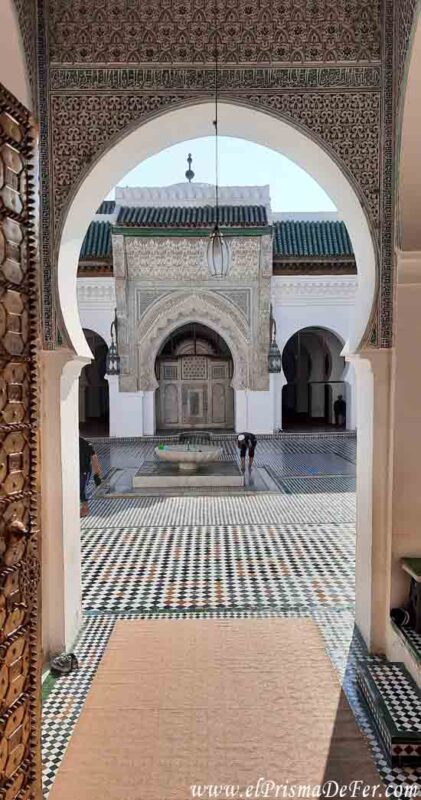
Al-Qarawiyyin: the oldest university in the world
Founded in 859 AD by a woman, Fatima al-Fihri, the University of Al-Qarawiyyin is recognized by UNESCO and Guinness World Records as the oldest university still in operation. Although the mosque and library are only open to Muslims, you can see the exterior and feel the historical weight of the place.
Mausoleum of Moulay Idriss II
Shrine dedicated to the city's founder, Moulay Idriss II, considered a saint by many Moroccans. Although access is restricted to non-Muslims, the facade and surrounding atmosphere are very special.
Viewpoints and rooftops
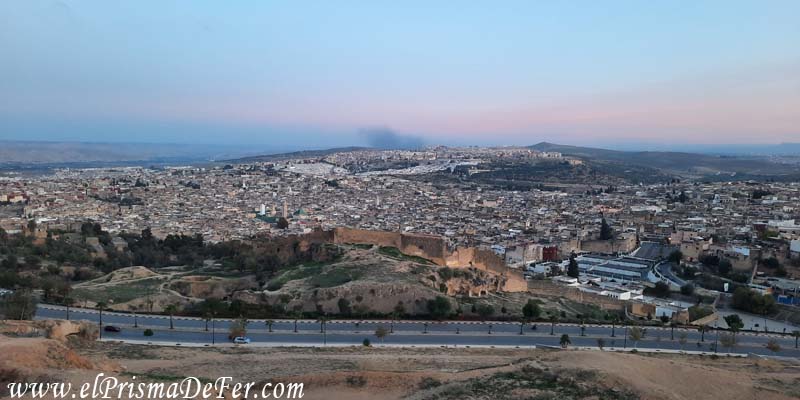
- The Merinid Tombs: Ruins on the hill overlooking Fez el-Bali (see location). The views are spectacular, especially at sunset.
- Borj Nord: An old 16th-century fortress built by the Saadi dynasty. Today it houses an armaments museum and also boasts an impressive viewpoint (see on the map).
Experience a traditional hammam
Nothing beats a Moroccan bath after hours of walking through the medina. You can try a traditional public hammam (more local and affordable), or one in a riad or spa for a more relaxing experience.
Taste the cuisine of Fez
- Chicken pastilla with almonds and cinnamon: a delicious contrast between sweet and savory.
- Tajines: lamb with prunes, chicken with pickled lemon or spiced vegetables.
- Harira: thick soup with lentils, chickpeas and spices, typical during Ramadan.
- Dates, honey sweets and the inevitable mint tea.
Street food is also part of the charm... but be careful.
Tip: Although local food is often delicious, it's best to look closely at the stall's appearance, whether there's a lot of locals eating there, and whether the food is cooked properly or at the right temperature. Not everything that smells good... goes down well.
What to do in Fez beyond the medina
Although the medina is the historical and cultural heart of Fez, exploring outside its walls also reveals other facets of the city: from multicultural neighborhoods to tranquil parks and historic buildings.
Visit the Jewish Quarter (Mellah)
The Mellah of Fez, located in the Fez el-Jdid area, was the first Jewish quarter established in Morocco in the 15th century. Although today most of its inhabitants are not Jewish, the place retains a very particular atmosphere.
- Streets with wooden balconies (something unusual in Moroccan architecture).Streets with wooden balconies (something unusual in Moroccan architecture).
- The Ibn Danan Synagogue, restored and open to the public, is a hidden gem and a testament to the ancient coexistence between Jewish and Muslim communities.
- The Jewish cemetery, just behind the Mellah, is one of the oldest and largest in the country.
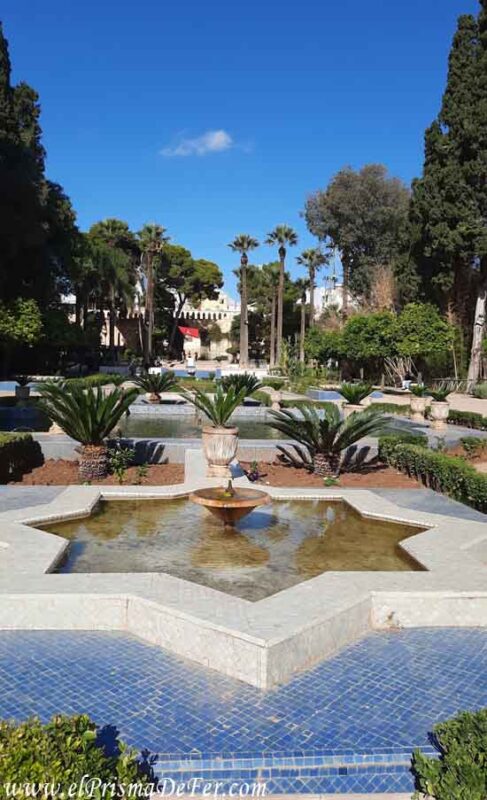
Relax in the Jnane Sbil Garden
If you need a break after walking through the medina, the Jnane Sbil Garden is the place for you. Located between Fez el-Bali and Fez el-Jdid, this Andalusian-style park offers shade, fountains, flowers, an artificial lagoon, and peaceful paths where you can sit, read, or simply take a break from the hustle and bustle.
Explore Fez el-Jdid and its walls
Fez el-Jdid was founded in the 13th century as an extension of the city to house the Royal Palace (Dar el-Makhzen) and the administrative quarters. Although the palace is not open to the public, its main gatehouse is monumental, with massive gilded doors, glazed tiles, and carved wood.
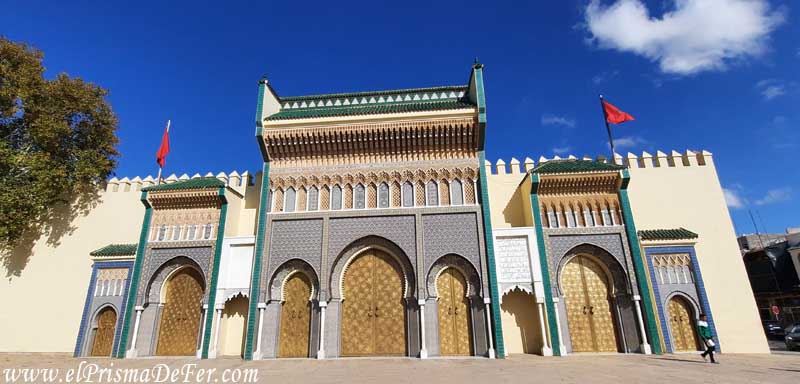
- The defensive wall and several bastions that protected the city.
- The military quarter, which displays a more sober and functional architecture.
Nejjarine Museum of Wood Arts and Crafts
Technically within the medina, but worth a separate mention. Located in a restored old funduq (caravanserai), this museum is perfect for understanding Fez's artisan tradition: carpentry, inlays, antique tools, and decorative objects. It also has beautiful architecture and a panoramic terrace.
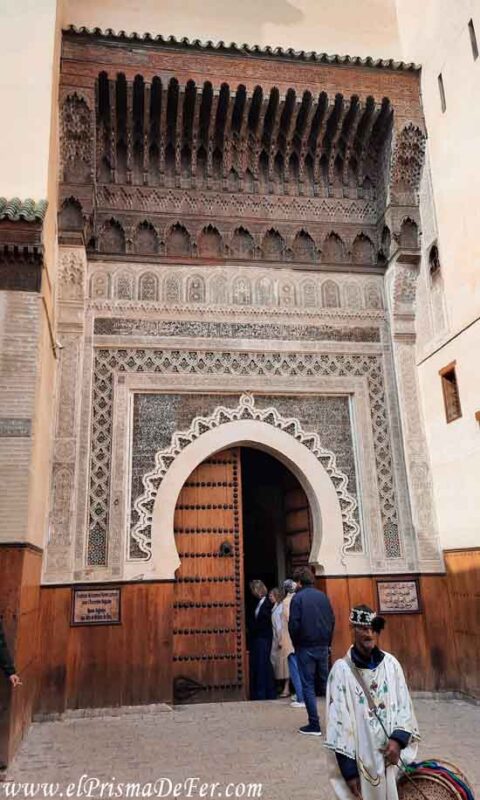
Dar Batha (Museum of Moroccan Arts)
Activities organized in Fez
🏨 Where to stay in Fez
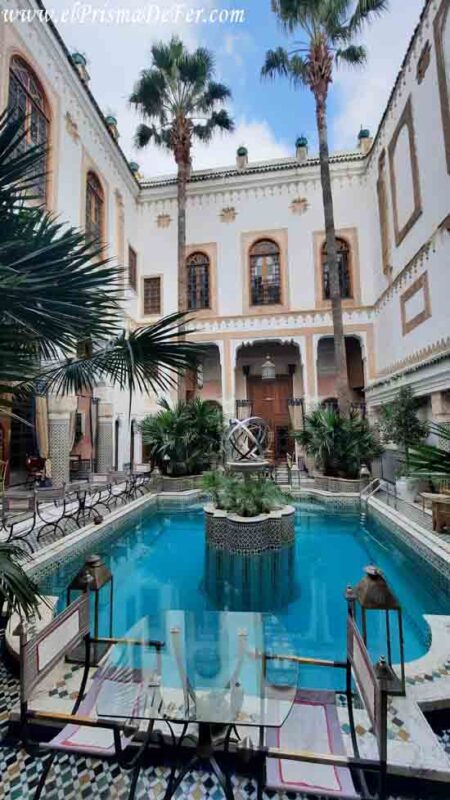
The best area to stay in Fez is within the medina (Fez el-Bali) , especially if it's your first time in the city. Traditional riads abound here, restored Moroccan houses with interior courtyards, mosaics, and an authentic atmosphere that transports you back centuries.
For a quieter experience, you can opt for accommodation just outside the medina, in the Fez el-Jdid or Ville Nouvelle areas, where there are modern hotels and a bit more urban order.
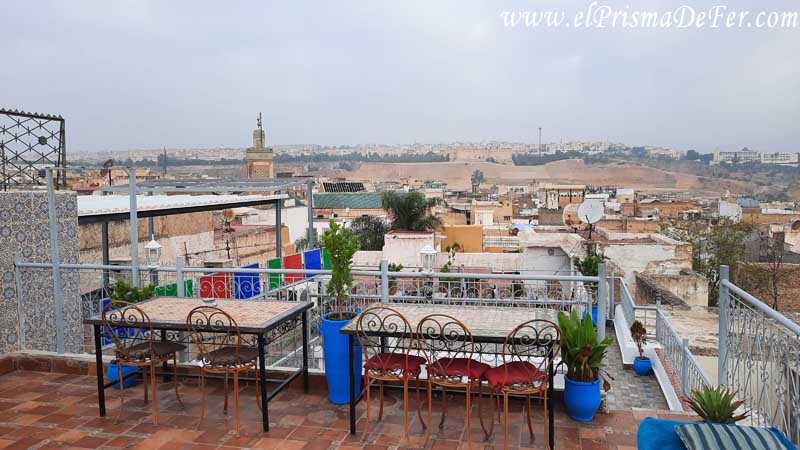
I stayed inside the medina, in the picturesque Hostel Speakeasy Fes. The internal decoration is the best :).
🛡️ Is it safe to travel to Fez?
Overall, Fez is a safe city for travelers, but as with many ancient medinas in the Arab world, you should move around with some caution, especially at night.
In my case, it was the only place in Morocco where I really didn't feel completely safe. One night, without a clear destination, I wandered into the inner alleyways of the medina and ended up disoriented. I came across some locals who were waving at me for reasons I couldn't fathom.
Tips for moving safely in Fez:
Avoid walking alone through the medina at night, especially without a clear destination. Enter the name and exact location of your accommodation, or save it to Google Maps. Do not display valuables unnecessarily. If you get lost, ask for help in a store or restaurant rather than ask strangers in empty alleys.
That said, Fez is not a dangerous city, but it is a place where you should be more cautious than in other Moroccan cities such as Marrakech or Rabat.
⏳ How many days to stay in Fez
Ideally, you should dedicate at least 2 or 3 full days to Fez. One day to thoroughly explore the medina, another for the surrounding areas or more leisurely visits, and a third if you want to take it easy, do some shopping, or relax in a traditional hammam.
If you have time, you can use Fez as a base for a trip to the imperial city of Meknes, Volubilis (Roman ruins) or the charming Ifrane, all just a few hours away.
How to get from Fez Airport to the city center
- Public Bus (Line 16): Connects the airport to Fez train station. The journey takes approximately 40 minutes and costs between 3 and 4 dirhams.
- Taxi: There are taxis outside the airport, but it is advisable to set the fare in advance, as the use of taximeters is not common.
If you don't want to complicate things and prefer convenience, you can book a private transfer from this link.
🗓️ 3-Day Itinerary in Fez, Morocco
🕌 Day 1 – First encounter with the medina and guided tour
- Free Walking Tour of the medina (Fez el-Bali). Ideal for initial orientation and historical context.
- Visit to places such as the Bou Inania Madrassah, the Nejjarine Fountain and a panoramic view of the Chouara Tannery.
Lunch in a traditional restaurant Self-guided tour of the medina souks: Attarine Souk (spices), Seffarine Souk (copper), and carpet shops. If you still have energy, explore the medina's nightlife, with caution, especially if you're alone.
✡️ Day 2 – History, culture, and the lesser-known Fez
- Visit to the Jewish Quarter (Mellah) and the Ibn Danan Synagogue.
- Photo of the impressive golden gate of the Royal Palace (although you can't visit the inside).
Lunch in the modern area or near the park. - Take a stroll through the Jnane Sbil Garden to relax a bit.
- If it's open, visit the Dar Batha Museum or the Nejjarine Museum.
🌄 Day 3 – Lookouts, views, and local experiences
- Climb to the Miradores del Borj Nord or Borj Sud for panoramic views of the medina.
- Visit the Tomb of the Merinids, among ruins and open landscapes.
Last minute purchases in the medina: spices, pottery, leather goods, or souvenirs. You can end your trip with a tasting menu or something more relaxing, depending on your energy level.
Final thoughts on my visit to Fez
Fez is, without a doubt, a historical gem. Walking through its medina is to delve into centuries of tradition, Islamic architecture, artisanal life, and spirituality.
Frequently asked questions about visiting Fez
How many days does it take to visit Fez?
Is Fez worth visiting?
What is the medina of Fez like?
What shouldn't I miss in Fez?
Is it possible to visit the tanneries without a guide?
Is Fez safe?
Where is the best place to stay?
What is the food like in Fez?
What is the best time to go?
Some video captures from Fez
Support The Prism of Fer!