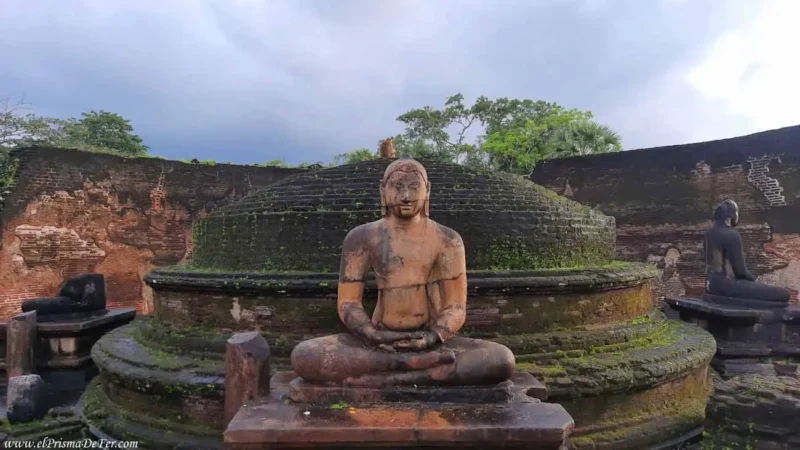

Where is Polonnaruwa located?
Polonnaruwa is located in north-central Sri Lanka, within the famous Cultural Triangle, a region steeped in history, ancient temples and former royal capitals.
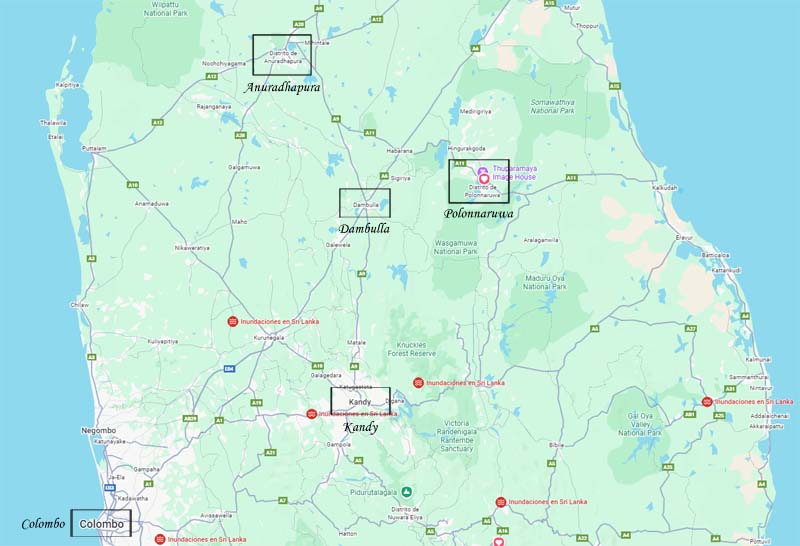
2.5 hours from Sigiriya/Dambulla 3 hours of Anuradhapura 5–6 hours from Kandy 5–6 hours from Colombo


How to get to Polonnaruwa
The most common way to get there is from Colombo, either by bus or train. The road trip usually takes between 5 and 6 hours, while the train journey can be a bit slower and with fewer direct services.
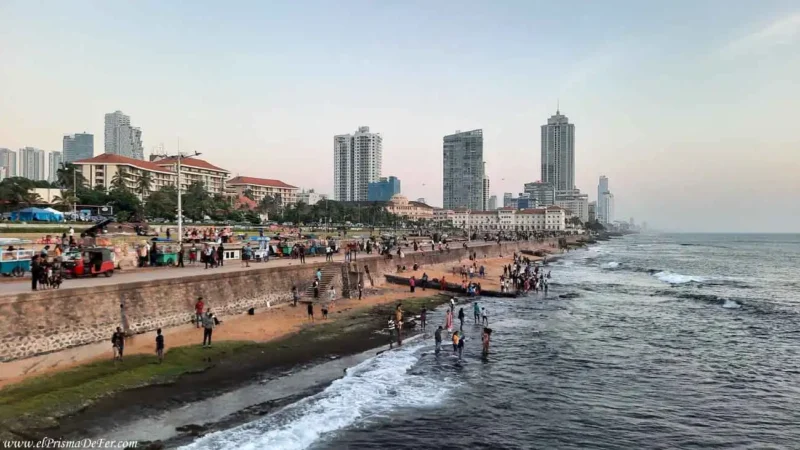
Another highly recommended option, and the one I chose, is to base yourself in Dambulla. This city is strategically located in the center of the Cultural Triangle and allows easy access to several important attractions, such as Sigiriya, Polonnaruwa, Anuradhapura and Kandy.
From Dambulla there are frequent buses to Polonnaruwa and the journey takes approximately 1.5 hours.
History of Polonnaruwa
How to visit Polonnaruwa
Most budget-conscious travelers choose to visit Polonnaruwa by bicycle, a practical option for covering the distances between temples and moving around freely.
Another alternative is to hire a tuk-tuk for the day. It's more comfortable if you're traveling in hot weather or prefer to avoid physical exertion, although you'll lose some of that feeling of exploring at your own pace. The driver usually waits for you at each point, and you can travel without any problems.
It's also possible to visit Polonnaruwa on an organized tour, a convenient option if you're staying in Sigiriya or Dambulla. These tours usually include transportation, a guide who helps you better understand the history of the complex, and in some cases, combine the visit with a safari in Minneriya National Park, famous for its elephants. If you'd rather forget about the logistics for a day, this can be a practical and very comprehensive alternative.
What doesn't change is that, whatever your means of transport, it's best to start early to avoid the strong midday sun.
The entrance to Polonnaruwa is purchased at the archaeological museum, which is also the starting point for the tour. You will be asked to show your ticket there before entering the historical area. It costs approximately $30 USD.
What to see in Polonnaruwa
Polonnaruwa Archaeological Museum
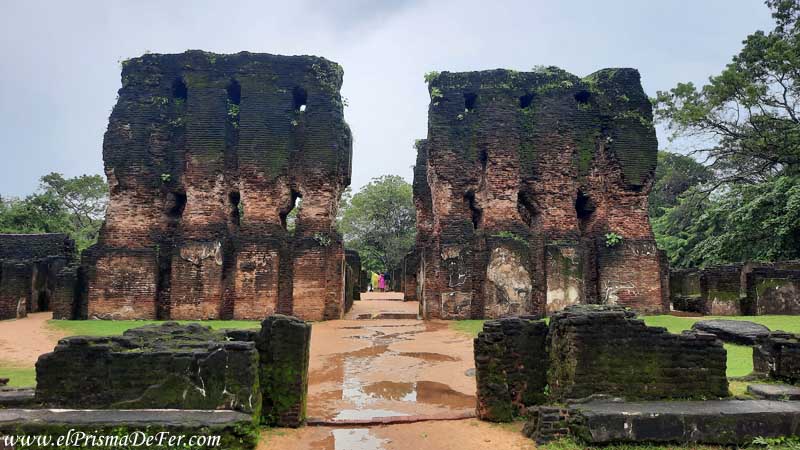
Parakramabahu I Royal Palace
The first place to visit within the complex is the monumental area of the old Royal Palace. Built in the 12th century, this palace once had seven floors and more than a thousand rooms.
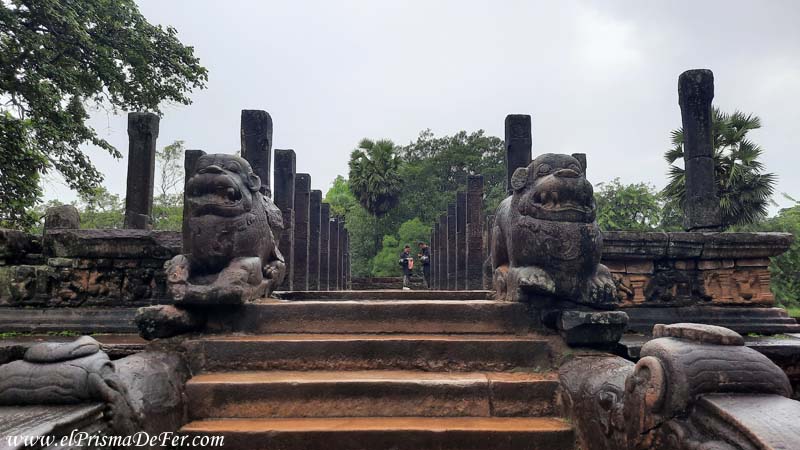
Audience Hall (Council Room)
Right next to the palace is this room where the king received his ministers. Its pillars, carved with figures of lions and elephants, are one of the most striking details of the complex.
Royal Bath (Kumara Pokuna)
Just a few meters from the palace lies this surprisingly well-preserved ceremonial pool. Its stepped pool design and ornamental details offer a glimpse into the architectural refinement of the period.
Quadrangle (Dalada Maluwa)
From here on you will enter the densest and most interesting part of the complex. The Quadrangle (see location on the map) brings together some of the most important temples and religious structures in all of Polonnaruwa in a relatively small area.
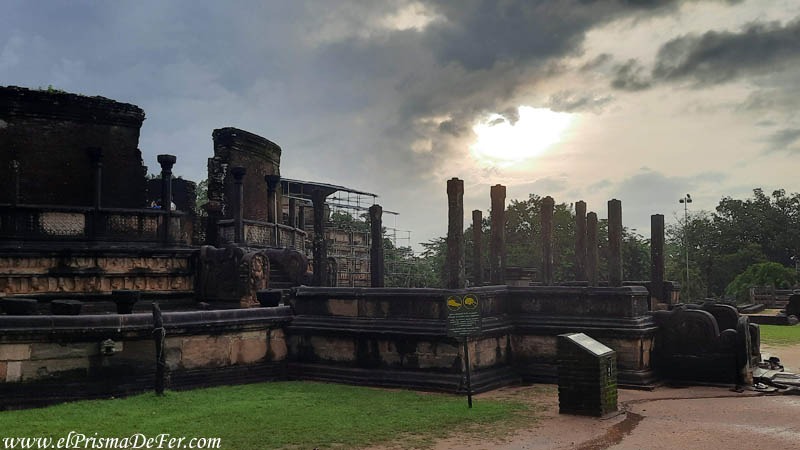
Vatadage
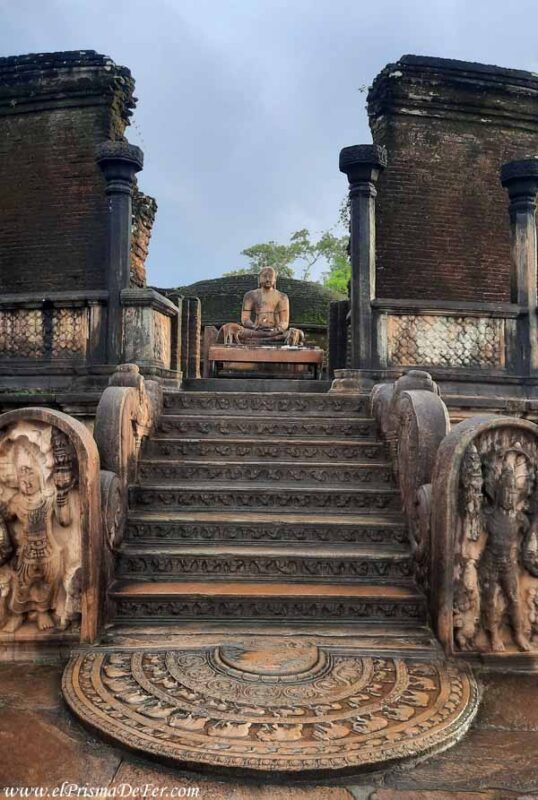
Hatadage and Atadage
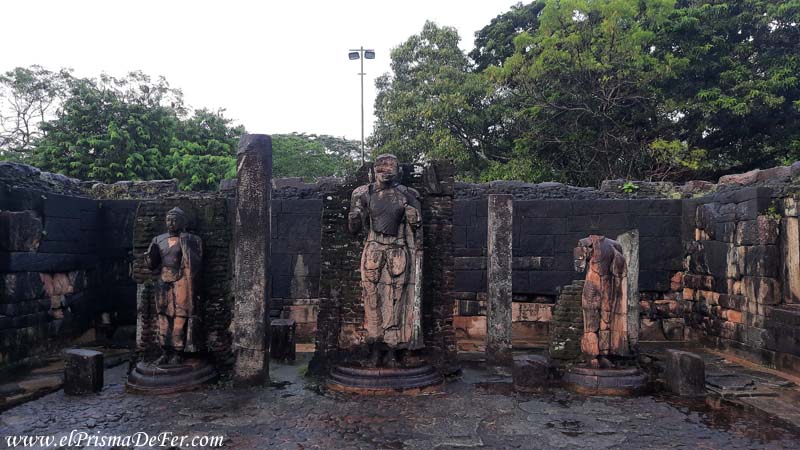
Thuparama
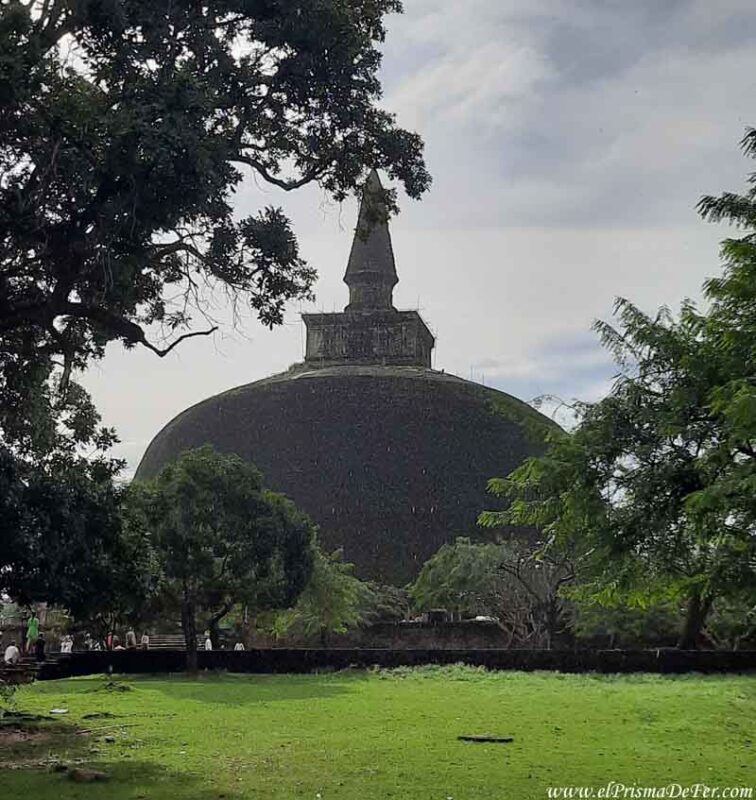
Rankoth Vehera
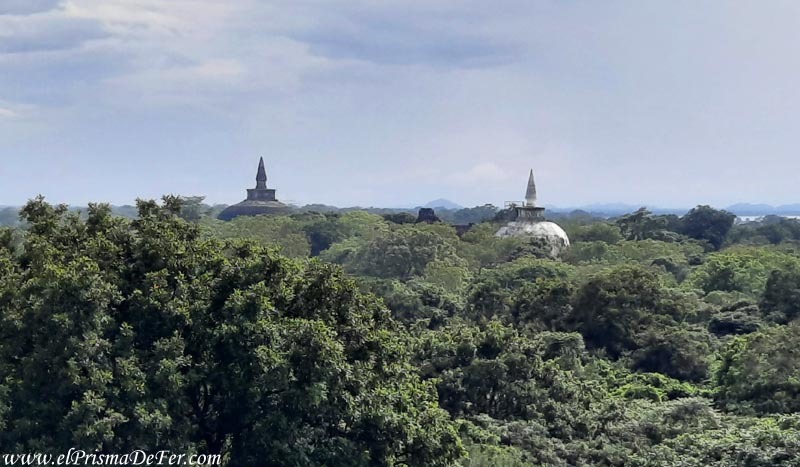
After exploring the Quadrangle, head towards this amazing dagoba, almost 55 meters high (see location on the map).
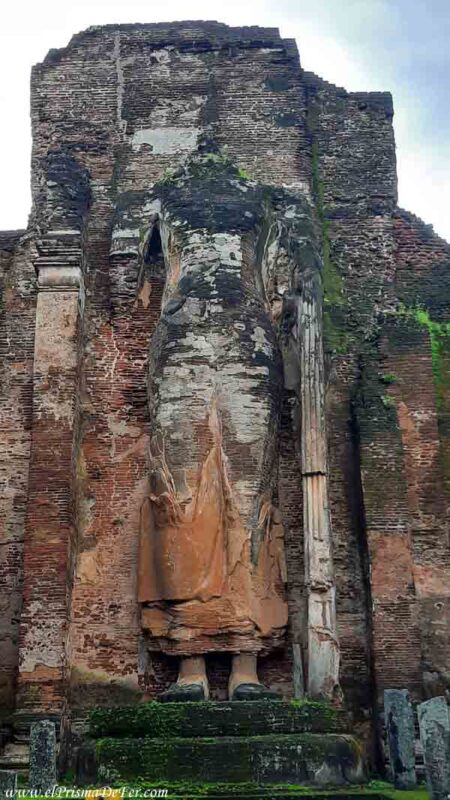
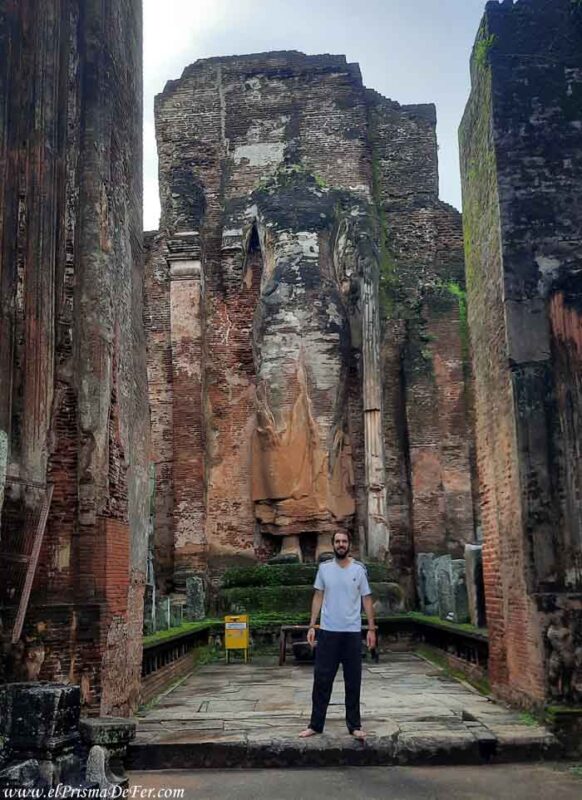
Lankatilaka
Famous for its long corridor and the giant Buddha statue that, although damaged and headless, still commands respect (see location).
Kiri Vehera
Gal Vihara
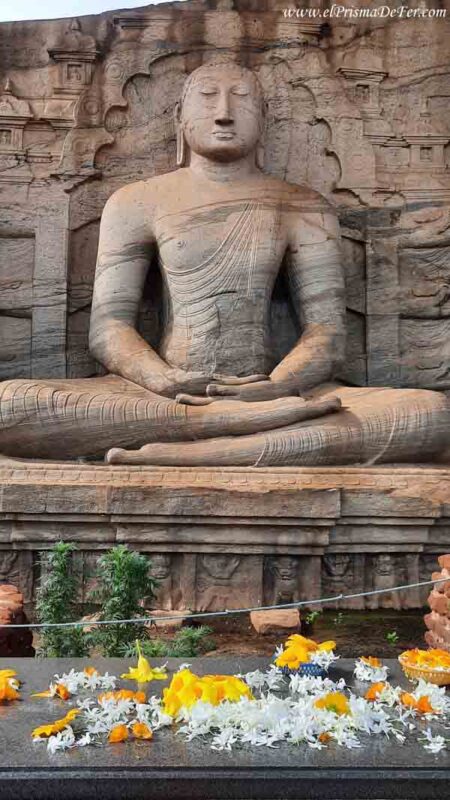
It is, without a doubt, the jewel of Polonnaruwa. This set of four Buddhas carved directly into a granite wall is a masterpiece of Sinhalese art (see location).

Other ruins of interest in Polonnaruwa
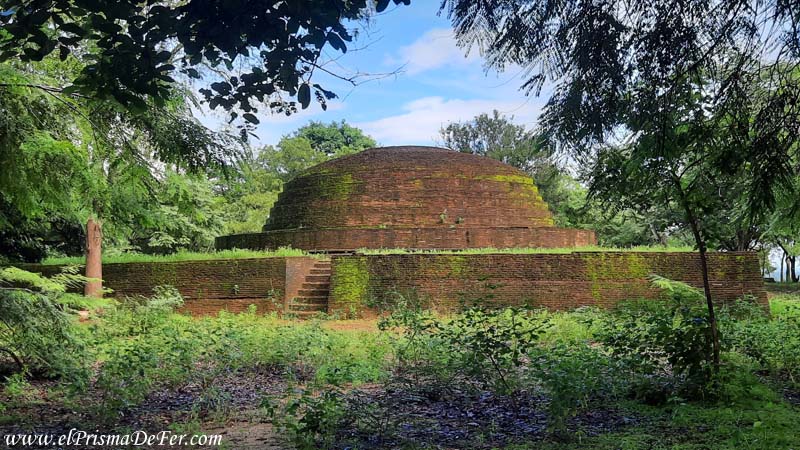
One of them is Demala Maha Seya, a huge, unfinished stupa hidden in the heart of nature. Very few people visit these ruins, making it a great place to enjoy the silence.
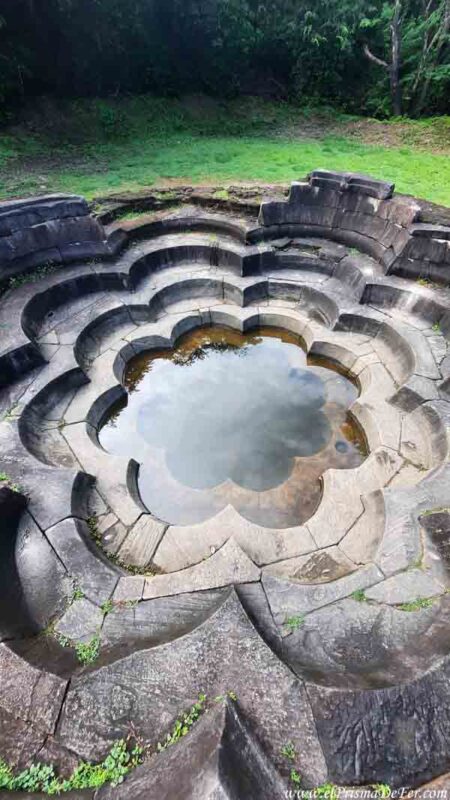
There is also the Lotus Pond (Ancient Nelum Pokuna), a ceremonial pool in the shape of a lotus flower whose architecture is surprising for its precision and symmetry.
And I couldn't fail to mention Thivanka Image House, one of the treasures of the complex. A sanctuary with reliefs sculpted on its walls that remain surprisingly intact, and where monkeys swarm among the trees, creating a completely cinematic atmosphere.
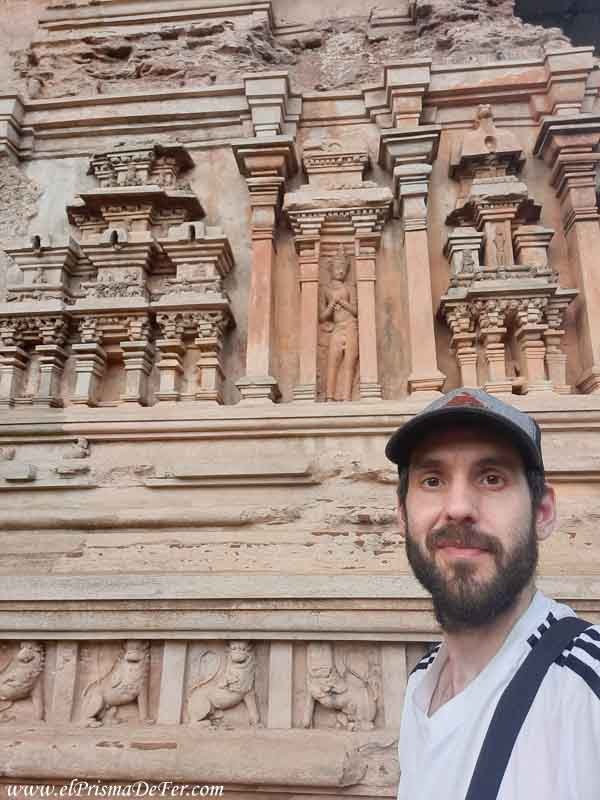
Parakrama Samudra
Is it worth visiting Polonnaruwa or Anuradhapura… or both?
Choosing between Polonnaruwa and Anuradhapura can be difficult, especially since both share a similar entrance fee, around $30 USD, and are part of Sri Lanka's famous "Cultural Triangle".
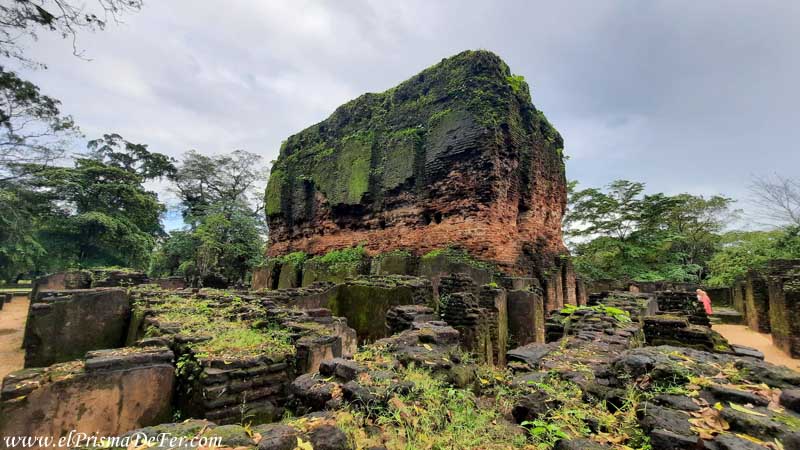
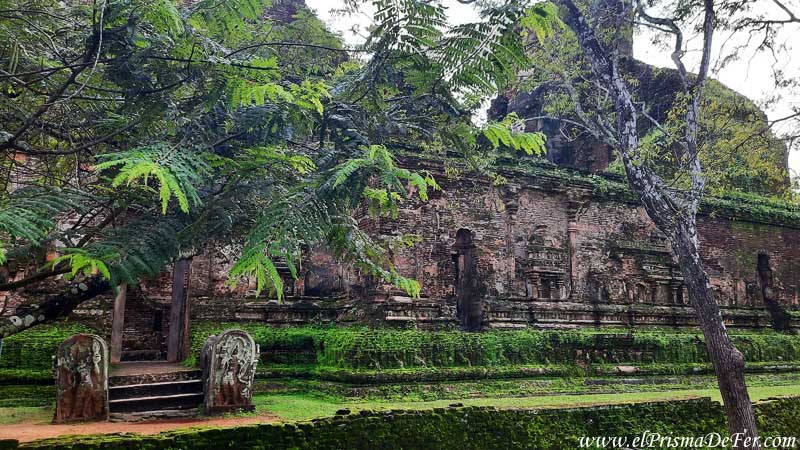
In my case, Polonnaruwa was clearly more interesting. The complex has a greater variety of ruins, temples, and Buddha statues, and it's all surrounded by nature, lakes, and green areas that make the visit much more enjoyable.
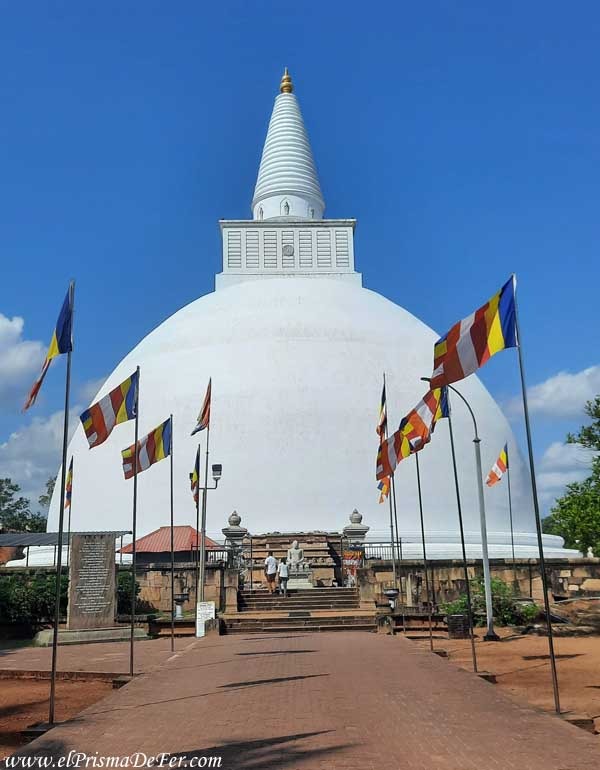
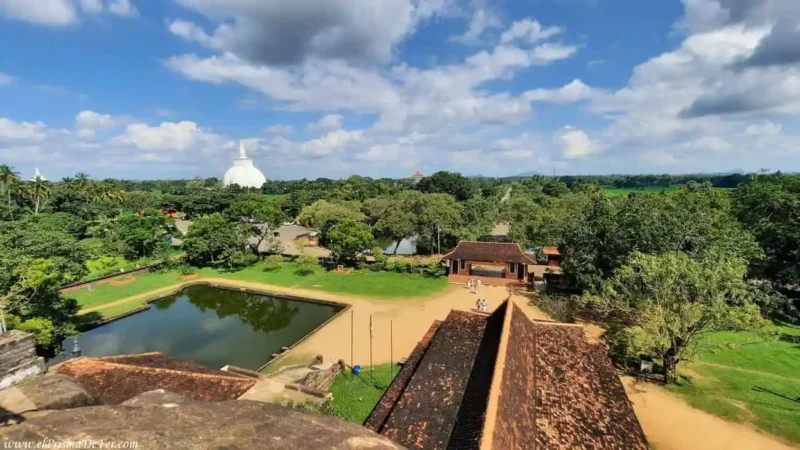
Anuradhapura, on the other hand, has enormous historical and religious value, but much of its charm lies in the active stupas and sites highly revered by the locals.
Where is it best to stay when visiting Polonnaruwa
Most travelers choose to sleep in New Polonnaruwa (Kaduruwela), as it is the modern area of the city and where you will find most of the guesthouses, simple restaurants and basic services.
Another convenient alternative is to base yourself in Dambulla, a much more strategic location within the Cultural Triangle. From there you can visit Polonnaruwa, Sigiriya, the Golden Temple, and other key sites without having to change accommodations each day. It's a more centrally located city with a wider range of options and better bus connections.
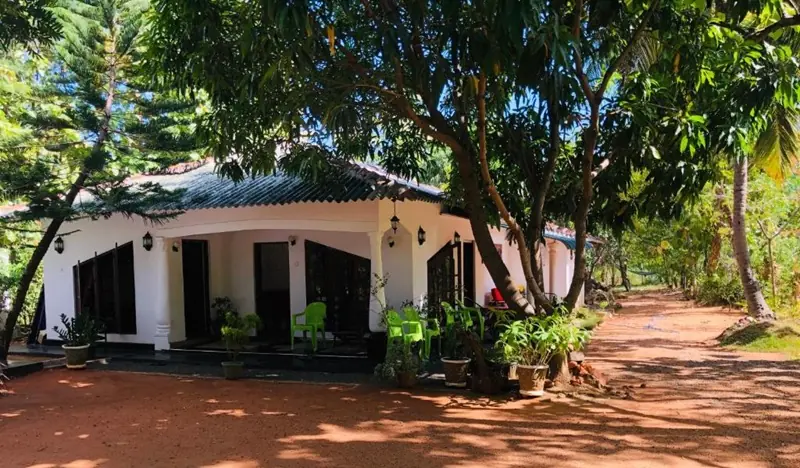
I stayed at Dambulla City Hostel, and I definitely recommend it. The place has a great vibe, it's quiet, surrounded by greenery, and has ideal common areas for relaxing after sightseeing.
Practical tips for visiting Polonnaruwa
- Arrive early: The heat in this area is intense, especially between 11 a.m. and 3 p.m. Starting your visit early not only gives you more bearable weather, but you'll also find fewer people at the most popular spots, such as the Quadrangle and Gal Vihara.
- Bring water, a hat, and sunscreen: There aren't many shady spots, and you won't find food or drink stands in every area of the complex. It's a good idea to stock up before entering.
- You can explore it by bike, tuk-tuk, or even on foot (although it's not the most comfortable option): Cycling is the most popular choice: cheap, practical, and allows you to move at your own pace. If you don't want to pedal in the sun, a tuk-tuk is a good alternative, especially if you want to save time. I only recommend walking if you have several hours and can tolerate the heat.
- The ticket is valid for one day only: Unlike other places in Sri Lanka, there is no extended pass here. It's best to plan your itinerary carefully before you start. Tickets are purchased at the museum, which is also the main entrance.
- Appropriate attire for temples: While most ruins don't require anything special, at certain religious sites (such as Gal Vihara) you'll need to cover your shoulders and knees. A large scarf in your backpack will do the trick.
- Take your time at the museum: Although many travelers overlook it, the museum is extremely helpful in understanding the history and role that Polonnaruwa played as the capital. It's worth spending half an hour there before entering the complex.
- Bring insect repellent: Depending on the time of year, there are usually mosquitoes in the areas closest to the ponds, especially in the afternoon.
- Avoid weekends and local holidays: There tends to be more domestic tourism and school groups, which makes the tour a bit slower.
Best time to visit Polonnaruwa
The best time is usually between May and September, during the eastern dry season. During these months, there is very little rain, the paths within the archaeological complex are in better condition, and it's easier to get around by bike or on foot without worrying about sudden storms. However, it is hot, so it's best to start your tour early.
The months of November through January are also a good option, with milder temperatures and moderate rainfall. In contrast, October and November tend to be more unstable due to the northeast monsoon, with more frequent rainfall that can complicate the visit.

Final thoughts on my visit to Polonnaruwa
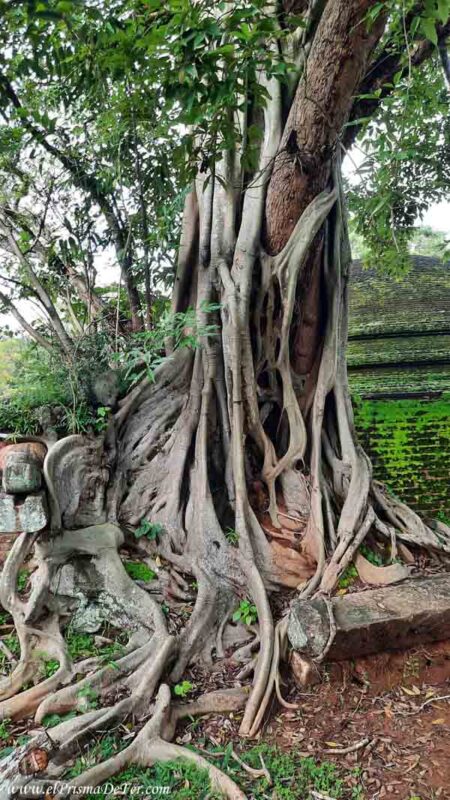
There were even moments that reminded me of my visit to Angkor Wat in Cambodia: that mixture of nature that envelops everything, roots that embrace the structures and temples that emerge from the green.
Without a doubt, Polonnaruwa was my favorite of the Cultural Triangle. I highly recommend visiting it and paying the entrance fee, which, although expensive, is worth every penny.
Frequently Asked Questions about Polonnaruwa
How much does it cost to enter Polonnaruwa?
How long does it take to travel around Polonnaruwa?
Do you need to rent a bike to get around?
Where can I rent bicycles?
Can you visit independently or is it advisable to hire a guide?
Is it better to stay in Polonnaruwa or in another city?
Is it necessary to buy the ticket in advance?
Are there restaurants inside the archaeological site?
Is it worth visiting Polonnaruwa if I've already been to Anuradhapura?
Support The Prism of Fer!