Polonnaruwa was one of the historical sites I enjoyed most in Sri Lanka. Unlike other more crowded places, here you can still feel that blend of nature, silence, and history that makes each temple and statue even more powerful.
Visiting Polonnaruwa means wandering among the ruins of palaces, stupas, monastic gardens, and sculptures carved with incredible precision almost a thousand years ago. All within a fairly large area, but very easy to explore by bike or tuk-tuk. And although it's one of the highlights of the Cultural Triangle, the good thing is that it's not usually as crowded as Sigiriya, for example.
In this guide, I'll tell you how to get there, what to see, how to plan your visit, and offer some practical tips based on my experience. If you're planning a Sri Lanka itinerary and are interested in the country's history, Polonnaruwa is a stop well worth making.
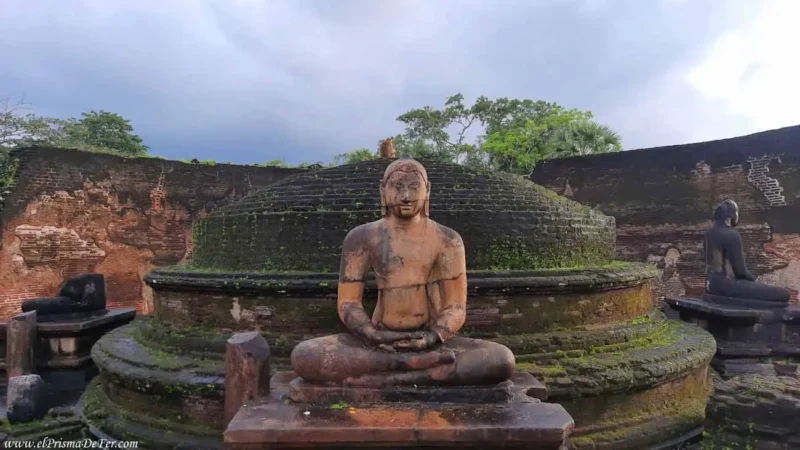

Table of Contents
Where is Polonnaruwa located?
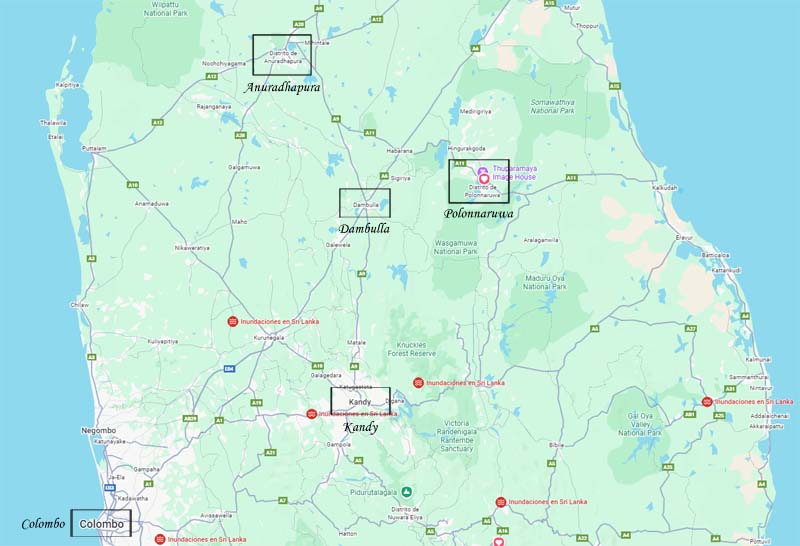
Polonnaruwa is located in north-central Sri Lanka, within the famous Cultural Triangle, a region steeped in history, ancient temples and former royal capitals.
The city is located on the shores of the large artificial lake Parakrama Samudra, built in the 12th century, which is still essential for the irrigation of the entire area.
It is approximately at:
- 2.5 hours from Sigiriya/Dambulla
- 3 hours of Anuradhapura
- 5–6 hours from Kandy
- 5–6 hours from Colombo


How to get to Polonnaruwa
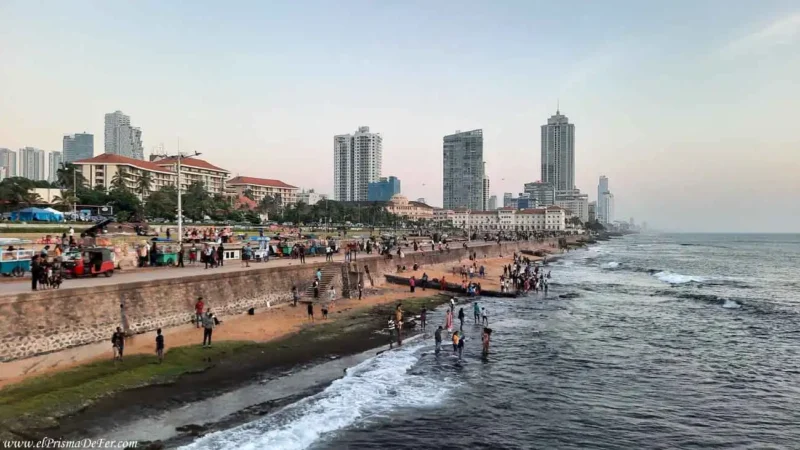
The most common way to get there is from Colombo, either by bus or train. The road trip usually takes between 5 and 6 hours, while the train journey can be a bit slower and with fewer direct services.
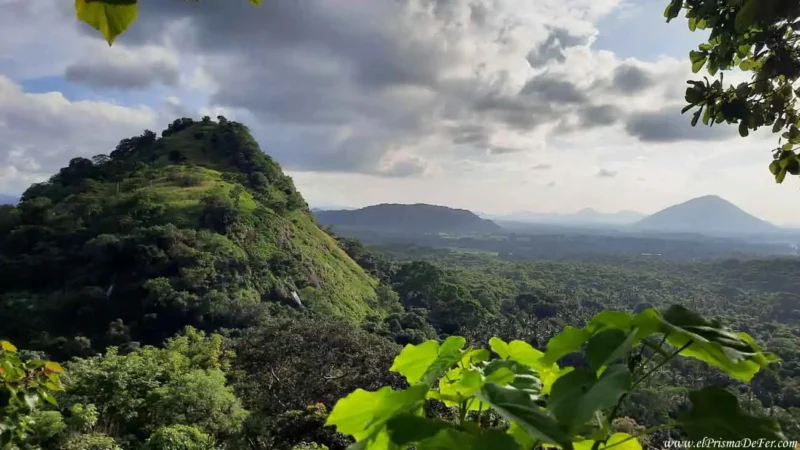
Another highly recommended option, and the one I chose, is to base yourself in Dambulla. This city is strategically located in the center of the Cultural Triangle and allows easy access to several important attractions, such as Sigiriya, Polonnaruwa, Anuradhapura and Kandy.
From Dambulla there are frequent buses to Polonnaruwa and the journey takes approximately 1.5 hours.
It's a more convenient option if you want to optimize time, avoid long journeys, and visit several archaeological sites from the same point.
History of Polonnaruwa
Polonnaruwa was the second capital of the ancient kingdom of Sri Lanka, and had its period of greatest splendor between the 11th and 13th centuries.
After the fall of Anuradhapura, the Sinhalese kings moved the country's political and religious center here, promoting a period of urban renewal, advances in hydraulic engineering, and an architecture that still surprises today with its scale and detail.
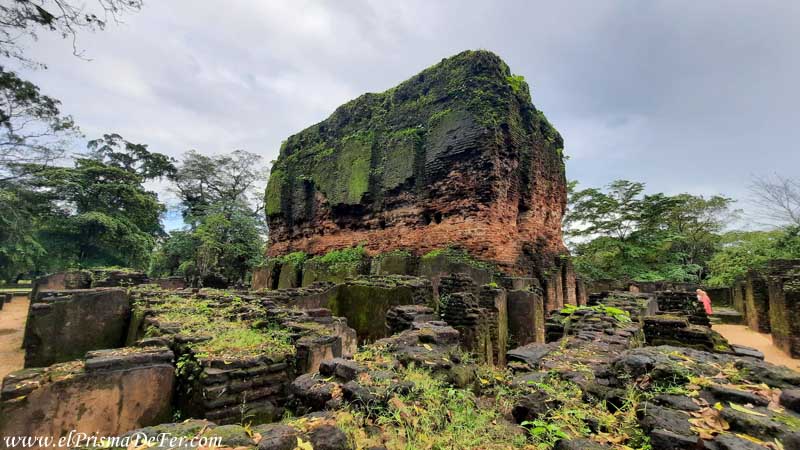
One of the most brilliant periods in its history came under the reign of Parakramabahu I, who transformed the city into a model of planning and development. He is credited with the construction of enormous water reservoirs, such as the Parakrama Samudra, and the reorganization of the administrative and monastic system.
Under his rule, Polonnaruwa achieved a regional influence marked by trade, diplomacy, and a significant artistic legacy.
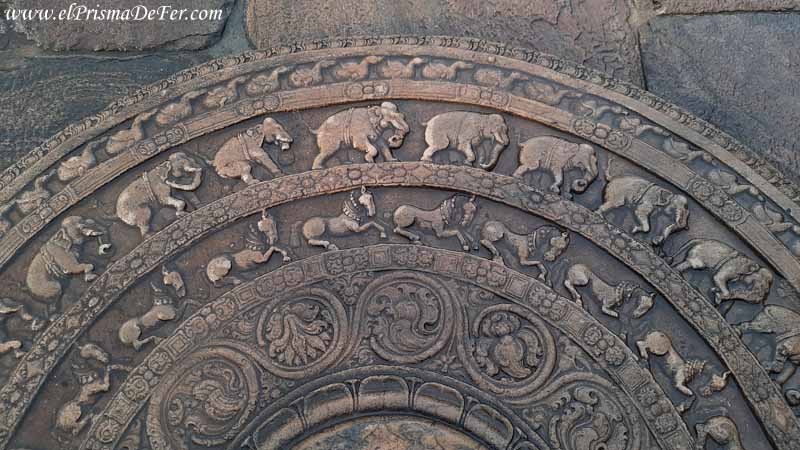
Although the city fell into decline after invasions from southern India and was eventually abandoned as a capital, its monumental complex remained surprisingly intact.
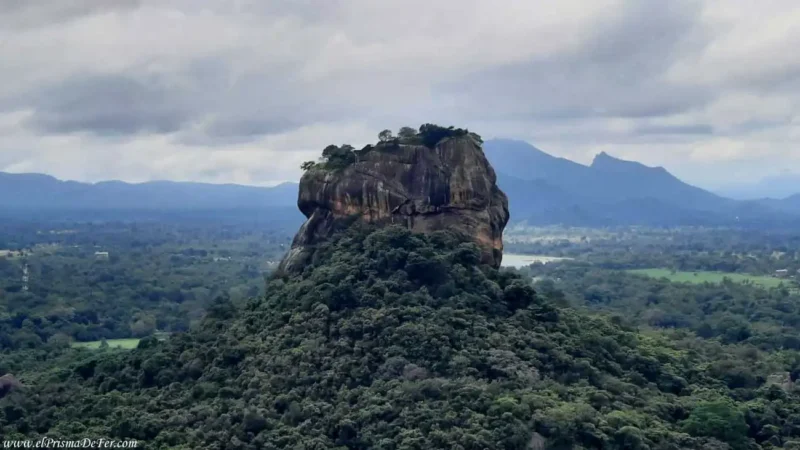
How to visit Polonnaruwa
Most budget-conscious travelers choose to visit Polonnaruwa by bicycle, a practical option for covering the distances between temples and moving around freely.
Bicycles are available for rent right in front of the main entrance, and the terrain is mostly flat, so even those who are not used to cycling can do so without problems.
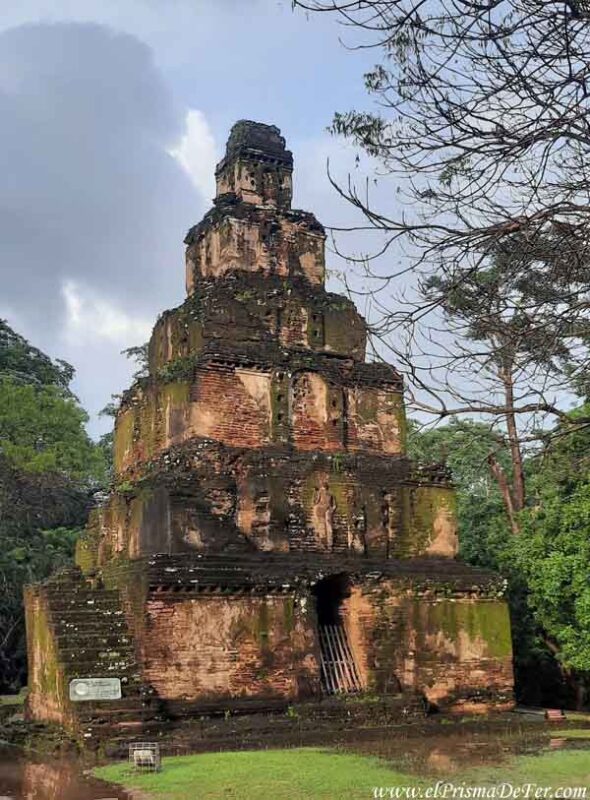
Another alternative is to hire a tuk-tuk for the day. It's more comfortable if you're traveling in hot weather or prefer to avoid physical exertion, although you'll lose some of that feeling of exploring at your own pace. The driver usually waits for you at each point, and you can travel without any problems.
It's also possible to visit Polonnaruwa on an organized tour, a convenient option if you're staying in Sigiriya or Dambulla. These tours usually include transportation, a guide who helps you better understand the history of the complex, and in some cases, combine the visit with a safari in Minneriya National Park, famous for its elephants. If you'd rather forget about the logistics for a day, this can be a practical and very comprehensive alternative.
What doesn't change is that, whatever your means of transport, it's best to start early to avoid the strong midday sun.
The entrance to Polonnaruwa is purchased at the archaeological museum, which is also the starting point for the tour. You will be asked to show your ticket there before entering the historical area. It costs approximately $30 USD.
What to see in Polonnaruwa
Below I detail what to see in Polonnaruwa, in the ideal order to make the most of your time visiting the ruins.
Polonnaruwa Archaeological Museum
The tour begins in this small but comprehensive museum, which helps to understand the historical context of the ancient Kingdom of Polonnaruwa.
Its rooms display statues, decorative fragments, and models that reveal what the city looked like in its years of splendor.
Although many travelers pass through it quickly, it is worth spending a few minutes there before entering the main complex.
Parakramabahu I Royal Palace
The first place to visit within the complex is the monumental area of the old Royal Palace. Built in the 12th century, this palace once had seven floors and more than a thousand rooms.
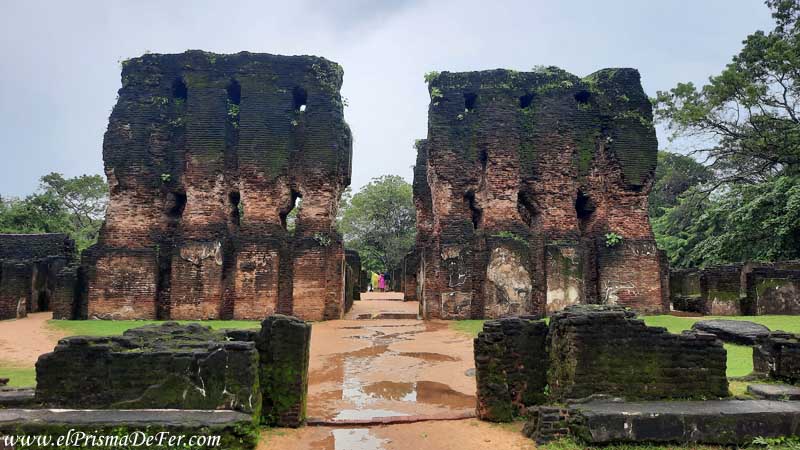
Although only its robust walls and columns remain today, walking among its ruins allows one to imagine the magnitude of what the royal residence once was.
It is the best place to delve into Polonnaruwa's golden age and understand the power the city once held.
Audience Hall (Council Room)
Right next to the palace is this room where the king received his ministers. Its pillars, carved with figures of lions and elephants, are one of the most striking details of the complex.
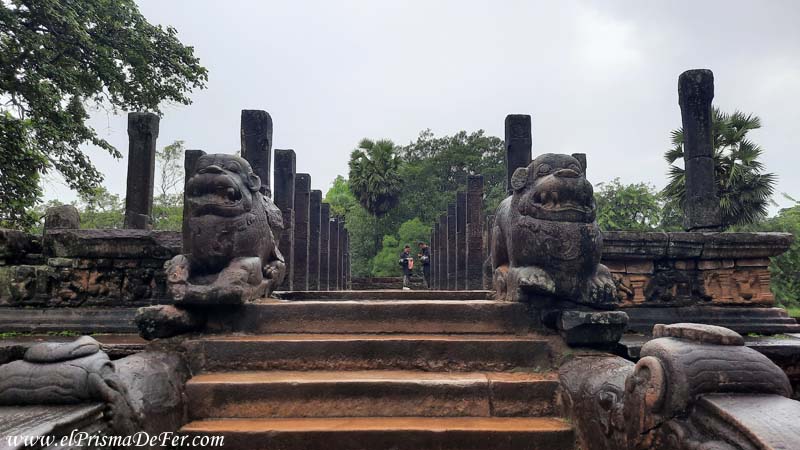
The structure is relatively small, but its preservation is excellent and allows one to appreciate the elegance and architectural style of the time.
Royal Bath (Kumara Pokuna)
Just a few meters from the palace lies this surprisingly well-preserved ceremonial pool. Its stepped pool design and ornamental details offer a glimpse into the architectural refinement of the period.
Quadrangle (Dalada Maluwa)
From here on you will enter the densest and most interesting part of the complex. The Quadrangle (see location on the map) brings together some of the most important temples and religious structures in all of Polonnaruwa in a relatively small area.
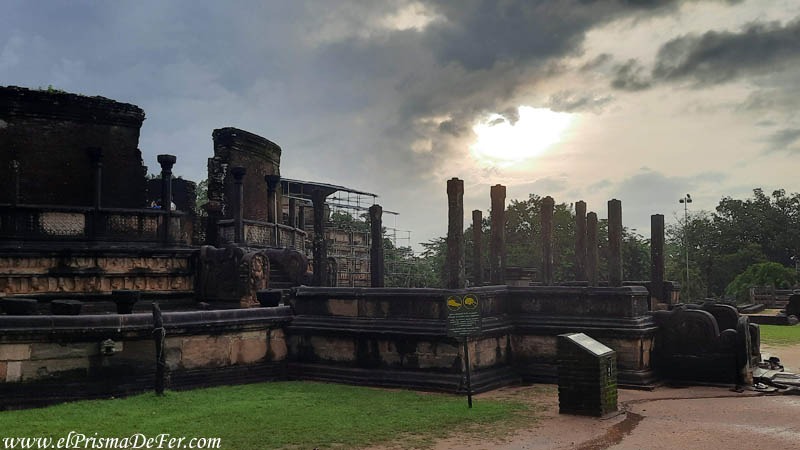
Among them are the Vatadage, the Hatadage, and the Thuparama.
Vatadage
Within the Quadrangle, the Vatadage is probably the most well-known structure. It is a circular shrine built to protect a sacred relic.
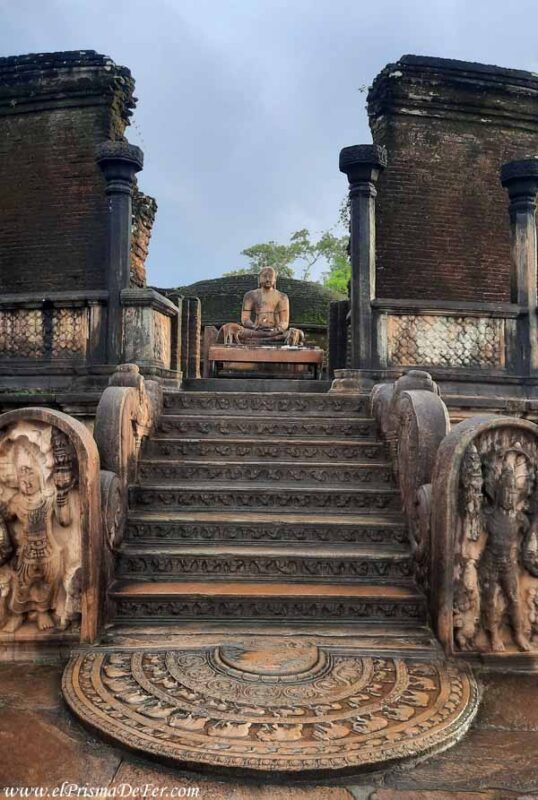
Its steps, flanked by carved stone guards, lead to a platform where four seated Buddhas face the cardinal directions, and the design of the outer ring makes it one of the most photogenic spots on the tour.
Hatadage and Atadage
Right next to the Vatadage, these ancient reliquaries show the architectural evolution between the first and later buildings of the complex.
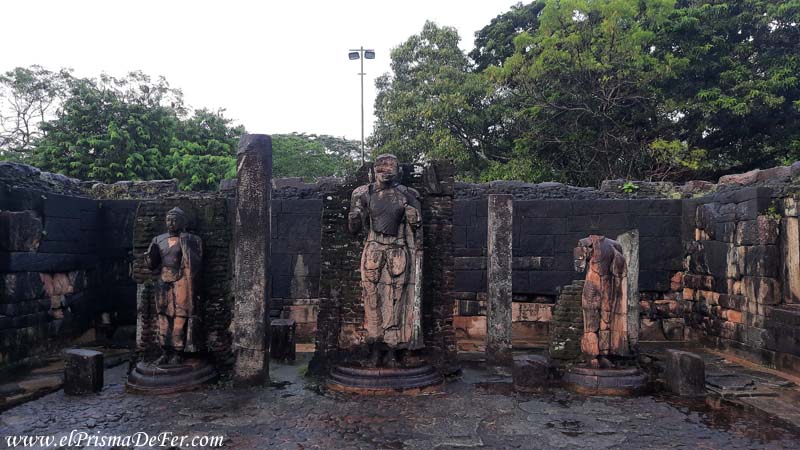
Its pillars and staircases framed by stone guardians are details worth observing.
Thuparama
One of the best-preserved temples in terms of its internal structure, as it retains its roofed sanctuary. Although smaller, it is very special for preserving sculptures in their original positions.
Rankoth Vehera
After exploring the Quadrangle, head towards this amazing dagoba, almost 55 meters high (see location on the map).
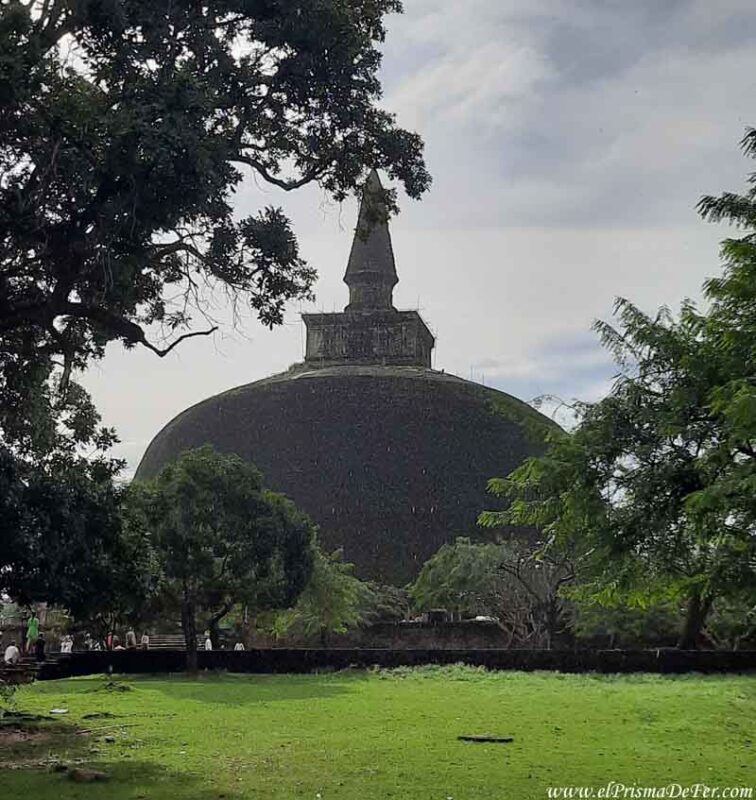
Its presence dominates the area and it is still a place of worship today, so it is common to see locals walking around the stupa clockwise.
Lankatilaka
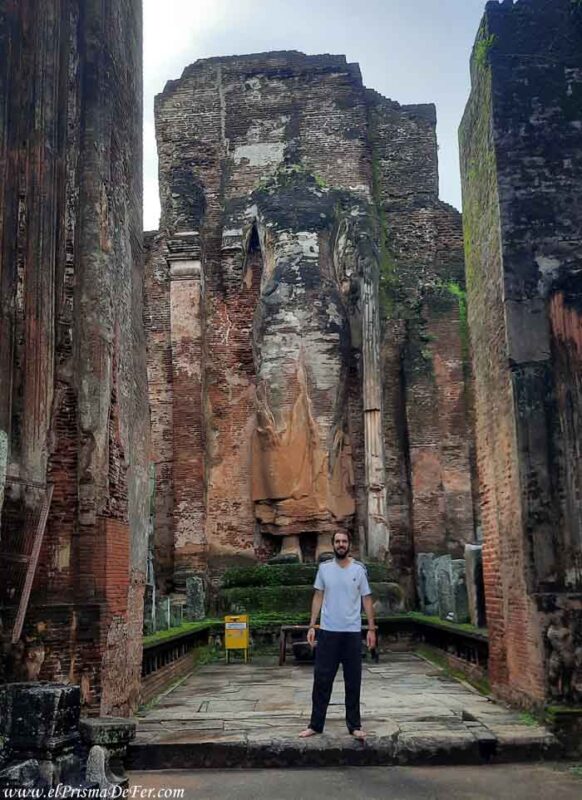
Famous for its long corridor and the giant Buddha statue that, although damaged and headless, still commands respect (see location).
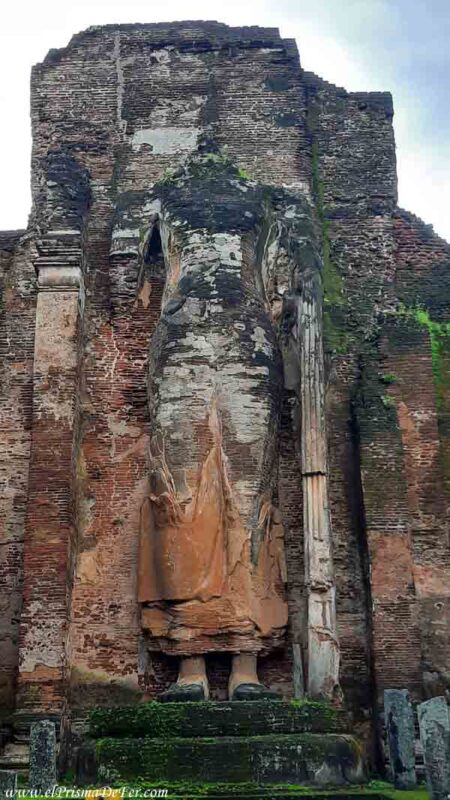
The walls surrounding the image reach a considerable height and convey a sense of monumentality that makes it one of the most impressive temples in the complex.
Kiri Vehera
Just a few minutes from Lankatilaka is this enormous white dagoba, remarkably well preserved.
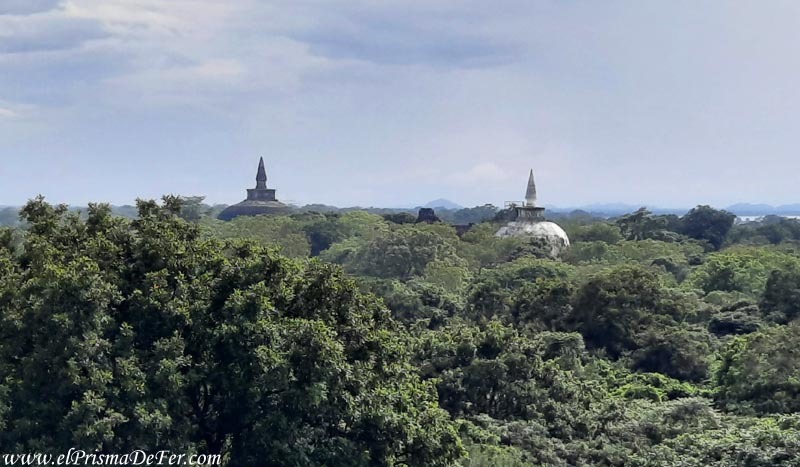
Its symmetrical profile makes it one of the most beautiful in Polonnaruwa.
Gal Vihara
It is, without a doubt, the jewel of Polonnaruwa. This set of four Buddhas carved directly into a granite wall is a masterpiece of Sinhalese art (see location).
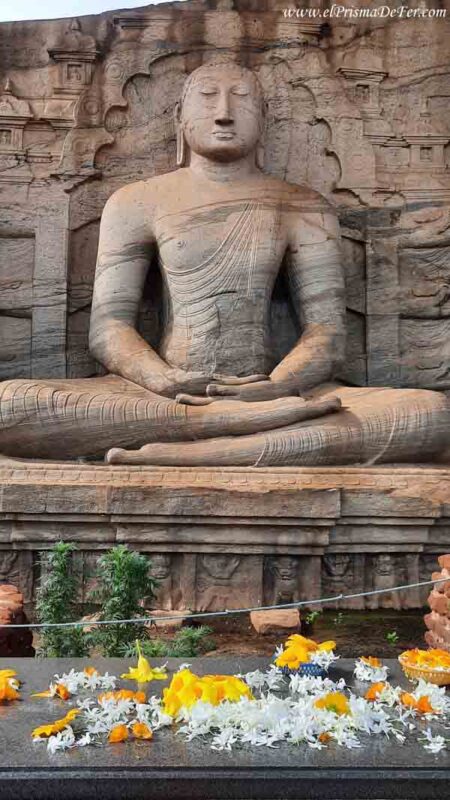
The sculptures include a seated Buddha, one in meditation, one inside a kind of artificial grotto, and the famous reclining Buddha, over 14 meters tall, which represents parinirvana.

It is the most visited spot, by tourists and locals, and where many travelers end their tour.
Other ruins of interest in Polonnaruwa
Besides its well-known attractions, Polonnaruwa holds lesser-known gems that are well worth discovering. Just keep exploring after visiting Gal Vihara.
One of them is Demala Maha Seya, a huge, unfinished stupa hidden in the heart of nature. Very few people visit these ruins, making it a great place to enjoy the silence.
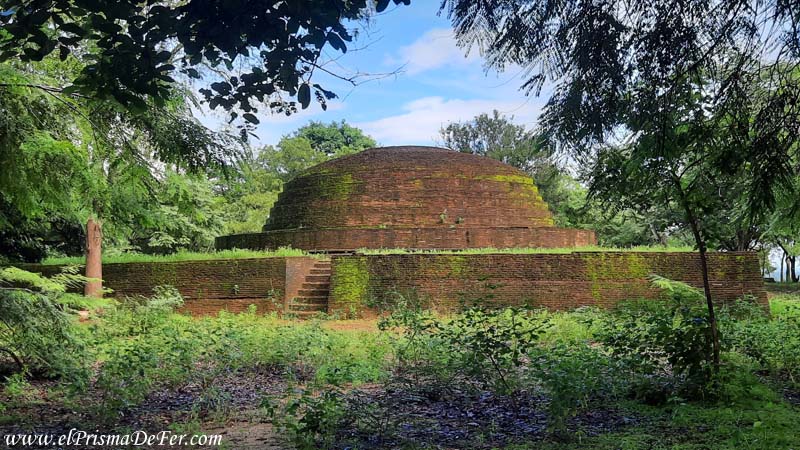
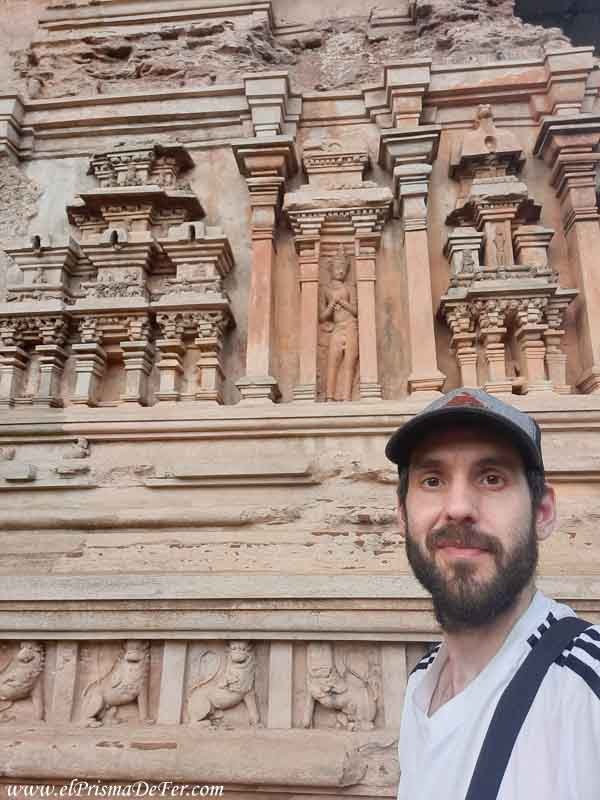
There is also the Lotus Pond (Ancient Nelum Pokuna), a ceremonial pool in the shape of a lotus flower whose architecture is surprising for its precision and symmetry.
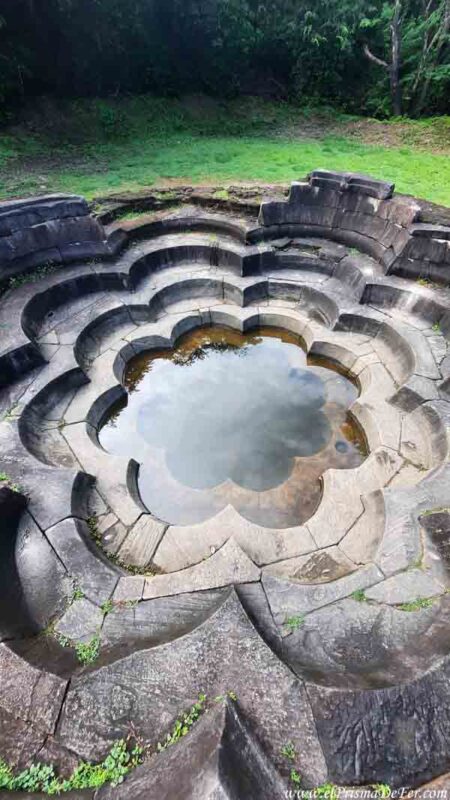
And I couldn't fail to mention Thivanka Image House, one of the treasures of the complex. A sanctuary with reliefs sculpted on its walls that remain surprisingly intact, and where monkeys swarm among the trees, creating a completely cinematic atmosphere.
Parakrama Samudra
Although it is not a temple, this enormous artificial lake built in the 12th century showcases the advanced hydraulic engineering of the kingdom.
It is still used today for irrigation, and its immensity helps to understand the importance of Polonnaruwa as an agricultural capital.
Is it worth visiting Polonnaruwa or Anuradhapura… or both?
Choosing between Polonnaruwa and Anuradhapura can be difficult, especially since both share a similar entrance fee, around $30 USD, and are part of Sri Lanka's famous "Cultural Triangle".
In my case, Polonnaruwa was clearly more interesting. The complex has a greater variety of ruins, temples, and Buddha statues, and it's all surrounded by nature, lakes, and green areas that make the visit much more enjoyable.
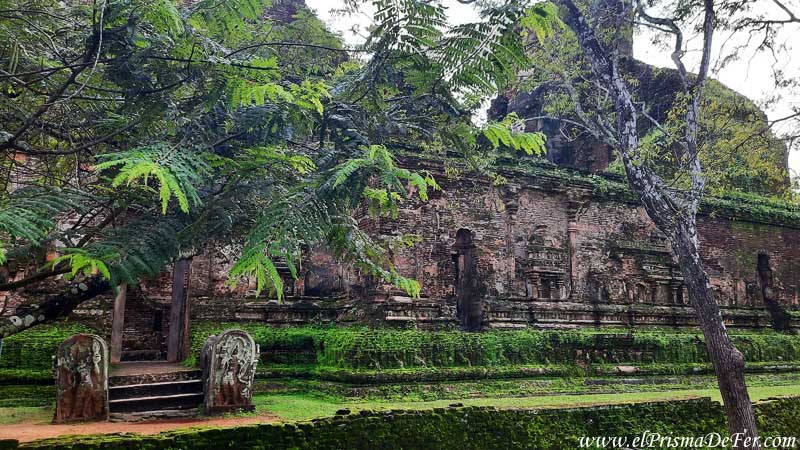
The structures are better preserved, the points of interest are more varied, and the layout is ideal for cycling without getting too tired.
Anuradhapura, on the other hand, has enormous historical and religious value, but much of its charm lies in the active stupas and sites highly revered by the locals.
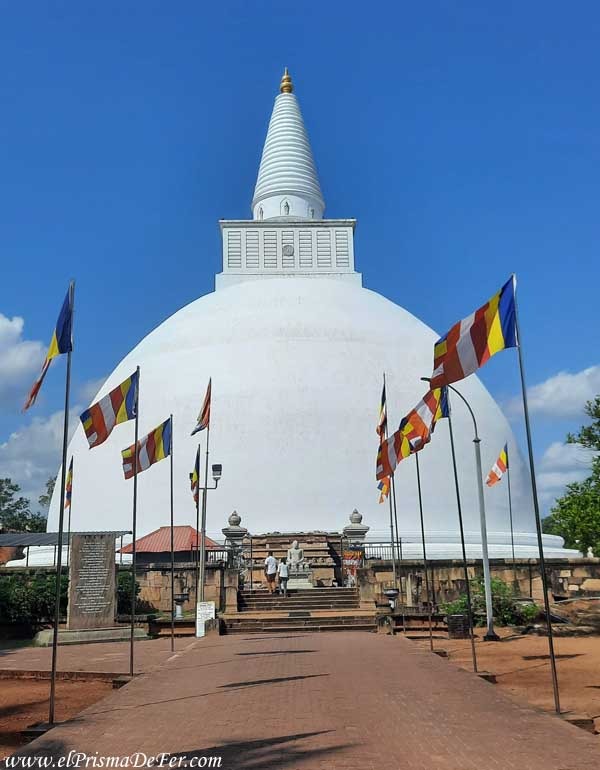
If you've already read my post about the city, you'll know that, personally, it didn't impress me that much. By exploring the free area, including some important stupas, and visiting the Sri Maha Bodhi Tree, you can get a good general idea without needing to buy the full ticket.
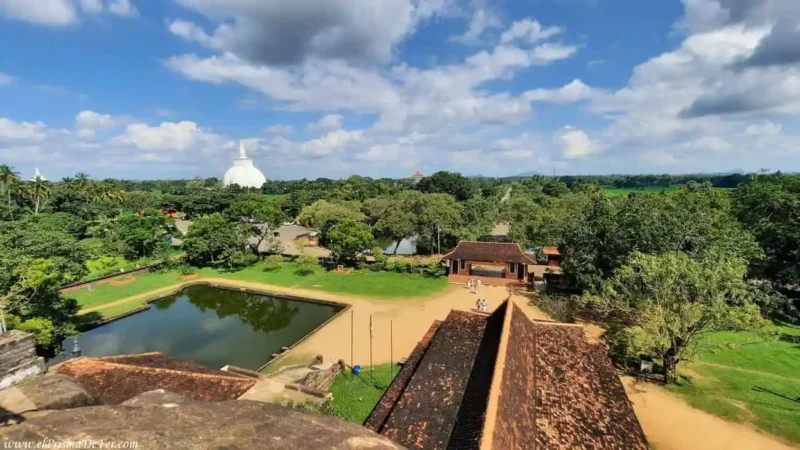
What to see in Anuradhapura, Sri Lanka. Is it worth visiting?
If I had a tight schedule and had to choose just one, I'd definitely go with Polonnaruwa. It's the most complete, entertaining, and visually appealing option.
On the other hand, if you have more days and are interested in delving deeper into the country's religious history, then yes, adding Anuradhapura can complement the trip well.
Where is it best to stay when visiting Polonnaruwa
Most travelers choose to sleep in New Polonnaruwa (Kaduruwela), as it is the modern area of the city and where you will find most of the guesthouses, simple restaurants and basic services.
From there, it's very easy to reach the archaeological site by tuk-tuk or bicycle, which is just a few minutes away. If your main goal is to explore the complex at a leisurely pace without long transfers, this is the most practical option.
Another convenient alternative is to base yourself in Dambulla, a much more strategic location within the Cultural Triangle. From there you can visit Polonnaruwa, Sigiriya, the Golden Temple, and other key sites without having to change accommodations each day. It's a more centrally located city with a wider range of options and better bus connections.
I stayed at Dambulla City Hostel, and I definitely recommend it. The place has a great vibe, it's quiet, surrounded by greenery, and has ideal common areas for relaxing after sightseeing.
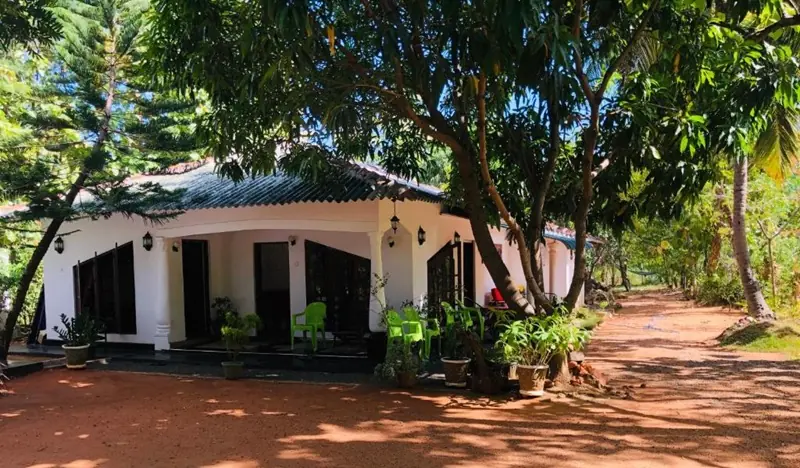
In addition, the owner was incredibly friendly and helped me organize some parts of my trip to Sri Lanka. If you're looking for comfort, a great location, and a relaxed atmosphere, it's a fantastic choice.
Practical tips for visiting Polonnaruwa
Some tips I wish I had known before visiting Polonnaruwa:
- Arrive early: The heat in this area is intense, especially between 11 a.m. and 3 p.m. Starting your visit early not only gives you more bearable weather, but you'll also find fewer people at the most popular spots, such as the Quadrangle and Gal Vihara.
- Bring water, a hat, and sunscreen: There aren't many shady spots, and you won't find food or drink stands in every area of the complex. It's a good idea to stock up before entering.
- You can explore it by bike, tuk-tuk, or even on foot (although it's not the most comfortable option): Cycling is the most popular choice: cheap, practical, and allows you to move at your own pace. If you don't want to pedal in the sun, a tuk-tuk is a good alternative, especially if you want to save time. I only recommend walking if you have several hours and can tolerate the heat.
- The ticket is valid for one day only: Unlike other places in Sri Lanka, there is no extended pass here. It's best to plan your itinerary carefully before you start. Tickets are purchased at the museum, which is also the main entrance.
- Appropriate attire for temples: While most ruins don't require anything special, at certain religious sites (such as Gal Vihara) you'll need to cover your shoulders and knees. A large scarf in your backpack will do the trick.
- Take your time at the museum: Although many travelers overlook it, the museum is extremely helpful in understanding the history and role that Polonnaruwa played as the capital. It's worth spending half an hour there before entering the complex.
- Bring insect repellent: Depending on the time of year, there are usually mosquitoes in the areas closest to the ponds, especially in the afternoon.
- Avoid weekends and local holidays: There tends to be more domestic tourism and school groups, which makes the tour a bit slower.
Best time to visit Polonnaruwa
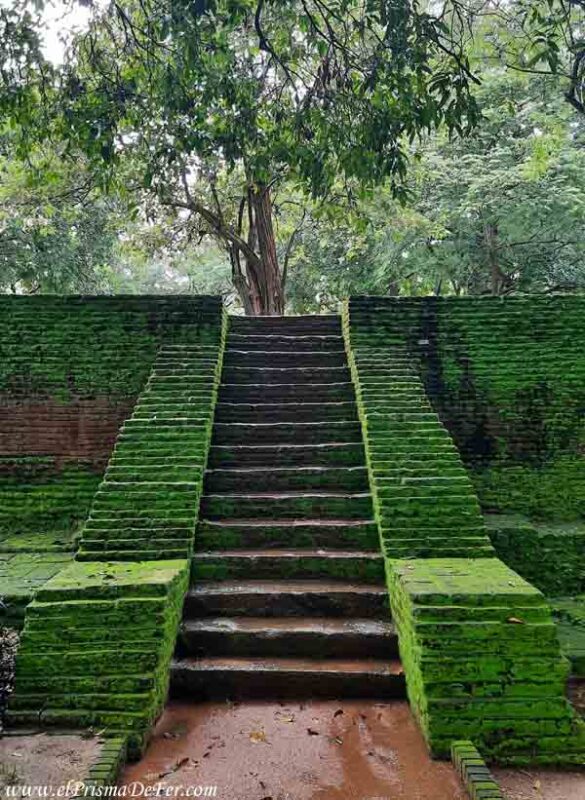
The best time is usually between May and September, during the eastern dry season. During these months, there is very little rain, the paths within the archaeological complex are in better condition, and it's easier to get around by bike or on foot without worrying about sudden storms. However, it is hot, so it's best to start your tour early.
The months of November through January are also a good option, with milder temperatures and moderate rainfall. In contrast, October and November tend to be more unstable due to the northeast monsoon, with more frequent rainfall that can complicate the visit.

Final thoughts on my visit to Polonnaruwa
Polonnaruwa surprised me more than I expected. Even with the intermittent rain, or perhaps because of it, the journey had an almost epic feel at times. Furthermore, there weren't too many people, which allowed me to explore at my leisure, stop wherever I wanted, and truly connect with the place.
There were even moments that reminded me of my visit to Angkor Wat in Cambodia: that mixture of nature that envelops everything, roots that embrace the structures and temples that emerge from the green.
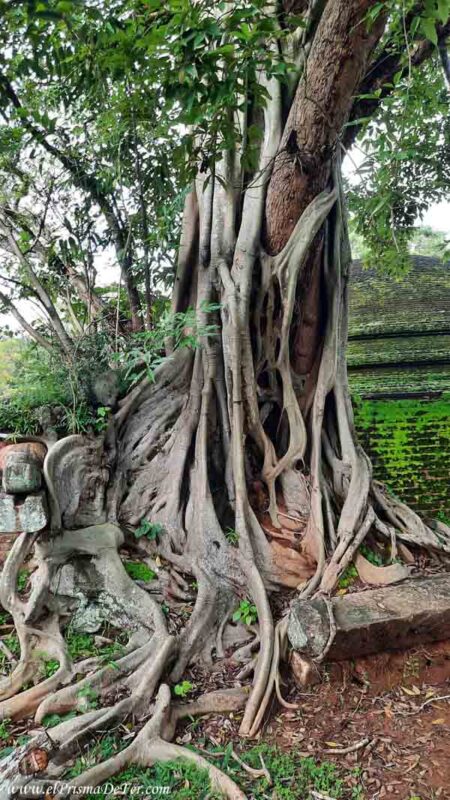
Without a doubt, Polonnaruwa was my favorite of the Cultural Triangle. I highly recommend visiting it and paying the entrance fee, which, although expensive, is worth every penny.
Frequently Asked Questions about Polonnaruwa
How much does it cost to enter Polonnaruwa?
The entrance fee is high by Sri Lankan standards, around $30 USD. Although the price may fluctuate over the years, it remains one of the most expensive entrance fees in the country. Even so, I think it's totally worth it.
How long does it take to travel around Polonnaruwa?
A full day is ideal for seeing the main temples, palaces, and statues at a leisurely pace. If you're particularly interested in history or want to get the most out of your visit, an extra half day can be useful, but it's not essential.
Do you need to rent a bike to get around?
It's not mandatory, but it is recommended. The distances between the main points are considerable, and the sun can be intense. Cycling makes the route much easier and more dynamic.
Where can I rent bicycles?
Near the main entrance and the museum, there are several stands that rent bicycles for a few hours or for the whole day. Some accommodations also offer their own rental services.
Can you visit independently or is it advisable to hire a guide?
It can be explored perfectly well on your own, but a guide can help you better understand the history of each structure and the architectural details.
Is it better to stay in Polonnaruwa or in another city?
Many travelers stay directly in Polonnaruwa, but it's also very common to base themselves in Dambulla, which is what I did. From there, it's easy to get around and also allows you to visit other important places in the country.
Is it necessary to buy the ticket in advance?
No, you buy tickets directly at the museum upon arrival. It's best to go early to avoid the intense heat and the larger tours.
Are there restaurants inside the archaeological site?
There are no options within the complex, but there are plenty nearby. It's advisable to bring water, some light snacks, and find a restaurant after your tour.
Is it worth visiting Polonnaruwa if I've already been to Anuradhapura?
For me, yes. Polonnaruwa offers a more diverse array of ruins and a more natural setting, making the visit feel more complete and visually appealing. If I had to choose one, it would definitely be this one.
Support The Prism of Fer!
Your support helps me continue creating free content on the blog. Thank you so much!