During my time in Japan, Osaka left me with mixed feelings. It's not like Kyoto or Tokyo, it's more disorganized. It has chaotic parts, modern areas, and also a certain decay that's noticeable when walking its streets.
But at the same time, it has a unique style. Between the neon lights, giant signs, and some slightly retro areas, it ends up having its own charm that can be captivating. It might not be the prettiest at first glance, but there's something about it that stays with you.
In this post, I'll tell you what to see, how to get around, where to stay, and what impressions this unique city in southern Japan left me with.

This post may contains affiliate links. If you purchase through these links, I may earn a commission at no extra cost to you. Thank you for your support!
Table of Contents
Expectations vs. reality
I came from spending 4 days in Kyoto, the cultural capital of Japan, where every corner captivated me. Imagine the hype I had when I arrived in Osaka. I had high expectations, especially after hearing so much about its street food, its relaxed vibe, and its brightly lit neighborhoods, I arrived eager to be won over.
Y si bien encontré rincones que realmente valen la pena, como Dotonbori de noche, el barrio Shinsekai o el Parque Tennoji Ten-Shiba, lo cierto es que Osaka wasn't quite what I imaginedI felt like something was missing, or maybe I compared it too much to other Japanese cities that had amazed me before, like Tokyo or Kyoto.
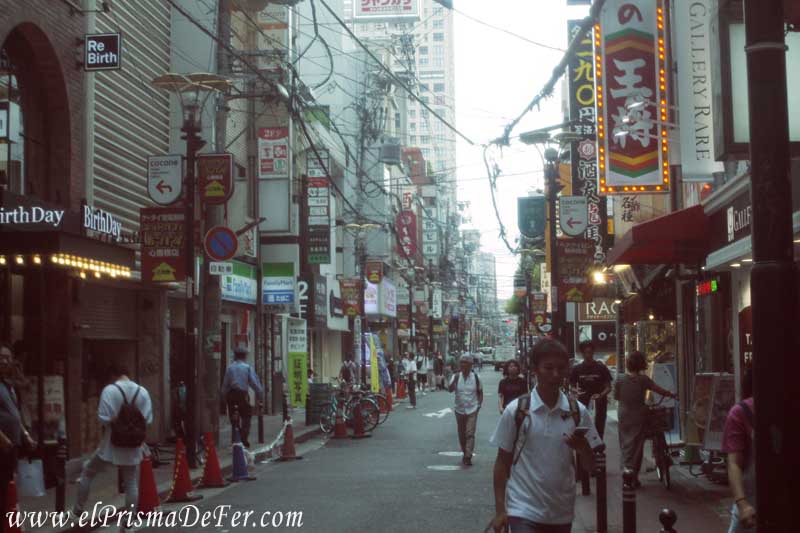
I found Osaka to be more run-down and desolate, dirtier than the standard we're used to in Japan, and with uglier roads. Beyond the relevant tourist sites to walk around, I I didn't find it a very pleasant city to walk around. en general, me pareció un poco deprimente, aunque con algunas areas llamativas.
This article is part of the 40-day travel itinerary visiting Japan and South Korea. You can see all the posts related to the trip there.

How to get to Osaka
Osaka is very well connected to the rest of Japan, whether you're coming from abroad or traveling within the country.
From abroad: Kansai Airport (KIX)
Kansai International Airport is the main entry point for international flights. From there, you can reach downtown Osaka by:
- Train (JR Haruka or Nankai Limited Express): takes you to Tennoji or Namba stations in 30–45 minutes.
- Bus (limousine bus): convenient if you are traveling with luggage and want to stop at specific hotels.
- Taxi or private transfer: more expensive, but practical if you go in a group or with children.
From other cities in Japan
- Tokyo to Osaka by Shinkansen: The bullet train Shinkansen (Tokaido Line) It takes between 2.5 and 3 hours. You can use the JR Pass if they have it.
- From Kyoto: only 15 to 30 minutes by local or express train.
- From Hiroshima: about 1.5 hours by Shinkansen.

You might be interested in reading about my visit to Tokyo, the city of my dreams.
Getting around Osaka: easy and efficient transportation
Osaka has a very well-organized transportation network. Here are the best ways to get around:
Subway and urban train
- The Midosuji line (red) connect the key points: Umeda, Namba, Tennoji.
- JR lines (like Osaka Loop Line) are also useful if you use the JR Pass.
- They can use cards ICOCA either Suica/Pasmo to pay without cash.
Buses
Although less popular with tourists, they can be useful for areas without trains. Google Maps works very well for routes.
On foot and by bicycle
Many areas are walkable. Some neighborhoods, like Dotonbori or Shinsekai, are best explored on foot. Bike rentals are also available by the hour or day.
Best things to do in Osaka
Map with the main attractions of Osaka
Walking Tour
A walking tour in Osaka is the best way to start exploring the city. While it's not free, it helps you get your bearings quickly, you learn history and anecdotes from a local guide, and you can meet other travelers along the way. You can book your walking tour here.
1. Stroll through Dotonbori, the heart of Osaka
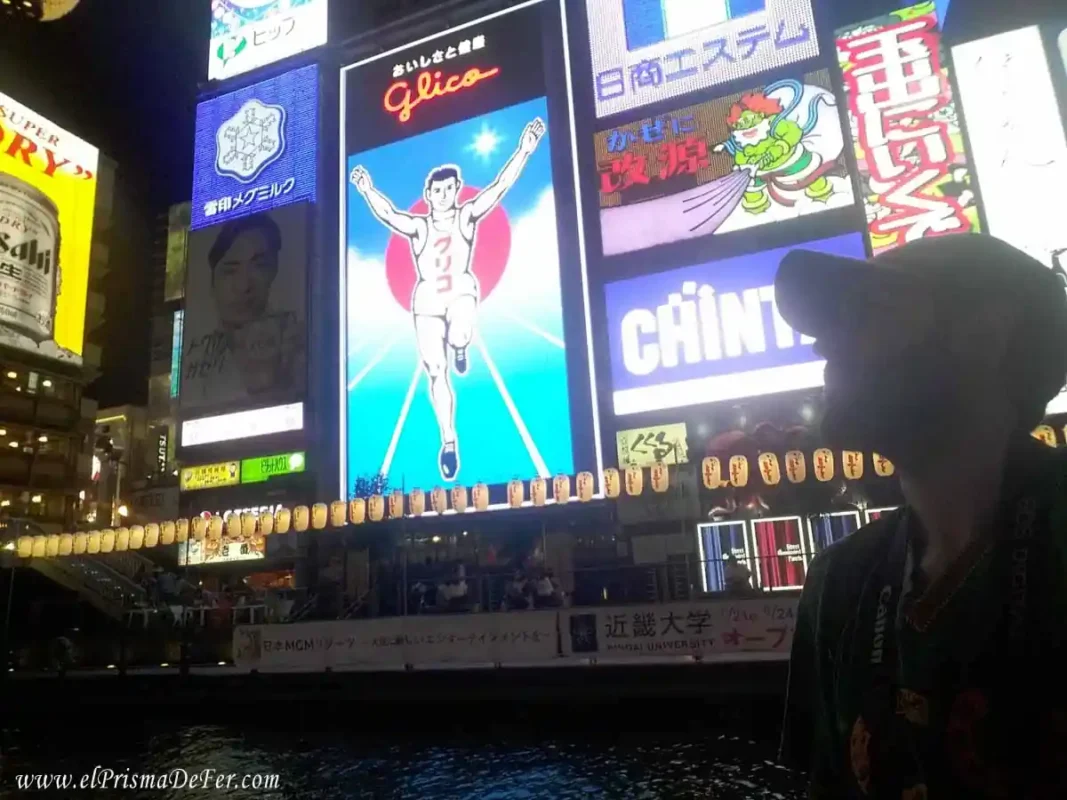
Dotonbori is Osaka's most famous neighborhood and one of my favorite places in the city. Its neon lights, the canal with its bridges, and the iconic Glico sign are a classic postcard (see location on map).
Here you can try some of the best street foods in Japan such as takoyaki (octopus balls) or okonomiyaki (a kind of Japanese omelet).
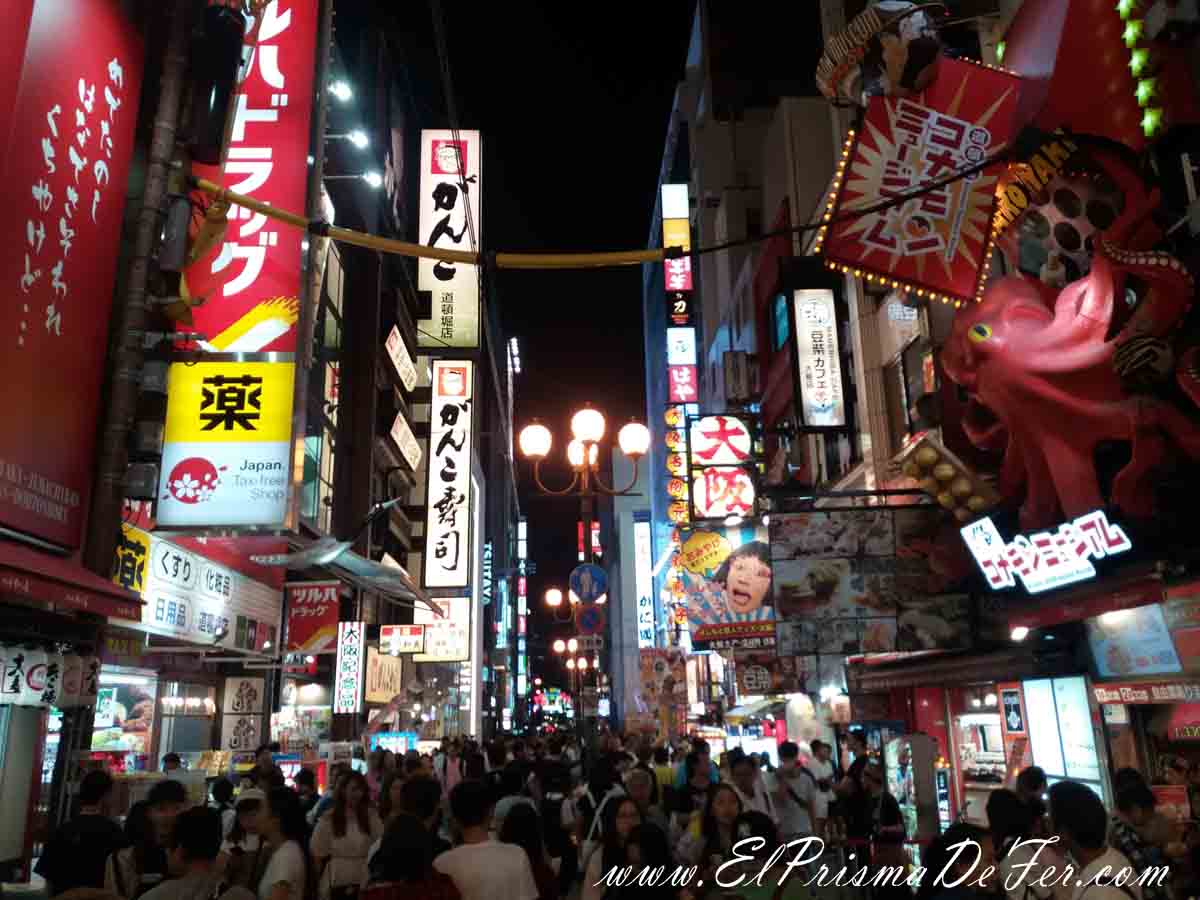
If you watch the documentary “Mi Maestro el Pulpo“ which is on Netflix before going to Osaka, they will lose their desire to eat takoyaki 🙁
It's a world of people at all hours. Especially on the bridge that crosses the canal, from where you can see the typical postcard of Dotonbori.
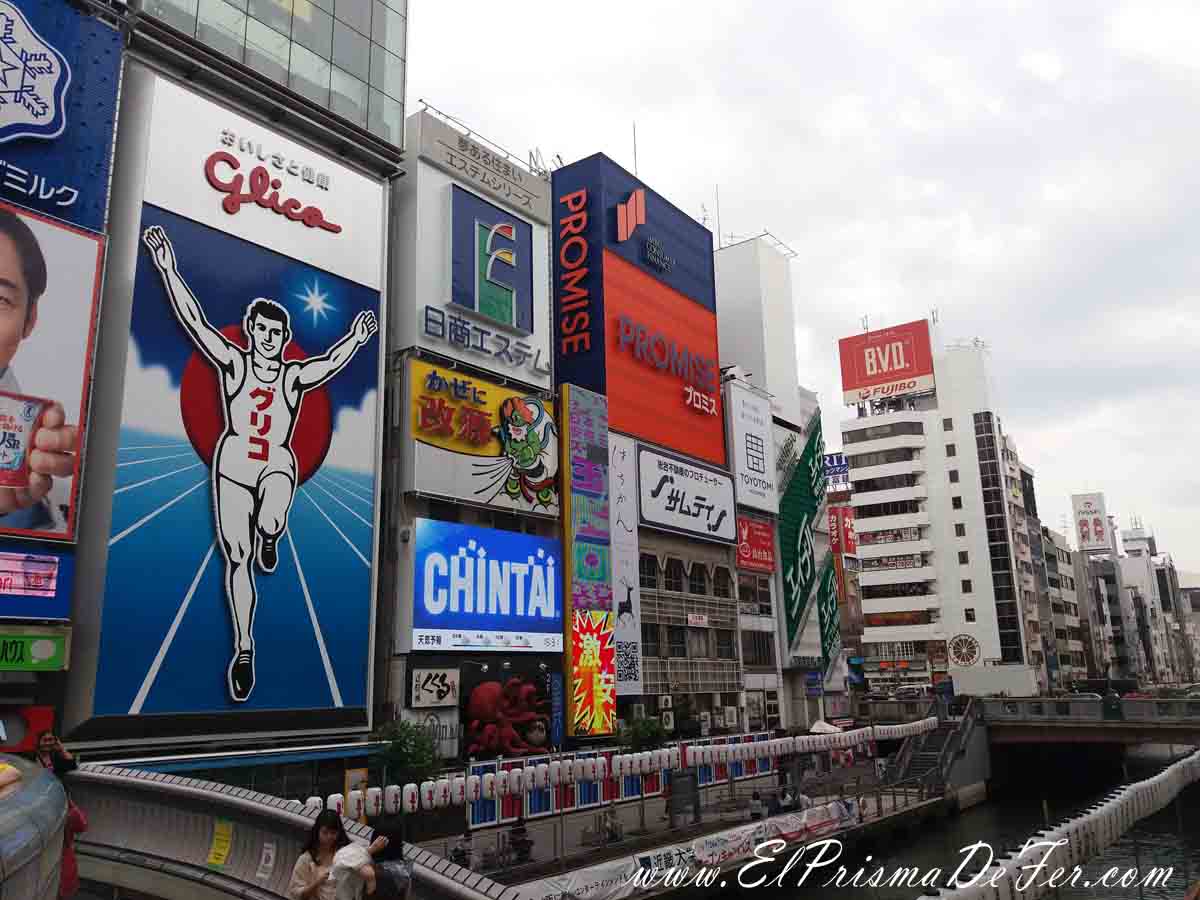
But it's at night when this place truly comes alive. The advertising billboards that during the day seem like mere decorations transform into a spectacle of vibrant neon lights that flood everything.
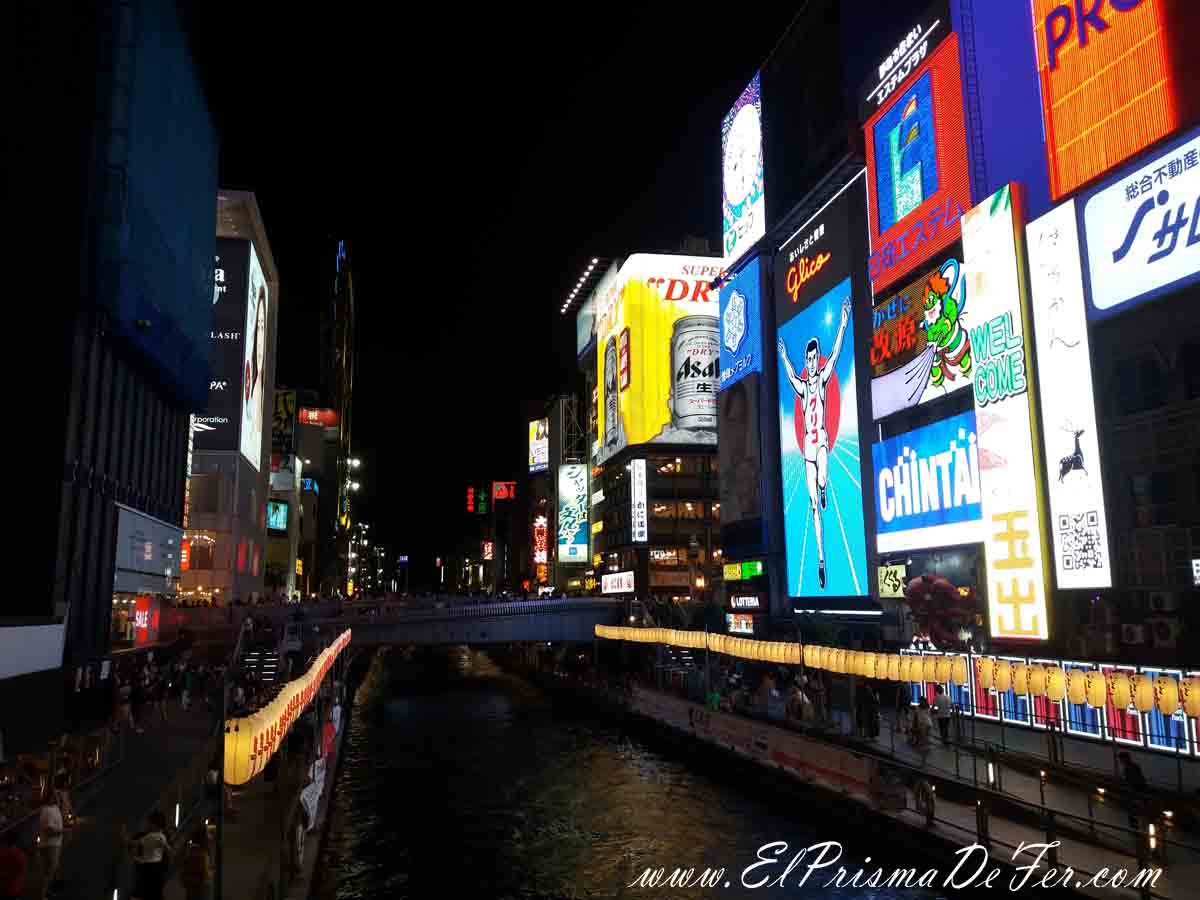
Walking through those illuminated streets is an intense, almost hypnotic visual experience. And not only that, the sounds, the smells of street food, the people… everything blends together and overstimulates the senses. It's like being in the middle of a movie that never stops.
2. Visit Osaka Castle
The Osaka Castle is one of the most iconic in the country. Surrounded by a huge park, it's perfect for walking and relaxing.

If you go in spring, the place is filled with cherry blossoms (sakura), making it one of the best spots for hanami (cherry blossom viewing). If you climb the main tower, you can enjoy panoramic views of the city.

To know more details about Osaka Castle, you can read the entry I wrote about it. The Castle Route of Japan
3. Climb the Umeda Sky Building
It is a 173 m tall skyscraper with a futuristic design (see on the map). It consists of two identical 40-story towers connected at the top by bridges and a moving staircase crossing the wide central atrium.
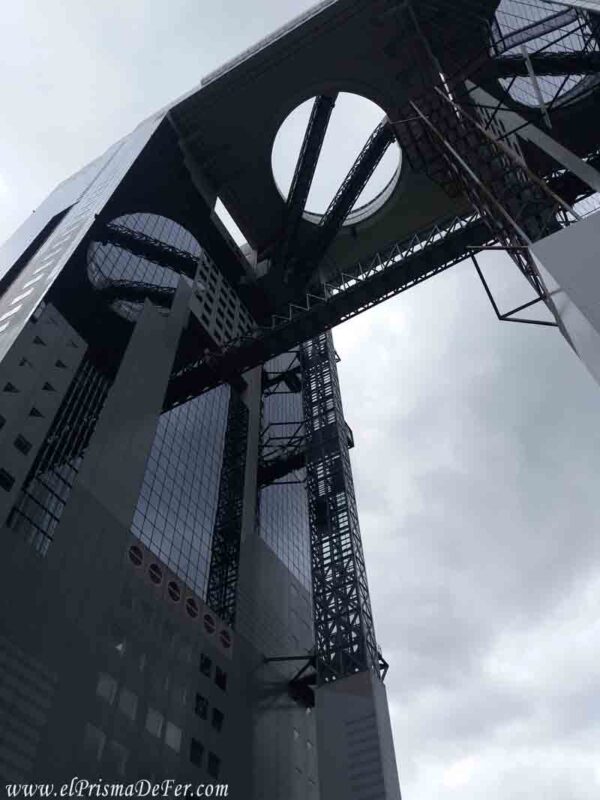
The architect wanted to give the building the appearance of a floating city, so he used special glass at the top of the building, which reflects the sky as an exterior landscape, contrasting with the opaque ceramics below.
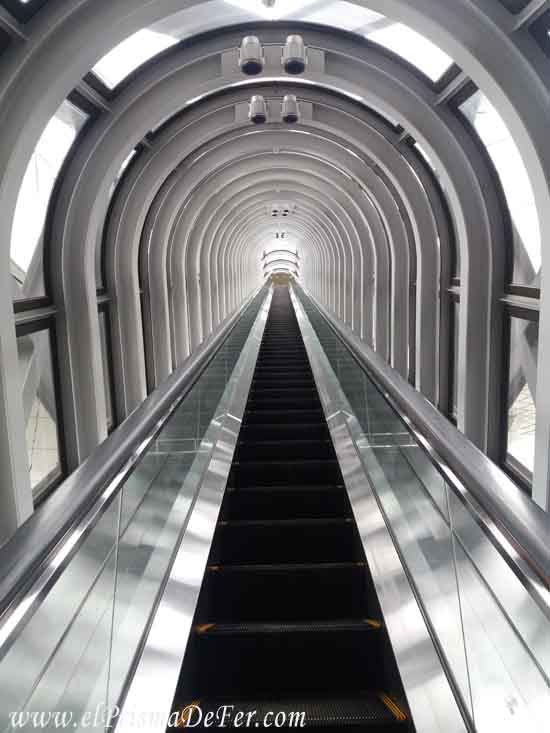
If you are looking for impressive views of the city, the Umeda Sky Building It's your place. Its floating observation deck offers a 360-degree view of Osaka, especially at sunset.
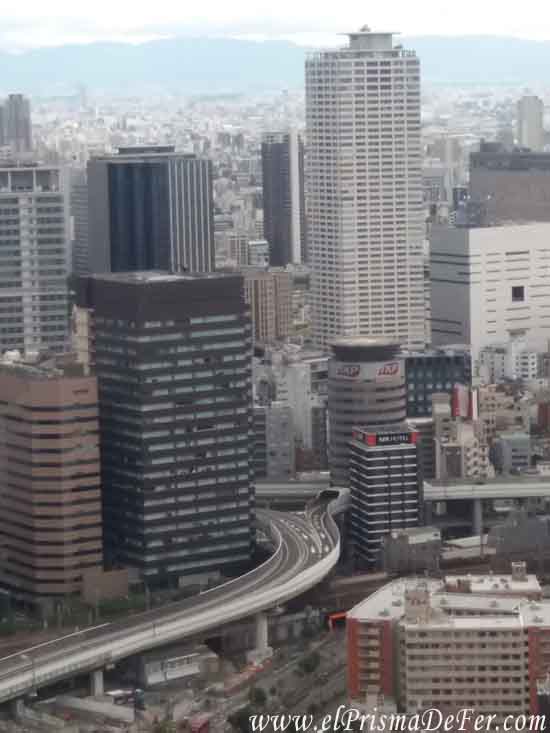
Admission is 2,000 yen. and they can buy it on the official website
4. Explore the Kuromon Ichiba Market
With more than 170 stores, Kuromon Ichiba It's the perfect place to try fresh local produce and traditional cuisine. From freshly cut sashimi to exotic fruits, this market is a foodie's paradise.
5. Experience the retro feel at Shinsekai
Shinsekai It is a neighborhood that seems frozen in time. It was one of the places I most enjoyed walking in Osaka.

It looks like a set from an 80s movie, with an atmosphere that mixes the decadent with the nostalgic.
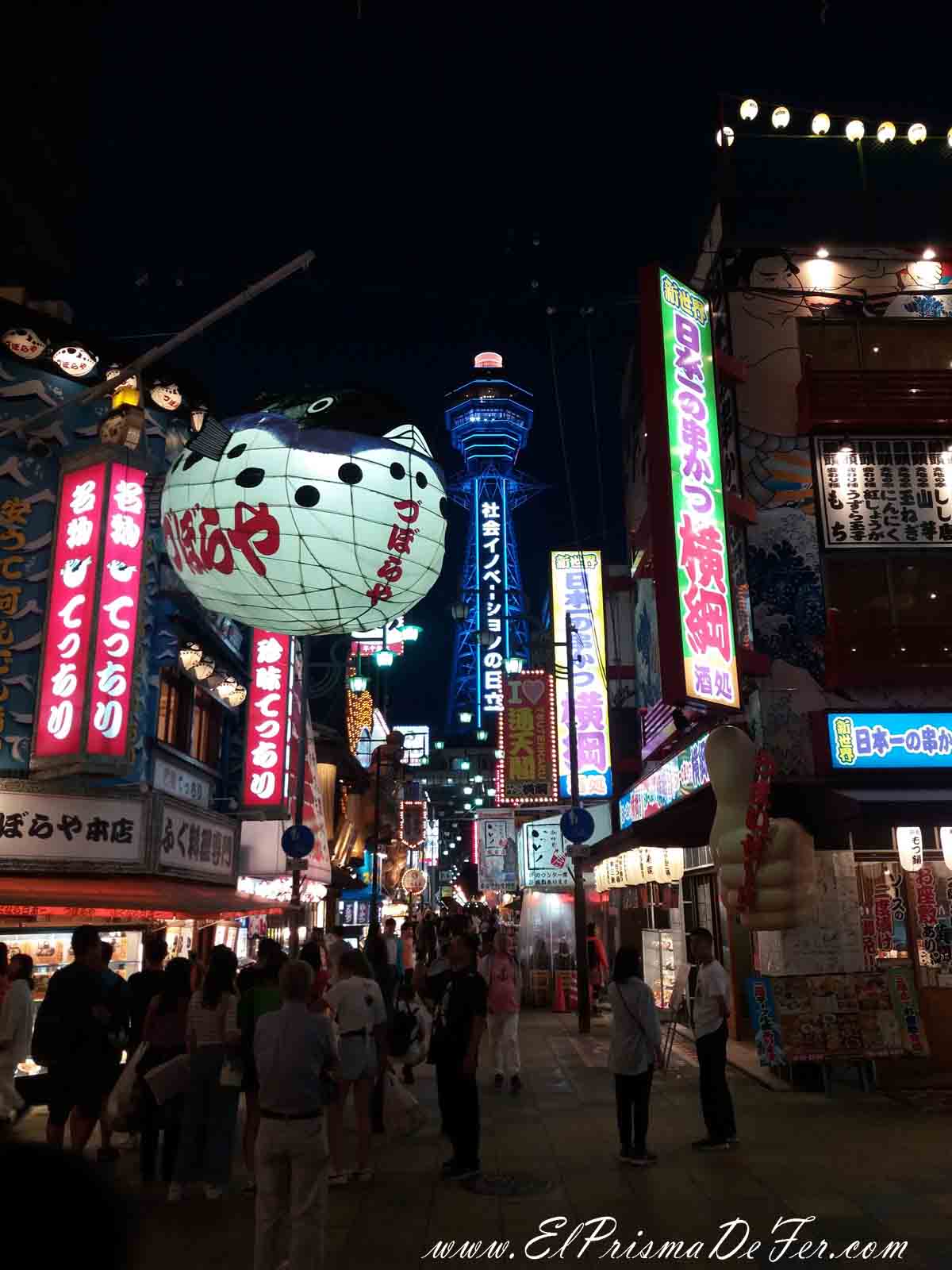
Here you will find the Tsutenkaku Tower, small kushikatsu (fried kebab) restaurants, and a surreal atmosphere.
Like Dotonbori, this neighborhood comes alive at night. During the day, it sometimes seems depressing, like a long-abandoned amusement park. But at night, with the neon lights on, it becomes a cyberpunk movie set, Blade Runner-style.
There is a street intersection that has one of the best views of Osaka (see on map). If you're interested in urban photography, this neighborhood is a must-see.
6. Explore the Tennoji-Tenshiba Park area and surrounding areas
One of my favorite places in Osaka. Here I found that corner of the city I needed to connect with.
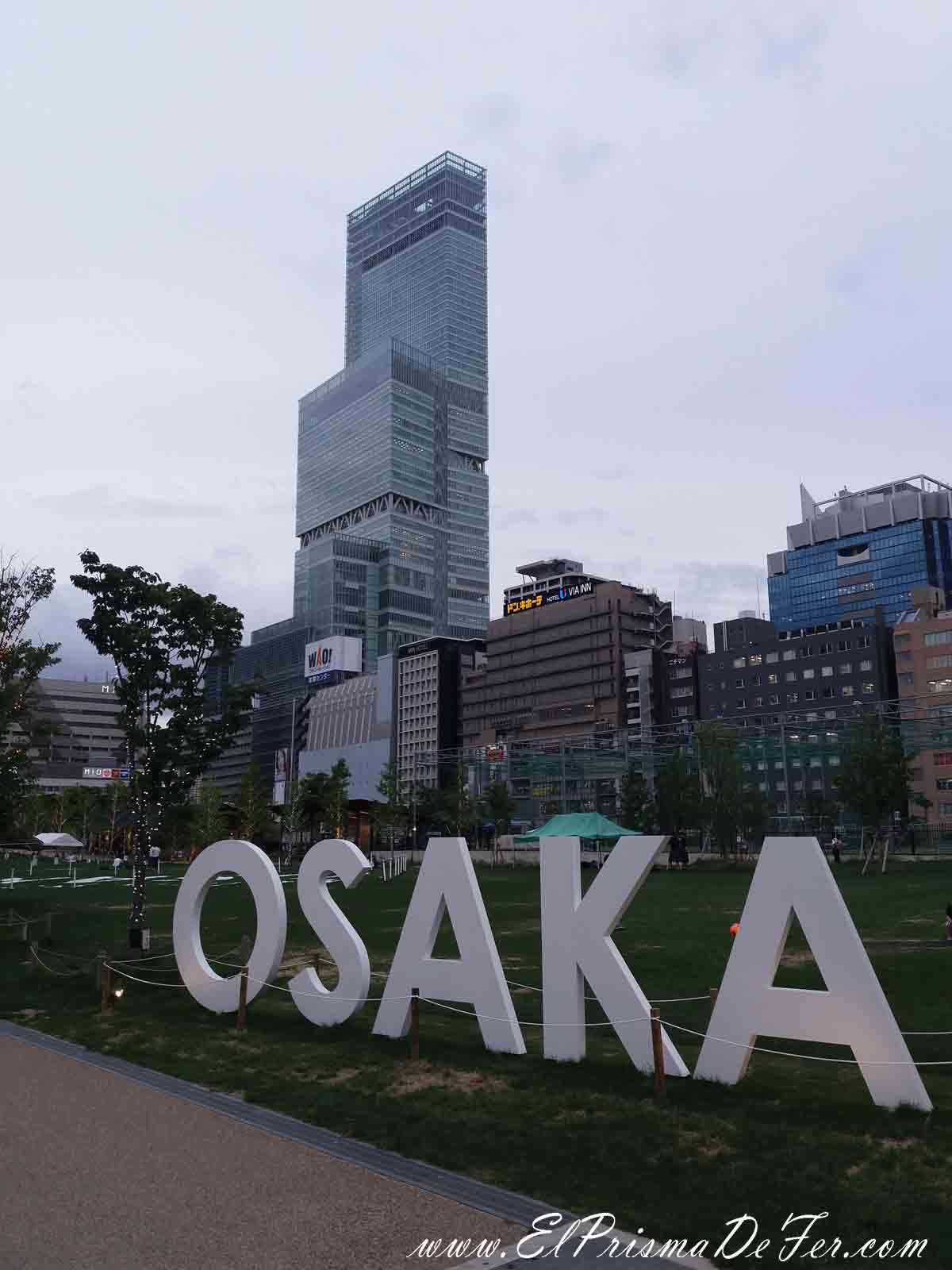
Located near Shinsekai, In Tennoji Park I felt a more local atmosphere, with families and young people playing in the park. It's a welcome respite from busier neighborhoods like Dotonbori, without so much tourism, and with beautiful views of the modern Abeno Harukas 300 building.
Every afternoon I would end up walking there, to lie down on the grass and relax after so much walking.
The building Abeno Harukas 300 has a free observation deck on the 16th floor, with gardens and city views. It's not that high up, but you can see the illuminated buildings across the street, with those elevators going up and down like something out of a video game.
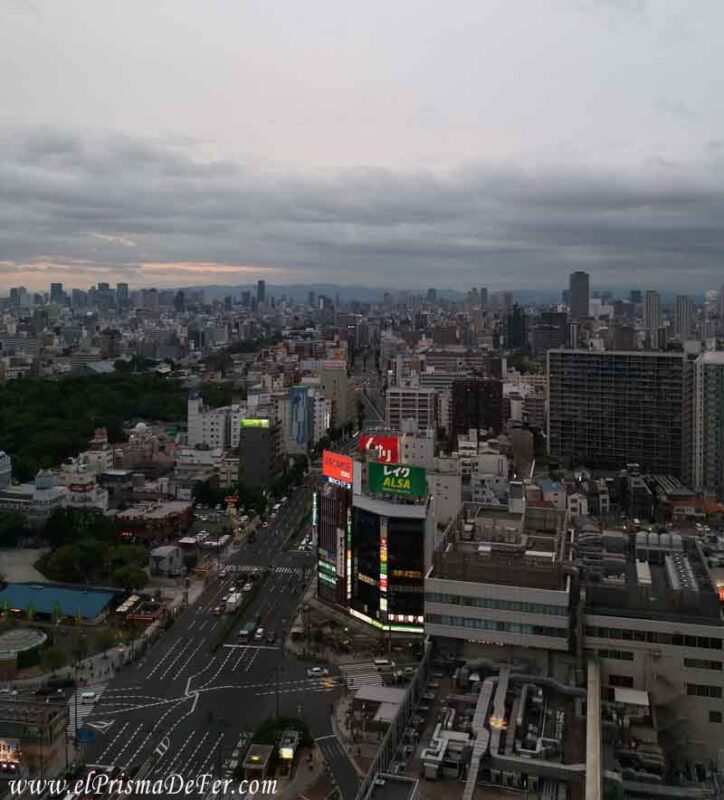
On the 60th floor, there is another observation deck with better views, but it costs extra (approximately ¥1200).
Buy a ticket to the Harukas 300 Observatory
7. Visit Universal Studios Japan
One of the days I was in Osaka, I spent entirely visiting Universal Studio Park.
I had the opportunity to visit Universal Studios in the United States when I was a kid, both in Orlando and Los Angeles. But I was really looking forward to this one in Japan, mainly because there were a couple of exclusive attractions that could only be visited at this Universal.
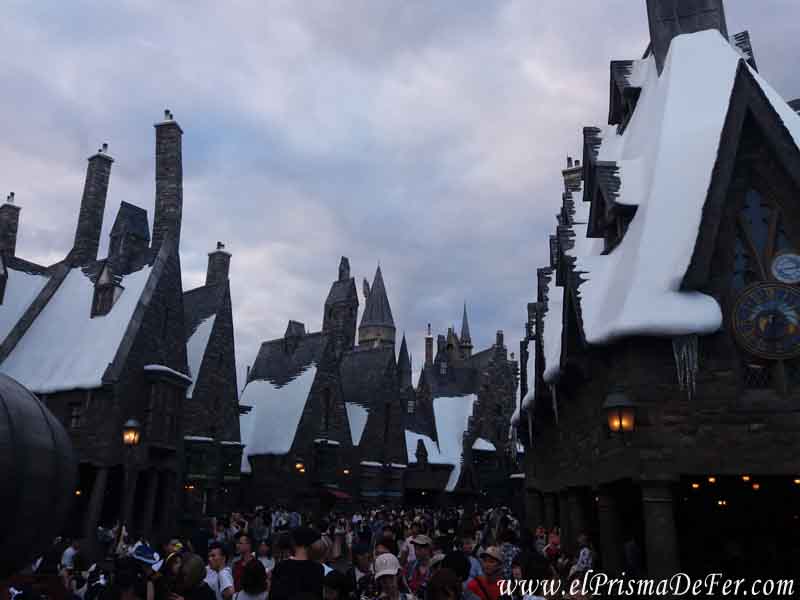
Besides, it's been so many years since I went to the others, that I had other world-famous games to see.
Among the main attractions you can visit today at Universal Studios Osaka are:
- Super Nintendo World: a colorful and interactive space dedicated to the iconic characters and games from the popular Nintendo universe.
- The Wizarding World of Harry Potter: an entire area dedicated to Harry Potter, with many games and simulators, one of the best in the Park.
- Demon Slayer: Kimetsu no Yaiba XR Ride: is a roller coaster that combines virtual and physical reality to take you to the world of “Demon Slayer”, allowing you to participate in epic battles while traveling through impressive settings.
- Hollywood Dream – The Ride: a roller coaster that offers a unique musical experience, allowing you to choose the soundtrack of your ride while enjoying exciting drops and twists.
- Jurassic Park – The Ride: You ride a boat, traversing a stage set among animatronic dinosaurs, culminating in a fall that will leave you soaked and exhilarated. This particular ride has been at Universal for a thousand years, as has Jaws.
- The Amazing Adventures of Spider-Man: a ride that combines a moving vehicle with 3D elements.
It seems that the exclusive attractions that I saw at the time are no longer there, they were Evangelion and Attack on Titan games. Now they've been replaced with several Demon Slayer ones from what I see.

Universal Studios Japan Ticket Prices
For him 1-day pass, the prices are:
- Adult admission (+12): 8,600
- Children's Admission (4-11): ¥5,600
- Entrance for retirees (+65): 7,700 yen
Just in case, you can check the official website para comprobar los últimos precios y por otros pases.
Buy a ticket to Universal Studios Japan
How to get to Universal Studios Japan from Osaka
Universal Studios Japan is located on Osaka Bay and is easily accessible from the city center. The ways to get there are:
By train (the most recommended option)
From Osaka Station (Umeda):
- Take the JR Osaka Loop Line to the station Nishikujo (approximately 6 minutes).
- Switch to the JR Yumesaki Line (Sakurajima Line) and get off at the station Universal City (about 5 additional minutes).
This route is included in the JR Pass and is the fastest and most convenient way to get to the park.
From Namba Station:
- Take the JR Yamatoji Line to the station Imamiya (3 minutes).
- Switch to the JR Osaka Loop Line until Nishikujo.
- Then, follow the same route until Universal City.
By bus
There are direct buses from Osaka-Umeda (Hankyu) to Universal Studios Japan. The trip takes approximately 35 minutes and is a convenient option if you prefer to avoid transfers.
8. Take a day trip to Nara
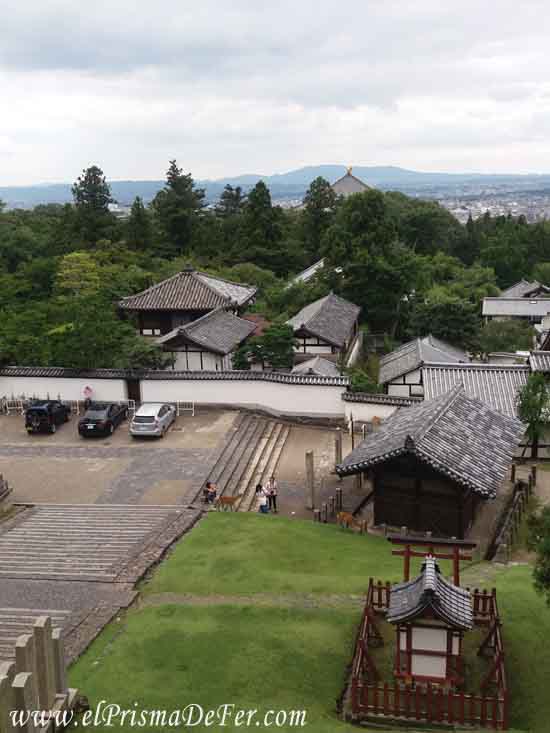
From Osaka you can take several day trips. One of them is to visit Nara, a small city but with a lot of history and nature.
Besides being famous for its temples and parks, it also has hundreds of deer that roam freely among the people. This was a getaway I really enjoyed and it lived up to my expectations.
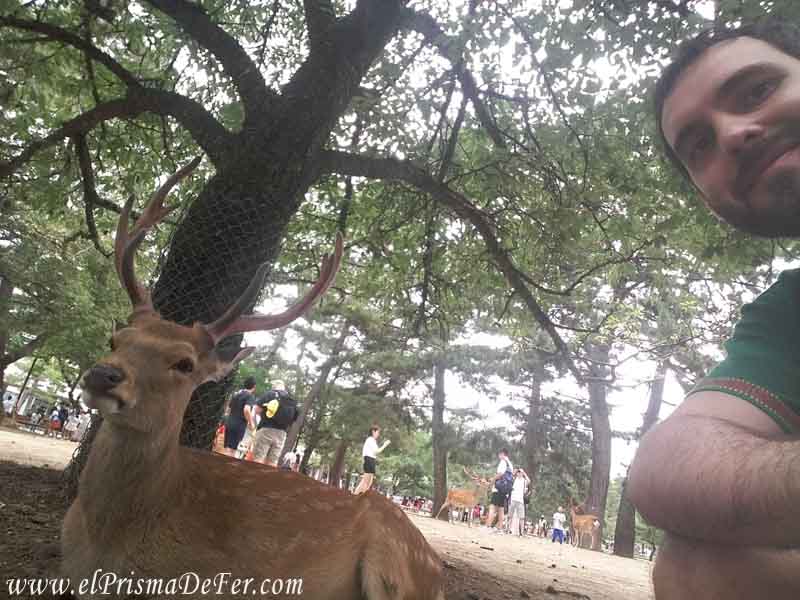
What to do in Nara: must-sees for a day trip
Stroll through Nara Park
This huge park is the soul of the city and where you will probably spend most of the day. More than 1,000 sika deer en libertad.
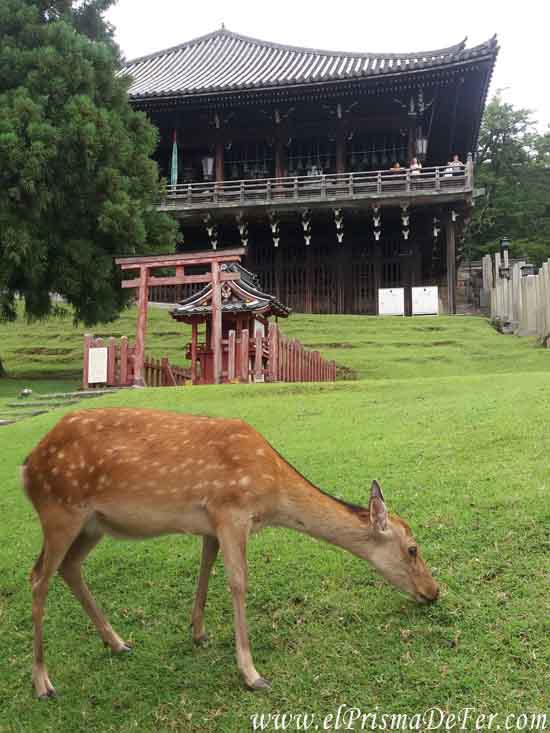
Son considerados mensajeros de los dioses según la tradición sintoísta, y si compran unas galletitas especiales (Shika Senbei), they'll follow you everywhere. Some bow, others get insistent and won't stop following you... but it's a unique experience.
Visit the Tōdai-ji and its Great Buddha
Within the park, and as one of the main attractions of Nara, is the Tōdai-ji Temple, uno de los más impresionantes de Japón.

Its main hall is made of wood and is gigantic (in fact, it was the largest wooden building in the world for centuries). Inside is the Daibutsu, a 15-meter-tall Buddha statue that is truly impressive.
Explore Kasuga Taisha Shrine
A little more hidden within the park, this Shinto shrine is famous for its thousands of stone and bronze lanterns.
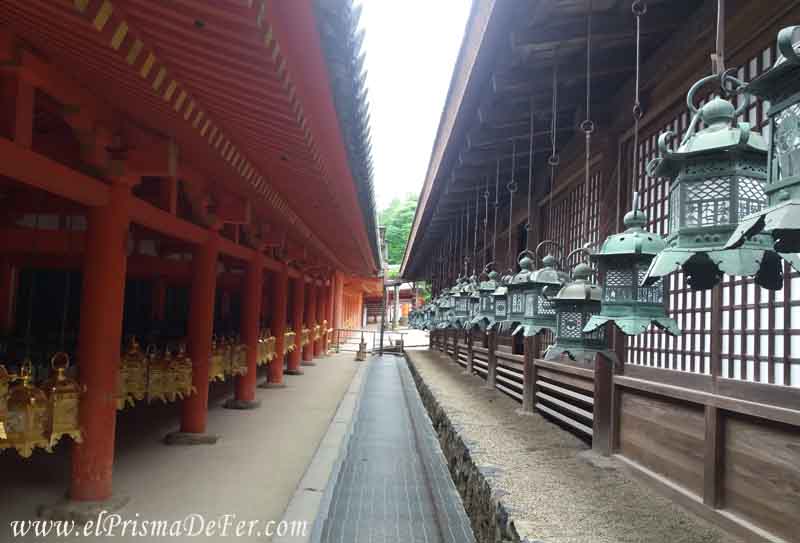
It's a quieter place but with a more spiritual atmosphere, ideal if you want a quieter moment away from the tourists.
Walking through Naramachi, the old town
If you have time and energy left, you can walk around Naramachi, a traditional neighborhood with wooden houses converted into cafes, craft shops and small museums.
How to get from Osaka to Nara
Getting to Nara from Osaka is very easy and quick, making it ideal for a same-day trip.
From Osaka Station (JR Osaka Station):
- Take the JR Yamatoji Line until Nara Station (about 50 minutes).
- Included in the JR Pass.
From Namba Station (Kintetsu-Namba Station):
- Take the Kintetsu Nara line until Kintetsu-Nara Station (about 40 minutes, closer to main attractions).
- It is not included in the JR Pass, but it is usually more convenient if you are staying in that area.
If you want to save time and walk less, the station Kintetsu-Nara leaves you closer to Deer Park and the temples.
Day trip to visit Nara, Kyoto and Osaka
If you're short on time, a great way to optimize your trip is to take a day trip from Kyoto to Osaka, or vice versa, passing through Nara. They're very close to each other, so in a single day you can combine the temples and deer of Nara with the urban contrast of Osaka without wasting too much time on transfers.
Is Nara worth visiting?
Yes, absolutely. Although it is small, Nara has a special energy, and offers a striking contrast to Osaka. It's perfect if you're interested in history, nature, or just want a more relaxing day among temples and deer.
9. Kobe Day Trip from Osaka: How to Get There and What to Do in One Day
Just half an hour from Osaka, Kobe is another perfect getaway for those looking for sea, mountains, an international flair… and world-famous beef.
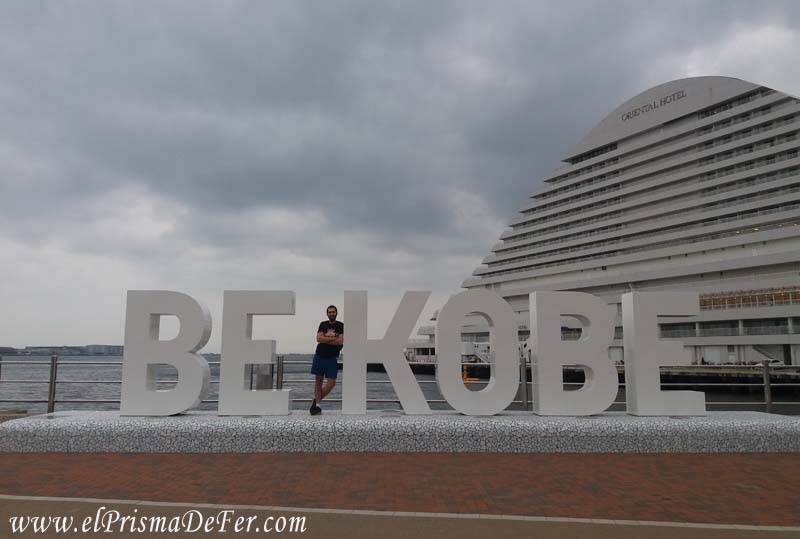
Although it wasn't the most exciting part of the trip, spending a day in Kobe was acceptable, especially because of the waterfront.
What to do in Kobe in one day
Stroll around Kobe Port and the Tower
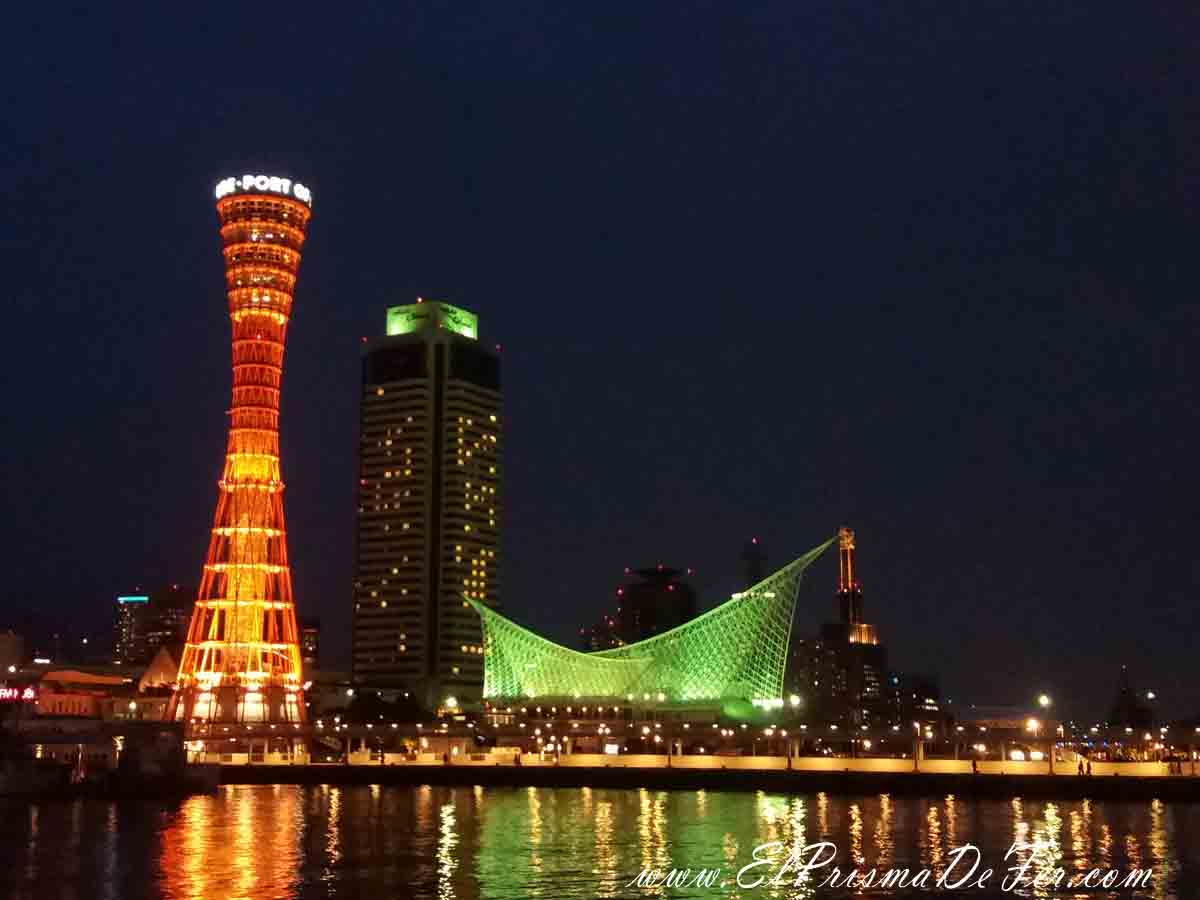
For me, the best thing about coming to Kobe is the area of Harborland It is modern, colorful and has beautiful views of the sea. You can go up to the Kobe Port Tower to see the city from above, or simply walk along the promenade, with the sea on one side and the mountains on the other.
Try the famous Kobe beef
The number one reason why many visit Kobe. If they want to treat themselves, there is specialty restaurants where they cook pieces of marbled meat in front of you that almost melt.
I didn't try it because everything seemed excessively expensive, but whenever I told someone I visited Kobe, they would ask me, Have you tried the meat?
Visit the Kitano neighborhood
Kitano is a neighborhood with Western-style houses dating back to the time when Kobe was one of the few ports open to foreign trade. Today, many of them are open as museums or cafes.
Is it worth going to Kobe for a day?
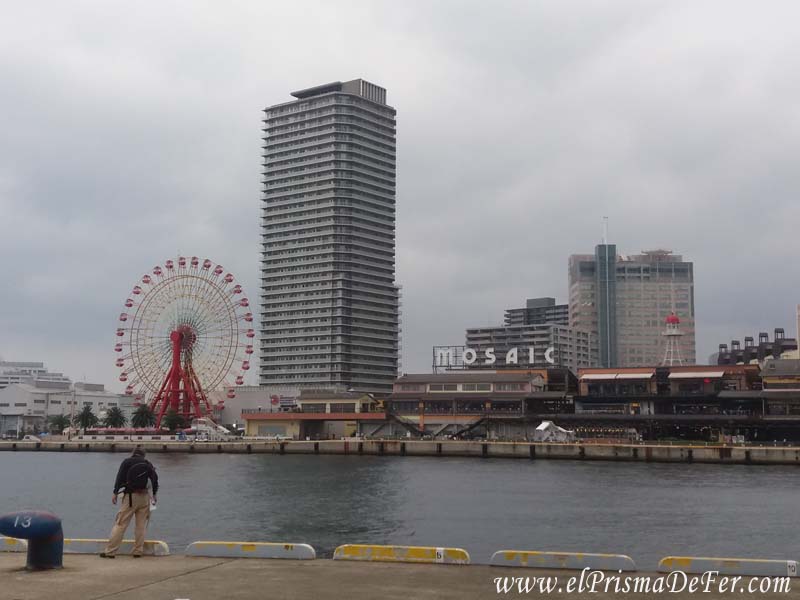
Mmm, it depends. If you want to try the famous beef, a visit to Kobe is probably a good idea for you. Now, if you just want to come for the day, like I did, you could skip it. Beyond the beautiful views from the seafront, with those modern structures, I didn't find it a charming place.
If I have to Choose between Nara or Kobe for a day trip from OsakaI would definitely lean towards Nara.
How to get to Kobe from Osaka
There are several ways to get there from Osaka:
JR Special Rapid Service (with JR Pass):
- From Osaka Station to Sannomiya Station (Kobe Central Station).
- Duration: 25–30 minutes.
Hanshin Line (if you are near Namba or Umeda):
- From Hanshin-Umeda Station to Hanshin-Sannomiya Station.
- Similar duration, and sometimes cheaper if you don't have a JR Pass.
Other places of interest in Osaka
- Shitennoji Temple: One of the oldest Buddhist temples in Japan, founded in 593 AD. It is not far from Tennoji Park.
- Sumiyoshi Taisha: A Shinto shrine famous for its unique architecture and bridges. It is one of the oldest shrines in Japan.
- Namba Parks: A shopping and entertainment complex with stunning architectural design. Located between Dotonbori and Shinsekai.
- Osaka Aquarium Kaiyukan: One of the largest and most modern aquariums in the world
Osaka Amazing Pass
If you plan to visit many attractions in Osaka, the Osaka Amazing Pass It may be useful. It gives you free access to several tourist spots and unlimited transportation for 1 or 2 days. It may be worth it if you make the most of your time.
Where to stay in Osaka: best areas for travelers
It's a big city, so there are many places to stay. My hostel was called Sun Village Tamatsukuri, but it no longer exists. It was located on the Tamatsukuri area. Far from the center, but well connected by train, and not too far from Osaka Castle.
But Osaka has neighborhoods for all tastes, with their own advantages and disadvantages. The most recommended are:
Namba / Dotonbori
Ideal if you want to be at the center of the action. Perfect for a night out, good food, and close to the metro.
Advantages: nightlife, food, shopping, well connected.
Disadvantages: It can be noisy and more touristy.
Umeda / Kita
Financial and shopping area. Quieter and more elegant. Ideal for those looking for train connections (Osaka Station) and good transportation for excursions.
Advantages: connections, shopping, more luxurious hotel options.
Disadvantages: less local atmosphere at night.
Tennoji
An emerging area, close to the zoo, Shitennoji Temple, and Shinsekai. It often has lower accommodation prices.
Advantages: affordable prices, a mix of modern and retro.
Disadvantages: not as central as Namba.
3 or 4 Day Osaka Itinerary
The main attractions within Osaka city are relatively close. Walking In 1 full day, you can visit Dotonbori, Shinsekai and Tennoji Park. Osaka Castle and the Umeda Sky Building are now a little further away from the downtown area.
During my stay in Osaka, I organized my visits in this way:
- Day 1: My hostel was near Osaka Castle, so I started there in the morning. Then, in the evening, I walked around Dotonbori, Shinsekai, and Tennoji Park, coming and going to see each at different times.
- Day 2: I spent most of the day at Universal Studios Osaka, and in the evening I returned to the famous neighborhoods.
- Day 3: Part of the day was spent hiking in Nara and back. On the way back, I also went to the Umeda Sky Building and then again at night to stroll among the neon lights.
- Day 4: That day, following my itinerary, I headed to the city of Himeji, south of Osaka. But while I was there, I took advantage of the opportunity to visit the port city of Kobe.

To know more details about Himeji Castle, you can read the entry I wrote about it. The Castle Route of Japan
Final thoughts on my visit to Osaka
Despite everything Osaka offers, I can't deny that I was somewhat disappointedI was used to the cleanliness, order and extreme care that Japan usually has, and yet, Osaka seemed more neglected to me, with areas that felt run-down, a somewhat desolate atmosphere, and a level of cleanliness below Japanese standards.
The elevated highways that cross the city give it a grayer, almost industrial feel, and at times I felt that It lacked that visual and spiritual harmony that I did find in Kyoto., for example, where everything seems to be in its place, even in the simplest corners.
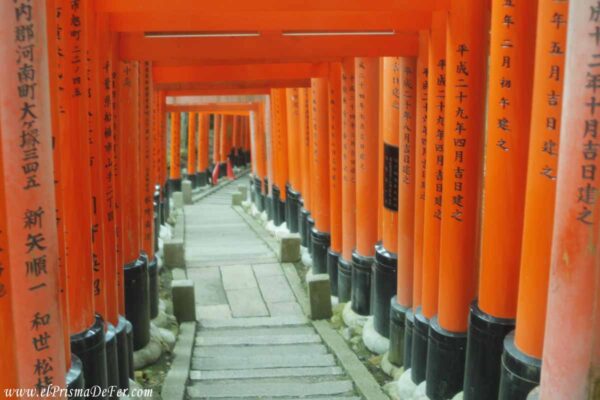
Article where I tell my experience Visiting Kyoto, the traditional city of Japan
And if I compare it to Busan, in South Korea, which also has a port, neon lights and urban energy, the difference is even more marked.
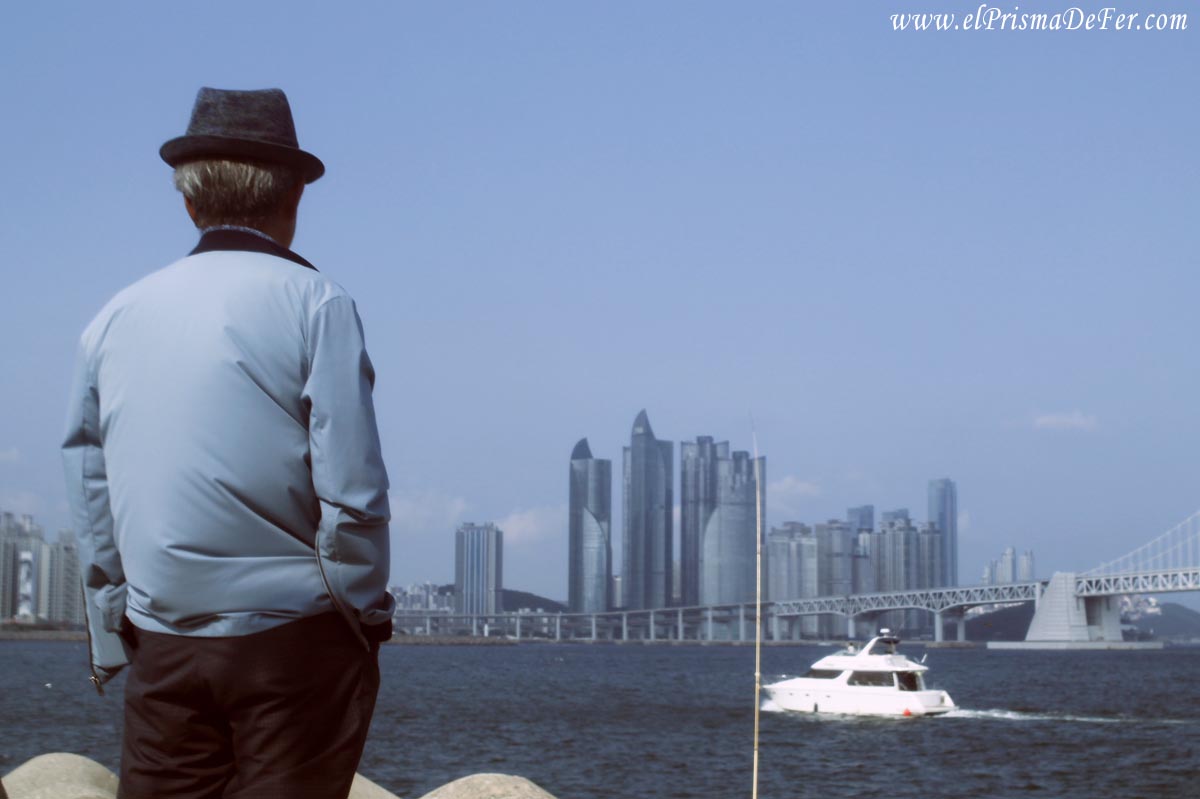
Here I tell you about my experience Visiting Busan, the city I liked the most in South Korea
If we take into account the 3 largest cities in Japan, Osaka, for me, is in 3rd place to visit as a tourist.
Although I also recognize that Osaka has its charm, especially in those retro neighborhoods like Shinsekai or the alleys of Tenma, which seem to be living in another time.
Save this post on Pinterest

Frequently Asked Questions about Osaka
How many days do I need to visit Osaka?
Two full days is enough to see the main sights: Dotonbori, Osaka Castle, and perhaps some other areas like Shinsekai or Namba. If you want to add theme parks or take it easier, you can stay for three days.
Is Osaka worth visiting?
It depends if you're interested in seeing a more "unpolished" side of Japan. It's not as charming as Kyoto, but it has personality, better street food, and a more vibrant nightlife.
Is it better to stay in Osaka or Kyoto?
It depends on the trip. Kyoto is better for temples and a traditional atmosphere, while Osaka is more practical for getting around, nightlife, and finding cheaper accommodation. Many people combine both.
How to get around Osaka?
Public transport works perfectly. The metro and trains cover the entire city and are easy to use. Furthermore, many tourist areas are quite close to each other.
Which area is best to stay in?
The best areas are Namba or Shinsaibashi, because you're close to everything and have good access to public transport. They're also the liveliest areas.
What typical food should I try?
Osaka is famous for its street food. Don't miss the takoyaki (octopus balls) and okonomiyaki (a kind of Japanese "pizza").
Is it possible to visit Osaka on a day trip?
Yes, absolutely. You can easily do a day trip from Kyoto. It's a great option if you're on a tight schedule.
What is the best time to go?
Spring (March–May) and autumn (October–November) are the best seasons for weather and scenery. Summer is quite hot and humid.
Is Osaka expensive?
Overall, it's a bit cheaper than Tokyo, especially for food and accommodation. It can easily fit into a backpacker's budget.
Support The Prism of Fer!
Your support helps me continue creating free content on the blog. Thank you so much!