Traveling through the Caucasus is a fascinating experience: epic mountains, ancient cultures, completely different languages, and a mix of Persian, Soviet, European, and Asian influences that you won't find anywhere else in the world.
But, unlike other regions, moving between its countries, Georgia, Armenia and Azerbaijan, can raise doubts, since each border has very particular rules, restrictions and dynamics.
This article summarizes everything you need to know to cross the borders of the Caucasus by land, country by country. Which border crossings are open? Which crossings are closed for political reasons? Where is the best place to exchange money? How easy is it to find transportation on the other side? You'll find all of this summarized here in a practical and up-to-date format, written from the perspective of the independent traveler.
The idea is that, with this guide, you can plan your routes without stress, whether you're backpacking, looping through the three countries, or simply want to optimize your time and understand which border crossing combination best suits your itinerary.
If your trip through the Caucasus is about to begin, this guide will simplify your journey. If you're already on your way, it will save you time, money, and a lot of headaches. Here's everything you need to know to cross from one country to another without any problems.

This post may contains affiliate links. If you purchase through these links, I may earn a commission at no extra cost to you. Thank you for your support!
Table of Contents
Azerbaijan
For many travelers, Azerbaijan is the gateway to, or exit from, the Caucasus. It's a country with a modern, energetic capital and a distinct blend of Muslim tradition, Soviet legacy, and an economic boom fueled by oil and gas.
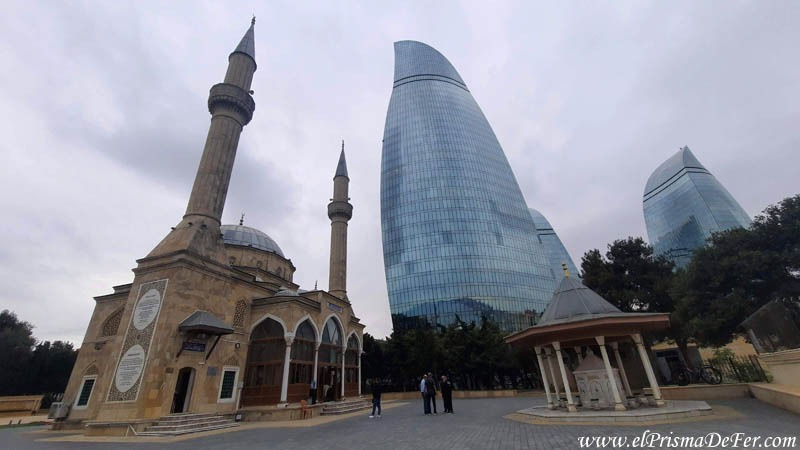
But in terms of borders, Azerbaijan operates very differently from Georgia or Armenia, and it's important to know this before planning any land route through the region.
Here I'll tell you how to enter and leave the country, without surprises.
How to enter Azerbaijan
Entering Azerbaijan is not as simple as crossing from a neighboring country by bus. Currently, all land borders remain closed to tourists, including crossings with Georgia, Russia, Iran and Armenia. This means that you won't be able to get there by land.
Currently, the only way to enter is by plane, with Baku being the main point of arrival. To do this, you need to previously process the e-visa, which is usually approved in a few days and can be easily requested online.
In the future, land crossings with Georgia, historically the most common entry point for backpackers, are likely to reopen. There was also the possibility of arriving by boat from Aktau, Kazakhstan, crossing the Caspian Sea to the port of Alat, but this service is not yet a clear or stable alternative.
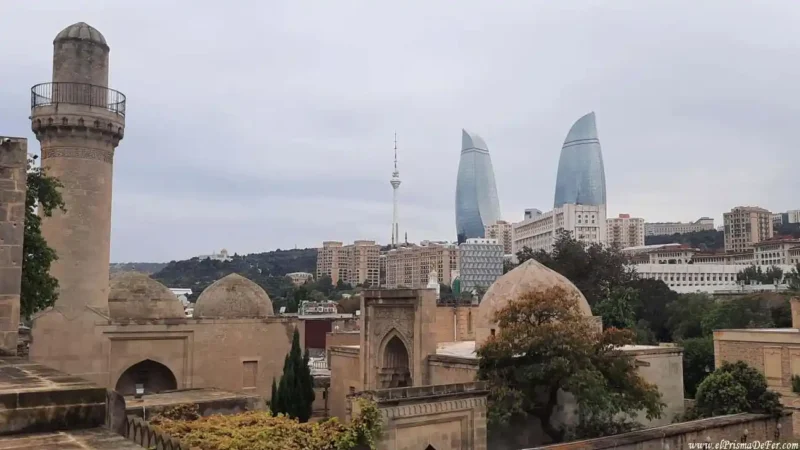
How to cross the border from Azerbaijan into Georgia
Leaving Azerbaijan for Georgia is the most common and practical route for most travelers. Although the border is closed to entry into Azerbaijan, it is open to exit, and crossing into Lagodekhi is quick and easy. It is the pass that most backpackers use to continue their journey towards Sighnaghi, Tbilisi or Telavi.
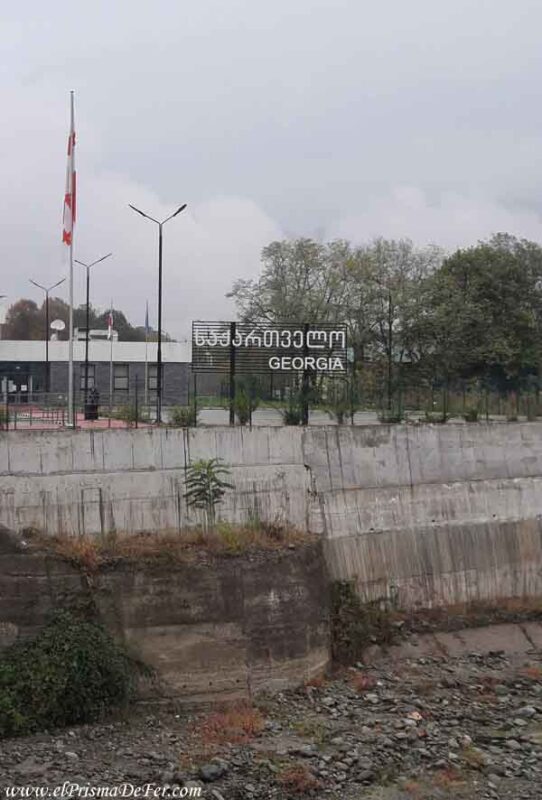
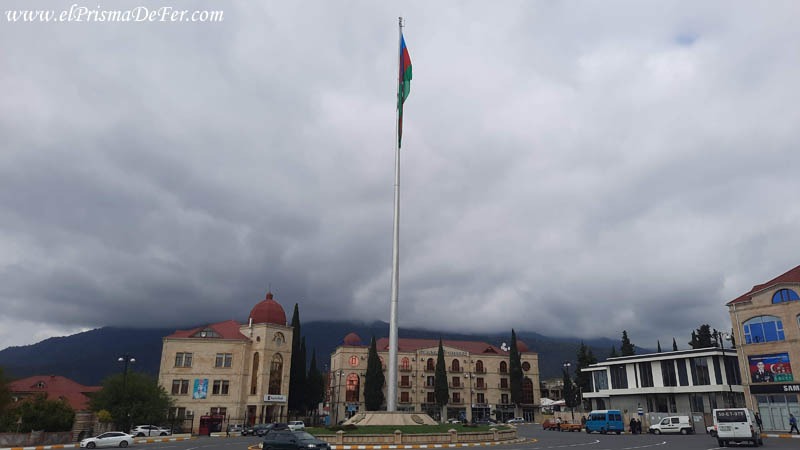
In the post I wrote about Zaqatala, the last Azerbaijani city before crossing into Georgia, you will be able to find out all the details to be able to cross this border without complications.
How to cross the border from Azerbaijan into Iran
There are operational steps to cross into Iran (for example, Astara), and it is usually possible, but it requires an Iranian visa and checking conditions before traveling, as the situation can vary depending on political tensions or unilateral decisions.
How to cross the border from Azerbaijan into Russia
The land border between Azerbaijan and Russia cannot be crossed because it has been closed since 2020, mainly due to the COVID-19 pandemic, and the authorities have extended this measure.
To travel between the two countries, the only option is to fly or, in the case of vehicles, transport them by ferry across the Caspian Sea and then fly.
How to cross the border from Azerbaijan into Armenia
The border between Azerbaijan and Armenia is completely closed for political reasons. There are no open land crossings and this is not expected to change in the near future.
Practical tips before and during the crossing
- Check official sources: confirm the status of the border crossing on the Azerbaijani website, your country's embassy, and the authorities of your destination country. Rules can change with little notice.
- Visas and permits: If you plan to cross into Iran, you need the appropriate visas and, if you are traveling by vehicle, international permits/insurance. Don't try to improvise without the proper documentation.
- Money: Along the border with Georgia, there are usually no exchange bureaus or ATMs at the border crossing itself. Exchange some currency or bring a card and plan to withdraw lari/ruffles in the first town on the other side (Lagodekhi, Tsnori, etc.).
- Transportation after crossing the border with Georgia: Taxis are generally available on the Georgian side; from Lagodekhi you can take marshrutkas (minibuses) to Tsnori and then buses to destinations such as Sighnaghi/Tbilisi. Arrange fares before boarding.
- SIM card: The Azeri operator's SIM stops working when crossing. Buy a local SIM in Tsnori, such as Geocell or Magticom).
- Passport stamps / Nagorno-Karabakh: Avoid stamps or visas in your passport indicating visits to territories not recognized by Azerbaijan (Nagorno-Karabakh), as they may cause you problems when entering/leaving.

Georgia
Georgia is one of the most popular destinations in the Caucasus for travelers. Its natural beauty, ancient history, and excellent connectivity make it an ideal hub for exploring the region.
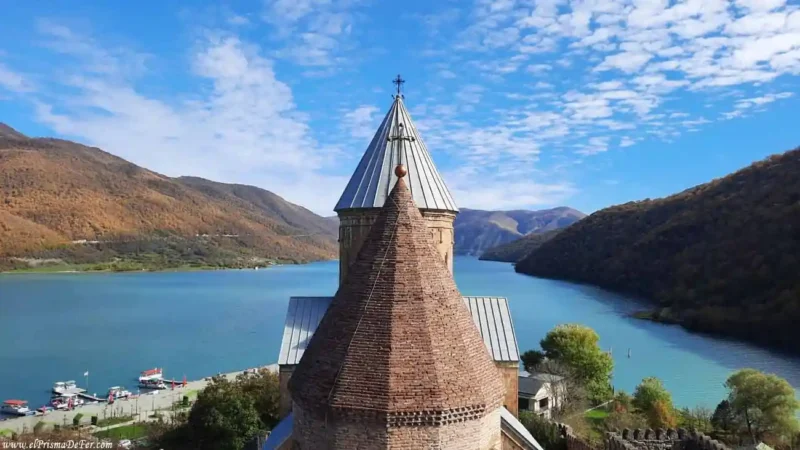
From its rolling green hills to its ancient churches and vineyards, Georgia is both a destination and a strategic transit point between Azerbaijan, Armenia, and Russia. But as with the rest of the Caucasus, crossing its borders has its nuances: some crossings are open, others have restrictions, and some routes are best planned to maximize time and budget.
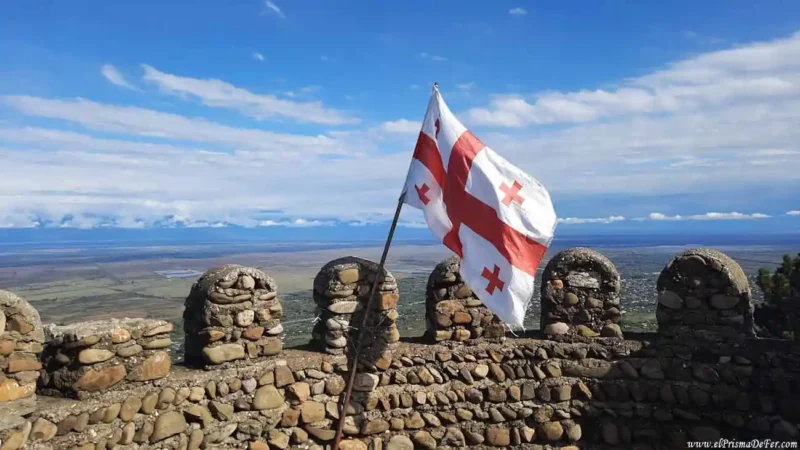
How to cross the border from Georgia into Azerbaijan
Currently, it is not possible to travel from Georgia to Azerbaijan by land. You must take a flight, landing at Baku airport.
How to cross the border from Georgia into Armenia
Traveling overland between Tbilisi (Georgia) and Yerevan (Armenia) is one of the easiest and most popular routes in the Caucasus. The route is open, safe, and operates daily with multiple departures.
The most common option is to do it by marshrutka, although you can also use a night train or hire shared taxis.
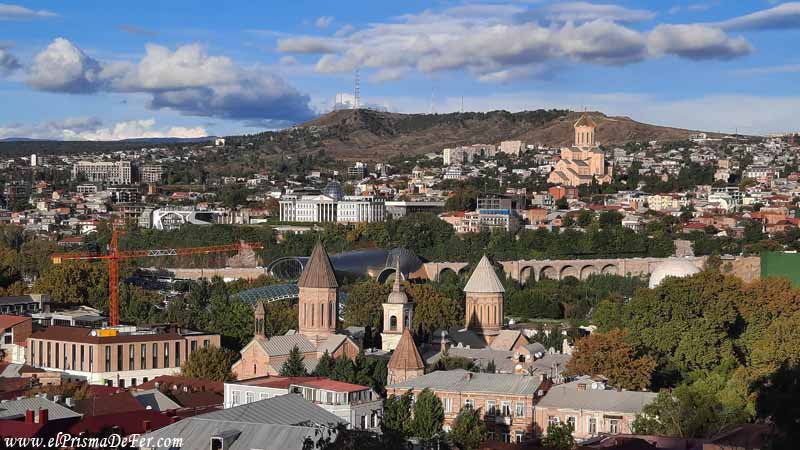
Where do marshrutkas depart from in Tbilisi?
The most frequent departures to Yerevan are from:
- Ortachala Station, the classic one for international routes.
- Avlabari (Kars Square), more central, convenient and usually has a higher actual frequency.
Both stations have marshrutkas that depart between 8:00 and 18:00, depending on the day and demand. Reservations are not required; you pay on-site and they leave when full.
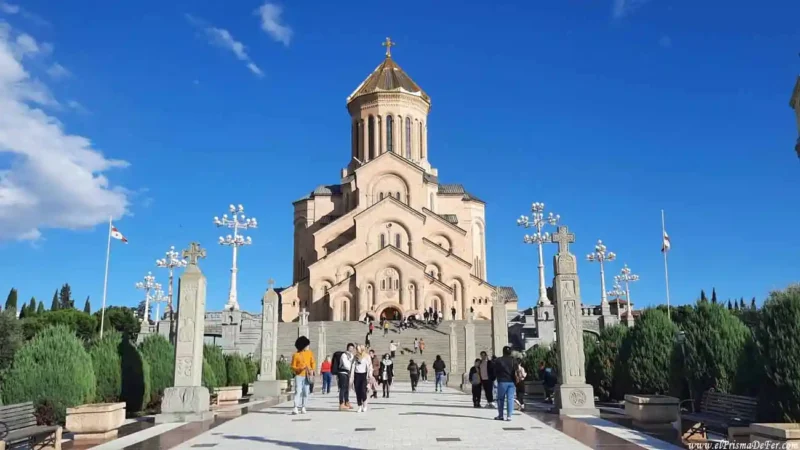
There's also a shared taxi service, Taxi Fayton, which is popular with locals and a bit cheaper. They leave from the area near the Palace of Justice in Tbilisi and leave you near DoubleTree by Hilton Yerevan City Centre. To book, you need to contact them beforehand via WhatsApp.

Crossing the border
The crossing is simple and direct, without having to unload heavy luggage:
- You get out of the vehicle on the Georgian side to seal the exit.
- You go back up and they advance a few meters.
- You get off again on the Armenian side for passport control.
- If you need a visa (most people don't anymore), it can be arranged right there.
The process usually takes between 20 and 40 minutes, except on days with heavy traffic.
There are no currency exchange offices at the border crossing, so it's advisable to bring some drams or exchange them in Tbilisi before leaving.
Trip duration
The entire journey takes between 5 and 6 hours, depending on traffic in Tbilisi, queues at the border, and the number of stops along the route.
Where does the marshrutka drop you off in Yerevan?
Most marshrutkas arrive at:
- Kilikia Bus Station, the main international bus terminal in Yerevan.
From there, you can take a cheap taxi (Yandex/gg) to the center in 10–15 minutes.
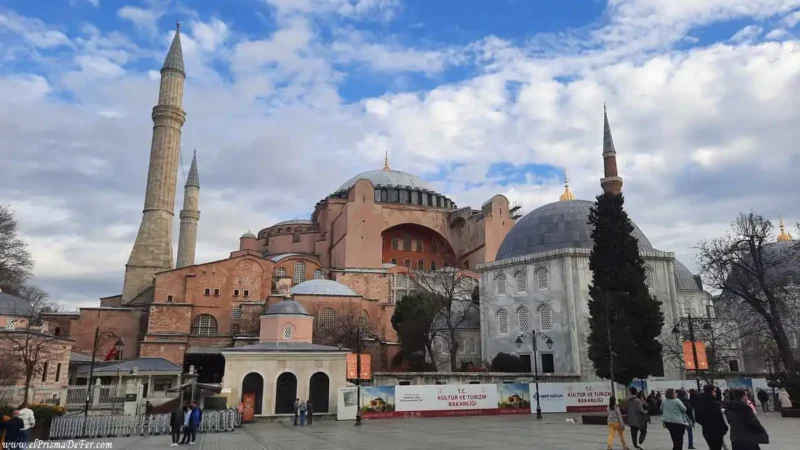
How to cross the border from Georgia into Türkiye
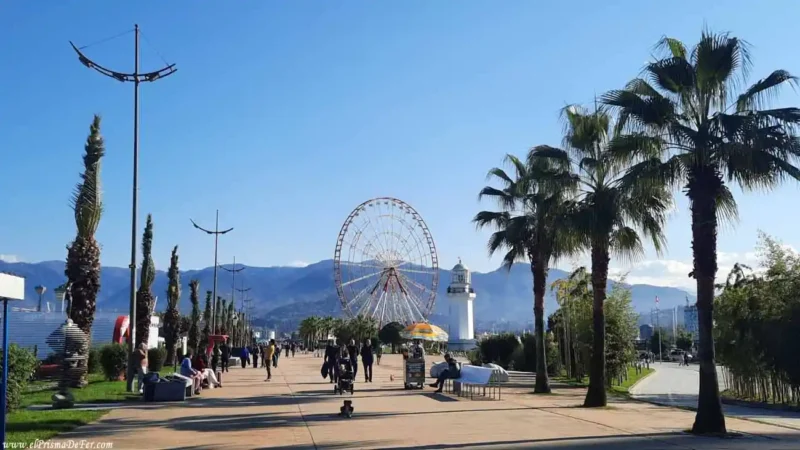
The most used and practical route to cross from Georgia to Turkey (or vice versa) is the one that connects Batumi with the Turkish city of Hopa through the Sarpi border crossing.
The vast majority of travelers cross through Sarpi, either by public transport or taxi. Batumi is only 20 minutes from the border, so it's a quick and very easy trip to arrange.
How to do it:
- From the center of Batumi, you take a city bus or marshrutka that indicates Sarpi. They run very frequently and the journey costs very little.
- You get off at the Georgian border post and complete the exit formalities.
- You walk a few meters to the Turkish side, where you go through passport control.
- On the Turkish side, just 200–300 meters away, you'll find direct minibuses to Hopa, Arhavi, Trabzon and other cities in the region.
The entire process usually takes between 30 minutes and 1 hour, depending on the number of people.
Other less used routes
Although Sarpi is by far the most convenient, there are other crosses as well:
- Vale → Posof (near Akhaltsikhe): a more mountainous and less crowded route, useful if you are exploring southern Georgia.
- Türkgözü → Akhalkalaki: less accessible, but operational and with good routes on the Turkish side.
These options may be slower and require coordinating transportation in advance, as marshrutkas are not as frequent.
Things to keep in mind
- Türkiye and Georgia allow land crossing without problems for most nationalities, but check if you need a visa according to your passport.
- On the Turkish side, both taxis and minibuses are readily available to continue your journey to the Black Sea coast or to connect with larger destinations such as Rize or Trabzon.
- There are usually no exchange bureaus on the border line, so it's best to bring some Turkish lira or withdraw cash from the first ATM on the Turkish side (there's one as soon as you cross).
How to cross the border from Georgia into Russia
The border with Russia is complex, as Georgia has three crossing points, but not all are under the control of the Georgian government, and some correspond to separatist territories such as South Ossetia.
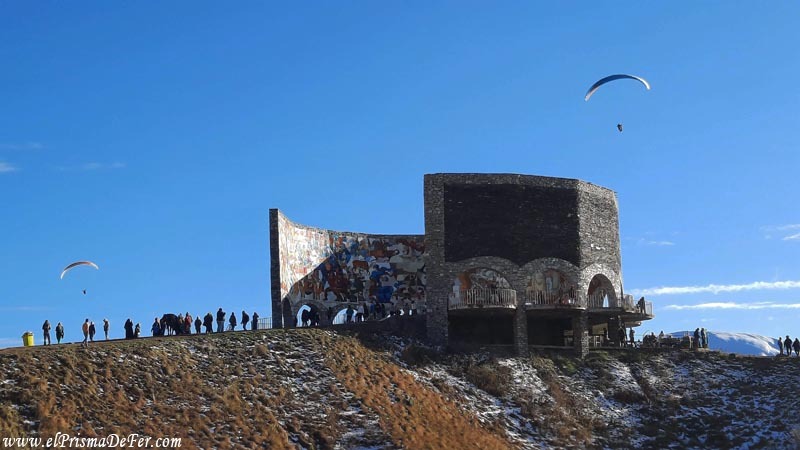
The only official and recognized crossing between Georgia and Russia is Zemo Larsi (Kazbegi / Stepantsminda) / Verkhny Lars, on the famous Georgian Military Highway.
The most common way: direct buses from Tbilisi
You can't cross on foot. The most common and easiest way is to take a direct bus from Tbilisi to Russia.
- The buses leave from Ortachala or from Didube, according to the company.
- They usually have destinations Vladikavkaz or even cities further north, depending on the day.
- The entire journey takes around 6–8 hours, depending on traffic at the border.
- There are services that take you directly to Moscow, but be prepared for a journey of approximately 30 hours.
The advantage of this system is that you don't need to make transfers and the bus itself waits while all passengers complete the immigration process.
What is the border crossing like?
- On the Georgian side, the process is usually quick.
- Then you go through an intermediate zone until you reach the Russian checkpoint, which is stricter and where you lose more time.
- During peak season or on snowy days, you may encounter lines of trucks that slow down progress.
On average, the crossing takes between 1 and 4 hours, but it can take longer on busy days.
What to keep in mind
- Russian visa: Most foreigners need one, and it must be approved before you go to the border crossing. Without a visa, you won't be allowed to cross, even if you're only in transit.
- Weather conditions: the pass may close temporarily due to snow, avalanches or landslides, especially in winter.
- Irregular hours: Although officially open 24/7, waiting times can vary greatly.
- Limited amenities: There are no currency exchange offices or services on the Georgian side right at the border, so it's best to bring water, some food, and local currency.
Armenia
Armenia is one of the most interesting countries in the Caucasus: ancient monasteries, intense history, mountains in every direction, and a calm vibe that contrasts with its neighbors.
For those traveling by land, it's an easy country to navigate and fairly straightforward in terms of its borders… although there are two major border closures that affect any itinerary. The only countries that share open borders are Georgia and Iran.
Here I explain how to enter, how to exit and what to keep in mind to get around without complications.
How to cross the border from Armenia into Georgia
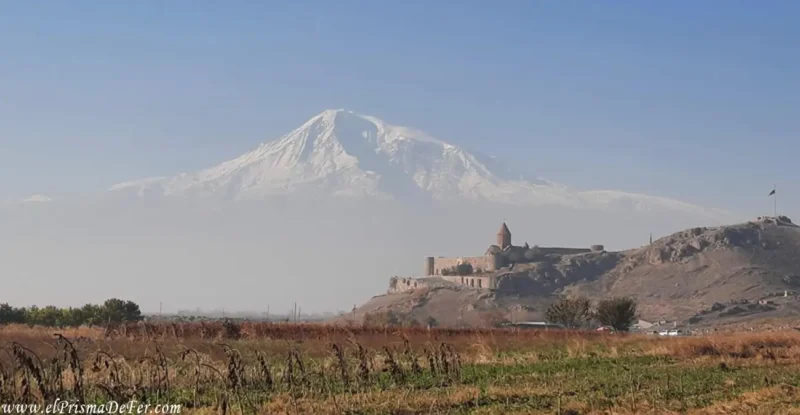
The two capitals, Yerevan and Tbilisi , are very well connected, and the border crossing is generally quick, safe, and straightforward. No visa is required between the two countries, so travel is quite smooth.
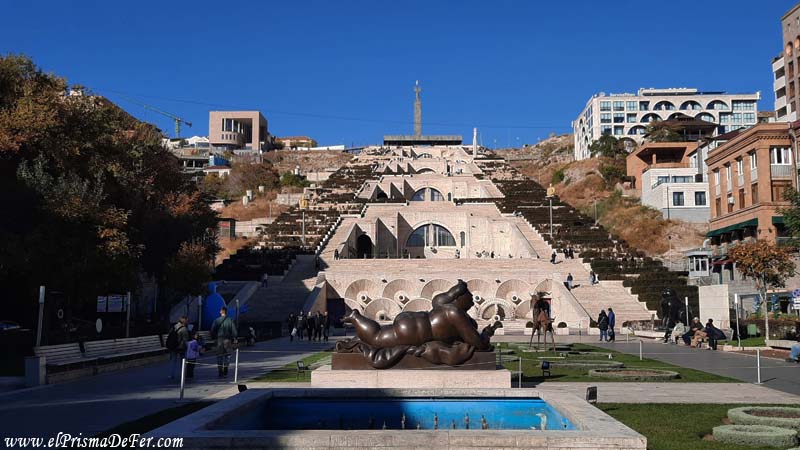
1. Marshrutka from Yerevan to Tbilisi (the most used option)
The vast majority of travelers choose the marshrutka because it is economical, frequent, and direct.
- Where do they come from? Mainly from the Kilikia station in Yerevan. Some minibuses also depart from Avlabari (but less frequently).
- Journey duration: Between 5 and 6 hours, depending on border traffic.
- Crossing process: Everyone gets out of the vehicle on the Armenian side, completes the formalities, walks a few meters, and gets back in after the Georgian checkpoint. It's quick and orderly.
- Where does it drop you off in Tbilisi? Usually at the Avlabari or Ortachala station, although it varies depending on the company.
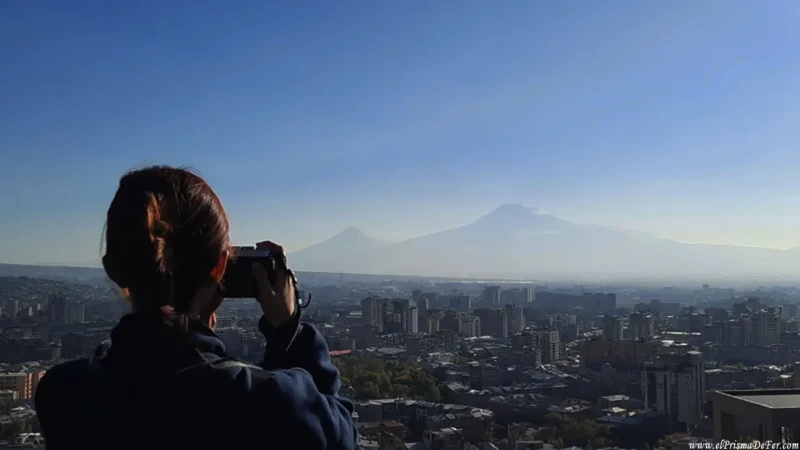
2. Big bus or minibus Yerevan – Tbilisi
More convenient than the marshrutka, although less frequent.
- It usually comes from Kilikia.
- The travel time is similar (5–6 hours).
- You have more space and the pace is less frantic than the marshrutka.
3. Shared taxi
The fastest and most flexible option.
- It also departs from Kilikia.
- The car is assembled when enough people gather.
- Ideal if you're in a hurry or if you want to stop at some point along the way.
- The journey lasts between 4 and 5 hours.
The same option I mentioned in the Georgia section also applies: Taxi Fayton, which is an economical and popular alternative.
4. Yerevan – Tbilisi Train
It exists, but it doesn't work all year round and it's usually slow. It's only worthwhile if you're looking to save on a hotel room or if you enjoy the train experience.
What is the border crossing between Armenia and Georgia like?
The step is very simple:
- On the Armenian side the process is quick; they check your passport and that's it.
- On the Georgian side, again basic control and visa-free entry for most visitors.
- They don't usually ask additional questions, except for reasons for travel or length of stay.
- The entire crossing usually takes 20–45 minutes.
Practical advice
- Money: There are currency exchange offices on both sides of the border and ATMs already on the Georgian side.
- Food and water: If you're traveling by marshrutka, there's usually a short stop before or after the border.
- Schedules: Marshrutkas from Yerevan usually leave between 8:00 and 11:00, but it's best to arrive early to secure a seat.
- Luggage: No one checks it thoroughly, but it can go through a scanner on the Georgian side.
- Climate: In winter there may be snow on some sections of the road, although the route remains operational.
How to cross the border from Armenia into Iran
The crossing between Armenia and Iran is one of the quietest and most accessible in the Caucasus for independent travelers.
Contrary to what many imagine, the border is fully operational, traffic is stable, and the authorities of both countries are used to receiving foreigners.
It is a popular route for backpackers traveling between the Middle East and the Caucasus.
Crossing point: Meghri – Norduz border
The only land crossing between the two countries is:
- Meghri (Armenia) → Norduz (Iran): It is a safe, paved crossing and very frequently used by commercial transport.
It is located in the far south of Armenia, in a mountainous but well-connected region.
From Yerevan to Meghri
To get to the border from Yerevan, the options are:
1. Marshrutka Yerevan → Meghri
- It leaves from Kilikia station.
- There aren't many per day, so it's best to check the schedule beforehand.
- The journey takes 7–9 hours, as it is a very mountainous route.
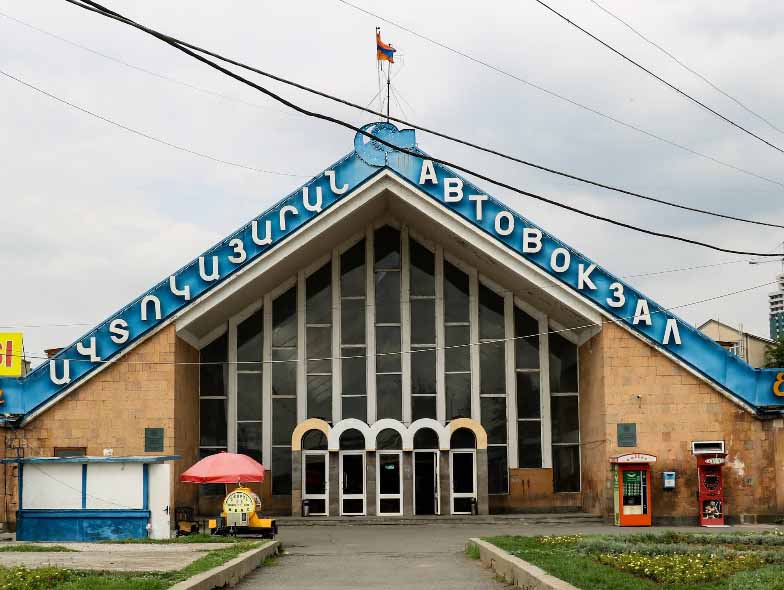
2. Shared taxi
More expensive but significantly faster. It's organized in Kilikia when there are enough people.
3. Private Taxi
The most convenient option, especially if you're traveling with luggage or in a group.
On the border
Since I didn't cross it, I don't have firsthand information about what the crossing and subsequent passage to Iran is like.
How to cross the border from Armenia into Türkiye
The border with Türkiye has been closed for decades due to political tensions. If you wanted to go to Türkiye, you would first have to go to Georgia, and then cross into Turkey.
How to cross the border from Armenia to Azerbaijan
The border with Azerbaijan is also closed due to historical conflicts and has no prospects of reopening in the short term.
Final comments and updates
The idea of this article is to share my experience crossing several of the borders of the Caucasus, supplemented with information gathered from other travelers for those steps that I did not personally take.
Each traveler experiences these crossings differently, and regulations can change faster than one imagines.
Therefore, if you've recently crossed any of these border crossings and have any new information, I would greatly appreciate it if you could leave it in the comments. This way, I can keep this guide as up-to-date as possible and help other travelers planning their route through this fascinating region.
Support The Prism of Fer!
Your support helps me continue creating free content on the blog. Thank you so much!