My arrival in Almaty from Mongolia, marked the beginning of my journey through Kazakhstan and the heart of Central Asia. Although no longer the official capital of the country, this city remains the cultural, economic, and social heart of the nation, and one of the most vibrant in Central Asia.
Surrounded by the imposing Alatau mountains, Almaty combines stunning natural landscapes with a modern, dynamic and surprisingly cosmopolitan atmosphere.
From the first moment, I loved how clean and organized it is, with tree-lined avenues, well-maintained parks, and a gastronomic offering that reflects its ethnic diversity.
Its streets blend Soviet influences with the independent spirit of the new Kazakhstan. Almaty is a city where you can walk among modern skyscrapers and, around the corner, find Orthodox churches, traditional bazaars, or monuments to the communist era.
It was the perfect base for exploring turquoise lakes and reddish canyons, but also a city that deserved to be enjoyed.
In this post I'll tell you everything I discovered, what I liked most, what to see and do, how to get around, and why Almaty was one of my favorite cities in the world.


This post may contains affiliate links. If you purchase through these links, I may earn a commission at no extra cost to you. Thank you for your support!
Table of Contents
A look at Almaty's history and architectural heritage
Almaty, whose name means “place of apple trees,” has a long and changing history that is reflected in every corner of the city.
Its origins date back to an ancient settlement on the Silk Road, although the modern city began to take shape in the 19th century, when the Russian Empire established the Verniy fort in this strategic area at the foot of the Tian Shan Mountains.
Throughout the 20th century, Almaty (then called Alma-Ata) became the capital of the Kazakh Soviet Socialist Republic, a role it held until 1997, when the capital was moved to Astana.

This past is clearly seen in its architecture, which mixes Soviet, Russian-classical influences and traditional Kazakh elements. The imposing public buildings, wide avenues, and monumentalist-style buildings are a direct legacy of the communist era.
A good example is the Palace of the Republic, or the seat of government, with its austere geometry. There are also more decorative buildings, such as the beautiful Zenkov Cathedral, made entirely of wood without the use of nails, a rare example of Orthodox architecture in Central Asia.
Also notable are the Academy of Sciences, with its imposing brutalist aesthetic, and the Hotel Kazakhstan, one of the most emblematic Soviet buildings in Central Asia, with its unmistakable silhouette.

In recent years, the city has added modern towers, international hotels, and glass and steel shopping malls, forming a striking contrast to the Soviet blocs and traditional markets. This interweaving of styles makes walking through Almaty a journey through different stages of its history.

My impressions of Almaty: a refreshing contrast
After coming from Ulan Bator, the capital of Mongolia, Almaty surprised me with its warmth and liveliness. Unlike the austerity and cold climate of Ulan Bator, Almaty is very green, with extensive parks and water channels that descend from the mountains to irrigate the city, giving it a much cooler and more pleasant atmosphere.

Furthermore, Almaty is clearly a multicultural and modern city, with a wide range of shops of all kinds, from traditional markets to contemporary boutiques, and a very diverse culinary scene that reflects this cultural mix.
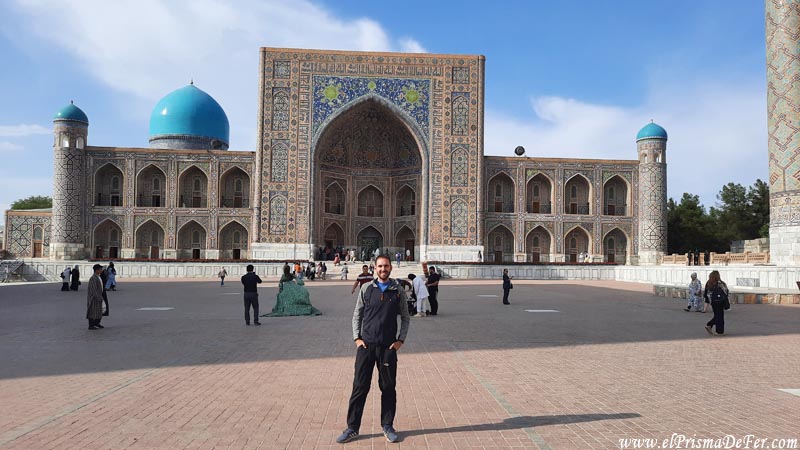
I used it as a base to get around Kazakhstan and visit nearby places, and others not so close, such as Turkestan and the Aral Sea, which was very convenient. The city has a pace that invites you to stay for several weeks to discover it in depth.

Compared to other major cities in Central Asia, Almaty was undoubtedly my favorite, thanks to its combination of nature, modernity, and urban life.
How to get around Almaty: the metro, an underground gem
One of the best ways to get around Almaty is by using the metro, which, in addition to being efficient and economical, is an attraction in itself.
Opened in 2011, the system is small but modern, clean, and very safe. Its most striking feature is the design of its stations, many of which retain the monumental air typical of Soviet architecture, with a carefully crafted aesthetic that blends marble and Kazakh cultural motifs.

Among the most outstanding stations are:
- Baikonur, decorated with a space theme in homage to the cosmodrome of the same name
- Abay, which pays tribute to the country's most important poet with murals and traditional elements
- Zhibek Zholy, one of the busiest, with beautiful marble details and an almost art gallery atmosphere
- Alatau, which combines light marbles and ornamental details with a very photogenic symmetry.

🚌 By Bus
In addition to the metro, you can easily get around by buses and trolleybuses, which cover the city well. For longer distances or if you prefer something more convenient, Yandex Go (the local Uber) works perfectly and is very accessible. But if the weather permits, walking is also very enjoyable: many areas of Almaty are leafy, quiet, and pleasant to explore on foot.
How to get from Almaty Airport to the city center
Almaty International Airport (ALA) is located about 15 km from the city center, and there are several ways to get there depending on your budget, arrival time, and comfort level.
🚌 City bus
For tight budgets or if you want to get around like a local, there are public buses that connect the airport with different points in the city center.
The most common lines are the 79 and the 86 (see stop location on the map). The journey is slower, but very cheap (around 100 tenge).
🚖 Taxi or Yandex Go
The most convenient and direct option is to take a taxi or Yandex Go, the most popular ride-hailing app in Kazakhstan and throughout Central Asia, similar to Uber. It works very well, is economical, and allows you to avoid negotiations or overcharging.
A trip to the city center usually costs between 2,000 and 3,000 tenge (about $5 to $7 USD) and takes about 25 to 40 minutes, depending on traffic.
Recommendation: Avoid taxi drivers who approach you inside the airport and request the ride from the app once you are outside.
🚗 Private transfer or from accommodation
Some hotels and hostels offer private transfers from the airport. This is a good option if you arrive early in the morning or want to travel worry-free. It's a good idea to book in advance, especially if you don't speak Russian or Kazakh.
Map of the most important places to see and visit in Almaty
What to see and do in Almaty: the city's must-sees
Almaty has a lot to offer, both culturally and naturally. It's an ideal city for combining urban walks with mountain getaways, all without having to venture too far. Here are some of the best places to see and things to do in Almaty, organized so you can create your ideal itinerary.
Walking Tour
A free walking tour in Almaty is the best way to start getting to know the city. While it's not free, as it works based on tips, it helps you get your bearings quickly, you learn history and anecdotes from a local guide and, in the process, you can meet other travelers. You can book your free walking tour here.
Panfilov Park and its attractions
Panfilov Park is one of the city's most important green spaces, ideal for a leisurely stroll among monuments and centuries-old trees. Within it, you can see and visit several places of great interest:
🕍 Zenkov Cathedral
Within the park is the iconic Zenkov Cathedral, a jewel of Orthodox architecture, built entirely of wood without nails. It is one of Almaty's most photogenic buildings and a symbol of resilience, having survived several earthquakes.

Beyond its imposing multicolored wooden facade, what I truly loved about Zenkov Cathedral was its interior. Upon entering, one finds a space filled with details: finely painted Orthodox icons, frescoes in soft tones, and a secluded atmosphere that contrasts with the bustle of the surrounding park.
Light streams in through ornate stained-glass windows, bathing the interior in soft colors, and everything is meticulously maintained. Unlike other, more ornate churches, this one possesses a simple yet harmonious beauty.


Memorial to the fallen of the Second World War
Directly opposite the cathedral is the World War II Memorial. The enormous bronze sculpture depicts a group of soldiers marching forward with purposeful expressions, honoring the 28 heroes of the Panfilov Division who fought in the defense of Moscow.
Behind it, an eternal flame burns in memory of all the Kazakhs who died in the war.

🎶 Museum of Kazakh Musical Instruments
Also within the park is this small museum, which displays traditional instruments from all over the country. It's ideal for better understanding the rich musical heritage of the steppes and discovering unique sounds like the dombra and kobyz.
🏙️ Kok-Tobe
Kok-Tobe is a hill with spectacular views of the city and the surrounding mountains. You can walk or take the cable car up from the center (see location), and enjoy an open-air stroll, food fairs, souvenir shops and even a Beatles statue.

It's a perfect plan for sunset.
🌆 Almaty Tower (Television Tower)
Located on the slopes of Kok-Tobe, the Almaty Tower is one of the tallest structures in the country. Although it is not currently open to the public inside, seeing it up close is impressive due to its size and location.

From the surrounding viewpoints you can get one of the best views of the city.
🕌 Almaty Central Mosque
The Almaty Central Mosque is one of the largest in the country, with a capacity for 7,000 people. Its white marble façade, five minarets, and shining gold main dome contrast with the peaks of the Tian Shan Mountains in the background.

🕌 First President's Park
This sprawling park is perfect for escaping the hustle and bustle of the city center. With expansive gardens, fountains, and a monumental portico, First President's Park pays tribute to Nursultan Nazarbayev, the first president of independent Kazakhstan.

In the background, the mountains provide a natural backdrop for incredible photos.
🌿 Botanical Garden
A peaceful stop in the middle of the city. The Almaty Botanical Garden is ideal for nature lovers, with tree-lined trails, picnic areas, and a wide variety of plant species. It's especially pleasant in spring and autumn.

🛍️ Green Bazaar (Zelyony Bazar)
If you want to experience the city like a local, the Green Bazaar is a must-see. It's Almaty's most traditional market, selling dried fruit, sweets, sausages, cheeses, clothing, and souvenirs. Don't leave without trying the freshly made manty and samsa.
Be careful, brand-name clothing is often counterfeit. I bought a pair of Columbia trekking shoes that seemed to be of good quality, but after a month of intensive use in Kyrgyzstan, I started to see the seams slowly coming apart. Other items I bought, like sun-protective sleeves, turned out better.
🏨 Hotel Kazakhstan
This iconic Soviet-style building is one of the city's symbols. With its straight lines and retro decor, the Hotel Kazakhstan represents the monumental architecture of the communist era.

You don't need to stay there to approach and admire it or have a coffee in its surroundings.
🏛️ Central State Museum of Kazakhstan
The Central State Museum of Kazakhstan is one of the most important museums in the country and an ideal stop if you want to better understand the history, culture, and evolution of this young nation.

Housed in a spacious building with typical Soviet architecture, with columns, marble, and a striking dome, the museum is striking in its size and how well it is organized.
Inside you will find a huge collection of objects that span from prehistoric times to present-day Kazakhstan.
There are rooms dedicated to nomadic peoples, with weapons, textiles, jewelry and items from daily life on the steppes; others that cover the period of Russian and Soviet influence, with documents, uniforms and maps; and also a section focused on the country's independence and its contemporary development.

The interesting thing about the museum is that, even if you're not a history buff, you can explore it in an enjoyable way, with informative panels and many visual displays. There are even models, archaeological artifacts, and traditional costumes that help contextualize what you see later in the country's landscapes and traditions.

It's a great place to visit at the beginning of your trip, especially if you're using Almaty as a base for exploring other regions. It gives you an overview that will make sense later when you explore the rest of the country.

🖼️ State Art Museum of Kazakhstan
The Kasteyev Museum (named after the country's most famous painter) houses an impressive collection of Kazakh, Russian, and European art. It's one of the most important museums in Central Asia and an excellent place to understand the region's artistic evolution.


🚇 Navigate the subway stations
Although the Almaty Metro only has one line, traveling through it is an experience in itself. The stations are decorated with marble, murals, and motifs that reflect Kazakh culture and history, inheriting the tradition of the monumental subways of the Soviet era. Don't miss stations like Baikonur, Abay, Zhibek Zholy and Alatau, true underground galleries.

☕ Enjoy the rhythm of the city between cafes, parks and pedestrian walkways
Almaty invites you to take your time. Sitting on a café terrace, strolling through its tree-lined streets, exploring one of its many urban parks, or simply observing local life in the pedestrian areas are all part of visiting the city.

The gastronomic offer is varied; you can try traditional Kazakh food (the Navat restaurant is perfect for that) or get lost among brunches, cafes with modern design and craft breweries.
🥾 Trekking to the Great Almaty Lake
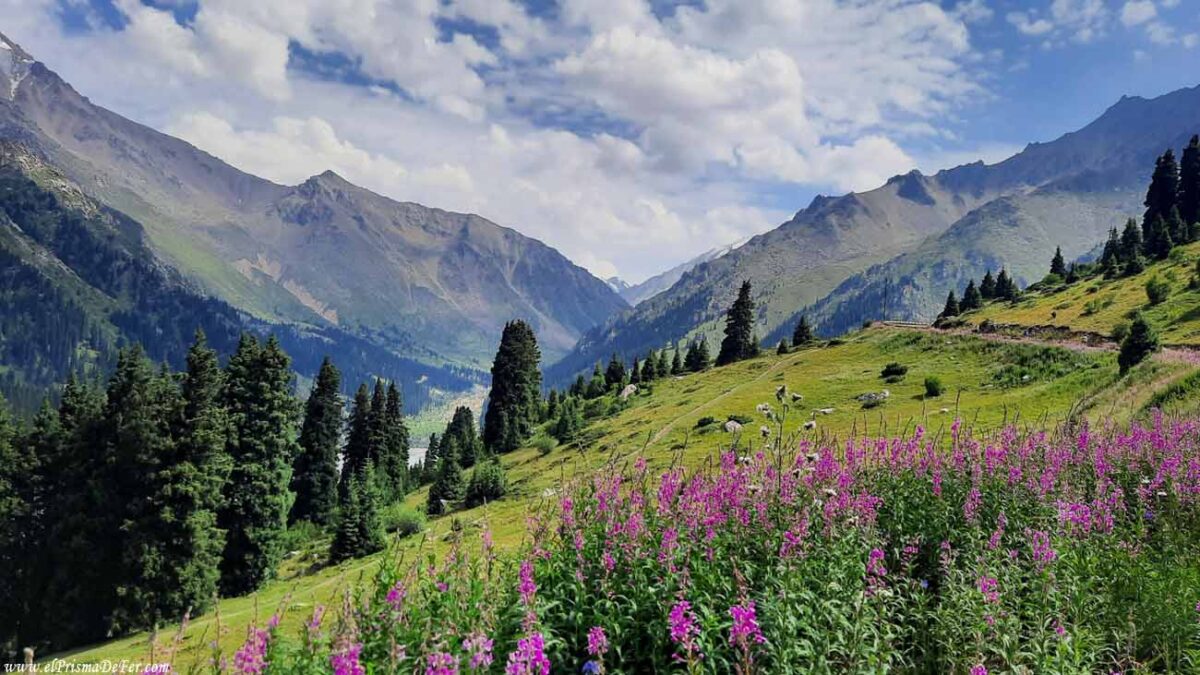
One of the most popular excursions from the city is to the Great Almaty Lake, a turquoise lake located at an altitude of over 2,500 meters in the Tian Shan Mountains.
It can be done in a day, by booking a tour, or with your own transportation. It's an accessible hike, with picture-postcard scenery at any time of year.

🚶♂️ Go to the Great Almaty Lake on your own: nature at your own pace
Going to Great Almaty Lake on your own is not only entirely possible, but it's one of the best ways to fully enjoy the experience. Most travelers opt for private tours, but if you enjoy walking, improvisation, and a more independent experience, you'll love this option.

Once you get off the bus in the village of Kokshoky (see stop), you can start walking up a path that winds through the mountains, following a water channel that accompanies you for much of the way.
The hike is long but very pleasant, and you slowly gain altitude, surrounded by spectacular landscapes, with mountains that may be snow-covered depending on the season, green valleys and lots of peace.

The walk is always on a paved road, so you can't get lost. At the end, the lake appears suddenly, its turquoise waters framed by peaks over 3,000 meters high. Without a doubt, one of the most breathtaking landscapes in Kazakhstan.

The views are spectacular and there are several spots from which you can take great photos or simply sit and enjoy the scenery.
You can't swim or get too close to the water because it's a reserve, but just being there makes all the effort worthwhile.

🚌 How to get to the Great Almaty Lake?
If you want to do this excursion on your own using public transportation, follow these steps:
- Go to the First President's Park, which is at the intersection of Al-Farabi and Navoi streets in Almaty. There is a bus stop next to the park entrance (see location on map).
- From that stop, I boarded bus number 28 (sometimes referred to as bus 34 from some points in the park) or bus 211.
- Get off at the final stop (see location), in the village called Kokshoky or also known as GES-2.
From there you can:
- Take a shared or individual taxi up to the lake access point for approximately 2000–5000KZT, depending on the distance and whether you share with other people.
- Or start walking 3 to 10 km uphill. The trail from Kokshoky to the lake takes about 2–4 hours, depending on your pace and energy level.
🏞️ Take a trip to Charyn Canyon, Kolsai Lakes, and Kaindy Lake
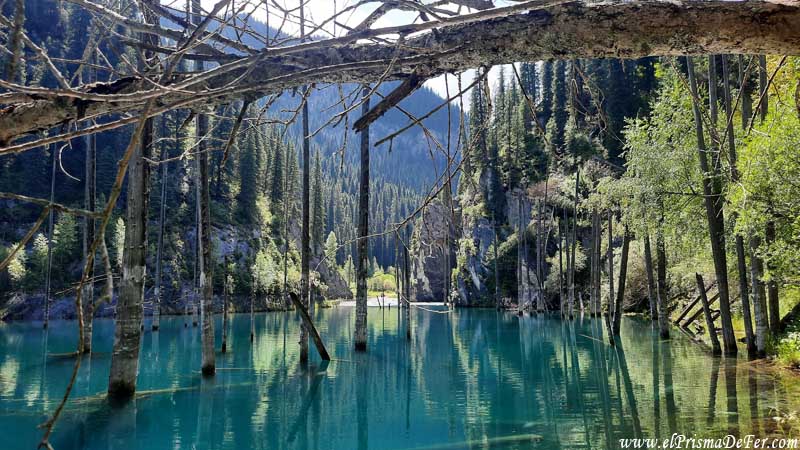
If you have a few extra days in Almaty, one of the best getaways you can take is an excursion to Charyn Canyon, the Kolsai Lakes and the surreal Kaindy Lake, famous for its submerged trees.

It's an unforgettable experience that combines desert landscapes, mountain forests, and alpine lakes. Most travelers do it on a 2- or 3-day tour, as the distances are considerable and the roads aren't always well-marked.
It's a journey that's completely worthwhile, and I detail it in depth in another blog post.
Where to eat in Almaty: between traditional and modern
Almaty's food scene is as diverse as the city itself. You can find everything from traditional Kazakh dishes served in atmospheric yurts to modern cafes serving European-style brunches and international restaurants with surprising standards. Eating well in Almaty isn't difficult, and the best part is that prices remain quite affordable.

If you want to try the local cuisine, I recommend starting with Navat, a popular chain with traditional decor, where they serve beshbarmak, plov, lagman and kymyz (fermented mare's milk).
For something more authentic and off the tourist track, it's worth seeking out small family-run eateries or markets like the Green Bazaar, where you can try manty (a kind of steamed ravioli), samsa (baked pastries) and all kinds of nuts, cheeses and typical sweets.


For those who miss specialty coffee or are looking for more international options, Almaty also has something to offer. Places like Café Central, Kishlak or Coffeedelia offer everything from good coffee to more contemporary dishes.
And if you want a different experience, some rooftops like the one at The Ritz-Carlton hotel or the Line Brew restaurant combine spectacular views with high-level gastronomy.
Whether you want to eat like a nomad in a yurt or sit down with a flat white on a hipster corner, Almaty has an option for you.
Where to sleep in Almaty
Almaty offers a good variety of accommodations for all budgets, from backpacker hostels to luxury hotels with mountain views. The key is choosing the right area, as it's a fairly large city, although well connected by public transport.
To get around comfortably and be close to restaurants, cafes, metro stations and some of the main attractions, it is ideal to stay in the center or its surroundings, especially in neighborhoods such as Almaly, Bostandyk or near Panfilov Park. These areas are safe, walkable, and have a nice mix of local life and urban vibe.
A well-located hostel with a local flair and close to the city's main attractions is the Wanderlust Hostel. While it doesn't seem to be the best cleanliness, it's very cheap and centrally located.
I decided to stay in an area a little further from the center, but accessible by metro. Ideal if you're traveling on a budget but want to maintain a certain level of comfort. There are several modern, clean hostels with well-equipped kitchens, like the Kochevnik Capsule Hotel, where I stayed.

🚉 How to get from Almaty to Turkestan or the Aral Sea (Aralsk)
Kazakhstan has a very useful, albeit slow, rail system for long-distance travel. From Almaty, you can reach both Turkestan and Aralsk by train, ideal for those traveling with time who want to save on accommodation by taking overnight trips.
Almaty → Turkestan
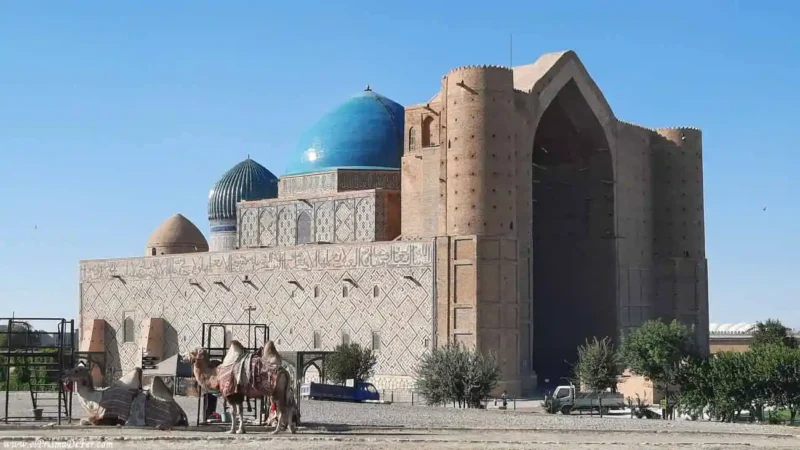
Turkestan is in the south of the country and is more accessible than Aralsk. There are direct night trains leaving from the stations Almatý 1 or Almatý 2. The journey takes between 13 and 16 hours, depending on the type of train.
Tickets can be purchased at tickets.kz or at stations. There are plazkart (economy), kupe (compartment for 4), and SV (compartment for 2) options.
Almaty → Aralsk (Aral Sea)
My next step would be to visit Aralsk, the gateway to the former Aral Sea. It's a long journey but possible. There are direct trains to Aralsk departing from Almaty, although not every day. The journey can take between 30 and 33 hours, depending on the train.
Traveling by kupe is recommended for such long journeys. Alternatively, you can take a connecting route via Kyzylorda or Shymkent.
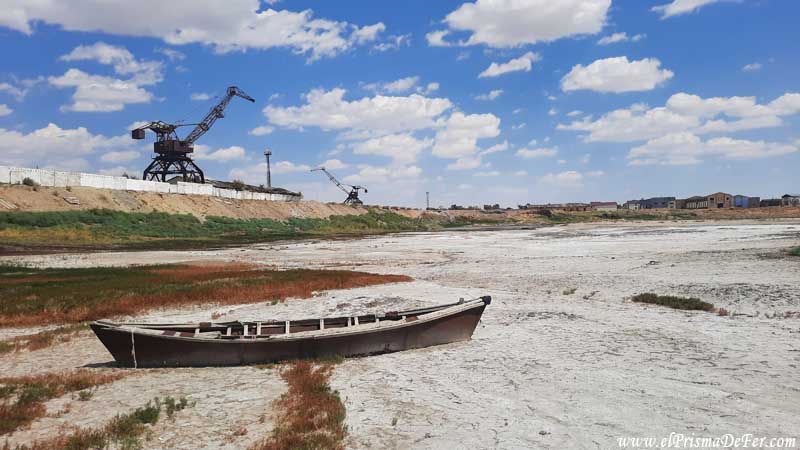
Train rides in Kazakhstan are part of the experience. They're slow, yes, but also very scenic, affordable, and a great way to meet locals. Bring water and food, and download something to read or watch offline. And if you're traveling in the summer, pack something light; in the winter, dress warmly.
🚌 How to get from Almaty to Bishkek (Kyrgyzstan)
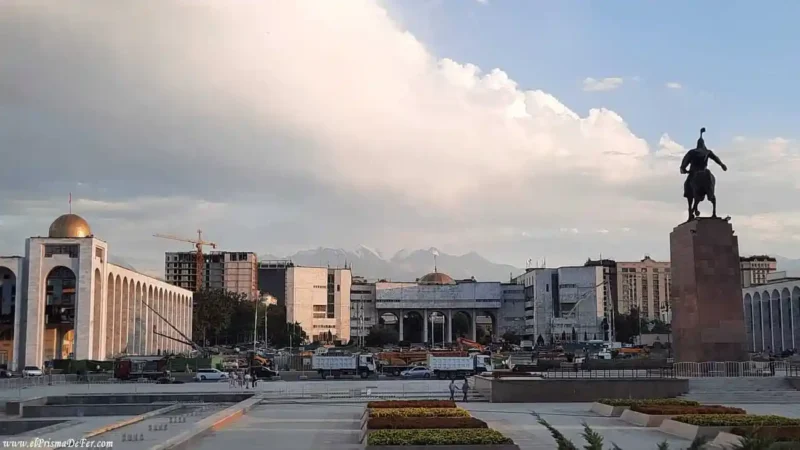
If, like me, you are thinking of going to Kyrgyzstan from Kazakhstan, the crossing between Almaty (Kazakhstan) and Bishkek (Kyrgyzstan) is one of the easiest international routes to make in Central Asia. The two cities are relatively close, connected by road, and the border crossing is quite popular with local travelers and backpackers.
🛻 1. With marshrutka or bus
It is the most popular option among locals and travelers:
- Where it leaves from: At the Sayran station (see location on the map).
- Frequency: They run all day, from early morning until late afternoon.
- Duration: 4 to 5 hours, including border crossing.
- Price: Very cheap (approximately between 3 and 6 USD).
- Border: You cross it on foot (you get off the minibus, go through immigration, and get back on the other side or take another form of transportation).
- Where it drops you off: It used to drop you off at the Western Bus Station in Bishkek, but now it seems to drop you off at the New Station (see location)
🚖 2. By shared or private taxi
Another common option in Sayran or local apps:
- Duration: Similar to the minibus (4–5h), but more comfortable.
- Cost: More expensive if it is private, but shared is affordable.
- Tip: Negotiate the price well before getting in.
Final thoughts on my visit to Almaty
My experience in Almaty was very positive and exceeded my expectations. I loved the city's cultural offerings, from museums to historical monuments, uniquely combined with the proximity to nature, which is present in every corner.
In addition, I had the opportunity to meet many kind and open people, which made my stay even more enjoyable and entertaining.

Almaty is not just a starting point for exploring Kazakhstan, but a destination worth discovering in its own right. Its blend of tradition, modernity, and natural landscapes makes it a complete and welcoming city for any traveler.
Save this post on Pinterest

Frequently asked questions about Almaty
How many days do I need to visit Almaty?
With 2 to 3 days you can see the main sights of the city and take a day trip to nearby places, such as the mountains or lakes. If you want to explore at a more leisurely pace or go trekking, you can stay longer.
What is the best time to travel?
Spring and autumn are ideal due to the mild weather. Summer is also a good option, especially for mountain activities. Winter is cold, but it's ski season in nearby areas.
Is it an expensive city?
Almaty is relatively inexpensive compared to Europe, although more expensive than other Central Asian cities. Accommodation, food, and transportation remain affordable.
How to get around the city?
The subway is the most practical option. There are also buses, and you can use apps like Yandex Go to get around by taxi at very low prices.
Can I pay by card?
Yes, many places accept cards, but it's always a good idea to carry some cash in local currency (tenge), especially for small expenses.
Is Almaty safe?
Yes, it's a fairly safe city for travelers. As with any place, it's wise to take basic precautions, especially at night.
What language is spoken?
The main languages are Russian and Kazakh. English is not as widespread, but it is usually spoken in tourist areas.
What can't I miss?
Some must-sees include Panfilov Park, Zenkov Cathedral, the Kok-Tobe cable car, and mountain excursions such as Big Almaty Lake or Charyn Canyon.
Is it possible to set up a base to explore the surrounding area?
Yes, Almaty is the best base for exploring southeastern Kazakhstan, with many day trips and multi-day excursions.
Support The Prism of Fer!
Your support helps me continue creating free content on the blog. Thank you so much!