Purmamarca is one of the most visited towns in the Quebrada de Humahuaca and, in large part, this is due to the famous Hill of Seven Colors.
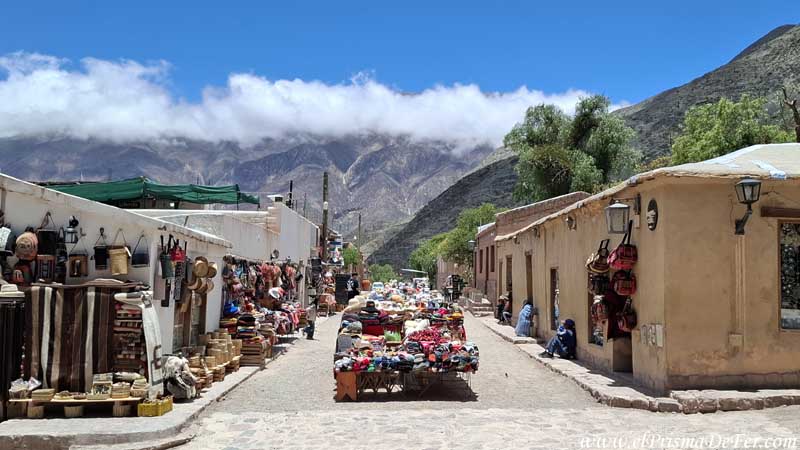
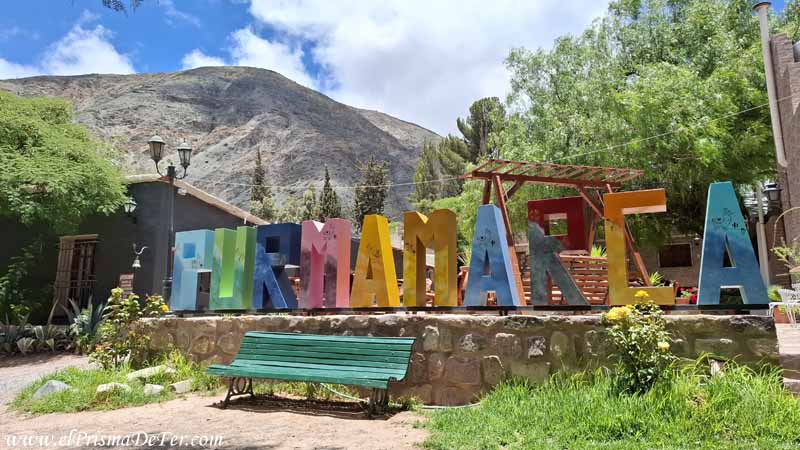
During my visit to Purmamarca I found a small town, easy to explore on foot, with colorful hills to suit all tastes, a strong tourist presence and many artisans in their stalls set up in the plaza and surroundings.
In this article I'll tell you what to see in Purmamarca, in the town and its surroundings, plus some practical tips for exploring it properly.
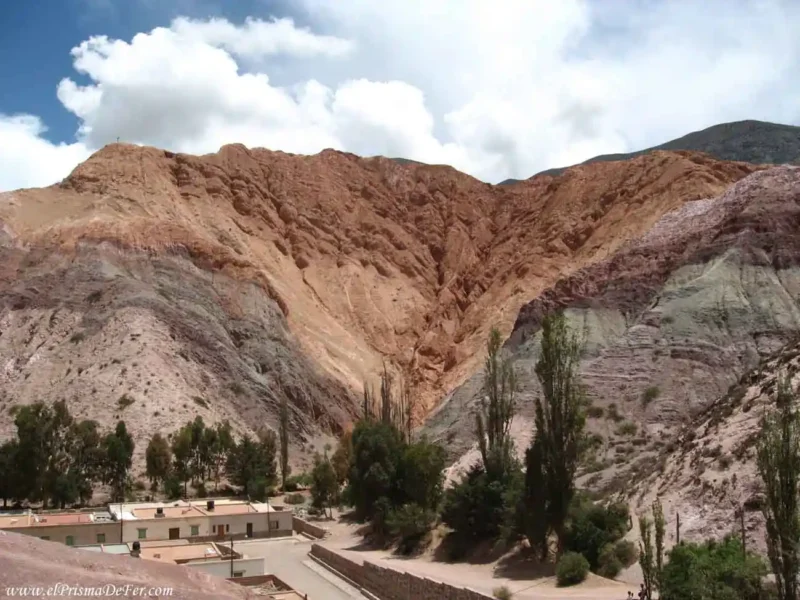
Table of Contents
Where is Purmamarca located?
Purmamarca is located in northwestern Argentina, within the province of Jujuy, and is part of the Quebrada de Humahuaca, declared a World Heritage Site by UNESCO.
It is located about 65 km north of San Salvador de Jujuy, following National Route 9, in a valley surrounded by multicolored hills.
Due to its location, Purmamarca is often one of the first stops when entering the Quebrada de Humahuaca from the city of Jujuy. Furthermore, it is very close to other key points in the area, such as Tilcara, which is 25 km away, Humahuaca, about 70 km away and a few kilometers from the crossing to the Salinas Grandes, making it an excellent stopover point for half-day excursions.
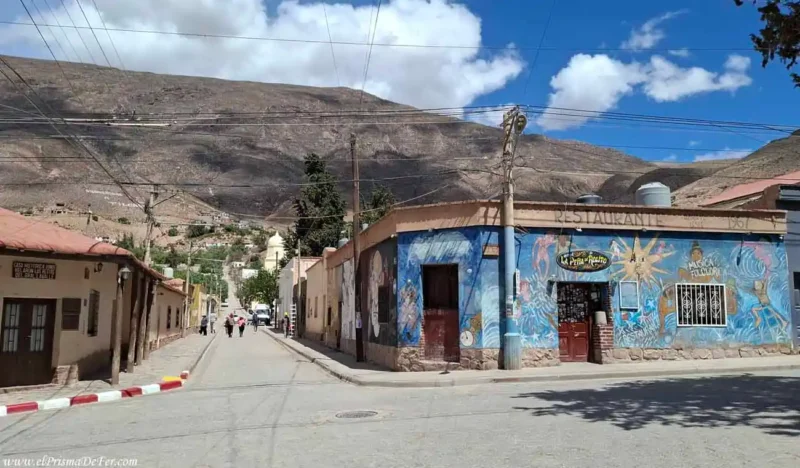
The town sits at over 2,300 meters above sea level, so the climate is dry and the nights are usually cool, even in summer.

How to get to Purmamarca
Purmamarca can be reached in several ways, as the town is well connected with the rest of the Quebrada de Humahuaca and with the capital of Jujuy.
From San Salvador de Jujuy, the most direct way is via National Route 9, a journey of approximately one and a half hours. You can travel by private car, taxi, or public transport. Buses depart frequently from the bus terminal, and many of them stop in Purmamarca.

If you are coming from other points in the ravine, such as Tilcara or Humahuaca, there are also regular bus services that travel along Route 9 in both directions. The journey from Tilcara is short, about 30 minutes, while from Humahuaca it can take around an hour and a half.
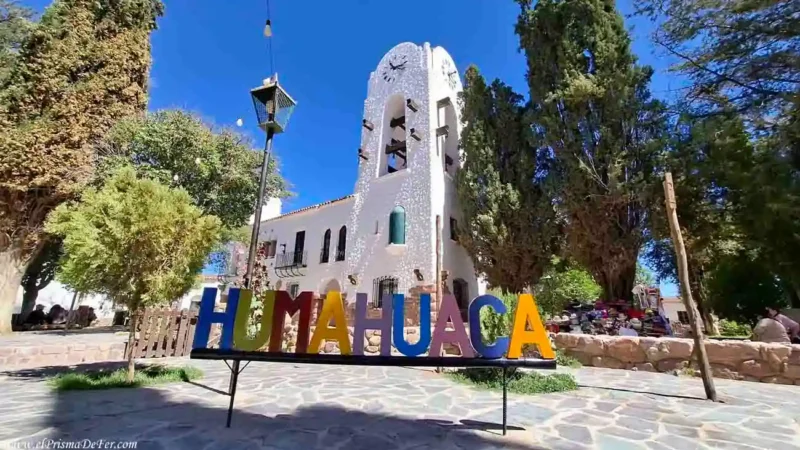
Another option is to arrive as part of an organized tour, especially if your plan is to combine Purmamarca with the Salinas Grandes salt flats or other nearby towns. In that case, they usually include round-trip transportation from San Salvador de Jujuy or Tilcara, which is convenient if you have limited time.
Visit Purmamarca with the Solar Train
Purmamarca is part of the route of the Tren Solar de la Quebrada (Solar Train of the Quebrada), although the station is not in the town, but about 3 km away. For this reason, the train company transports passengers in vans from the station to the center of Purmamarca.
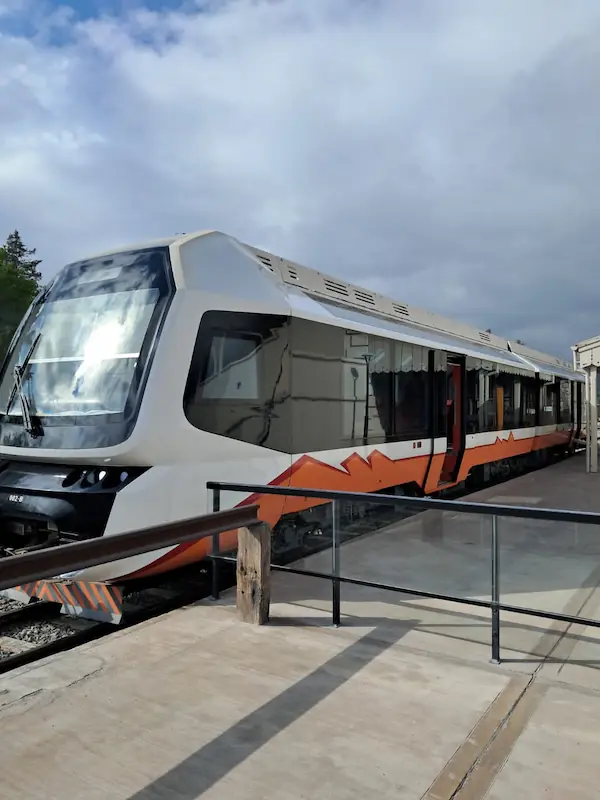
Once in the village, free time is usually limited, generally between one and one and a half hours, before returning to the station to continue the tour.
For me, this timeframe is quite tight and doesn't allow for a leisurely exploration of Purmamarca. Activities like the Paseo de los Colorados are either completely excluded or would have to be rushed, so it's not the ideal option if you want to enjoy the place at a relaxed pace.
What to see in Purmamarca
Purmamarca is a small town, but it has several points of interest that can be explored on foot, and a classic day trip departs directly from the town center. These are the main things to see and do.
Hill of Seven Colors and viewpoint
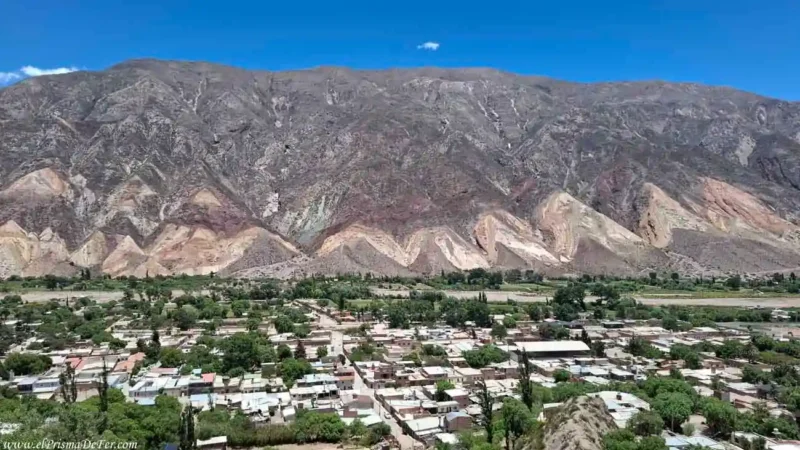
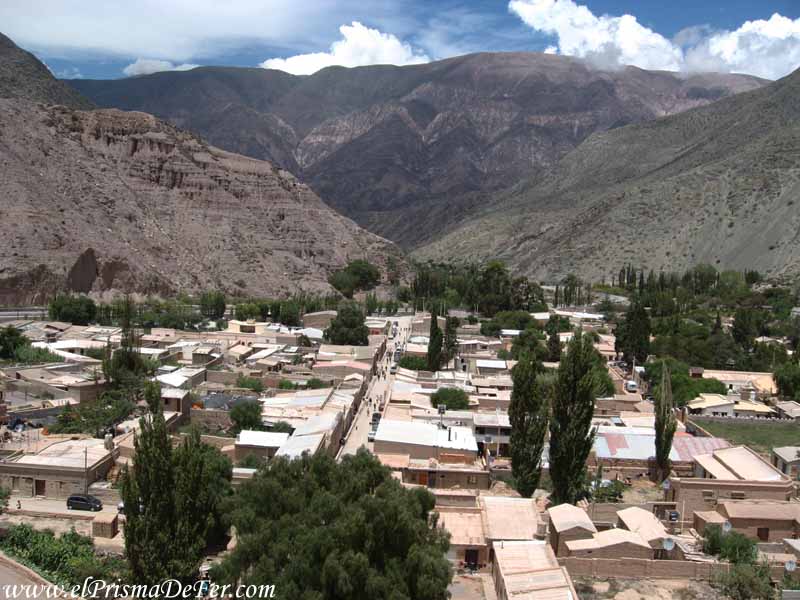
The Hill of Seven Colors is the most well-known image of Purmamarca and accompanies the town from any angle.
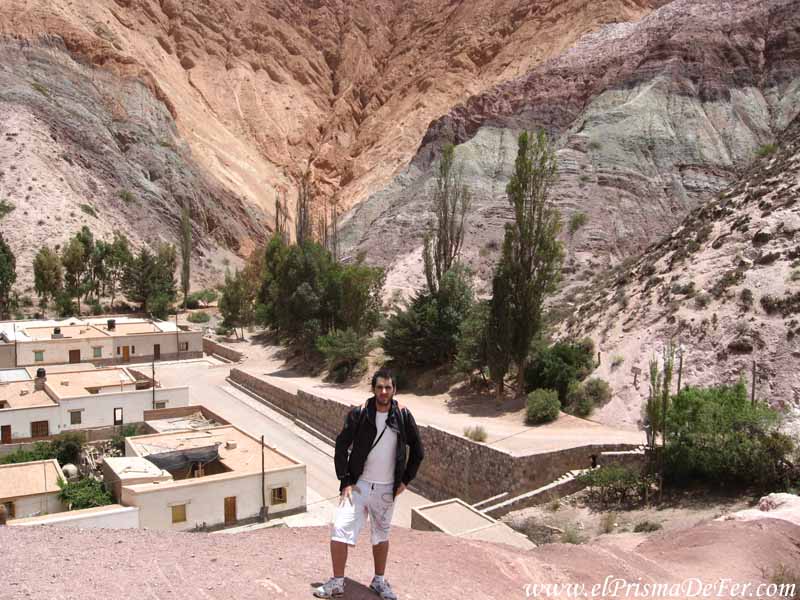
To appreciate it better, you can climb to the El Cerro El Porito viewpoint (see on the map), which offers a clear view of both the hill and the town center. Access used to be free, but now, since a footbridge has been built, there is an entrance fee of around 1,000 Argentine pesos.
From the top you get a very nice panoramic view of the town, with the hill in front and the contrast between the reddish, ochre and greenish tones of the mountain.
Paseo de los Colorados
The Paseo de los Colorados is a circular path that skirts the town and allows you to get away from the center for a bit.
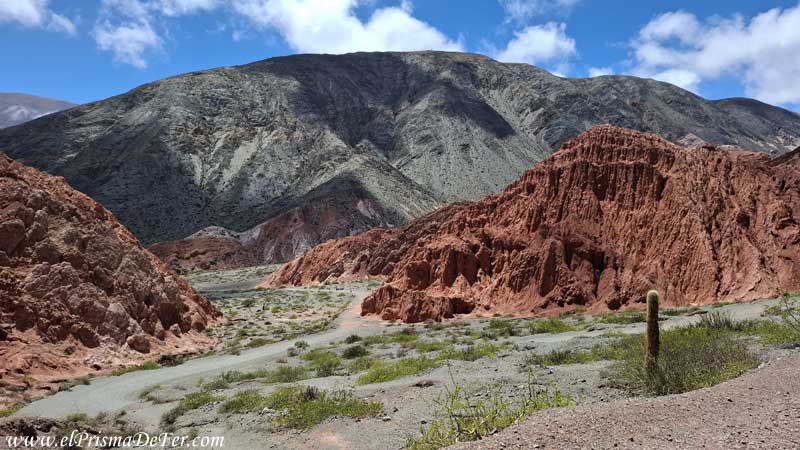
The walk is not particularly difficult and can be completed in about 40 to 45 minutes, at a leisurely pace. Like the viewpoint, it used to be free, but now there is an entrance fee of approximately 1,000 Argentine pesos.
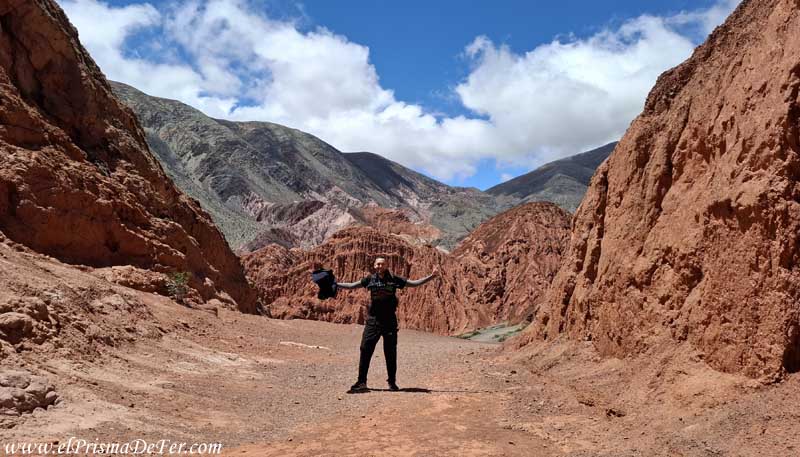
The hike is worthwhile and doesn't require any special fitness. It winds through hills of red and orange hues, sandstone formations, cacti, and open landscapes.
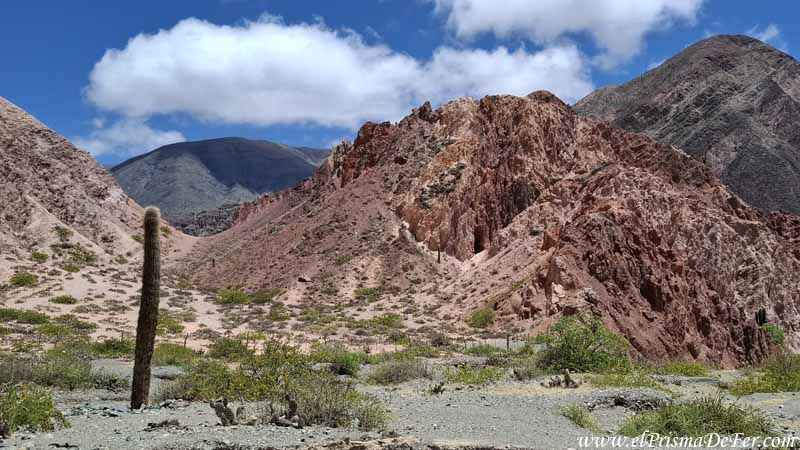
It is a highly recommended hike, to complement the viewpoint of the Hill of 7 Colors.
Walking through the town
The center of Purmamarca is easily explored on foot. Around the main square are concentrated craft stalls, small restaurants, cafes, and markets selling textiles, ceramics, and regional products.
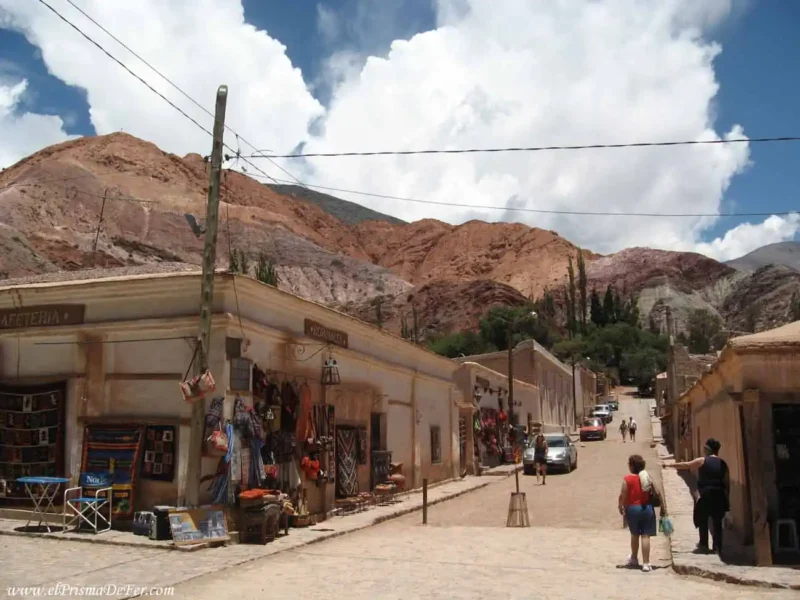
It's a good place to stop for a while, observe the movement of the town and sit down to eat something with the hills always in the background.
Opposite the square you can also see the small town hall and a well-maintained old church.
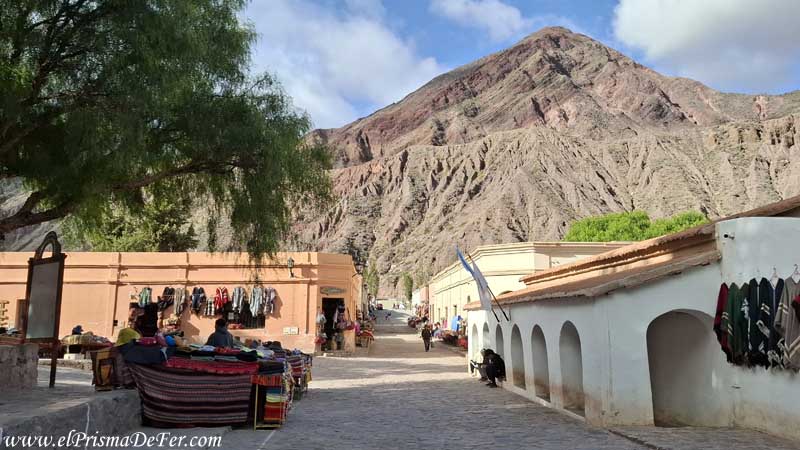
Excursion to the Salinas Grandes salt flats
One of the most popular excursions from Purmamarca is a visit to the Salinas Grandes (see on the map), located about 65 km from the town.
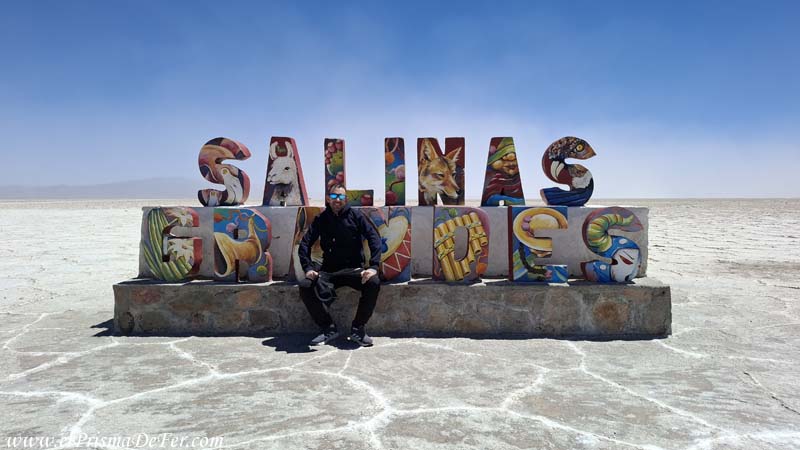
If you have a car, you can easily do it on your own, as the road is completely paved and in good condition.
Otherwise, there are options for organized excursions or shared taxis that leave from the town, usually wait to gather passengers and then depart.
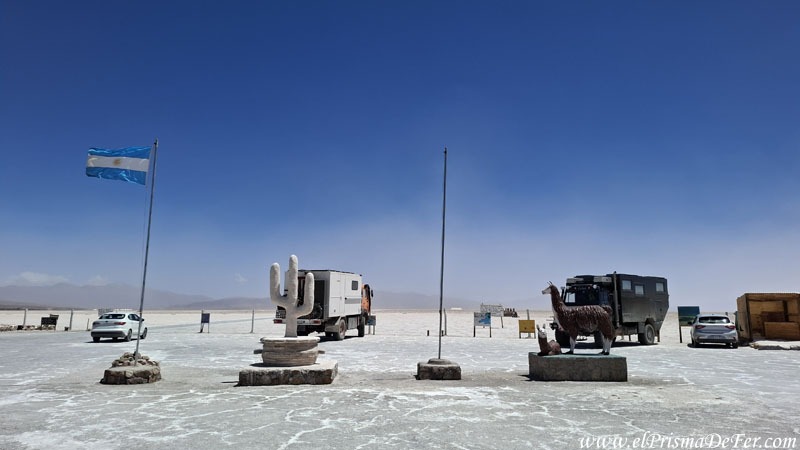
The road ascends the Lipan Slope, with curves and spectacular viewpoints, until it reaches a height of nearly 4,100 meters above sea level.
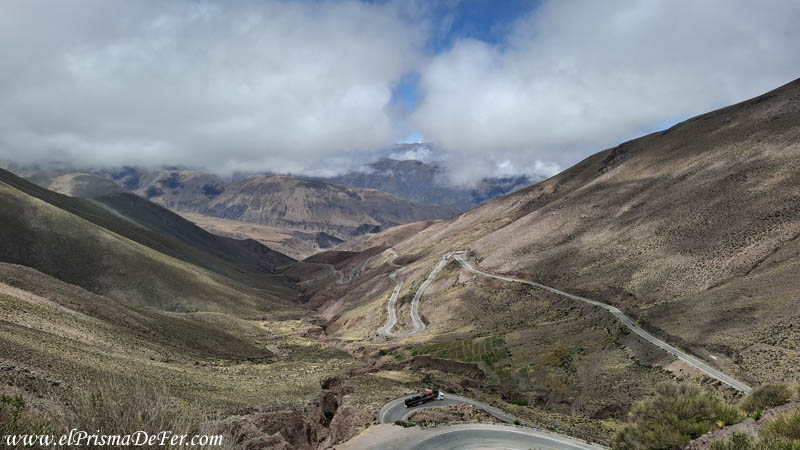
Once at the salt flats, you pay an entrance fee and can explore a section of the salt flats—not much, really. The visit usually focuses on taking the classic perspective photos, which are practically obligatory.

In the past, when arriving independently, it was common for local guides to explain the salt extraction process.
Today, that explanation is usually given mainly to groups that arrive with an organized tour, while those who go on their own only have a short time to take photos and not much else.
In total, the excursion usually takes half a day, including transfers and time spent in the salt flats.
Comparison between the Salinas Grandes of Jujuy and the Salar de Uyuni in Bolivia
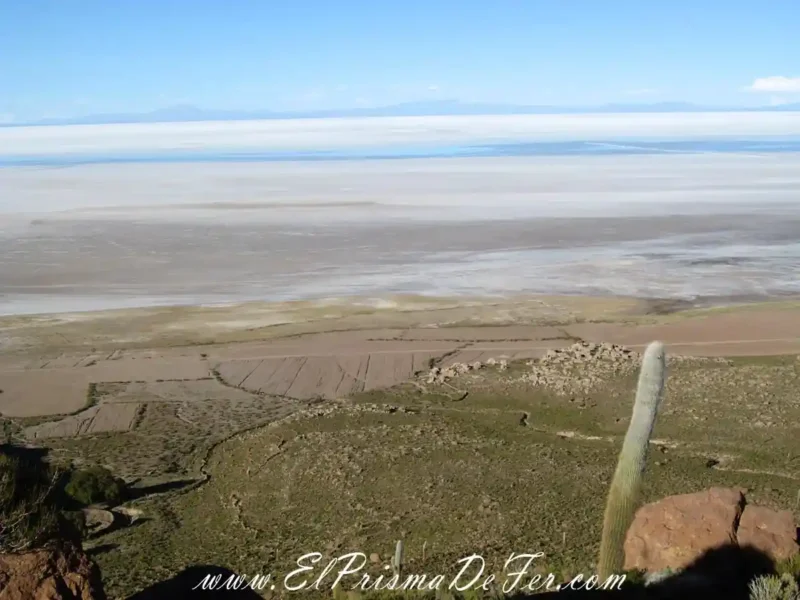
Having visited both the Salinas Grandes in Jujuy and the Salar de Uyuni in Bolivia, I must say that the difference between the two is enormous.

In Jujuy, the visit is very limited to a brief stop to take photos with perspective tricks and little else; there is not much context or proposals to stay or explore the place in depth.
In contrast, the Salar de Uyuni, due to its enormous scale, offers a much more complete experience, with extensive tours, unforgettable sunrises and even the possibility of sleeping in a hotel built entirely of salt, something that favors immersion in the place far beyond the classic photo.
Is it worth visiting the Salinas Grandes in Jujuy?
For those who have never seen a salt flat, the Salinas Grandes can be interesting, especially because of the contrast with the Andean landscape and because of the access route, crossing the Cuesta del Lipán, which is truly beautiful.
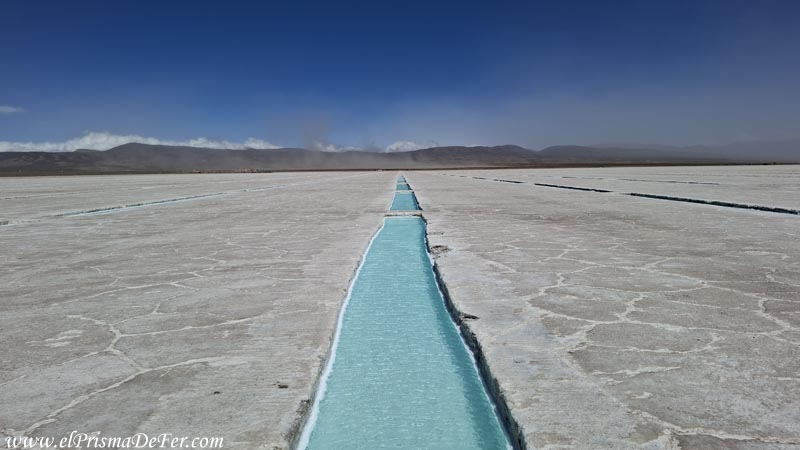
However, I think it's important to temper expectations. As the visit is currently planned, it's reduced almost entirely to a short stop for taking photos, without much content or time to explore the area.
I didn't think it was a must-see in the Quebrada, although it might be worthwhile if you have extra days or are curious to see a salt flat for the first time.
How to get from Purmamarca to San Pedro de Atacama (Chile)
By Bus
One of the best ways to travel is with the international bus service operated by Andesmar, which connects Purmamarca with San Pedro de Atacama.
- Departure from Purmamarca: ~03:40 AM.
- Arrival in San Pedro de Atacama: ~11:30 AM.
- Duration: ~8 – 9 h aprox.
- Route: passes through National Route 52, crosses Cuesta de Lipán and goes up the high plateau to the Paso de Jama, crossing the border into Chile and then going down to Atacama.
This bus usually runs once a day and is ideal if you don't want to drive or coordinate several legs of your journey.
To search for the route on the Andesmar website, you have to enter "Parador Purmamarca" as the origin and "San Pedro De Atacama (Chile)" as the destination, then select the date and it will take you to the results screen.
By own car or rented car
If you have a car or want to rent one, this is a spectacular trip with incredible scenery.
- Route: Purmamarca → Susques → Jama Pass → San Pedro de Atacama.
- Distance: ~410 km (depending on the final route).
- Estimated driving time: ~6 – 8 h excluding stops.
Recommendations if you are traveling by car:
- The road is paved up to the pass and in good condition.
- Bring extra fuel, water, and food, because there aren't many gas stations between Purmamarca and Susques.
- Check the status of the Jama Pass in winter, as it may be closed due to snow or adverse weather conditions.
- Have up-to-date immigration and vehicle documentation to cross the border.
This mode gives total independence and allows you to make stops to take photos or at high points of the plateau.
Where to sleep in Purmamarca
Purmamarca is a very small town, so almost any location is good for accommodation. Everything is within a few minutes' walk: the main square, restaurants, hiking trails, and access points for excursions. This means you won't need to use any transportation once you've settled in.
A great option for both backpackers and those looking for a relaxed atmosphere is the Giramundo Hostel Purmamarca. It boasts an excellent location, very close to the center, a friendly traveler vibe, and comfortable common areas for relaxing or socializing. Plus, the breakfast is plentiful and delicious, a welcome addition before heading out to explore the Quebrada.
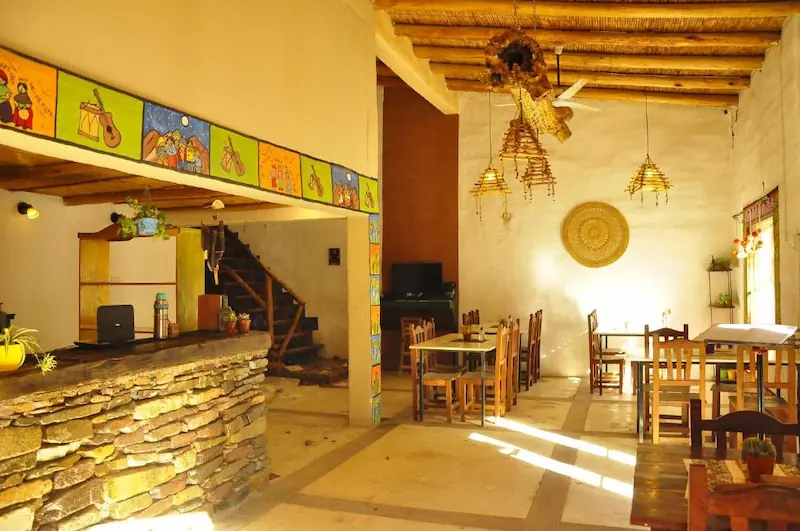
Beyond this option, the town has hostels, inns and accommodations for different budgets, so it's easy to find something that suits the type of trip you're taking.
Best time to visit Purmamarca
The best time to visit Purmamarca is from April to October, when the weather is drier, the days are usually sunny, and the temperatures are pleasant for walking and hiking.
During these months there is less rain and the landscapes are well defined, ideal for enjoying the Hill of Seven Colors and the surrounding trails.
Summer, between December and March, brings higher temperatures and the rainy season. While the town can still be visited, walks can become more strenuous and some excursions may be affected. In return, the hills are usually greener and the landscape changes considerably compared to the rest of the year.
Final thoughts
I liked Purmamarca, and it's definitely one of the must-see destinations in the Quebrada de Humahuaca. Despite its popularity, it has beautiful scenery and some enjoyable activities.
The Paseo de los Colorados was my favorite part. It's not crowded, you can walk peacefully, and the views of the hills are beautiful.
The excursion to the Salinas Grandes, on the other hand, left me with mixed feelings. While the place is striking, I feel that the visit, as it's currently structured, offers little and ends up being more of a photo opportunity than a truly enriching experience.
Even so, Purmamarca remains an excellent spot within the ravine and a place I recommend visiting.
FAQs about Purmamarca
What time of day is the Hill of Seven Colors best viewed?
The best time to see the Hill of Seven Colors is in the morning, when the sun begins to illuminate it from the side and the colors appear more defined. At sunset, the sun is no longer directly overhead and shadows begin to appear on the hillside, so the colors don't stand out and lose contrast.
How long does it take to visit Purmamarca?
Half a day is enough to explore the town, climb to the viewpoint, and take the Paseo de los Colorados (Walk of the Colors). If you also want to add the excursion to the Salinas Grandes salt flats or explore at a more leisurely pace, it's best to spend a full day or even the night in Purmamarca.
Is it worth staying overnight in Purmamarca or just visiting it briefly?
Both options are valid. As a stopover, you can easily see the main sights, but staying overnight in the town allows you to enjoy it early in the morning or at sunset, when there are fewer people and the atmosphere is more peaceful, although accommodations are more expensive compared to other towns, such as Tilcara.
Is it possible to explore Purmamarca on foot?
Yes. Purmamarca is very small and the entire center is walkable. You only need transportation for more distant excursions, such as the Salinas Grandes salt flats.
Is the Paseo de los Colorados difficult?
No. It's an easy, well-marked trail, suitable for most people. The hike takes about 45 minutes and requires no prior experience, just comfortable shoes and water.
Is it necessary to book a tour to go to the Salinas Grandes salt flats?
It's not mandatory. If you have a car, you can go on your own without any problem. Otherwise, tours and shared taxis depart from Purmamarca, which are usually the most practical option.
What is the altitude of Purmamarca?
Purmamarca is located at about 2,300 meters above sea level. It generally doesn't cause problems, but it's best to take it easy on the first day and stay well hydrated.
Support The Prism of Fer!
Your support helps me continue creating free content on the blog. Thank you so much!