After waking from the dream that turned out to be Yangshuo, I headed to Fenghuang, another idyllic corner of China. Also known as the "City of the Phoenix," it's a city that, architecturally speaking, seems frozen in time.
With its traditional wooden houses built on stilts along the Tuojiang River, stone bridges, and alleyways lit by red lanterns, it offers one of the most iconic postcards of historic China.
And despite its growing popularity, Fenghuang retains much of its original charm. Whether by day, with its reflections on the water, or by night, when the lights completely transform the landscape, it's a truly outstanding destination, though not without its nuances.
In this post you will find everything you need to plan your visit to Fenghuang: what to see, how to get there, how much time to spend there and practical tips to make the most of this traditional Chinese gem.
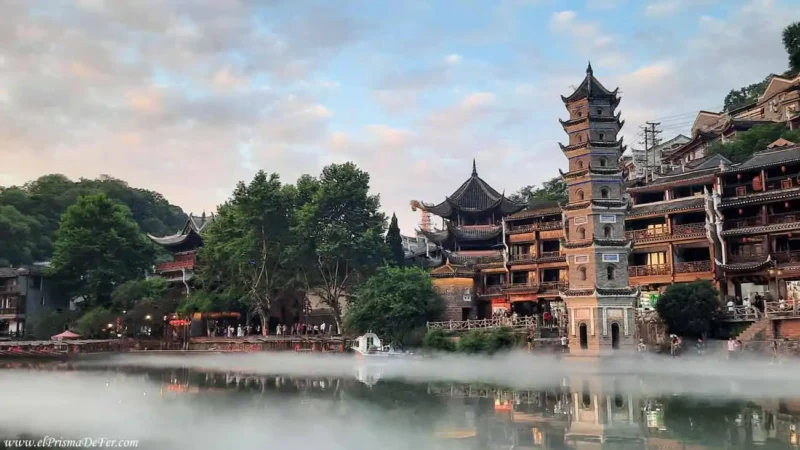

Table of Contents
Where is Fenghuang located?
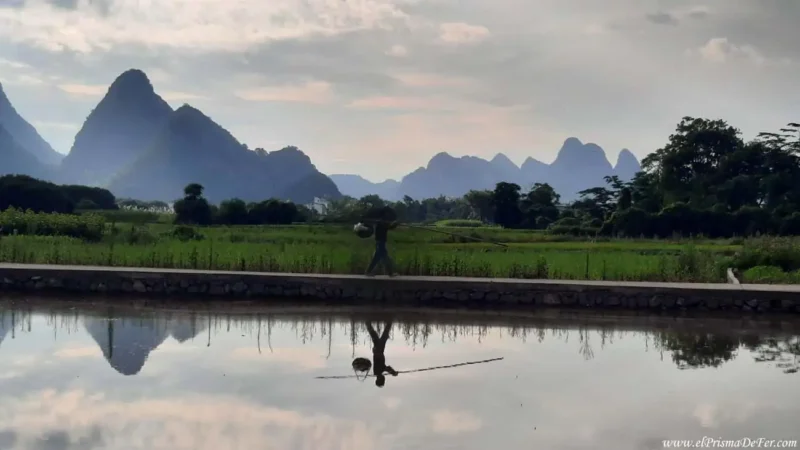
Fenghuang is located in western Hunan Province, in southern China. It lies on the banks of the Tuojiang River, in a mountainous area near the border with Guizhou Province.
Although it is not on a classic tourist route like other cities in the country, its location is part of a region rich in culture and traditions, especially linked to ethnic minorities such as the Miao and the Tujia.

Why is it called the "City of the Phoenix"?
The name Fenghuang literally means “Phoenix” in Chinese (“Feng” = mythical bird, “Huang” = phoenix), hence it is often known as “Phoenix Town” or “City of the Phoenix”.
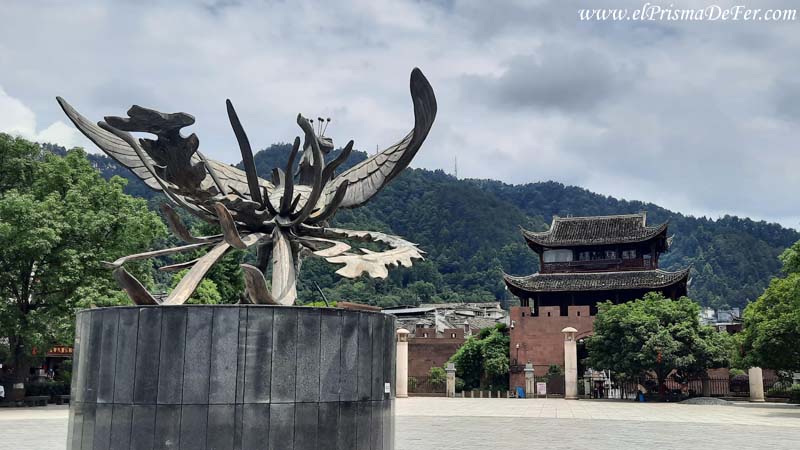
The phoenix is a very important figure in Chinese culture, associated with harmony, prosperity, and rebirth. According to some interpretations, the city's name is linked to the shape of the surrounding mountains, which resemble a phoenix spreading its wings.
My impressions of Fenghuang
Arriving from Yangshuo just before nightfall, my first impression of Fenghuang wasn't the best. I found a town completely overrun with local tourists, full of bars and nightclubs with loud music and brightly lit karaoke bars along the riverbank.
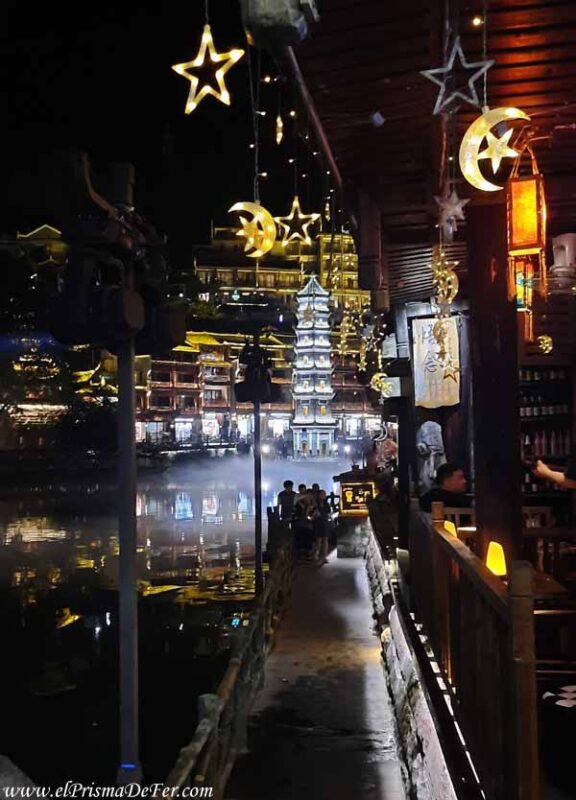
It's quite jarring. While the city lights and decorations are beautiful, I couldn't help but think that this kind of atmosphere clashes with and detracts from the essence of the historical setting.
I think that if all that nightlife were a little further away from the old town, moving it to the more modern areas, the perception of the historic center would change completely.
But my perception changed somewhat during the day. When the crowds thin out and the noise from the bars and music fades, the city reveals a completely different side.
That's where I found the atmosphere I was looking for: more tranquility, quiet alleyways, and a more genuine ambiance. In that context, I liked Fenghuang much more.
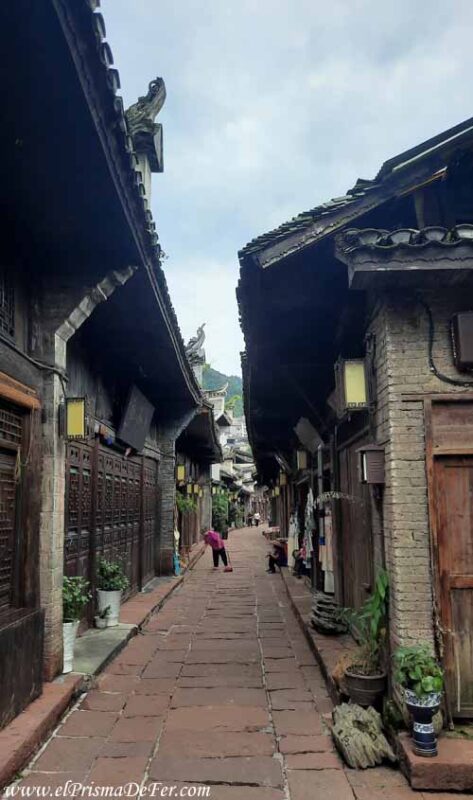
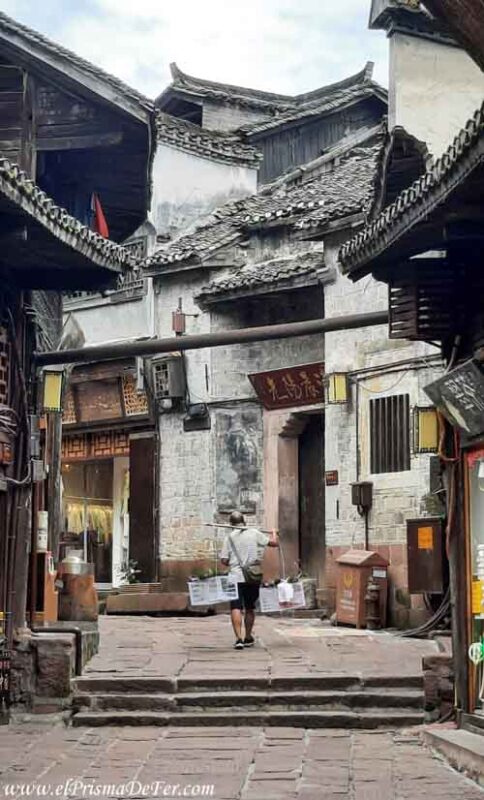
It's an extremely scenic and photogenic place. Every corner, bridge, alleyway, and reflection in the river invites you to take photos constantly. It's a very "Instagrammable" city, something that had already happened to me in Morocco, in the blue city of Chefchaouen.
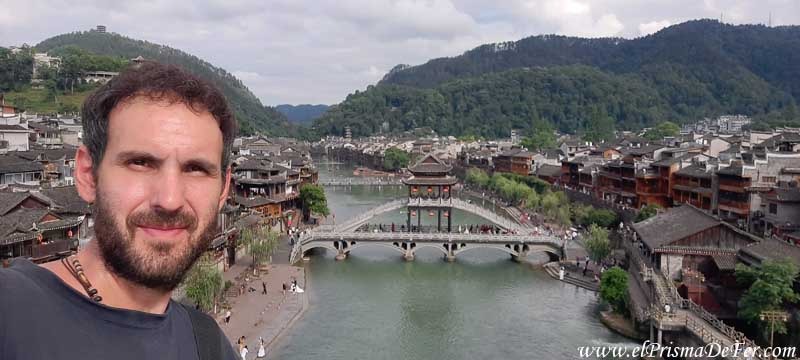
By the second night, especially at sunset, I was able to enjoy it a bit more. I changed my perspective, found new angles, sat down for a beer, and simply walked through less central streets. That's when I began to connect more with the place.
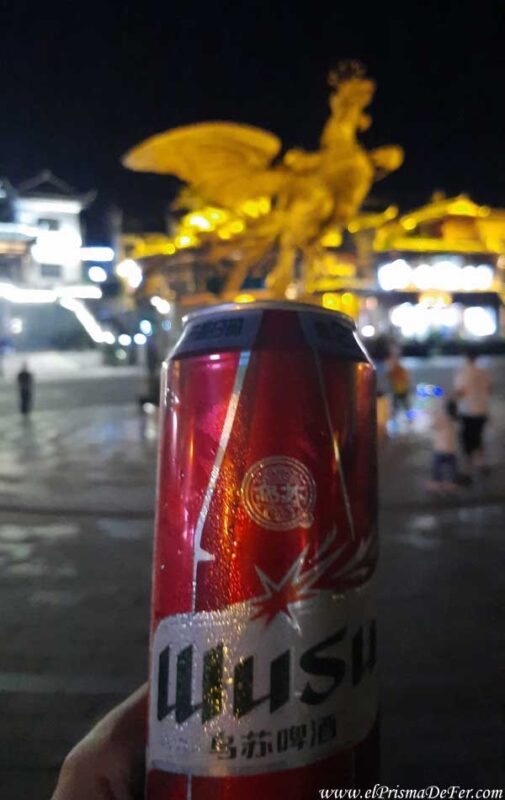
Fenghuang is undoubtedly very beautiful and has its own charm. When you manage to escape the noise and the crowds, I feel like you can travel back in time.
As an anecdotal fact, I was struck by the small number of foreign tourists; you could practically count them on the fingers of one hand.
What to see in Fenghuang
Fenghuang isn't very big, and although it has some interesting spots you can visit, much of its charm lies in wandering aimlessly and letting yourself be surprised by the details.
Walk along the Tuojiang River
The Tuojiang River is the city's central axis, and everything revolves around it. Walking along its banks is the main activity, as it offers the best views of the traditional wooden houses built on stilts.
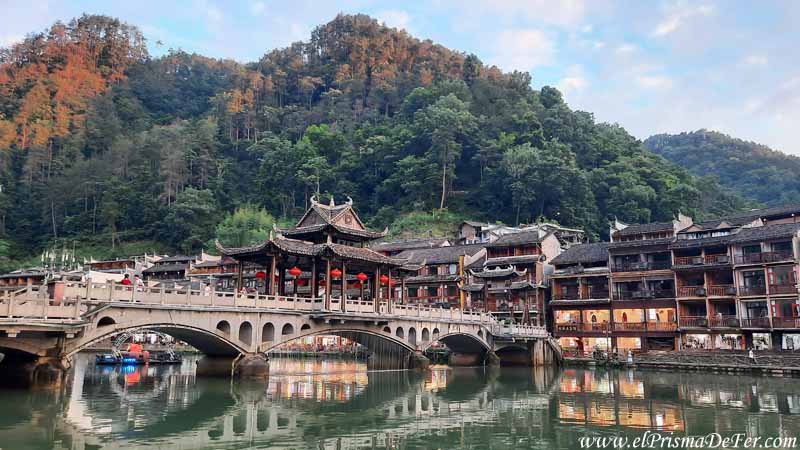
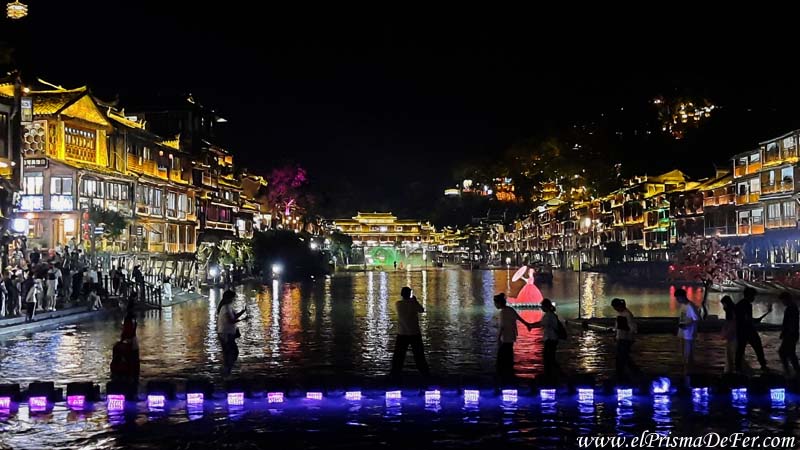
During the day, the atmosphere is much calmer and allows you to better enjoy the surroundings, while at night the lights reflect on the water and create a very characteristic image of the place.
Traditional bridges
Fenghuang has several bridges that connect both sides of the Tuojiang River and are a central part of its visual identity.
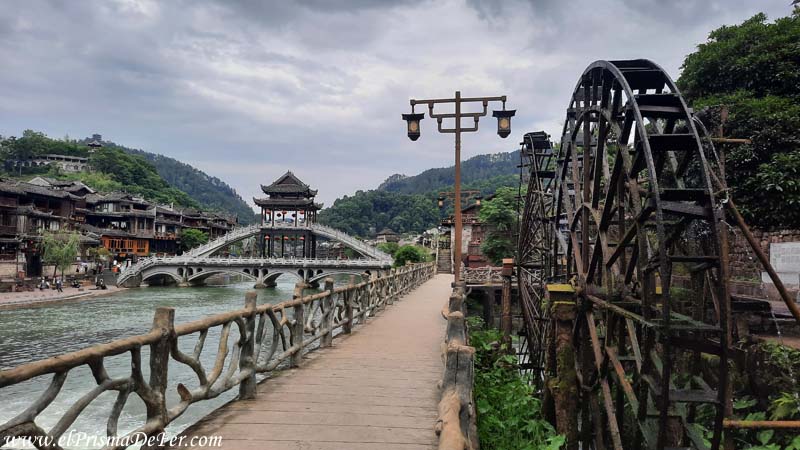
The most famous is the Hong Bridge (see location), a multi-level covered bridge from which you can get very good views of the river and the city.
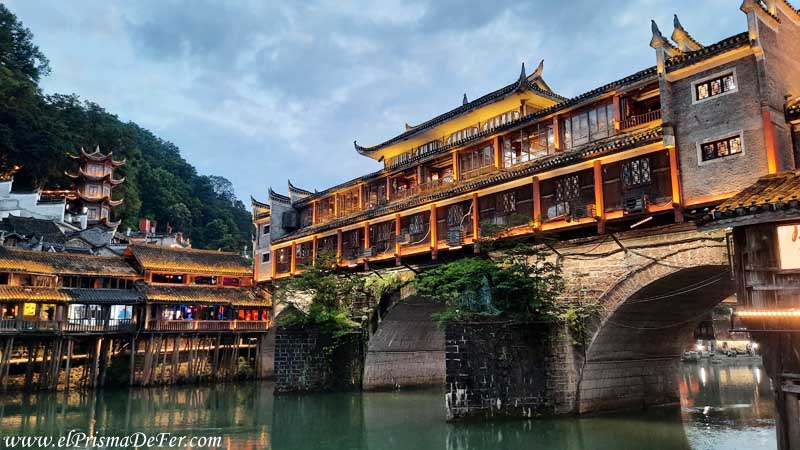
Another of the most striking is the so-called "Rainbow Bridge", known as Fenghuang Rainbow Bridge, which stands out for its shape and traditional aesthetic.
In addition, there are small stone bridges along the river that you cross by hopping from slab to slab. It's very picturesque, but it tends to get crowded, as many people stop there to take photos.
Alleyways of the old town
Wandering through the streets of the historic center is one of its greatest attractions. The alleyways are filled with wooden houses, shops, red lanterns, and charming little corners that invite you to linger.
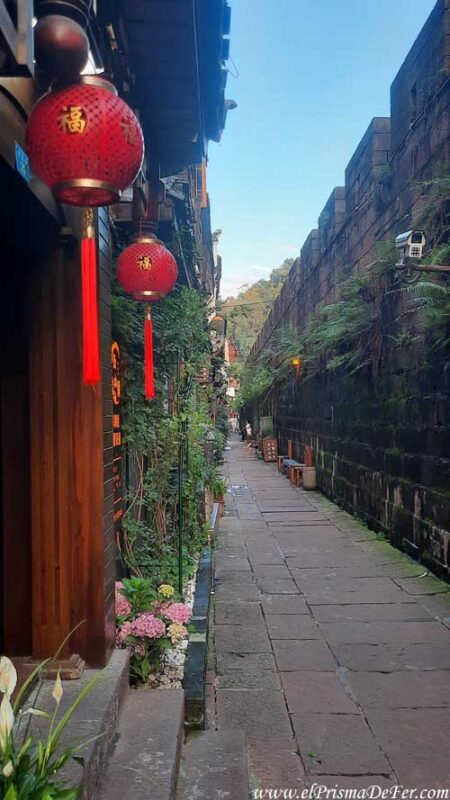
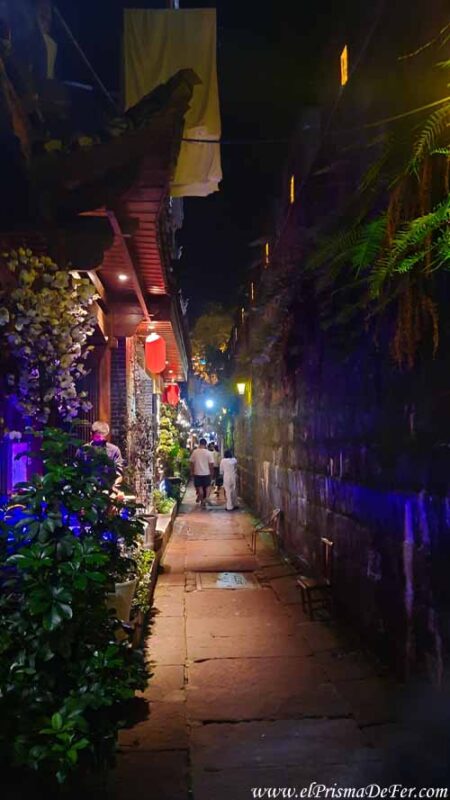
In the morning it is quieter and more pleasant, while in the afternoon and evening it becomes more touristy and lively.
Ancient walls and gates
Fenghuang preserves several sections of its ancient city walls, which once surrounded and protected the city. While not as imposing as those in other Chinese destinations, such as Xi'an, they hold historical value and offer excellent views of the surrounding streets.
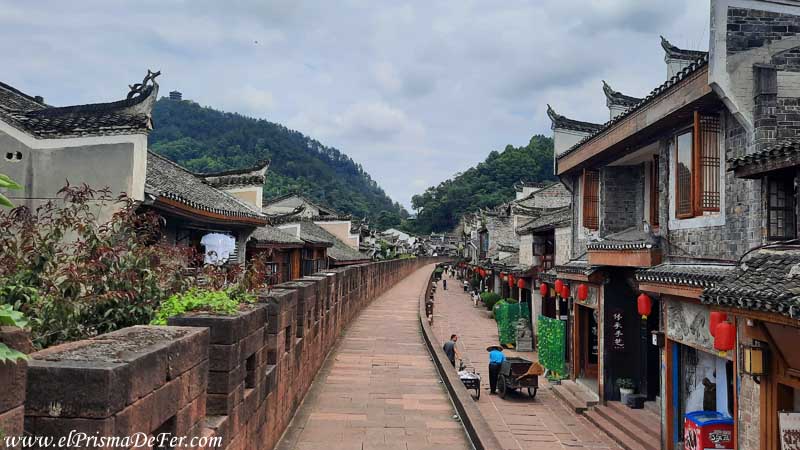
In some sections, it's possible to walk along these walls, offering a unique perspective of the city and the Tuojiang River. From there, you can see both the rooftops of the old town and the surrounding natural environment.
Some access gates that were part of the defensive system are also preserved, adding to that feeling of a historic walled city.
Historic Residences and Temples
Within the old town there are several ancient buildings that can be visited by paying an entrance fee, such as old residences, temples and historical buildings.
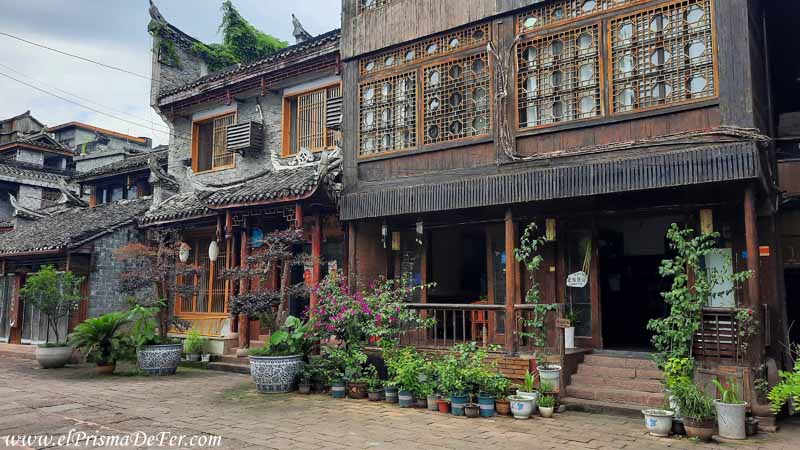
These visits allow you to delve a little deeper into local history and traditional life in the area, although they are not essential if you prefer a more independent tour.
Sunset and night
One of the most interesting times to visit Fenghuang is at sunset. The lanterns begin to light up and the atmosphere gradually changes. It's a good time to take a leisurely stroll and watch the city transform.
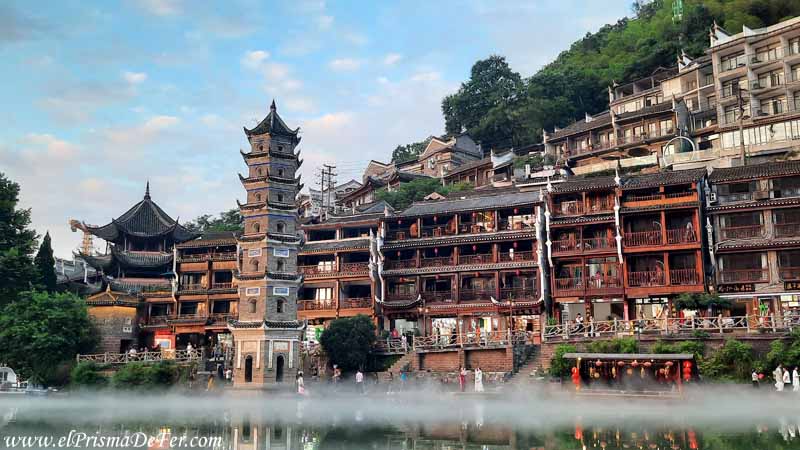
At night, the city lights up completely, and dozens of bars, nightclubs, and karaoke venues spring up along the banks of the Tuojiang River. The music is usually very loud, accompanied by flashy lights that contrast sharply with the historic surroundings.
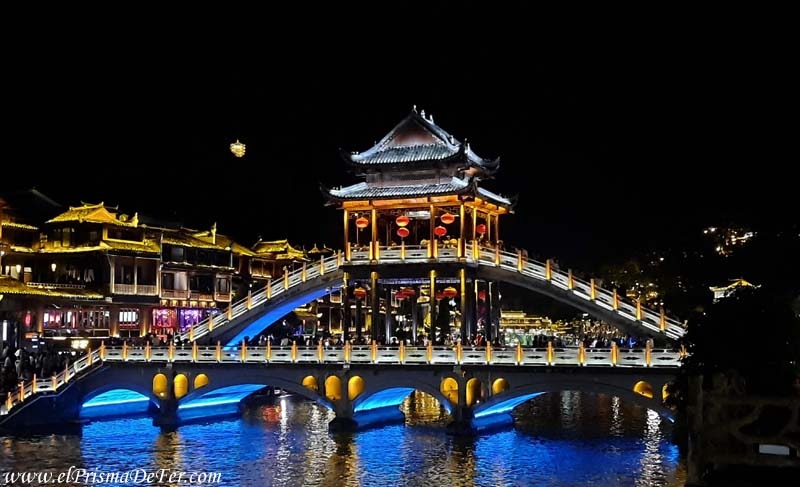
But what strikes me is that, despite all the hype, many of these places look almost empty inside, with very few people. From the outside they seem very busy, but when you look inside, you actually see very few tables with people, and many are even using their phones.
Traditional dress for photos
One thing you'll see constantly in Fenghuang is people dressed in traditional costumes from local ethnic groups, especially the Miao. Many shops rent these outfits for a few hours, usually including makeup and hairstyling.
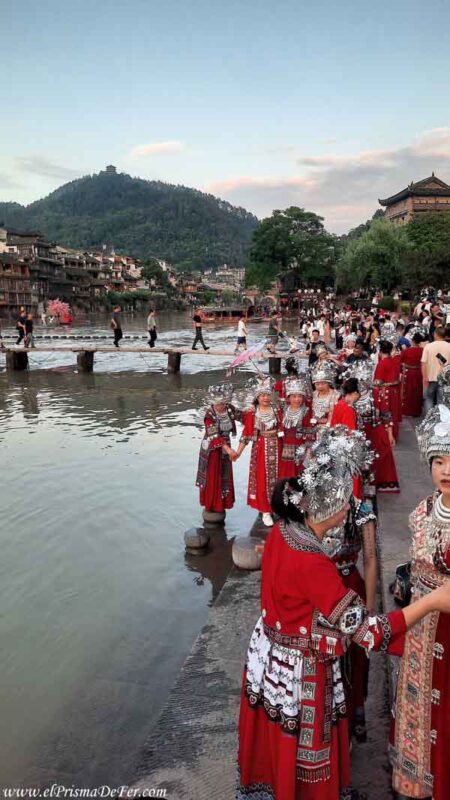
It's an extremely popular activity among Chinese tourists, who use these costumes to take photos all over the city. It looks more like a photo shoot than a historical or tourist attraction.
This left me with some ambiguity. On the one hand, I couldn't help but wonder if this isn't just a simplification of cultures like the Miao for the sake of appearances, which could be interpreted as a lack of respect or a trivialization of their identity.
But on the other hand, it can also be seen as keeping those traditions visible, generating local jobs, and bringing cultural elements, even if only superficially, closer to many people who might otherwise have no contact with them.
I'd like to know the opinion of the people who live there and belong to those ethnic groups. What will they think when they see all those young people (and some not so young) dressed up and taking photos to post on social media? Will they find it amusing? If anyone knows the answer, please let me know.
How to get to Fenghuang
Fenghuang is not as direct to reach as some of China's more touristy destinations, but it is fully accessible by combining trains.
In my case, I was coming from Yangshuo. First, I took a train to Guilin, which is the main transportation hub in the area. From there, I continued with another train to Fenghuang (more precisely, to Fenghuang Gucheng Station), an option that makes the journey much simpler nowadays than in the past.
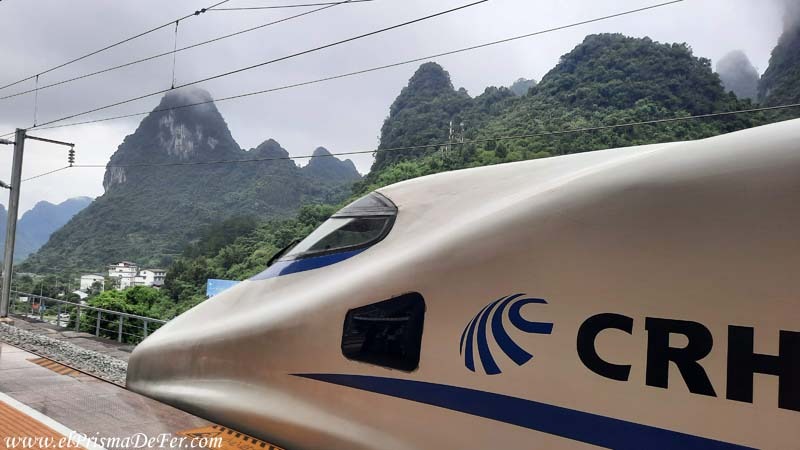
Another common alternative is to travel from Zhangjiajie or Changsha, both of which have good rail connections.
The train doesn't drop you directly in Fenghuang's old town, but at the station called Fenghuang Gucheng, which is located about 10–15 km from the historic center.
From there you have several options to get there:
- Taxi or DiDi: the fastest option (about 15–25 minutes)
- Shuttle bus: there are usually buses that connect the station with the tourist area
- Private transfers: some accommodations offer them
Where to sleep in Fenghuang
Fenghuang isn't a particularly cheap city when it comes to accommodation, especially if you want to be close to the historic center. Also, keep in mind that traditional hostels aren't plentiful in the city center, so the most common options are guesthouses or small hotels.
In my case, I ended up staying at 166 Inn (see on Booking or Trip.com), a guesthouse located fairly close to the center, but far enough away from the bars and karaoke venues. It operates out of the owner's own premises, where he lives and is very friendly. He didn't speak English, but he more than made up for it with friendliness and helpfulness.
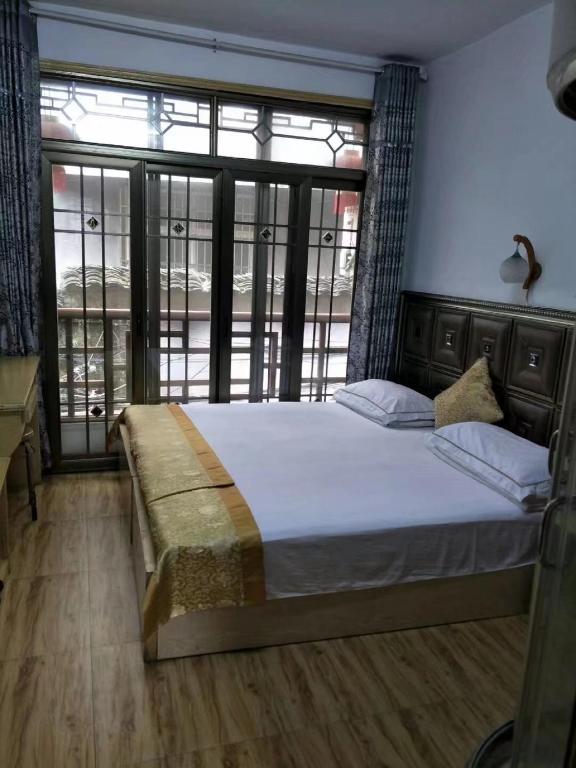
The place has small rooms with squat-style bathrooms, but it met our needs. Even so, it was one of the cheapest options I found near the old town, so it ended up being a good choice considering the price and location.
Food in Fenghuang
As in many cities in China, in Fenghuang you will find a wide variety of street food and local dishes, especially in the more touristy streets of the old town.
One of the classics that seems to be everywhere is the so-called "stinky tofu." It's easy to identify even before you see it, especially because of its strong and rather overpowering smell. I tried it, and it's nothing special. It's not particularly tasty or memorable; it's just pretty average.
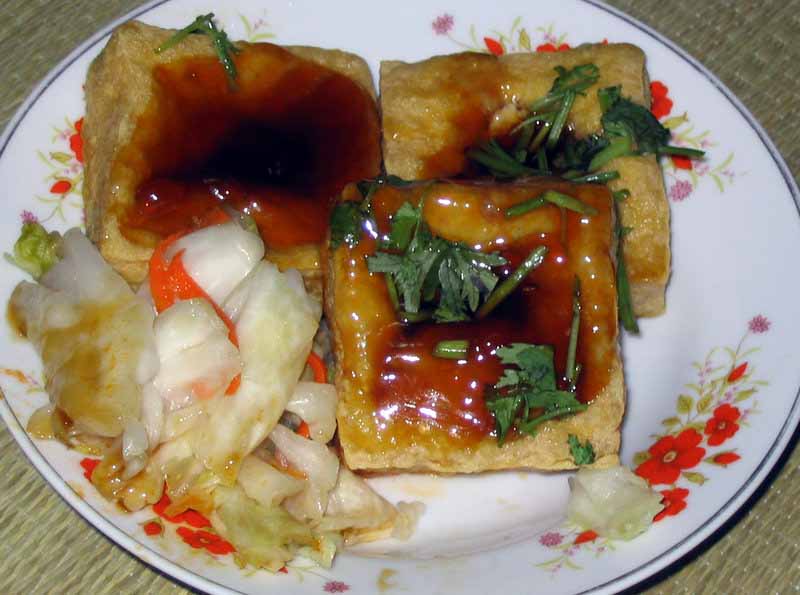
That's why, for me, the "cost-benefit" doesn't quite add up. You have to put up with a pretty unpleasant smell to eat something that doesn't really smell great afterward.
Final thoughts on my visit to Fenghuang
Fenghuang is a destination I ended up liking, though not at first. I stayed for several days, and that made all the difference. By exploring it at different times of day and venturing off the main tourist routes, I began to appreciate it much more and enjoy it in my own way.
When the intensity of tourism decreases, especially in the morning or in quieter areas, that version of the city that is really worthwhile appears: scenic, charming, and with that feeling of being in a place frozen in time.
But you should go with clear expectations. It's a very popular destination with local tourists, and you can feel it, especially at night, when the noise, music, and crowds can be a bit overwhelming.
Frequently Asked Questions about Fenghuang
Is Fenghuang worth visiting?
Yes, especially if you're interested in traditional Chinese architecture. It's a very scenic and photogenic destination, although the experience can vary considerably depending on the time of day.
How many days are needed?
Two days is enough. You can easily explore the old town in a full day, but spending a night allows you to see the city both during the day and illuminated.
What is the best time to go?
Spring and autumn are usually the best seasons. Summer can be quite hot and there are more tourists, while winter is colder but also quieter.
What time is best to visit it?
Early mornings are the best time to enjoy it, with fewer people and a more authentic atmosphere. At night, the city is more illuminated, but also more crowded.
Is it very touristy?
Yes, mainly for local Chinese tourists. There are very few foreigners, but it can get quite crowded, especially during peak hours and on weekends.
Is it expensive?
Overall, it's not a cheap destination within China in terms of accommodation, especially near the historic center. Eating out and getting around remain affordable.
Is it possible to walk there?
Yes, Fenghuang's old town is compact and can be explored entirely on foot.
Is it an authentic destination or a manufactured one?
It has a bit of both. The architecture and surroundings are authentic, but mass tourism and the nightlife take away some of that feeling at times.
Is it advisable to combine it with other destinations?
Yes, it is often combined with nearby places like Zhangjiajie or even with wider routes through southern China.
Support The Prism of Fer!
Your support helps me continue creating free content on the blog. Thank you so much!