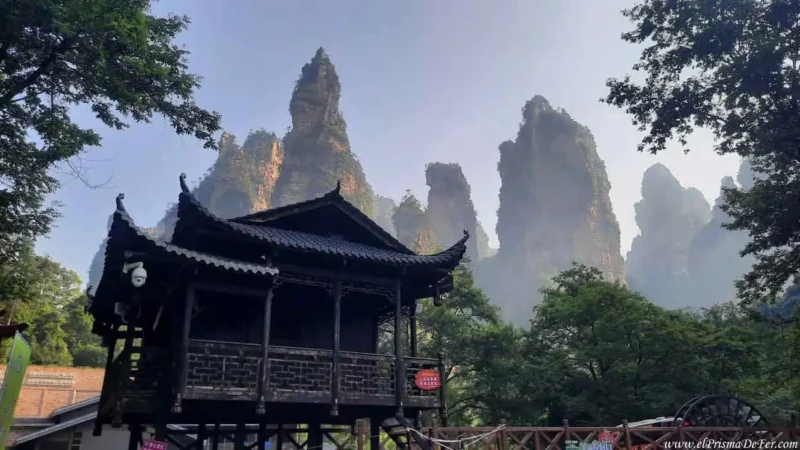
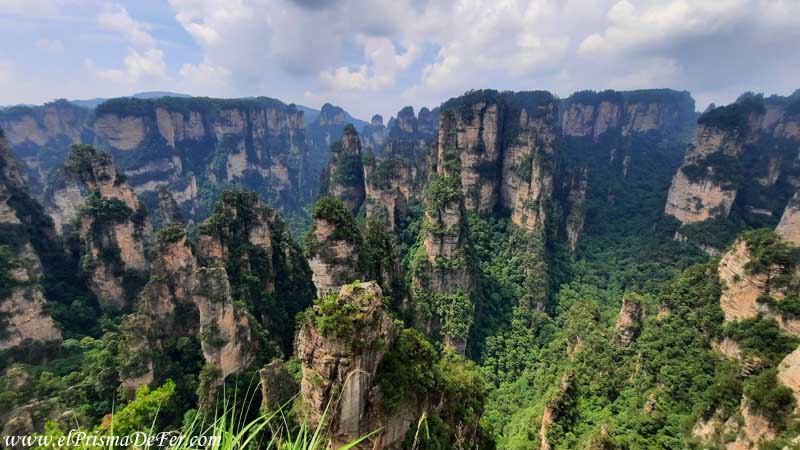
After visiting Zhangjiajie National Park, my trip through China continued to Chongqing, one of the country's most intriguing cities. It's not as "classic" a destination as Shanghai or Beijing, but it turned out to be a real surprise.
Chongqing is strange. A gigantic, somewhat chaotic city, built among mountains, with intersecting levels and buildings bisected by a subway. It's a place that initially disorients me, but little by little it captivated me with its personality, so different from any other city I've seen in China.
In this post, I'll tell you what to see in Chongqing, how to get around this unique city, its most iconic landmarks, and my experience exploring it. A guide to understanding (or at least trying to understand) one of the strangest and most fascinating places in China.
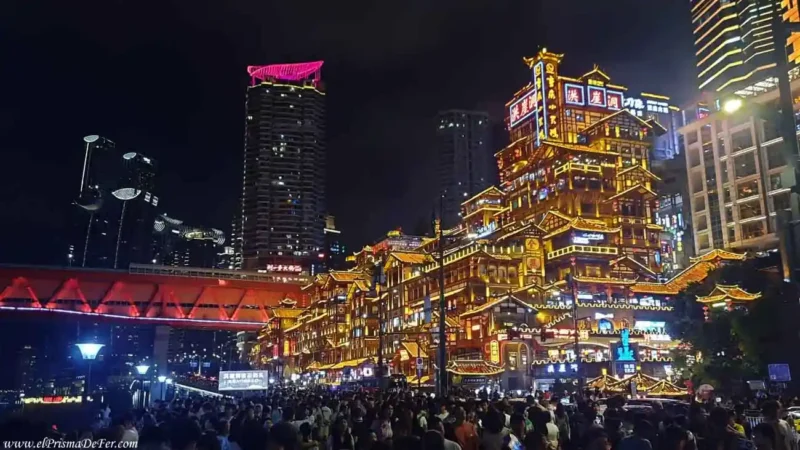

Table of Contents
Where is Chongqing located?
Chongqing is located in southwest China, on the banks of the Yangtze River, one of the country's most important rivers. The city is surrounded by mountains and crisscrossed by rivers, which largely explains its unique geography, with constant changes in elevation, giant bridges, and neighborhoods built at multiple levels.
Furthermore, it is a strategic point within the country, functioning as a gateway to the interior of China and a key stop on routes such as the famous Yangtze River cruise.
Despite not being as internationally known as other Chinese cities, Chongqing is one of the most populated cities in the world and an important economic, cultural and transport center in the region.

How to get to Chongqing
As a major transportation hub in China, Chongqing is fairly easy to reach. The most common option is the high-speed train, which connects the city to many destinations across the country quickly and efficiently.
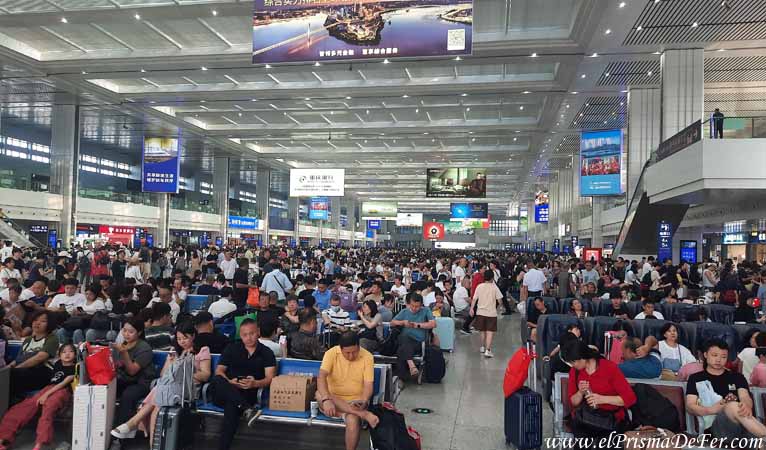
From Zhangjiajie, for example, you have several options. The most recommended option is the train (either direct or with a connection), which takes approximately between 2 and 4 hours depending on the service (see schedules and prices). It's comfortable, punctual, and drops you off directly in the center of Chongqing, where you can connect to the city's subway system.
Long-distance buses are also available, although they are slower and less comfortable, so they are not usually the first choice. Another option is to fly, but in this case, due to the relatively short distance, it is usually not worthwhile considering airport and transfer times.
First impressions of Chongqing
When I arrived in Chongqing, I found a densely populated city with enormous buildings that blend old structures with modern skyscrapers. All of this was built on uneven terrain, with areas on hills with constant slopes on one side, and areas that descend to the riverbank on the other.
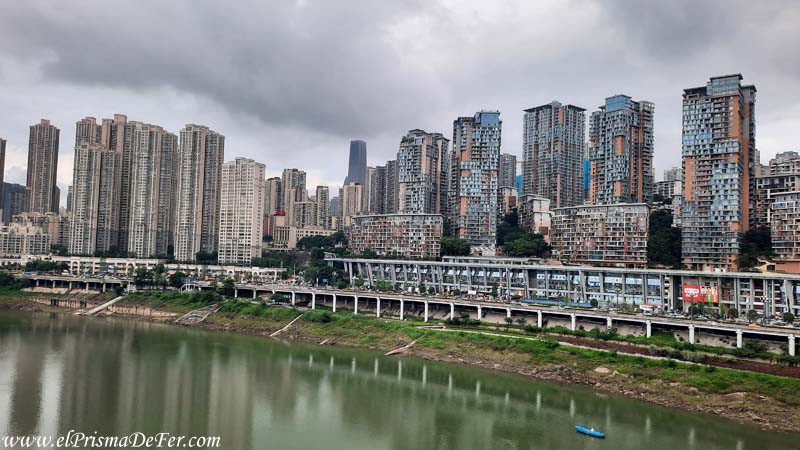
To connect both levels you can use public elevators, endless stairs and passageways that make it hard to feel oriented all the time.
The first day I was completely disoriented. I mean, I knew my hostel was in the upper part of town, and I had to find a way down. But since you're surrounded by buildings and highways, you can't tell if you're already up or down.
I ended up discovering that I was actually walking at the level of the 20th floor or so, and that inside another, taller building, with no clear signage, there was an elevator that connected directly to the lower level. I got there more by following people than by following directions.
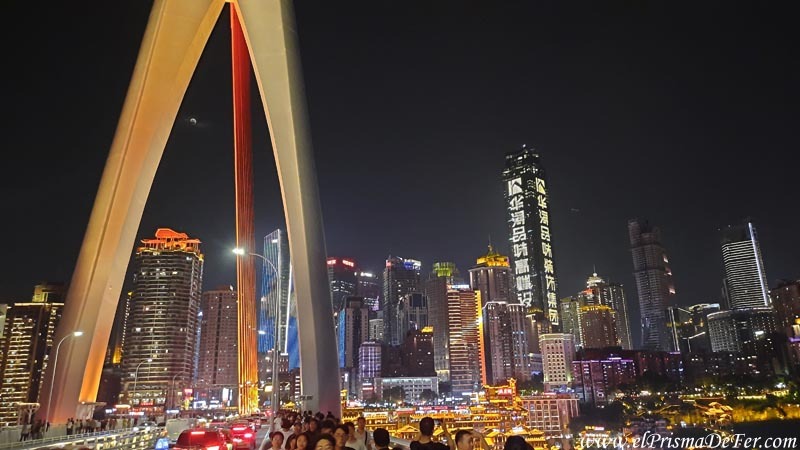
As I went downstairs, I came across a complex of traditional architecture completely illuminated at night, with an aesthetic that reminded me a lot of Miyazaki's worlds.
It is one of the most iconic images of Chongqing, along with the modern bridge that crosses the river, also illuminated, creating a contrast between the traditional and the contemporary.
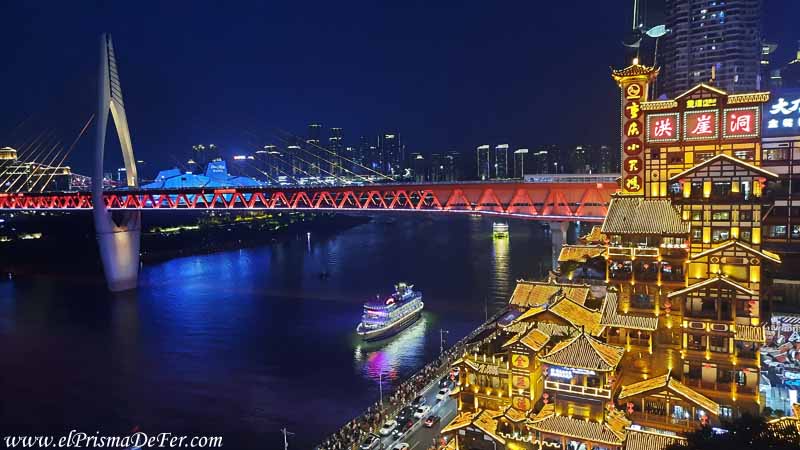
In addition, both banks are usually full of local tourists and people taking photos, because the views from both sides of the river are very striking.
As the days went by, I discovered that it's a city full of interesting corners, with different areas to explore, museums, and viewpoints. It's a bit chaotic and at times disconcerting, but also very attractive. Long live Chongqing!
Map with the main attractions to see in Chongqing
What to see in Chongqing
Chongqing is a city of places that you discover as you explore it. Even so, there are several interesting spots worth keeping on your radar.
Hongyadong Folk
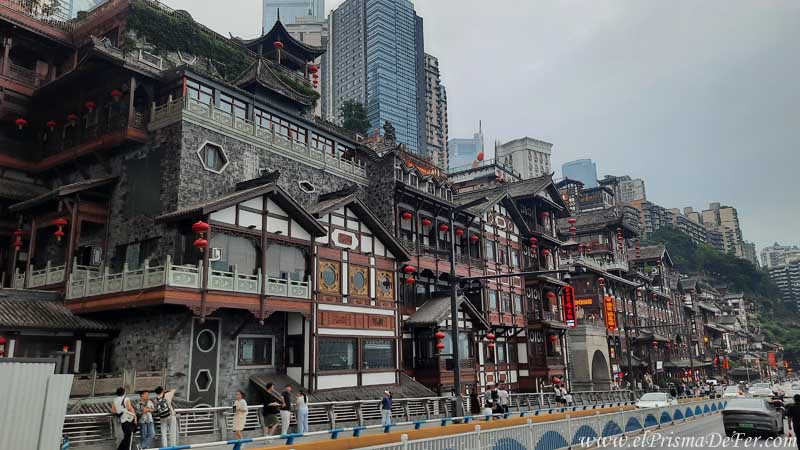
It is, without a doubt, the most iconic place in the city (see location). This complex of traditional architecture, built on multiple levels over the river, becomes completely magical at night, when it is illuminated and looks like something out of a fantasy film.
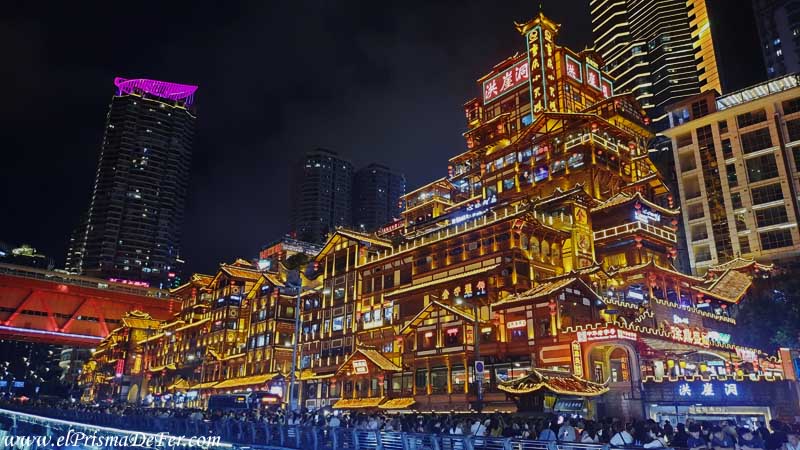
But it's not just for looking at from the outside; inside it's also full of shops, restaurants, tea houses, and food stalls, functioning almost like a vertical shopping mall with an old-fashioned aesthetic.
It's very touristy and usually crowded, but walking through it and seeing it from different angles, especially at night, is an unmissable sight.
Qiansimen Bridge
The modern bridge that appears in all the photos next to Hongyadong Folk (see on the map). At night it is illuminated and creates a spectacular postcard scene combining the traditional with the contemporary.
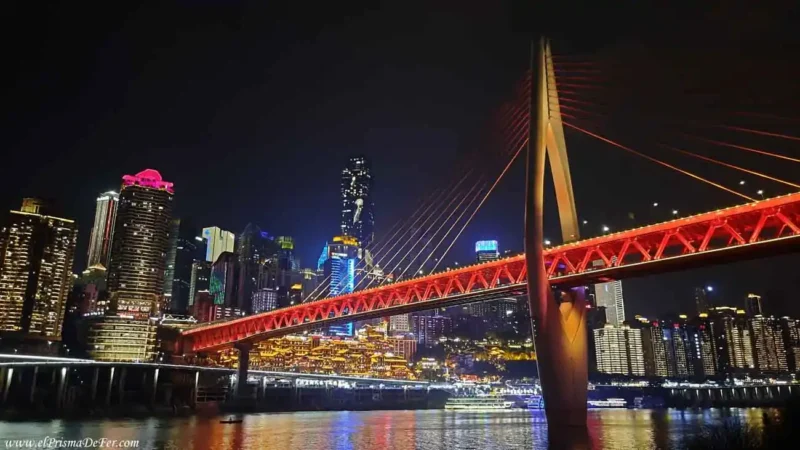
It is also possible to cross it on foot, which is a good walk to get another perspective of the city, although you should bear in mind that it is usually quite crowded.
Liziba Station (where the subway crosses a building)
One of the most curious places in Chongqing is Liziba Station, where the subway literally passes through the middle of a residential building (see location).
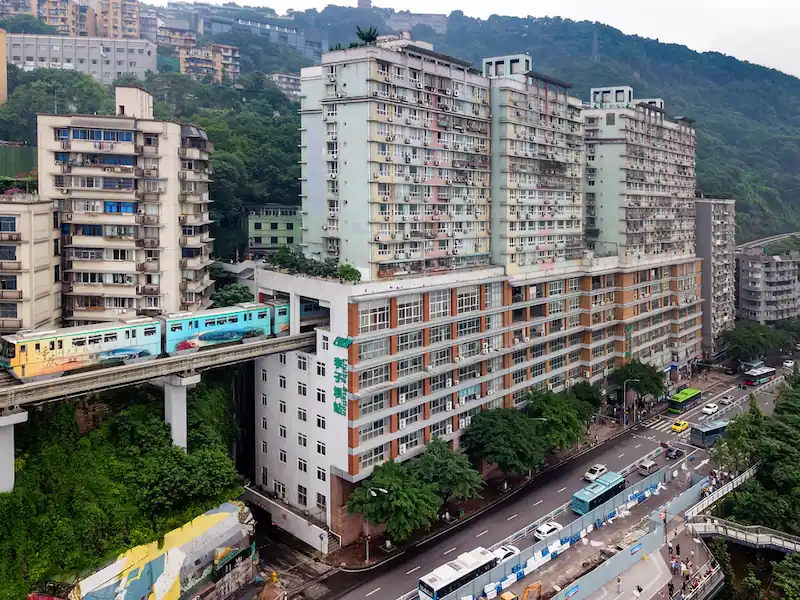
It's located on subway line 2, so it's quite accessible to get to; you simply get off at Liziba station.
Below are several marked points to see (and film) the exact moment the train passes through the building, something that became one of the most viral images in the city.
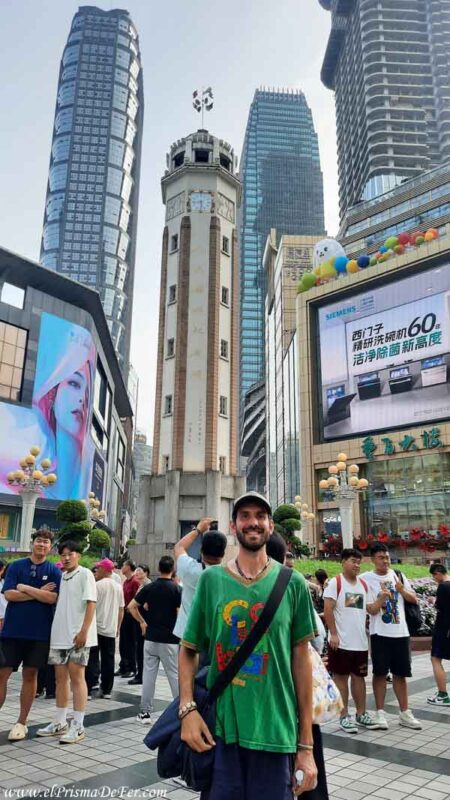
Jiefangbei Square
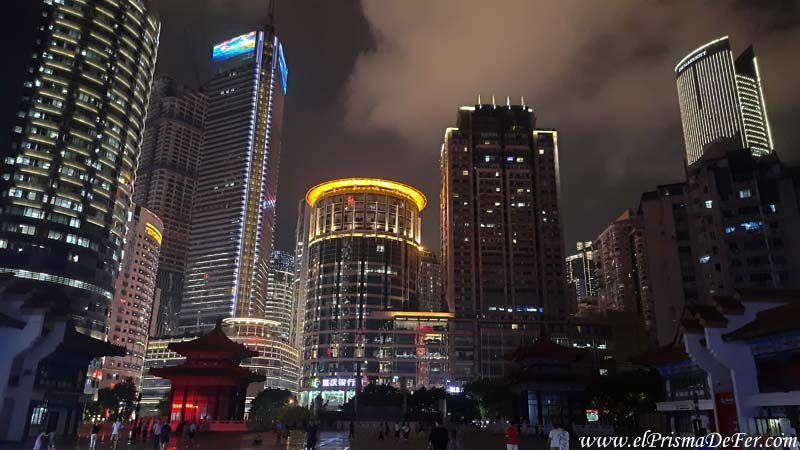
It is the modern heart of Chongqing, surrounded by skyscrapers, shopping malls and lights on all sides.
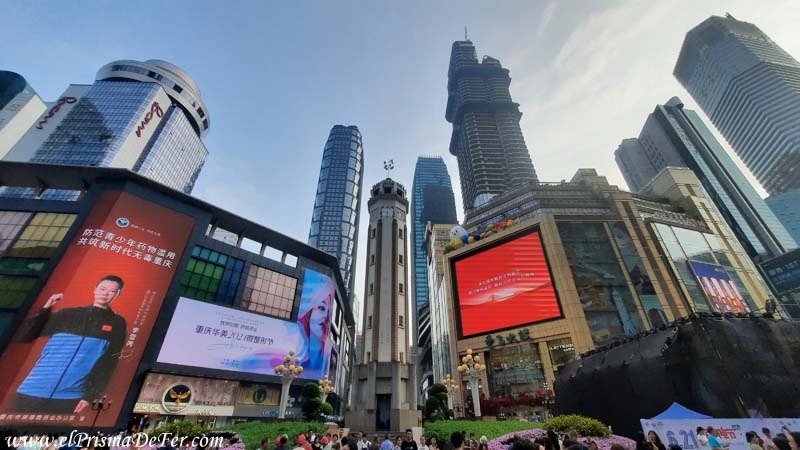
In the center is the People's Liberation Monument, one of the symbols of the city (see on the map).
Traditional neighborhood
Near Jiefangbei you can find a traditional neighborhood, which although originally an area where people lived, today is completely transformed into a kind of open-air shopping center, with old-style buildings that recreate the traditional architecture of the region.
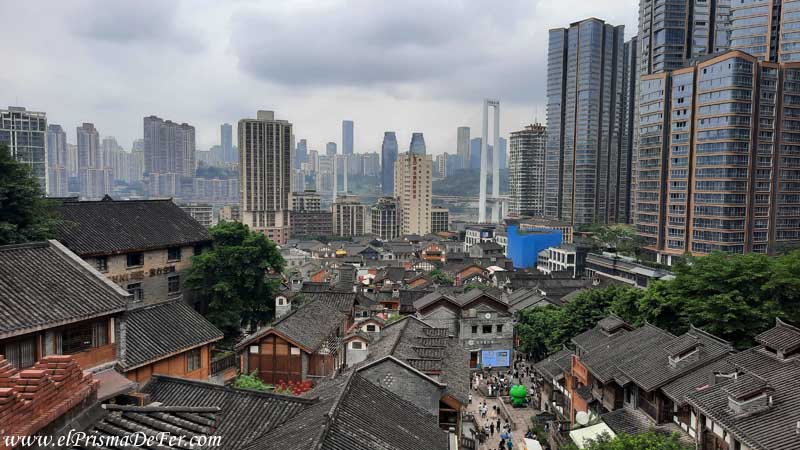
As you explore it, you'll find streets lined with wooden houses, lanterns, souvenir shops, bars, and plenty of places to eat or have a drink. It's very picturesque and visually appealing, especially at night when everything is illuminated.
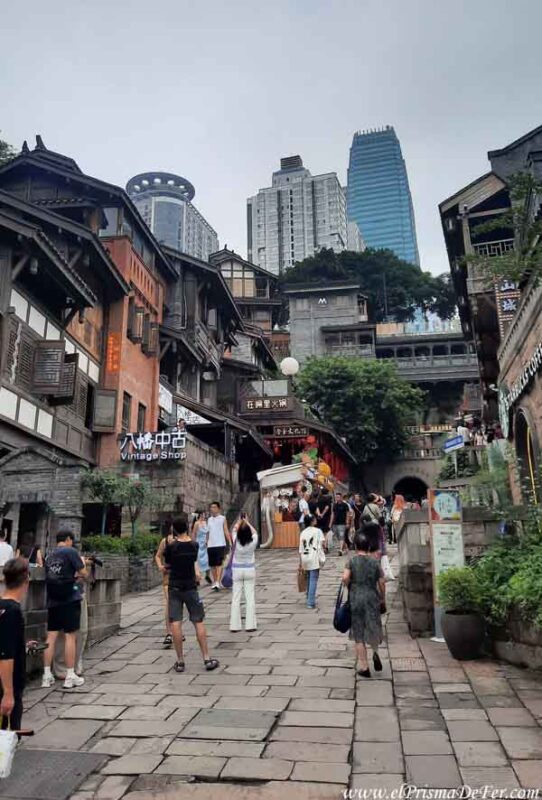
It is quite touristy and can get very crowded, which detracts from its authenticity. Even so, it's worth visiting, even just to stroll around and enjoy the atmosphere and the aesthetics of the place.
Great Hall of the People
One of the most imposing buildings in the city, with architecture reminiscent of the great Chinese imperial palaces, such as the Temple of Heaven in Beijing.
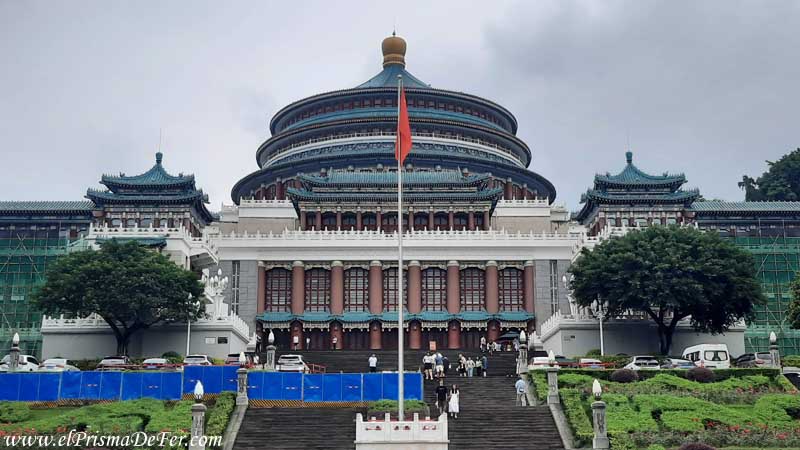
Its enormous dome and symmetry make it a striking landmark, both inside and out. It is located in a large open square (see on the map), which allows you to appreciate it in all its magnitude and is usually a good place to take a walk, away from the chaos of other more central areas.
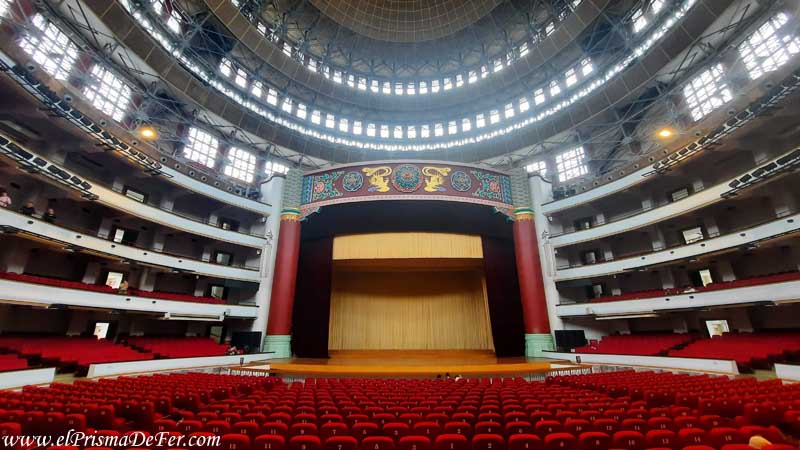
There is an entrance fee, but it's quite inexpensive.
Three Gorges Museum
Directly opposite the Great Hall is this museum, one of the most important in Chongqing. Admission is usually free, and it offers a good introduction to the region's history, including the development of the Yangtze River and the impact of the Three Gorges Project.
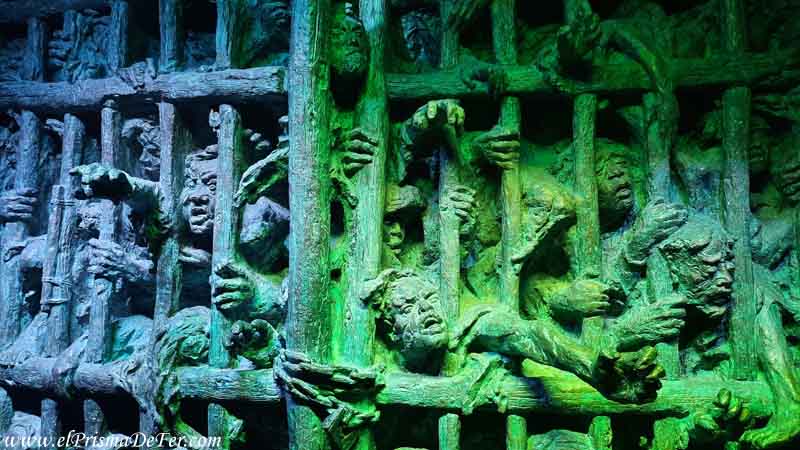
It also has interesting sections on Chongqing's role during World War II, when it served as China's provisional capital.
Raffles City
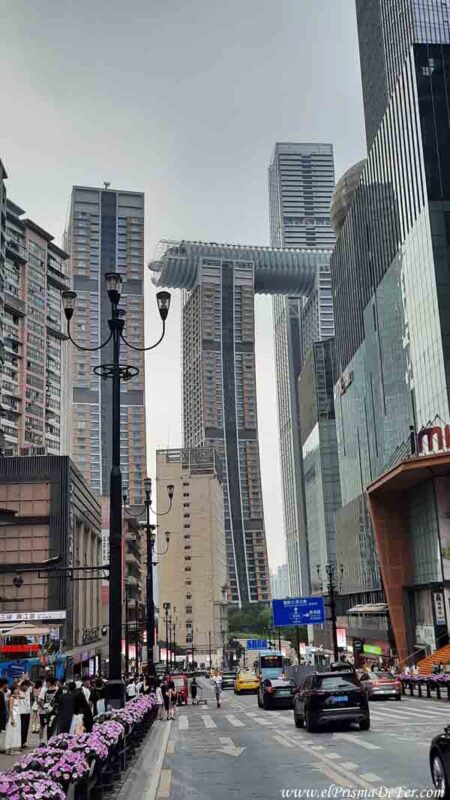
This is one of the city's most modern and impressive developments. Located at the confluence of the Yangtze and Jialing rivers (see on map), this skyscraper complex became an icon of the Chongqing skyline.
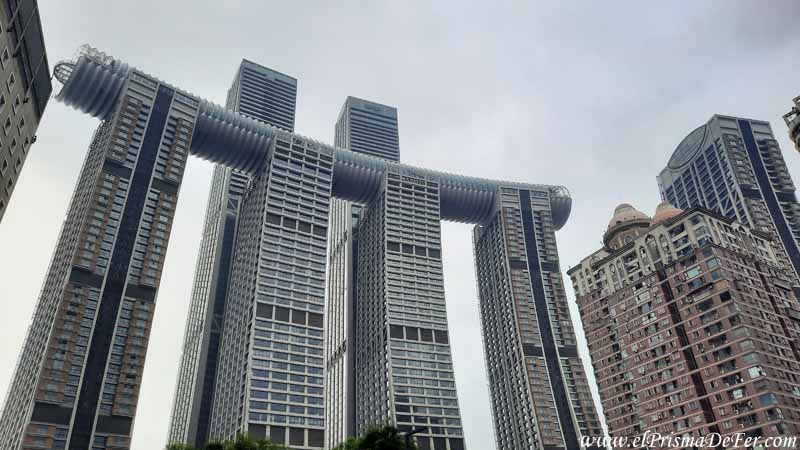
The most striking feature is its elevated horizontal structure, known as "The Crystal", which connects several towers at height, creating a kind of bridge in the sky.
At the bottom you can find a huge shopping center with shops, restaurants and modern spaces, while on the upper levels there are viewpoints and panoramic areas from where you can appreciate the magnitude of the city and the confluence of the rivers.
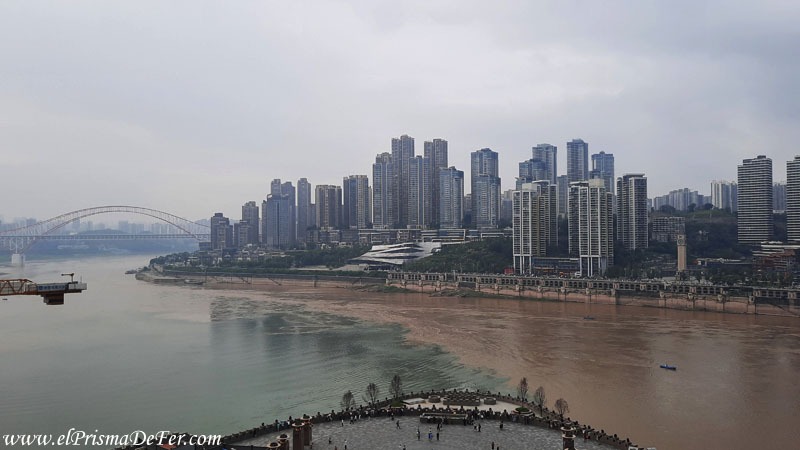
Stroll along the riverbank
Walking along the riverbank is one of the best things to do in Chongqing, on both sides. Especially in the area in front of Hongyadong Folk (see location), where you can stroll through a park with beautiful panoramic views of the illuminated complex and the skyline.
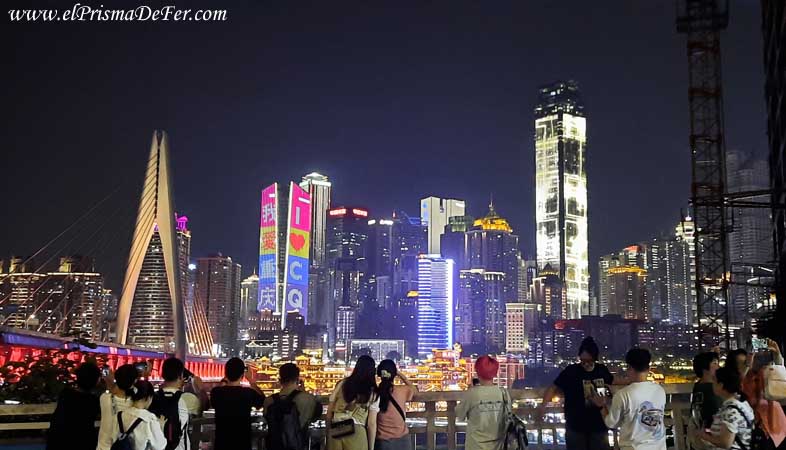
It's a place frequented by locals, all taking photos because the views are truly striking.
Yangtze River Cableway
A cable car that crosses the Yangtze River and offers a different perspective of the city (see location). I didn't take it, but you'll get great views of the skyline and the sheer scale of Chongqing.
Get lost in its streets and levels
Beyond the specific landmarks, part of Chongqing's magic lies in simply exploring it. Going up and down stairs, venturing into passageways, discovering hidden elevators, and trying to understand how the different levels connect.
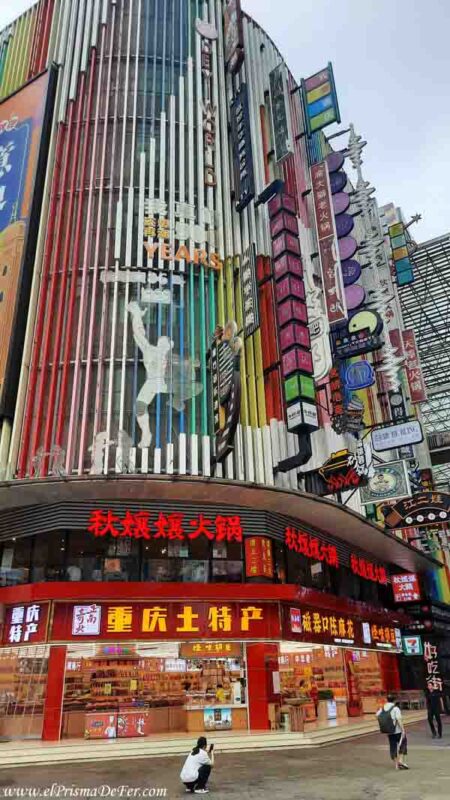
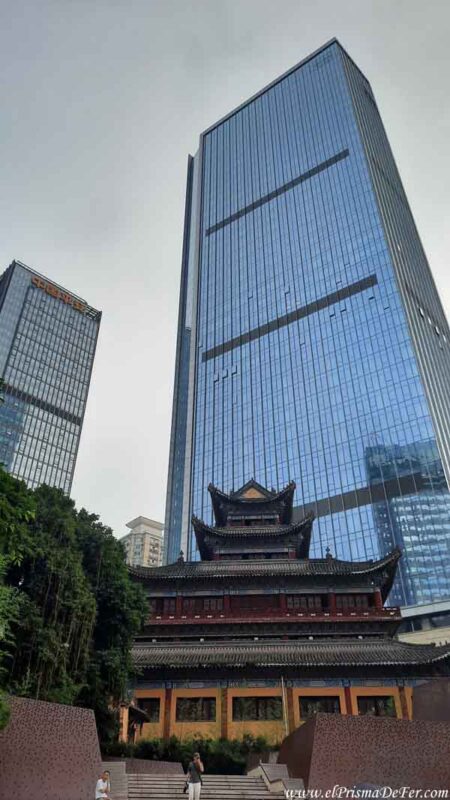
Excursion to the Three Gorges
Another popular activity to do from Chongqing is to take a trip through the famous Yangtze Gorges.
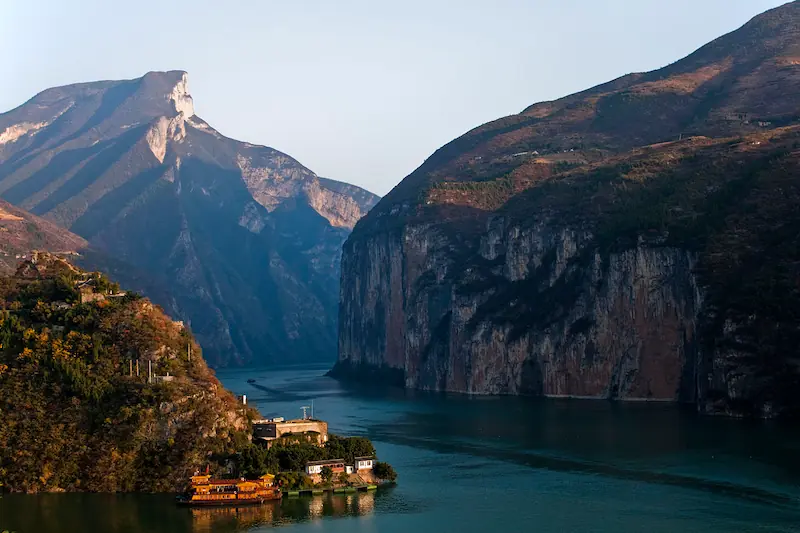
The Three Gorges are one of China's most famous natural landscapes. They are a section of the Yangtze River that flows through a series of canyons surrounded by steep mountains and cliffs that rise on either side of the water.
Along the route you can also see ancient temples, traditional villages and rock formations that were shaped over thousands of years by the passage of the river.
Today, one of the most popular ways to experience them is through cruises that travel along this stretch of the Yangtze River, often departing from Chongqing. These trips can last from one to several days, allowing you to appreciate the scenery at a relaxed pace while sailing through the gorges.
Furthermore, this area is closely linked to the Three Gorges Dam, one of the world's largest hydroelectric projects, which partly transformed the original landscape, but also made tourist navigation more accessible.
Eating hot pot in Chongqing
If there's one culinary experience you absolutely can't miss in Chongqing, it's the famous hot pot. This city is considered one of the hot pot capitals of China, and trying it here is practically a must.
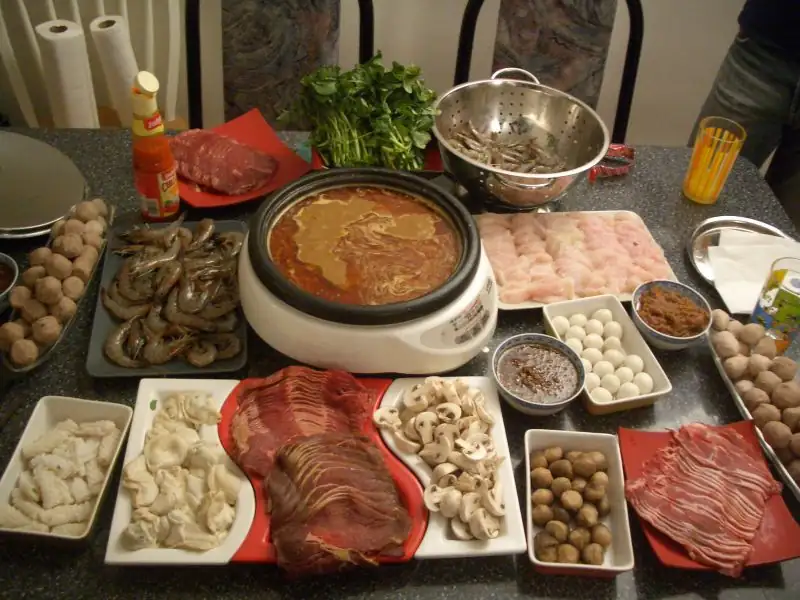
A hot pot consists of a pot of boiling broth in the center of the table, where you cook different ingredients yourself: meats, vegetables, tofu, noodles, among others.
But what makes the Chongqing style special is its extremely spicy and flavorful taste, with a lot of chilies and Sichuan peppercorns, which creates that very particular sensation of spiciness and numbness in the mouth.
Going out for hot pot is a whole social experience. The restaurants are usually packed, with a lively atmosphere, communal tables, and lots of activity. It's noisy, intense, and totally part of the local culture.
However, it's not for everyone. If you're not used to spicy food, it can be quite a challenge. Luckily, many places offer milder versions or even two separate broths (one spicy and one milder), allowing you to adjust it to your liking.
Where to sleep in Chongqing
When choosing where to stay in Chongqing, my recommendation is to stay in the upper and central part of the city, as it will be much easier to find your way around.
The area near Jiefangbei Square is one of the best options; you're close to many of the main points of interest, well connected by transport, and with plenty of food and service options nearby.
In my case, I stayed at the Uuw Rassa Hostel (see Booking and Trip.com) and the experience was very good. It's a clean hostel, well located, and quite affordable for the area. A highly recommended option if you're looking for something practical and comfortable for exploring the city.
Best time to visit Chongqing
The city is known for being hot, humid, and quite foggy, which in some cases can affect the views.
In general, the best times to visit are spring (March to May) and autumn (September to November). During these months, temperatures are more pleasant and there is less humidity than in summer, making exploring the city much more enjoyable.
Summer (June to August) can be quite intense, with high heat and heavy humidity. Added to this is the possibility of rain, which can make getting around more uncomfortable.
In winter (December to February), temperatures drop, but it's not extremely cold. However, fog is quite frequent, which can limit panoramic views, something important in a visually stunning city like Chongqing.
Final thoughts on my visit to Chongqing
Once again, China has surprised me. I've visited several destinations on this trip, and each one has left a good impression on me in some way. It's a country that never ceases to amaze me, both for its uniqueness and its unexpected charm.
Chongqing, in particular, is a strange city… but one that captivates you. At first, it's disconcerting, difficult to understand, but as you explore it, you begin to find its meaning and charm. It has its own unique energy, unlike any other city I've ever visited.
I was left wanting more. I wished I had more days to continue exploring, but without a doubt, it's a destination I recommend, especially if you're looking for a city with an impressive skyline and unique architecture.
Frequently Asked Questions about Chongqing
How many days do I need to visit Chongqing?
Two or three full days are enough to see the main sights of the city and get a feel for its atmosphere. If you want to take day trips to nearby places, such as the Yangtze Gorges, it's a good idea to add another day.
Is it an easy city to get around?
Not really. Chongqing is quite chaotic and very vertical, with many levels, stairs, and uneven terrain. It can be disorienting at first, but you get used to it over time.
Which is the best area to stay in?
The central and upper area, near Jiefangbei Square, is one of the most convenient for getting around and being close to the main attractions.
What is the most famous thing about Chongqing?
Places like Hongya Cave, the subway passing through the building at Liziba Station and its famous hot pot are among the most representative of the city.
Is Chongqing worth visiting?
Yes, especially if you're looking for a different city.
How to get around the city?
The subway works very well and is the best way to travel long distances. You can also use apps like Didi or walk, although you have to be aware of the constant hills.
Is Chongqing expensive?
Generally, no. Compared to other major cities in China, it's usually quite affordable, both in terms of accommodation and food.
What's the weather like?
It's a city known for its humidity, summer heat, and frequent fog. The weather can be quite harsh depending on the time of year.
Is it very touristy?
It has tourism, but it's mostly local. It's not as internationalized as Beijing or Shanghai, which gives it a more authentic feel.
Can it be combined with other nearby destinations?
Yes, it is common to combine it with Zhangjiajie or with an excursion on the Yangtze River.
Support The Prism of Fer!
Your support helps me continue creating free content on the blog. Thank you so much!