Getting around Sri Lanka can be as much a part of the trip as the temples, beaches, or mountains themselves.
The country has a diverse transportation network, chaotic at times, and completely different from what many travelers are used to. Trains wind through tea plantations, buses move at their own pace—fast and sometimes unpredictable—tuk-tuks appear on every corner, and there are more comfortable options like private cars or organized transfers. Each mode of transport has its advantages, its challenges, and its charm.
When planning how to get around, it's important to understand that distances in Sri Lanka don't always translate into short travel times, infrastructure is limited, traffic can be heavy, and journeys often take longer than the map indicates.
In the following sections, I'll tell you about the most common options for getting around the country, with practical tips and what to expect from each one.
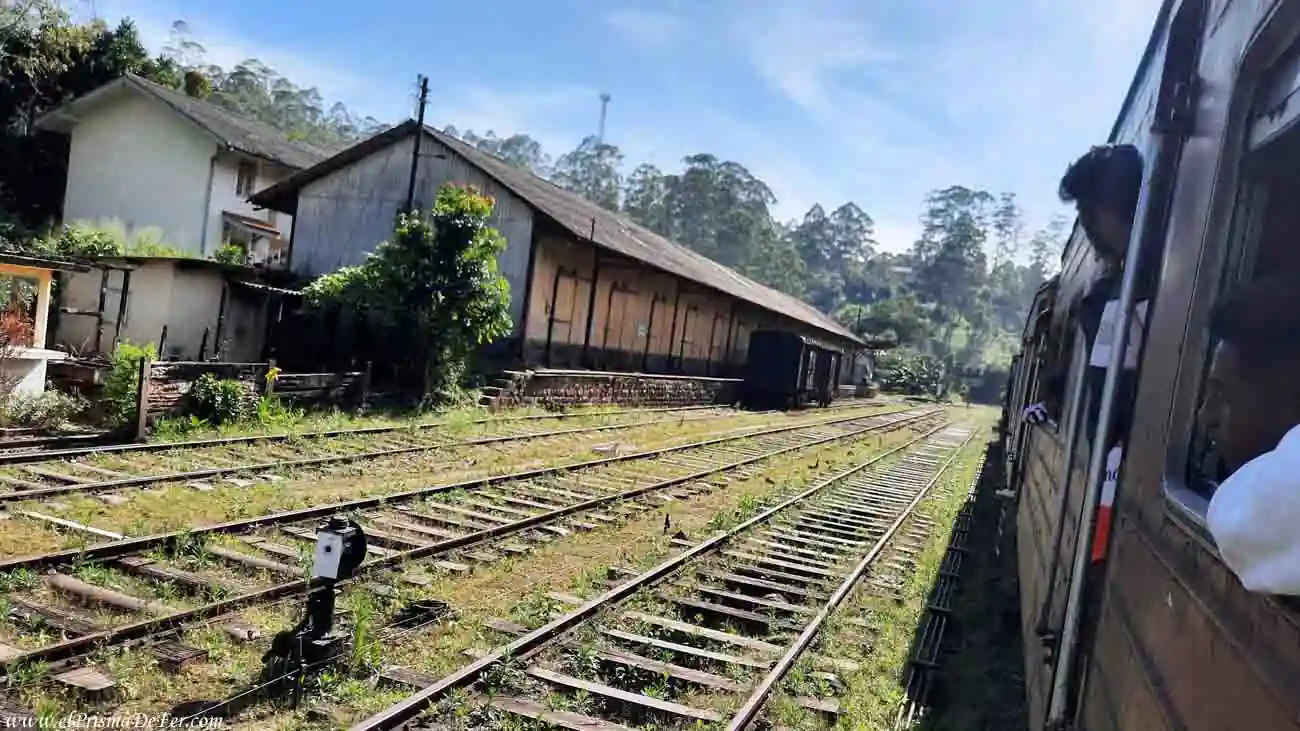

Table of Contents
Traveling by train in Sri Lanka
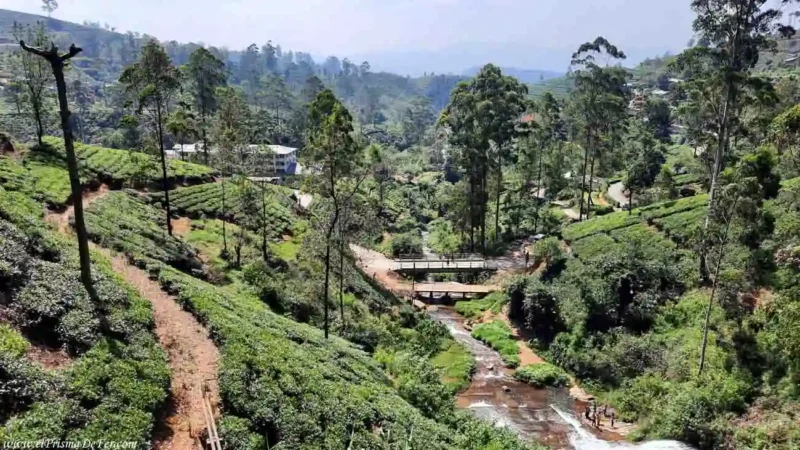
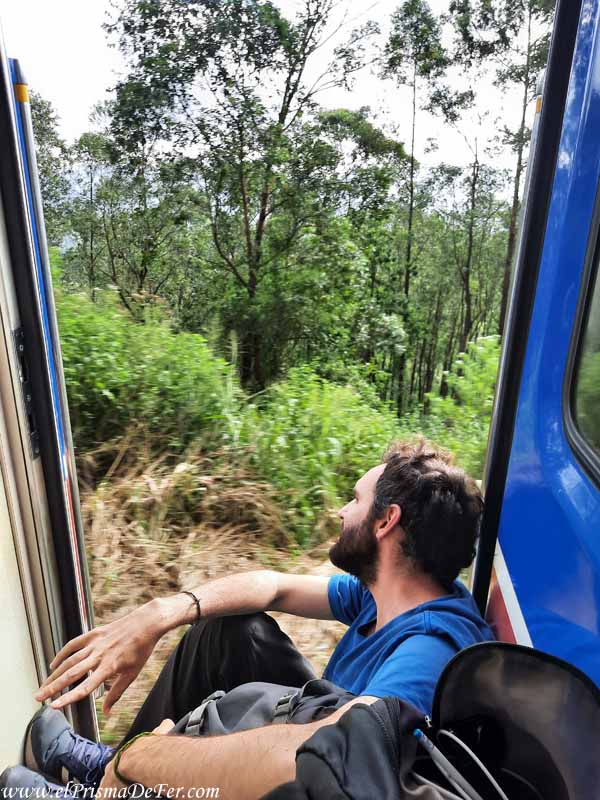
Traveling by train is one of Sri Lanka's most iconic experiences. While the railway system isn't the most modern or fastest, it offers some of the most scenic journeys in Southeast Asia, especially in the country's mountainous regions.
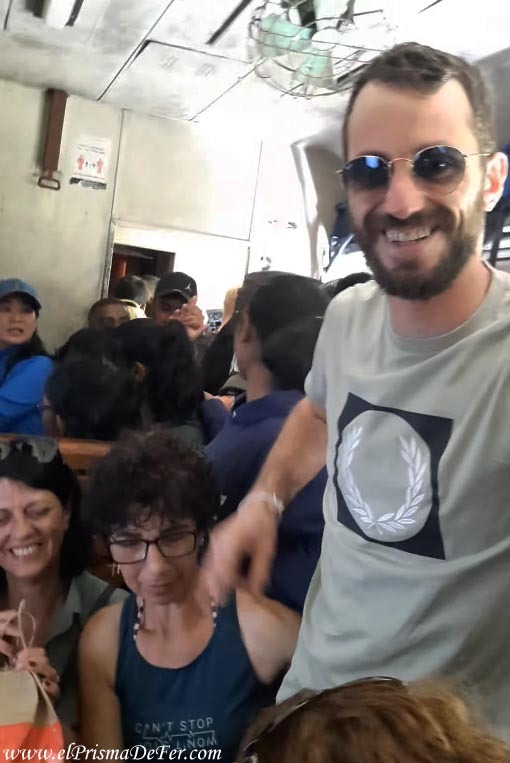
Trains are often slow, somewhat unpredictable and, in many cases, crowded, but they are also inexpensive and allow you to experience part of the daily rhythm of the locals.
What is the service like?
The train service in Sri Lanka is basic but functional. There are several classes:
- Third class: the cheapest and busiest. Seats are not always guaranteed.
- Second class: the most balanced option: cheap, relatively comfortable and with the possibility of reserving a seat on some sections.
- First Class / Observation Saloon: Available only on some tours. Offers greater comfort, air conditioning, and large windows to enjoy the scenery.
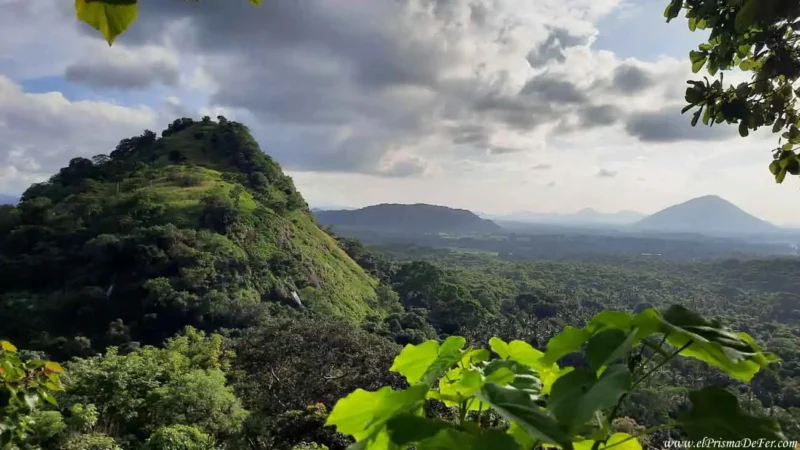
Punctuality is not the strong suit of the rail system, but the journey experience itself makes up for any delays.
Main sections
These are the most popular routes among travelers:
- Kandy – Ella (or vice versa): the famous train through the tea plantations, considered one of the most beautiful journeys in the world.
- Colombo – Kandy: very practical if you are arriving from the capital and want to connect with the central area.
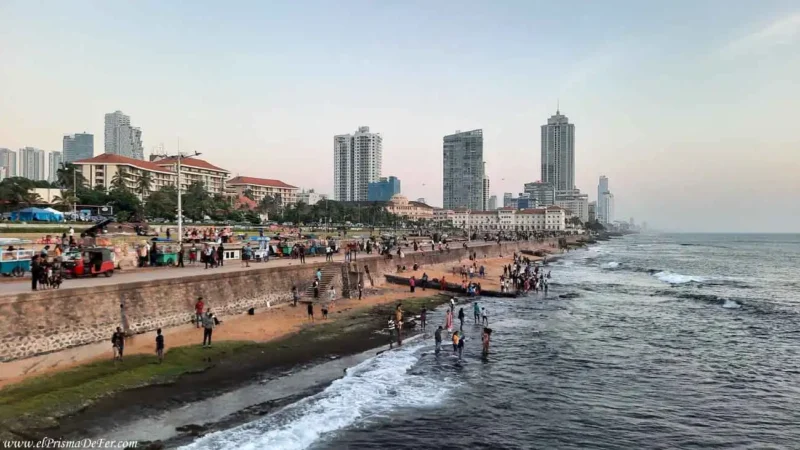
- Colombo – Galle – Matara: the southern coastline, with constant ocean views.
- Anuradhapura – Jaffna: ideal for connecting with the north of the country.
- Colombo – Jaffna: fast for those traveling directly from the capital to the north.
All these sections work in both directions as well as for intermediate sections.
How to buy tickets?
There are three main forms:
- At the station: is the most common. For classes without reservations, you simply buy a ticket and board.
- Advance booking recommended For popular routes (such as Kandy–Ella), it's advisable to book a seat in advance. This can be done at main stations or through authorized local agencies.
- Through online agencies: Some companies allow you to manage bookings online, although they usually charge a small extra fee for the service.
In practice, if you want second or first class with a guaranteed seat on the tea plantation leg, it's best to book as soon as you arrive in the country or use an intermediary.


Travelling by bus in Sri Lanka
Traveling by bus is undoubtedly the most common and economical way to get around Sri Lanka. The network is enormous, reaching virtually every corner of the country, and operates from early morning until late at night.
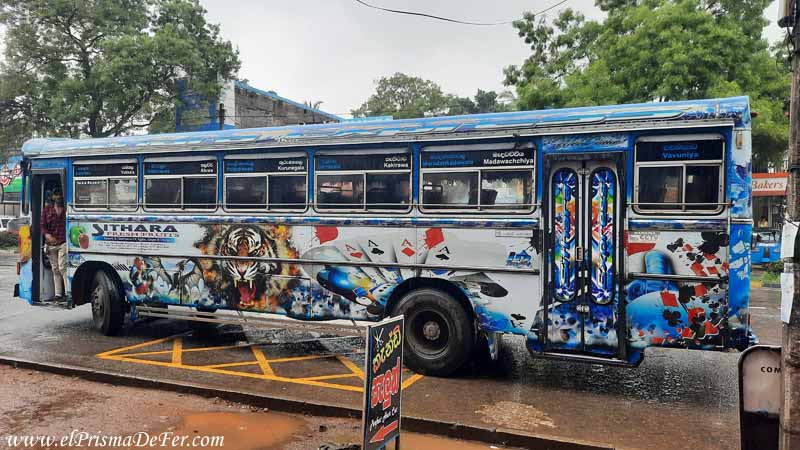
But you need to prepare yourself physically and with patience. The buses are usually packed, the driving pace is intense, and the stops can be chaotic for those who aren't used to it. Even so, it's an authentic experience and a great way to travel cheaply.
What is the service like?
The service varies depending on the type of bus:
- Public buses (CTB): the red ones. They are the cheapest and make many stops. They are usually packed during rush hour, but they are reliable and cover almost the entire country.
- Private buses: usually white or colored. They tend to be a bit faster and a bit more expensive, but they also fill up quickly.
- Semi-luxury or “express” buses: with fewer stops and somewhat more comfortable. They are not truly luxurious, but they offer a more relaxed journey.
Don't expect great comfort; buses often don't have air conditioning, and in private buses, the music can be loud. Even so, they serve their purpose and are part of the daily life of locals.

What routes do travelers usually take?
Among the most popular routes used by tourists:
- Colombo – Kandy: the most frequent connection between the capital and the center of the country.
- Kandy – Dambulla – Sigiriya: ideal for those visiting the Cultural Triangle.
- Dambulla – Anuradhapura / Polonnaruwa: practical connections to continue the archaeological tour.
- Colombo – Galle – Matara: one of the busiest lines in the south, useful for getting to the beaches.
- Ella – Tissamaharama (Yala) – Mirissa: popular among those who go on safari or continue to the southern beaches.
In general, there is always some possible combination, although sometimes it involves changing buses in an intermediate city.
How to buy tickets?
One of the advantages of the bus is its simplicity:
- They are not reserved. You simply go to the stop or station, get on and pay the conductor.
- The price is very economical, even for long journeys.
- The frequency is high, especially on main routes, so you'll rarely have to wait too long.
The hardest part is usually figuring out which bus is yours, as many don't have clear signs in English. If you're unsure, asking the locals always works; people are very friendly and can usually point you to the right bus without any problem.
Where are the main bus stations?
I'm sharing the location of the main bus terminals in Sri Lanka's major cities, so you know where to get on and off at each one:
- Location of the Colombo terminal
- Location of the Anuradhapura terminal
- Location of the Dambulla terminal
- Location of the Kandy terminal
- Location of the bus stop in Ella
- Location of the bus stop in Mirissa
Sri Lanka Railways + buses combined
Many routes move faster by combining different modes of transport. For example:
- Train from Colombo to Kandy + bus to Sigiriya.
- Train from Kandy to Ella + bus south.
- Bus to Colombo + train to the coast.
Renting a tuk-tuk in Sri Lanka: one of the most popular ways to travel around the country
Renting a tuk-tuk has become a very common practice among travelers in Sri Lanka, especially among those looking to move around freely and experience the country in a more authentic way.
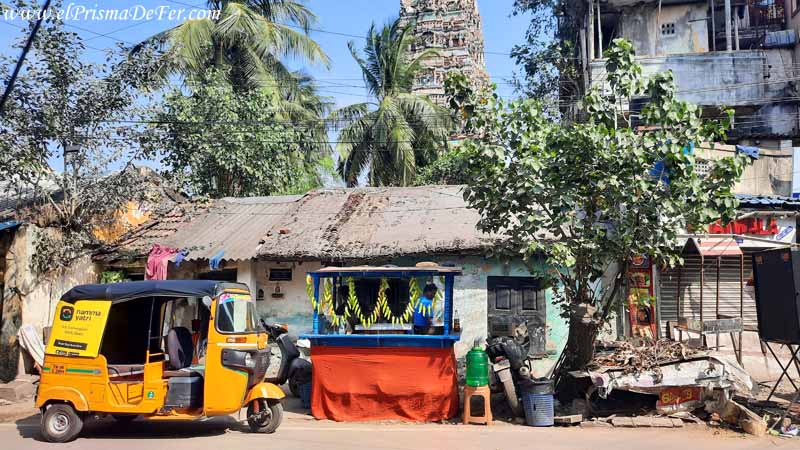
It's an economical, fun option, perfect for short or medium distances, as it allows you to stop wherever you want, avoid some public transport combinations, and reach places that are sometimes off the beaten tourist track.
To drive legally, you need to obtain a local driver's license (which is easy to get in Colombo) and rent the vehicle from a registered company. Most provide the tuk-tuk with basic insurance, roadside assistance, and a brief instruction manual.
Driving can be challenging at first, especially due to the chaotic traffic and local driving style, but most travelers adapt quickly.
How much does it cost to rent a tuk-tuk in Sri Lanka?
As for the price, renting a tuk-tuk in Sri Lanka usually costs between $12 and $20 USD per day, depending on the company, the condition of the vehicle, and the rental period.
Many travelers opt for weekly or monthly rates, which significantly reduce the final cost. Add to that the fuel, which is economical and efficient, and daily expenses tend to remain low even when traveling long distances.
Private transfers and taxis
Private transfers are the most convenient way to get around Sri Lanka, especially if you're traveling as a couple, with friends, or with limited time.
Many local agencies and accommodations offer this service, which consists of a car with a driver that takes you directly from one point to another without the need to make connections, negotiate prices, or deal with unreliable schedules.
It is an ideal alternative for long journeys such as Colombo–Ella, Kandy–Sigiriya or Galle–Mirissa, where public transport can become slow or cumbersome.
The drivers usually know the routes very well and can make intermediate stops if you ask them to (viewpoints, temples, shops, etc.), which makes the trip much more flexible.
As for prices, they vary depending on the distance and the vehicle, but they are usually reasonable for what they offer.
For example, a long transfer between two major cities can cost between $50 and $100 USD, while shorter journeys cost considerably less. It's always advisable to get several quotes or check with your accommodation, which often gets better prices than tourist agencies.
Private transfers aren't the cheapest option, but they are the simplest and most efficient. If you have a tight schedule, prefer to avoid the chaos of public transport, or are traveling with heavy luggage, they can be an excellent investment to make the most of your time in the country.
Domestic flights
Domestic flights are available from smaller airlines, but they tend to be expensive and don't save much time except for very specific distances. Most travelers don't use them.
How to get around within Sri Lankan cities
Tuk Tuk
Tuk-tuks are the most typical means of transport in Sri Lanka and a quick and convenient option for getting around within cities and surrounding areas.
They're everywhere: on street corners, in front of stations, and in tourist areas. They operate like taxis, but without a meter, so the price is always negotiated before getting in.
In general, short trips are very cheap, but in tourist areas drivers tend to inflate the price a bit. For reference, a short trip in the city usually costs between 200 and 600 rupees, depending on the distance and traffic.
Tuk-tuks are ideal for quick trips, when you're in a hurry, or simply want to get around without waiting for a bus. The experience is noisy, a bit chaotic, and totally part of the country's charm.
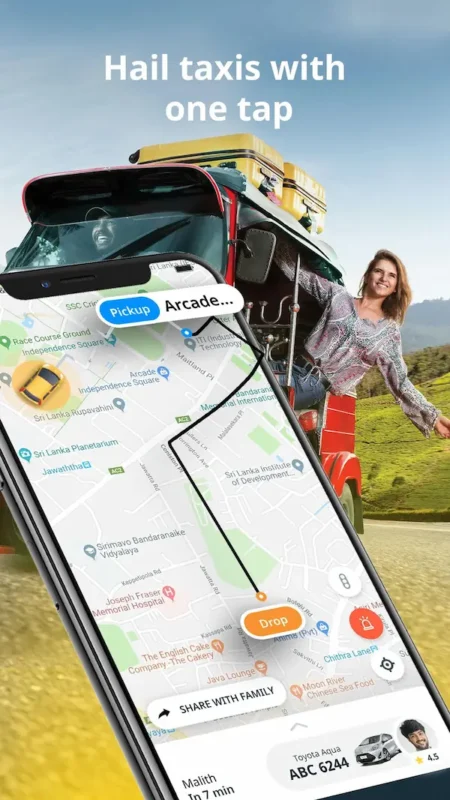
However, if you don't want to haggle, or prefer to know the price beforehand, there's a much more practical alternative: PickMe.
How does PickMe work?
PickMe is the most used transportation application in Sri Lanka (similar to Uber or Bolt), especially in large cities like Colombo, Kandy or Galle. It's very convenient because:
- Calculate the fixed price before the trip, avoiding negotiations.
- It allows you to ordertuk-tuks, cars, and even motorcycles in some areas.
- Payment is made in cash at the end of the journey.
- Drivers tend to be more professional and avoid overcharging.
It works simply: you download the app, enter your destination, choose the type of vehicle, and wait for the driver. In large cities, there's usually constant availability, while in small towns, the options may be more limited.
PickMe is especially useful for those who have just arrived in the country and are not yet familiar with local prices, or for those who simply prefer a transparent system.
It's also a great option for short transfers in Colombo, where traffic is heavy and traditional tuk-tuks sometimes overcharge.
Renting a scooter: possible, but with caution
In tourist areas like Ella, Mirissa or Arugam Bay, scooters can be rented without much bureaucracy.
- It's practical for moving at your own pace.
- Keep in mind that to drive legally you need an international driving permit validated in Colombo, although many travelers do so without it at their own risk.
- Traffic can be chaotic, so prior experience is recommended.
Conclusion: What is the best way to get around Sri Lanka?
There is no single ideal way to travel around Sri Lanka; it all depends on how much time you have, your budget, and the type of experience you are looking for.
- The trains offer the most memorable journeys in the country, perfect for enjoying the scenery, although the most popular sections are often very crowded.
- Buses are the most economical and practical option to reach almost any destination, although they require patience and a certain tolerance for chaos.
- Tuk-tuks are key for short distances and quick movements within cities, while PickMe provides convenience and clear prices without negotiation.
- And if you want to maximize your time or avoid long connections, private transfers are the most convenient and direct alternative.
The best approach is to combine several of these modes of transport depending on the route and travel style. With the right information and a little flexibility, reaching any corner of the country becomes part of the adventure.
Support The Prism of Fer!
Your support helps me continue creating free content on the blog. Thank you so much!