Exploring the Gobi Desert, one of the largest in the world, is a unique experience for those seeking otherworldly places.
It stretches between southern Mongolia and northern China, and has landscapes ranging from vast steppes to enormous dunes, such as the huge Khongoryn Els, passing through canyons and rock formations, such as the flaming cliffs of Bayanzag. It's not an easy journey; distances are long, infrastructure is limited, and most routes can only be traversed by off-road vehicle with a local driver.
In this post I'll tell you about my experience spending 2 days in the Gobi Desert: what places I visited, how to organize a short tour, how much time is spent on the road, and what you can expect in terms of scenery, accommodation, and logistics.
I've also included practical tips for making the most of a short visit and figuring out if two days are enough for your Mongolia itinerary. But I'm telling you now, it's a perfect route to delve into the heart of Mongolia and be part of the ancient Silk Road.

This post may contains affiliate links. If you purchase through these links, I may earn a commission at no extra cost to you. Thank you for your support!
Table of Contents
How to get to the Gobi Desert
The most common starting point for exploring the Gobi Desert in Mongolia is Dalanzadgad (see location on map), capital of the Ömnögovi province.
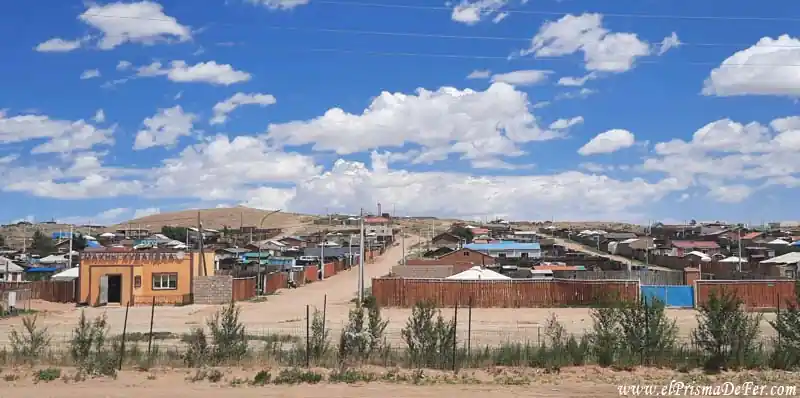
It's a small town, surrounded by vast empty expanses, but it serves as the perfect base for organizing your trip. From here, you can contact local drivers and agencies that offer off-road vehicle tours to the main attractions of the desert.
To get to Dalanzadgad from Ulaanbaatar, there are domestic flights that take about 1 hour, although it is also possible to do it by land in a journey that can take between 8 and 10 hours by bus or private car.
The air option is faster and more comfortable, but the road trip allows you to appreciate the changing landscapes of the Mongolian steppes.
By bus to Dalanzadgad
To purchase tickets for the bus connecting Ulaanbaatar to Dalanzadgad, a convenient option is to do so through Tapatrip, a widely used online platform in Mongolia for booking ground transportation. It allows you to check schedules, prices, and secure your seat in advance, avoiding the need to go to the terminal to purchase one.

Once in the city, the entire trip through the Gobi Desert is organized with guides and specialized transportation, as most of the routes are unpaved and unmarked.
Although Dalanzadgad isn't a tourist destination per se, it's worth spending a few hours browsing its small central market, trying the local food at family-run restaurants, or visiting the regional museum, which provides a good introduction to the flora, fauna, and culture of the Gobi. It's also a good place to stock up on supplies and fuel before heading deeper into the desert.

Tips for choosing a tour through the Gobi Desert
Most tours depart from Dalanzadgad or Ulaanbaatar and usually include transport in 4x4 vehicles, a guide, accommodation in gers (traditional yurts) and meals.
As for pricing, a 3-day Gobi tour from Dalanzadgad can cost between 100-150 USD per person per day, while a more comprehensive 6-8 day tour departing from Ulaanbaatar is usually around 500-800 USD per person, depending on the season, group size, and comfort level of accommodations. Traveling in a group helps keep costs down, as fuel and a guide are shared.
The ideal tour length depends on how much you want to explore: a shorter trip will allow you to visit the most iconic sites, such as the Khongoryn Els dunes and the Yolyn Am Canyon, while a longer one will include remote areas, dinosaur fossils, and nomadic villages.
Before booking, confirm which sites are included in the itinerary, how many hours you drive per day, and what services are covered in the price.
My experience booking a 2-day tour in the Gobi
The tour was organized by Chimgee’s Guesthouse, in Dalanzadgad. I found it by looking up references on Google Maps. It has a property, a short distance from the bus station, with several gers set up for sleeping.
Chimgee, the owner, is very friendly and will personally pick you up at the station to take you to the gers, where she explains in detail what the tour will be like and agrees on the cost of the excursion, if you decide to do it with them.
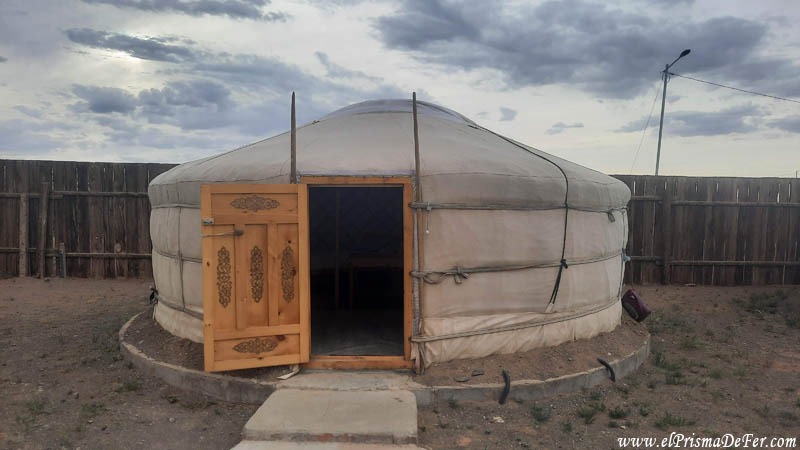
They offer 2 or 3 day tours, with an approximate cost of 100 USD per day. The driver is her husband, and if the group is larger, they can negotiate better prices.
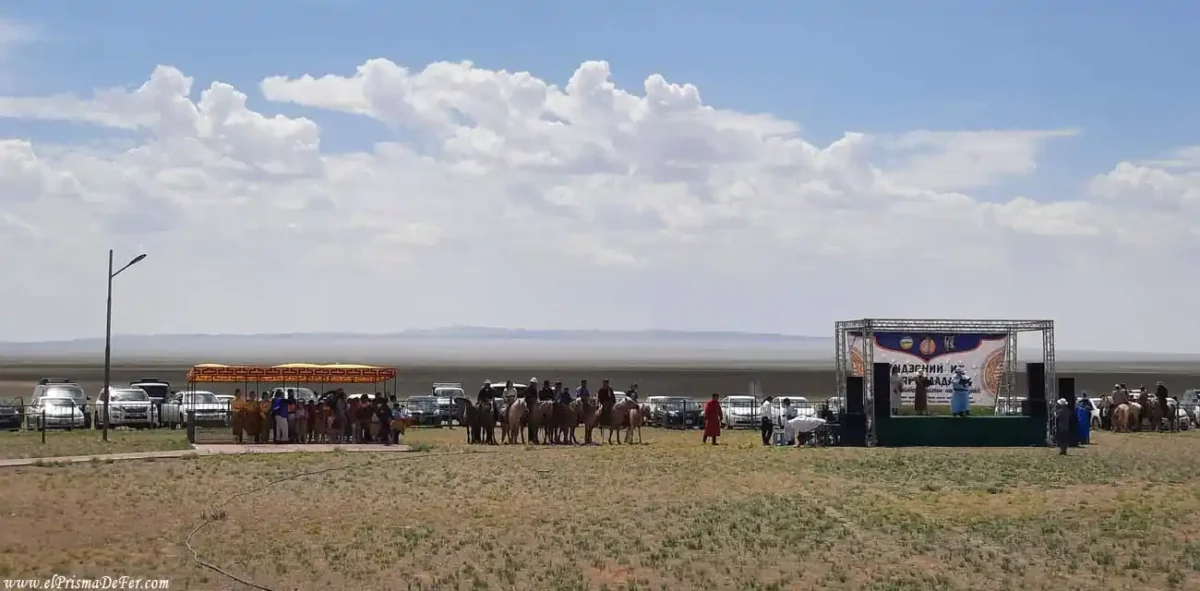
My experience was very positive: they fulfilled everything they promised and, in addition, the day after the tour my husband was kind enough to take me to see the Naadam festival in a remote village on the way to the Gobi, a detail that allowed me to live an extra experience at no additional cost.
What to bring on the Gobi tour
Although there is usually a stop at a restaurant for lunch during the tour and the camps (gers) where you sleep offer dinner and breakfast at night, it is highly recommended to bring your own supplies.
Water, in particular, is best bought in Dalanzadgad, where there are large markets and prices are much lower than in remote places.
The same applies to snacks, dried fruit, or cookies, which can be very useful during the long hours of travel between stops. Being prepared ensures you won't go thirsty or hungry in the vastness of the desert.
Day 1 of the Gobi tour: Yolyn Am Canyon and Khongoryn Els dunes
The first stop of the tour was at the Yolyn Am Valley canyon, located within the Gurvan Saikhan National Park. The vehicle dropped us off at the parking lot, where a short, easy hike begins until we reach the narrowest part of the canyon, where the river freezes completely in winter.
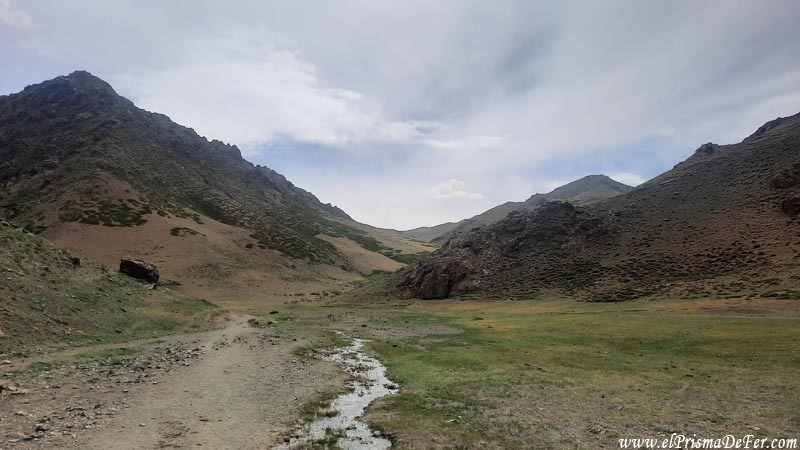
I visited it in the middle of July, so there were only small remnants of ice left, nothing too impressive, but the surroundings are still pleasant for walking around, enjoying the air and stretching your legs before continuing your journey through the desert.
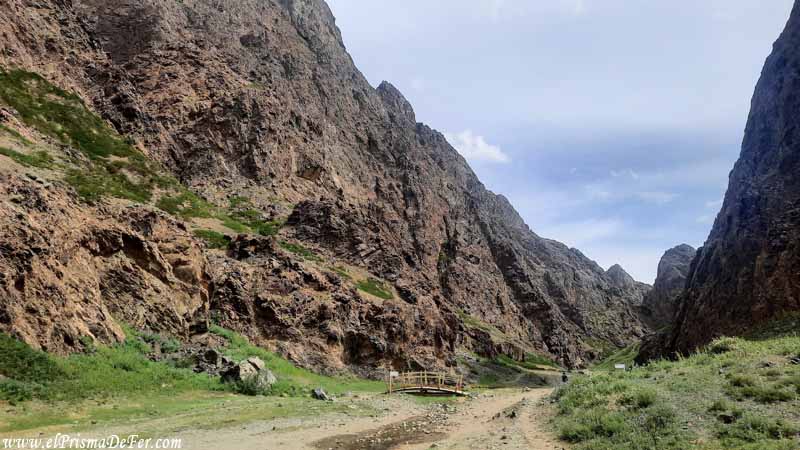
After visiting Yolyn Am Valley and walking to the small stretch of frozen river, we resumed our journey through increasingly arid landscapes.
The second stop of the day was in Bayandali, a village where all tours usually stop for lunch. At this time, the place is quite busy, with travelers and locals mingling at the few available restaurants.
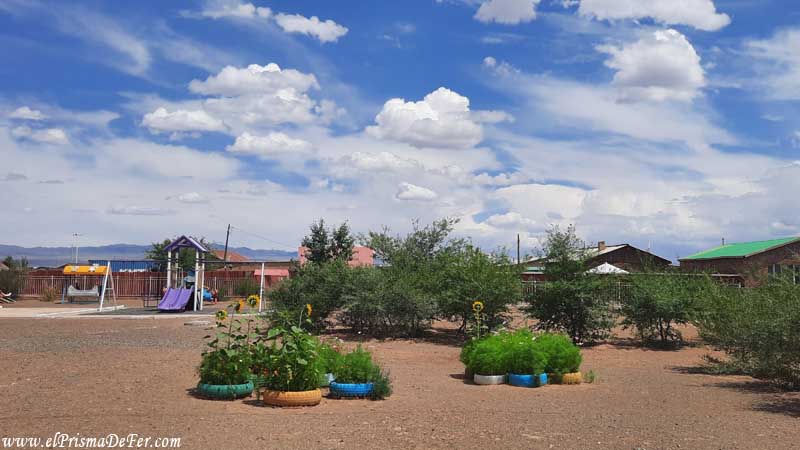
Khongoryn Els Dunes
After a couple more hours on the road, we made another impromptu stop, this time in the middle of the desert. There was absolutely no one around, and it was like a perfect introduction to what was to come next: the spectacular dunes of Khongoryn Els.

Reaching the dunes is the best part of the trip; from afar they look like mountains of sand that rise abruptly in the middle of the steppe.
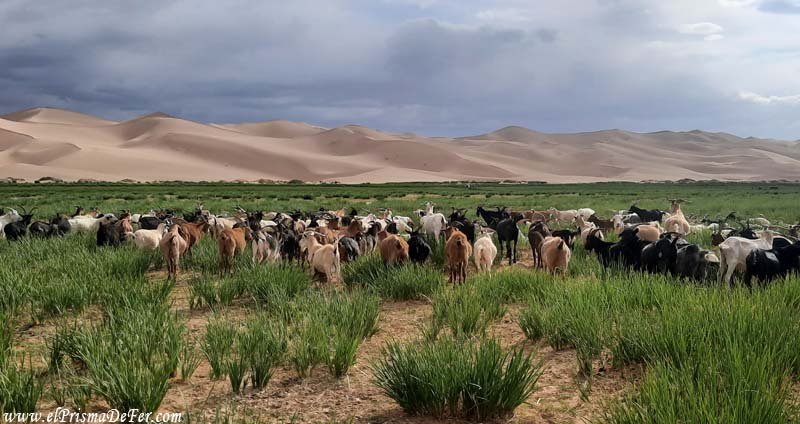
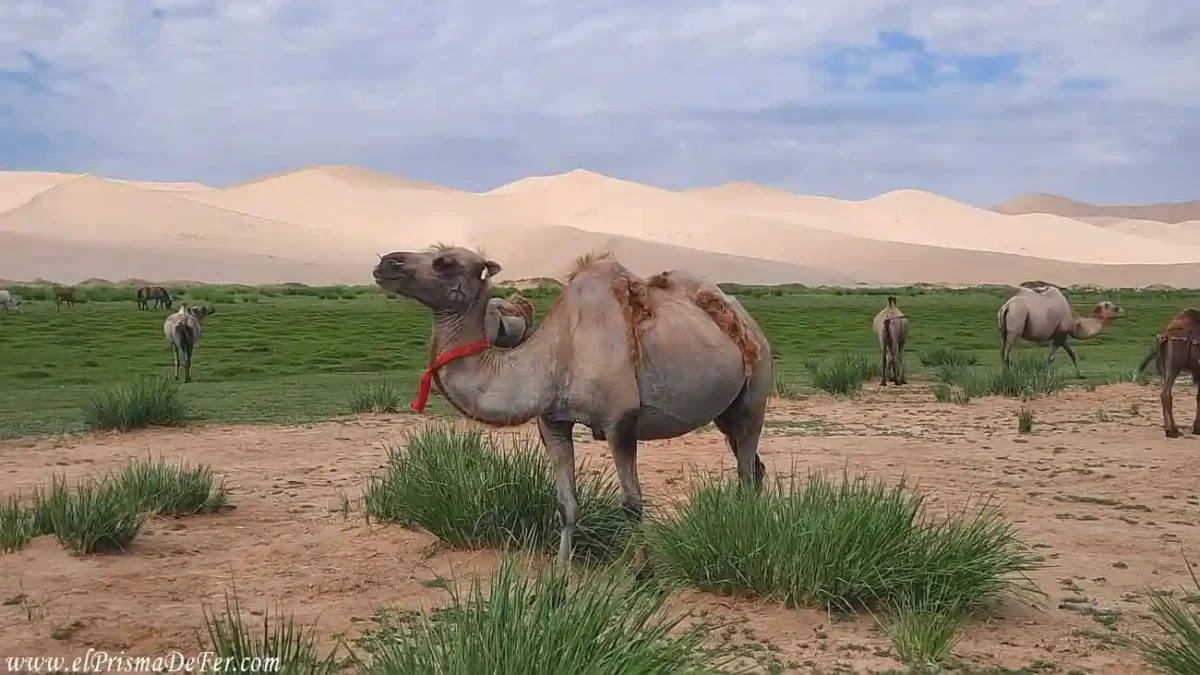
Before climbing, we passed through the oasis at the foot of the dunes, a green corridor crossed by a river, with camels and horses peacefully grazing. It's a true contrast, a small paradise in the midst of such a hostile environment.
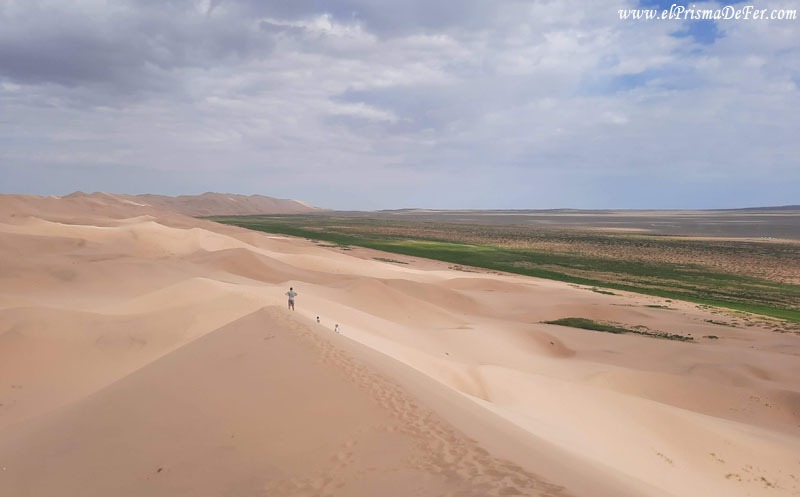
The climb to the highest dune is exhausting; the sand gives way with every step, and the wind suddenly shifts as you reach the top. From the top, the views are otherworldly: the sea of sand stretching to the horizon, and on the other side, the green oasis.
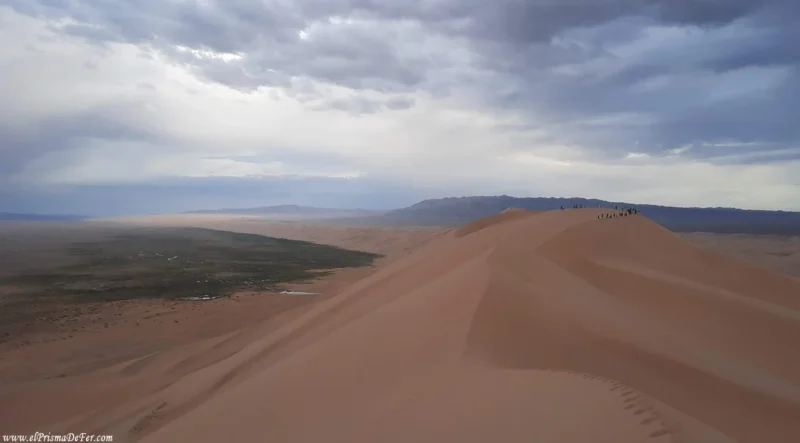
However, the highest dune is also where most tourist groups congregate, taking the opportunity to slide and roll on the sand as part of the experience.
With so many people, it loses some of the charm of the desolation that surrounds it, but if you move away even a few meters, you can once again feel that silent immensity that makes the desert so special.
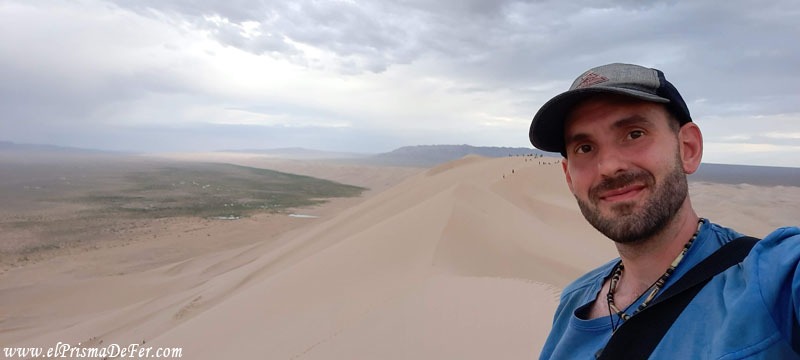
I stayed until I saw the sunset from above, a magical moment with the last rays of the sun dyeing the sand gold.
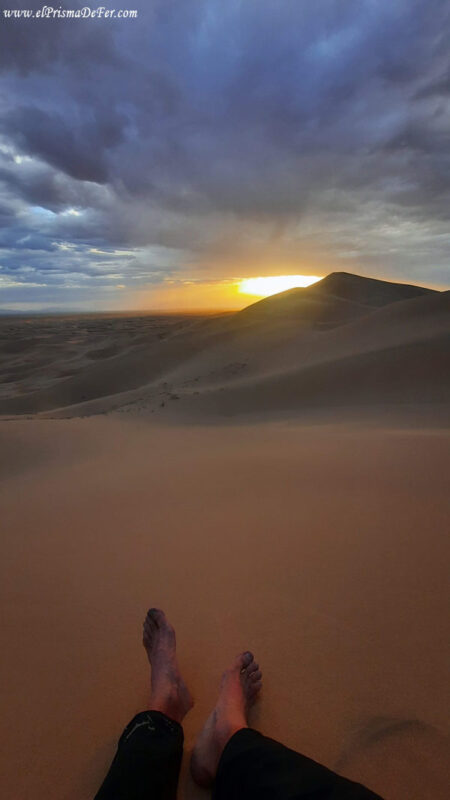
After the descent, which is quick, we headed to the ger (Mongolian yurt) camp, where you can eat, bathe, and rest. If the sky is clear—I wasn't lucky—it's the ideal time for stargazing.
Day 2: Dunes and Flaming Cliffs
In the morning, after having breakfast at the camp, we returned to a section of the dunes to enjoy the scenery for a while longer, this time almost alone.
Since there were no people this time, the peace and quiet at those hours gave a completely different feeling to the previous day, allowing you to walk among the sand and appreciate the morning sun on the dunes.
Flaming Cliffs
Afterwards we set off towards Flaming Cliffs (Bayanzag), one of the most emblematic places in the Gobi Desert.
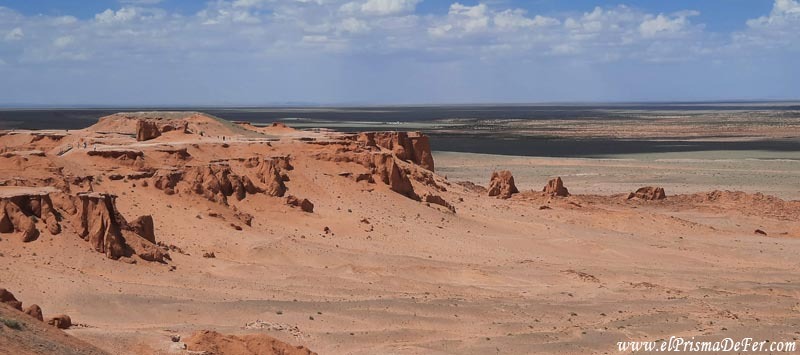
The road took us through arid landscapes and amazing rock formations, while the driver told us a little about the paleontological findings in the area.
Flaming Cliffs is famous for the dinosaur fossils discovered in the mid-20th century, and for the reddish hue of the rocks, especially at dawn and dusk.
Upon arrival, we were able to walk along the marked trails, observe the eroded sandstone formations, and learn about the geological and paleontological history of the place.
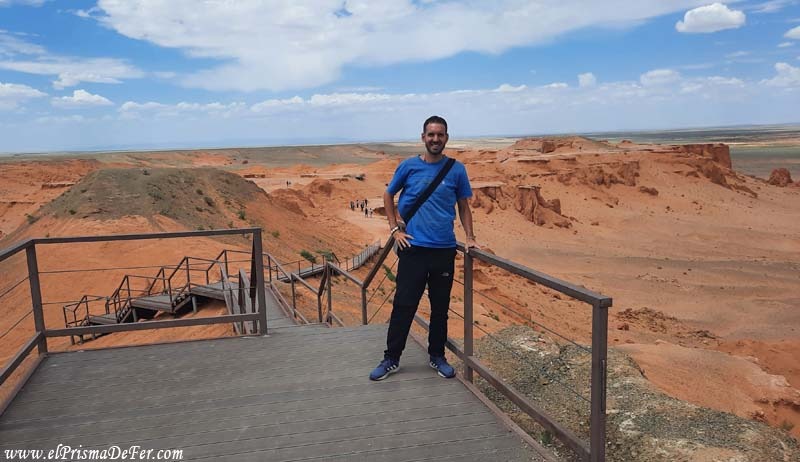
Although there are visitors, the area is large enough to move around calmly and without too much hustle and bustle.
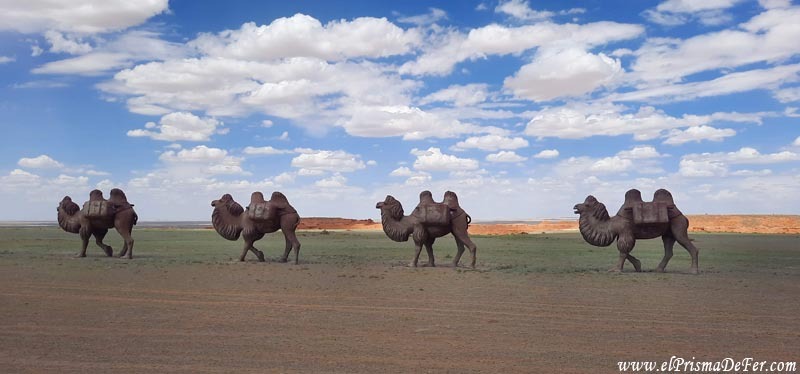
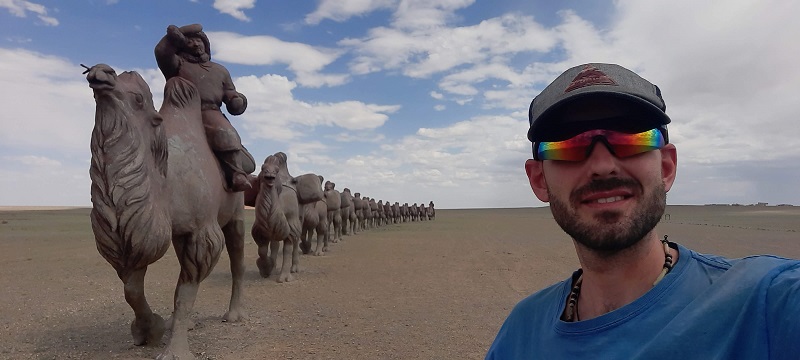
One of the gems I liked most at the Flaming Cliffs were some camel statues representing an ancient caravan, a reminder that the Silk Road passed through this area.
It was a simple detail, but it sparked something in me. Suddenly, amidst that arid and seemingly isolated landscape, I imagined caravans crossing these same lands centuries ago, connecting this remote corner with major trading centers in Asia. The thought that this “end of the world” was part of such a vast commercial network blew my mind.
Return to Dalanzadgad
After visiting Flaming Cliffs, we began our return journey to Dalanzadgad, arriving in the afternoon. I took the opportunity to walk around the small town, exploring its streets and markets, and trying some local food. Dalanzadgad, although modest and not particularly noteworthy, has a pleasant atmosphere for stretching your legs after the desert and recharging your batteries.
That day also served as preparation for the following day, as we would return to Bayandali to witness the opening of the Naadam Festival.
How the Gobi Desert differs from other deserts
I've been lucky enough to visit several deserts, and I must say the Gobi was one of my favorites so far. Here's why:
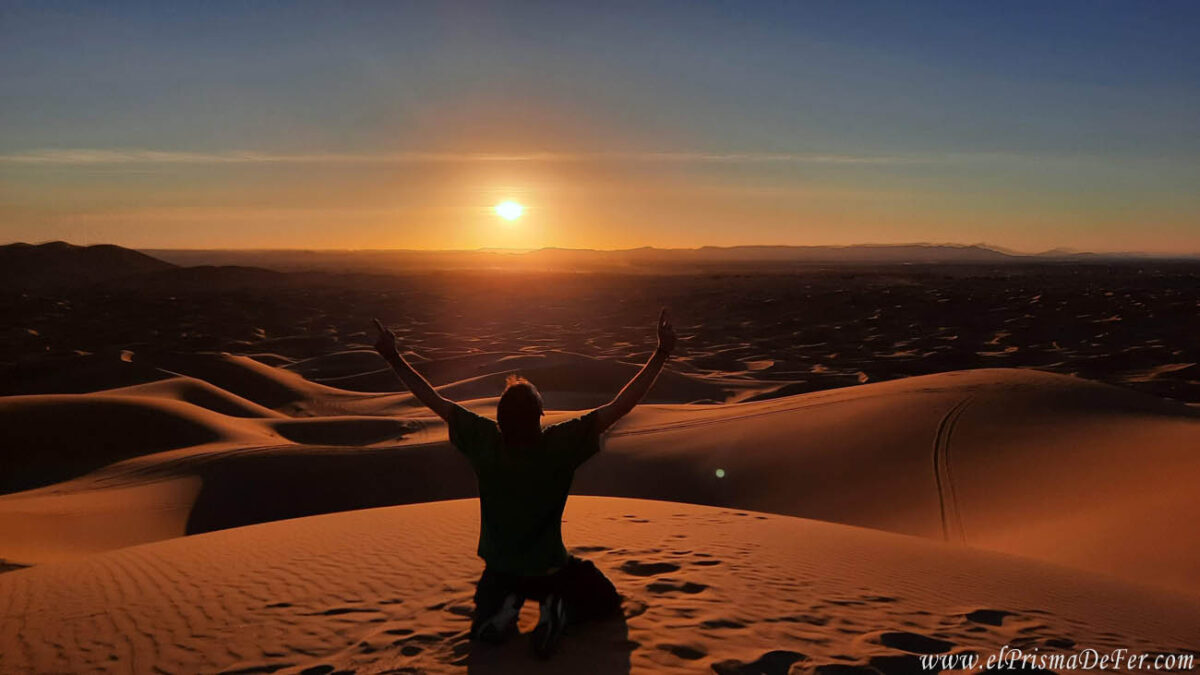
- Sahara (Merzouga, Morocco): In Merzouga, the dunes are very close to the town, with tourist infrastructure, lodges a stone's throw away, and ATVs shuttling in and out. The Gobi, on the other hand, is much more desolate and remote; the Khongoryn dunes are far from any town, creating a sense of vastness and solitude that's hard to replicate.
- Thar (Jaisalmer, India): The Thar is dotted with villages and busy roads. Its landscapes have a strong cultural component, but the vastness is less than in the Gobi, where the open steppe and wide skies dominate the panorama.
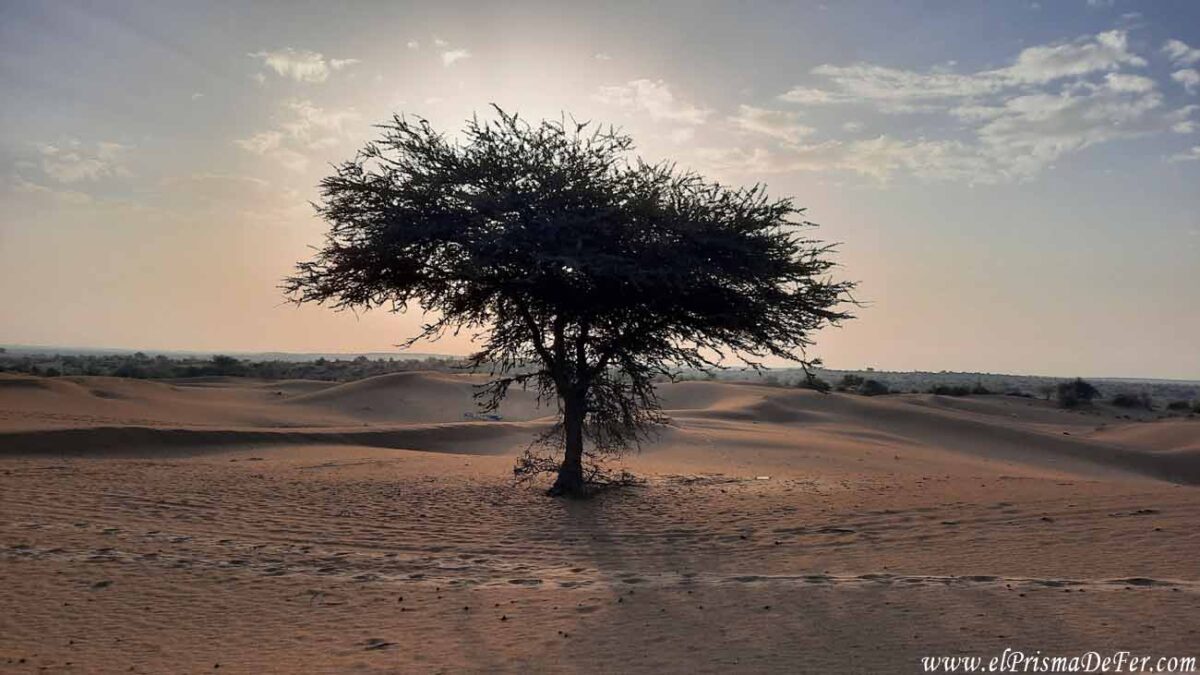
How to visit the Thar Desert from Jaisalmer, India, on your own
- Wadi Rum (Jordan): Wadi Rum is a rocky desert with dramatic formations, reddish colors and well-defined paths. The Gobi, in contrast, combines giant dunes with green oases and rocky valleys, offering a more diverse landscape in terms of color contrasts and ecosystems.
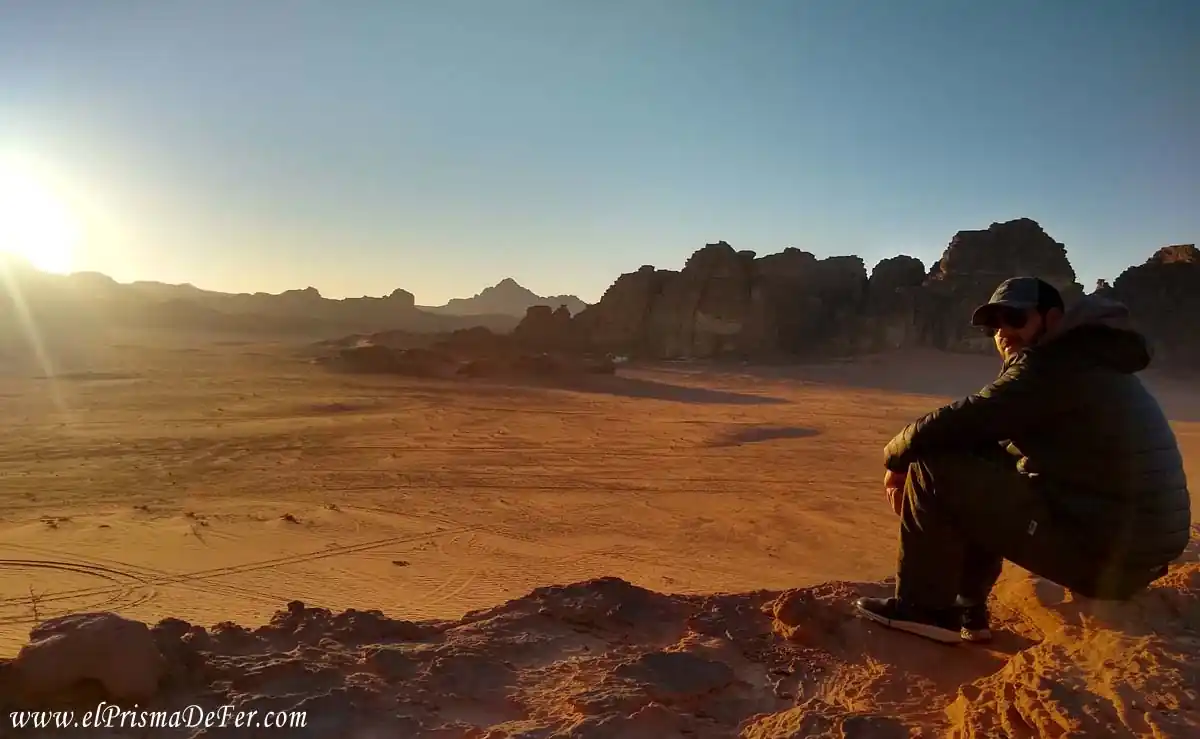
- Salar de Uyuni (Bolivia): Uyuni impresses with its flat, white expanse of salt, almost surreal. The Gobi is not flat; it has a marked relief of dunes, hills, and cliffs, and its sense of desolation is distinct, with wind and moving sand, as well as oases and wildlife.
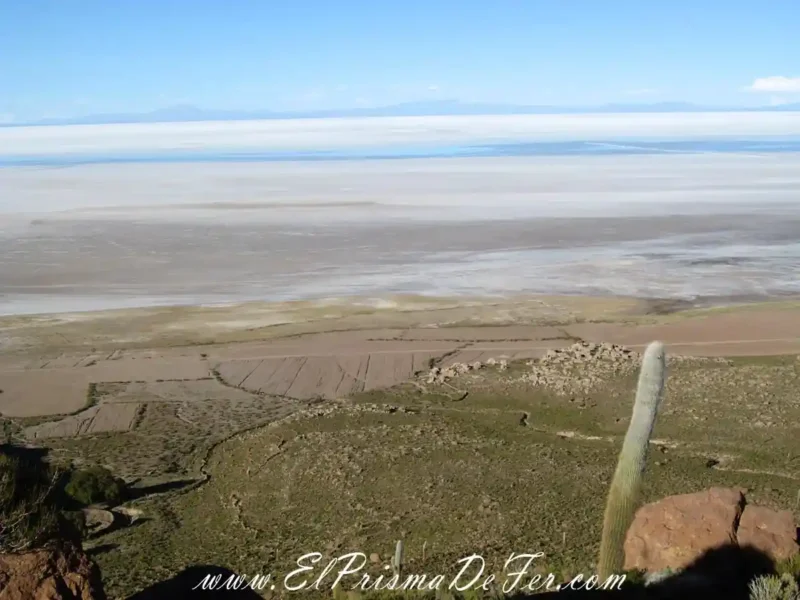
In short, the Gobi stands out for its remoteness, variety of landscapes, and the feeling of being in a virtually untouched territory, something that makes it unique compared to other popular deserts in the world.
What is the best time to go to the Gobi Desert?
The Gobi's climate is extreme and changeable. In summer, daytime temperatures can exceed 35 °C, but at night they drop dramatically, even reaching -10 °C. The sky is generally clear, but the wind can whip up sudden sandstorms, especially in open areas.

In winter, the cold is intense, with minimum temperatures below -30 °C. Traveling in spring or autumn is generally more pleasant, although it's always a good idea to be prepared for sudden changes in temperature and weather conditions.
Final thoughts on the 2-Day Gobi Desert Tour
I loved the tour of the Gobi Desert and, for me, it is one of the most impressive deserts I have ever seen.
Its combination of absolute desolation, with no towns or cities nearby, along with the green oases and the enormous dunes of Khongoryn, makes it truly unique. The feeling of vastness and solitude that you experience when you venture a little way away from the more crowded areas is unforgettable.
While the other stops on the tour, such as Yolyn Am Valley and Flaming Cliffs, are beautiful and provide variety, the core of the experience is the dunes. I would have liked to spend one more day exploring the dunes, enjoying the scenery, the wind, and the seemingly endless skies, to fully absorb the magic of the place.
Save this post on Pinterest

Frequently Asked Questions about the Gobi Desert
Is the Gobi Desert worth visiting?
Yes, especially if you want to see the most remote and diverse Mongolia. The Gobi isn't just sand; there are giant dunes, canyons, rock formations, dinosaur fossils, and vast steppes that seem to stretch on forever.
How many days does it take to travel through the Gobi Desert?
The usual time is 2 days. Anything less means many hours of driving and little time in each place.
Can you explore it on your own?
It's not the most common option. The distances are enormous, there's little signage, and almost no paved road. Most travelers do it on an organized tour with a driver and guide.
Where do you sleep?
You usually sleep in ger camps (traditional yurts) or in family accommodations. The amenities are basic, but they are all part of the experience.
What is the best time to go?
From June to September, the weather is more stable. Sandstorms can occur in spring, and temperatures are extreme in winter.
It's really hot?
It can be warm during the day, but the nights are usually cold, even in summer. It's important to dress in layers.
Is it expensive to visit the Gobi?
Tours are not cheap compared to other Asian destinations, mainly due to distances and fuel costs. However, they usually include transportation, accommodation, and meals.
Is there a signal or internet?
There's no cell phone signal or internet for most of the route. It's quite a disconnected experience.
Support The Prism of Fer!
Your support helps me continue creating free content on the blog. Thank you so much!