Few cities in the world evoke as much mystery and history as the ancient capital of the Timurid Empire, Samarkand. Just hearing its name evokes an air of legend, caravans, madrassas, and tales of the Silk Road. Located in the heart of Uzbekistan, this city was for centuries a vital crossroads between East and West, attracting traders, explorers, and scholars from all corners of the globe.
Samarkand, much like Rome, gives you the feeling of walking through an open-air museum. The Islamic architecture dazzles at every turn, with its turquoise domes, intricately detailed mosaics, and monumental squares. But beyond its beauty, what makes it special is the symbolic weight it has for any traveler who follows the Silk Road; being there is to touch a living part of that ancient history.
In this post, I'm going to tell you what to see, how to get there, how long to stay, and all those useful tips I wish I'd known before arriving. Because yes, Samarkand exceeded my expectations, and I hope you can experience it the same way.

This post may contains affiliate links. If you purchase through these links, I may earn a commission at no extra cost to you. Thank you for your support!
Table of Contents
📜 A little history of Samarkand
Samarkand is one of the oldest still-inhabited cities in the world, with more than 2,500 years of history. It was already an important trading center when Alexander the Great conquered it in the 4th century BC, and centuries later, under Persian rule, it was part of the Sassanid Empire.
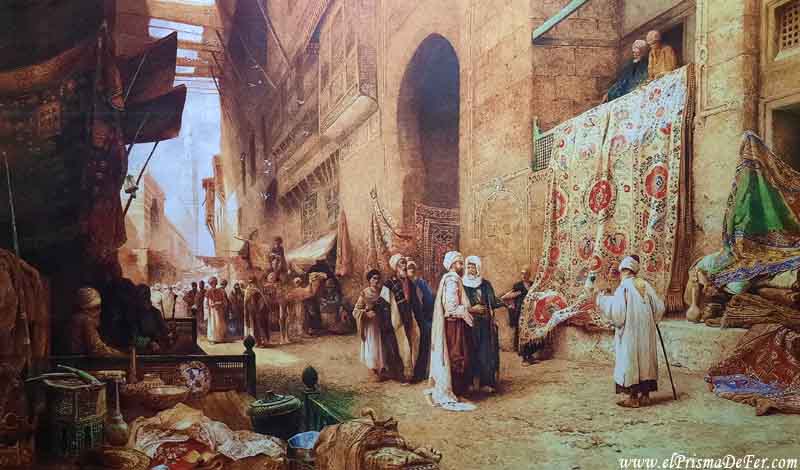
But its true heyday came during the Islamic period, when it was a jewel of the Silk Road. Traders from China, India, Persia, and Europe passed through here, turning Samarkand into a melting pot of cultures, religions, and knowledge.
The city was razed to the ground by the Mongols in the 13th century, but re-emerged even more powerfully under the rule of Tamerlane (Timur), who made it the capital of his empire and one of the most brilliant cultural and scientific centers in Asia.
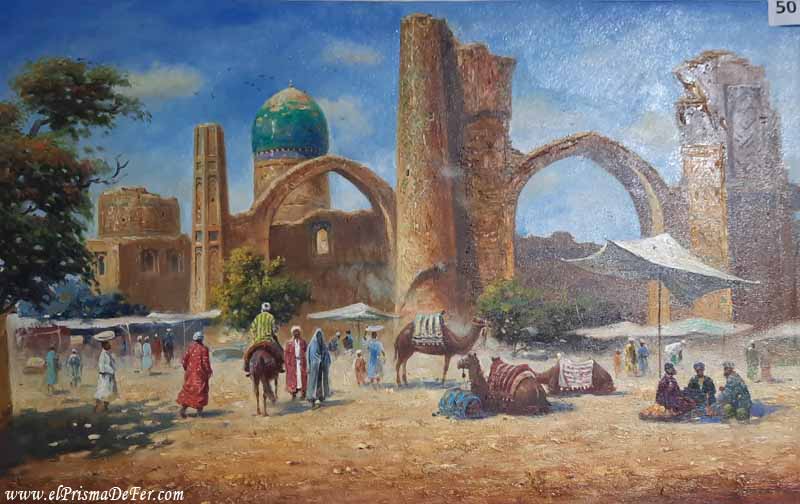
Today, walking through its streets is a reflection of that past: madrasas, mosques, mausoleums, and bazaars speak of a city that was, and continues to be, a symbol of splendor and diversity.

It's a shame that in Latin America we are taught so little about this part of the world. The history of Central Asia, its empires, and figures like Timur, often falls completely off our radar.
That's why arriving in Samarkand and discovering its legacy was such a huge surprise for me. Not only because of the sheer size of its empire, but also because of the cultural, architectural, and scientific impact it left behind. Traveling through this region isn't just about changing landscapes; it's also about opening yourself up to civilizations as rich as they are unknown from our Western perspective.

⚔️ Who was Tamerlane or Timur?

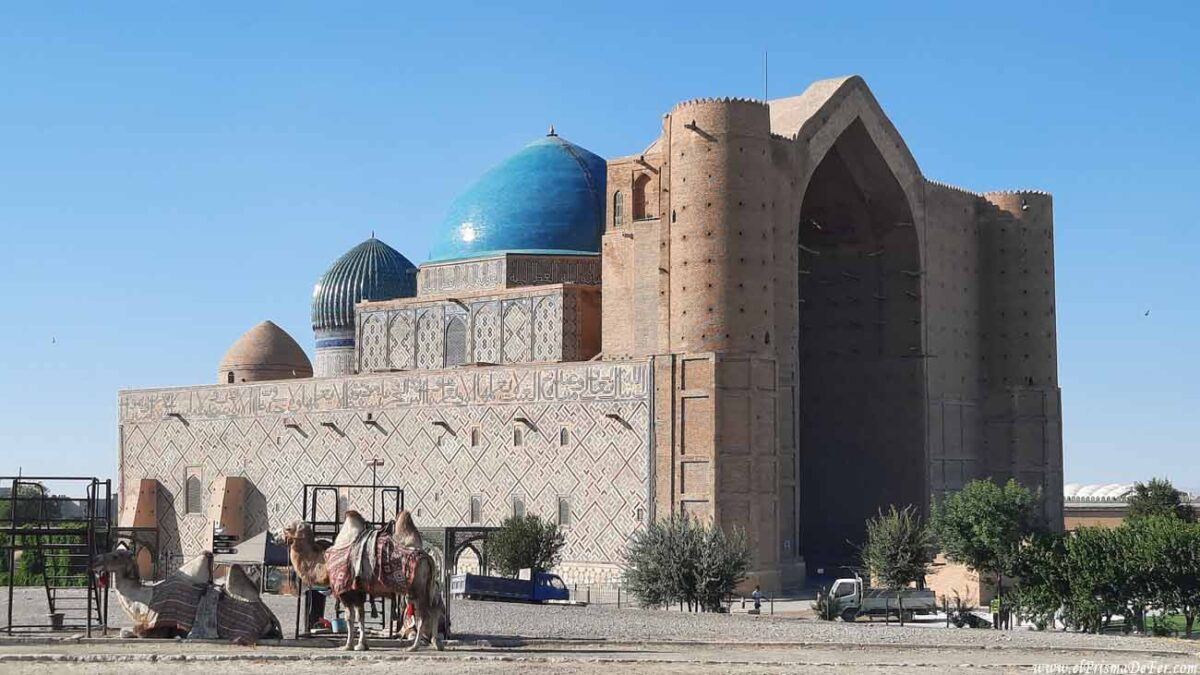
Tamerlane (or Timur, as he is known in Uzbekistan) was one of history's great conquerors. Born near Samarkand in the 14th century, he managed to form an empire that stretched from Turkey to India. Unlike Genghis Khan, who came from the north, Timur was more strategic: in addition to conquering, he beautified cities, built monuments, and protected the arts.
Samarkand was his most prized possession. He filled it with palaces, gardens, mosques, and schools, bringing in the finest artisans and architects from across his empire. Many of the structures we see today, such as the Gur-e-Amir, were built under his rule or in his honor.
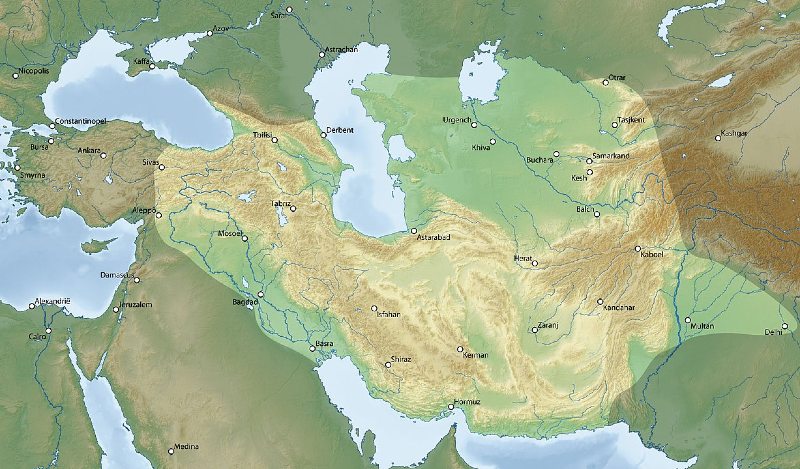
Although his legacy is tainted by controversy due to his brutal military campaigns, in Uzbekistan he is remembered as a national hero and a key figure in the country's historical identity (like San Martín in Argentina or Genghis Khan in Mongolia).
His image is everywhere, from statues to banknotes, and it is impossible to understand Samarkand without talking about him.
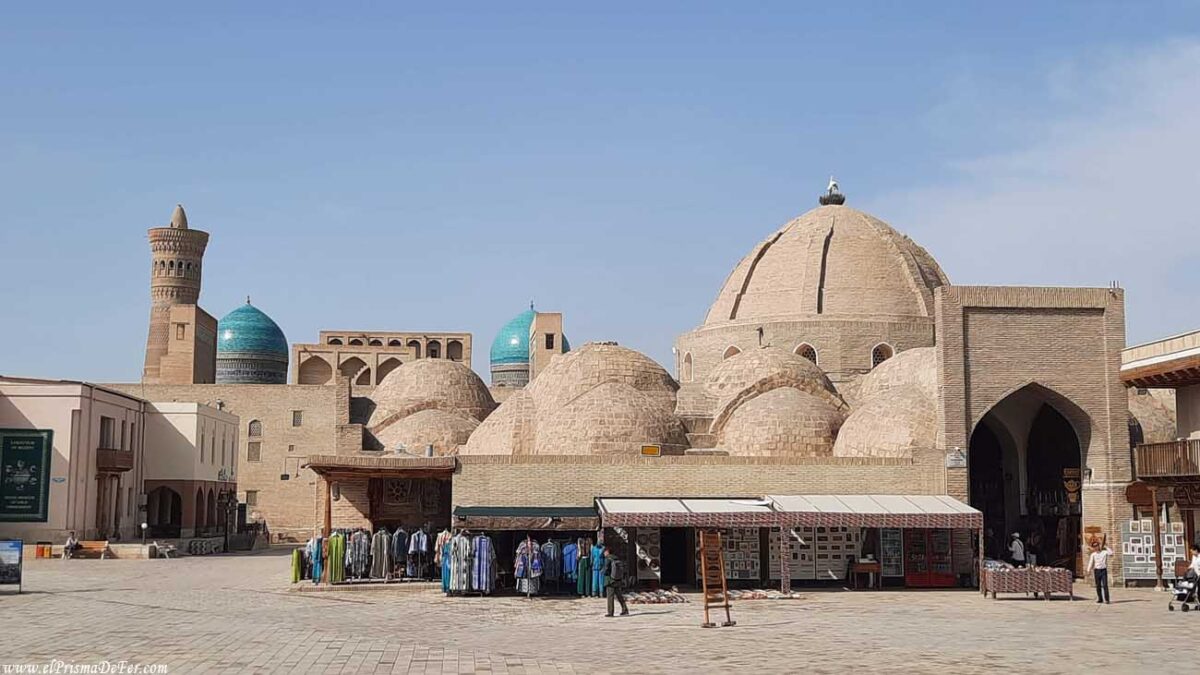
If you want to know the route I took in Uzbekistan, you can read my two-week travel itinerary through the country.
🚉 How to get to Samarkand?
Samarkand is very well connected both within Uzbekistan and with Tajikistan. These are the most common routes:
From Tashkent
- Afrosiyob Rapid Train: The most comfortable and fastest option. It takes between 2 and 2 hours and 30 minutes. It is recommended to purchase tickets in advance online.
- There are also slower trains and buses, but they're not worth it if you get the fast one.
On the website Uzbekistan Railways or ETicket.uz you can see schedules, prices and even buy tickets online.
From Bujara
- You can also take the Afrosiyob train, which takes about 1h30 to 2h.
- Another option is a shared taxi, although the trip may be longer and less comfortable.
From Panjakent (Tajikistan)
- There is a border crossing near Samarkand, just 30 km away.
- From Panjakent, you can take a taxi to the border, cross on foot (with a visa or exemption depending on your nationality), and then take another taxi to the Uzbek side. The entire journey usually takes about 2-3 hours in total.
Tip for crossing the Tajikistan-Uzbekistan border: As soon as you cross the border on foot, you'll see many private taxi drivers approaching to take you to Samarkand. But if you walk a little further, you'll find shared taxis waiting to fill up and leave (see location). They probably won't go all the way to the city center, but they'll get you quite close and for a better price. Then you can look for another taxi or ask someone in the area for directions to your accommodation.
💡 Tip extra: Siempre es útil llevar efectivo en moneda local (som uzbeko o somoni tayiko) para taxis o transportes intermedios.
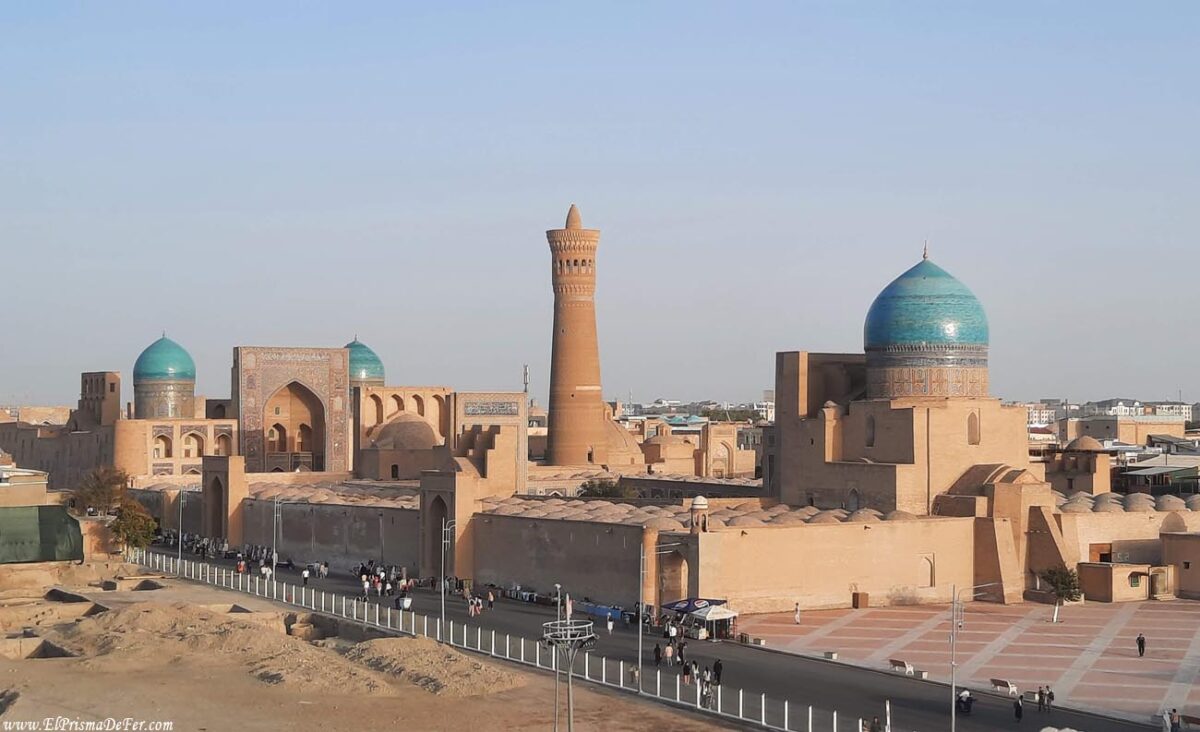
You may be interested in reading the Guide I wrote for traveling in Uzbekistan on your own, where I detail important things for getting around the country.
A surprisingly touristy city, in the best European style
Among the things that caught my attention about Samarkand was discovering a city that, far from being a relic lost in time, is fully prepared for tourism, almost as if one were in a European capital. Clean streets, renovated pedestrian walkways, scenic lighting on the monuments, and a historic center where everything has been carefully restored to shine before the visitor's eyes.
From cafes with menus in English to guided groups with headsets, and an increasingly wide and organized range of hotels, Samarkand presents itself as a comfortable, modern city designed for tourists.
This may be shocking if you were expecting a more rustic or authentic atmosphere, but it is also part of its new face, a city proud of its history that seeks to showcase itself to the world with the same infrastructure and level as the great international tourist destinations.
Although you lose a bit of that feeling of discovering something "off the beaten track," the experience is still rewarding. Samarkand achieves that balance between the ancient and the modern, and in that sense, it surprised me much more than I expected.
Map of places to see in Samarkand
🏛 What to see in Samarkand?
Samarkand is steeped in history and impressive architecture. It's best to take the time to explore it on foot or by local taxi, as every corner has something to surprise you.
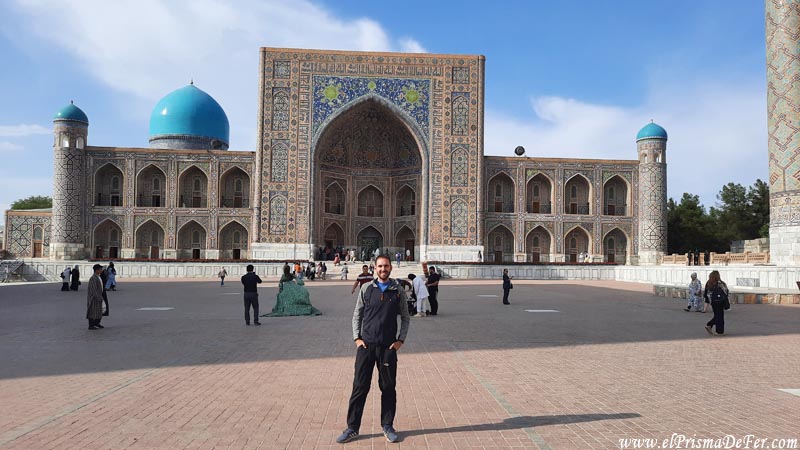
Walking Tour
A walking tour in Samarkand is the best way to start exploring the city. While it's not free, it helps you get your bearings quickly, you learn history and anecdotes from a local guide, and you can meet other travelers along the way. You can book your walking tour here.
🕌 Registán
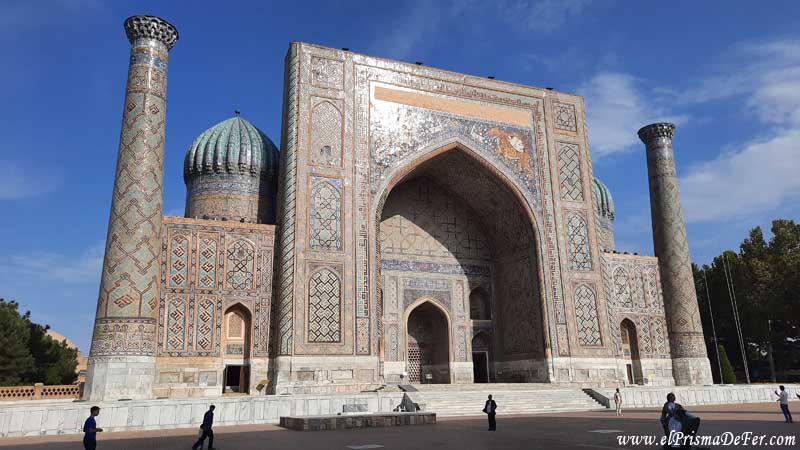
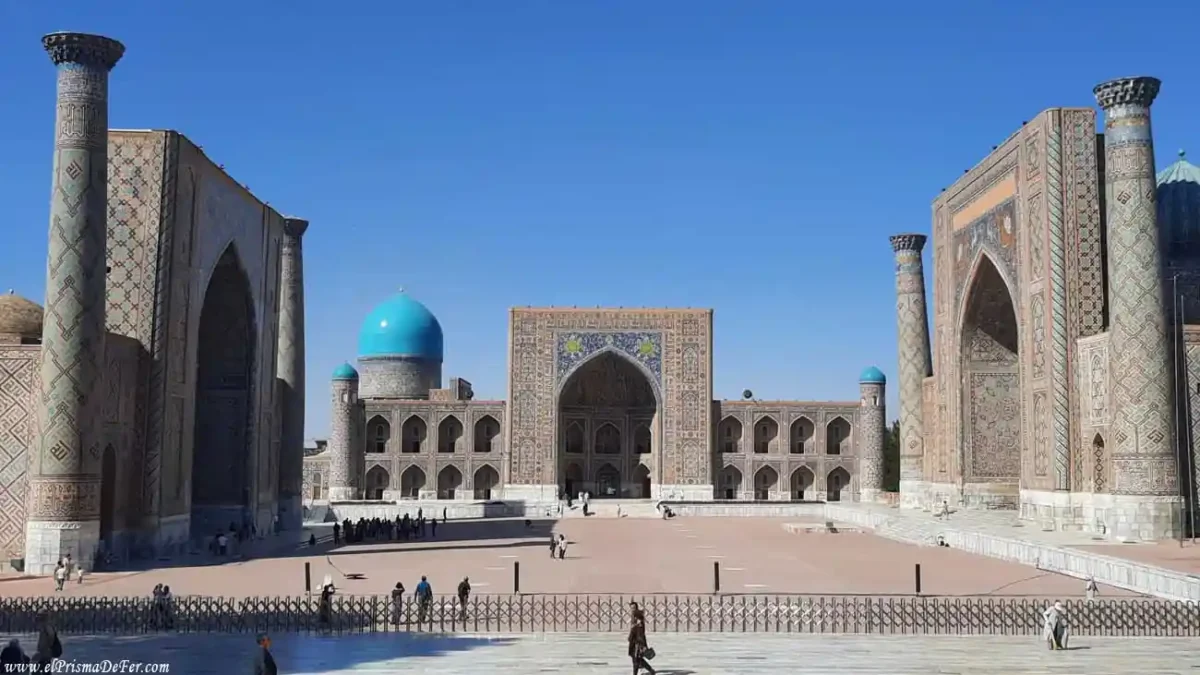
The Registan is, without a doubt, Samarkand's most iconic postcard image and one of the most impressive squares in the Islamic world. During the heyday of the Silk Road, this was the social, commercial, and educational heart of the city: a large open space surrounded by three majestic madrasas (Koranic schools), each with its own history and unique architectural details.
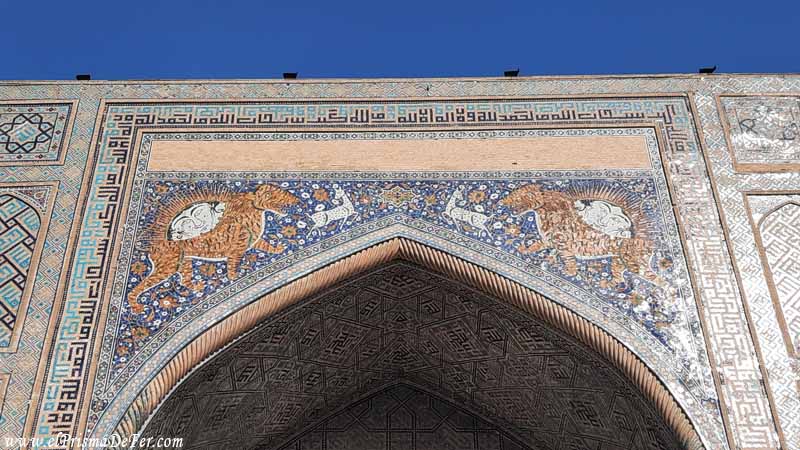
The 15th-century Ulugh Beg Madrasa, built by Tamerlane's astronomer grandson, is notable for its mosaics depicting the heavens, a nod to his love of science. The 17th-century Sher-Dor features a striking detail that is rare in Islamic art: two tigers that appear to be hunting deer, framing a sun with a human face. Finally, the Tilya-Kori shines inside and out, with a gilded interior that justifies its name (“covered in gold”).
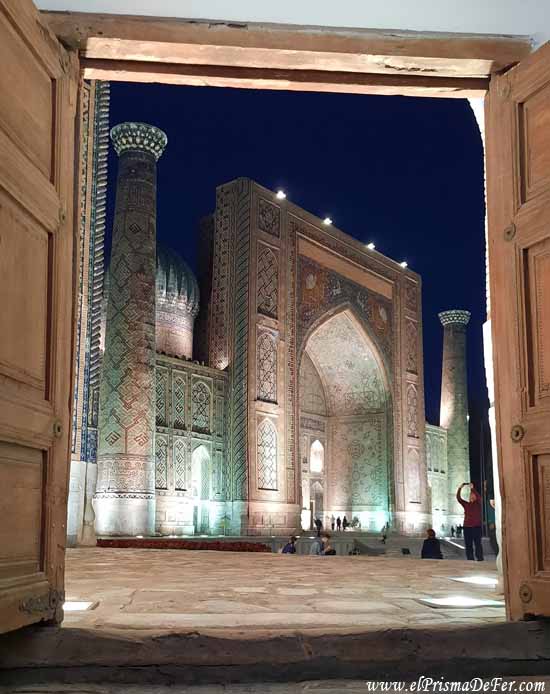
By day, the place is striking for its scale and symmetry, and at night, when the lights come on, the Registan transforms into a magical setting. There are light and sound presentations on certain days, which help explain its history. If you could only see one place in Uzbekistan, this would be the one.
How much does it cost to enter Registan Square?
To enter the Registan and its madrasas, there is an entrance fee of around 100,000 Uzbek for non-Uzbek visitors (the price may vary). I recommend it, because from the outer plaza, although you can see the three main buildings, you miss the interiors and many of the architectural details that are much more enjoyable up close.
🪦 Shah-i-Zinda
Shah-i-Zinda (“the living king”) is not just a necropolis, it is one of the most refined expressions of Islamic funerary art. The complex comprises a row of richly decorated mausoleums, erected between the 11th and 15th centuries. Walking through this narrow corridor surrounded by turquoise domes and shimmering mosaics is a dazzling experience.
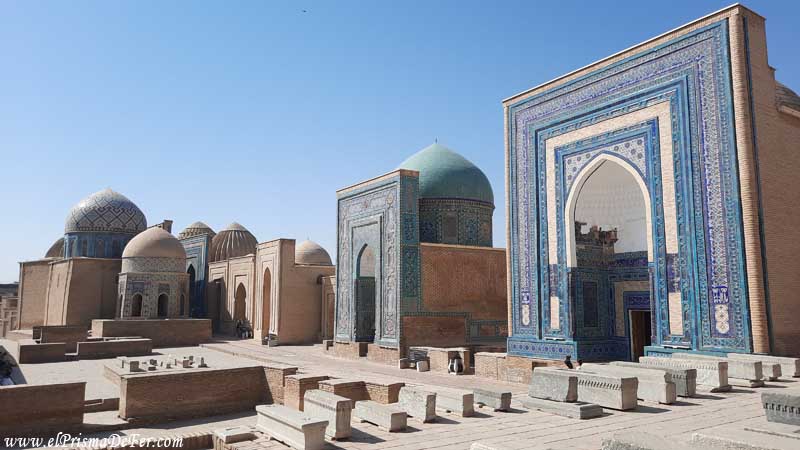
Qusam ibn Abbas, a cousin of the Prophet Muhammad, is believed to be buried here, making the site a popular pilgrimage site for centuries. Furthermore, members of Tamerlane's family and important court figures were also buried in the complex.
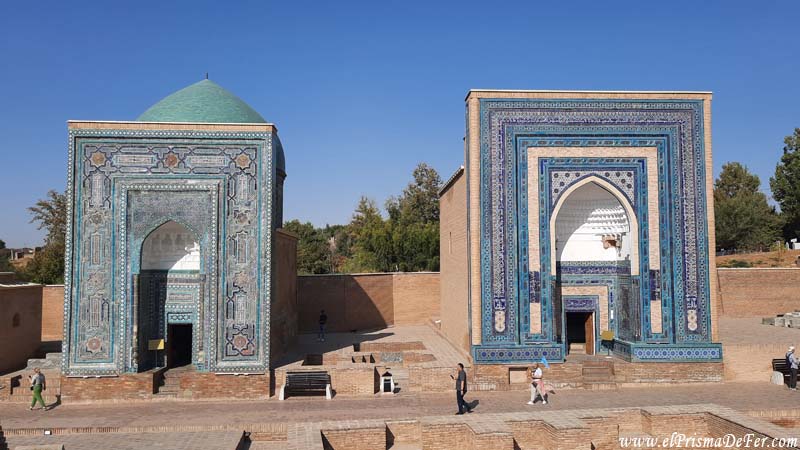
Each mausoleum has its own unique style, making the visit a visual delight: glazed tiles, calligraphic inscriptions, hypnotic geometric patterns... everything is carefully designed. While the Registan takes the spotlight, Shah-i-Zinda is the most spiritual and moving corner of Samarkand.
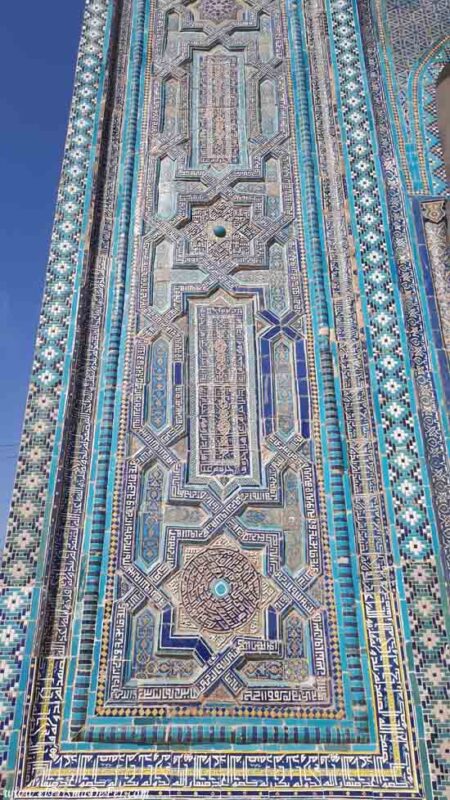
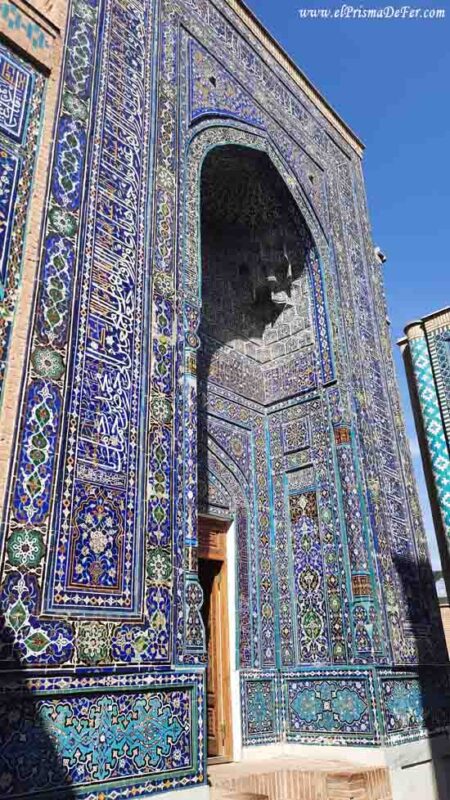
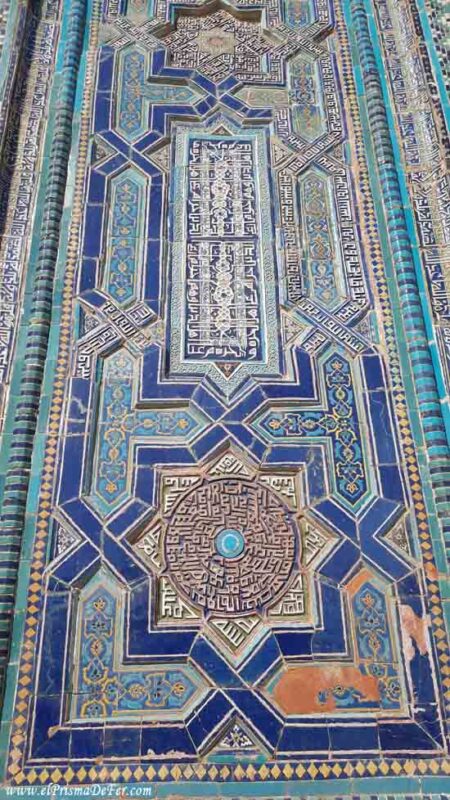
The only negative point I can mention is that, due to its stunning architectural beauty, the site is often crowded with people taking photos for social media. It's important to remember that this is a necropolis, so the complex deserves to be explored with a bit more respect and awareness of its historical and cultural significance.
How much does it cost to enter the Shah-i-Zinda necropolis?
To enter the Shah-i-Zinda necropolis, there is an entrance fee of around 50,000 sum for non-Uzbek visitors (the price may vary). It's definitely worth it.
If you don't want to pay the entrance fee to visit the Shah-i-Zinda necropolis, there's a way to get a free overview from the surrounding public cemetery. Access is through this entrance (see on map) and by walking to this specific point (see location) you'll get some views of the complex from the outside.
I'm not sure if it's allowed or not, but there was no check at the entrance. Anyway, it doesn't even come close to seeing the tombs and the details from inside, but it can be an alternative if you don't want to spend money.
🕌 Bibi-Khanym Mosque
The Bibi Khanym was built in the 14th century by order of Timur, and at the time was one of the largest mosques in the Islamic world. Its intention was as ambitious as it was symbolic, to demonstrate the power of the Timurid Empire and leave an eternal mark on its favorite city.
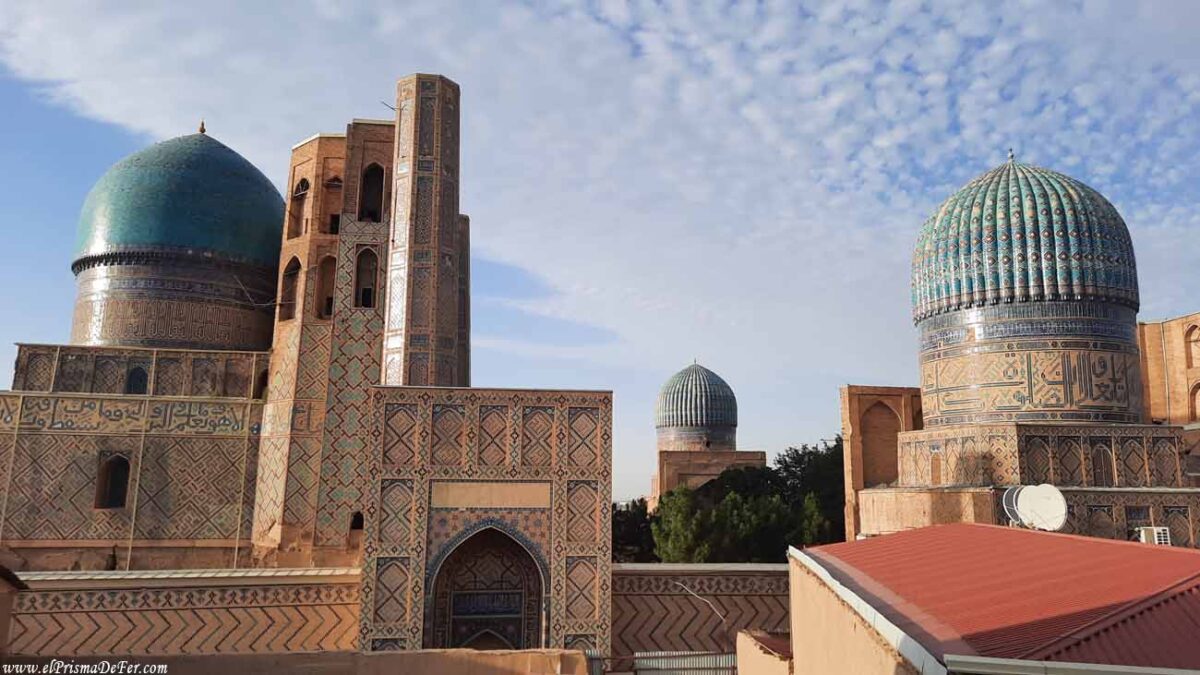
According to legend, it was erected in honor of Timur's favorite wife, although some accounts suggest that she herself ordered its construction during the conqueror's absence. The result was a monumental structure, with a dome nearly 40 meters high, towering minarets, and a portico that makes you feel tiny as you walk through it.
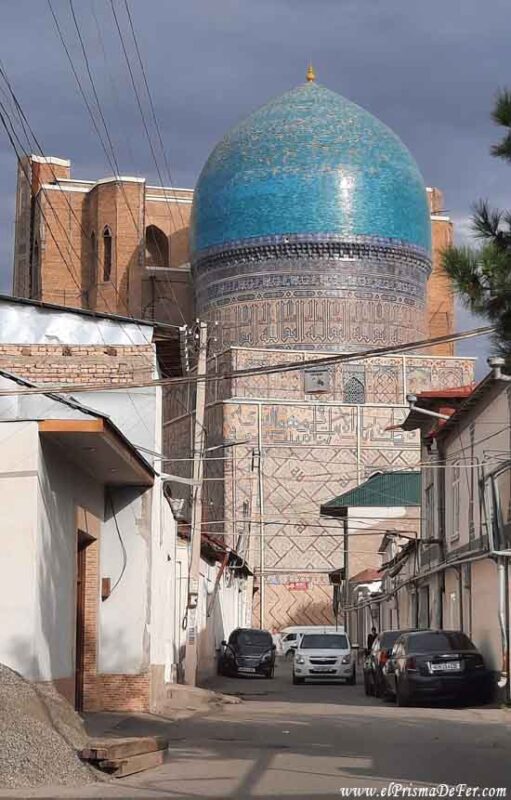
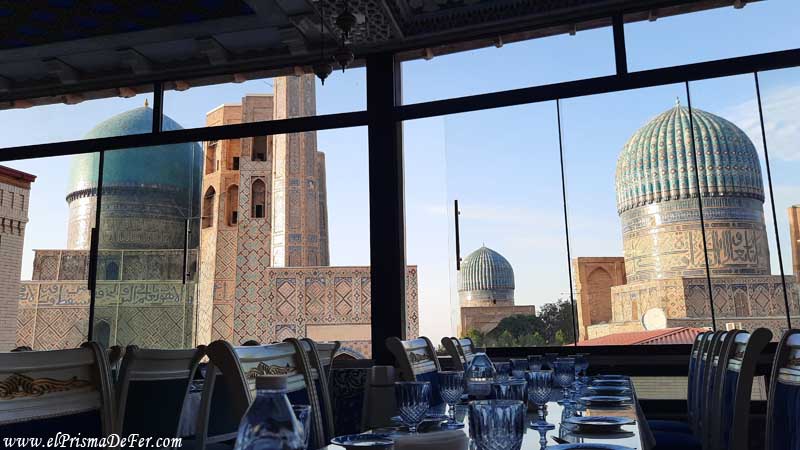
Over the centuries, earthquakes and the passage of time damaged its structure, but much of it was restored. Today, it still commands awe, and its location directly across from the Siyob Bazaar makes it an excellent starting point for exploring the city.
How much does it cost to enter the Bibi-Khanym Mosque?
To enter the Bibi-Khanym Mosque, you need to pay an entrance fee of around 75,000 som for foreigners (prices may vary), which I found rather high. You can't access the main mosque, and while it's possible to enter the two side buildings, the interiors don't offer much. If you're traveling on a tight budget, you might be better off saving that money for other attractions.
🌟 Gur-e-Amir (Mausoleum of Tamerlane)
Gur-e-Amir, whose name means "Tomb of the Emir," is the final resting place of Tamerlane, along with some of his descendants, such as Ulugh Beg. From the outside, its fluted blue dome is easily distinguishable and is one of the architectural symbols of Samarkand. But the truly impressive monument is inside.
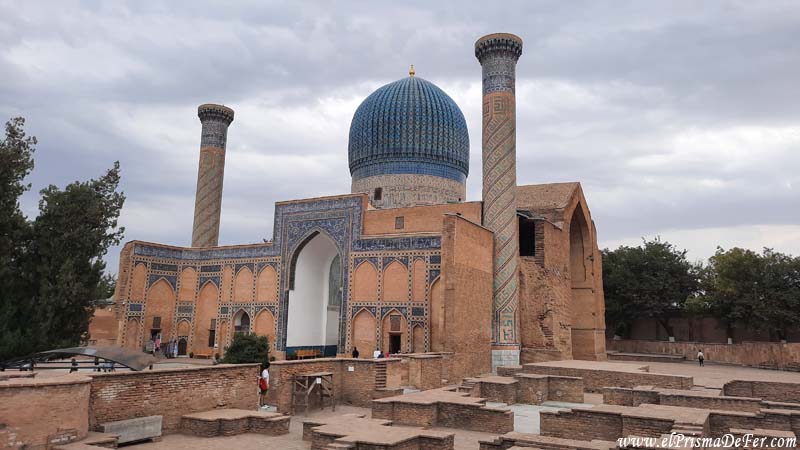
The mausoleum is small compared to other monuments, but its decoration makes it grand: carved marble, gold-leafed walls, Arabic inscriptions, and a solemn atmosphere that invites silence. In the background, beneath a large slab of dark jade, lies Tamerlane's tomb, although his body lies in a deeper crypt.
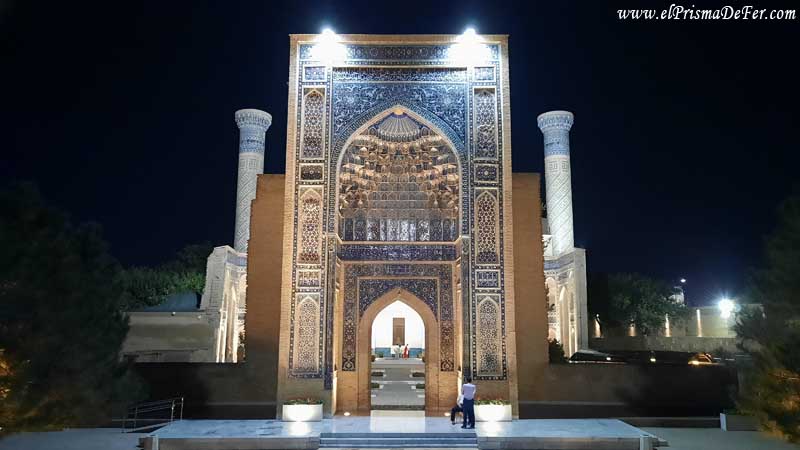
A curious fact: When a Soviet team opened his tomb in 1941, they are said to have found an inscription warning that anyone who disturbed his rest would unleash a great war. Days later, Hitler invaded the Soviet Union. Myth or not, the aura surrounding this site is as powerful as its history.
How much does it cost to enter Timur's mausoleum?
To enter Gur-e-Amir, it is necessary to pay an entrance fee of around 75,000 som for foreigners (prices may vary over time).
🛍️ Siyob Bazaar
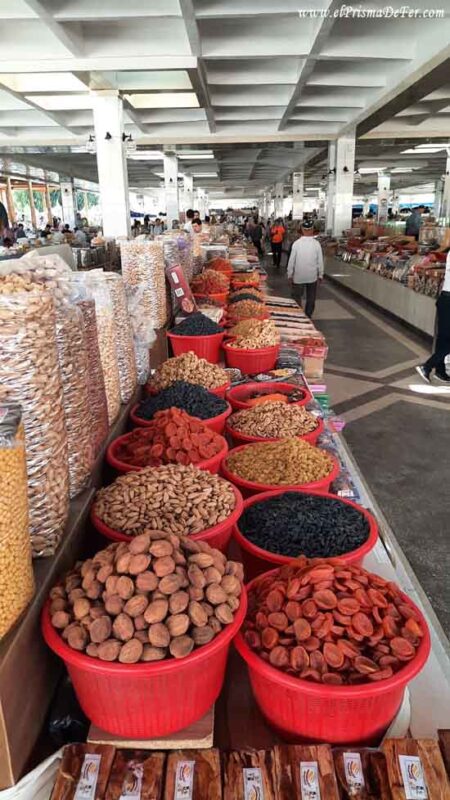
Right next to the Bibi Khanym Mosque, the Siyob Bazaar is the commercial heart of Samarkand. Its aisles exude the everyday life of Uzbekistan: mountains of dried fruit, aromatic spices, freshly baked bread, local sweets, nuts, carpets, and even tourist souvenirs. It's the perfect place to mingle with the locals, practice some haggling, and sample flavors you won't soon forget.
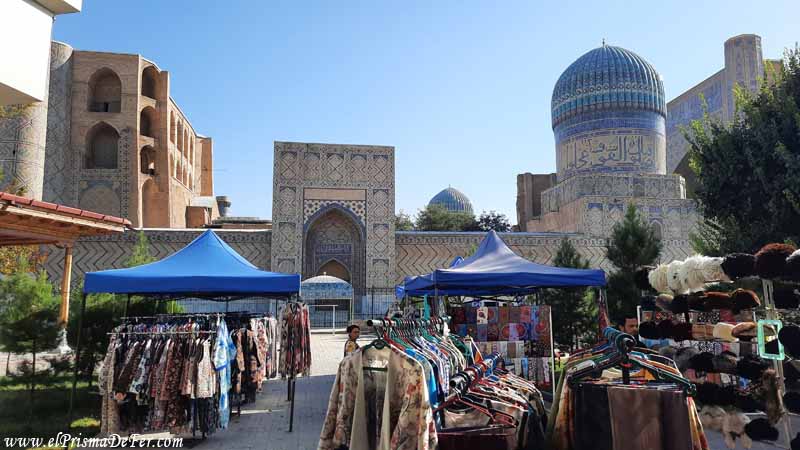
If you come in the summer, don't miss the Uzbek melons, famous for their sweetness. And if you arrive hungry, there are affordable local food stalls that are a gem for a cheap lunch.
🕌 Hazrat Khizr Mosque
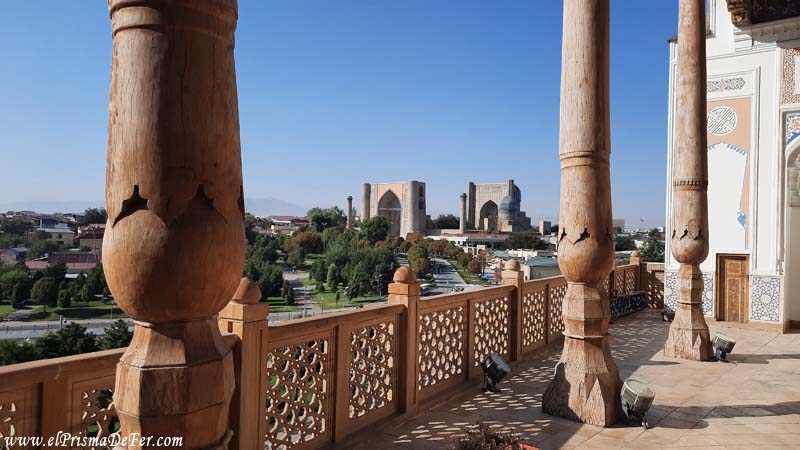
The Hazrat Khizr Mosque may not be as imposing as others in Samarkand, but it is a place full of symbolism and charm. It is located on a small hill and offers one of the best panoramic views of the old town.
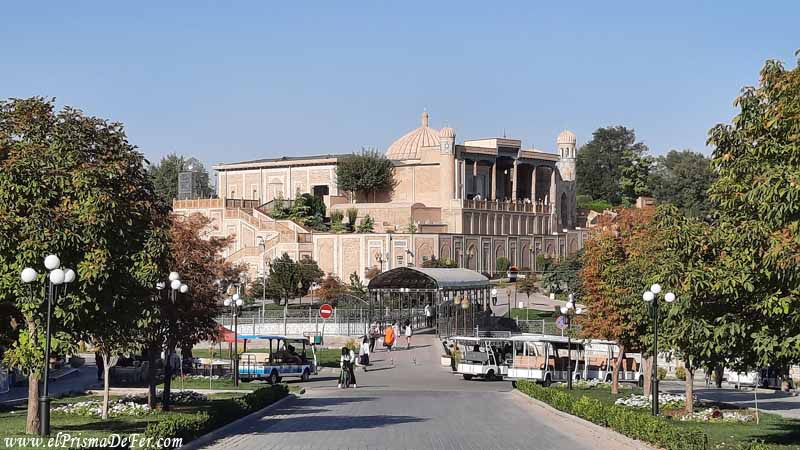
This mosque is dedicated to Khizr, a sacred figure in Islam associated with immortality and spiritual guidance. This is said to have been the first Islamic place of worship built in Samarkand, although the current structure dates back to the 19th century, with several recent restorations that have further beautified its architecture.
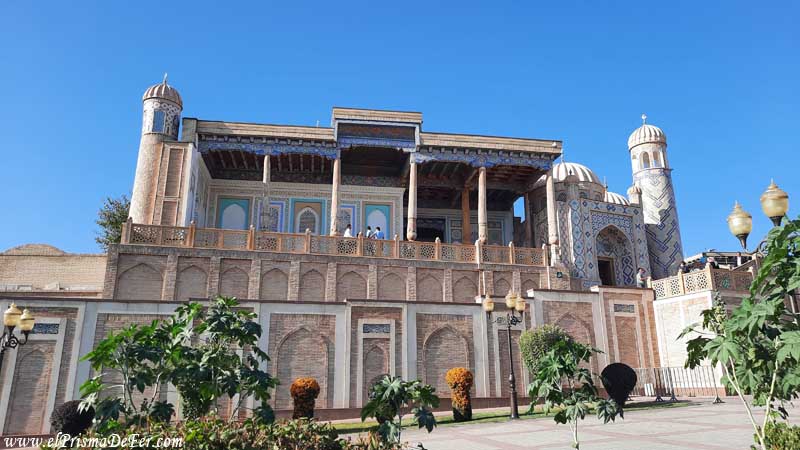
Unlike other tourist-packed places, it tends to be quieter here. The interior is decorated with delicate carvings and floral motifs, and from its terrace you can clearly see the Bibi Khanym Mosque, the Siyob Bazaar, and the city's signature turquoise roofs.
A curious fact: the tomb of Uzbekistan's first president, Islam Karimov is also located within the complex, which gives the site additional symbolic importance.
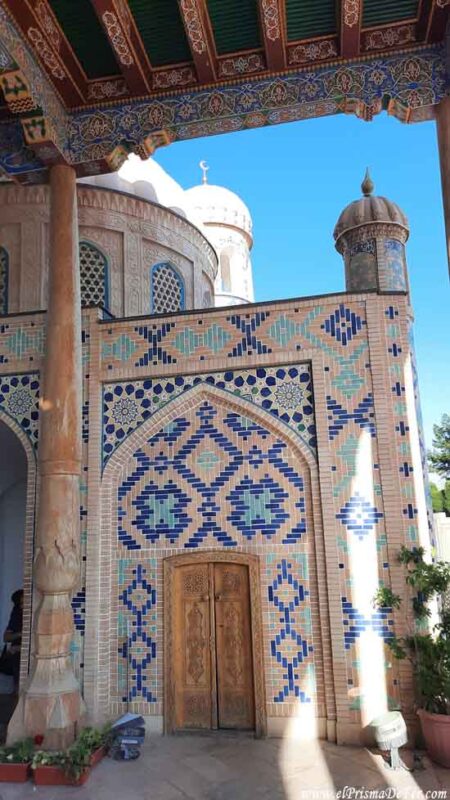
- Admission is free.
🖼️ Art galleries in Samarkand
I enjoyed discovering Samarkand through its art scene. There are many small galleries scattered throughout the city, especially in side streets near the Registan or around the Old Town.
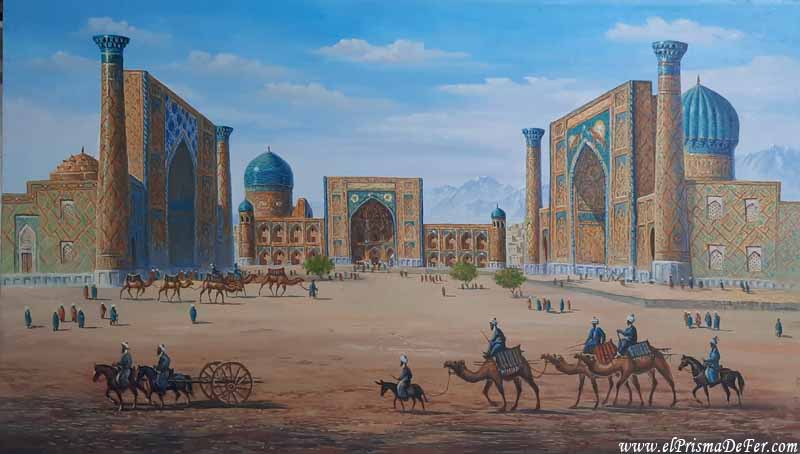
You'll find everything from contemporary artists who fuse modern styles with traditional Islamic iconography, to workshops in ceramics, embroidered tapestries, and Persian miniatures.
Some art houses also function as cafes or cultural centers, and offer temporary exhibitions and workshops for curious travelers.
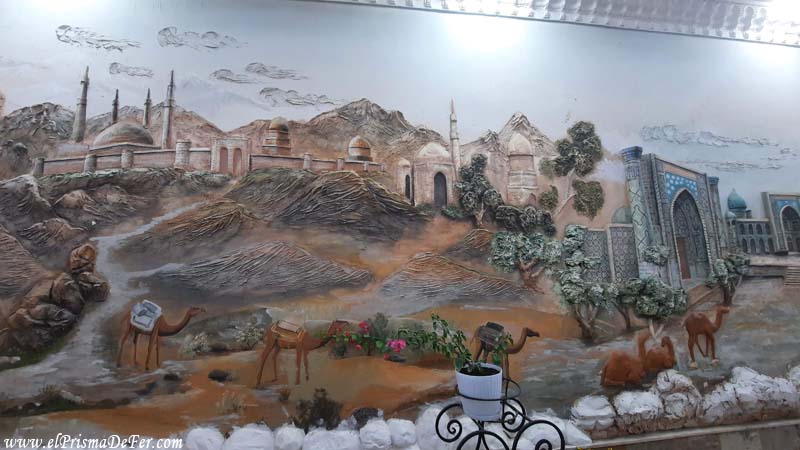
If you're interested in art, it's worth spending a few hours discovering these spaces.
🧭 Ulugh Beg Observatory
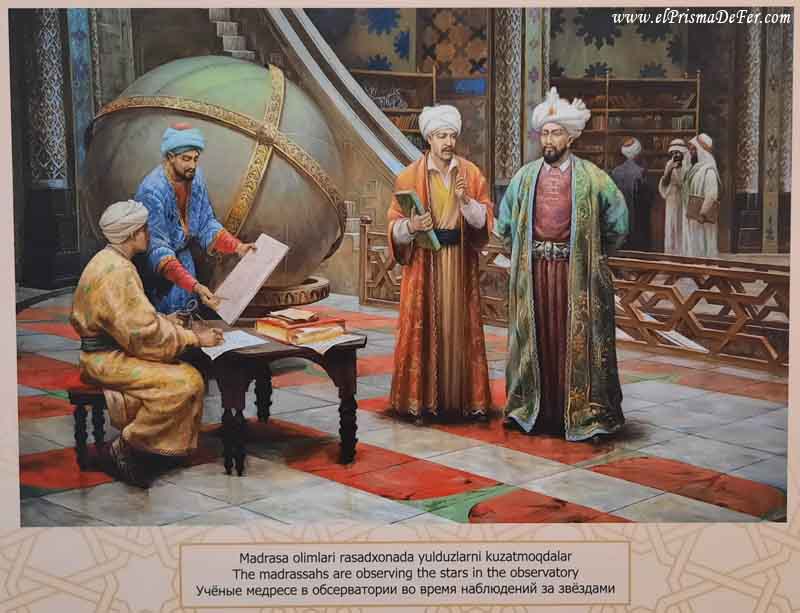
Ulugh Beg, Tamerlane's grandson, was a brilliant astronomer. His observatory was a scientific gem of the 15th century, and although little remains today, the accompanying museum beautifully tells his story and achievements.
🏞 Afrosiab and the History Museum
In the north of the city are the remains of Afrosiab, the original Samarkand, which predates even the arrival of Islam. The museum houses frescoes, maps, and artifacts that help us understand the city's evolution over the millennia.
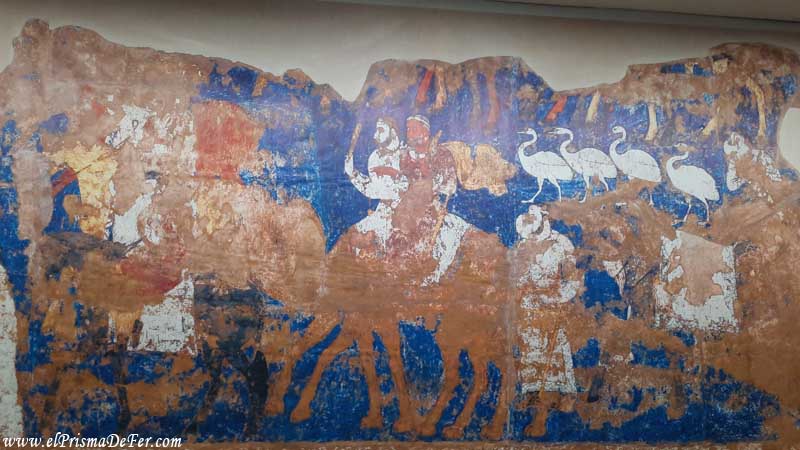
Although, to be honest, I found it very small and lacking in features. You can see everything in 30 minutes. If you're short on time, you might want to skip this visit.
How much does it cost to enter the Afrosiab and the History Museum?
To enter Afrosiab, you need to pay an entrance fee of around 80,000 som for foreigners (prices may vary over time). A very high price for what little it offers inside.
Organized activities in Samarkand
🛏 Where to stay in Samarkand?
Samarkand has options for all budgets, from boutique hotels to backpacker guesthouses. If you are looking for comfort and to be close to the main historical sites, it is best to stay near the Registan or around the Siyob Bazaar. You'll have everything close at hand: attractions, restaurants, and transportation.
For backpackers, there are several budget guesthouses and hostels, many with breakfast included and a traveler-friendly atmosphere. Some are even located in traditional Uzbek houses with interior courtyards, which greatly enhances the experience. If you have a bigger budget, there are boutique hotels with plenty of charm and local flair.
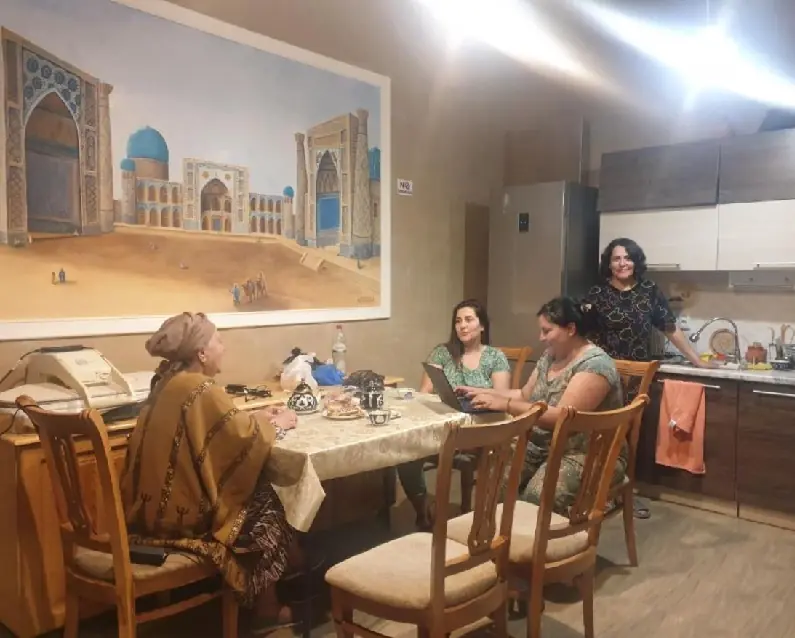
I stayed at Azaliya Hostel, and luckily I couldn't have made a better choice. It's located in the old part of town, close to the main attractions. It has a good kitchen, a patio, and comfortable rooms. It's ideal for spending quiet nights and meeting other travelers.
💡 Tip: Booking well in advance is a good idea, especially during peak season (spring and fall), when group tours can fill up some accommodations quickly.
Is it safe to visit Samarkand?
Yes, Samarkand is a safe city for travelers, even if you're traveling alone and on a backpacker's budget. Uzbekistan is generally one of the most stable countries in Central Asia, with strong state control and low crime rates, especially in tourist areas. Samarkand has a peaceful atmosphere, with a moderate police presence and friendly locals.
As in any destination, it's a good idea to take basic precautions: take care of your belongings in crowded spaces like markets or stations, and avoid ostentatiously displaying valuables. But beyond that, it is not common to hear about experiences of theft or scams. People are generally friendly, and many are curious about foreign visitors, especially if they see you're coming from far away or traveling alone.
While language can be a barrier (English is rarely spoken), it doesn't pose a safety issue. With a little sign language and patience, you can always find a way to communicate. Traveling through Samarkand is, in short, a safe experience, even for those who dare to explore it independently.
How many days to stay in Samarkand?
Samarkand is one of those cities that impresses at first sight, but also deserves to be explored at a leisurely pace. While many organized tours offer express one-day visits, it's best to stay at least two nights (2 or 3 full days) to enjoy both its main monuments and its unique atmosphere without rushing.
On your first day, you can dedicate yourself to visiting the must-sees: the iconic Registan Square, the Mausoleum of Tamerlane (Gur-e Amir), and the Bibi-Khanym Mosque. The second day allows you to explore the Shah-i-Zinda Necropolis at a more leisurely pace, visit the Ulugh Beg Observatory, and stroll through the bazaars and old streets at a different pace. If you have a third day, you can even explore less touristy corners or visit the nearby village of Afrosiab and its archaeological museum. Staying a little longer also gives you the chance to see the city illuminated at night, which has its own magic.
✨ Final reflection on my visit to Samarkand: a city for walking and traveling back in time
Samarkand fascinated me. It's a city best enjoyed with your eyes wide open to admire so much historical beauty. With its wide squares, majestic madrasas, and fairytale mosques, it's a true architectural paradise for lovers of history, Islamic art, and ancient cultures.
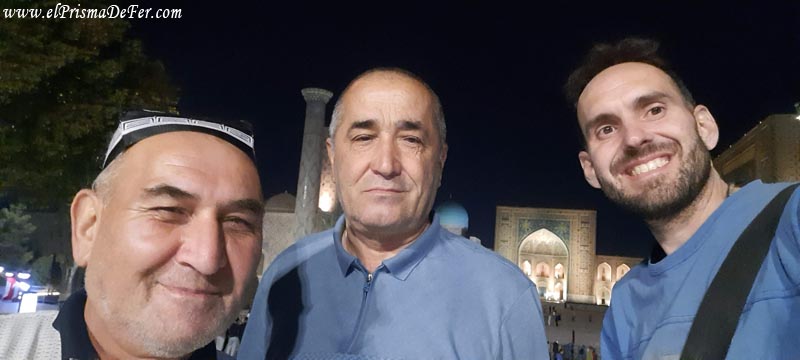
At every turn, you encounter centuries of stories, conquests, and legends. And while there are many tourists today, and sometimes the modern bustle breaks the atmosphere of yesteryear, Samarkand's essence remains intact. I recommend exploring it on foot, without rushing, letting every corner speak to you. Because here, unlike what I felt in the United Arab Emirates, history isn't just seen, it's breathed.
Frequently Asked Questions about Samarkand
How many days are needed to visit Samarkand?
With 2 full days you can see the main attractions such as Registan Square, Shah-i-Zinda, Bibi-Khanym Mosque and Ulugh Beg Observatory. If you want to explore it at a more leisurely pace or take nearby excursions, 3 days is ideal.
Is Samarkand worth visiting?
Yes, without a doubt. Samarkand is one of the great landmarks of the Silk Road and stands out for its monumental architecture, ancient history, and atmosphere very different from other cities in Uzbekistan.
Is it easy to get around Samarkand?
Yes. The historic center is quite compact and many sights can be reached on foot. For longer journeys, taxis are inexpensive and easy to find.
How to get to Samarkand?
You can get there by train (including the Afrosiyob high-speed train) from Tashkent or Bukhara, or by bus and marshrutka. The train is the most comfortable and efficient option.
Is it an expensive city to travel to?
No. Samarkand is inexpensive, especially for food and transportation. The biggest expense is usually accommodation if you travel during peak season, although there are good options for backpackers.
When is the best time to visit Samarkand?
The best times to visit are spring (April–May) and autumn (September–October), when the weather is pleasant. Summers are very hot and winters can be quite cold.
Is it safe to travel to Samarkand?
Yes, it's a very safe city for travelers. As with any tourist destination, you just need to take basic precautions against petty theft.
Can I pay by card or is it better to bring cash?
It's a good idea to bring cash. While some hotels and restaurants accept cards, cash is still the most common payment method, especially in markets and taxis.
Video of my trip to Samarkand, Uzbekistan
Support The Prism of Fer!
Your support helps me continue creating free content on the blog. Thank you so much!