If there was one place that surprised me in Morocco, it was Tinghir. Located between the imposing High Atlas Mountains and the gateway to the Sahara, this small city, also known as Tinerhir, turned out to be one of my favorite places in the country.
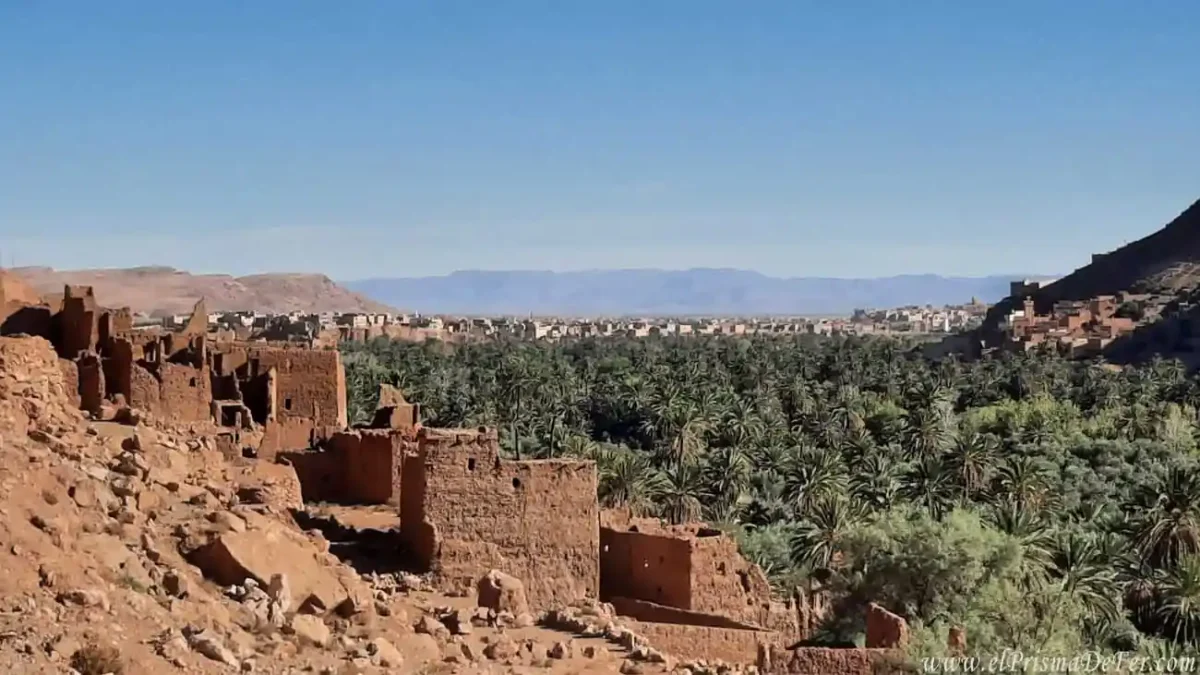
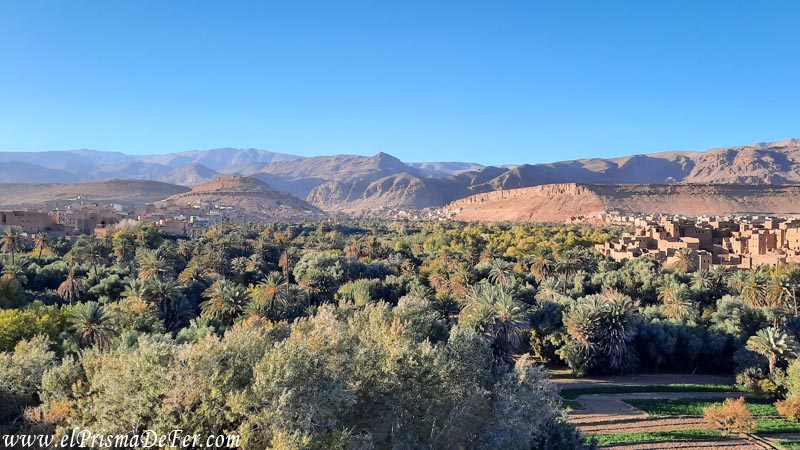
Beyond its proximity to the famous Todra Gorges, what I really loved was its surroundings, with an oasis that stretches between palm groves and adobe kasbahs hidden among the vegetation, creating a landscape that truly makes you travel back in time.
In this post, I'll tell you what to see and do in Tinghir, from its palm groves and kasbahs to the most interesting corners of the oasis. I'll also explain how to explore the area, how to visit the Todra Gorge, and why this place could be one of the biggest surprises of a trip to Morocco.

This post may contains affiliate links. If you purchase through these links, I may earn a commission at no extra cost to you. Thank you for your support!
Table of Contents
Location of Tinghir and characteristics of the Todra Valley
Tinghir is located in southeastern Morocco, between the High Atlas and the Anti-Atlas, and serves as an excellent base for exploring the Todra Valley, one of the country's natural wonders.
This oasis city is strategically located between popular tourist destinations such as Merzouga (the Sahara Desert) and Ouarzazate, making it a common stop on routes crossing this mountainous and semi-desert region.
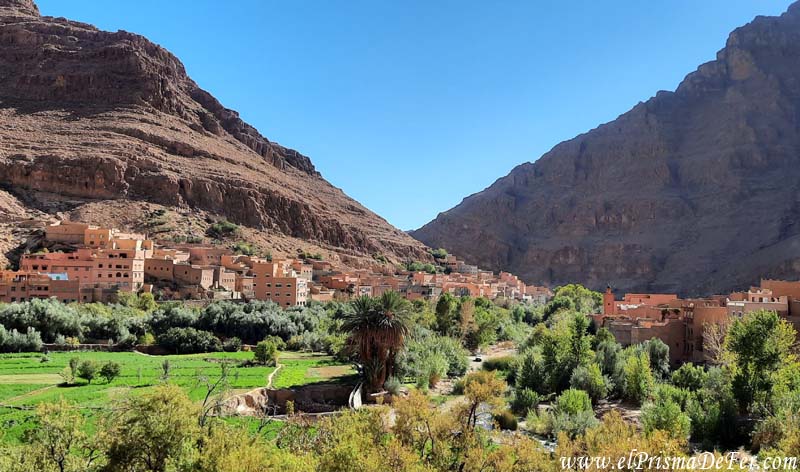
The Todra Valley, for its part, is a fertile green corridor that follows the course of the Todra River, surrounded by reddish mountains and limestone canyons that reach heights of up to 300 meters.
This contrast between the green of the oasis, full of palm trees, orchards and small irrigation canals, and the ochre of the mountains creates a landscape of unique beauty.
Throughout the valley, Berber villages, cultivated fields, and centuries-old kasbahs give the area a unique and timeless feel.
This post is part of the itinerary I put together to travel Morocco in 3 or 4 weeks.

How to get to Tinghir
🚐 From Merzouga
If you're coming from the desert like me, Tinghir is a natural stop on the way back to the center or north of the country.
- By bus: There are daily buses from CTM or Supratours that depart from Merzouga to Tinghir. The journey takes between 3.5 and 4 hours, passing through Rissani and Erfoud.
- By car or shared taxi: You can also take a shared taxi to Erfoud or Errachidia and connect with another taxi to Tinghir. Ideal if you want to travel faster or can't find a bus.
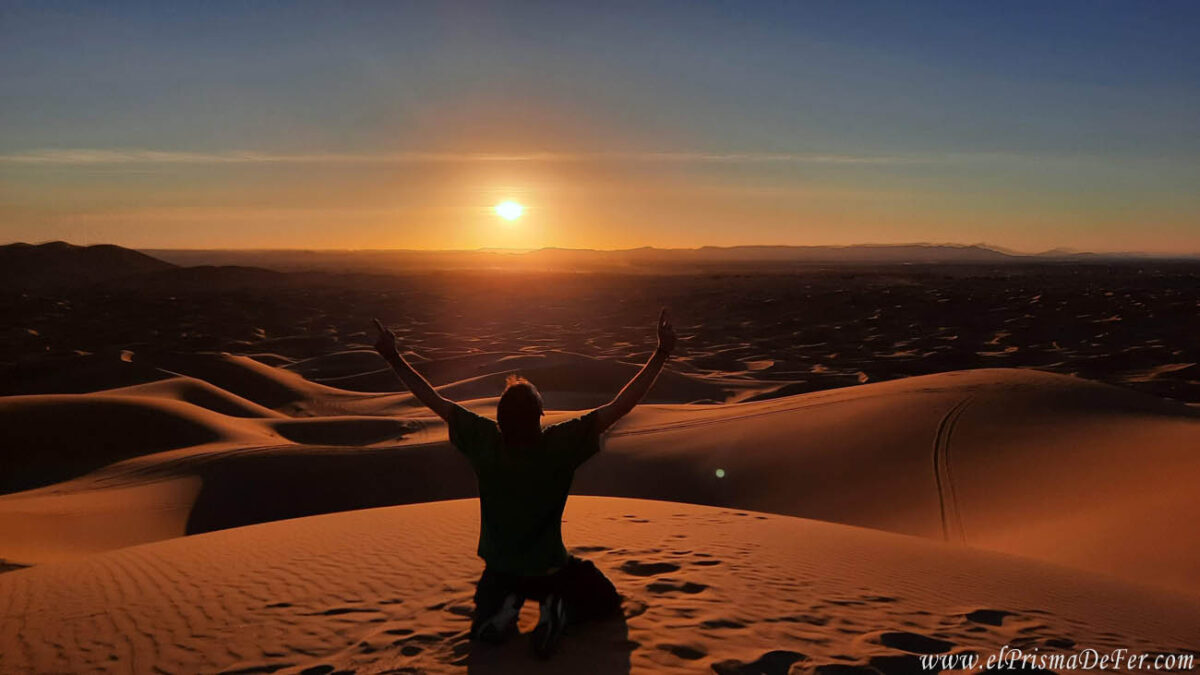
If you're thinking of exploring this area, you might be interested in reading the post I wrote about Merzouga, the entrance to the Sahara Desert
🚌 From Marrakech
From the imperial city of Marrakech, Tinghir is located about 370 km through the High Atlas Mountains.
- By direct bus: There are buses from CTM and Supratours that connect both cities. The trip takes between 7 and 8 hours depending on traffic and intermediate stops.
- By car or private tour: Many travelers rent a car or book a tour that stops in Ait Ben Haddou and Ouarzazate, arriving in Tinghir at the end of the day.
🚗 From Ouarzazate
From the Moroccan film city, Tinghir is just 170 km along the N10, a very picturesque road.
- By bus: CTM or Supratours offer daily services. The trip takes around 3 to 4 hours.
- By car or shared taxi: Ideal if you want to stop in the Valley of the Roses or Berber villages along the way. Shared taxis are also available from the station.
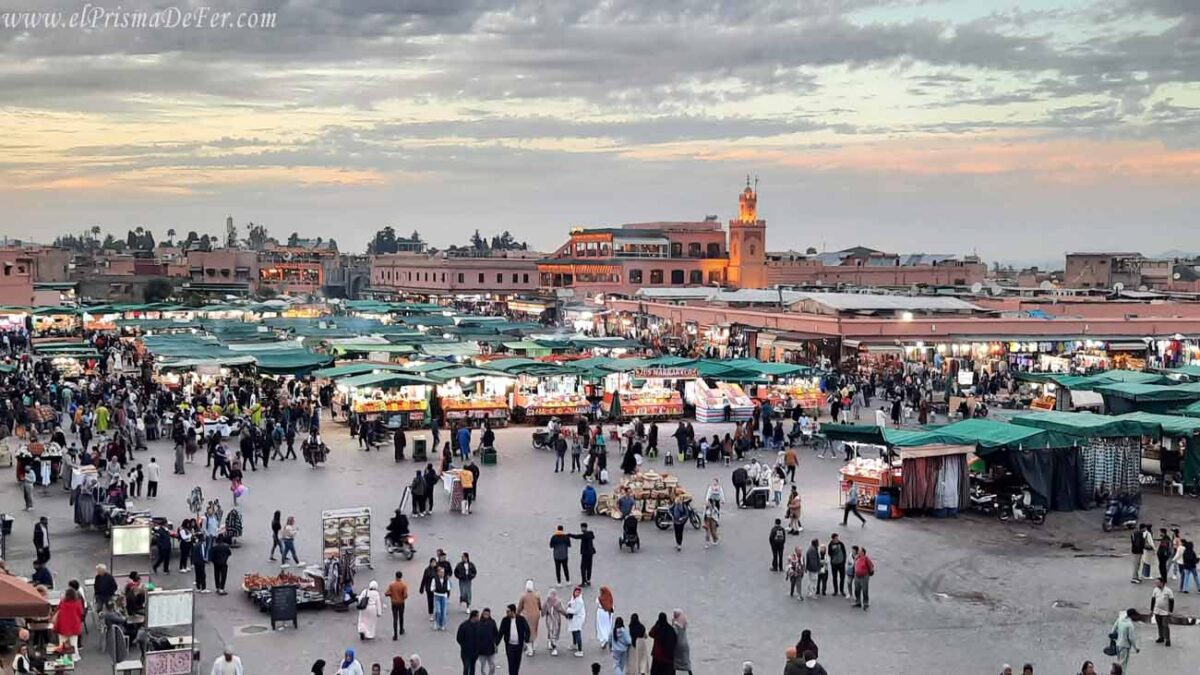
You can read the complete travel guide to Morocco. There you have all the information you need to plan your trip to this fantastic country.
🌴 What is a palm oasis and what is it used for?
What made me fall in love with this place was getting lost in its palm oasis. But this isn't just a picturesque landscape worthy of a postcard; it's the agricultural and vital heart of many communities in desert areas like Tinghir.
These oases exist thanks to traditional irrigation systems, which channel water from nearby springs or rivers to keep a strip of fertile land alive in the middle of the arid environment.
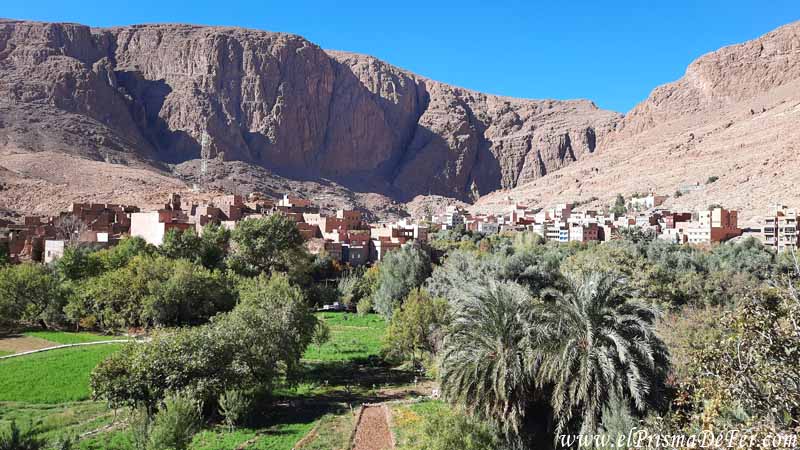
The date palm, which gives the oasis its name, shades other, more sun-sensitive species, allowing for terraced farming. At the bottom of the oasis, farmers plant wheat, barley, alfalfa, corn, and a wide variety of vegetables, while fruit trees (such as pomegranate and fig trees) occupy the middle level.
Besides being a source of food, these oases are spaces for work, social life, and cultural heritage. Many families depend directly on what they produce there and maintain it through knowledge passed down from generation to generation.
🏰 What is a kasbah and why are there so many in this region?
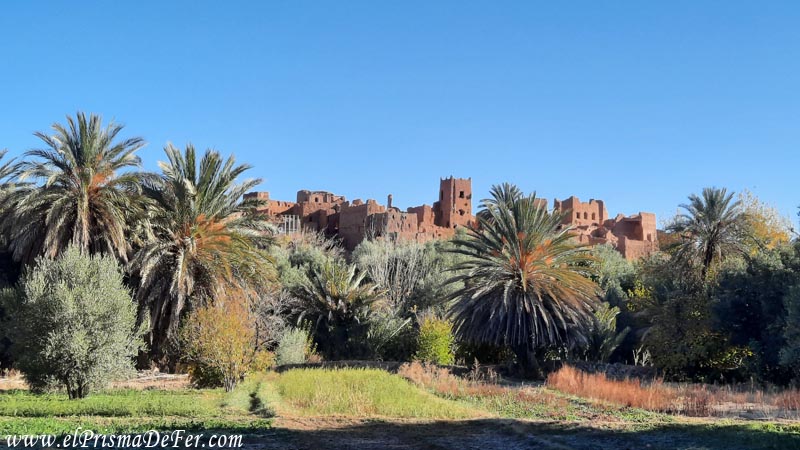
Another of the peculiarities I loved about Tinghir and the entire region is the presence of these adobe fortifications. Kasbahs (or qasbahs) are ancient fortresses or fortified residences that served both as homes for powerful families and as defensive points in times of conflict.
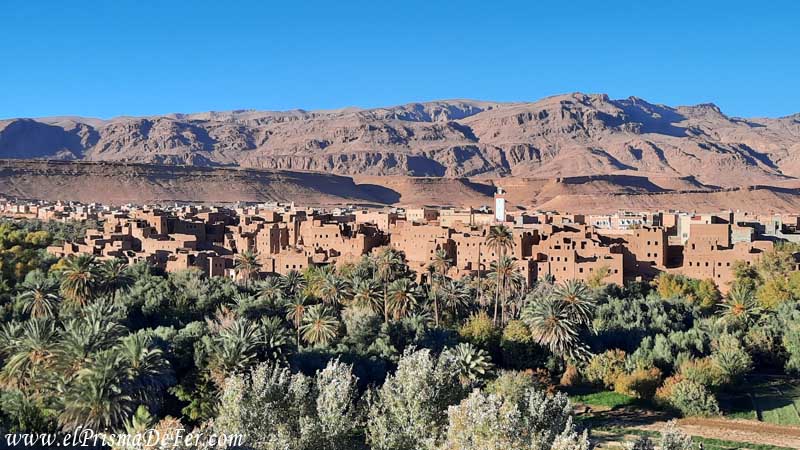
They are built primarily from adobe, a mixture of mud and straw that, while vulnerable to rain, is perfect for the dry climate of southern Morocco. Their architecture is notable for its thick walls, crenellated towers, and decorative mud details, which still impress today with their beauty and functionality.
In areas like the Todra Valley and Dades Valley, these kasbahs are very common because they were a practical and symbolic way to consolidate the power of local tribes and control trade routes. They were often located next to oases and palm groves, as in Tinghir, where agriculture flourished, and community life was organized from there.
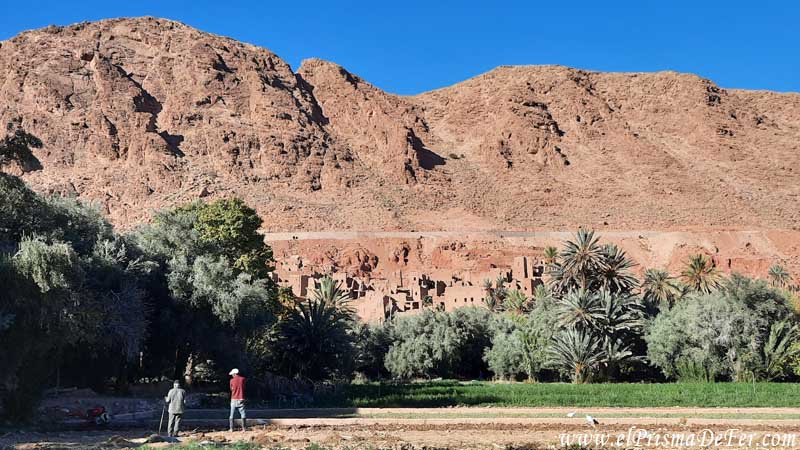
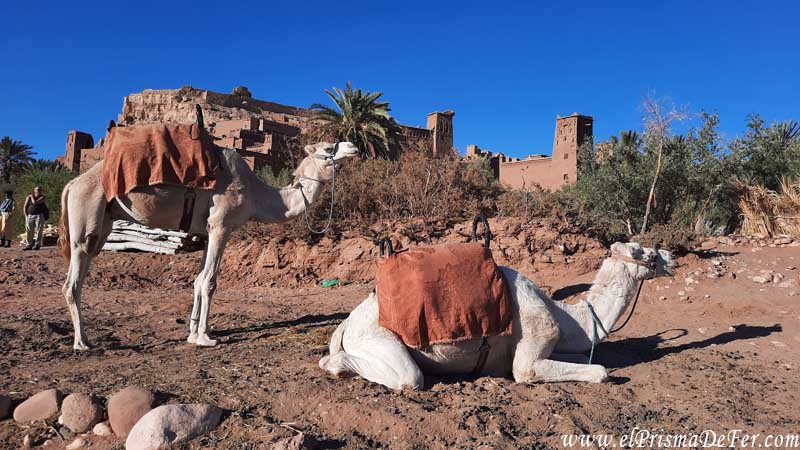
While walking around this region of Morocco, it is common to come across abandoned or partially ruined kasbahs, as happened to me while exploring the palm grove of Tinghir. That feeling of stumbling upon a piece of forgotten history amidst the trees and mud is truly unique, almost like stepping back in time.
Some of these kasbahs have been restored and converted into museums or accommodations, but many others remain as silent witnesses to an era that profoundly marked the identity of southern Morocco.
🧭 Kasbahs you can visit near Tinghir
If you're interested in delving into the history and architecture of southern Morocco, here are some kasbahs worth exploring:
Kasbah of El Glaoui (Tinghir)
Located in Tinghir, this partially restored kasbah belonged to the family of the powerful chieftain El Glaoui. Although part of it is in ruins, you can walk through its corridors and terraces overlooking the palm grove. It's a good way to imagine how the area's powerful people lived.
Kasbah of Aït El Haj Ali (around the palm grove)
This is a less touristy kasbah, almost forgotten among the palm trees. If you dare to explore on your own, you might stumble upon its crumbling adobe walls and feel like you're in a movie scene. There are no signs or marked trails, but it's there, almost waiting to be discovered.
Kasbah of Taourirt (in Ouarzazate)
Although it's about a 2.5-hour drive from Tinghir, it's one of the most important kasbahs in southern Morocco. Completely restored and open to the public, it showcases the architectural splendor of this type of building and is a good visit if you're traveling south toward Marrakech.
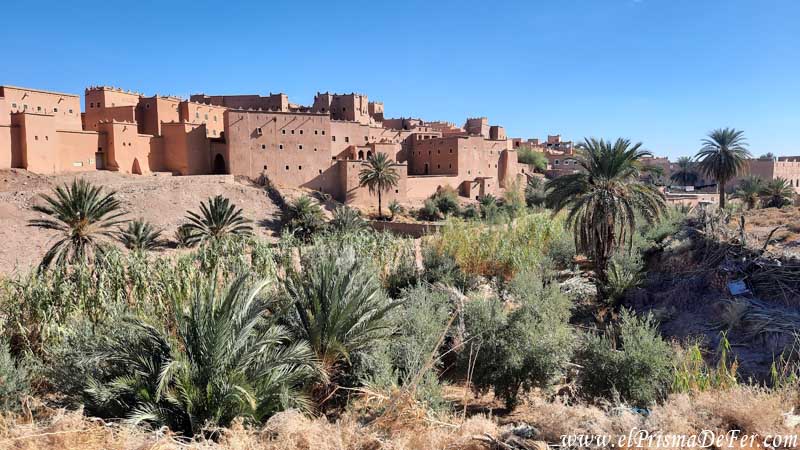
Kasbahs scattered throughout the Todra Valley and surrounding areas
On your way to or from the Todra Gorges, you'll come across numerous small kasbahs, either ruined or inhabited by local families. Although many don't have official names, simply seeing them amidst the arid landscape and oases is part of this region's charm.
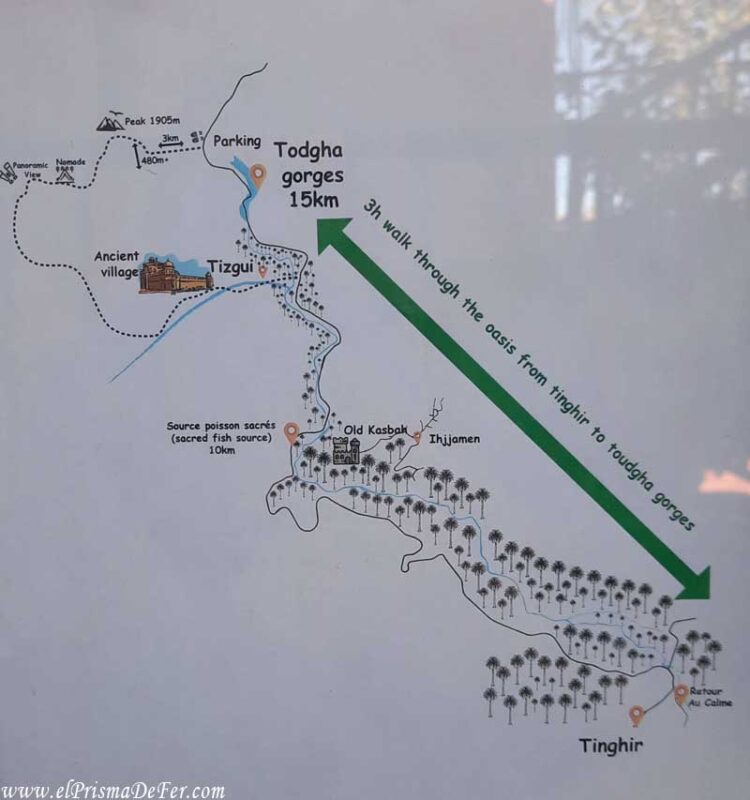
Map of Tinghir, with the Palm Oasis and Todra Gorge
What things to see and do in Tinghir
So, what can be done in Tinghir that I liked so much:
🏞 Explore Todra Gorge
Without a doubt, one of Tinghir's greatest attractions is the imposing Todra Gorge, a canyon with vertical walls that reach up to 150 meters in height.
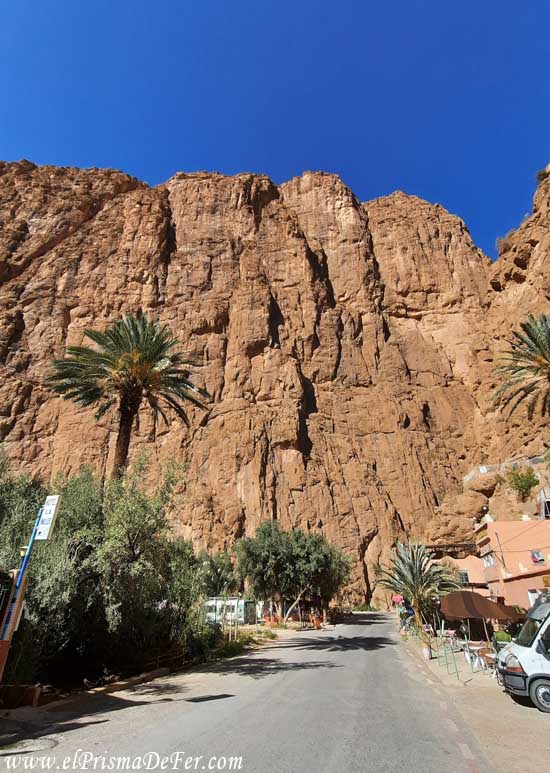
You can explore them on foot along the river trail, or if you enjoy climbing, this is one of the best spots in the country. At the canyon entrance, you'll usually find food stalls, tea vendors, and some artisans.
Generally, tours departing from Marrakech towards Merzouga include a visit to the Gorges.
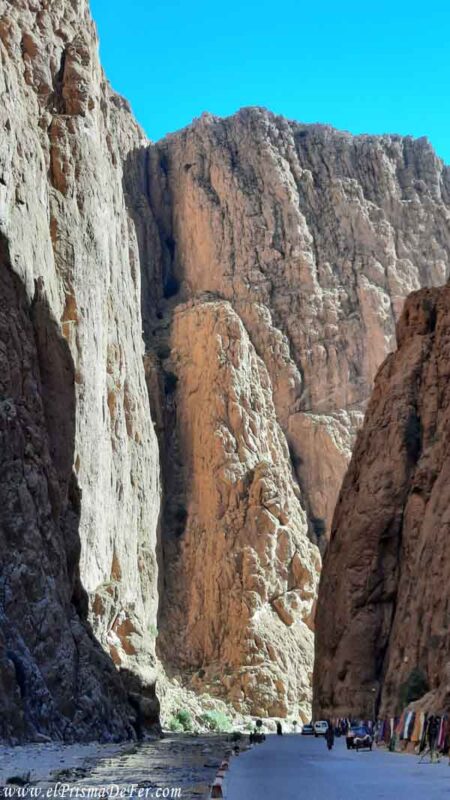
Furthermore, a long trekking trail starts at the end of the canyon, climbing the mountains and offering panoramic views of the valley. I didn't do it, so I can't say what it's like, but it might be a good activity for those looking for something more adventurous and away from the tourist areas.
How to get to Todra Gorges from Tinghir
To get to Todra Gorge from the city of Tinghir you can:
- Taking a Taxi: The fastest and most convenient way is to take a taxi from Tinghir to Todra Gorge. The journey is approximately 10/15 km and takes about 20 minutes. The estimated cost is 26 to 32 Moroccan dirhams (MAD).
- Do a Hike: If you prefer a more economical option and want to enjoy the scenery, you can hike from Tinghir to the gorge, either along the trail or through the palm oasis. The distance will also be about 15 km.
- Taking a Shared Taxi: Another alternative is to take a shared “grand taxi,” which is a common and affordable option in Morocco. The approximate cost is US$2 to US$3. They often drive along the road, picking up people waiting for them on the side of the road. If they see you walking, even if you're a tourist, they'll likely stop and ask if you're going to the Gorge.
I took a shared taxi and then walked back through the oasis. This combination seems appropriate to me, because the route uphill is mostly uphill, and the return is the opposite.
Regardless of the means of transport you choose, the journey from Tinghir to the Todra Gorge is beautiful and you can appreciate the landscapes so characteristic of this area.
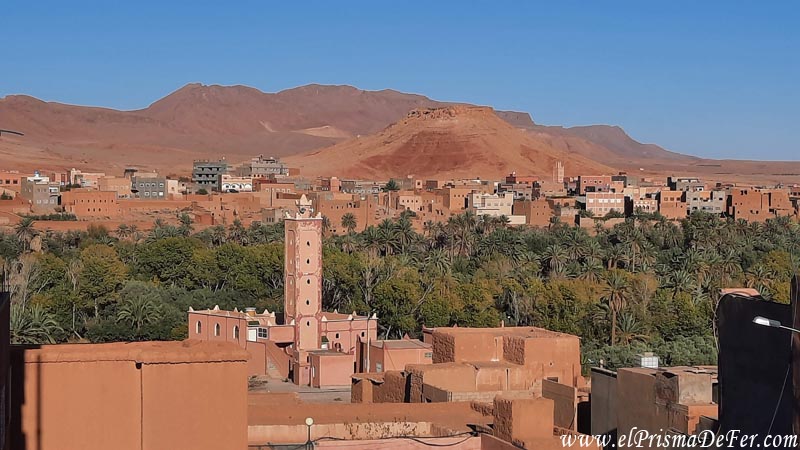
🚶♂️ Walk through the Palmeral and the Ksur
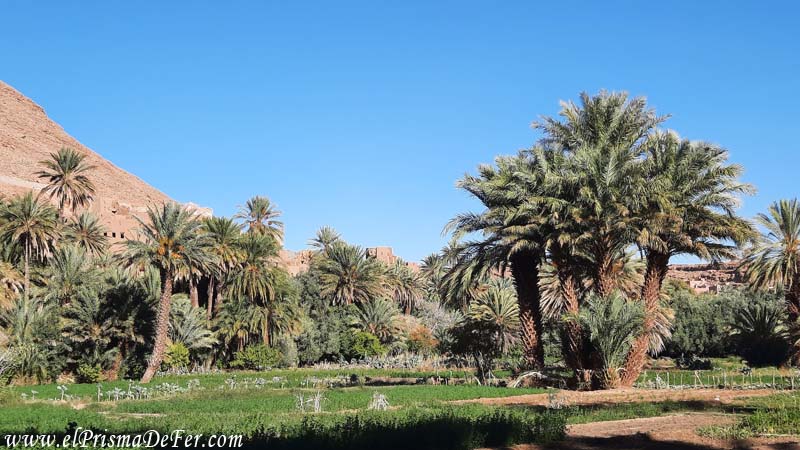
Of all the places I visited in Tinghir, the palm grove was undoubtedly my favorite. Walking along those dirt paths that wind through the thousands of date palms is like stepping into another world.
The best thing is that it's not a place prepared for tourism, but rather it's part of the daily life of the local people.
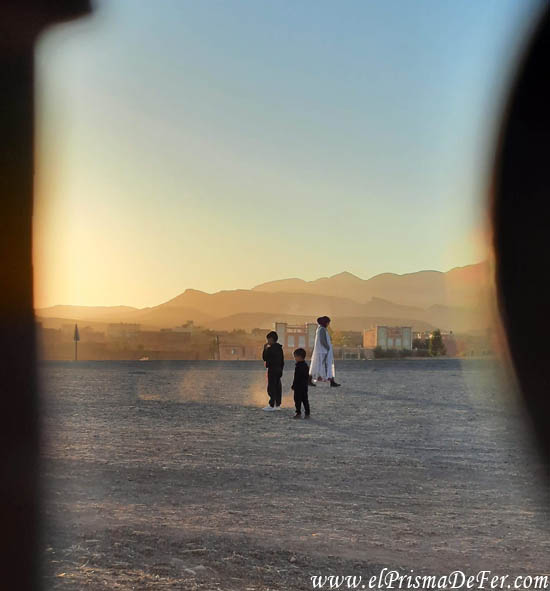
At every turn you see men working the land with mule-drawn plows, women washing clothes in the irrigation canals, or children playing among the wheat and alfalfa fields. There are no signs or official paths; you can easily get lost and discover something unexpected.
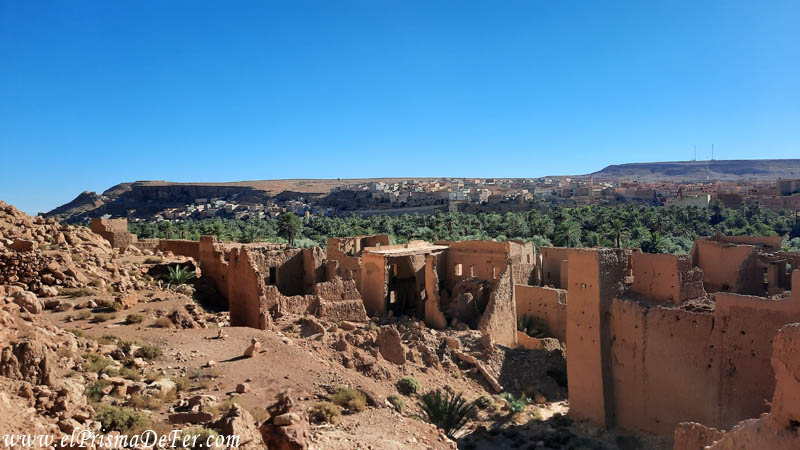
It happened to me that, while walking back from the Gorge towards the village, I stumbled upon the ruins of an old Kasbah hidden among the vegetation (see location on the map).
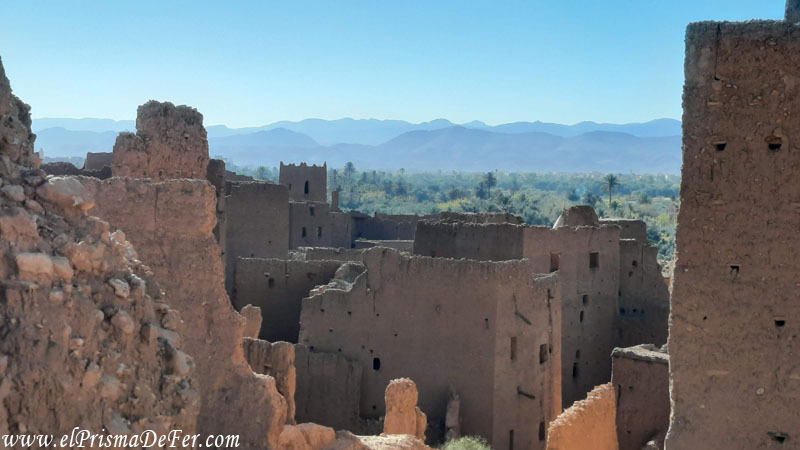
There was nobody there, no signs, no explanations, just a set of adobe walls worn down by time.
I felt like Indiana Jones, arriving at a place where there was once life, gatherings, and stories. You can see what I mean in the video at the end of this post.
Explore the Ikalalne Mosque and surrounding areas
Old mosque made of earth and stone. It can be accessed from the palm grove (see location), following the ruins of Ksar Afanour until you reach the Mosque, or from the road through the village of Afanour.
There is usually a guide in the area, Addi, who enthusiastically shares his restoration work, details of rural Moroccan Islam, and the challenges he faces in preserving the place.
At the end of the visit, it is recommended to leave a good tip as a token of appreciation, as he needs funds to continue maintaining it.
🕌 Visit the Medina of Tinghir
Although small, the medina has its charm. Quiet streets, some old mosques, and a lively local life.
🏘 Discover nearby Berber villages
If you have time, you can organize hikes or taxi rides to nearby villages like Tamtattouchte or Aït Hani, where you'll experience another side of Amazigh culture. Some accommodations also offer excursions or even overnight stays with local families.
🌄 Watch the sunset from a viewpoint
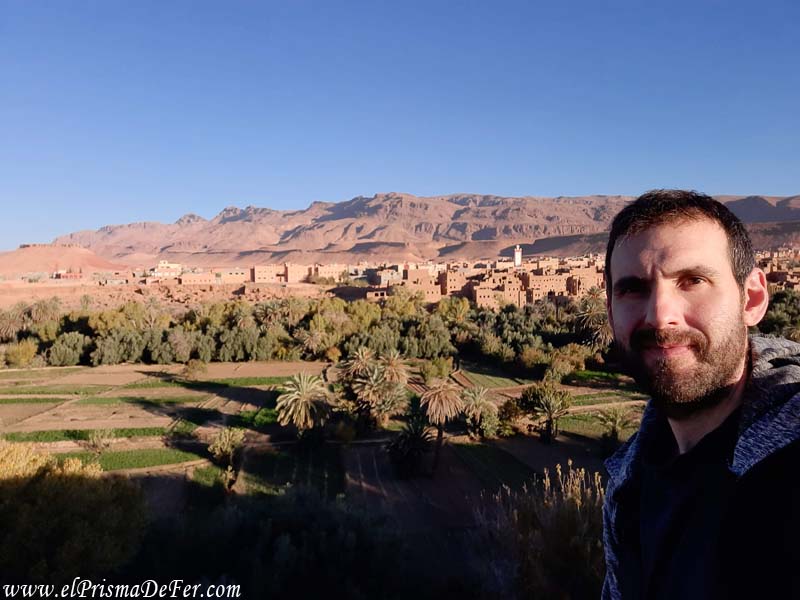
On the hill north of the center there is a viewpoint from where you can see the whole oasis, the palm grove, the mountains and the city skyline at sunset (see on the map).
🍽️ Eating at a Berber restaurant: an experience with flavor… and surprise
After finishing my walk through the palm grove, I ended up having lunch at a small local restaurant run by a Berber family (see on the map).
I was offered tagine and freshly baked bread, accompanied by mint tea. The food was delicious, made with fresh ingredients. The hospitality was genuine, with smiles, questions about my trip, and a feeling that I was being welcomed.
But I noticed that the owner avoided telling me how much lunch would cost. I waited patiently, but when we finished, the bill was quite high for the prices in the area. She was clearly trying to take advantage of me being a tourist.
It was an awkward moment, but by talking things through nicely, I managed to negotiate a fairer price. I know they didn't mean any harm; it's a common practice in tourist areas of Morocco and many other countries. Luckily, everything turned out alright, and they even invited me to stay longer and chat with the family.
I find the Berbers to be very funny and friendly people. I got along very well with them throughout my trip to Morocco. But beyond their warmth, I advise you to ask the price before sitting down and make it clear, even in places that seem overflowing with friendliness.
Is it better to visit Tinghir on a tour or on your own?
Whether you prefer the comfort of an organized tour or are drawn to the adventure of exploring on your own, both options are perfectly viable. Below, I explain the advantages and disadvantages of each to help you decide which best suits your travel style.
Visit Tinghir on a tour:
Advantages:
- Convenience: Tours typically cover transportation, accommodations, and some activities, allowing you to relax and enjoy yourself without logistical worries.
- Local Guides: You'll have the advantage of having a guide who will provide you with detailed information about the history and culture of the place, which can enrich your experience.
- Accessibility: If you don't speak Arabic or French, a tour can help you communicate and access places that might otherwise be more difficult to explore on your own.
- Optimized time: If you only have a few days in Morocco, a tour allows you to optimize your time, visiting all the highlights without wasting time planning.
Disadvantages:
- Less freedom: Tours have fixed schedules and pre-established routes, which means you'll have less flexibility to explore at your own pace or make spontaneous stops.
- Price: Tours are usually more expensive than doing it on your own, as they include additional services such as transportation and a guide.
- Mass tourism: In some cases, organized tours can be more crowded, which diminishes the feeling of authenticity and can make the place feel less genuine.
Some tours you can find departing from Marrakech to Merzouga that include a visit to Tinghir:
Visit Tinghir on your own:
Advantages:
- Greater flexibility: You'll have the freedom to choose your own pace and route, allowing you to explore beyond the usual tourist stops, such as the quiet corners of palm groves or remote villages.
- More authentic experience: As an independent trip, you'll immerse yourself deeper in the local culture, interacting directly with the locals and seeing the daily lives of Tinghir people without the barriers of a tour group.
- Lower cost: Traveling on your own can be cheaper, especially if you stay in simpler places or use local transportation instead of organized tours.
Disadvantages:
- Greater effort in planning: You'll need to research and organize everything from transportation to accommodations and activities. If you don't speak Arabic or French, this can be a challenge.
- Local Unfamiliarity: If you don't have prior experience in Morocco, it can be difficult to find certain places or fully understand the local culture without a guide to help you.
- Risk of getting lost: Without a guide, you could get lost in remote areas or not know the best places to visit if you don't have a detailed map or internet access.
🏨 Where to stay in Tinghir?
Tinghir, although small, offers several accommodation options ranging from cozy traditional houses to some more modern accommodations.
Most of the options are located near the town center or around the palm grove, allowing you to enjoy a peaceful and picturesque atmosphere.
- Riad or traditional houses: If you're looking for a more authentic experience and a closer look at the local culture, the ideal option is to stay in a riad or traditional Berber house. Many of these accommodations are run by local families, who will make you feel right at home. Plus, in some cases, you'll have the opportunity to enjoy local cuisine on-site and learn more about the local customs.
- Simple Hotels and Accommodations: If you prefer something more comfortable and with more amenities, there are several simple hotels in downtown Tinghir that offer good value options. While they're not luxurious, they have everything you need for a pleasant and comfortable stay, with some rooms boasting spectacular views of the mountains and palm grove.
- Accommodations near the Palm Grove and the Gorge: If you're looking to enjoy peace and nature, there are several accommodations near the palm grove and on the way to the Gorge, where you can wake up surrounded by palm trees. These more secluded spots offer a serene and relaxing atmosphere, ideal for unwinding after a day of exploring.
I stayed at the hostel Le Retour au calme Maison d’hôtes, located near the city center. It's run by its owner, a French woman. It has a great atmosphere, an outdoor common area, spacious rooms, and they can advise you on little-known trails in the area.
The only downside is that to get to the bathrooms, you have to cross part of the courtyard, and when it's cold at night, it can be a bit uncomfortable, but the rest is great.
In general, the options in Tinghir are limited but quite welcoming. It's advisable to book in advance if you're traveling during peak season, as there aren't as many accommodations as in other tourist cities in Morocco.
🌞 When is the best time to visit Tinghir?
Spring (March to May) and autumn (September to November) are the best times to visit Tinghir. The climate is moderate, with pleasant temperatures for trekking and exploring the valley and palm grove. The landscape is verdant, ideal for enjoying the views.
Summer (June to August) can be very hot, with temperatures above 40°C, which can make outdoor activities uncomfortable, although it is a good time if you prefer to avoid crowds.
In winter (December to February), temperatures are cool during the day and cold at night. It's a quieter season, but warm clothing is a must.
In short, spring and autumn are the best times to enjoy Tinghir. If you prefer cooler temperatures, winter is also an option, but summer should be avoided.
Is it preferable to sleep in Ouarzazate or Tinghir?
This is very subjective, but for me, Tinghir has much more charm than Ouarzazate. Based on everything I've said in this post, what this city conveyed to me doesn't compare to what I felt in Ouarzazate. However, in terms of location, the latter is in a better position, as it's halfway between Marrakech and Merzouga.
Is it worth sleeping in Tinghir?
Absolutely. To see the main sites at a leisurely pace, it's best to spend at least one night in Tinghir, two if possible. Plus, as it's on the way between Marrakech and Merzouga, it's a perfect stop to slow down and acclimatize to the desert.
How many days to stay in Tinghir?
Two full days are enough to explore the Palm Oasis, the Todra Gorge, and add in some other activities.
✨ Final Thoughts: Tinghir, a Hidden Gem in Morocco
Although Tinghir is not one of the most visited destinations in Morocco, for me it became one of the most special places in the country.
The genuine, authentic local atmosphere is something you don't easily find in more touristy cities. The people, the tranquility of the palm grove, the history that permeates every corner, and the natural beauty of the place captivated me deeply.
It's the perfect place to spend a couple of full days, where you can disconnect, explore at your own pace, and immerse yourself in the daily life of the Berbers. Tours passing through the desert usually don't spend much time in Tinghir, which allows the place to retain its essence without being overrun with tourists.
It's a shame that many don't linger here longer, as this town offers much more than meets the eye.
If you're looking for a place to enjoy Morocco in a more peaceful, authentic way, and closer to the local culture, I definitely recommend Tinghir. You won't regret spending a couple of days in this very special corner.
After these unforgettable days in Tinghir, my journey continues to Ouarzazate, the birthplace of Moroccan cinema. There, more arid landscapes await me, along with the best-preserved kasbah in all of Morocco and locations that have brought legendary films and TV series to life.
Video of Tinghir
Support The Prism of Fer!
Your support helps me continue creating free content on the blog. Thank you so much!