If you're in China or Mongolia, you'll probably consider crossing over to the neighboring country. It's an interesting change, because in a short time you can go from big cities and modernity to much more open, desolate landscapes with endless steppes.
If you are in Beijing and want to make that journey, there are several ways to do it, although the best known is the train that connects with Ulaanbaatar, part of the Trans-Mongolian Railway route.
In this post, I'll tell you how you can travel from Beijing to Mongolia by train. From what the journey is like, where to depart from, where to go, and what to expect at the border crossing, to some practical tips for organizing your trip without too much hassle.

This post may contains affiliate links. If you purchase through these links, I may earn a commission at no extra cost to you. Thank you for your support!
Table of Contents
How to get to the border from Beijing by train
The most direct way to get from Beijing to the Mongolian border is by train, following the same route as the Trans-Mongolian Railway.
The journey starts at Beijingbei North Station and heads north, passing through increasingly less urbanized areas until reaching the border city of Erenhot, Erlian Station (see location on map).
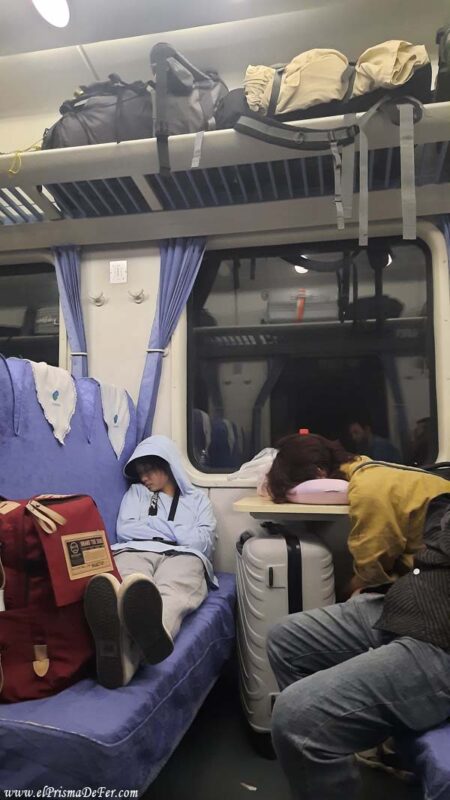
There are two main options: take a direct international train to Ulan Bator (the K23/24), or travel on a domestic train to the border town of Erenhot and cross the border on your own (see schedules, prices and buy tickets).
The first option is simpler because you don't have to get out of the car or deal with the crossing, but it's more expensive and more cumbersome to buy, while the second option is usually cheaper and more flexible, although it involves organizing the border crossing separately.
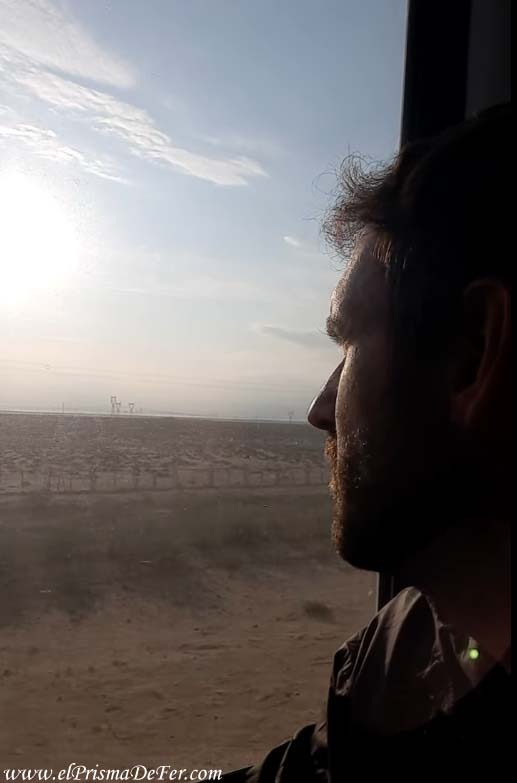
The journey to the border usually takes between 10 and 12 hours and is a peaceful trip. As you leave Beijing, the landscape changes; the big cities disappear, and more arid and open areas begin to appear, giving you a glimpse of what you'll find on the other side.
In addition to the direct train to Erenhot, there is also the option of splitting the journey from Beijing into two legs, which is useful if the schedules don't work for you.
One alternative is to travel first to Hohhot (Huhehaotedong station), the capital of China's Inner Mongolia province, and from there you can continue on another train to Erenhot (Erlian), getting closer to the border.
If you travel on the K23 international train, you'll likely have to spend around 5 hours at the station for border crossing procedures before continuing your journey to Ulaanbaatar, the capital of Mongolia. If you opt for a local Chinese train, read on to find out how to proceed.

How to cross the border between China and Mongolia
Upon exiting the train station in Erenhot, you'll see several drivers offering transfers. The tour includes the entire process: they take you first to Chinese immigration control, where you get out with your luggage, complete the exit formalities, and then get back into the vehicle.
Then you cross the neutral zone until you reach the Mongolian border post, where you repeat the process to enter the country.
Taxis usually drop you off at the main square of Zamyn-Uud (see on the map), which is the city on the Mongolian side.
If you see that taxi drivers are asking for more than 50 CNY, an alternative may be to go to the international bus terminal, located approximately 1 km away, where there are also regular services to the border for the same price.
The total journey isn't long, but the time depends largely on the number of people at the border. Generally, it can take between one and two hours to complete the entire crossing.
Services and money exchange in Zamyn-Uud
In Zamyn-Uud, especially in the area near the train station and the main square, you'll find everything you need for a break before continuing your journey. There are currency exchange offices and banks where you can get local currency, as well as some restaurants and small shops.
It's a good place to exchange money, buy supplies for the journey, or simply get organized before continuing on to Ulaanbaatar. While not a particularly attractive city, it serves its purpose as a stopover and resupply point.
How to get from the Mongolian border to Ulaanbaatar
Once you cross into Mongolia and reach Zamyn-Uud, the next step is to continue to Ulaanbaatar, which is more than 600 km to the north.
The most classic option is the train. There is a daily service that departs around 6:05 PM from Zamyn-Uud train station (see location) and arrives in the capital after about 15 hours of travel.
It's a long, comfortable, and quite popular alternative, but there are two points to keep in mind: there's only one departure per day, and depending on the season, it can fill up quickly.
If you don't want to wait or can't find a place, a very common alternative is the minivans that are waiting in the main square (the same place where the taxi dropped you off).
You'll find drivers looking for passengers to fill their vehicles. They usually leave when they're full, which generally doesn't take too long.
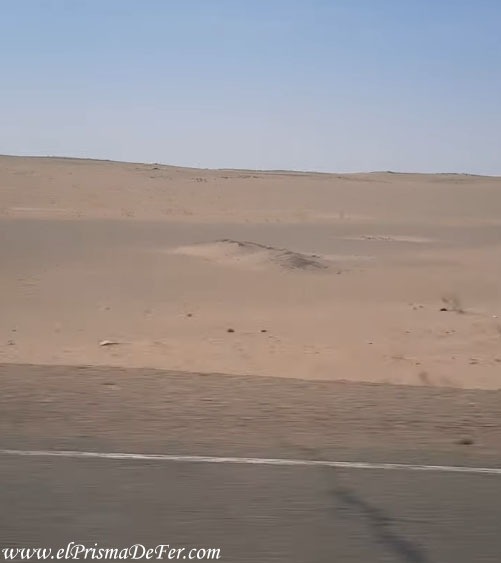
A few years ago, the price was around 100,000 tugriks (or about 220 yuan), and the journey takes approximately 8 hours. The entire route is paved, so, despite being a long trip (though shorter than the train), it's quite comfortable and direct.
Arrival in Ulaanbaatar
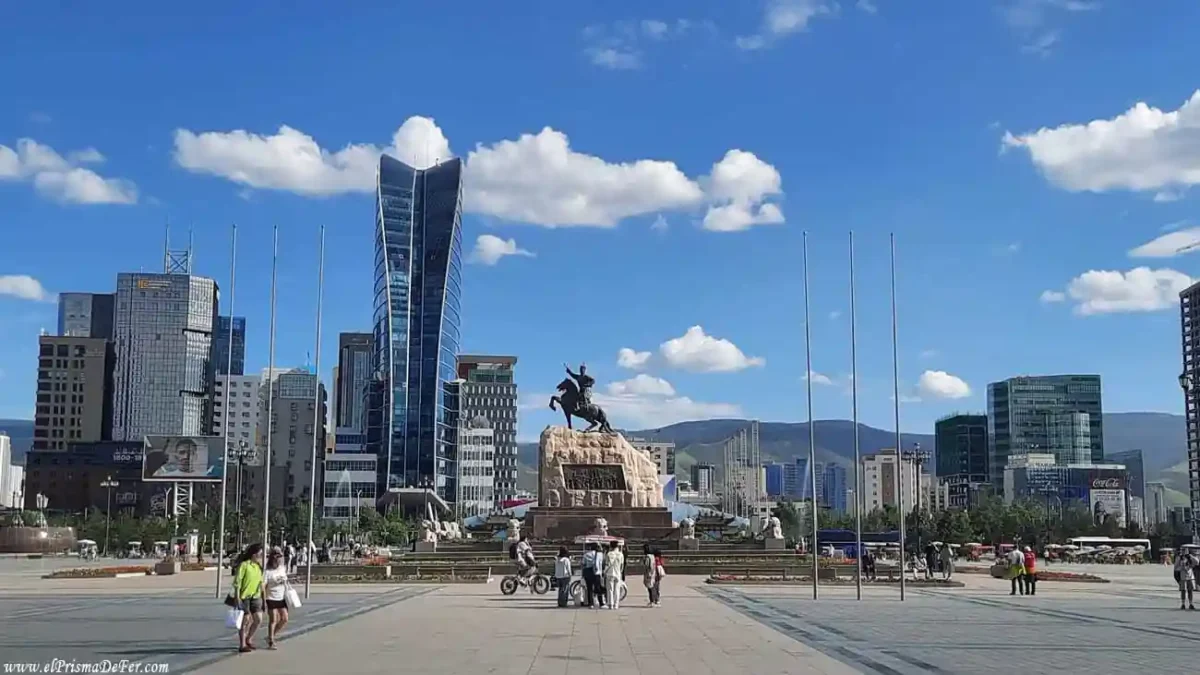
Whether you travel by minivan or private transport from Zamyn-Uud, you will most likely be dropped off in the central area of Ulaanbaatar, usually near Sükhbaatar main square.
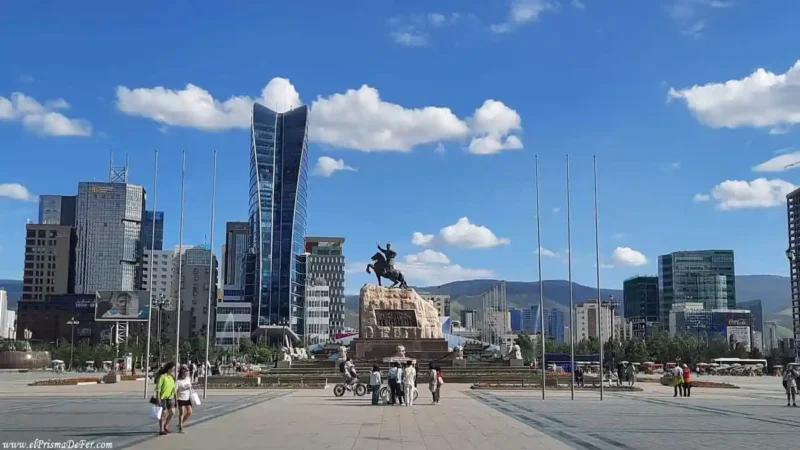
From there it's easy to walk or take another taxi to your accommodation, as it's one of the most central and well-located points in the city.
How to get from Ulaanbaatar to the border and Beijing
Making the return journey from Ulaanbaatar to Beijing is quite similar, with the same options but in the opposite direction.
The most direct alternative is the international train that connects both cities as part of the Trans-Mongolian Railway. It's the most convenient option because you don't have to worry about the border crossing; everything is done on the train itself. However, it can involve several hours of waiting at the border while the checks are carried out.
If you prefer something more flexible and economical, you can go down to Zamyn-Uud by train (there are daily departures from Ulaanbaatar) or by minivan, which usually leave when they are full and take about 8 hours on a paved road.
From Zamyn-Uud you cross to Erenhot, usually by taxi, repeating the same migration process but in reverse.
Once on the Chinese side, from Erenhot you can take a local train to Beijing (see schedules, prices and buy tickets). This is a popular option for those traveling independently, as it allows you to split the journey and better adapt to schedules and availability.
In short, you can do it all on a single international train or split the trip into segments for more flexibility. Both options work well; the choice depends more on your budget, time, and desire to simplify logistics.
Frequently asked questions about the China-Mongolia crossing
Do I need a visa to cross the border?
It depends on your nationality. Many countries don't require a visa for stays of up to one month in both Mongolia and China. However, it's always best to check before traveling.
How long does the border crossing take?
The entire process usually takes between 1 and 2 hours, although it may take longer during peak season or if it's busy. It includes departure from China, transfer, and entry into Mongolia.
Is the process complicated?
No, it's pretty straightforward. You just have to follow the signs, queue at immigration, and show your passport. The most "cumbersome" part is having to get out of the vehicle several times.
Is it possible to cross on foot?
No, this border crossing is not open to pedestrians. You have to cross in a vehicle (taxi, bus, or private transport).
How much does it cost to cross by taxi?
The average price from Erenhot to Zamyn-Uud is around 50 yuan. If they ask for much more, you can look for another option or go to the bus terminal.
Can I exchange money at the border?
Yes, there are currency exchange offices in both Zamyn-Uud and Erenhot, although the rates may not be the best. It's best to exchange just enough for getting around.
Is there transportation just across the street?
Yes, on the Mongolian side there are always taxis and minivans waiting for passengers to go to Ulaanbaatar or other destinations.
Does the crossing operate every day?
Yes, it's a busy and frequently used crossing, although the hours can vary. It's best to cross during the day to avoid any problems.
Is the crossing safe?
Yes, it's a common border crossing used by travelers. As always, it's a good idea to keep an eye on your belongings and agree on prices before getting into a taxi.
Is it better to do it independently or by direct train?
Both options work. The direct train simplifies everything, while traveling independently offers more flexibility and is usually cheaper.
Support The Prism of Fer!
Your support helps me continue creating free content on the blog. Thank you so much!