After exploring the picturesque city of Fenghuang, it was time to visit one of the destinations I was most looking forward to on my entire trip through China, the imposing Zhangjiajie National Forest Park.
You probably know it as the famous “Avatar Park”, as its surreal landscapes of rock pillars covered in vegetation served as inspiration for the movie Avatar.
I had incredibly high expectations, and luckily I can say that Zhangjiajie not only lived up to them, but far exceeded them. It's a place that seems unreal, where every viewpoint leaves you with the feeling of being on another planet.
In this post I'm going to tell you everything you need to know to plan your visit: how to get there, which areas to explore within the park, how much time to spend there, the best viewpoints, practical tips, and my personal experience exploring this unique place in the world.
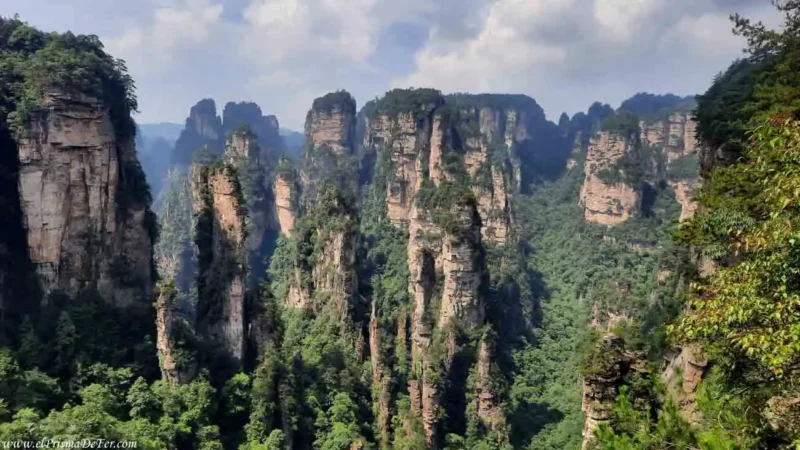

Table of Contents
Where is it located?
Zhangjiajie National Forest Park is located in Hunan Province, in south-central China. It forms part of the larger Wulingyuan Scenic Area, a UNESCO World Heritage Site renowned for its unique rock formations.
Despite being in a relatively remote area, Zhangjiajie is quite well connected within China, so including it in an itinerary is much simpler than it might seem at first glance.

Why do the mountains in “Avatar Park” have that shape?
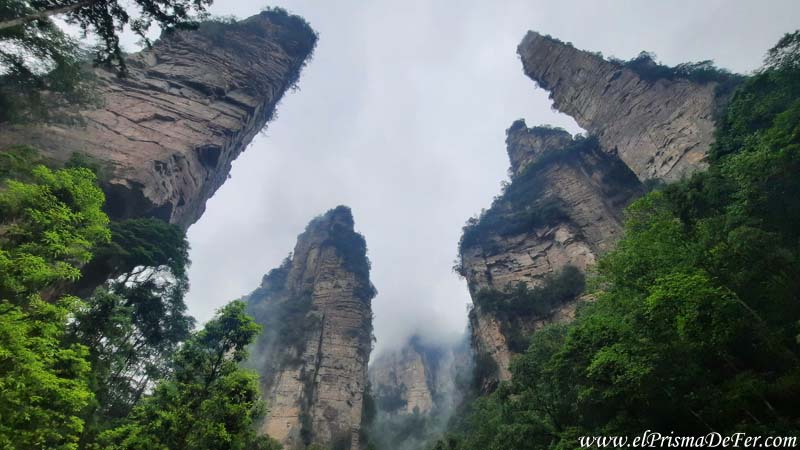
If you've ever seen pictures of the famous "Avatar Park" in China, officially Zhangjiajie National Forest Park, you've probably wondered how such tall, thin, almost floating rock columns could exist.

These formations are pillars of quartz sandstone, a very resistant type of sedimentary rock. Over time, the area was uplifted by tectonic movements and then shaped by differential erosion.
Wind, rain, and temperature changes eroded the weaker parts of the rock, while the harder sections withstood the process. The result is these vertical towers that seem to defy gravity.
Furthermore, the region has a humid climate with abundant vegetation. Plant roots grow within the cracks in the rock, gradually widening them, which further separates and sharpens these pillars. Frequent fog also enhances the visual effect, making the mountains appear suspended in the air.
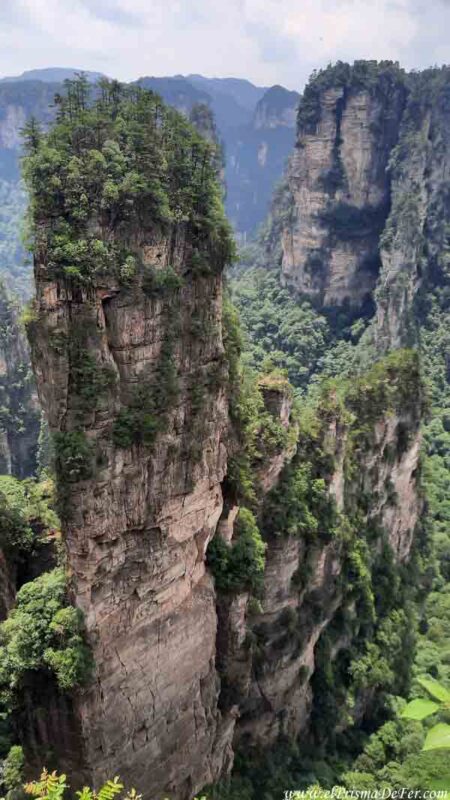
It's no coincidence that this landscape inspired James Cameron to create the floating mountains of Avatar. In fact, one of the most iconic formations was renamed "Avatar's Hallelujah Mountain."
How to get to Zhangjiajie Park
To visit Zhangjiajie National Park, you have two main bases: Zhangjiajie City or the Wulingyuan area.
Zhangjiajie
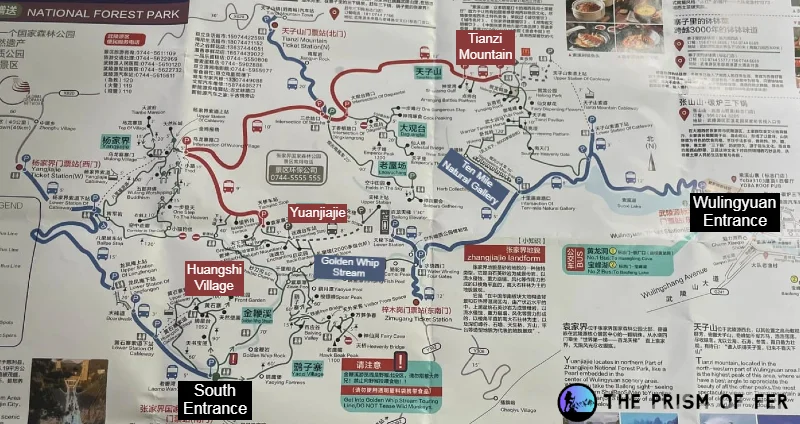
From Zhangjiajie city, you can easily reach one of the park entrances by bus or taxi in about 30-40 minutes, the most commonly visited being the one known as Forest Park Entrance (see location), where you can directly start the tour along the Golden Whip Stream and also go up to Huangshi Village.
Zhangjiajie is the most common choice if you're coming directly from another city in China, as it has the airport and train station (see location on map).
Wulingyuan
However, you can also stay directly at Wulingyuan, which is much closer to one of the main park entrances (see on map). This is the option I chose, and I highly recommend it because you're just a few minutes' walk from the entrance, the atmosphere is more peaceful, and you save time on commuting each day.
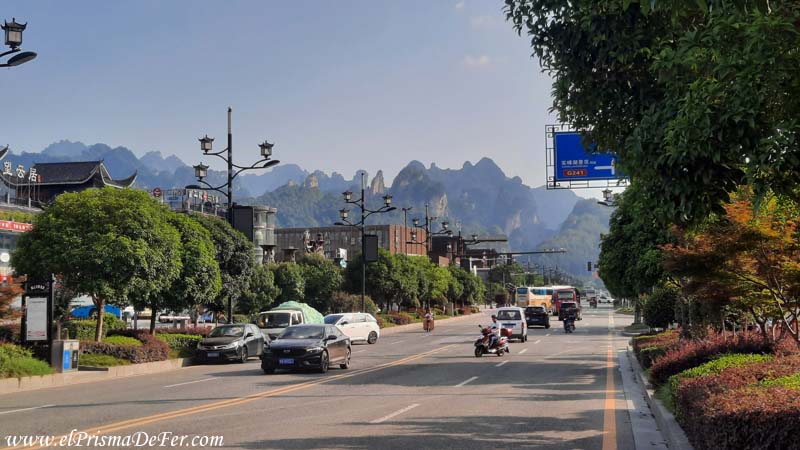
If you decide to stay in Wulingyuan, you should know that it doesn't have its own train station. This means you'll first have to get to Zhangjiajie, either by train or plane, and from there, upon exiting the train station (or the nearby bus terminal), you'll find buses that go directly to Wulingyuan.
It's a journey of approximately 30 to 40 minutes, inexpensive, and quite frequent. There's no need to book in advance; simply leave the station and look for the bus.
Zhangjiajie Park entrance fees and duration
The general admission ticket costs around 165 yuan, and includes access to the park and use of the internal bus system, which are essential for moving between the different areas.
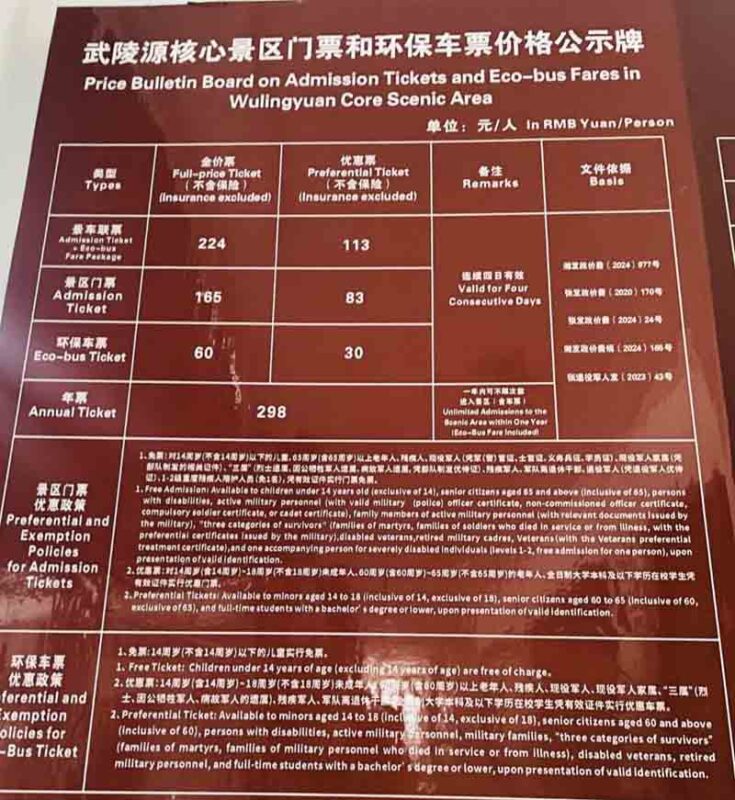
Entry to Zhangjiajie Park is usually valid for 4 consecutive days.
Cable cars and elevators are not included in the entrance ticket. While they are not essential for exploring the park, as it is entirely possible to do so on foot by going up and down stairs, they do offer the advantage of accessing the upper areas effortlessly and, in many cases, saving time.
So for example, the Tianzi Mountain cable car costs around 72 yuan, the Yangjiajie cable car about 76 yuan, and the famous Bailong elevator about 65 yuan.
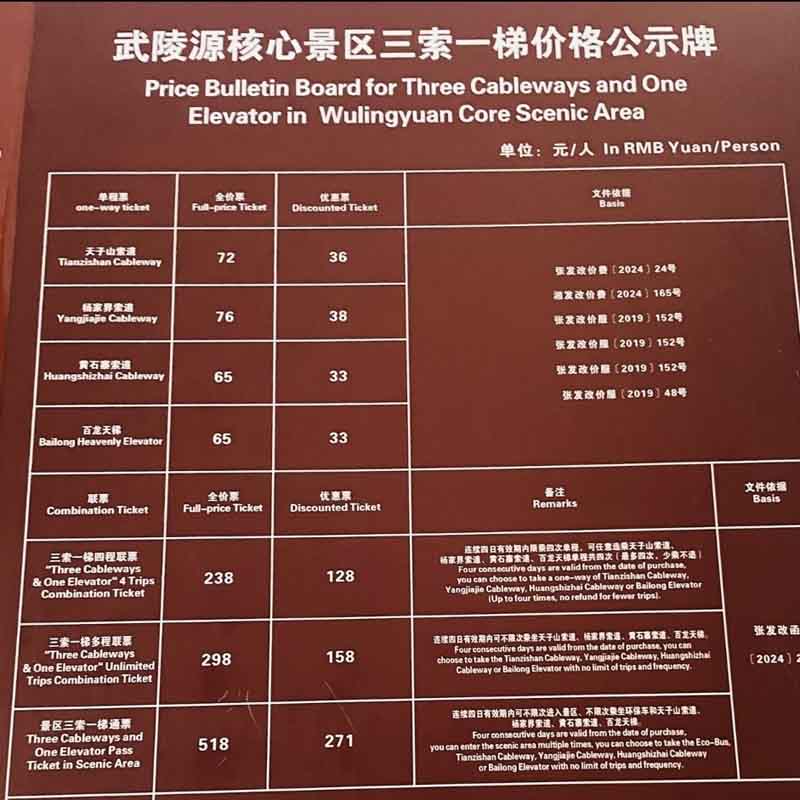
It's possible to buy combination tickets, which can be more convenient if you plan to use several of these options. One of the most common includes three cable cars and one elevator for about 238 yuan.
How to visit the Park
Zhangjiajie National Park is a huge park with multiple zones, levels, and ways to explore it. Therefore, it's helpful to know in advance how you can visit it to better plan your trip and save time.
The park is broadly divided into two levels:
Lower part (valleys and trails)
The lower part of Zhangjiajie Park is the level where the scenery is experienced from within, walking among valleys, rivers and vegetation, with the enormous rock pillars rising up around you instead of viewing them from above.
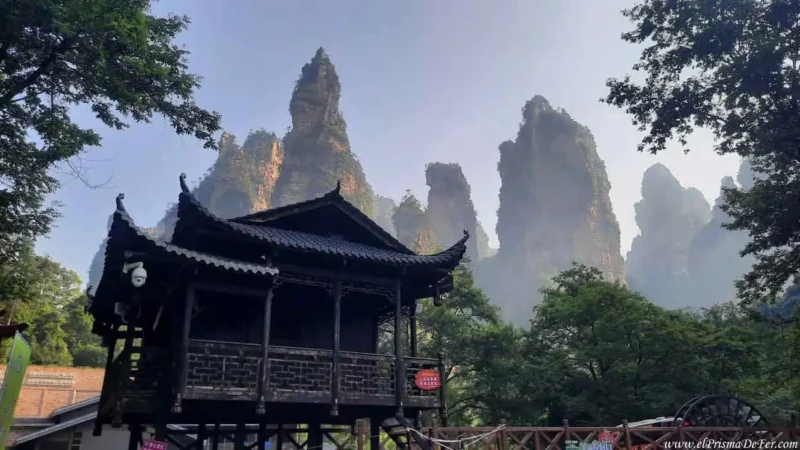
It is a much more immersive and peaceful experience, compared to the panoramic viewpoints at the top.
The two most important trails are:
Golden Whip Stream
The Golden Whip Stream is one of the most highly recommended trails, it is approximately 7.5 kilometers long and runs through one of the most scenic valleys in the park.
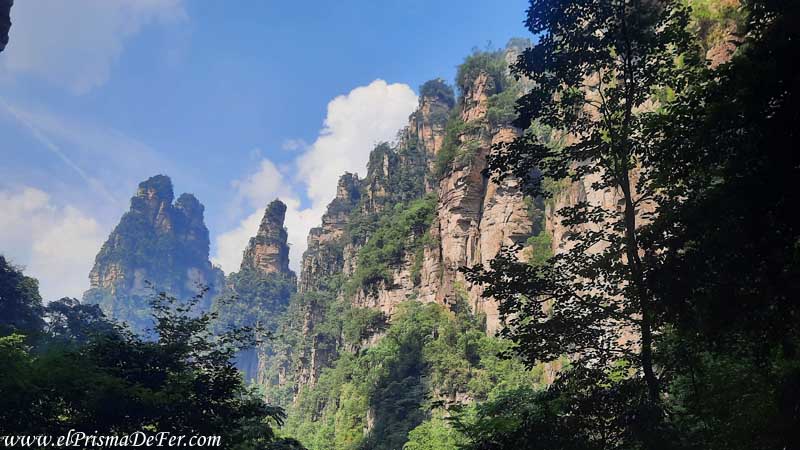
This trail connects the area of the park's south entrance, from where you can also ascend to Huangshi Village, with the area where the famous Bailong Elevator is located, one of the fastest access routes to the upper part.
You walk for 2 to 3 hours following the course of the river surrounded by vegetation and the enormous rock pillars that rise on both sides.
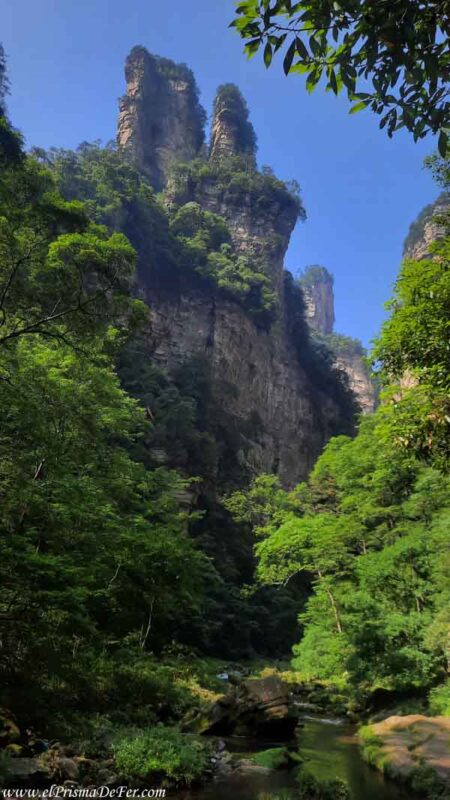
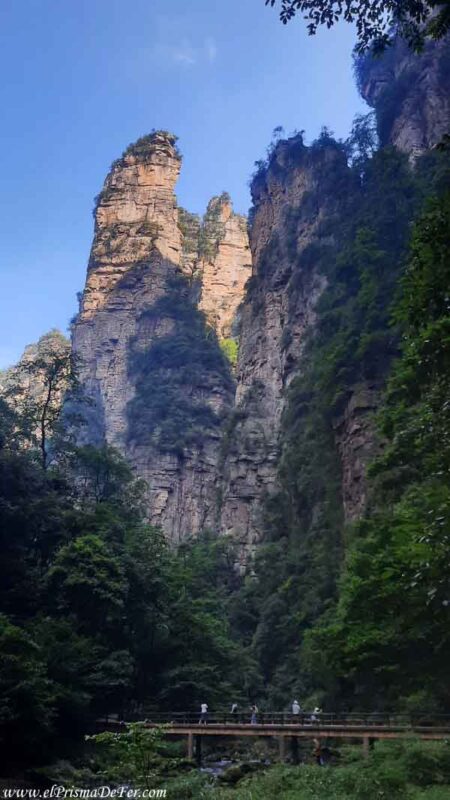
It's a linear route, so you can do it in one direction (it doesn't matter where you're starting from), and then combine it with internal buses or continue to other areas.
Along the trail, you also have the option to climb a long staircase to the Yuanjiajie area for free. That's the option I chose. It's much more challenging but less crowded, and it takes you directly to the best viewpoints without needing to use the elevator.
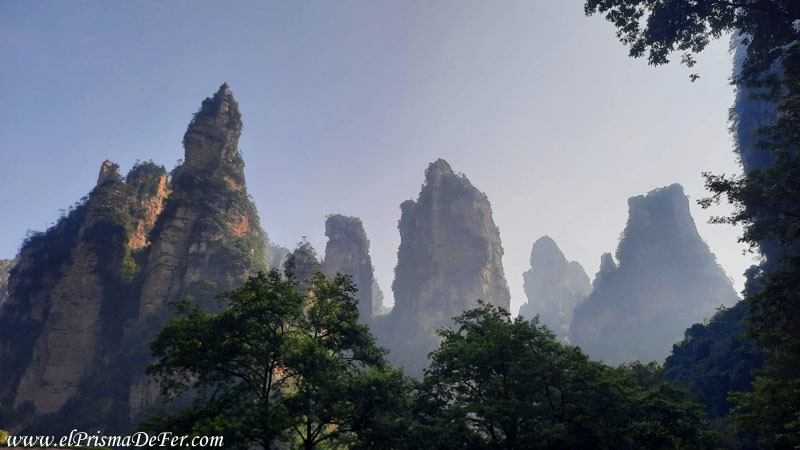
It's also common to encounter monkeys along this trail. While they may seem harmless, it's recommended not to feed them or get too close.
10 Mile Natural Gallery
Another popular trail is the 10 Mile Natural Gallery, which is shorter and more accessible. It's a 5-kilometer route that can be completed in approximately 2 hours round trip, and along the way you'll see rock formations with curious names that spark the imagination.
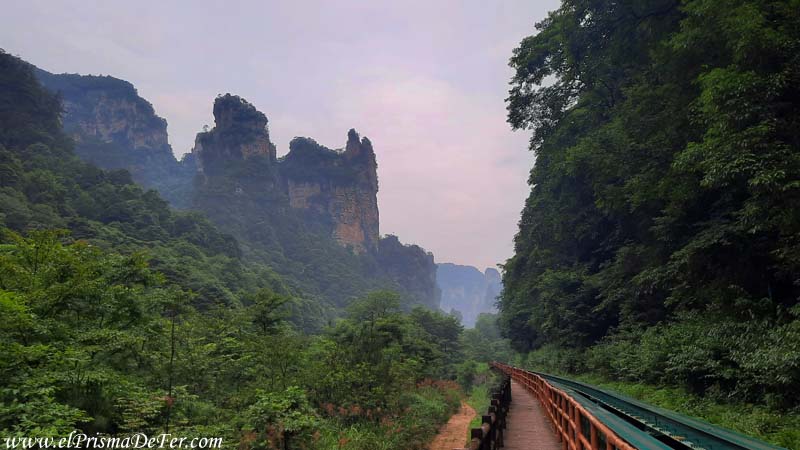
Unlike the Golden Whip Stream, this trail is more touristy, less epic and rugged, and even has a small train for those who prefer not to walk, which takes away some of its charm, but makes it more accessible for people who cannot or do not want to walk.
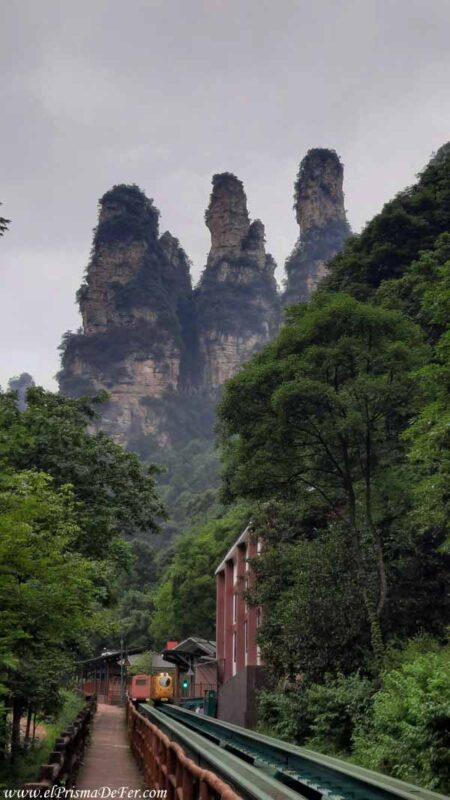
This trail also connects to the upper part of the park. From its end, it is possible to begin the ascent up the long stairs that lead to the Tianzi Mountain area.
It's a demanding climb, with lots of steps, but totally feasible for those who prefer to avoid cable cars or elevators.
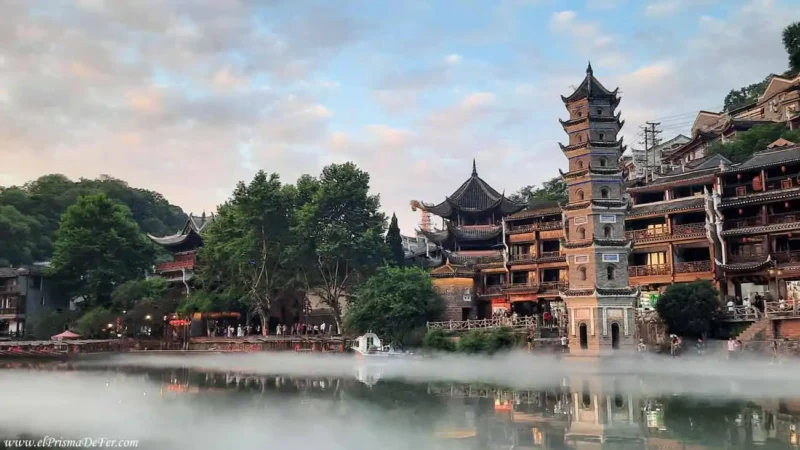
Upper section (panoramic viewpoints)
The most iconic views of the park are concentrated in the upper part.
Yuanjiajie, where the best Avatar viewpoint is located
One of the most anticipated spots within Zhangjiajie is the famous "Heaven Pillar" viewpoint, also known as Hallelujah Mountain, in the Yuanjiajie area.
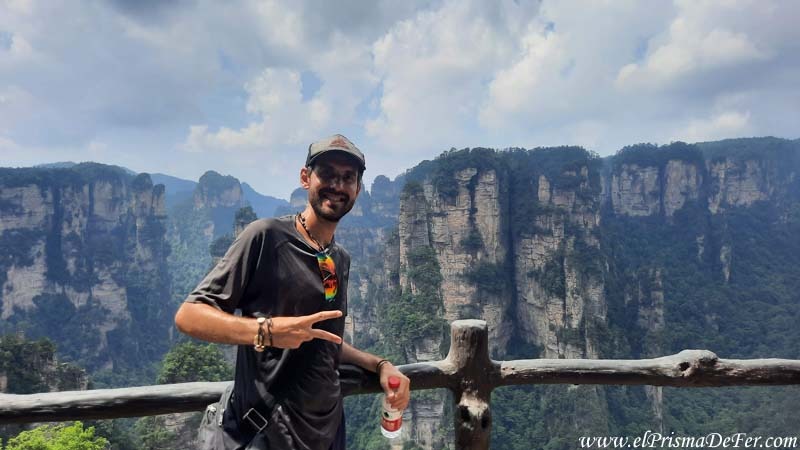
To get here from the Golden Whip Stream, I had to climb a long set of stairs, passing by a few intermediate viewpoints that give you a taste of what's to come. You can also get here by taking the Bailon Elevator, near one of the internal bus stops.
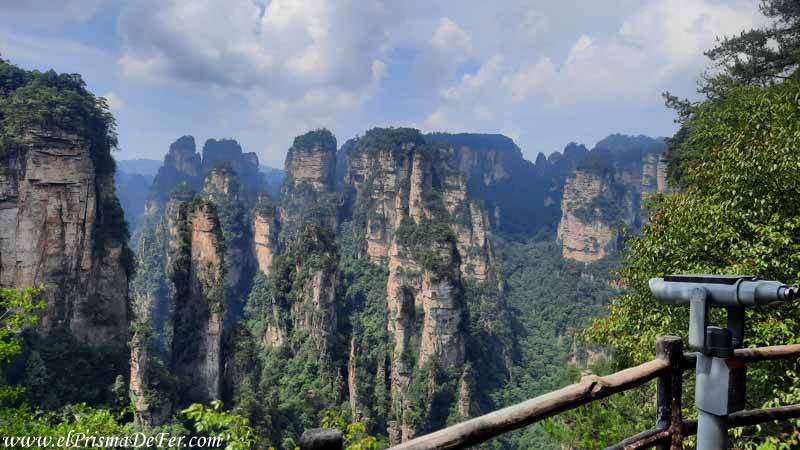
When I finally arrived, drenched in sweat from the humidity, I couldn't believe it. The views were out of this world.
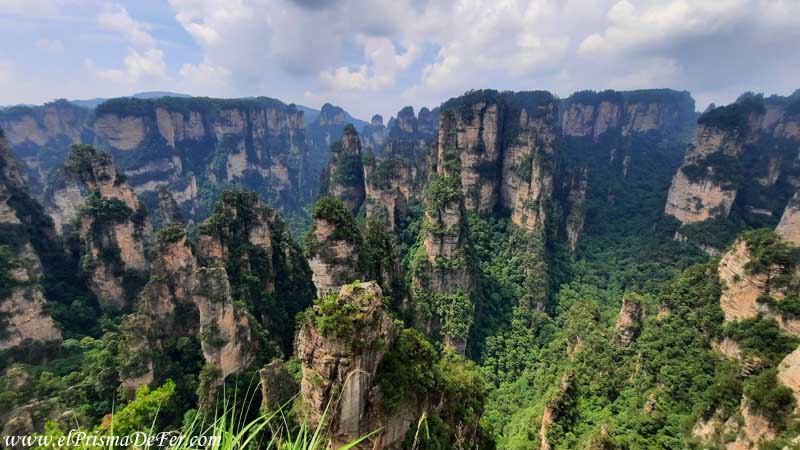
Those rock pillars rising abruptly from the earth, covered in vegetation, create a scene unlike any other in the world. It is, without a doubt, one of the most breathtaking landscapes I have ever seen.
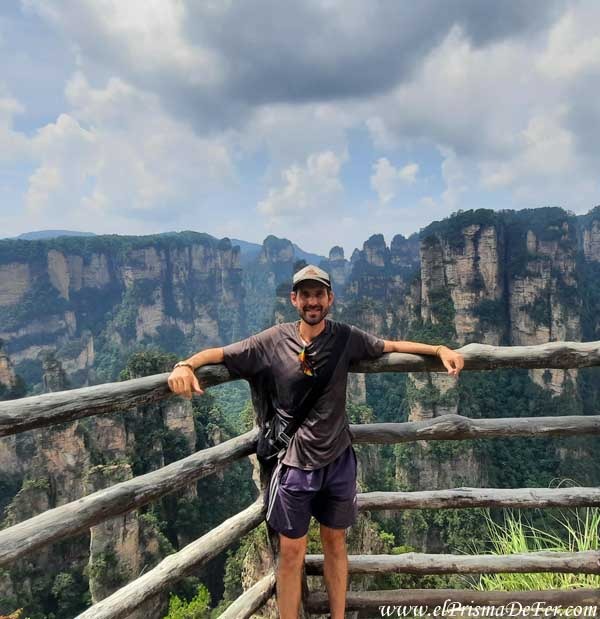
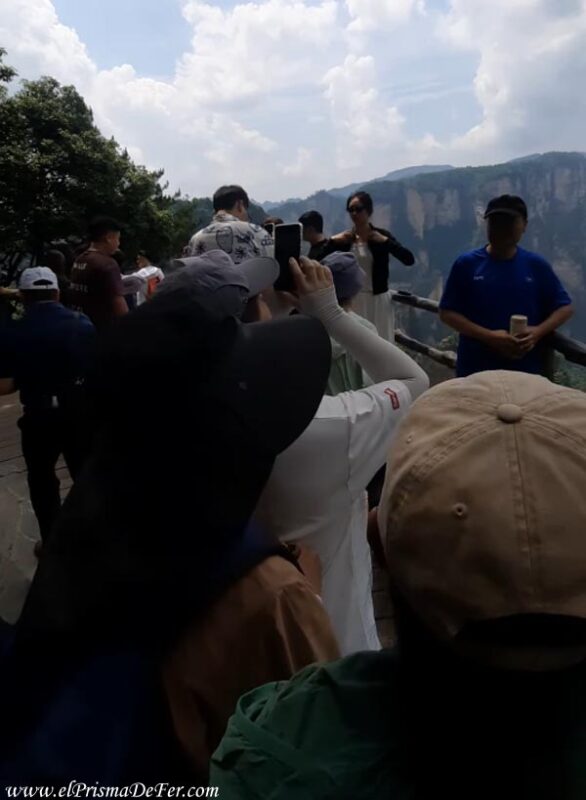
But all that glitters is not gold. The downside of this viewpoint is that it's completely overcrowded with Chinese tourists, with organized groups, guides speaking through megaphones, and little space to simply stop and enjoy the view in silence.
Unfortunately, it's not a place to relax or contemplate calmly, but rather to be amazed, take some photos, and keep moving forward.
Tip: If you move away from the main viewpoints and explore the walkways, you're likely to find other, almost empty ones with equally spectacular views and much more tranquility.
Tianzi Mountain
From the Yuanjiajie area you can connect to the Tianzi Mountain area using the park's free buses.
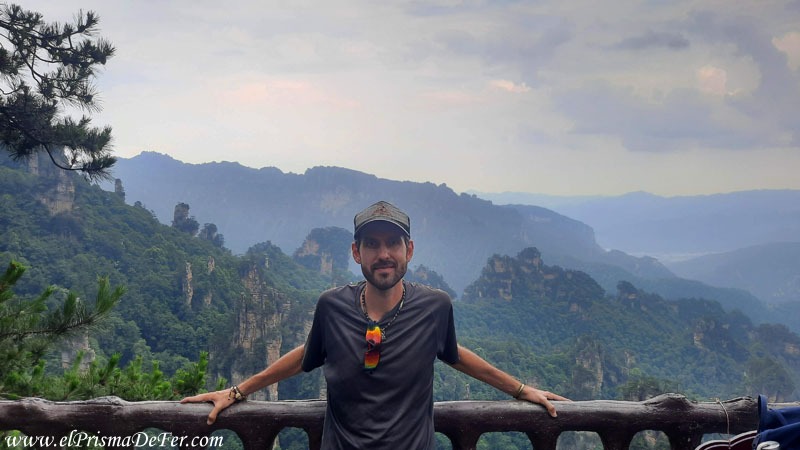
Tianzi Mountain offers more open and panoramic views, where you can better appreciate the depth of the landscape, although you don't have the pillars as close as in Yuanjiajie.
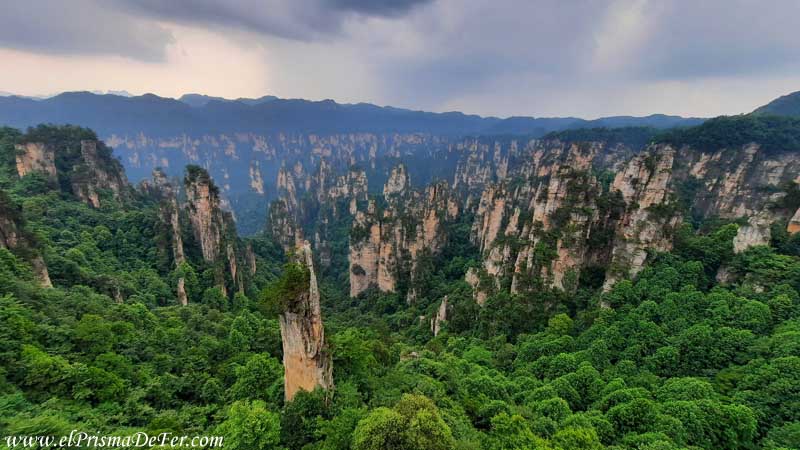
Many people prefer this viewpoint, especially when there are fewer people or when it's foggy, when the landscape becomes a bit more dramatic.
I liked it and there are noticeably fewer people, but if I have to choose a viewpoint, I still prefer the Yuanjiajie area.
Yangjiajie
Yangjiajie is the least visited option. Although I didn't get a chance to visit it, I've heard it has a wilder feel, somewhat more challenging trails, and less developed viewpoints, which could be a good alternative for those looking to escape the crowds.
Huangshi Village
Another area you can explore within Zhangjiajie is Huangshi Village. To get there, you have to climb a long and challenging staircase that starts near the park's south entrance. It requires time and some physical fitness, but there's also the option of using a cable car.
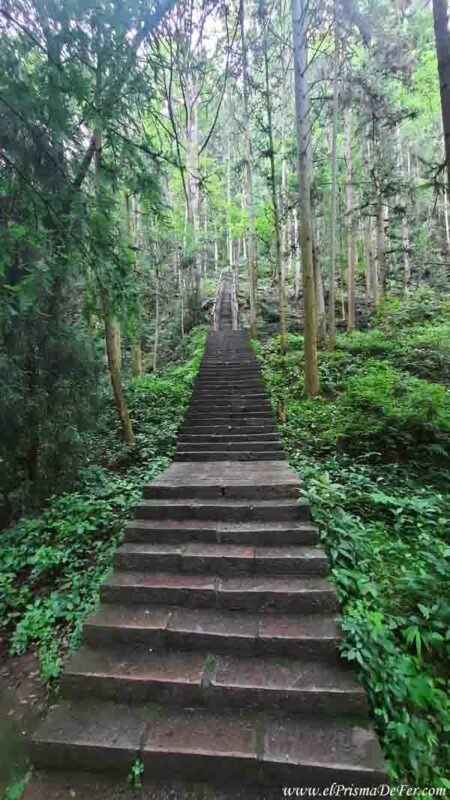
At the top, you'll find a small temple and several trails connecting different viewpoints. From there, under normal conditions, you can get panoramic views of the mountains and rock pillars from a different perspective, but the day I went, the weather wasn't great and visibility was practically zero, so I couldn't appreciate much.
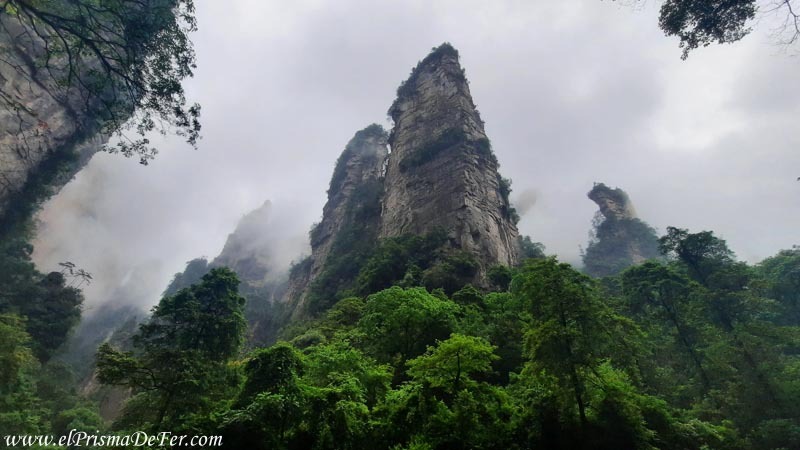
Even so, it's an interesting area to add to the tour, especially if you have time, good weather, and want to explore a less crowded part of the park.
How to combine the lower part with the upper part
To move between the lower and upper parts of the park, you have several options, each with its own advantages and disadvantages.
Elevators
The Bailong Elevator is the fastest way to get up to the Yuanjiajie area, where some of the park's most famous viewpoints are located.
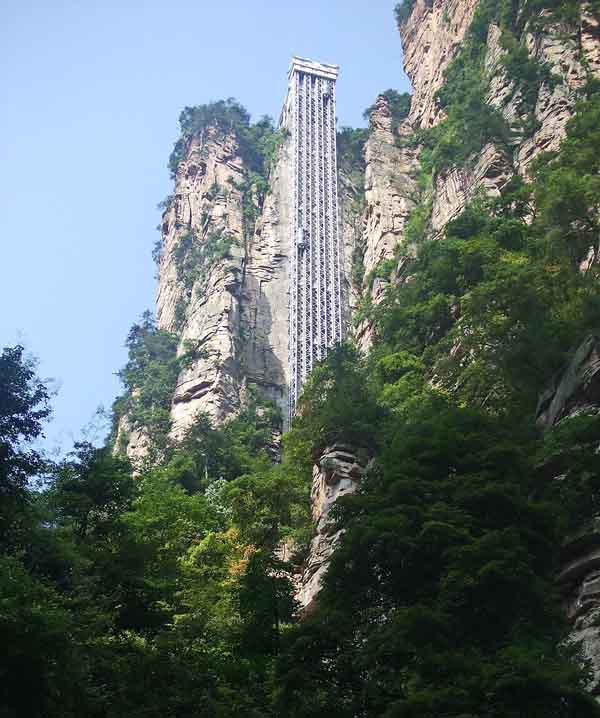
However, it is also one of the most expensive options and has the longest waiting times, especially during peak season.
It's very attractive and quick to go up (you've probably seen videos online), but the lines can be long and make you waste a lot of time.
Cable cars
One of the main ones is the Tianzi Mountain cable car, which connects the lower part near the 10 Mile Natural Gallery with the top of this mountain. It's an alternative to climbing stairs and offers panoramic views throughout the journey.
Another important one is the Yangjiajie cable car, which allows you to access this less crowded area of the park without having to do demanding walks.
There is also the Huangshi Village cable car, which connects the park's southern entrance to this elevated area. It's especially useful if you want to avoid the long climb up the stairs to the top.
Stairs
Another way to get around Zhangjiajie is through its endless staircases, which connect the lower areas with the upper areas of the park.
It's the alternative I use all the time. They're completely free and less crowded, but they can be quite demanding, with thousands of steps and considerable physical effort, especially going uphill.
These stairs are distributed in different parts of the park, one of the most used being the one that connects the Golden Whip Stream trail with the Yuanjiajie area. There is also the climb from the 10 Mile Natural Gallery to Tianzi Mountain, or from the south entrance of the Park to Huangshi Village, among others.
The main advantage is that they're free and you avoid the lines for elevators and cable cars. Plus, as you gain altitude, you'll find intermediate viewpoints that are often empty and offer equally spectacular views.
The disadvantage, obviously, is the physical effort. This is no small matter, especially on hot or humid days, and can be exhausting if you're not prepared.
Internal bus system
These buses, included in the general admission ticket, connect the main points of the park in both the lower and upper areas and run frequently. You can hop on at one stop and off at another depending on the route you want to take.
But it's important to note that they do NOT directly connect the lower and upper levels, but rather operate within each level, so to change heights you will need to use stairs, cable cars or the elevator.
Some important stations where you're likely to pass through are:
- Main entrances (such as Wulingyuan or the South Entrance)
- Where the Golden Whip Stream Trail begins (lower section)
- Where the 10 Mile Natural Gallery trail begins (lower section)
- Yuanjiajie area, where the “Avatar”-like views are (upper part)
- Tianzi Mountain, another area with viewpoints (upper part)
- Yangjiajie (less visited, quieter)
How was my 3-day tour inside Zhangjiajie Park?
I spent three days visiting Zhangjiajie Park, always entering through Wulingyuan, which was the city where I based myself to organize my trip.
Day one
On the first day, I started early, taking the bus from the entrance to the start of the Golden Whip Stream trail. From there, I walked about halfway along the trail, where I took one of the stairways leading up to the Yuanjiajie area.
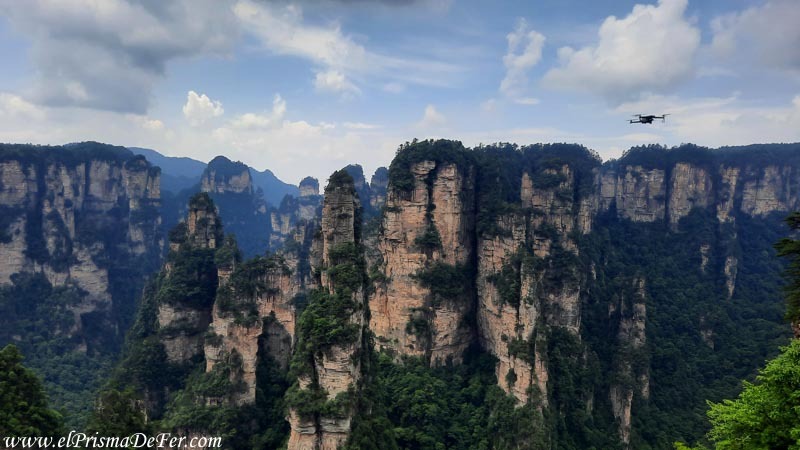
After visiting its viewpoints, the most famous in the park, I took one of the buses from the upper part that connects to Tianzi Mountain.
From there I continued exploring new viewpoints, with more open vistas but with rain clouds approaching. Then I decided to walk down the stairs, which eventually connect to the 10 Mile Natural Gallery trail.
With the weather already bad, I walked the path from its end to what would be the beginning, where I took the bus that took me back to Wulingyuan.
Without a doubt, this was the best day of the three.
Day two
The weather wasn't great on the second day, as it was rainy. I decided to return to the Golden Whip Stream and this time I explored its entire length, enjoying it at a more leisurely pace.
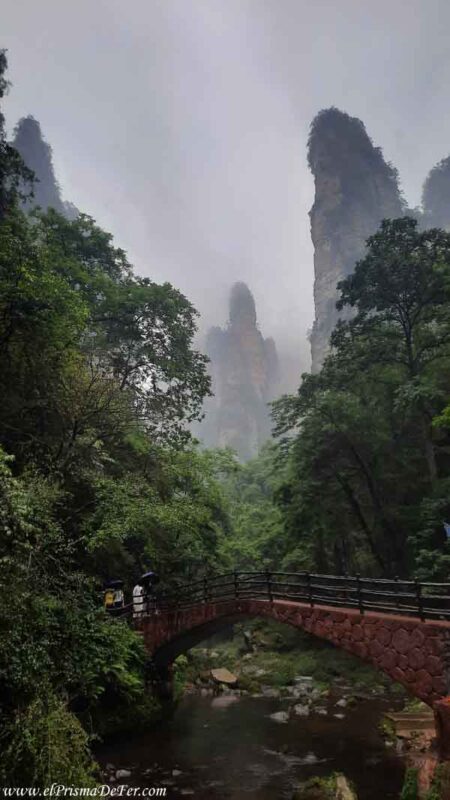
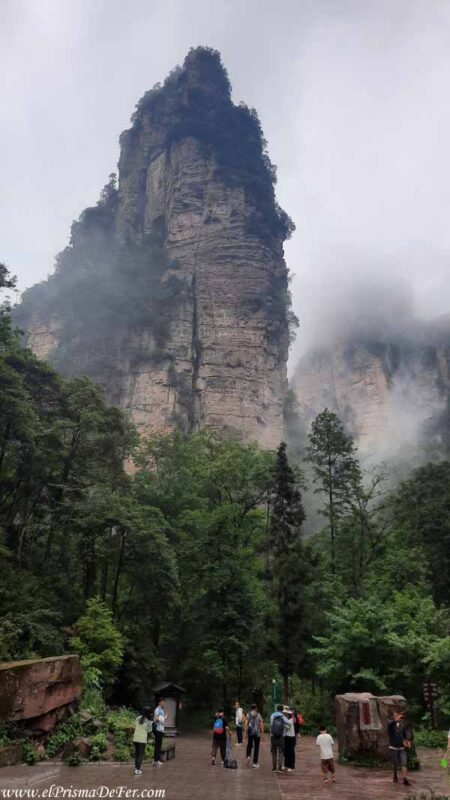
I made it to the park's south entrance and from there I hiked up to Huangshi Village. Unfortunately, visibility was practically zero at the top, so I couldn't see anything from the viewpoints, but the hike itself is very beautiful.
Then I went down the same path, walked back along the Golden Whip Stream, and took the bus back to Wulingyuan.
Day three
The third day was much shorter because I had to leave in the afternoon. I returned to the start of the 10 Mile Natural Gallery trail, as I hadn't been able to enjoy it properly the first day due to the weather.
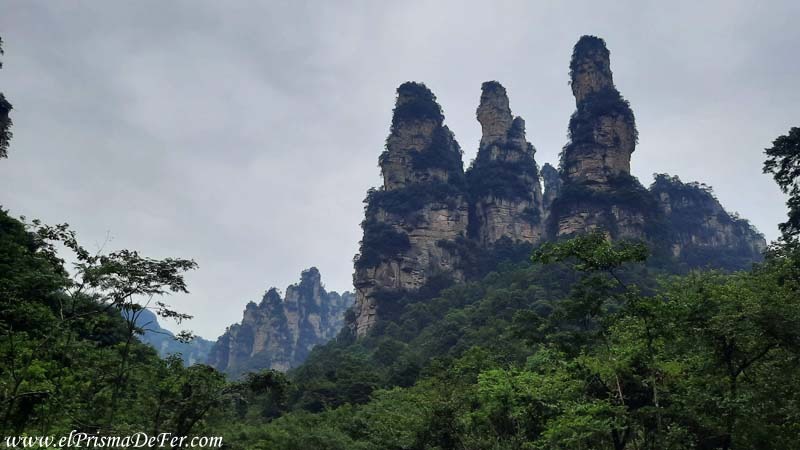
This time I explored it under better conditions, I went and came back along the same path, and after that, I ended my visit to the park.
Tips for planning your visit to Zhangjiajie Park
While there is no single “right way”, my recommendation is:
- Go up early (to avoid crowds)
- Visit the main viewpoints (Yuanjiajie, Tianzi)
- Take advantage of the good weather to visit the upper part
- Walk down
- Leave the lower trails for quieter times of the day or if the weather is bad.
Tianmen Mountain, another must-see near Zhangjiajie
Very close to the city of Zhangjiajie is another of the region's great attractions, Tianmen Mountain.
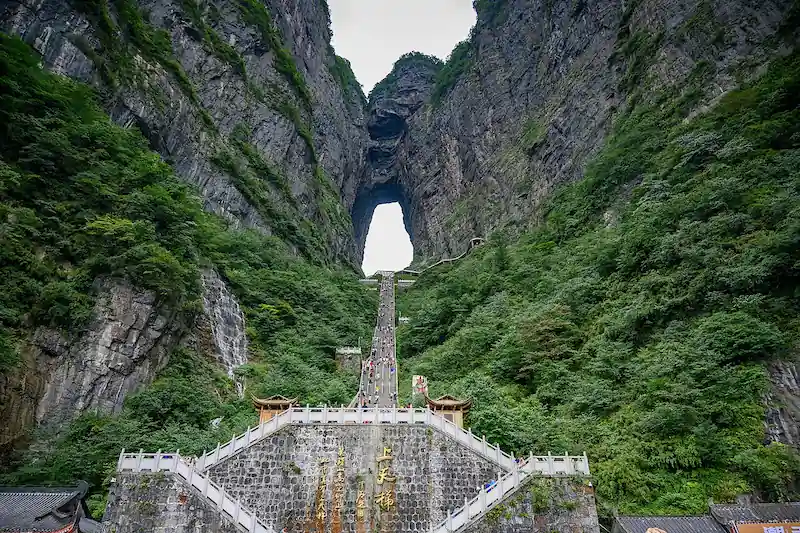
Unlike the National Park, here the protagonist is not the rock pillars, but an imposing mountain pierced by a huge natural opening in the rock, known as the "Gate of Heaven".
The visit includes some of the area's most striking attractions, such as one of the world's longest cable cars, hanging walkways on the mountain (including sections of glass) and the famous staircase of more than 900 steps that leads to the cave.
I decided not to visit it because of the bad weather. Visibility was very poor, and this type of place relies heavily on the views to truly be enjoyed. But if you have good weather, it's definitely another must-see to add to your trip to Zhangjiajie.
Best time to visit Zhangjiajie
The park area has a rather changeable climate and, above all, is very rainy for much of the year. Humidity is high and rainfall is frequent, which can significantly affect visibility at the viewpoints.
In general, spring (April to June) and autumn (September to November) are usually the best seasons to visit the park. During these months, temperatures are pleasant and there's a greater chance of clear days. Even so, rain can appear at any time, so it's always best to be prepared.
Summer (July and August) is the rainiest, hottest, and most humid season. It also coincides with school holidays in China, so the park is usually much more crowded. Winter (December to February), on the other hand, is colder and less crowded, but the likelihood of fog increases, which can significantly limit the views.
Where to stay in Wulingyuan
Wulingyuan is a small and fairly quiet town, designed almost exclusively as a base for visiting Zhangjiajie National Park. Therefore, generally speaking, almost any location is good for accommodation, as everything is relatively close and it's easy to get to the park entrance or find restaurants and services.
I stayed at Zhangjiajie Yeah Hostel (see Booking or Trip.com), and I loved it. It's a modern hostel, very clean, well-maintained, and very reasonably priced. In fact, it was one of the best hostels I stayed in during my trip to China.

Final thoughts on my visit to Zhangjiajie
China continues to pleasantly surprise me at every turn. I feel like I'm going from one incredible place to another, and Zhangjiajie National Park was no exception.
It's a landscape I haven't seen anywhere else in the world… except in the movie Avatar. It gave me the feeling of walking on another planet…it's hard to describe until you experience it.
Furthermore, I appreciated how well-maintained and organized the entire park is, especially considering the number of visitors. Despite this, there are always quiet corners where you can find some peace and quiet if you venture away from the more crowded areas.
Frequently Asked Questions about Zhangjiajie National Forest Park
How many days do I need to visit the park?
Ideally, you should dedicate at least 2 or 3 days to it. The ticket is valid for 4 consecutive days, so you have plenty of time to explore at a leisurely pace and adjust to the weather.
Is it possible to visit it in a single day?
Technically, yes, but it's not recommended. The park is huge, and you'll end up seeing everything only superficially.
Is it necessary to use cable cars or the Bailong elevator?
No, they're not mandatory. You can get around entirely on foot and using stairs, but it's quite strenuous. Cable cars and the Bailong Elevator save you time and energy, although they do cost extra.
How does transportation work within the park?
The park has free buses (included in the entrance fee) that connect the main points, both in the lower and upper levels. However, they do not connect between levels.
Is it easy to find your way around the park?
Overall, yes. It's well signposted and the bus system is very helpful, although it's a good idea to have a general idea of the route beforehand to optimize your time.
Are there many people?
Yes, especially at the most famous viewpoints like Yuanjiajie Scenic Area. Going early or getting away from the main attractions helps a lot.
Which is the best area to stay in?
Wulingyuan is the most convenient option, as it is very close to one of the main entrances to the park.
Does the weather significantly affect the visit?
Yes, quite a lot. It's a very rainy area with frequent fog. You can have incredible views… or see absolutely nothing. That's why it's key to have several days.
Is it worth it even if it's cloudy or foggy?
It depends. Sometimes the fog gives the landscape a more mystical feel, but if it's very dense, it can completely obscure the views.
Is it an expensive destination?
The entrance fee to the park isn't excessively expensive, but the costs of cable cars and elevators can add up quite a bit if you use them for several days.
Is it recommended for all types of travelers?
Yes, but with some caveats. There are accessible options (buses, cable cars), but also many stairs. The route can be adapted to your fitness level.
Support The Prism of Fer!
Your support helps me continue creating free content on the blog. Thank you so much!