After several intense days navigating Kathmandu's traffic and noise, I headed towards Lumbini, near the Indian border. The journey is long and quite tiring; the roads in Nepal are terrible, but it's the most common way to get there.
Lumbini is completely different from Kathmandu. It's a small, flat, quiet town, much more humble than the capital. I came here for two reasons: firstly, my one-month visa for Nepal was about to expire, and I needed to cross back into India; On the other hand, because Lumbini, in addition to its proximity to the border, is known for being the place where Siddhartha Gautama (Buddha) was born.
In this post I'll tell you what to expect when visiting Lumbini, how to get there from other cities in Nepal or from India, how long to stay, and whether it's really worth coming all the way here.

This post may contains affiliate links. If you purchase through these links, I may earn a commission at no extra cost to you. Thank you for your support!
Table of Contents
Where is Lumbini located?
Lumbini is located in southern Nepal, in the Terai region, a flat area near the border with India. It is a few kilometers from the Sunauli border crossing, making it a common stop for those entering or leaving Nepal by land.
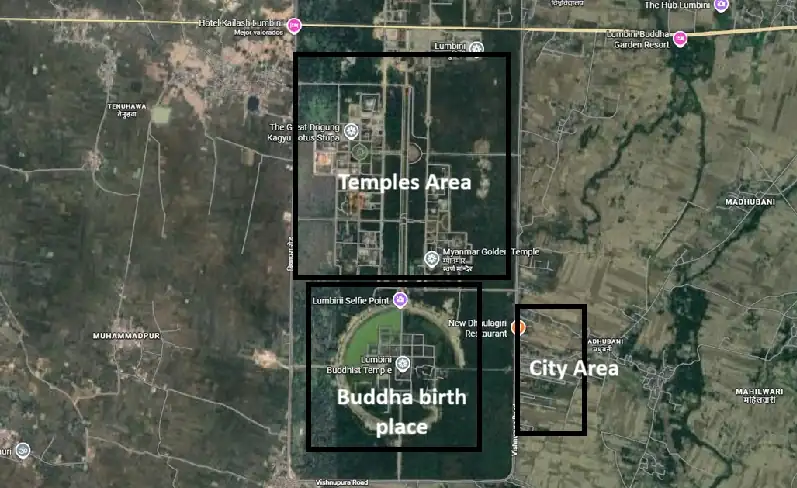
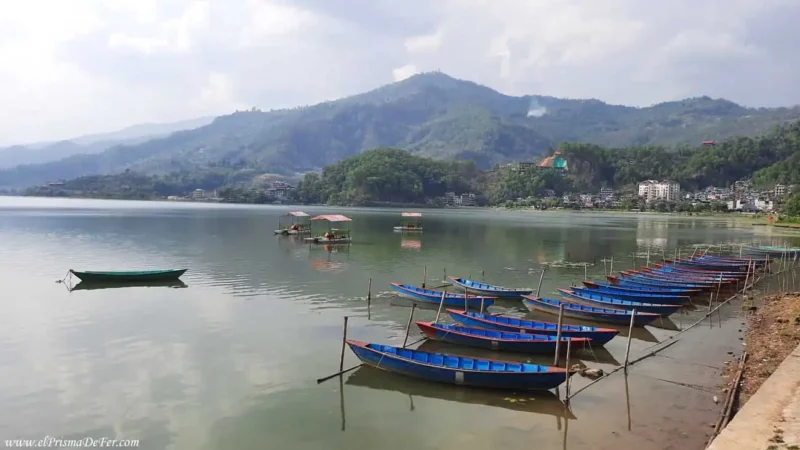
In terms of distances, Lumbini is about 300 km from Kathmandu and approximately 170 km from Pokhara. Although these distances may not seem great, journeys are often long due to road conditions and traffic, so it's advisable to allow at least a full day to reach either city.

Why is Lumbini important to Buddhism?
Lumbini is one of the most important places in Buddhism because it is the birthplace of Siddhartha Gautama, who would later become Buddha. For Buddhists, this site marks the beginning of the path that gave rise to one of Asia's most influential religions and philosophies.
Within the complex is the Temple of Maya Devi, which marks the exact spot of the birth, along with the Column of Ashoka, historical proof that Lumbini was already a place of pilgrimage in the 3rd century BC by order of Emperor Ashoka.
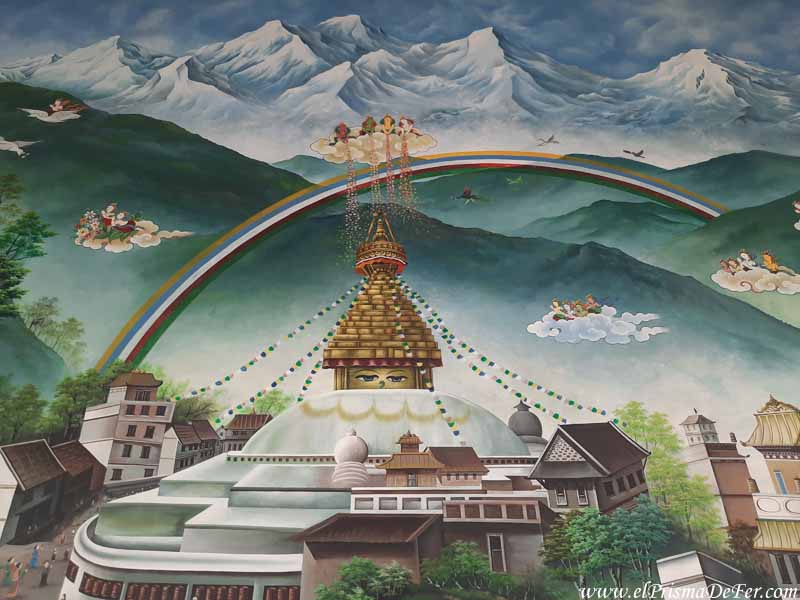
Today, Lumbini is part of the main Buddhist pilgrimage circuit, along with Bodh Gaya, where Buddha attained enlightenment; Sarnath, the place of his first sermon; and Kushinagar, where he died and attained parinirvana. For this reason, Lumbini receives pilgrims from all over the world who visit these key sites to understand the origin and development of Buddhism.
How to get to Lumbini
Getting to Lumbini requires time. These are the most common options depending on where you're coming from:
From India
The most common way is to cross overland from northern India.
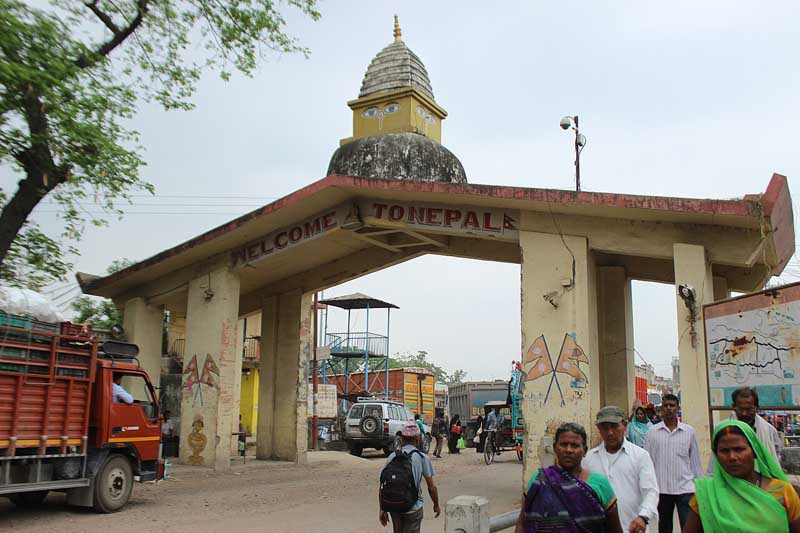
- The most frequently used border crossing is Sunauli, very close to Bhairahawa.
- Once you cross the border, there are local buses, taxis or rickshaws to Lumbini (about 20 km) or to Bhairahawa, from where you will need to connect with another bus.
The crossing is easy, but it's best to do it early and bring passport photos for your Nepalese visa if you need one.

From Kathmandu
- The most common option is the night or day bus, with a journey of between 8 and 10 hours, depending on traffic and the condition of the roads.
- Buses generally arrive at Bhairahawa (see location) or nearby stops, from where you need to take the final leg on another bus to Lumbini.
- You can also fly to Bhairahawa and then continue by land, although it is usually more expensive.
From Pokhara
- From Pokhara there are daily buses that take between 6 and 8 hours.
- It is one of the most used routes by travelers, although equally slow.
- As with the Kathmandu route, the final leg is usually done from Bhairahawa on another bus or local transport.
What to see in Lumbini
A visit to Lumbini is concentrated in a large, well-organized, and easy-to-navigate complex. The town itself isn't particularly picturesque, nor is it worth exploring on foot, but within the complex there are some very specific points of interest.
Temple of Maya Devi
It is the most important place in all of Lumbini. It marks the exact spot where Siddhartha Gautama was born.
Inside you can see archaeological remains, a stone that marks the birth and the pool where, according to tradition, his mother bathed before giving birth.
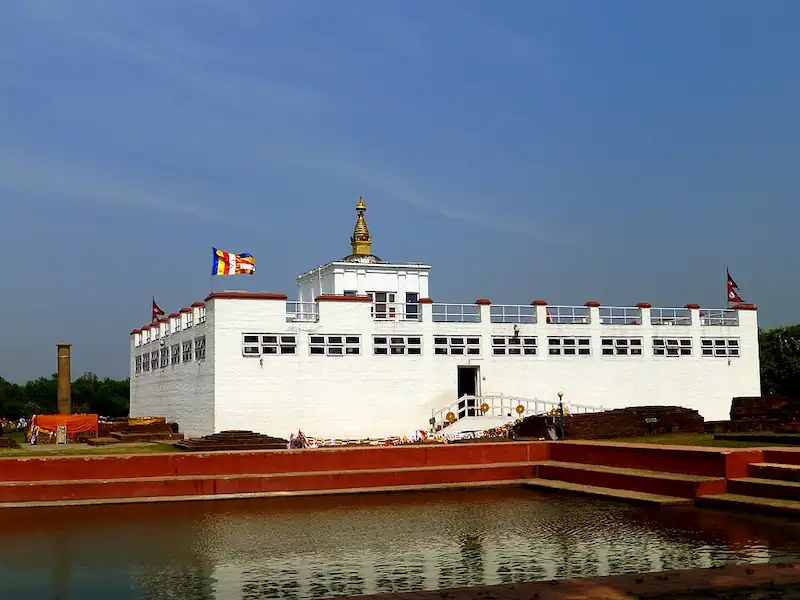
To enter you need to pay an entrance fee.
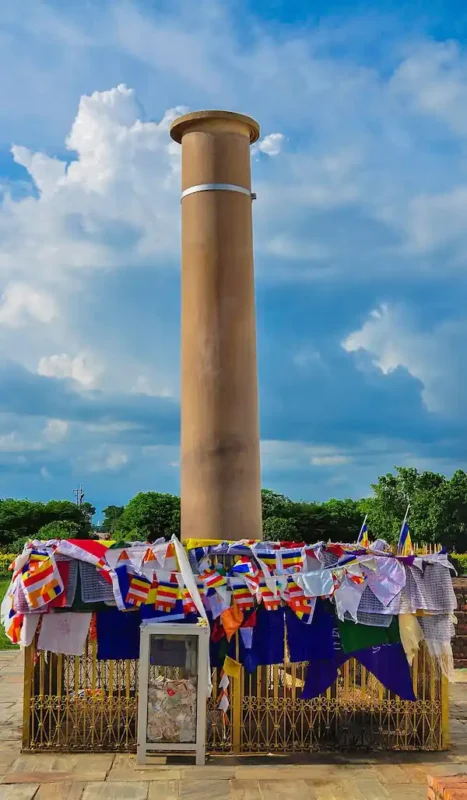
Ashoka's Column
Located next to the Maya Devi temple, it is one of the most important historical features of the site. It was erected in the 3rd century BC by Emperor Ashoka, confirming that Lumbini was already a place of pilgrimage at that time.
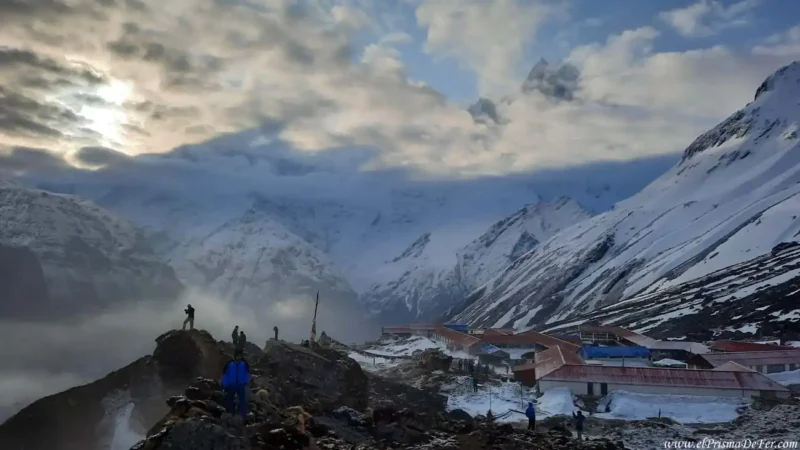
Monastic area
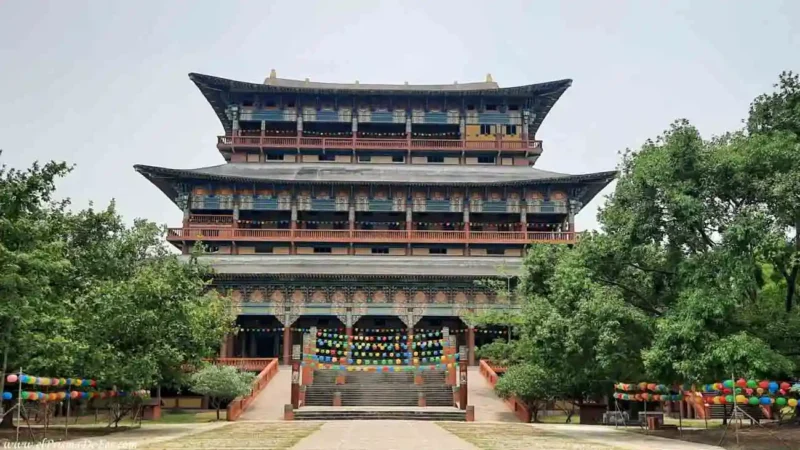
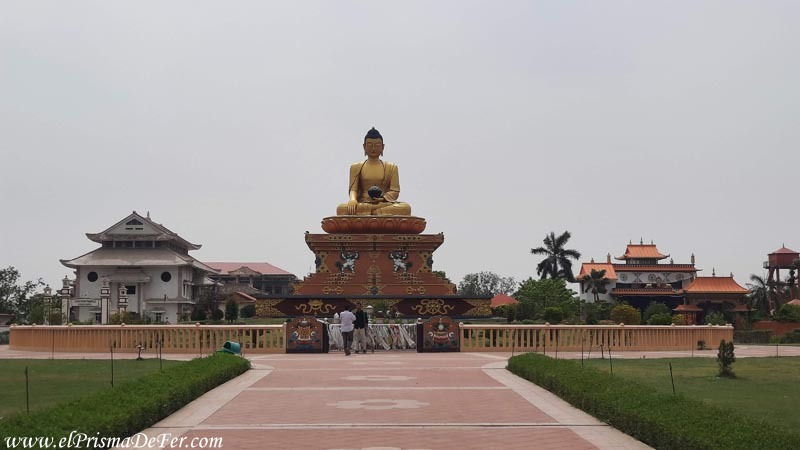
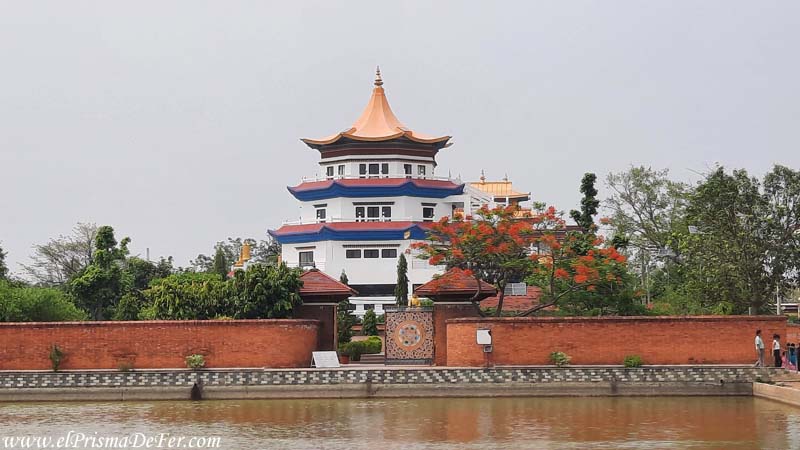
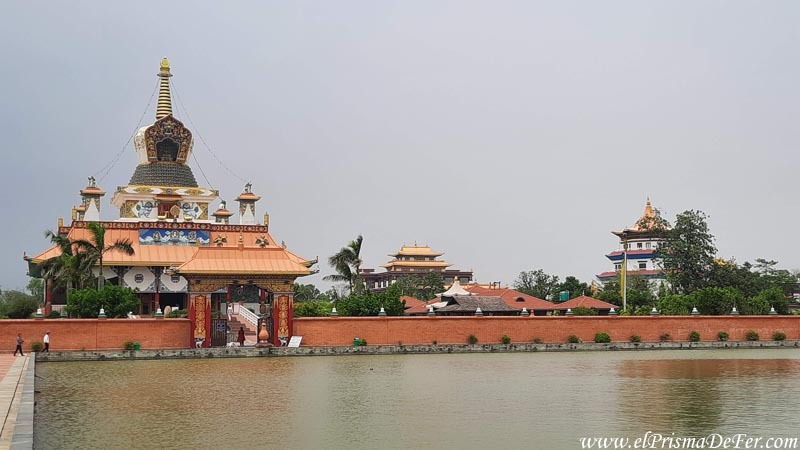
The monastic area is one of the most interesting parts of Lumbini. Monasteries built by different Buddhist countries are scattered along a canal, each with its own architectural and spiritual interpretation of Buddhism.
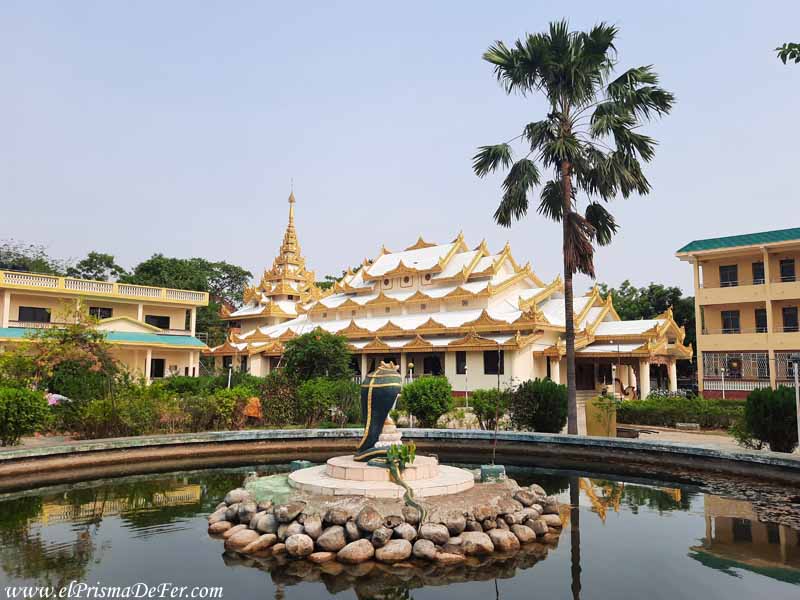
Some are quite simple, but others are truly spectacular. I especially liked the monasteries in South Korea, Thailand, and Cambodia, both for their size and the level of detail in the decoration, statues, and interiors.
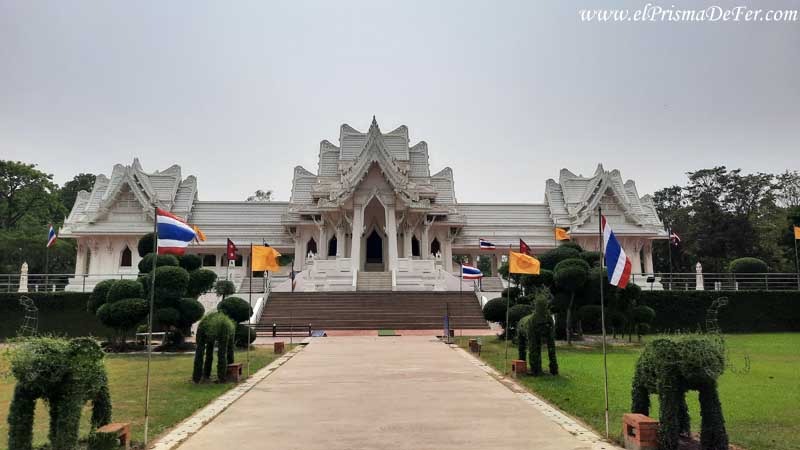
The contrast between styles makes walking through this area almost like visiting several countries in just a few hours.
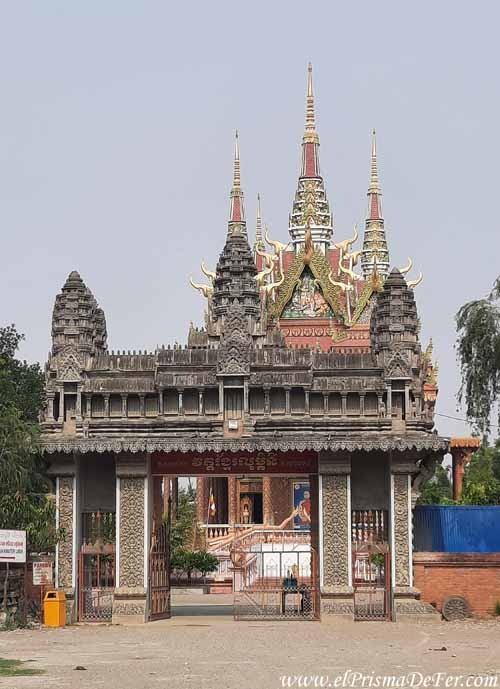
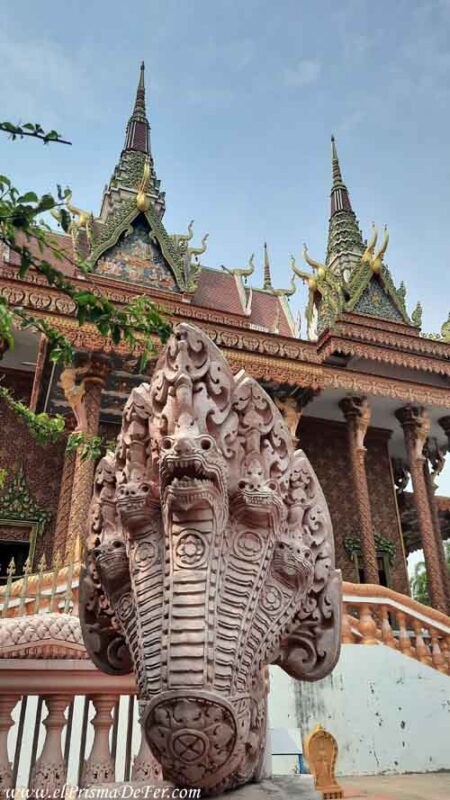
Most monasteries can be visited free of charge, provided you respect the basic rules (remove your shoes, maintain silence, and wear appropriate clothing). You don't need to go inside them all; it's best to choose a few representative ones and admire the rest from the outside.
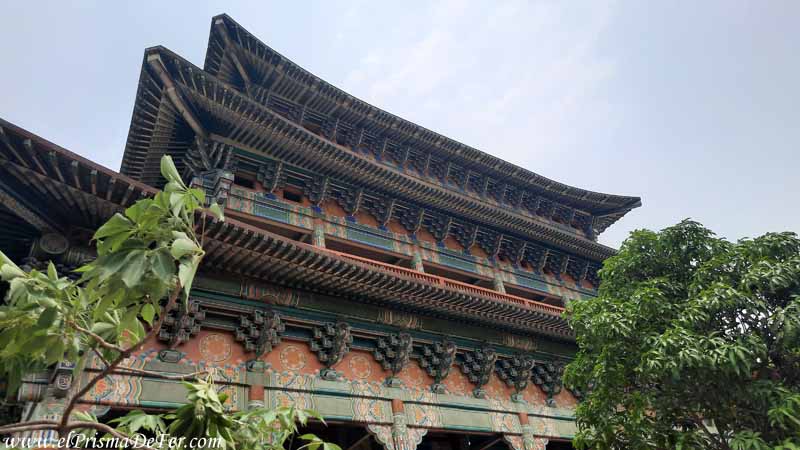
Sacred Garden
The Sacred Garden is the heart of the complex and connects the main points of interest. It is a spacious, well-maintained area designed for leisurely strolls. In addition to the green surroundings and trails, here you will find the Eternal Peace Flame, a flame that burns permanently.
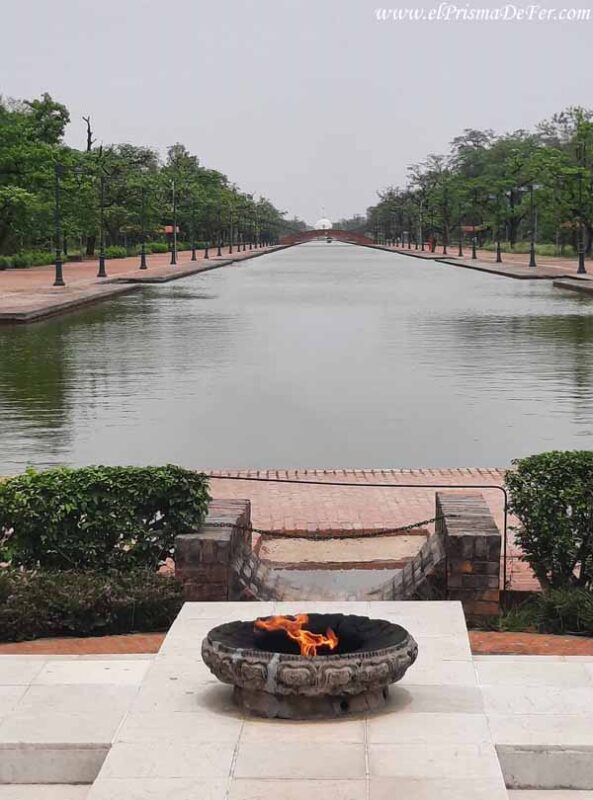
This fire symbolizes world peace and coexistence between religions, a message aligned with the spirit of the place.
Tickets and access to the complex
To visit Lumbini, you don't need to pay to explore the monastic area or the Sacred Garden. The paths, open spaces, and most of the monasteries can all be visited free of charge.
The only paid access within the complex is to the Temple of Maya Devi area, which marks the birthplace of Siddhartha Gautama. That ticket also includes a visit to the Ashoka Pillar and the immediate archaeological zones.
How to organize your visit to Lumbini
The Lumbini complex is enormous. It is not just a temple, but an area with international monasteries, a central canal, wooded areas and the archaeological site where the Maya Devi Temple is located.
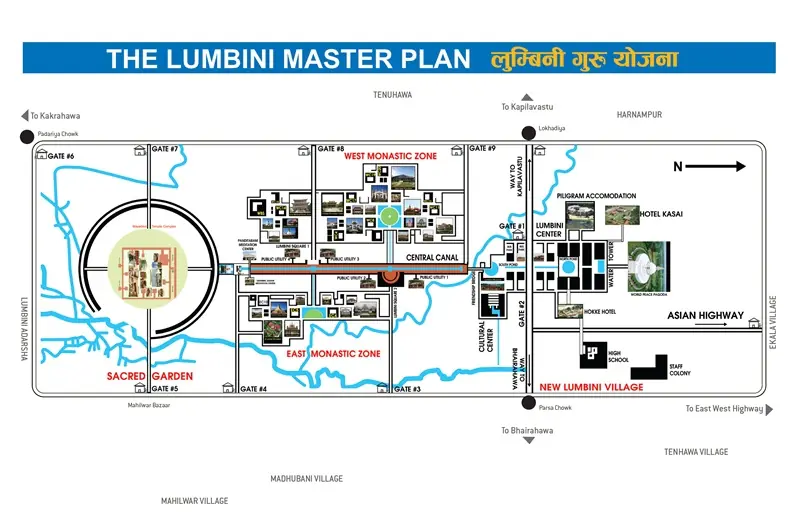
If you want to do the classic and orderly tour, the best thing to do is enter through the main gate (Gate 5), which takes you directly to the Buddha's birth temple, and is where you will end up buying the ticket to enter that area.
From there you can:
- Visit the Maya Devi Temple first.
- Walk along the central axis next to the canal
- Then tour the monasteries on the east and west sides
- End at the World Peace Pagoda
This is the most logical option if you're exploring on your own and want to follow the natural flow of the complex. However, if you prefer to do it in reverse order, you can enter through Gate 3, which will take you to the center of the temple area.
What is the best way to explore Lumbini?
The most practical and recommended way to explore Lumbini is by bicycle. The distances within the resort are long, the terrain is completely flat, and there are several places where you can rent bicycles at a low cost, allowing you to move freely and set your own pace.
Exploring Lumbini on foot is also possible, but it can be tiring if the idea is to visit the entire complex.
Another alternative is to get around by rickshaw or taxi, especially if you have little time or are traveling in intense heat. It's comfortable, but less flexible, as it depends on arrangements with the driver and doesn't allow you to stop as easily at every point along the route.
Where to stay in Lumbini
The best area to stay in Lumbini is near the main resort, so you can get around on foot and not rely on public transport. The town is small and doesn't have a defined center, so any accommodation near the entrances will be fine.
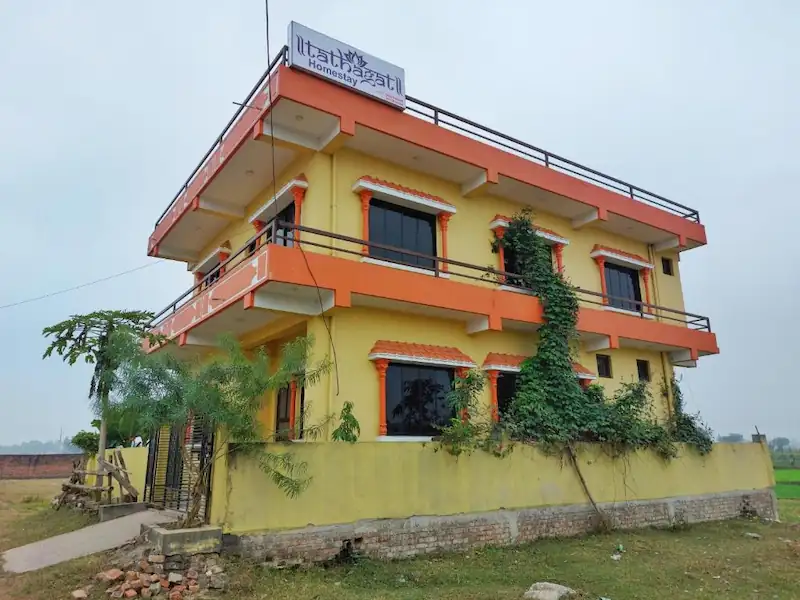
I stayed at Tathāgata Homestay, a family home that rents out a few rooms. The conditions were very good, the place was clean and quiet, and the price was low compared to other options in the area. It's also a reasonable distance from the resort, making it easy to walk back and forth.
Final thoughts: Is Lumbini worth visiting?
For me, Lumbini was worth it because it was on my way to India. It was a good way to slow down after several intense days and say goodbye to Nepal in the most peaceful way possible.
The atmosphere here is so calm, it almost inevitably makes you slow down. I even felt like meditating in the South Korean temple, something I don't usually do, but here, my mind and body were craving it.
However, if I had to travel exclusively from Kathmandu or Pokhara just to visit Lumbini, I probably wouldn't. As a city, or in terms of the number of attractions, it doesn't justify the trip. Lumbini's appeal lies primarily in its symbolic and religious significance.
In short, Lumbini is a recommended destination if it's on your itinerary or if you have a genuine interest in Buddhism and its history. Otherwise, there are other places in Nepal that offer much more in terms of scenery, urban culture, and travel experiences.
Frequently Asked Questions about Lumbini
How long does it take to visit Lumbini?
Half a day is enough to see the main sights. If you want to explore the monastic area at a more leisurely pace, it's best to dedicate a full day to it.
Is it worth spending the night in Lumbini?
Yes, at least one night. Sleeping near the complex allows you to visit the temples early in the morning or at sunset, when there are fewer people and the atmosphere is more peaceful.
Do you have to pay an entrance fee to visit Lumbini?
There is only an entrance fee for the Maya Devi Temple area and the archaeological zone. The Sacred Garden and most of the monasteries can be visited free of charge.
What's the best way to get around within the complex?
Cycling is the most practical option, as the distances are long and the terrain is flat. It can also be done on foot or by rickshaw, depending on the time available.
Is it an interesting destination if you're not Buddhist?
It depends on your expectations. If you're interested in history or looking for a quiet place, it might be worth it. If you're expecting a city with lots of attractions, probably not.
Is it possible to visit Lumbini on a trip between Nepal and India?
Yes. It's very close to the border and is a common stop for those traveling overland between the two countries.
What is the best time to visit Lumbini?
Between October and March, the weather is drier and temperatures are moderate. Summer is very hot, and during the monsoon season, there can be significant rainfall.
Support The Prism of Fer!
Your support helps me continue creating free content on the blog. Thank you so much!