I arrived in Kathmandu after spending a few peaceful days in Bandipur. But the transition from a calm, quiet village to Nepal's capital, with its heavy traffic and constant noise, wasn't very pleasant. Even so, I had high expectations for this city, a place steeped in history.
In this post I share my experience in Kathmandu, what places to visit, how to get around the city, where to stay, my impressions and some practical tips for organizing your visit to the capital of Nepal.

This post may contains affiliate links. If you purchase through these links, I may earn a commission at no extra cost to you. Thank you for your support!
Table of Contents
Where is Kathmandu located?
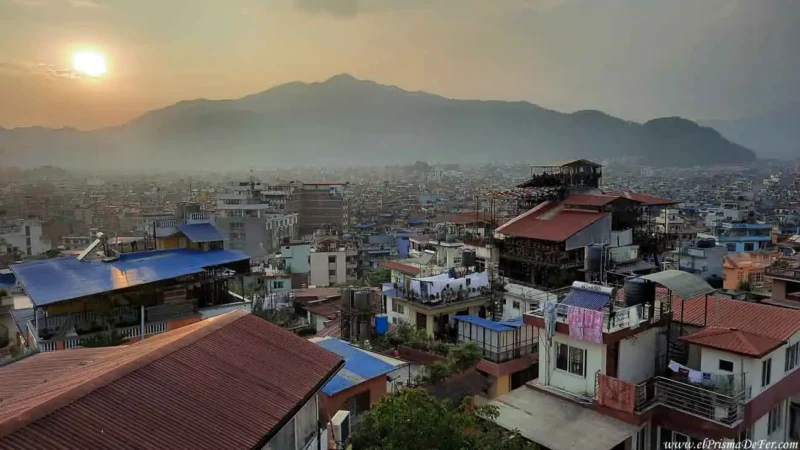
Kathmandu is located in the center of Nepal, within the Kathmandu Valley, a basin surrounded by hills at an altitude of approximately 1,400 meters above sea level. It is the capital of the country and its main political, cultural, and economic center.
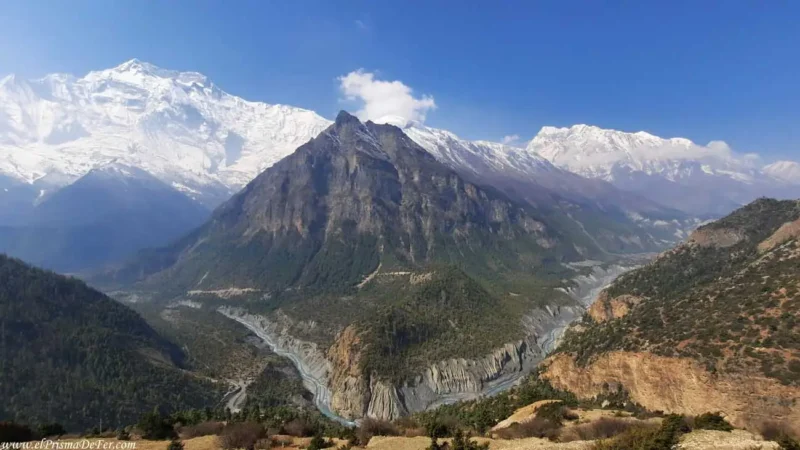
Although many people associate Nepal directly with the Himalayas, Kathmandu is not in a high mountain region. It is located several hundred kilometers from the great peaks, but serves as a gateway to regions such as Everest, Annapurna or Langtang, either by air or land.
Due to its strategic location, the city concentrates the international airport, most of the embassies, trekking agencies and tourist services, making it an almost obligatory stop for those visiting Nepal for the first time.

A brief history of Kathmandu
Kathmandu has a history of over two thousand years and was, for centuries, the political and cultural heart of the valley that bears its name. The city grew under the influence of various dynasties, especially the Licchavi and the Malla, responsible for many of the temples, palaces, and squares that still define the urban landscape today, such as the old durbar squares.
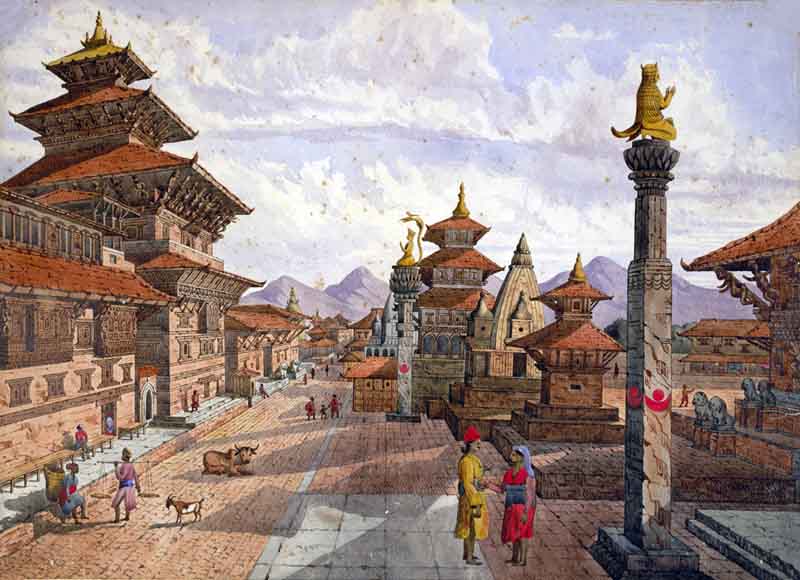
For centuries, the Kathmandu Valley was a vital crossroads between India and Tibet, facilitating both trade and the spread of Hinduism and Buddhism. This religious mix remains one of the city's most visible features, where shrines, stupas, and rituals are an integral part of daily life.
Kathmandu and the hippies
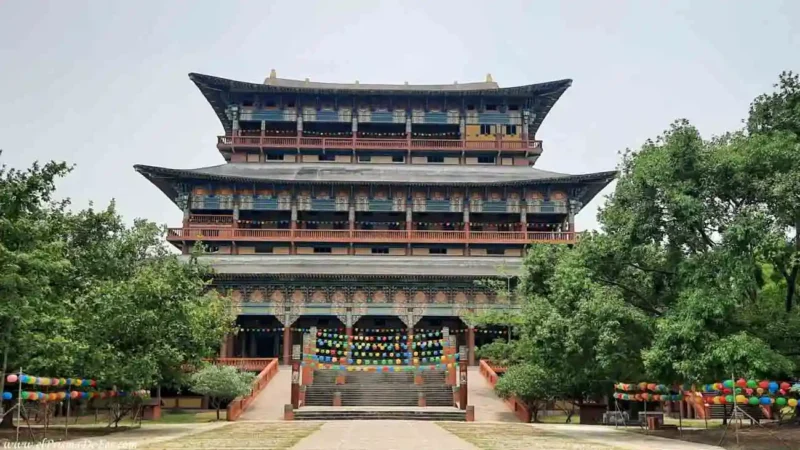
Kathmandu was a key hub for hippies, especially during the 1960s and 70s. At that time, Nepal was one of the few countries where hashish was legal and sold openly, even in state-licensed shops.
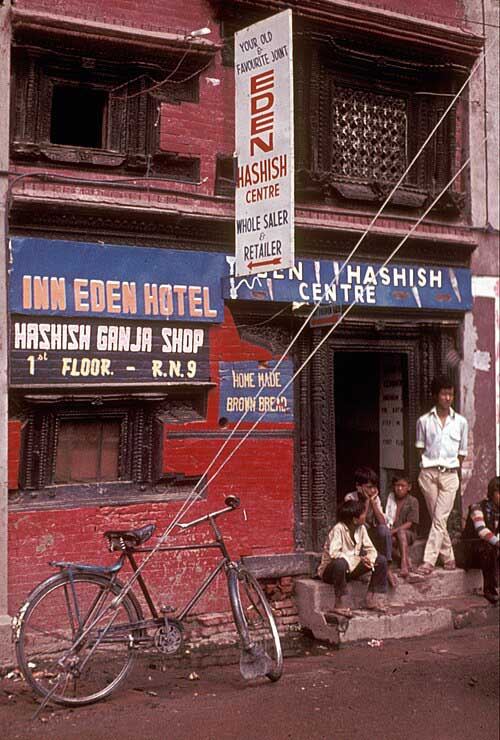
This made Kathmandu, and especially Freak Street, a mandatory stop for young people traveling from Europe to India, Afghanistan or Southeast Asia in search of freedom, spirituality and an alternative life to the Western system.
The city offered cheap accommodation, few restrictions, and a very tolerant atmosphere for that lifestyle. Added to that was its strong spiritual appeal.
Hinduism and Buddhism coexisted naturally, with temples, rituals, and a relationship with death and the sacred that seemed completely different to many Western travelers. Kathmandu ended up being a place to stay for weeks or months, to read, meditate, use drugs, and reflect on things—something very much in line with the spirit of the times.
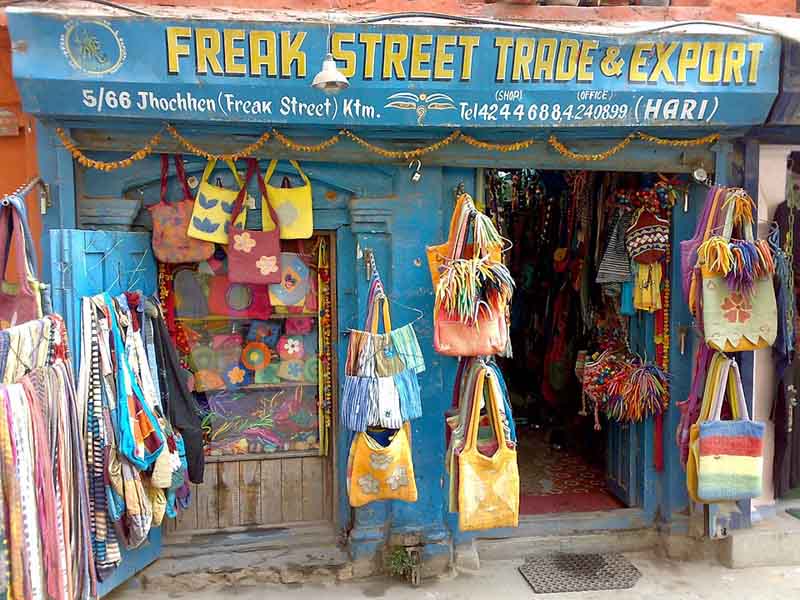
That era ended in the mid-1970s when the Nepalese government banned hashish under international pressure. With that, the classic hippie scene faded away, but its influence remained.
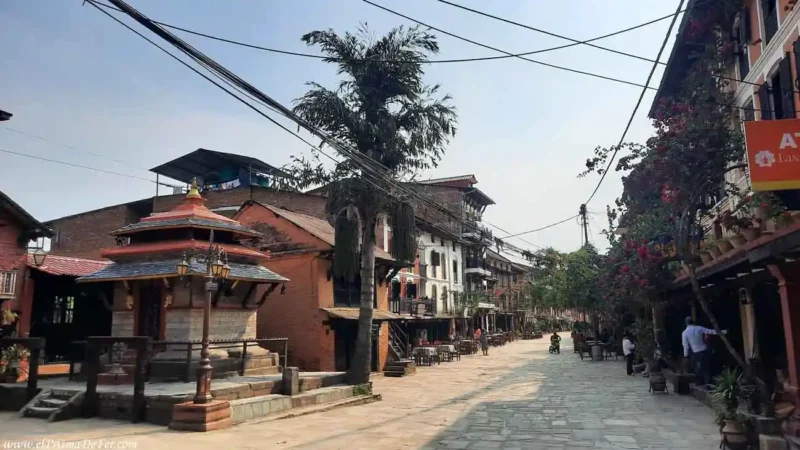
Today, although present-day Kathmandu is much more chaotic and less romantic, traces of that past can still be seen in certain neighborhoods, such as Thamel, cafes, and in the persistent idea of the city as a place of searching, even though it no longer has the magic that many imagined.
What is Kathmandu like today?
Today, Kathmandu left me with a rather different feeling than I expected. It certainly has its charms, boasting fascinating historical sites, neighborhoods steeped in history, and bohemian corners that evoke its past.
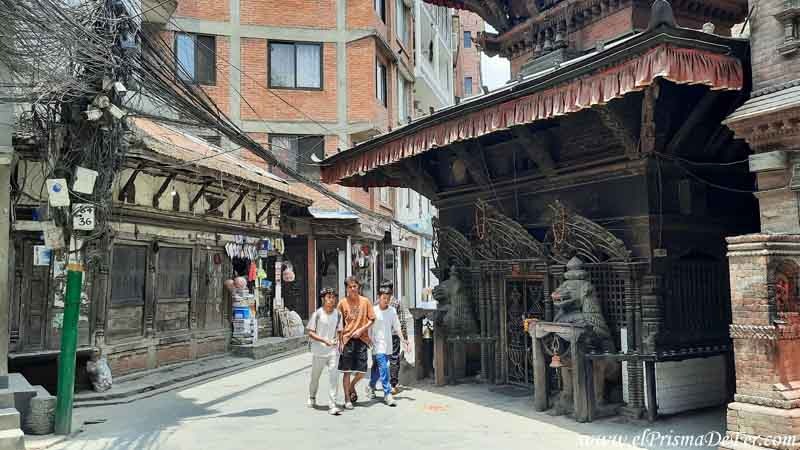
The city as a whole didn't quite win me over. It gave me the impression of being a place that had fallen on hard times, as if it had once been more glorious and was now rather neglected. The dirt, the constant traffic, and the pollution are very noticeable, and all of that ended up influencing my perception.
I know that Kathmandu suffered a devastating earthquake in 2015 and that many buildings and temples were destroyed or damaged. Even so, walking around, which is how I most enjoy getting to know a city, wasn't particularly pleasant for me.
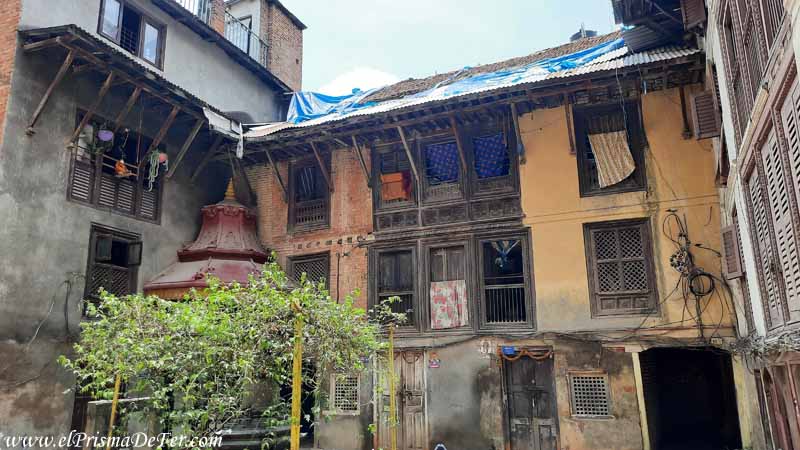
Kathmandu has several important highlights that are worthwhile, but as a city itself, it wasn't one of my favorites of the trip.
How to get to Kathmandu
By plane
Kathmandu is the main entry point to Nepal and has the Tribhuvan International Airport, the country's only international airport.
Most travelers arrive by air, either on direct flights from cities like Delhi, Doha, or Bangkok, or with a layover in the region. There are also domestic flights from Pokhara connecting both cities in about 25 minutes, faster but sometimes affected by weather.
The airport is relatively close to the city center, although transfers can take longer than expected due to traffic.
By land
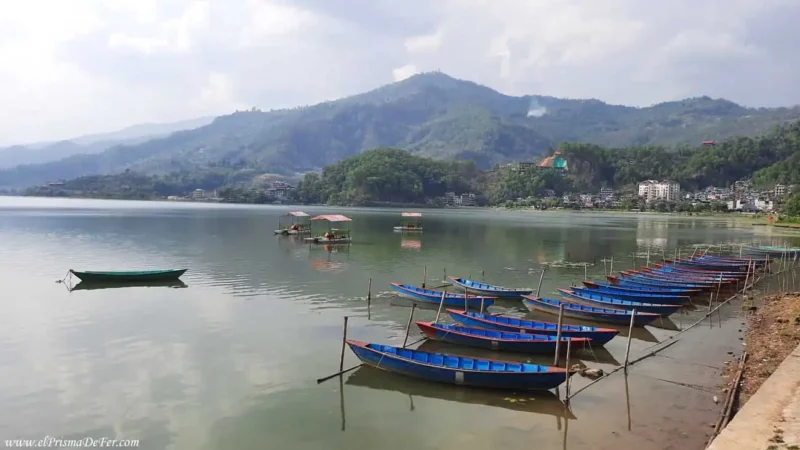
If you're coming from Pokhara, there are several land options. The bus or minivan trip usually takes between 6 and 8 hours, depending on the road conditions, and is the most common option among travelers with tighter time or budgets.
If you arrive by bus or minivan, you will most likely be dropped off at Gongabu Bus Park (see location), Kathmandu's main long-distance terminal, located a half-hour walk north of the Thamel neighborhood.
It's not a particularly pleasant area for walking, but from there it's easy to take a taxi or rickshaw to your accommodation. Some private companies also terminate their routes directly in Thamel, which makes getting there much easier.
Arriving from India is also common. Many travelers cross through border crossings such as Sunauli–Bhairahawa and continue by bus or jeep to the capital. It's a long but inexpensive journey.

Things to do in Kathmandu
Although the city itself didn't completely win me over, Kathmandu has many specific points of interest that justify a visit.
Kathmandu Durbar Square
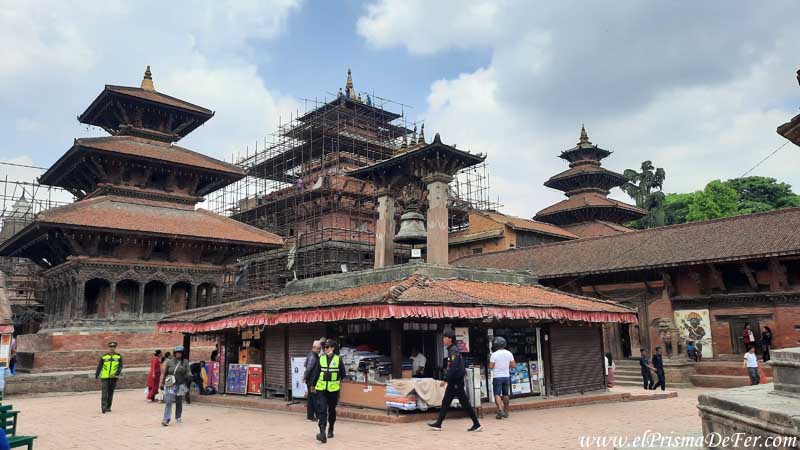
Kathmandu Durbar Square was for centuries the political and ceremonial center of the valley. Here stood the royal palace, the Hanuman Dhoka complex, and from this point the Malla kings ruled first and the Shah dynasty later.
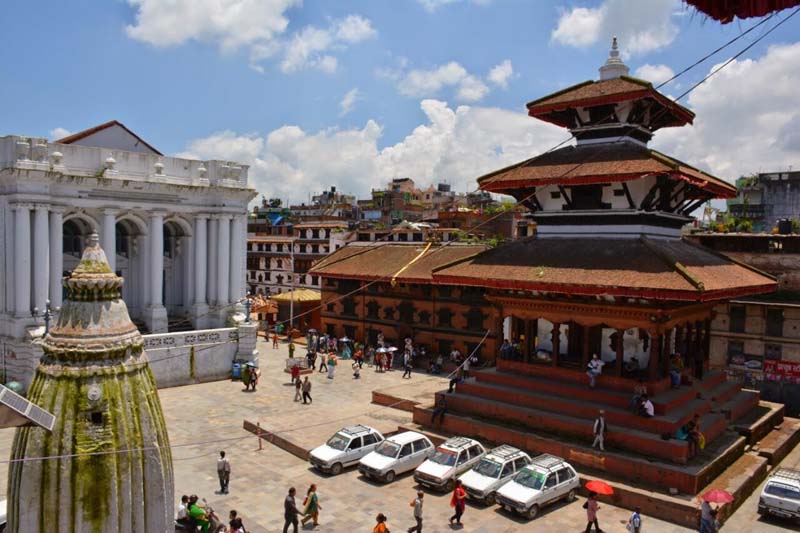
The complex is large but somewhat chaotic. There are Hindu temples of varying sizes, inner courtyards, shrines, and buildings that now coexist with vendors, guides, motorcycles, and everyday life. Furthermore, some areas are still under restoration following the 2015 earthquake, which detracts somewhat from its visual harmony.
It is advisable to visit it with some prior context (guide or reading) so as not to get lost among so many buildings and names.
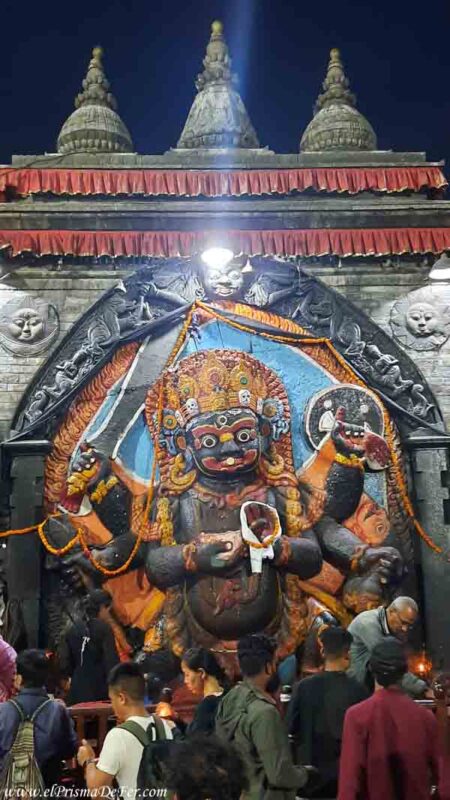
You have to pay an entrance fee of 1000 NPR to tour the interior of the square (check the official website for the updated price), although at times security is less intense and you can try to enter through a side street without paying.
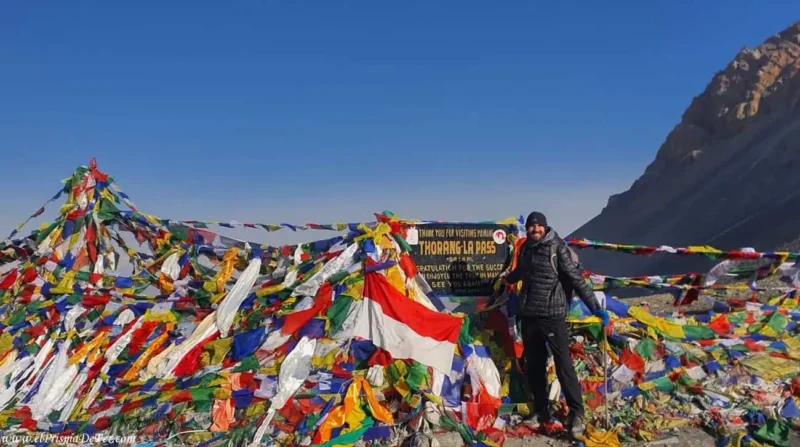
Patan Durbar Square
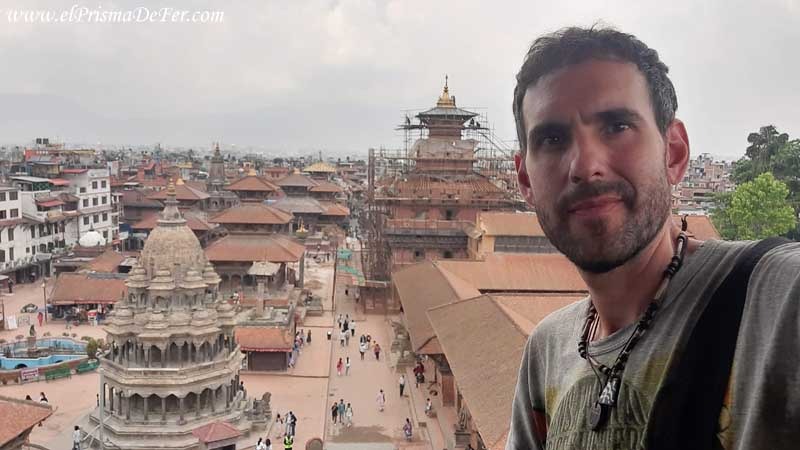
Patan, also known as Lalitpur, is located south of Kathmandu and is part of the same valley. Its Durbar Square is the main attraction, with an impressive concentration of temples, courtyards, and well-preserved historic buildings.
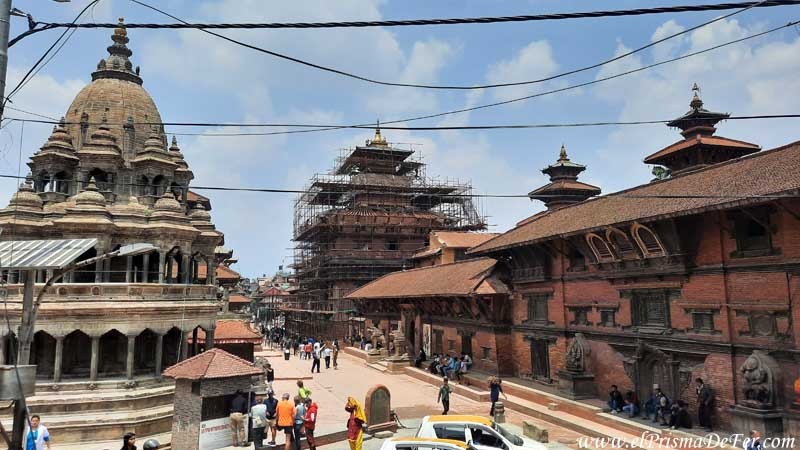
Unlike Kathmandu's Durbar Square, here the ensemble feels more harmonious and less chaotic, allowing for a better appreciation of the architecture and giving you time to explore. Furthermore, the area surrounding the square features quiet streets, artisan workshops, and cafes where you can sit and relax.
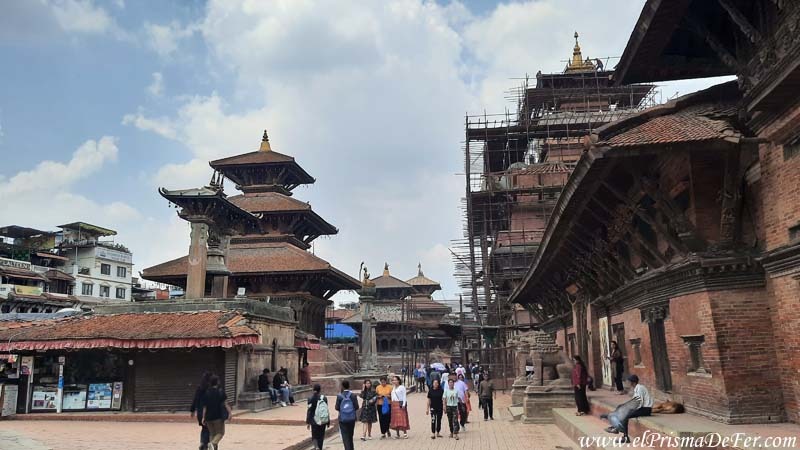
Patan is ideal for a half-day or full-day trip from Kathmandu. It's easy to get there by taxi or local transport, and there's also a 1000 NPR entrance fee to access the historic area (see prices).
While it's possible to try to enter through a side street and pretend you're not paying attention, there are usually security personnel patrolling and sooner or later they'll ask for your ticket.
A good alternative to see it for free and from a different perspective is to go up to one of the cafes located in front of the square (see location on the map). You buy something to eat and drink, and in return, you get a lovely elevated view of Durbar Square in Patan, perfect for observing the activity, the architecture, and taking photos without the chaos of street level.
How to get there
To get to Patan from Thamel, the most convenient option is a taxi, which usually takes between 20 and 30 minutes depending on traffic. It's ideal if you're short on time or want to get directly to Durbar Square without any hassle.
You can also go by local transport, although it requires a bit more patience and asking carefully where to get off. From the Ratna Park stop (see on map) buses leave for Patan or Lagankhel. They usually drop you off a few minutes' walk from the historic area. It's the cheapest option, but less straightforward for a first visit.
If you enjoy walking and the weather is nice, it's even possible to walk from nearby areas south of Kathmandu, although it's not the most pleasant route due to traffic and uneven paths.
Bhaktapur
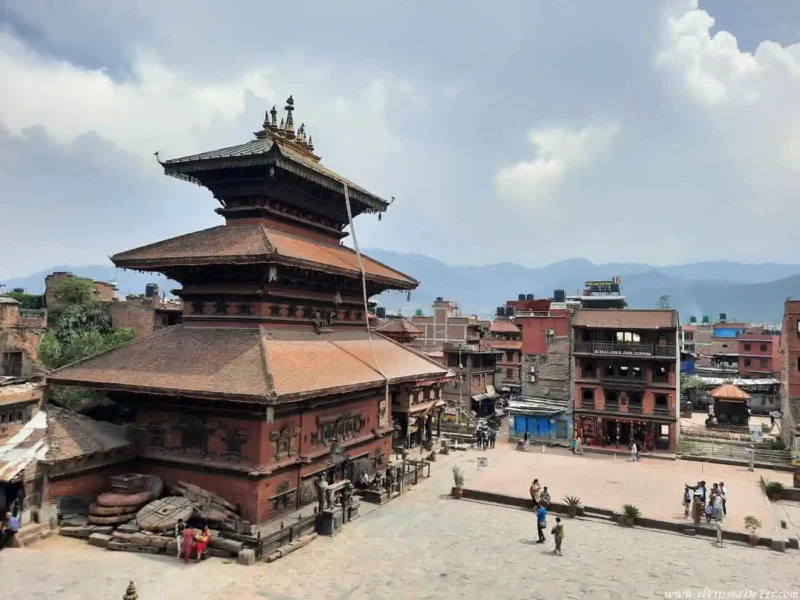
Bhaktapur is a little further away, to the east of the valley, but it's absolutely worth the trip. It's the city that best preserves its medieval character and, in many ways, the most attractive of the three ancient capitals of the valley.
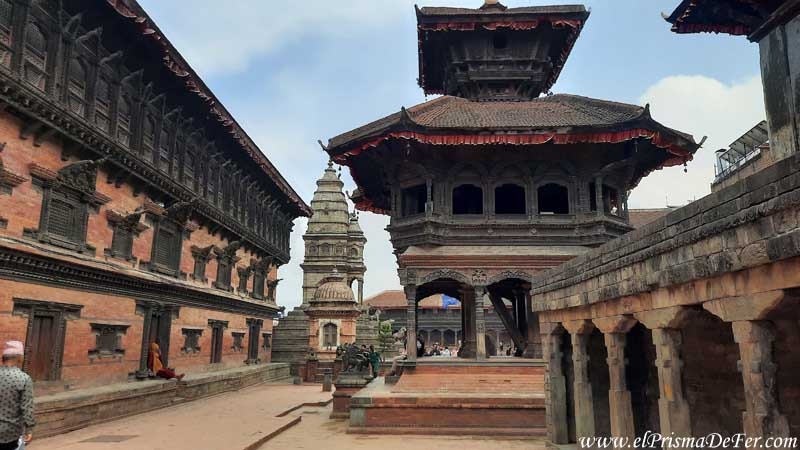
Its Durbar Square is wide, open and visually very striking, with temples, palaces and squares that feel less affected by modern traffic.
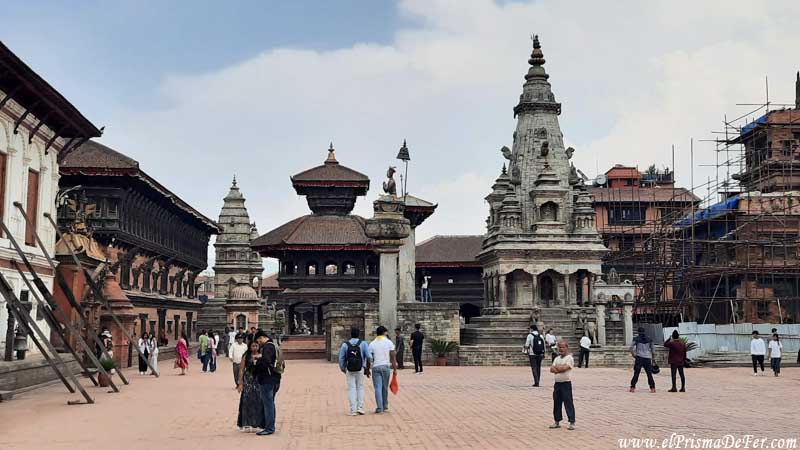
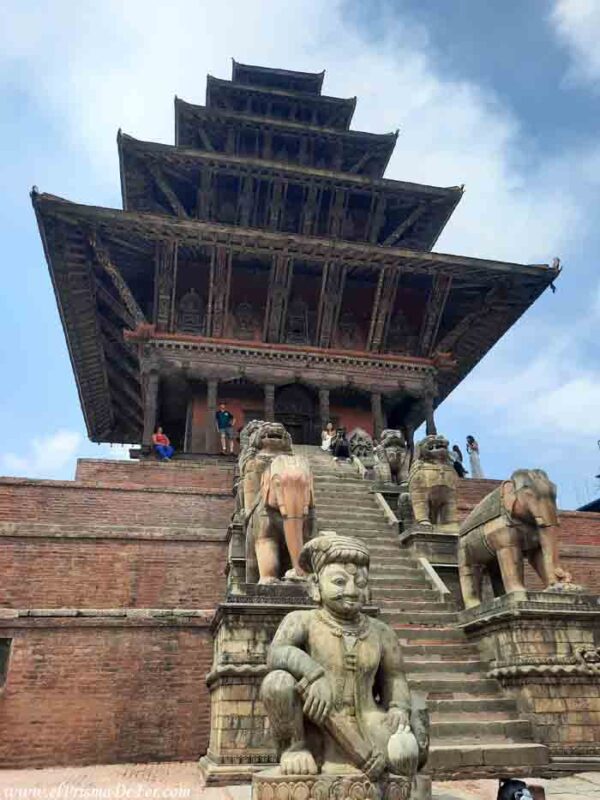
Another of the most emblematic points is the Nyatapola Temple, the tallest temple in Nepal, with its five levels and a staircase guarded by symbolic figures. Also nearby is the Bhairabnath Temple, which adds contrast and context to the whole.
Another interesting place is the Pottery Square, where pottery is still made in the traditional way today.
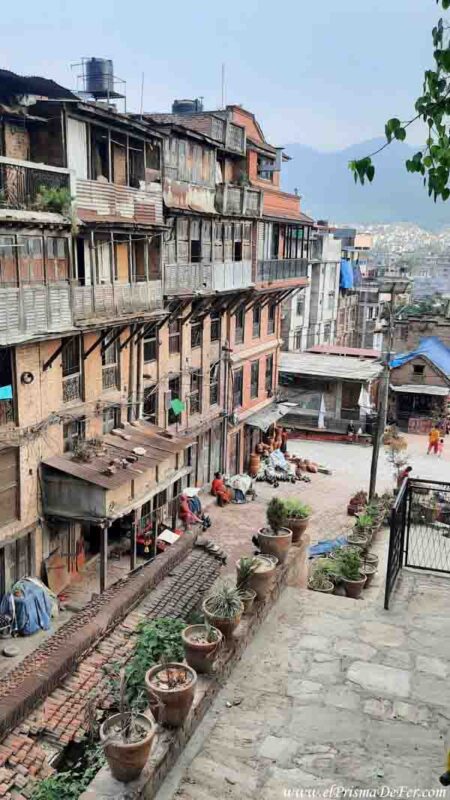
But beyond the specific sights, the best thing about Bhaktapur is getting lost in its cobbled alleyways, hidden courtyards, small temples, and everyday scenes that don't seem designed for tourism. It's also a great place to try local food, such as the famous juju dhau (typical yogurt), which is very much associated with the city.
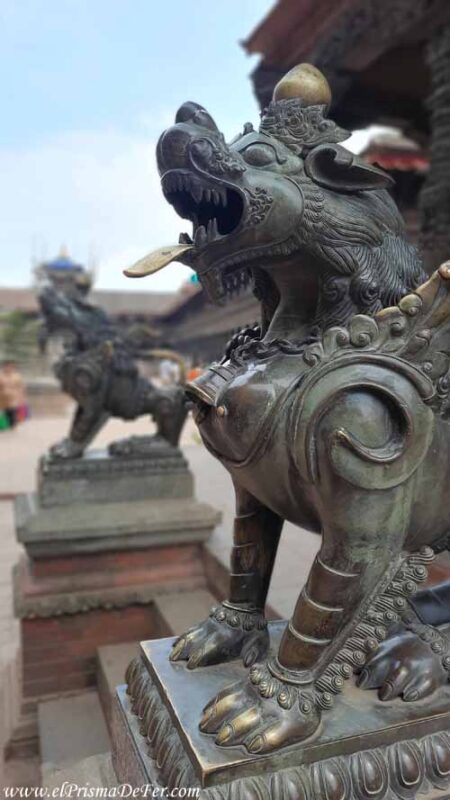
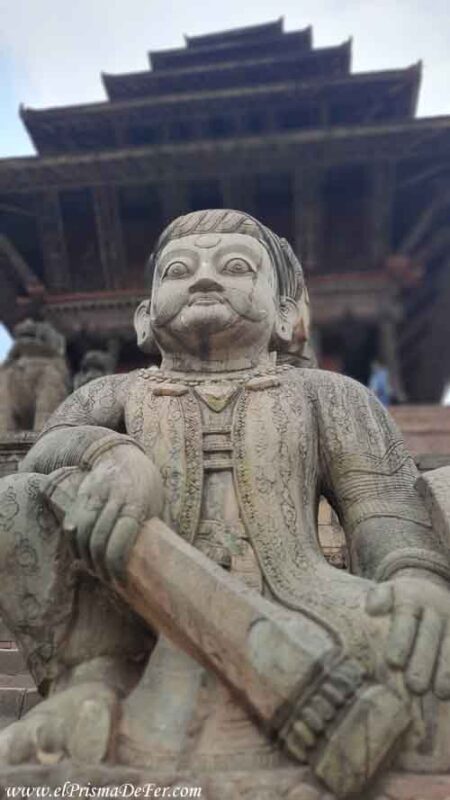
Access to the historic city is not free (around USD 18), but the ticket includes the entire complex and allows you to explore it at your leisure for several hours (check the official website for updated prices). If you have limited time and want to choose just one day trip outside of Kathmandu, Bhaktapur would be my recommendation.
How to get there
Bhaktapur is further away, about 13 km east of Kathmandu, but access is fairly straightforward. The simplest way is to take a taxi, which takes between 40 and 60 minutes, depending on traffic. It's the most convenient option if you're visiting for the day and want to save time.
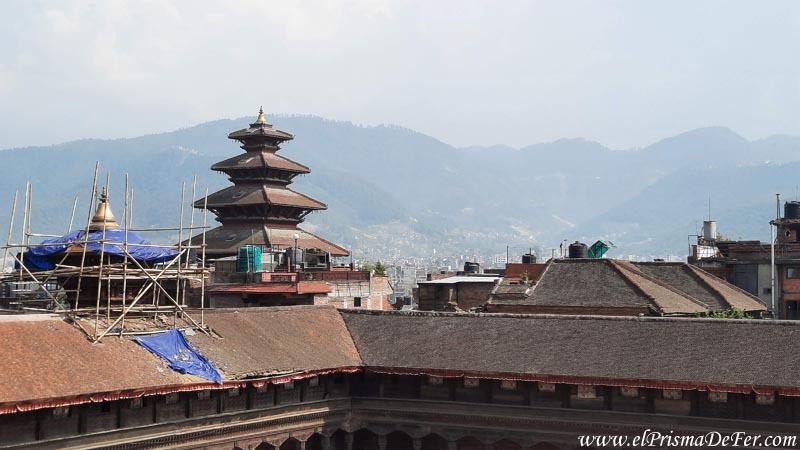
Another alternative is to go by local bus or minivan from the Ratna Park bus stop or from the Gongabu Bus Park. The buses are usually crowded, but they are cheap and relatively frequent. They drop you off near the main entrance to the city (see on the map), where you pay for the ticket to access the historical area. To return to Kathmandu, you follow the same route in reverse.
Swayambhunath (Temple of the Monkeys)
Swayambhunath is one of the oldest and most emblematic religious sites in the valley, located on a hill west of Kathmandu. It is known as the Monkey Temple because of the large number of monkeys that live in the complex and move freely around the stairs and terraces.
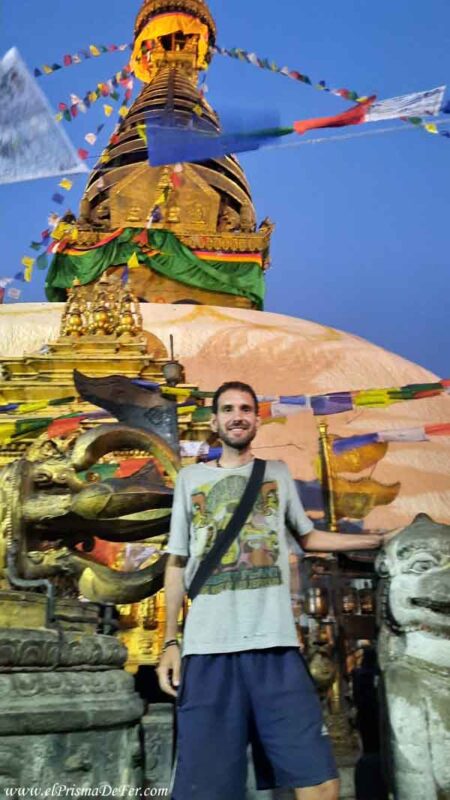
Once at the top, the complex has a large central stupa, small shrines, prayer wheels and monasteries that create a calmer atmosphere than the city center.
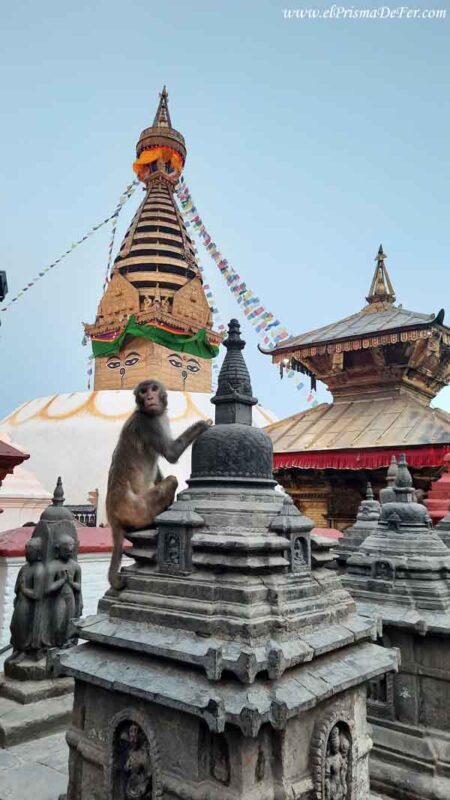
But the best thing for me is the panoramic views of the city. From the hill, you can see a good part of Kathmandu, with its dense neighborhoods, temples, and, on clear days, the hills surrounding the valley.
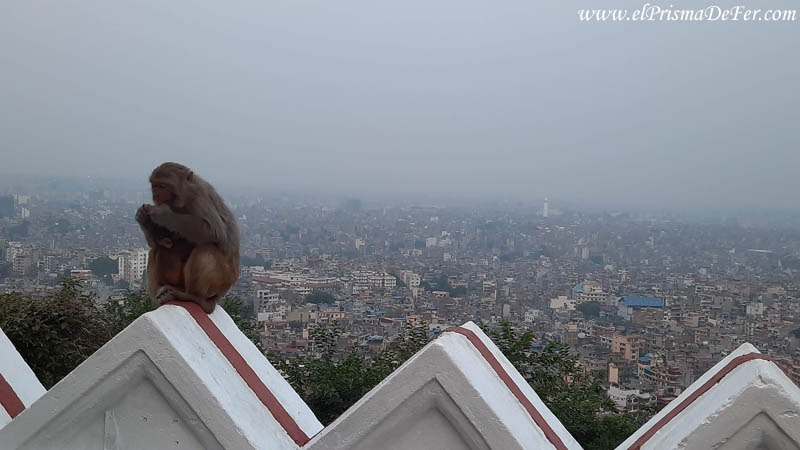
To enter the main area, you must pay a very small entrance fee (check the official website). Tickets are checked at the official entrances, especially at the main staircase. The site can get quite crowded, particularly mid-morning and at sunset.
How to get there
Getting from Thamel is relatively easy. The most direct option is a taxi, which takes about 10–15 minutes, depending on traffic.
You can also walk if you have the time and inclination; the walk takes about 30–40 minutes, although it's not particularly pleasant due to the traffic. Once at the base of the hill, you have to climb a long staircase to reach the stupa, where you should be aware of the monkeys, especially if you're carrying food or loose items.
Temple of Pashupatinath
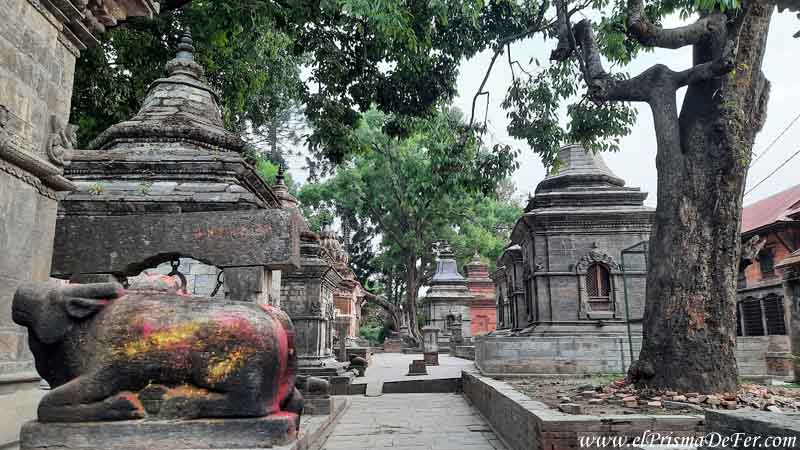
The Pashupatinath temple is one of the most sacred Hindu temples in Nepal and one of the most intense visits in Kathmandu.
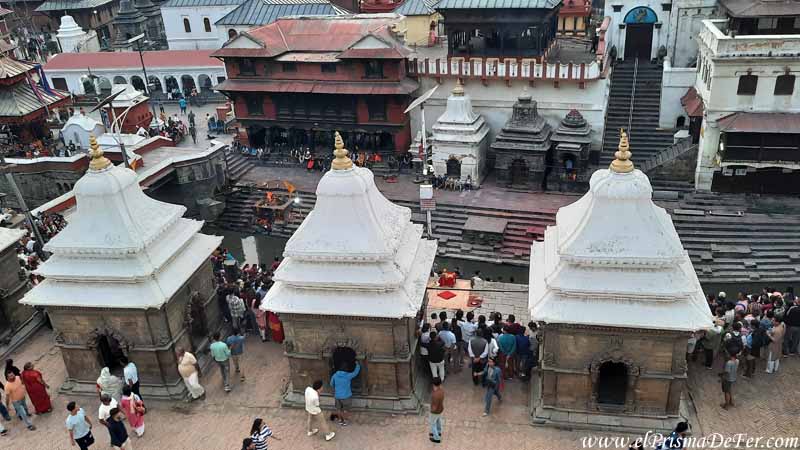
It is located on the banks of the Bagmati River and is a central place for funeral rituals, where cremations are carried out in the open air, facing the river, following traditions that have been repeated for centuries.
Every evening, at sunset, a religious ritual (aarti) takes place on the riverbank. Chants, the sound of drums, fire, incense, and priests marking the rhythm of the ceremony all come together.
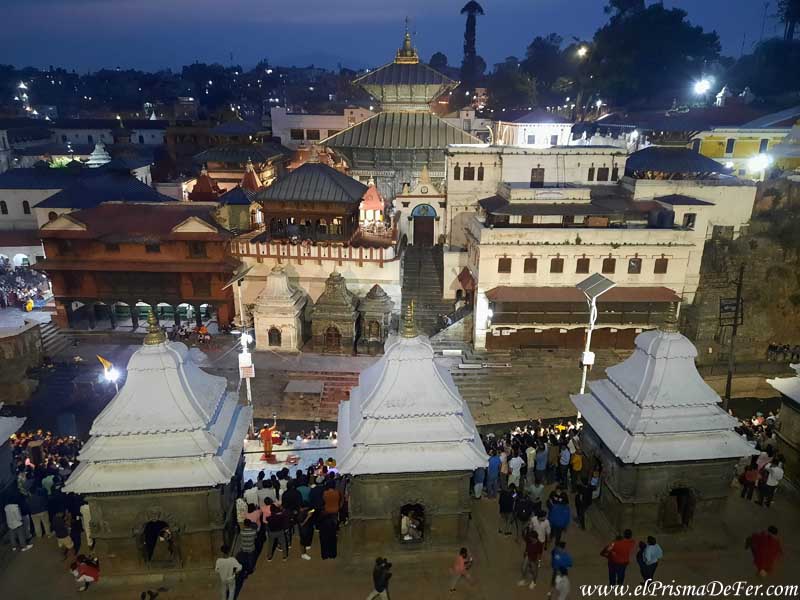
It is impossible not to think of Varanasi, in India. There, too, cremations take place at all hours along the banks of the Ganges River.
If you want to enter through the official entrances, the main complex has a paid entrance fee of 1000 NPR (check the official website for updated prices). However, when I went, there was a back/side entrance (in a temple on the opposite side from the main entrance, towards the more open area of the river) where they were not charging.
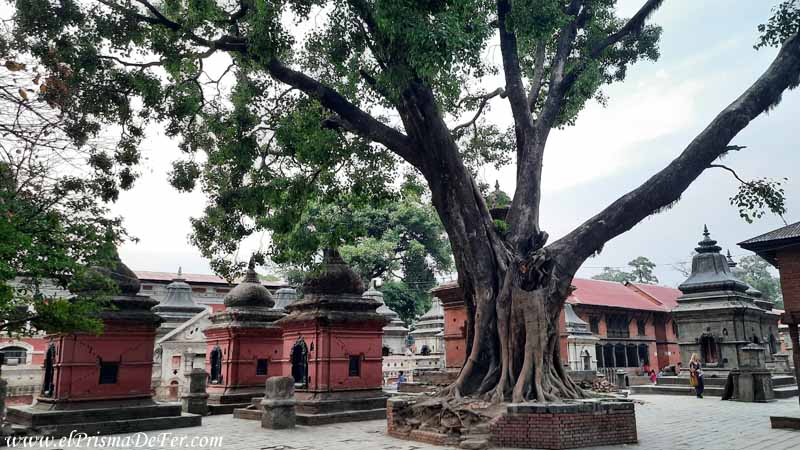
From there, you could visit some of the smaller temples at the top of the hill and walk to the area where the cremations and nighttime rituals take place, without needing to pay a ticket. This may change over time, but it's worth knowing and locating it on a map before you go.
Boudhanath Stupa
The great stupa of Boudhanath is one of the most impressive I've ever seen. It's almost hidden behind the buildings of the neighborhood, but once you find it, it's breathtaking.
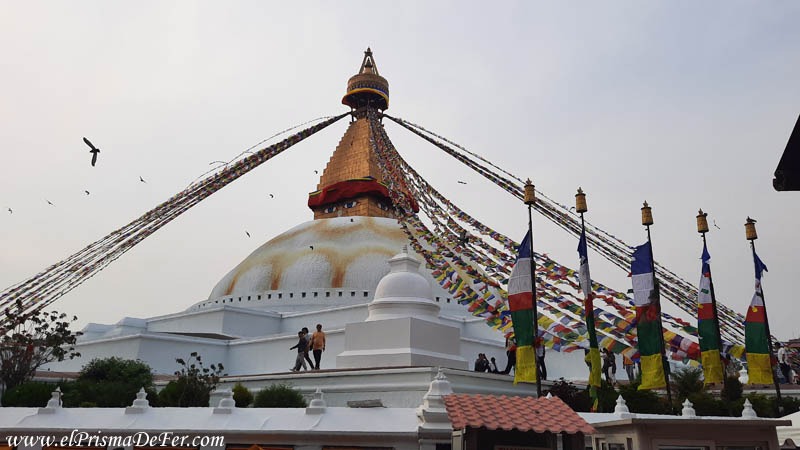
The number of people is surprising, with people walking clockwise, monks praying, prayer flags waving in the wind, and a much calmer atmosphere than in the city center.
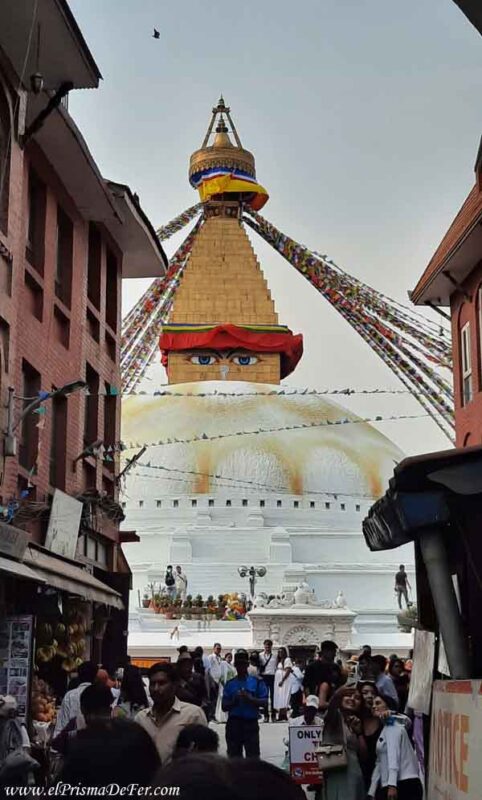
The area surrounding the stupa has a strong Tibetan influence, with monasteries, religious shops, bookstores, and cafes.
At dusk, when the lights begin to come on and more locals and pilgrims arrive, the place becomes especially attractive.
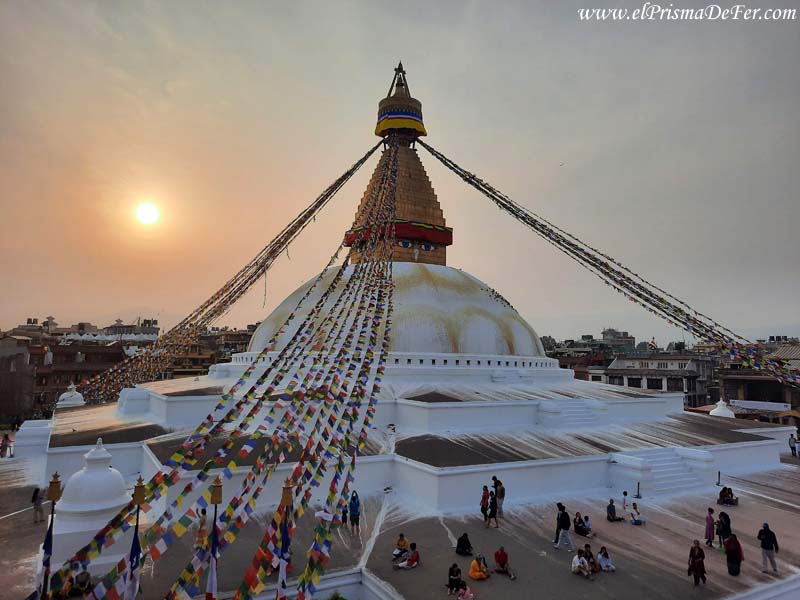
To enter the main perimeter of the stupa you have to pay an entrance fee. However, there is a very practical alternative if you don't want to pay for the ticket.
You can access a shopping arcade that surrounds part of the square, where there are shops and cafes with balconies and terraces. While having a drink or a bite to eat, you get an excellent view of the stupa from above, ideal for photos and observing the activity without being in the middle of the crowd.
Getting lost in Thamel
Thamel is the most touristy neighborhood in Kathmandu and, for most travelers, the first contact with the city.
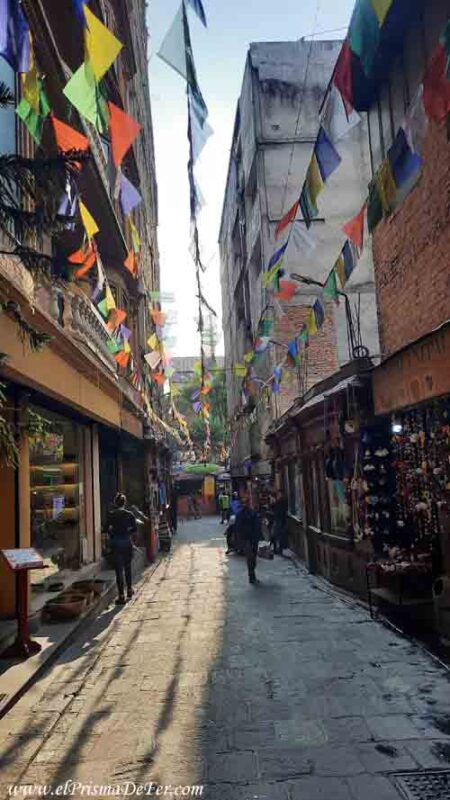
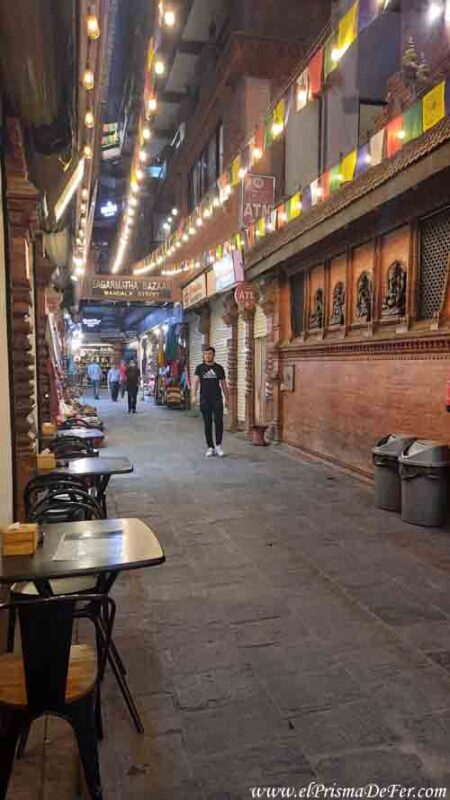
This area is home to most of the accommodations, restaurants, currency exchange offices, trekking agencies, and mountain equipment shops. It's a bit chaotic, noisy, and very crowded, but at the same time practical and functional.
It retains some of the backpacker spirit of bygone eras. In some bars, cafes, and bookstores, you can still sense that bohemian air left over from the years when Kathmandu was a must-see stop on overland routes through Asia. It's a place to socialize, plan your trip, and connect with other travelers before or after heading out into the mountains.
As a base, it was very convenient, and as the days went by, I grew to love it. I had my favorite restaurant, I would stop to look at the art houses and galleries, and I could walk its streets almost by heart.
Interesting museums in Kathmandu
While it is not a city that stands out particularly for its museums, Kathmandu and its surroundings have some specific places that are worth visiting to better understand the history, art and religion of Nepal.
Narayanhiti Palace Museum
It was the official residence of the royal family until the early 2000s. Today it functions as a museum and allows visitors to tour rooms, gardens and spaces that show how the Nepalese monarchy lived.
Patan Museum
For me, one of the best museums in the valley. It's located within the Durbar Square complex in Patan and is very well presented. It focuses on Hindu and Buddhist art and iconography, with clear explanations and a carefully curated display. Ideal to complement a visit to Patan.
National Museum of Nepal
Located in the Chhauni area, it houses diverse collections, including the country's history, religious art, antique weapons, and archaeological artifacts. It's not spectacular, but it provides a good overview of Nepal if you're interested in the historical context.
Viewpoints for seeing the Himalayas
Weather permitting, it's possible to get distant views of the Himalayas from the area around Kathmandu without having to trek. Of course, it all depends on the day, visibility, and a bit of luck.
Nagarkot
It's the most well-known viewpoint and usually offers the best views. It's about 30 km east of Kathmandu and is famous for its sunrises.
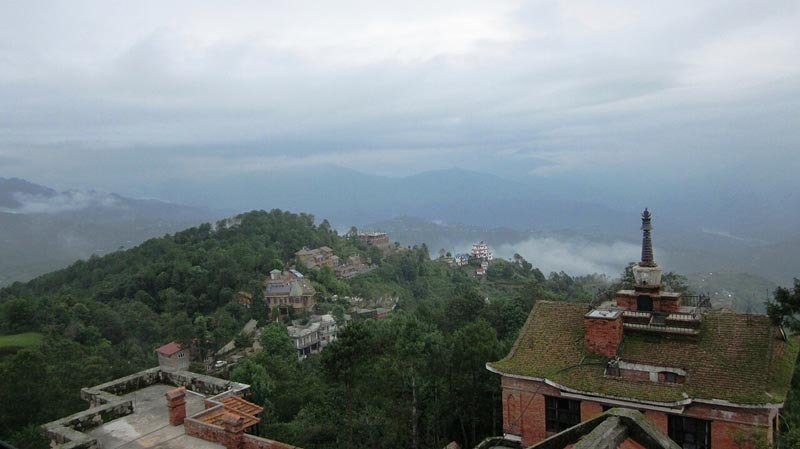
On clear days, several Himalayan peaks can be seen on the horizon. It's best to spend the night there to maximize your chances, as clouds tend to roll in quickly after morning.
Dhulikhel
Quieter and less touristy than Nagarkot, it's a bit further away, to the southeast of the valley. It's a good alternative if you're looking for fewer crowds and don't mind venturing a little further from the city.
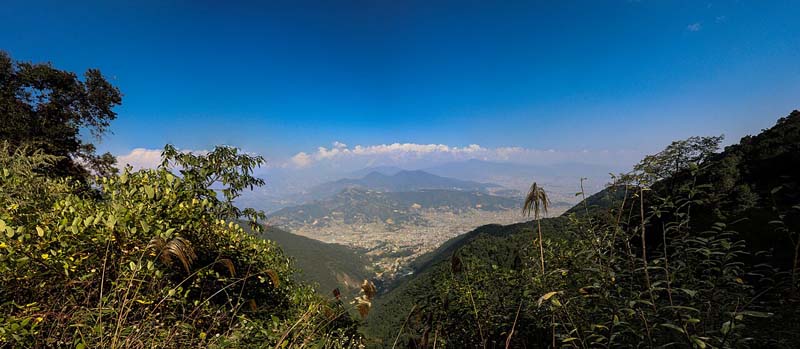
Chandragiri Hills
It's the closest and most accessible option from Kathmandu. It is reached by cable car, which makes it very popular. From the top, there are views of the valley and, on clear days, also of the Himalayas.
Where to stay in Kathmandu
Kathmandu offers a wide range of accommodations to suit all tastes, from boutique hotels to hostels designed for budget travelers. Thamel remains the most convenient area to stay, close to restaurants, travel agencies, trekking shops, currency exchange, and public transport.
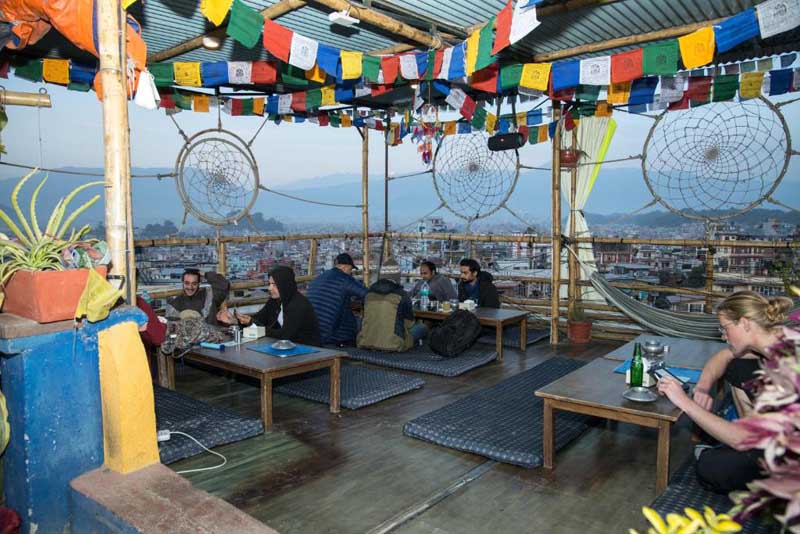
I stayed at Planet Nomad Hostel, and I recommend it, especially if you want a good location without overpaying. It's right in Thamel, which makes it easy to walk to the city's main attractions. The price was very reasonable for what it offers; it has a terrace with beautiful views and a relaxed, social atmosphere, ideal for meeting other travelers if you're traveling solo.
Final thoughts
Kathmandu is a city I think you should visit if you're traveling to Nepal. Between temples, stupas, historic districts, and nearby excursions, there's so much to see and experiences that are truly worthwhile.
That said, as a city itself, it left me slightly disappointed. The chaos, pollution, and general neglect meant I didn't enjoy it as much as I'd hoped, especially exploring it on foot, which is my favorite way to discover new places. I felt it's a place that had a more glorious past and doesn't quite live up to that legacy today.
Even so, I wouldn't skip it. My recommendation is to visit it, focus on its highlights, and combine it with excursions to the valley. Kathmandu wasn't one of my favorite cities, but it was a key stop to understand a bit more about Nepal's history.
Frequently Asked Questions about Kathmandu
Is it safe to travel to Kathmandu?
Overall, yes, it's safe. I didn't find Kathmandu to be a dangerous city, although it is chaotic. As in many Asian capitals, it's wise to keep an eye on your belongings in crowded areas, avoid poorly lit streets at night, and use taxis for longer journeys. The most common problems tend to be petty theft or small scams, not violent incidents.
What is the best time to visit Kathmandu?
The best times are October and November, and March and April. During these months, the weather is more stable, there is less rain, and the chances of seeing the Himalayas from nearby viewpoints are better. The monsoon (June to September) brings heavy rain and humidity, while winter is dry but with cold mornings and some fog.
How many days is it advisable to stay in Kathmandu?
For most travelers, 2 to 3 full days are enough to see the main sights of the city. If you include excursions to Patan and Bhaktapur, ideally you should have 4 or 5 days in total. More time can feel overwhelming if you don't plan any trips outside the city center.
Is it an expensive or cheap city?
Kathmandu is generally inexpensive by international standards. Accommodation, food, and transportation are affordable, especially if you're backpacking. Entrance fees to temples and historical sites can add up, but they're still reasonable.
How to get around within the city?
The most practical way to get around is by taxi or rickshaw, especially for longer journeys. Walking is possible in some areas, but not always pleasant due to traffic and sidewalks. Public transport is available, but it can be confusing for visitors.
Is Kathmandu worth visiting?
It's not a particularly pleasant city for walking, but it has some very important cultural sites and is an excellent base for exploring the valley and organizing trips around Nepal. Personally, it wasn't a destination I fell in love with, but it is one I consider interesting and worth visiting.
If I had to choose one Durbar Square to visit, which one would be the best?
If I had to choose just one, my recommendation would be Bhaktapur Durbar Square. Although it's the most expensive to enter, it's also the largest, the best preserved, and the one you can explore most peacefully.
Support The Prism of Fer!
Your support helps me continue creating free content on the blog. Thank you so much!