If you're thinking about trekking to Annapurna Base Camp, it's normal to have a thousand questions before you start: how long does it take, where do you start, what permits do you need, or how demanding is it really?
In this guide I have gathered all the practical information so that you can organize the tour on your own, without depending on agencies and knowing in advance what you will find.
The idea behind this post is to gather everything I wish I had known before organizing a trek to Annapurna Base Camp on my own: stages, routes, logistics, and the main differences with the circuit, so you can plan it with a clear idea of what to expect.

This post may contains affiliate links. If you purchase through these links, I may earn a commission at no extra cost to you. Thank you for your support!
Table of Contents
What does the trek to Annapurna Base Camp involve?
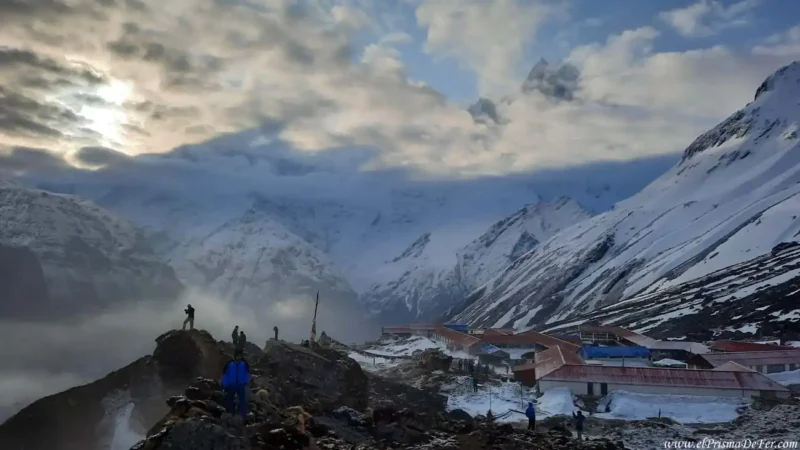
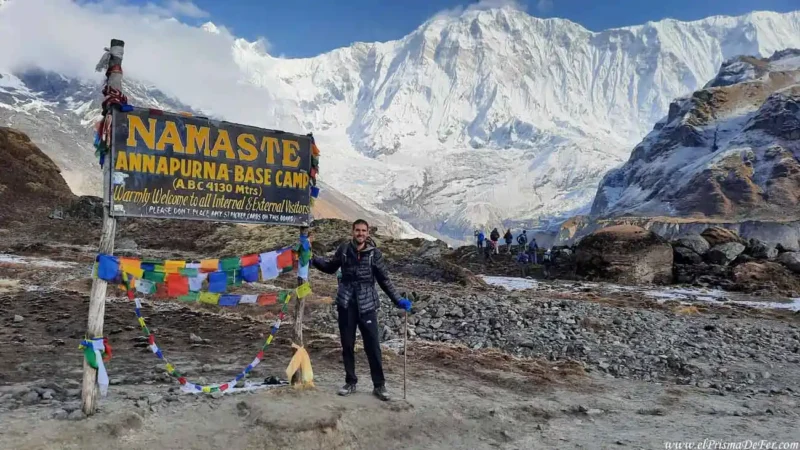
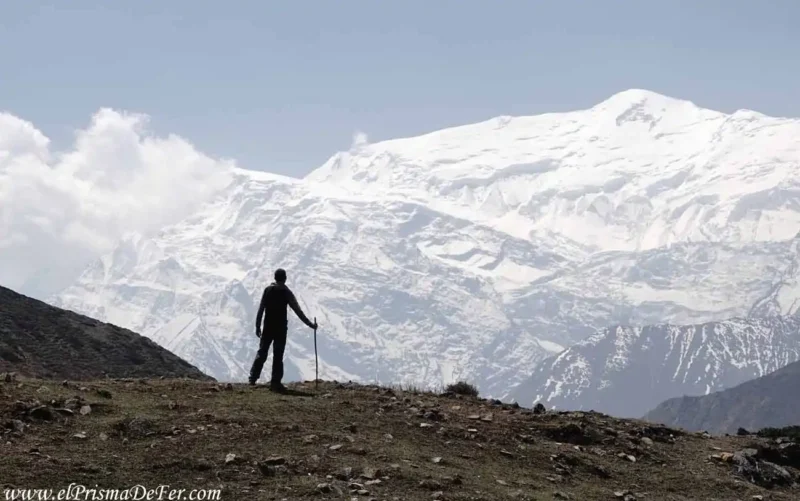
The Annapurna Base Camp (ABC) trek is a multi-day hike that takes you directly into the heart of the Annapurna massif, reaching the base camp located at an altitude of approximately 4,130 meters. Unlike the Annapurna Circuit, which circles the massif, this trek leads directly into a vast natural amphitheater of mountains, surrounded by towering peaks.
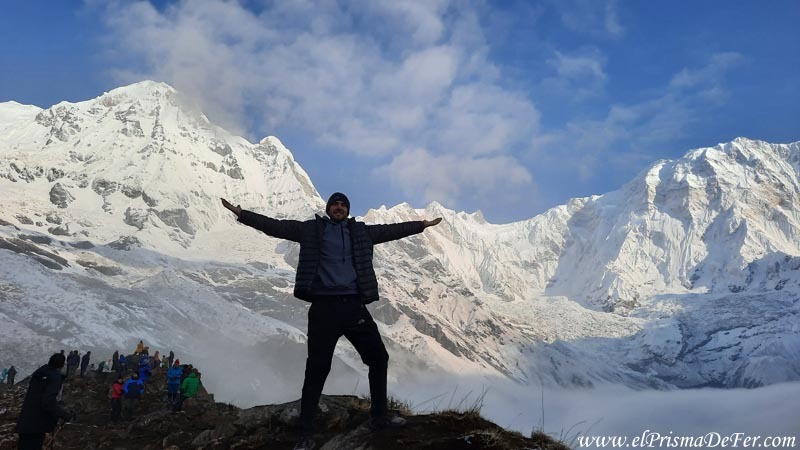
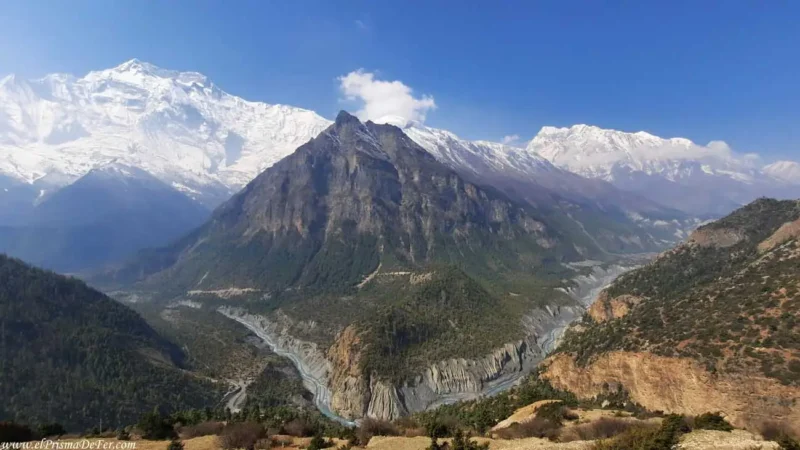
The trail winds through verdant valleys, rice terraces, rhododendron forests, and mountain villages inhabited primarily by Gurung and Magar communities. As you gain altitude, the landscape becomes more arid and alpine, until you reach the base camp area, where the surroundings open up and the mountains completely close the horizon.
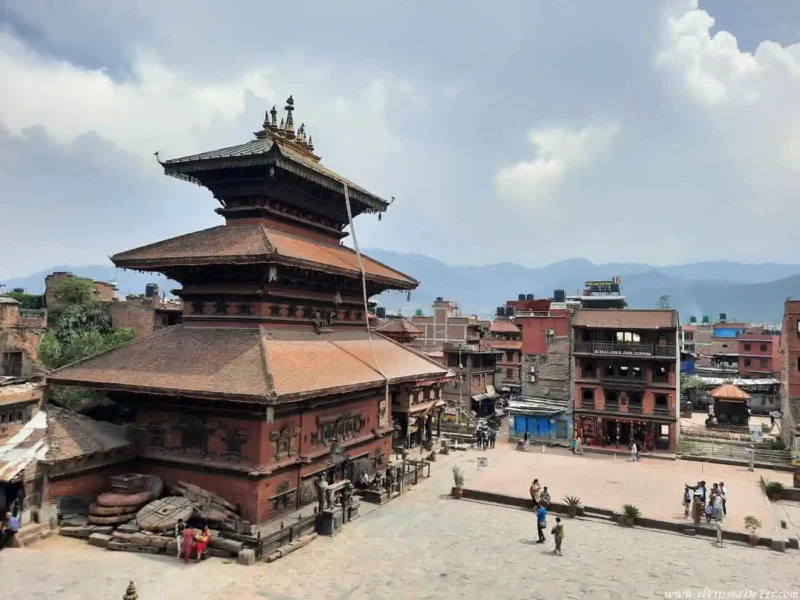
It is a very popular and well-marked trek, with teahouse infrastructure at almost every stage, making it accessible for those new to trekking in Nepal, while still offering one of the most breathtaking final views of the Himalayas.
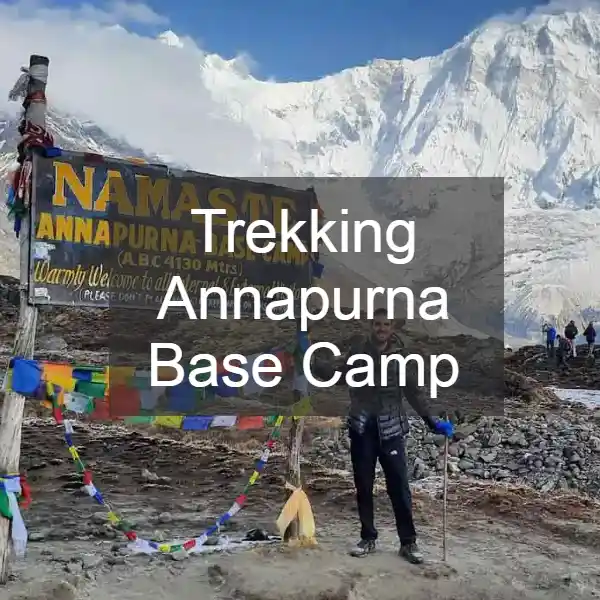
Do you want to follow this route precisely?
Download the KML/KMZ file of the trek I did to reach Annapurna Base Camp, and open it in apps like Maps.me, AllTrails, or Gaia GPS to have the complete route offline. Ideal if you want to move around the valley with confidence, even without cell service.
Download the Annapurna Base Camp trek on Gumroad for a low cost. You can also download the Annapurna Circuit trek or even take advantage of the both kit for a better price.

How long does the trek to Annapurna Base Camp take?
The duration of the trek to Annapurna Base Camp is not fixed and depends mainly on two factors: where you start walking from and how many stages you decide to link per day.
On a classic itinerary, starting from Nayapul or Ghandruk, the trek usually takes between 7 and 9 days, walking at a leisurely pace with logical intermediate stops to rest. This option is ideal if you want to enjoy the villages, acclimatize properly, and avoid excessively long days.
If you start further into the valley, for example from Jhinu Danda or Chhomrong, which can be reached by jeep, the time is reduced to 5 or 6 days. This is a good alternative if you have fewer days available, although it involves somewhat more demanding days.
There is also the possibility of joining stages, as I did in some sections. Technically, it's possible to get there faster, but keep in mind that the trek has many ascents and descents, with significant elevation changes, and linking stages together can take a physical toll.
Permits required to trek to Annapurna Base Camp
To trek to Annapurna Base Camp you need only one permit, the ACAP (Annapurna Conservation Area Permit). No other permits are required, and hiring a guide is not mandatory to obtain it.
The ACAP is the permit that regulates access to the entire Annapurna conservation area and serves both for the Annapurna Circuit and for trekking to base camp.
Where can I get ACAP?
The permit can be easily obtained at:
- Pokhara, at the Nepal Tourism Board office
- Kathmandu, if you arrange it before traveling to the region
Cost and validity
- Cost: around 3,000 Nepalese rupees
- Duration: There is no strict limit on the number of days; it covers the entire time you are within the protected area.
What do you need to process it?
- Passport
- A passport-style photo (there are several businesses around the office that offer this service)
- Complete a form with your personal details
Checks during the trek
The ACAP is present at checkpoints along the route, one of the most common being Chhomrong, when entering the valley that leads to base camp. It's advisable to keep it with you at all times.
Where to start the trek to Annapurna Base Camp
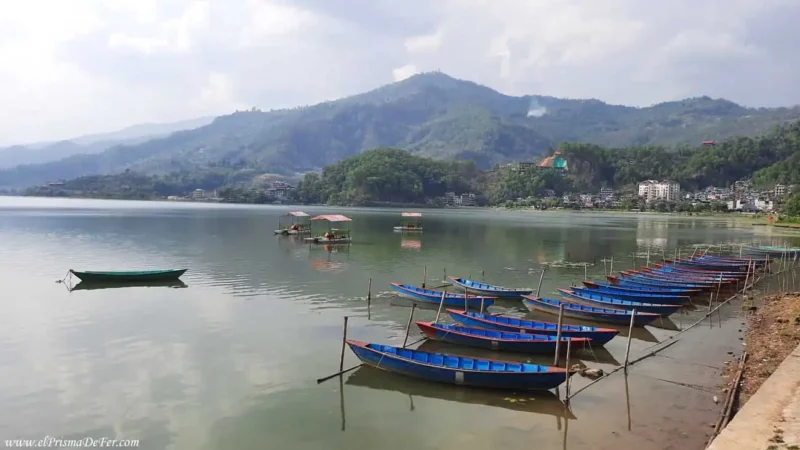
The Annapurna Base Camp trek has several possible starting points, but the most common is the Nayapul/Ghandruk area, about 2–3 hours by vehicle from Pokhara. Transportation is normally taken in the Baglung Bus Park area, from where jeeps and local buses depart for the starting villages.
From Nayapul, you enter the valley leading to Chhomrong, and from that point, the trail becomes fully mountainous. It's also possible to start further in if you want to shorten your trek, as there are jeep tours to intermediate villages.
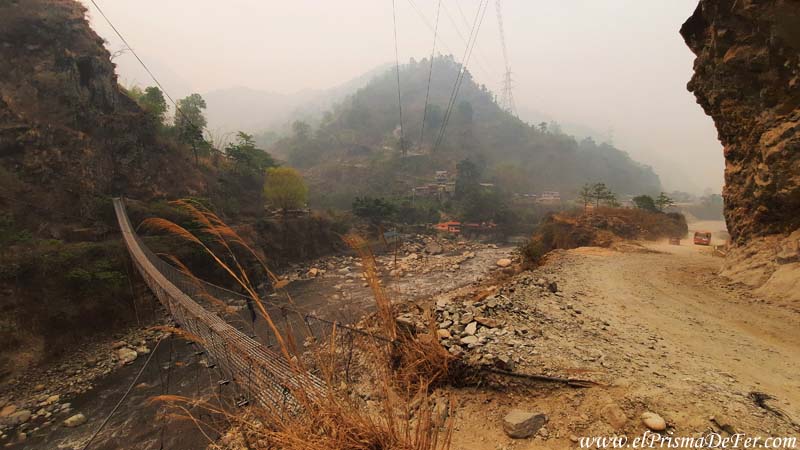
In my case, since I had just completed the Annapurna circuit, I started the trek from the Tatopani side, connecting both routes without returning to Pokhara. This combination allows you to cross the massif from one side to the other and experience a much longer and more continuous trek, ideal if you have the time and desire to keep hiking.
How to get back to Pokhara after trekking to Annapurna Base Camp
Once you have finished the trek to Annapurna Base Camp, the return to Pokhara is quite simple and there are several options, depending on where you decide to end the trek.
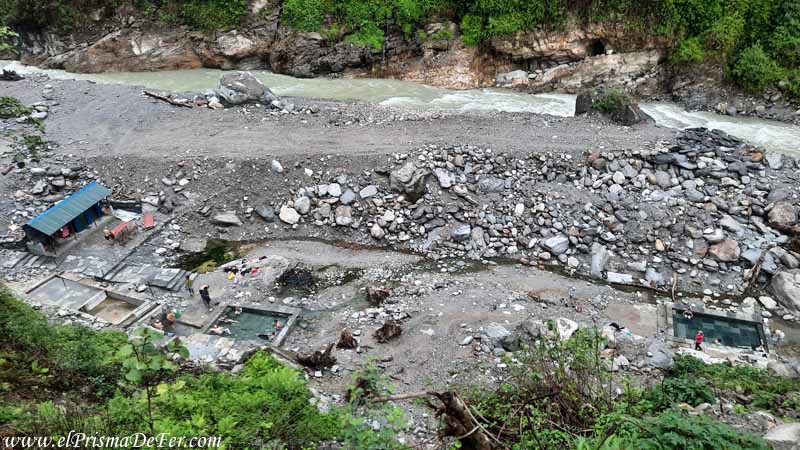
Most trekkers end their trek at Jhinu Danda, a very convenient spot because, in addition to the natural hot springs, it has a stop where jeeps and local buses depart.
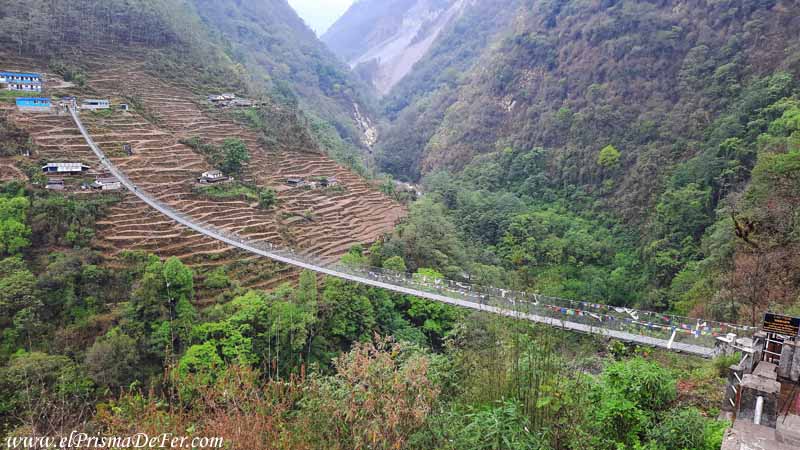
From there, the journey to Pokhara usually takes between 2 and 3 hours, depending on road conditions and traffic, and is one of the fastest and most comfortable options.
Another option is to go down to Nayapul, the classic starting point for trekking. Buses and jeeps also depart from there to Pokhara, although this involves a slightly longer walk on the final day.
In all cases, transport is arranged directly on site, without the need to book in advance. It's advisable to leave early in the morning to secure a spot, especially during peak season.
Is a guide necessary for the trek to Annapurna Base Camp?
Today, hiring a guide is not mandatory for the Annapurna Base Camp trek, and in practice the vast majority of travelers do it on their own.
Unlike other treks in Nepal, the ABC trek is very popular, short, and well-marked. The trail is clearly marked, villages are frequent, and there are always other trekkers along the way, which greatly reduces the feeling of isolation. Furthermore, getting to the starting point and back to Pokhara is relatively easy using local transport.
Even compared to the Annapurna Circuit, which I don't consider essential to do with a guide, the ABC circuit is still more accessible: fewer days, lower maximum altitude, and fewer exposed or truly remote sections.
When might it be advisable to hire a guide?
A guide can be useful if:
- You have no prior experience in multi-day trekking
- You prefer not to worry about the daily logistics
- Do you want to add cultural or natural context to the tour?
But if you're used to hiking in the mountains, know how to manage your time, and feel comfortable organizing yourself, it's not necessary. In my case, I did it without a guide and found it to be a completely manageable and very enjoyable experience.
What equipment to bring for Annapurna Base Camp
The equipment for the ABC course is not extremely technical, but it is advisable to be well prepared, especially because of the cold and humidity at high altitude.
The basics and essentials:
- Comfortable backpack
- Waterproof trekking boots
- Lightweight sneakers or sandals for shelters
- Layered clothing (base layer, coat and outer layer)
- Waterproof jacket or poncho (very important)
- Fleece or warm jacket
- Hat, gloves

Other recommended items:
- Trekking poles (very useful for the constant ups and downs)
- Sunscreen and sunglasses
- Reusable bottle or filtration system
- Small personal first aid kit
It's not mandatory to bring a sleeping bag, as teahouses usually provide blankets, but it gets quite cold at night in the last villages before base camp. If you're sensitive to the cold, a lightweight sleeping bag can help you cope.
Where to sleep during the trek to Annapurna Base Camp
Accommodation during the trek is in teahouses, small family-run guesthouses that offer rooms, hot meals and common areas for resting.
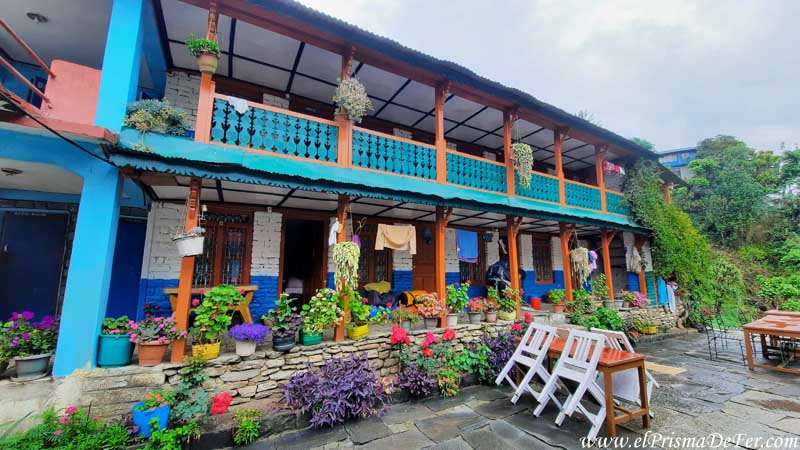
The towns are relatively close to each other, allowing you to plan flexible stages according to your pace. Some of the most common places to stay are:
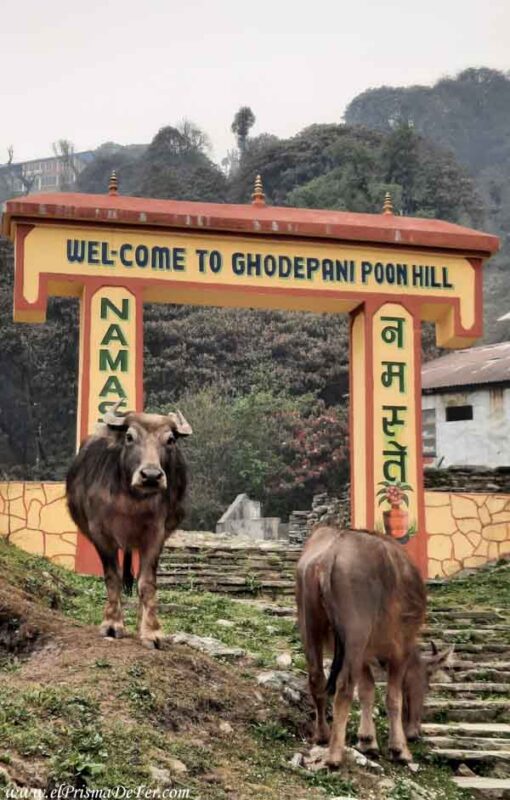
- Ghorepani / Tadapani: green and very popular areas, especially when combined with Poon Hill.
- Chhomrong: one of the largest towns on the route, with a wide range of accommodation and services.
- Bamboo, Dovan and Upper Dovan: classic intermediate stops in the valley, simple and peaceful.
- Deurali: one of the last villages before base camp, a good option to shorten the final stage.
- Annapurna Base Camp: the most expensive and basic accommodation on the trek, but with a unique location.
In lower-lying towns, prices are more affordable and there are usually more options. As you gain altitude, the cost increases and services become more basic. In many cases, the room price is low if you have dinner and breakfast at the same place.
Best time to trek to Annapurna Base Camp
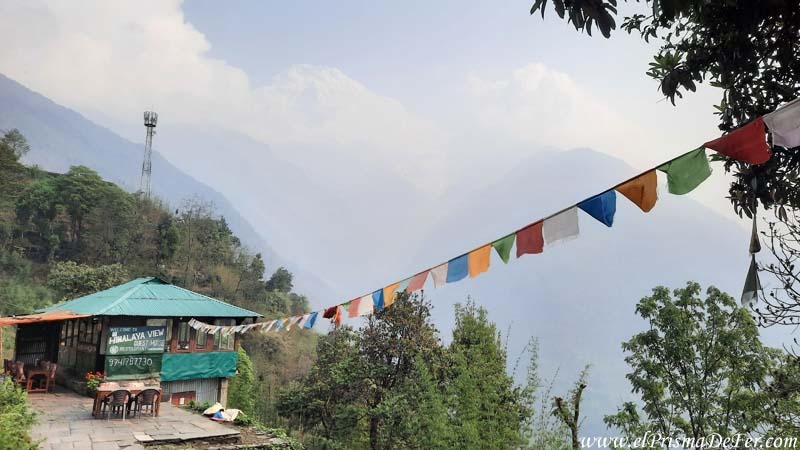
The best time to trek to Annapurna Base Camp is between March and May and between October and November, when the weather is usually more stable and the views are generally clearer.
Spring (March to May)
It's one of the most popular times to visit. The days are longer, the temperatures pleasant, and the trail is filled with rhododendrons in bloom, especially in the lower sections. On the downside, it tends to be more crowded, and in some years, there can be some haze in the valleys, particularly before the rains.
Autumn (October and November)
For many, this is the best season. The air is usually cleaner after the monsoon, the mountains are more clearly visible, and the weather is dry. Nights can be cold at higher altitudes, but overall conditions are very good.
Rainy Season and Winter
The monsoon season (June to September) is not ideal: frequent rain, muddy trails, low clouds, and poor visibility. In winter (December to February) trekking is possible, but the cold is intense in the higher sections and some stages can be complicated by snow.
Is it possible to combine the Annapurna Base Camp trek with the Annapurna Circuit?
Yes, both treks can be combined, but the most logical and natural way to link them is by starting with the Annapurna Circuit.
Once you have crossed the Thorong La pass and are continuing towards Tatopani, it is possible to connect by walking along a trail that leads to Ghorepani and then to the Annapurna Base Camp valley, without needing to return to Pokhara. This way, the entire route remains continuous and geographically coherent.
However, if you start from Annapurna Base Camp, there is no direct route connecting to the other side of the massif to join the circuit. In that case, to do the Annapurna Circuit you would have to return to Pokhara and from there take another transport to the circuit's starting point, splitting the experience in two.
Therefore, if your idea is to combine both treks in the same trip, the best thing to do is do the Annapurna Circuit first and then the ABC. This not only makes more logistical sense but also allows for gradual acclimatization.
Stages of the trek to Annapurna Base Camp (distances and altitudes)
The trek to Annapurna Base Camp can be adapted to suit individual paces, but below is a classic itinerary with the main stages, their approximate distances, and the altitude of each point. It's a good reference for planning your time and effort.
The distances are approximate and may vary slightly depending on the chosen route or if stages are combined.
| Stage | From → To | Approximate distance | Final altitude |
|---|---|---|---|
| Day 1 | Nayapul / Ghandruk → Ghorepani | 9–11 km | 2.860 m |
| Day 2 | Ghorepani → Tadapani | 7–8 km | 2.630 m |
| Day 3 | Tadapani → Chhomrong | 10–12 km | 2.170 m |
| Day 4 | Chhomrong → Dovan / Upper Dovan | 9–11 km | 2.600–2.800 m |
| Day 5 | Dovan → Deurali | 7–9 km | 3.200 m |
| Day 6 | Deurali → Annapurna Base Camp | 6–7 km | 4.130 m |
| Day 7 | ABC → Bamboo / Sinuwa | 14–16 km | 2.300–2.400 m |
| Day 8 | Bamboo / Sinuwa → Jhinu Danda | 8–10 km | 1.780 m |
| Day 9 | Jhinu Danda → Nayapul / regreso a Pokhara | 6–7 km + transporte | 1.070 m |
Some important clarifications
- Not everyone makes exactly these stops: the towns are relatively close to each other and it is common to combine or divide stages depending on the energy of the day.
- The trek has many ups and downs, even on days when the distance doesn't seem long.
- The maximum altitude is reached at the Annapurna Base Camp (4,130 m), which reduces the risk of altitude sickness compared to the Annapurna Circuit, although it is still advisable to ascend gradually.
Differences between the Annapurna Circuit and the Base Camp Trek
| Aspect | Annapurna Circuit | Annapurna Base Camp |
|---|---|---|
| Usual duration | 12–18 days (depending on the variant) | 5–9 days |
| Maximum altitude | 5.416 m (Thorong La Pass) | 4.130 m (Base Camp) |
| Physical difficulty | Moderate with a demanding day due to the altitude | Moderate, more constant |
| Sensation of altitude | High (actual risk of altitude sickness) | Medium |
| Landscape | Very varied: green valleys, high-altitude desert, Tibetan villages | Green, jungle and mountainous, more enclosed |
| Influx of people | Medium | High |
| Feeling of isolation | Larger, more remote | Smaller, more busy |
| Villages | Smaller and more traditional | More towns and more infrastructure |
| Weather | More extreme in height | More humid, frequent rains |
| Logistics | Longer and more complex | Easier to organize |
| Final view | Epic mountain pass | Annapurna Massif Amphitheater |
| Ideal for | For those who want variety and a long journey | Who wants stunning views in just a few days |
Frequently Asked Questions about the Annapurna Base Camp Trek
How many days does it take to trek to Annapurna Base Camp?
It usually takes between 5 and 9 days, depending on the starting point, the pace, and whether or not you include detours like Poon Hill. In my case, I combined it with the Annapurna Circuit, so I did it as an extension from Tatopani.
What is the maximum height of Annapurna Base Camp?
The base camp is at 4,130 meters above sea level. It's not as high as the Thorong La Pass on the circuit, but you still feel the altitude and it's best to ascend gradually.
Is it a difficult trek?
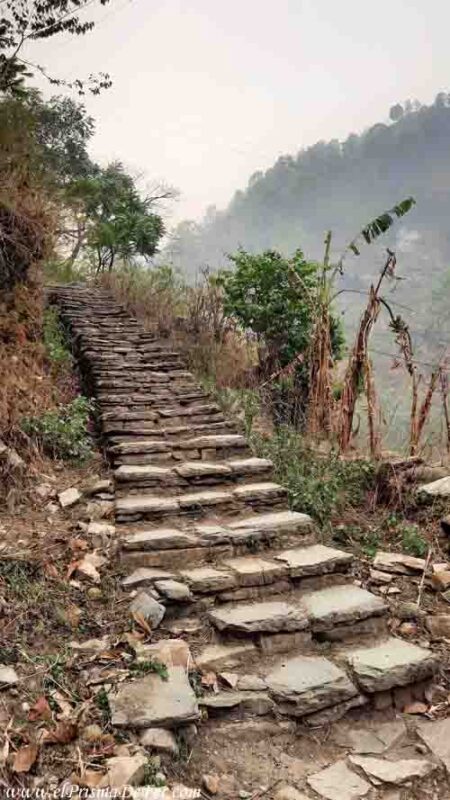
It's not technically difficult, but it is physically demanding. Lots of ascents and descents, stone steps, and long days if you combine stages. The altitude isn't usually a major problem, but fatigue accumulates.
Is there a risk of altitude sickness?
The risk exists, although it is lower than on the Annapurna Circuit. Even so, it's important to ascend slowly, stay well hydrated, and listen to your body. If you experience severe symptoms, it's best not to continue climbing.
Is it possible to do it without a guide?
Yes, it can perfectly well be done on your own. The trails are well-marked, there are frequent villages, and plenty of infrastructure. A guide can add context and safety, but it's not mandatory.
When is the best time to do it?
The best times are March to May and October to November. During monsoon season (June to September) there is more greenery, but also rain, mud, and fewer views.
Is Annapurna always visible from base camp?
No. Annapurna has the peculiarity of becoming cloudy early, so the ideal time to see the massif is at dawn. If the weather is good, the view is spectacular; if not, it can be completely overcast.
How expensive is trekking?
It's cheaper than the Annapurna Circuit, as it takes fewer days. Daily expenses increase as you gain altitude, especially for food and accommodation at base camp.
Where do you sleep during the trek?
You sleep in teahouses (basic mountain accommodations) in all the villages. At Base Camp, the refuge is more expensive and limited, but it serves its purpose.
Is there Wi-Fi and hot showers?
Yes, but the last few days are extra and get more expensive the higher you go. Above a certain height, the Wi-Fi is slow or unreliable, and hot showers aren't always available.
Is it worth combining with the Annapurna Circuit?
For me, yes, absolutely. They are two very different treks that complement each other: the circuit is more remote and varied; the ABC is greener, more popular, and has an incredible final view.
Support The Prism of Fer!
Your support helps me continue creating free content on the blog. Thank you so much!