Adam's Peak (Sri Pada) is one of Sri Lanka's most sacred sites, and every season thousands of pilgrims and travelers embark on the nighttime ascent to reach the summit at dawn. I, too, wanted to experience this, drawn by both the physical challenge and all that it represents on a cultural and spiritual level.
However, reality was quite different from what I imagined. I made the climb in January, at the peak of the season, and the number of people was overwhelming, with the stairs jammed and endless lines. After several hours moving almost at a snail's pace, I realized that I wasn't going to reach the top that day.
Even so, the experience wasn't a failure. Climbing Adam's Peak showed me the devotion of the pilgrims and the shared effort of entire families. I didn't reach the summit, but the climb, and everything surrounding it, was equally worthwhile.
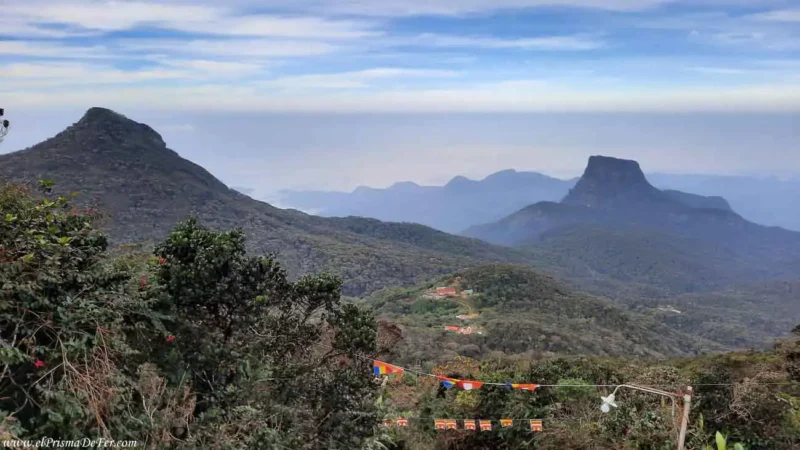

Table of Contents
Where is Adam's Peak located?
Adam’s Peak, also known as Sri Pada, is located in southwestern Sri Lanka, within the Central Range, a mountainous area covered in rainforest and tea plantations. It is relatively close to towns such as Hatton, Nallathanniya and Maskeliya, which are often used as a base for the climb (see location on map).
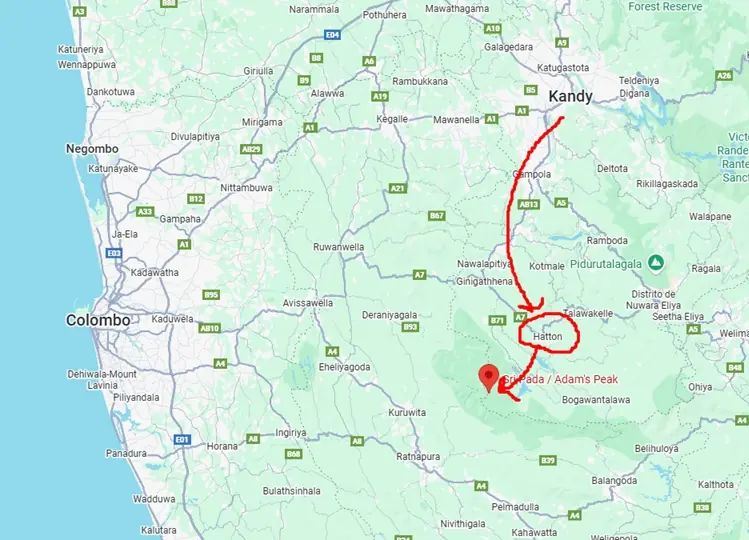
Its location is halfway between the central highlands, such as Nuwara Eliya or Ella, and the more urban area to the west, where Colombo and the coast are located.
The most common access is from Nallathanniya (also called Dalhousie), the village at the foot of the mountain from where the classic ascent route begins, especially during the pilgrimage season, which runs roughly from December to May.


How to get to Adam's Peak
Reaching Adam's Peak requires several transfers, as the mountain isn't directly connected to major cities. Most travelers head first to Hatton, a small town in the tea plantation area, and from there continue to Nallathanniya, the main starting point for the climb.
From Kandy
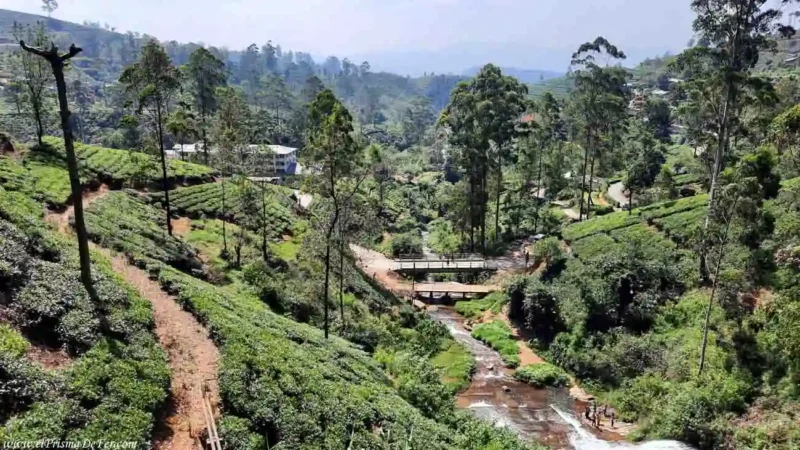
From Kandy you can get to Hatton by train or bus. The train is the more scenic option, as it passes through mountain landscapes and tea plantations, although it is slower.
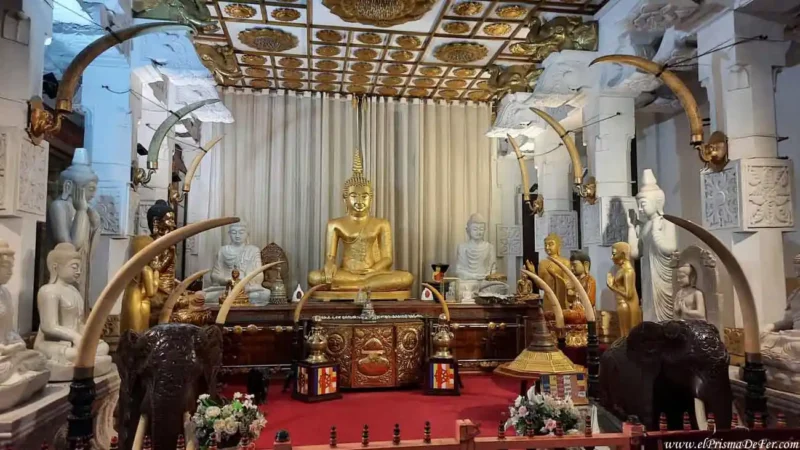
The journey usually lasts between 4 and 5 hours. Once in Hatton, there are local buses and tuk-tuks that connect to Nallathanniya in approximately 1-2 hours.
From Colombo
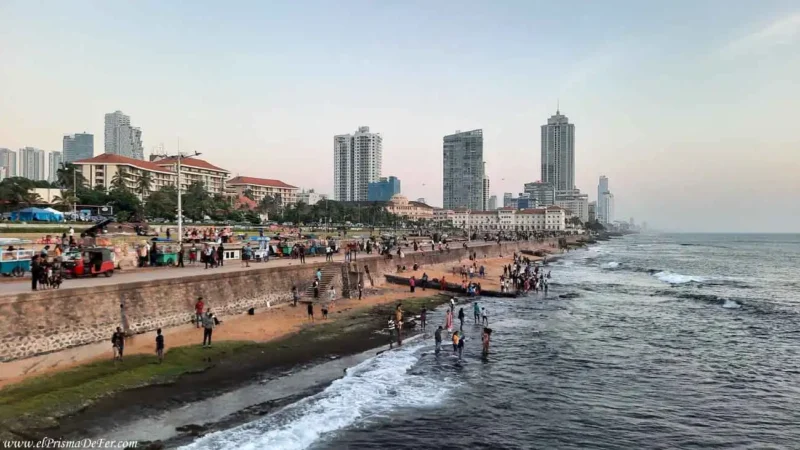
There are frequent trains and buses from Colombo to Hatton. The train journey takes around 4 hours, while by bus it can be a little faster, depending on traffic. This is one of the most popular routes for local pilgrims.
From Ella or Nuwara Eliya
From Ella or Nuwara Eliya, the most practical option is to combine train and bus to Hatton. Although the distance isn't great, the journey can take several hours due to the mountain roads.
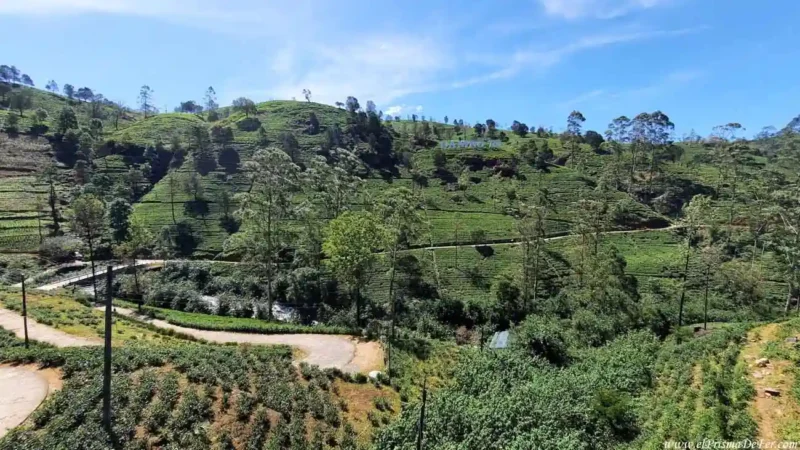
Even so, the trip is part of the experience and offers a glimpse into a much more rural Sri Lanka.
From Hatton to Nallathanniya (Dalhousie)
Local buses run from Hatton to Dalhousie quite frequently, especially during peak season.
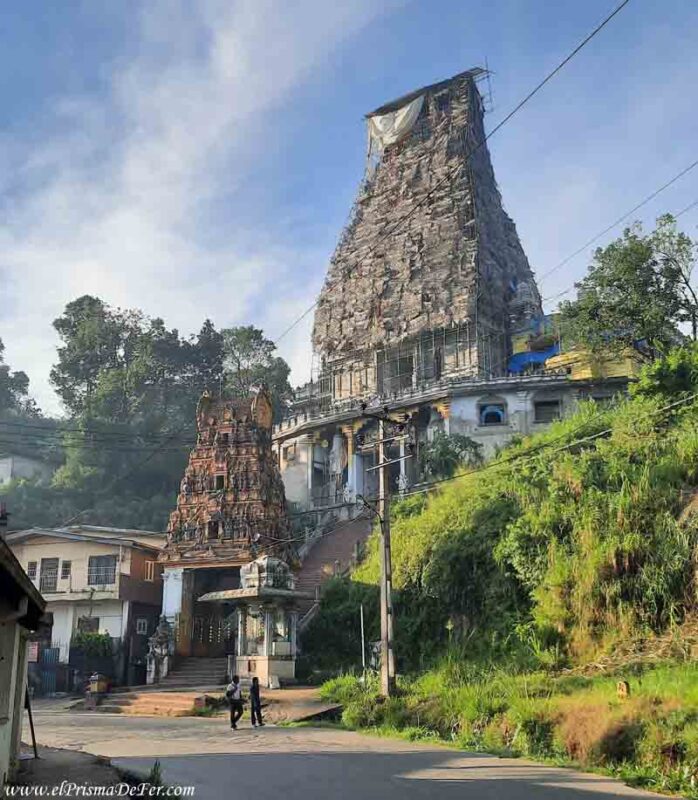
You can also go by tuk-tuk or shared taxi. It's best to arrive in Dalhousie in the afternoon, rest a bit, and start the climb at night or in the early morning.
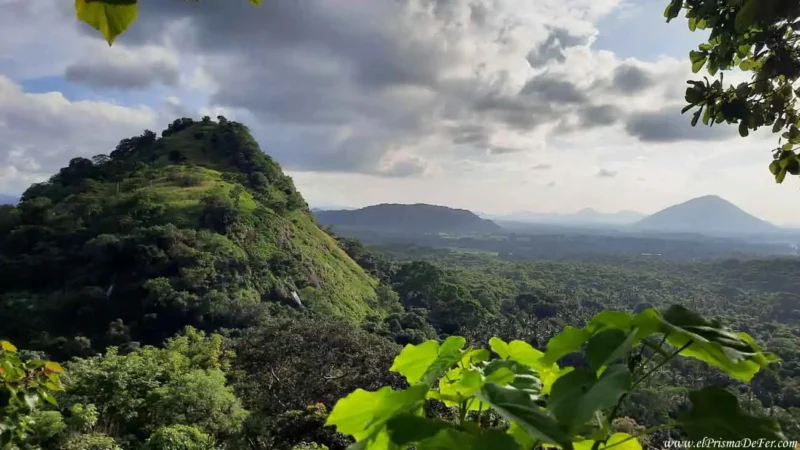
Why is it called Adam's Peak and what makes it so important to the people of Sri Lanka?
The Adam’s Peak (Sri Pada) is one of the most sacred and symbolic places in Sri Lanka, not only because of its imposing presence in the highlands, but also because of the religious and cultural significance it holds for various communities in the country.
At its summit is a footprint carved into the rock that is venerated by several religions, each with its own interpretation.
For Buddhists, the footprint belongs to the Buddha and represents one of the most sacred sites in the country. Hindus associate it with the god Shiva, while for Muslims and Christians it is the footprint left by Adam upon stepping onto Earth after being expelled from Paradise, hence the name Adam's Peak.
The climb to Adam's Peak is not just a hike, but a pilgrimage. During peak season, thousands of local families ascend at night, step by step, in an act of faith, sacrifice, and tradition. For many Sri Lankans, making this climb at least once in their lifetime is almost obligatory, an experience that transcends mere tourism and offers a deeper understanding of the country's spirituality.
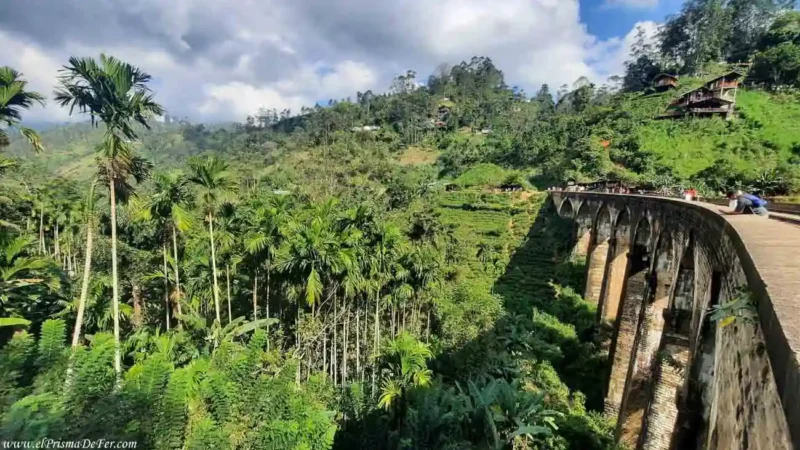
Best time to climb Adam's Peak
The best time to climb Adam's Peak (Sri Pada) is during the pilgrimage season, which runs roughly from December to May. During these months, the trail is fully maintained, well-lit at night, and has food stalls, rest areas, and support services along the entire ascent. Additionally, the weather is generally more stable, and the chances of seeing the sunrise from the summit are higher.
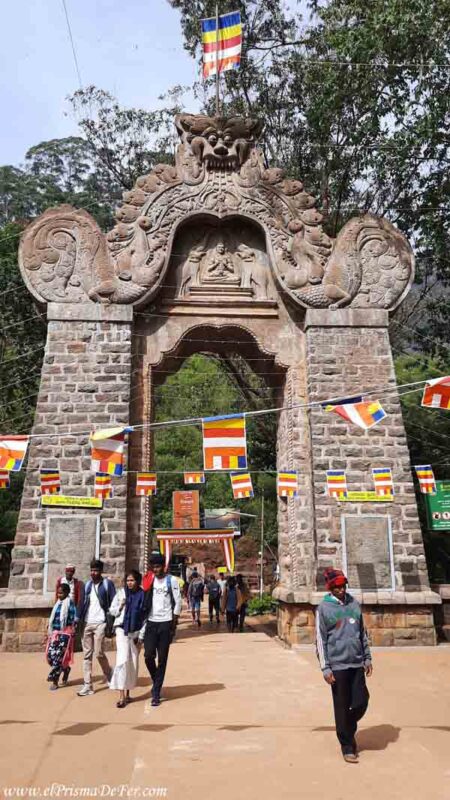
Within this period, the busiest months are January and February. January, in particular, can become extremely crowded. It coincides with local holidays, long weekends, and religious festivals, resulting in a huge influx of pilgrims.
In my case, the number of people was such that progress became very slow, with constant lines on the stairs, to the point of not being able to reach the top.
If you're looking for a quieter experience, December (outside of holidays) and March or April are usually better options. Services are still available and the weather is pleasant, but the crowds are somewhat more manageable. Going during the week also helps avoid the biggest crowds.
Outside of the official season (June to November), the climb is not recommended. The weather is more unstable, there can be heavy rain, less lighting, and several sections of the trail are closed or unmaintained.
What is the climb to Adam's Peak like?
The ascent to Adam's Peak usually begins in the early hours of the morning, as most people aim to reach the summit just in time for sunrise. From Nallathanniya (Dalhousie), the trail begins with an endless series of steps that set the tone for the entire ascent (see location on the map). It's not a traditional mountain hike, but rather a steady climb up stone and cement stairs.
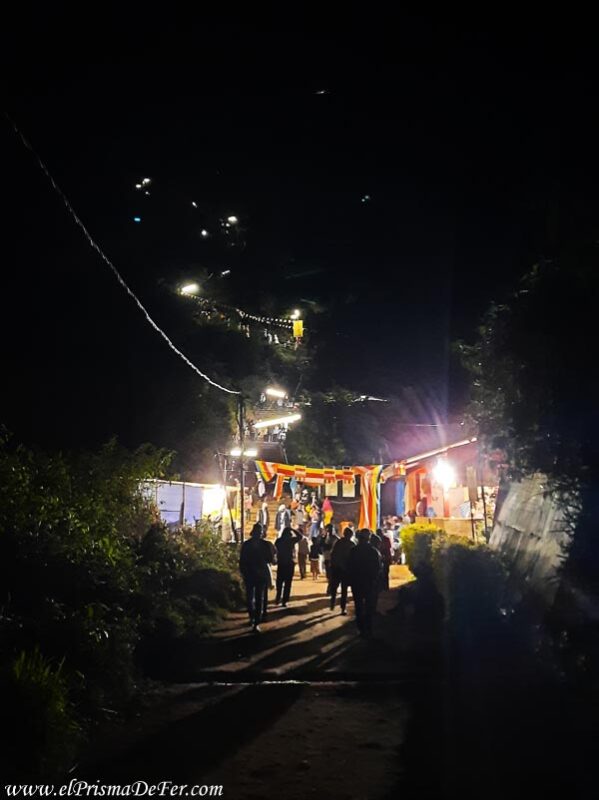
Along the trail, there are numerous stalls selling hot tea, coffee, snacks, simple food, and water. Basic restrooms and small seating areas are also available. This makes the climb accessible even for people unaccustomed to trekking, although the physical exertion remains considerable.
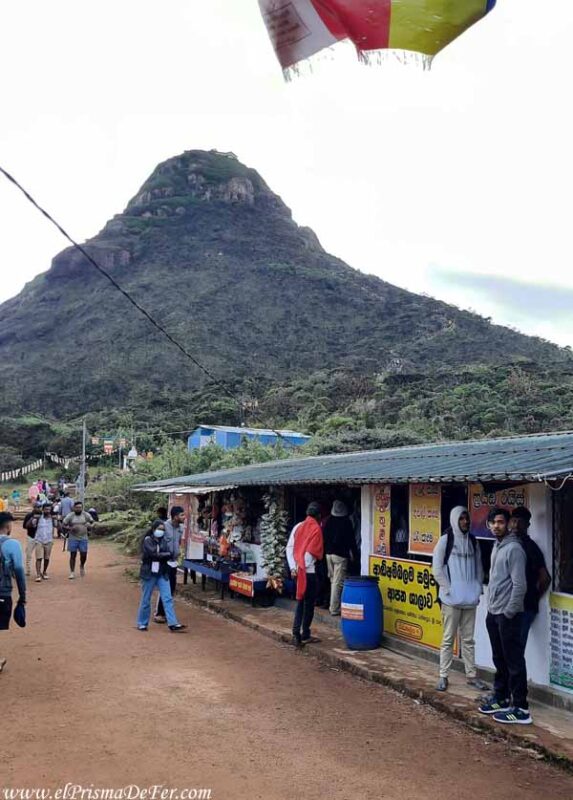
The duration of the ascent varies considerably depending on the pace and, above all, the number of people. Under normal conditions, the ascent usually takes between 2 and 4 hours, and the descent somewhat less. However, during peak season, especially in January, the time can easily double due to queues and sections where progress becomes very slow.
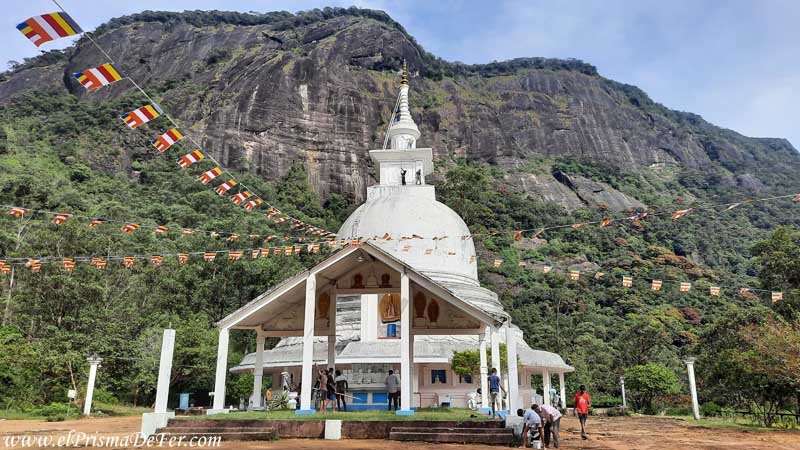
There's a lovely atmosphere in the early morning. You see lights all along the mountain, pilgrims climbing in silence or praying, entire families, and travelers from all over the world sharing the same goal. As you gain altitude, the temperature drops a bit, and the wind can pick up, so it's a good idea to bring something warm even if it's hot below.
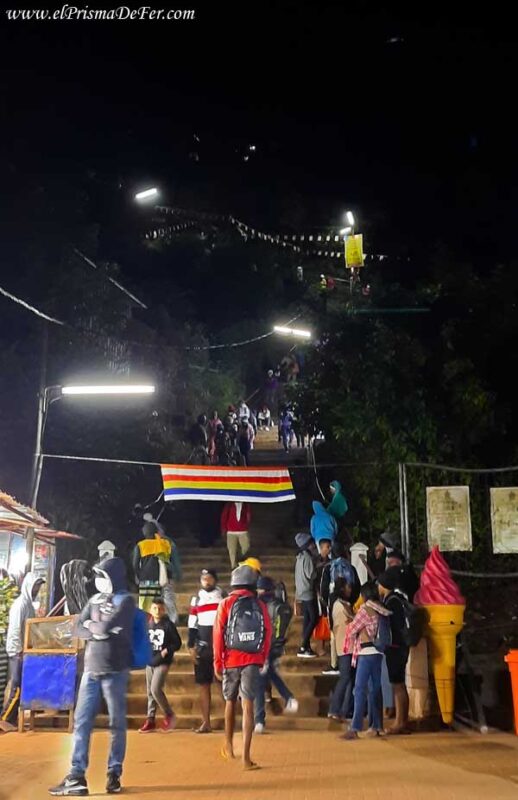
Although the trail is well-marked and maintained during the season, the incline is constant and demands patience. More than a technical challenge, the ascent of Adam's Peak is an experience of rhythm and camaraderie with the crowds.
Why I decided not to reach the top
As I approached the final part of the climb, the line to reach the summit became endless and practically stopped moving. Instead of walking, it was a matter of standing and waiting for long periods, with stretches where we barely advanced a few meters.
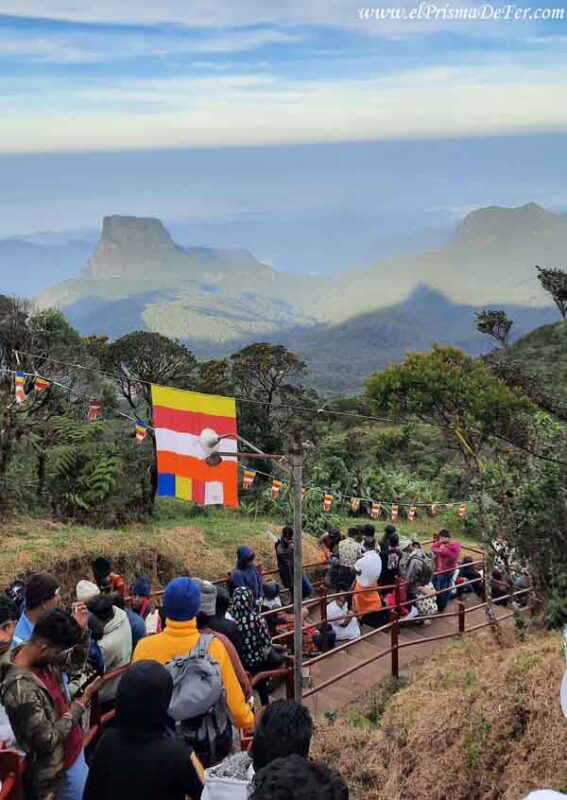
At that point I understood that, even if I continued, I was going to need several more hours just to be able to spend a few minutes at the top, surrounded by hundreds of people, with no space and with a constant movement of people going up and down. Besides, sunrise had already passed hours before, so it wouldn't be possible to see it from up there.
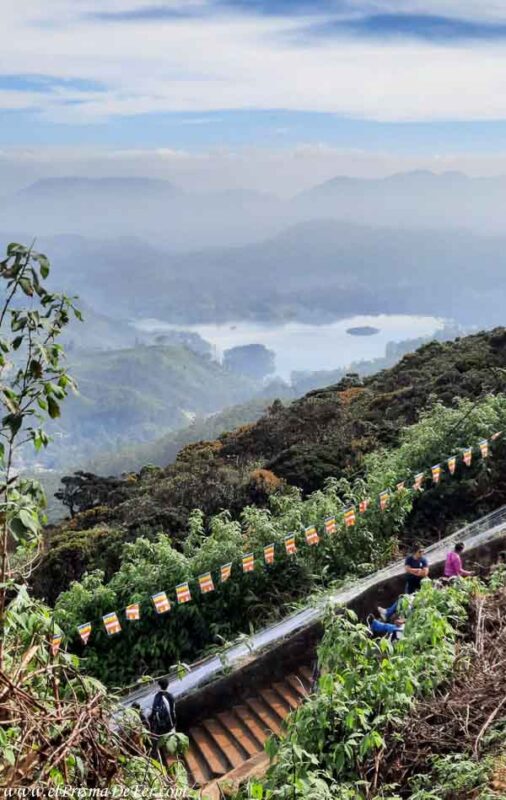
Some locals, noticing I was a foreigner, gestured for me to move forward and "cut in line." However, I didn't feel comfortable doing that. We were all there for the same reason, and cutting in seemed disrespectful to those who had been waiting patiently for hours.
So I decided to turn back. I preferred to keep the experience of the climb, the nighttime atmosphere, and everything I had experienced along the way, rather than force a summit that, for me, had lost its meaning.
Where to stay in Nallathanniya (Dalhousie) and Hatton
Nallathanniya (Dalhousie) is a small village almost exclusively geared towards climbing Adam's Peak. Therefore, location isn't a major issue: practically any accommodation is relatively close to the trailhead.
Most guesthouses and hostels are designed for spending just one night, resting for a few hours, and leaving early in the morning for the mountains.
I stayed at the Green House Hostel, a simple, affordable, and functional option. Nothing luxurious, but more than enough for this kind of trip. I chose it because of its proximity to the trailhead and because it was convenient for getting there, sleeping a bit, and setting off early.
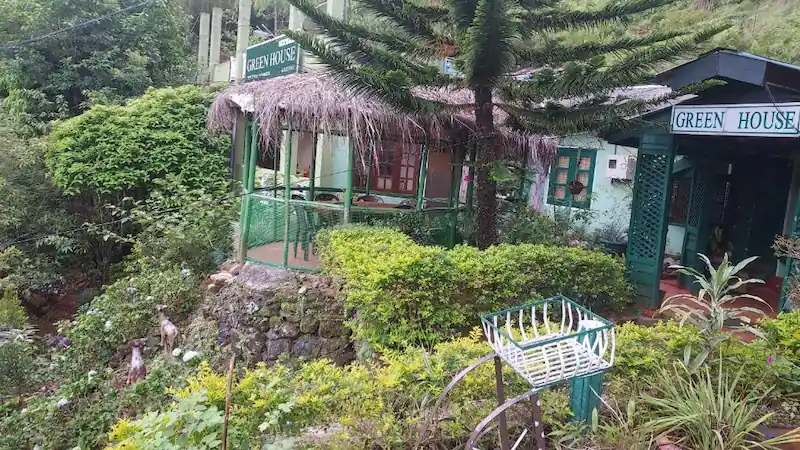
Another option is to sleep in Hatton, especially if you arrive by train and prefer a place with a bit more infrastructure. Hatton is larger, has more services and dining options, although it's about an hour or two away from Nallathanniya by public transport.
I stayed at the New Mount Villa, which is more of a hotel style than a hostel, comfortable, well located and very close to the train station, ideal if you continue your journey the next day.
Pensamientos finales: ¿vale la pena subir el Adam’s Peak?
For me, it's definitely worth it, even without reaching the summit. Adam's Peak is a very different experience from other places in Sri Lanka and allows you to get off the beaten tourist track.
There are very few foreign travelers and the vast majority of the people who climb are local families on pilgrimage, giving the place a cultural value that is hard to find in other destinations.
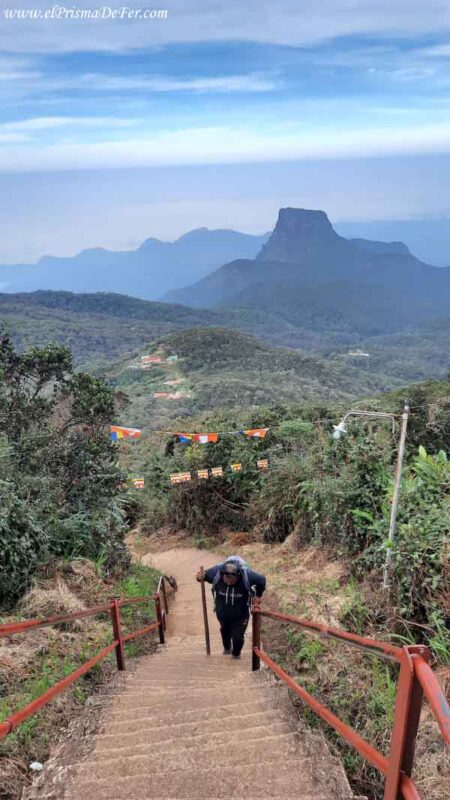
It's not a leisurely stroll, and it's not quite like some of the country's other popular peaks. For example, in Ella there is the so-called Little Adam’s Peak, which is pleasant and easy, but is no comparison with the magnitude, effort and significance of the original Adam’s Peak.
However, it's not an experience for everyone or for every itinerary. If you're short on time, it probably won't be worth the time and physical effort.
On the other hand, if you have a little leeway in your route and are interested in experiencing something authentic, intense, and deeply local, Adam's Peak is an experience that adds up, even if, as happened to me, you decide not to reach the summit.
Frequently Asked Questions about Adam's Peak (Sri Pada)
Is it necessary to reach the top for the experience to be worthwhile?
Not necessarily. While reaching the summit is the goal for many, the Adam's Peak experience offers much more. The nighttime ascent, the pilgrim-like atmosphere, and the immersion in the local culture make it worthwhile even if you don't reach the top.
How many hours does it take to climb Adam's Peak?
Under normal conditions, the ascent usually takes between 2 and 4 hours, and the descent somewhat less. During peak season, especially in January, the time can increase considerably due to the number of people and queues near the summit.
Is it a difficult hike?
It's not technical, but it is tiring. The entire route is on stairs, with a constant incline. No trekking experience is necessary, but a minimum level of fitness and patience are required.
Is it possible to go up during the day?
During peak season, the vast majority of people hike up at night to watch the sunrise. Hiking during the day is possible, but you miss much of the experience and there are usually fewer services available along the way. However, it can be a good alternative to avoid the crowds.
Do you have to pay an entrance fee to go up?
No. The climb to Adam's Peak is free. There is no entrance fee or permit to access the trail.
What clothes should I wear?
Comfortable clothing, a jacket for the evening (especially on top), regular shoes, and something waterproof in case the weather changes. Although there are stalls, it's advisable to bring your own water.
Is the path well signposted?
Yes. During the pilgrimage season, the path is very well signposted and lit, with stalls and people all along the route.
Is it safe to climb Adam's Peak?
In peak season, yes. There are lots of people, stalls, and a constant presence of locals. Even so, it's best to keep an eye on your belongings and proceed slowly up the stairs.
Is it worth it if I've already been to Ella or climbed Little Adam's Peak?
Yes. They are completely different experiences. Little Adam’s Peak is easy and scenic, while Adam’s Peak is much more demanding and meaningful, both physically and culturally.
How many days do I need to include Adam's Peak in the itinerary?
Ideally, you should allow two days. One to reach Nallathanniya and the other to make the ascent in the early morning, then use the rest of the day to rest or return to your itinerary. If you're very short on time, this might not be the best option, but with some extra time, it greatly enhances the trip.
Support The Prism of Fer!
Your support helps me continue creating free content on the blog. Thank you so much!