I arrived in Colombo after spending New Year's in Dubai, and the contrast between the two cities was enormous. You go from an ultra-modern and orderly metropolis to a more chaotic, noisy, and authentic capital, where daily life is felt on every corner.
It's not an "easy" city, nor is it particularly charming at first glance, but it is an interesting place to start understanding what Sri Lanka is really like.
Colombo blends historic temples, colonial buildings, markets, and modern seaside neighborhoods. It can feel a bit overwhelming at times, but it's easy to explore on your own and choose which areas to visit depending on how much time you have. And if you're looking to immerse yourself in the local culture from the very beginning, the city makes a great introduction.
In this post I'll tell you what to see and do in Colombo, which are the most interesting areas to walk around, and some practical tips to make the most of your time in Sri Lanka's capital.
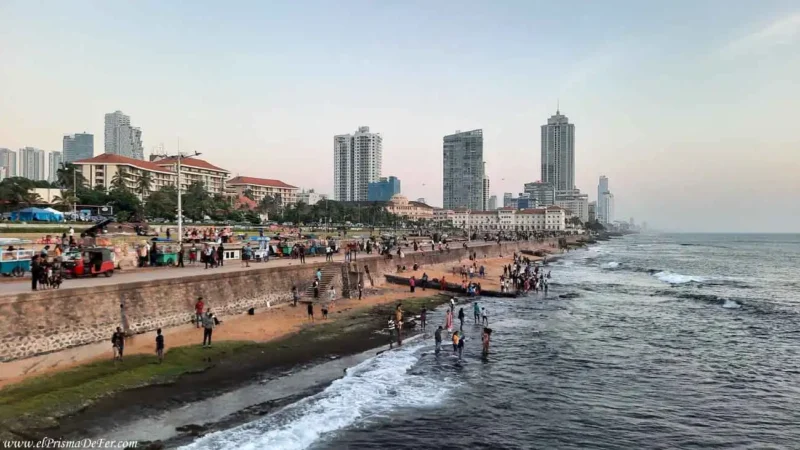

Table of Contents
Where is Colombo located?
Colombo is located on the western coast of Sri Lanka, on the shores of the Arabian Sea, serving as the main gateway to the country.
The city is located about 35 kilometers from Bandaranaike International Airport and stretches along a coastal strip where colonial neighborhoods, modern financial areas and small residential enclaves are mixed together.
Its strategic location in the Indian Ocean is no accident; for centuries, Colombo was a key point on the maritime routes connecting the Middle East, Africa, and Southeast Asia.
This privileged position meant that Arab merchants, Portuguese, Dutch and British colonizers passed through here, leaving a mosaic of influences that can still be seen in its architecture, its port and in daily life.


My impressions of the city
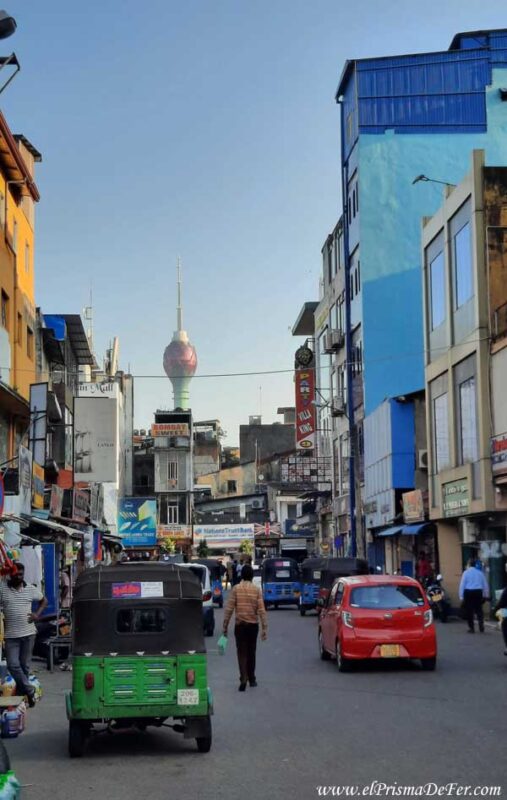
In general, I didn't like Colombo very much. It was the first city in South Asia I visited; later came India and Nepal, but that's another story. My first impression was of a messy, noisy, and not very clean place.
It's not a particularly scenic city to walk around, and sometimes the mix of traffic, heat, and visual chaos can be exhausting.
Although it has enjoyable spots, such as the seafront promenade or some areas of Colombo Fort, you only have to walk a couple of blocks away to realize that it is an intense city.
But on a positive note, I must say that it felt more "authentic" than Dubai, for example. I'm not saying I liked it more, but the "soul" of Colombo felt much more genuine than the artificial cities of the Emirates, where everything is designed to impress.
And, compared to what I later experienced in India, I can say that it wasn't the most chaotic city I'd ever been to. In the end, it turned out to be good preparation for what was to come in India.
Map with the main attractions to see in Colombo
Things to do in Colombo
Tuk-Tuk Tour
A tuk tour in Colombo is the best way to start exploring the city. It helps you get around quickly, you learn history and anecdotes from a local driver, and you can meet other travelers along the way.
Gangaramaya Temple
Gangaramaya is one of the most important Buddhist temples in the city, and a visit helps to understand the cultural and religious mix that defines Sri Lanka.
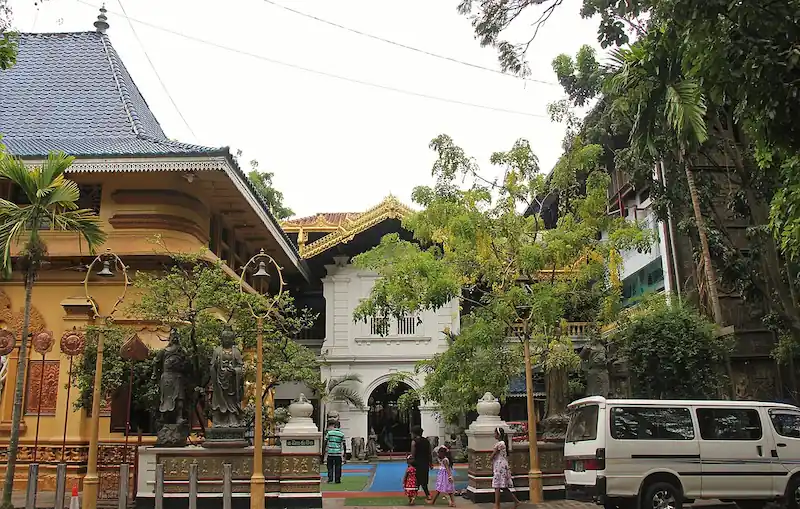
It's not a traditional temple in a single building, but rather a complex of halls, courtyards, reliquaries, libraries, and small shrines where Thai, Chinese, and Indian influences converge. The first impression can be overwhelming due to the sheer number of religious objects, statues, and offerings housed in the same space.
You'll see monks walking around, worshippers making donations, people lighting candles, and tourists mingling with the local spiritual life.
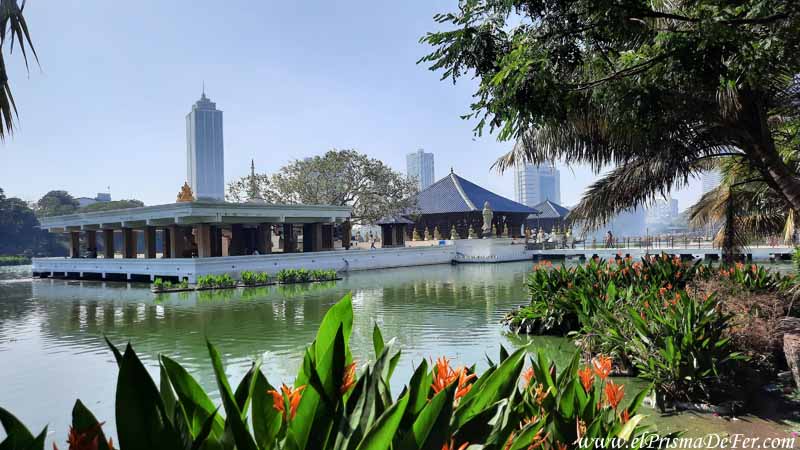
In addition, near the temple is the Seema Malaka, a platform built over Lake Beira, which offers an absolute contrast with its minimalist aesthetic and tranquil atmosphere.
Galle Face Green
The Galle Face Green is a large esplanade facing the sea, one of the most representative spaces of Colombo's social life.
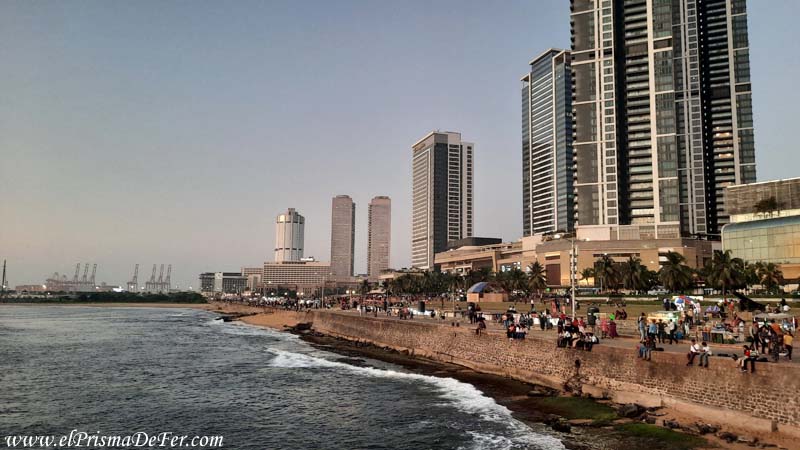
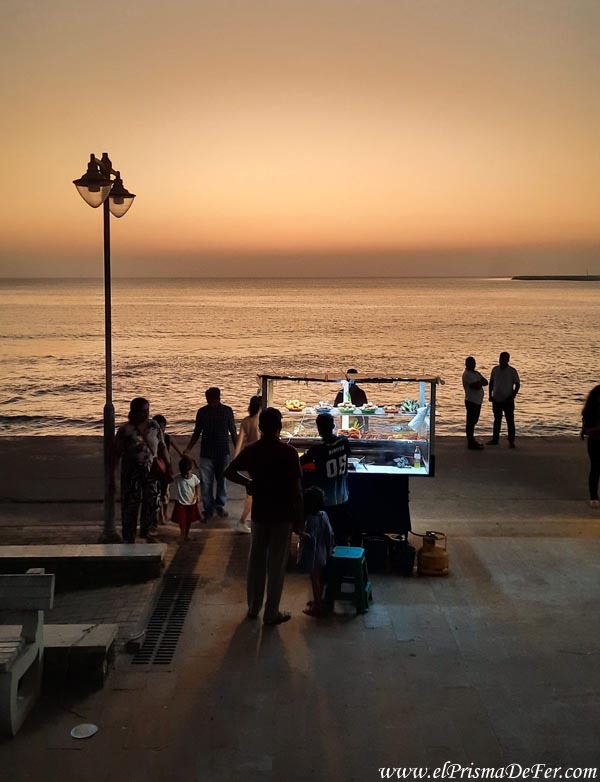
At any time of day you'll find families strolling, vendors setting up makeshift food stalls, young people playing cricket, and couples enjoying the coastal breeze.
It's a perfect place to observe how the city moves without needing to plan too much, simply walking, eating something local and letting yourself be carried away by the energy of the place.
At sunset, the promenade takes on a different dimension. The light dips down on the Indian Ocean and the avenue fills with people who come out to say goodbye to the day.
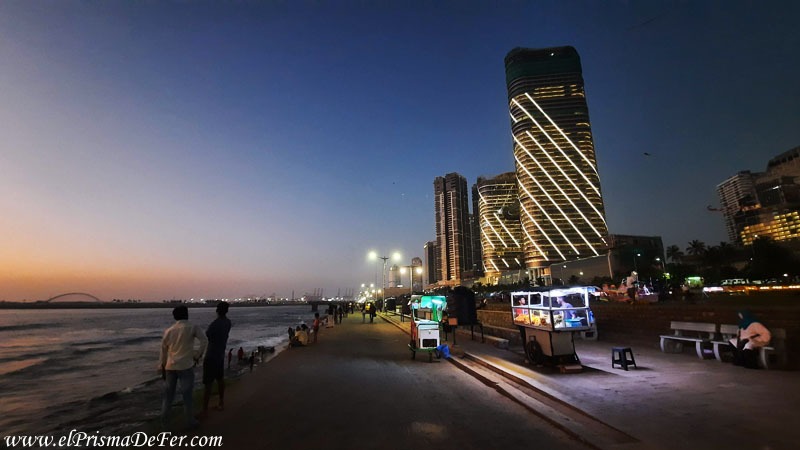
If you come from ultra-modern cities, this corner has a more earthly charm.
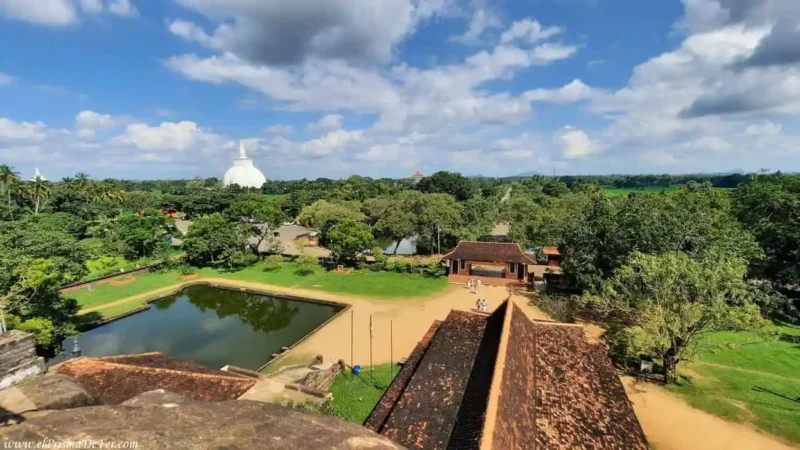
The Red Mosque (Jami Ul-Alfar Mosque)
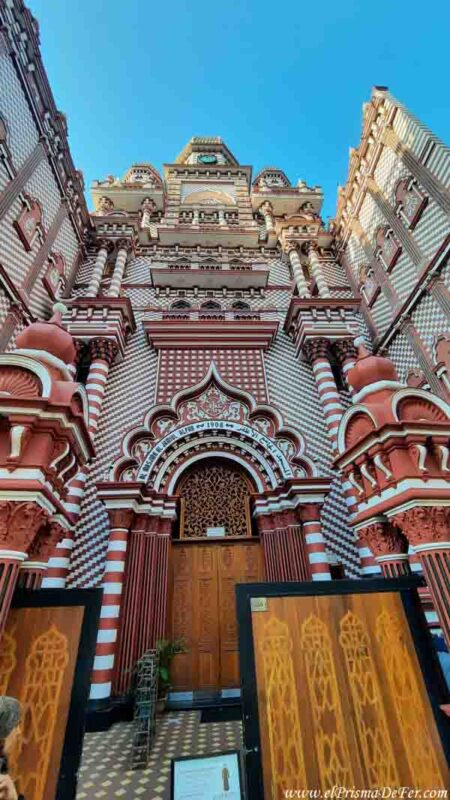
Colombo's famous red mosque is one of the city's most striking buildings, thanks to its geometric red and white facade that makes it impossible to mistake.
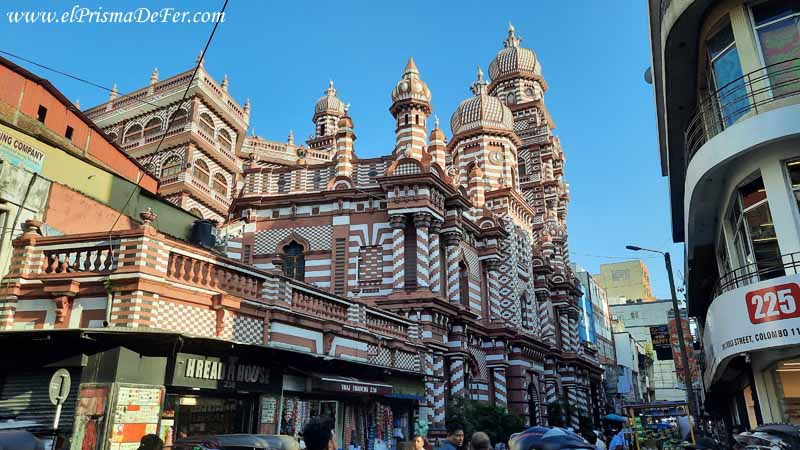
It is located right in Pettah, which means that there is always activity around, food stalls, shops and an intense atmosphere that fits perfectly with the spirit of the neighborhood.
Although the mosque is relatively recent compared to other religious buildings in the country, it has become a visual and photographic icon.
Pettah Market
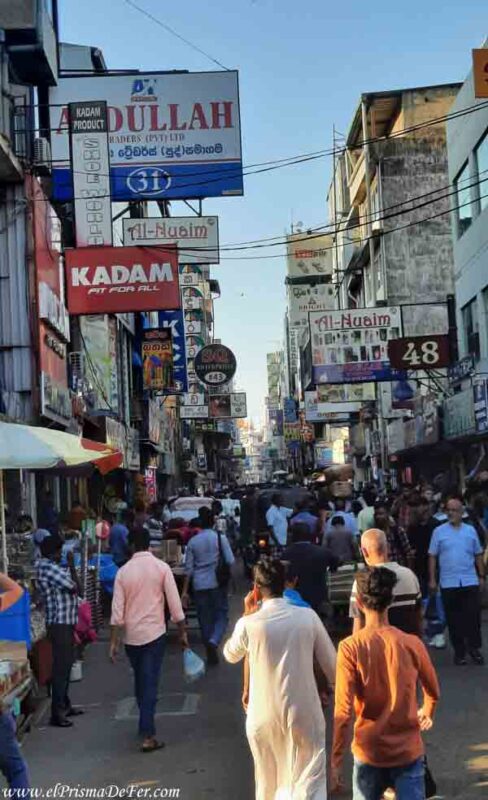
The Pettah district is the commercial heart of the city, a labyrinth of streets where each block seems to have its own rhythm. It's chaotic, noisy, and full of life, with stalls selling everything from fabrics and spices to electronics, jewelry, fruit, and just about anything else you can imagine.
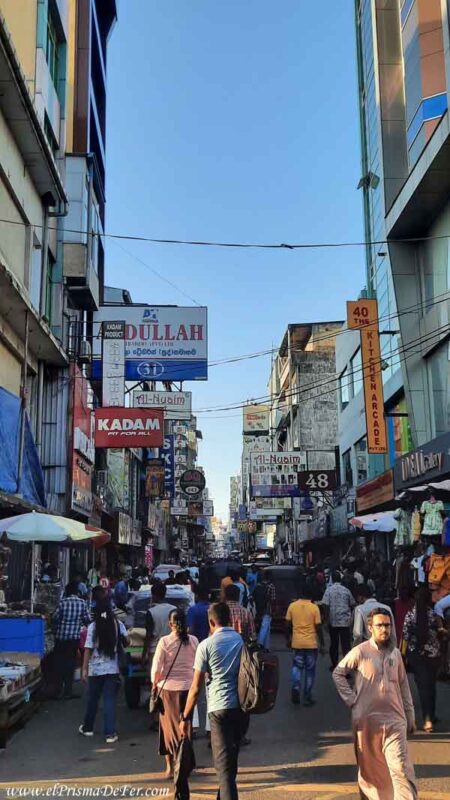
Walking through the market requires patience, but it rewards you with scenes that showcase the most authentic Colombo. It's a perfect place to sample street food, buy spices at good prices, or simply observe how daily life unfolds away from the hotels and modern buildings.
Although it can sometimes feel overwhelming, it is one of the neighborhoods that best encapsulates the essence of the city.
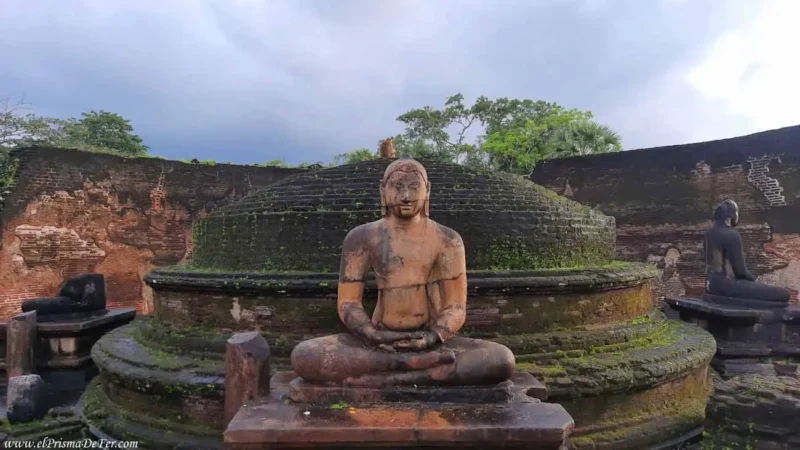
Fort and Old Dutch Hospital
The Fort area is the old colonial district, where several buildings from the British era are preserved, including customs houses, banks, and old government offices.
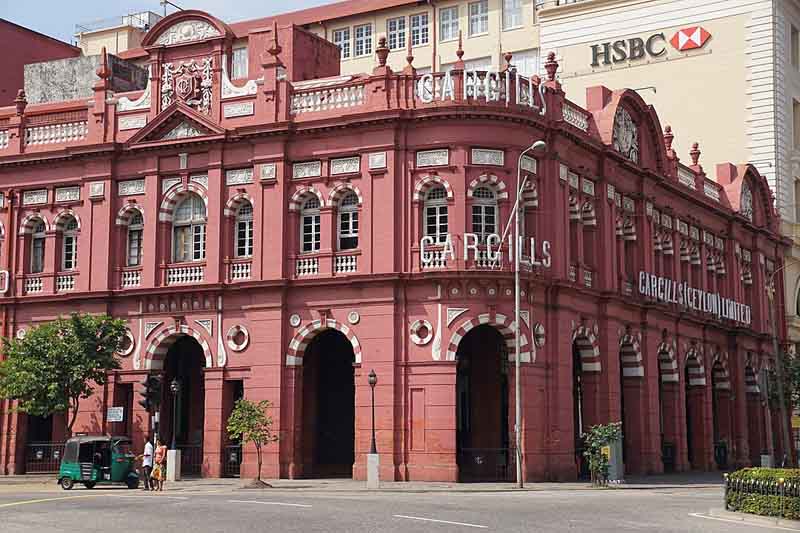
It's an interesting area to explore on foot, especially if you enjoy the contrast between historic architecture and modern urban planning. Although part of the neighborhood has been renovated, it still retains corners where you can feel the area's history.
The Old Dutch Hospital is one such example. This former colonial hospital has been converted into a small complex of restaurants and shops that retains its original aesthetic.
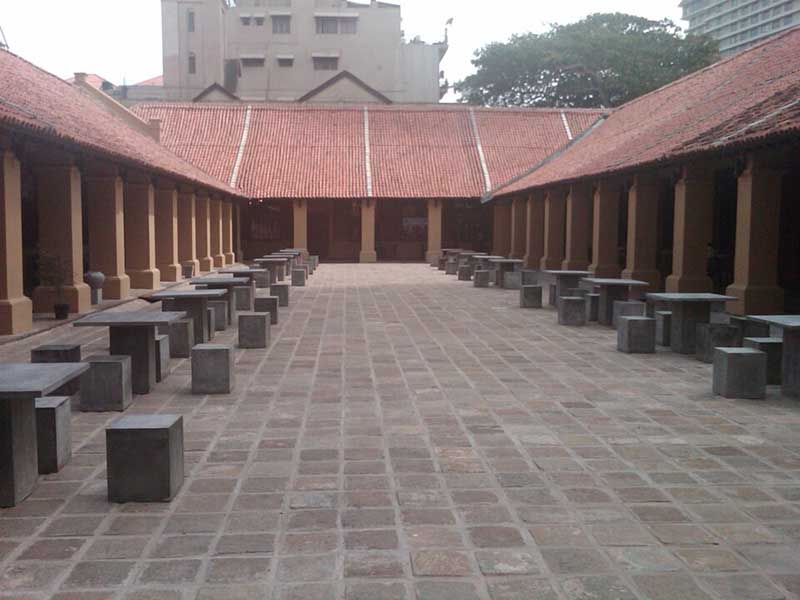
It's a pleasant place to take a break, have a drink or dinner in a more relaxed atmosphere, although it's not particularly cheap.
Viharamahadevi Park
This park is the green lung of Colombo and an ideal place to disconnect from the urban noise.
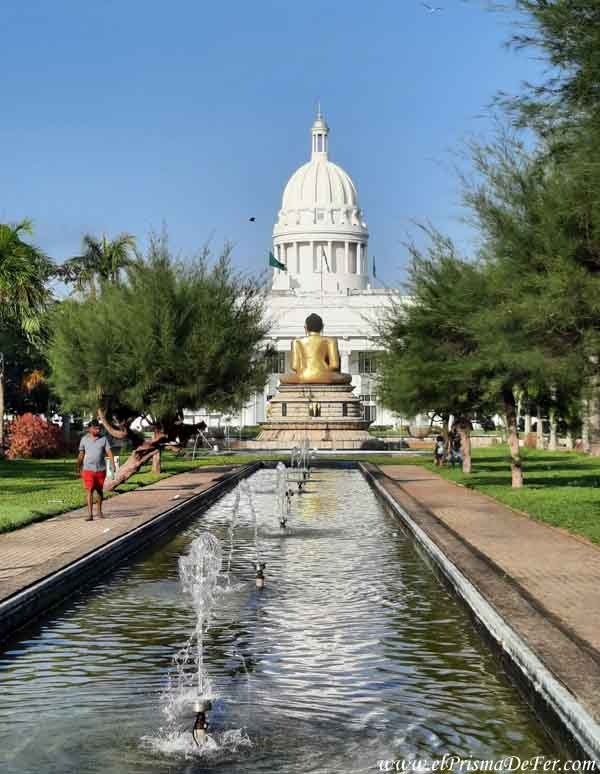
During the week it is usually quite quiet, allowing you to observe how locals use the space to read, relax or meet with friends.
Besides being a good place to escape the heat, the park has several points of interest, such as the gigantic golden Buddha in front of the city hall.
Lotus Tower
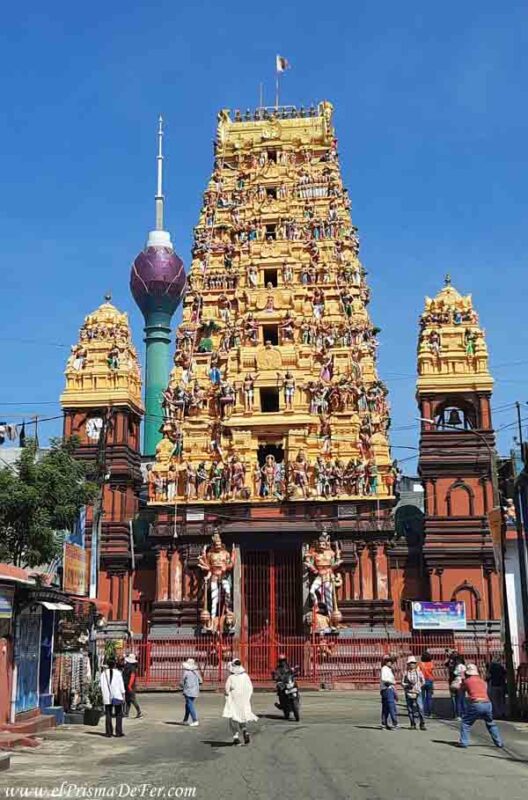
The Lotus Tower is a modern monument that stands out in the Colombo skyline and can be seen from virtually anywhere in the city.
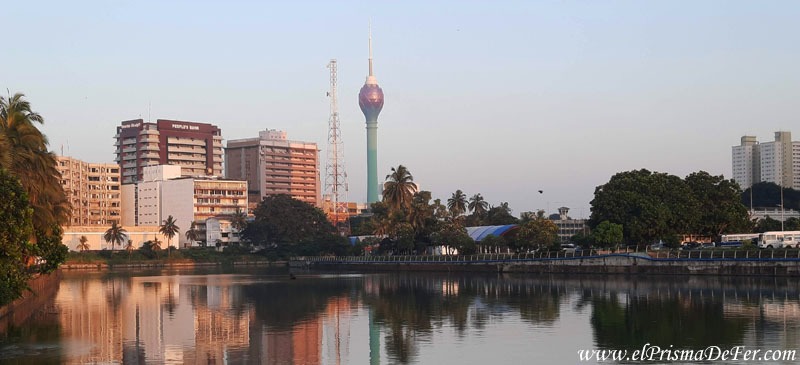
Its design, inspired by the lotus flower, symbolizes purity and renewal, and at the same time reflects the country's technological ambitions.
Although it is impressive from below due to its size, the most interesting thing is to go up to the viewpoint to get panoramic views of Colombo, the port, the coast and the newer neighborhoods that are in constant transformation.
Beyond the observation deck, the tower has spaces dedicated to exhibitions, entertainment, and restaurants, making it a worthwhile visit if you want to see Colombo from a different perspective.
National Museum of Sri Lanka
The National Museum is ideal for those who want to understand a little more about the country before moving on to other destinations, such as Kandy, Sigiriya or the Cultural Triangle.
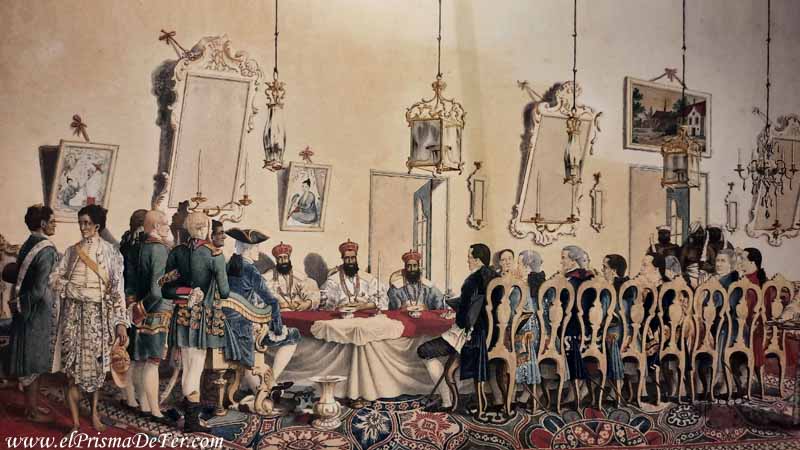
Its rooms span thousands of years of history, from the ancient Sinhalese kingdoms to the Portuguese, Dutch and English colonial era.
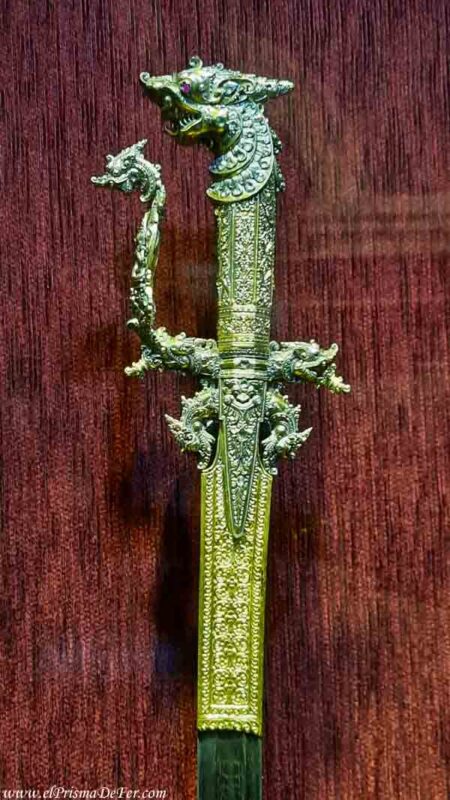
Furthermore, the building itself, in colonial style, is imposing and forms part of Colombo's architectural legacy.
Activities organized from Colombo
Where to stay in Colombo
The best area to stay in Colombo is Colombo Fort, especially if you are traveling independently. This neighborhood is home to the main train and bus stations, making it incredibly easy to connect to cities like Kandy, Galle, Anuradhapura, or Ella.
Plus, you're steps away from the waterfront promenade, Galle Face Green, and several historic buildings, markets, and shopping areas, making it convenient to both get to and start exploring.
I stayed at the C1 Colombo Fort, a hotel/hostel that I loved. It has the comfort and services of a modern hotel, but also the option of shared rooms, making it an ideal mix of comfort and a traveler's spirit.
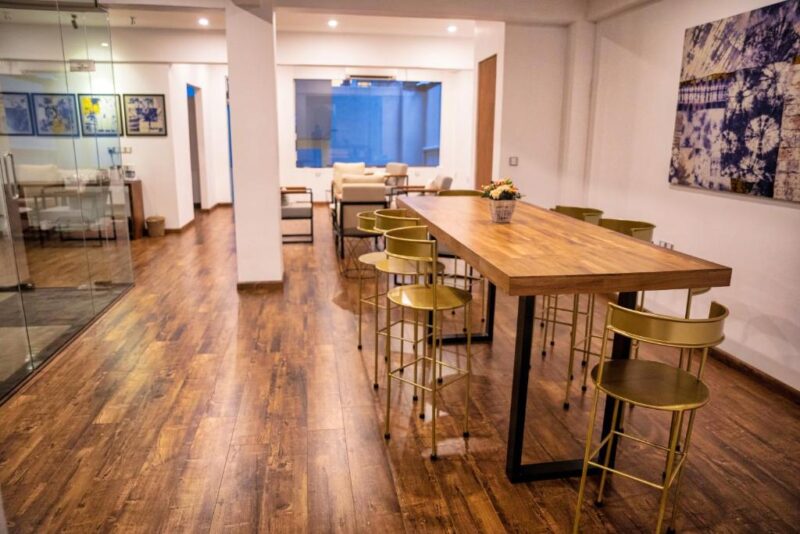
It's a very clean place, with good facilities, and perfect for meeting other travelers who are also touring Sri Lanka.
If you want a comfortable, well-located base with a great atmosphere, this area, and this accommodation in particular, are a great choice.
How to get from Colombo to other cities in the country
Colombo is the most common starting point for exploring Sri Lanka, and fortunately, it's very well connected by both train and bus to virtually every corner of the country. Most travelers use two specific zones, Colombo Fort for trains and Pettah for buses.
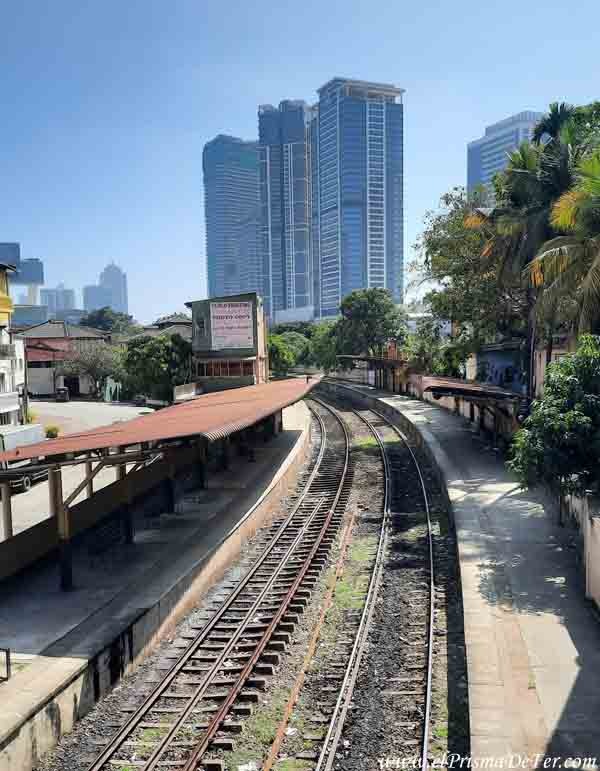
If you're traveling by train, you need to head to Colombo Fort Railway Station (see map), located right in the city center and very close to the waterfront. Trains depart from there to Kandy, Ella, Anuradhapura, Jaffna, Galle, Matara, and other important destinations. It's a large station, seemingly chaotic at first glance, but well signposted.
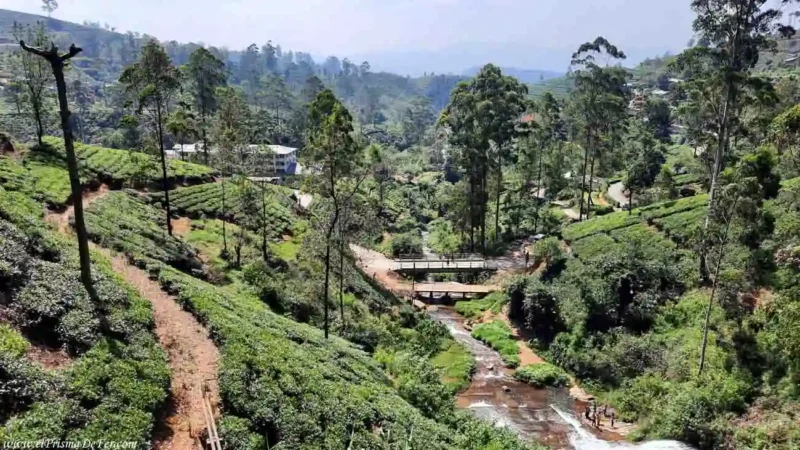
For the more touristy routes, such as the train to Kandy or to the south of the country, it is advisable to arrive early because it gets very crowded, especially if you do not have a reserved seat.
For buses, the reference is the Pettah Main Bus Station (see location) or the Kotuwa bus station (see on map), a few blocks from the train station. It's a world apart: street stalls, vendors, vehicles constantly coming and going.
From there, frequent buses depart for almost all destinations in the country, both local and long-distance.
If you need more comfortable or direct buses, you can also look for private companies on nearby avenues, where many have their own stops or small offices.
If you stay in Colombo Fort you'll have everything at hand: trains, buses, tuk-tuks and connections to any city you want to visit in Sri Lanka.
How to get from the airport to Colombo
Bandaranaike International Airport (CMB) isn't actually in Colombo, but in the city of Negombo, about 35 km to the north. From there you have several options to get to the city center, depending on your budget and the level of comfort you're looking for:
Taxi or app (PickMe/Bolt)
The most convenient and direct way. In the arrivals area you will find official taxis, but you can also use local apps like PickMe, which are usually cheaper and more transparent in price.
The journey takes between 40 and 60 minutes, depending on traffic. It's the best option if you're arriving at night or in the early morning with luggage.
Express bus to Colombo Fort
There is an express bus service, Airport Express Bus (Route 187), that connects the airport to the central station Colombo Fort. It is inexpensive, relatively fast, and has space for luggage.
Buses usually depart every 30–60 minutes and take around 1 hour. It's ideal if you're traveling on a backpacker's budget.
Train from Negombo
There is no direct train from the airport, but you can take a tuk-tuk to Negombo station and from there a train to Colombo.
It's the slowest and least practical option unless you want to experience the train from the very beginning. The journey can last between 1.5 and 2 hours in total.
Private transfer
Many accommodations and agencies offer private transfers at a fixed price. It's similar to a taxi, but with the advantage of having someone waiting for you at the exit with your name on it. Convenient if you're looking for zero stress after a long flight.
In general, if you've just landed in Sri Lanka and want to get there simply and without hassle, a taxi app is usually the best combination of price, comfort, and speed.
Is Colombo in Sri Lanka safe?
Colombo, in general, is a safe city for travelers, but as in any major capital in South Asia, it's advisable to use common sense.
During the day there are usually no major problems, especially in areas like Colombo Fort, Pettah, or near the waterfront, where there is a constant flow of people. Public transport is also safe, although chaotic, and the main routes are well-monitored.
At night, however, some areas can become less comfortable for walking, especially if you're alone. Not necessarily dangerous, but with an atmosphere that generates a certain distrust: poorly lit streets, few people around, and the presence of isolated groups.
It's also common to see people sleeping on the street or asking for help; it's not a risk in itself, but if you're traveling at night, it's best to stay on the main avenues or use a tuk-tuk.
How many days to stay in Colombo
Colombo is not usually a city to stay in for too long, and most travelers use it more as an entry or exit point to the country than as a main destination.
Even so, it's worth spending a day or two to get a better understanding of Sri Lanka's urban rhythm, explore its most iconic places, and settle in before starting your journey inland.
A full day is enough to visit the most important temples, stroll through Galle Face, explore the Pettah neighborhood, and get close to the famous Red Mosque.
If you have two days, you can explore the city more calmly, visit a museum, walk along less touristy coastal areas, or simply use the time to recover from your flight and organize your itinerary.
Beyond that, unless you have a very particular interest in Sri Lankan urban life, is usually not necessary.
Final thoughts on my visit to Colombo
Colombo wasn't a city I absolutely loved, but I still think it deserves at least a couple of days in any Sri Lanka itinerary.
It has a different energy, more chaotic and real, that immerses you completely in the country's daily life. After coming from Dubai, with all its luxury and cleanliness, the contrast was enormous, but also refreshing.
Colombo shows you another way of life, more authentic, and that's why it's worth giving it some space before continuing your journey to the country's most touristic destinations.
Frequently Asked Questions about Colombo
Is Colombo worth visiting?
Yes, although it's not usually a favorite city for travelers. It's not the most visually appealing, but it can be a good introduction to the country, allowing you to understand its pace and experience local life before exploring more natural or historical destinations.
How many days do I need?
With 1 or 2 days you can see the most important sights: Colombo Fort, Galle Face Green, the Red Mosque, Pettah Market and a temple. More time is usually unnecessary unless you have very specific interests.
Is it safe to move around the city?
Generally, yes, but at night some areas can feel less safe and it's common to see people sleeping on the streets. Ideally, avoid walking in poorly lit areas and use tuk-tuks or taxis after dark.
Where is the best place to stay?
The most convenient area is Colombo Fort, close to the train and bus stations, the waterfront promenade and several of the most visited spots. It also offers good options for backpackers and independent travelers.
How do I get from the airport to the city center?
The main options are the Airport Bus 187, a taxi, or a vehicle booked through an app. The bus is the cheapest; the taxi, the most comfortable.
What transportation should I use to get around Colombo?
The most practical thing to do is combine tuk-tuk (with PickMe to avoid haggling), walk in the more central areas and, if it is very hot, take a taxi. Buses are available, but they can be slow and confusing if you've just arrived.
Where can I catch trains and buses to get to other cities in Sri Lanka?
Trains depart from Fort Railway Station and most long-distance buses from Bastian Mawatha (Pettah). Both are close to each other.
What's the weather like in Colombo?
It is hot and humid year-round. Heavy rains are possible during the monsoon season, especially between May–June and October–November.
Support The Prism of Fer!
Your support helps me continue creating free content on the blog. Thank you so much!